
Dino Missing Capitals: 6 Powerful Alphabet Discoveries
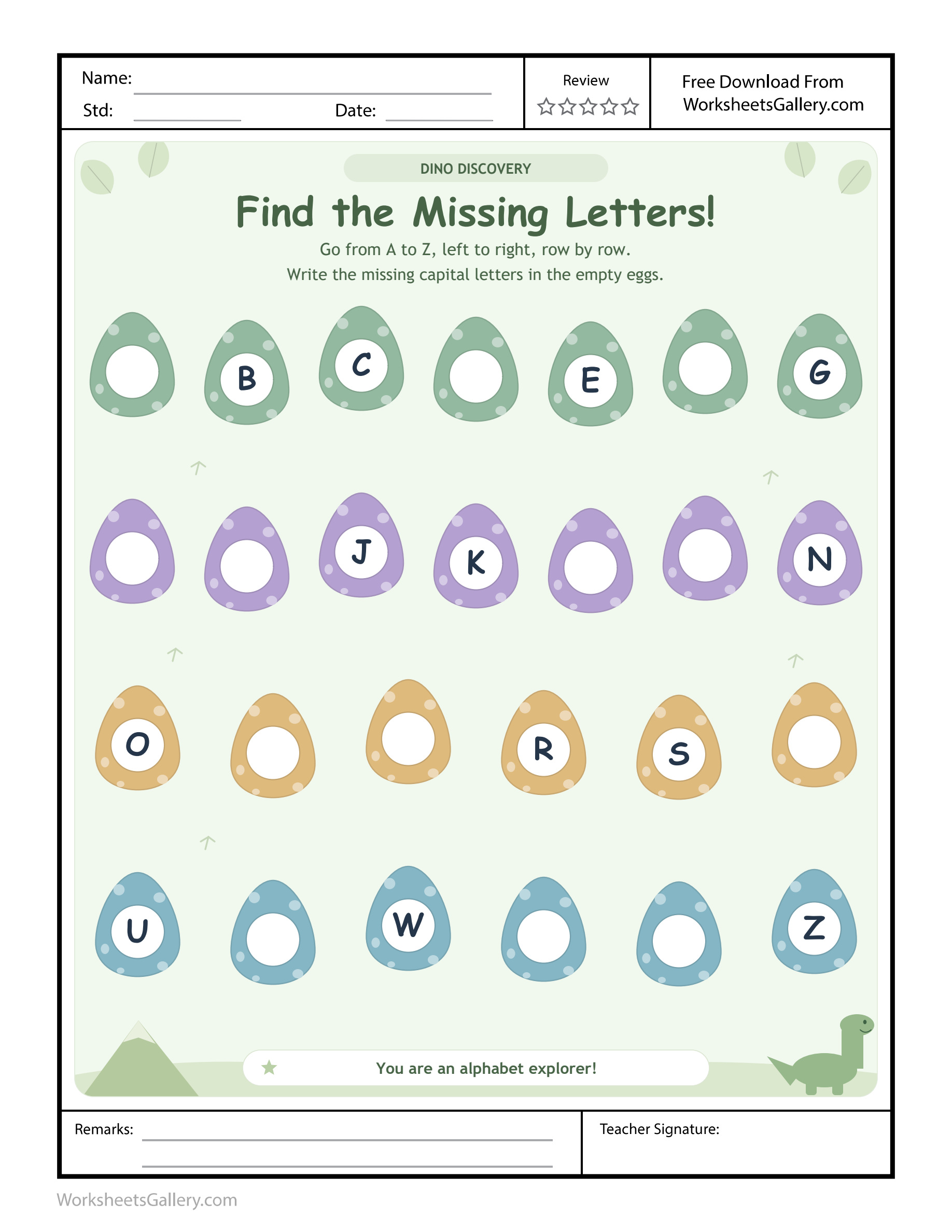
An empty dinosaur egg can hold a question before it holds a letter. Dino Missing Capitals invites a child to propose an uppercase letter, inspect the surrounding alphabet, and decide whether the proposal belongs. Thirteen eggs need capitals across a complete A–Z route. Some gaps stand alone; others arrive in pairs, and even the first position needs attention. Let the learner handle one discovery at a time. A spoken answer, a selected card and a written capital can each reveal something useful, especially when an adult asks how the choice was checked.
🦕 Open Dino Missing Capitals with a finding
Idris points to the first egg and suggests A. His older sister asks what he can see after it. B and C are already printed, so they read A–B–C together. He has a reason for the choice before his pencil touches paper. Dino Missing Capitals can begin with this small act of checking rather than with an adult announcing all the letters to write.
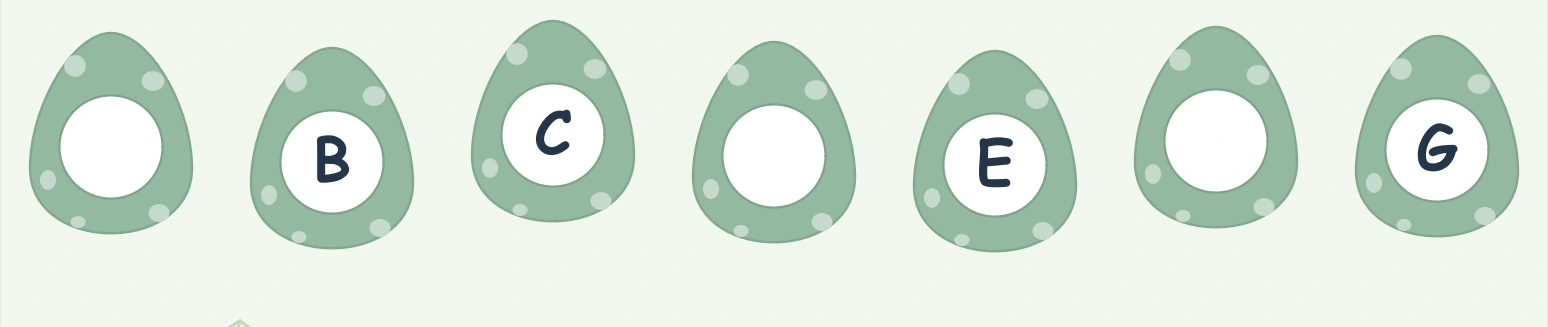
The first row covers A–G. B, C, E and G appear in print; A, D and F are missing. Dino Missing Capitals therefore starts differently from a sheet with A supplied as a model. If the learner hesitates at the first egg, point toward B and ask what begins the alphabet before it. A capital reference strip remains a perfectly useful tool for testing the idea.
Three kinds of answer on Dino Missing Capitals
Name it
A child says P while looking at the opening. Listen for the intended capital name before discussing the pencil.
Choose it
The learner selects P from visible capital cards. That response shows recognition even when handwriting needs support.
Record it
A written P combines the choice with forming a recognizable shape. Notice both parts without treating them as identical skills.
These response options make Dino Missing Capitals useful for children with different experience. If a learner names P correctly but draws an uncertain shape, supply a model away from the egg. If the capital is recognizable but belongs in the wrong place, return to the alphabet clues. The most useful support depends on which part of the task is uncertain.
Map Dino Missing Capitals before filling the shells
Twenty-six egg positions continue through four rows: A–G, H–N, O–T and U–Z. The upper pair of rows has seven positions each, while each lower row has six. On Dino Missing Capitals, follow each row from left to right and return to the next left edge. Decorative dinosaur details are scenery, not extra letters to count or complete.
For adult reference, the thirteen absent capitals are A D F / H I L M / P Q T / V X Y. Keep the reference aside until you need to check a particular place. Dino Missing Capitals asks for sequence decisions, with neither dotted tracing outlines nor a picture-to-sound matching rule. A dinosaur picture does not determine which capital belongs inside an egg.
| Evidence point | What is visible | What to test |
|---|---|---|
| Alphabet beginning | B and C follow the first gap. | Does A start the run correctly? |
| Middle of row two | J, K and N are supplied. | Do L and M connect K to N? |
| Third-row pair | O comes before two gaps and R follows. | Do P and Q fit those two places? |
| Approach to the ending | W precedes two gaps before Z. | Can X and Y complete that approach? |
Seven useful observations from Dino Missing Capitals
Dino Missing Capitals: a reason can accompany a name
Ask how the child knows D belongs after C. Dino Missing Capitals offers visible evidence for a brief explanation. A point toward E can be enough; avoid requiring polished speech when a learner has already communicated the relationship clearly.
Dino Missing Capitals: a short sequence can be held together
P and Q need to stay in order between O and R. Dino Missing Capitals offers a small memory demand with visible endpoints. Let the child rehearse the four names before deciding which one to record first.
Dino Missing Capitals: a printed model can be recognized
The learner compares a capital on a reference strip with the same identity in another typeface. Dino Missing Capitals gives that comparison a purpose. Focus on the letter's recognizable features, not on making every handwritten stroke identical to the font.
Dino Missing Capitals: a finger can organize the route
Pointing to each egg supports deliberate visual tracking. At a row end, Dino Missing Capitals requires a return to the left, followed by the next alphabet letter. Observe whether the child finds that starting place independently or benefits from a quiet gesture.
Dino Missing Capitals: a hand can plan its next movement
An egg center provides room to decide where a capital should begin. Dino Missing Capitals allows an adult to notice paper control, comfortable reach and writing effort. A larger readable letter is more useful here than a cramped response made to imitate print size.
Dino Missing Capitals: a correction can become a finding
When a proposed capital fails the sequence check, the learner can try another. Dino Missing Capitals provides a visible reason for revision, making “I changed my idea” an ordinary part of the activity. Praise noticing the mismatch as well as finding the replacement.
Dino Missing Capitals: a learner can request the right support
“Show me the shape” and “help me find the next name” are different requests. Use Dino Missing Capitals to practice such distinctions gently. An adult who responds to the actual difficulty gives the child a useful example of asking for specific help.
A discovery routine at home
Place Dino Missing Capitals on a clear surface with a pencil and a nearby capital strip. Invite the child to select an interesting egg. Ask for a possible letter, give time to consider it, then read a short sequence that includes the next printed anchor. Write only after the choice is understood. An adult may record a dictated capital if writing would interrupt the investigation.
Suppose Idris reaches the P–Q openings and proposes Q for the first one. His sister names O, pauses, and lets him continue toward the printed R. He hears that P was skipped. On Dino Missing Capitals, the mistake has supplied a useful question: where did P need to go? There is no need to label the whole row incorrect.
- Begin with a short stretch the learner can name with support.
- Place letter cards beside the sheet rather than over printed clues.
- Allow time for a proposed answer before offering a choice.
- Use a separate scrap for a capital formation demonstration.
- Pause when the child has checked one meaningful finding.
- Leave the next uncertain pair for another rested session.
Dino Missing Capitals at a classroom evidence desk
A small-group teacher can offer three roles: proposer, pointer and recorder. The proposer names a capital; the pointer identifies its neighbors; the recorder writes the agreed response. Rotate after a brief turn on Dino Missing Capitals. Each learner should experience choosing and checking, rather than one child doing all the thinking while another only holds the pencil.
For an individual observation, ask a child to show a response in two ways. Can the learner say M, then select its card? Can the learner form it with a model? Dino Missing Capitals can reveal a difference between sequence knowledge and written production. Note the support used alongside the response, and avoid treating a neatly copied page as proof of unaided alphabet recall.
Dino Missing Capitals between O and R
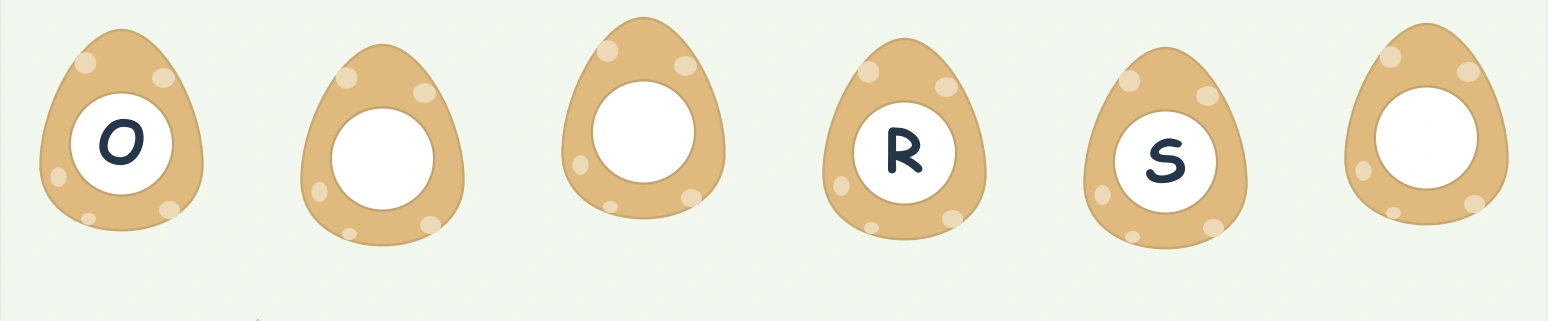
The third row supplies O, R and S. P and Q belong between O and R, with T completing the row after S. Dino Missing Capitals presents two linked gaps followed by one separate ending gap. Before writing P, let the child say O–P–Q–R and touch each position. That rehearsal keeps Q available for the second egg.
If the learner swaps P and Q, compare the short run again using capital cards. Dino Missing Capitals does not need to become a lesson about dinosaur names or sounds. Keep the evidence about alphabet position, and introduce a letter-shape model only when the child has identified the intended capital. Choose first, then show how to record the choice.
Six discoveries to carry into play
-
1. A Dino Missing Capitals evidence envelope
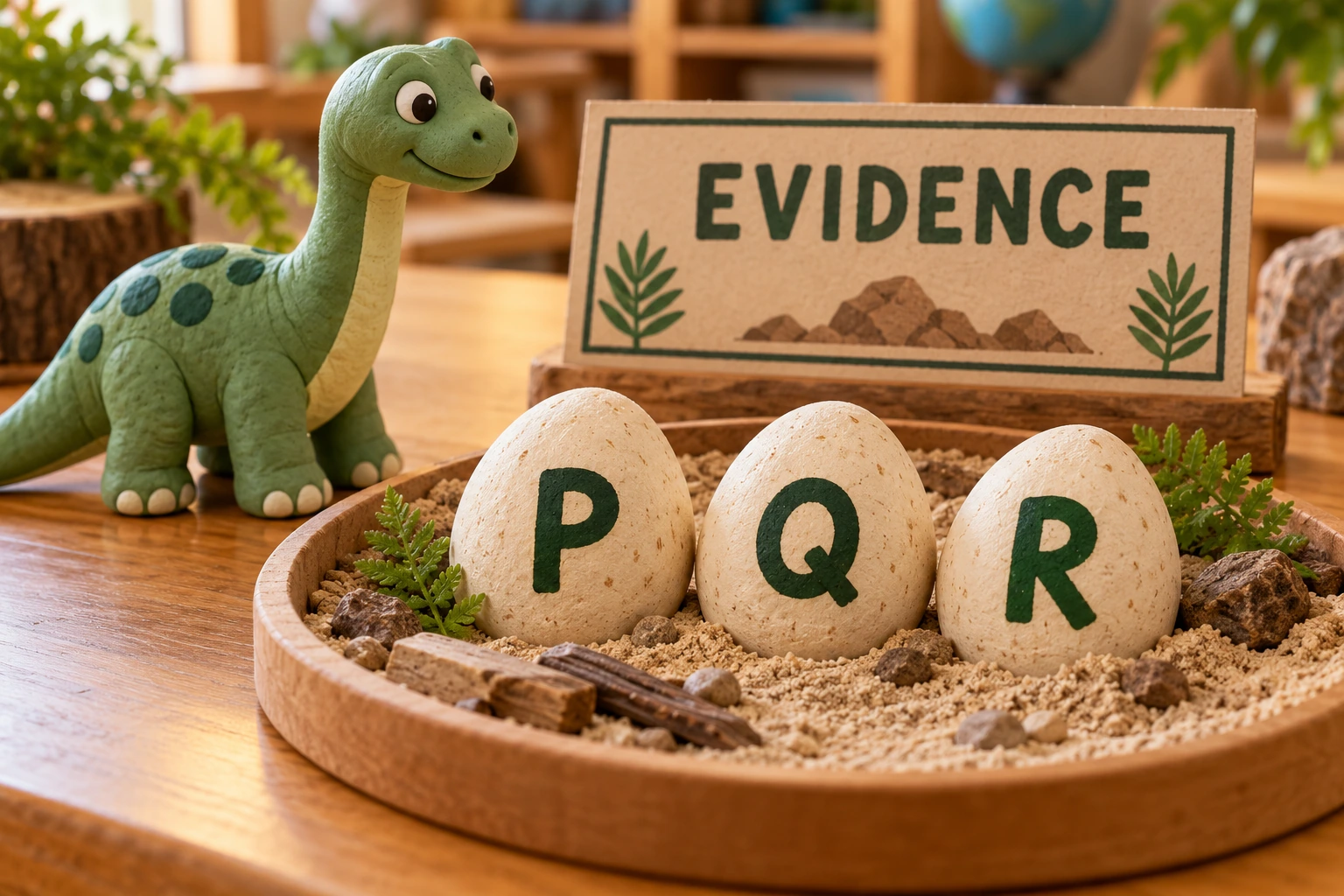
Put P, Q and R cards into a small envelope marked EVIDENCE. Arrange O beside it, then let the child take out and order the cards. Compare the arrangement with the matching worksheet segment. The label supports the pretend investigation without giving the child's written answers a pass-or-fail stamp.
-
2. A Dino Missing Capitals first-egg reveal
Arrange A, B and C under three cups, with B and C visible. Ask what might be under the first cup, then reveal A together. Say which visible letters helped with the proposal. Repeat only if the child wants to reverse the adult and learner roles.
-
3. A Dino Missing Capitals card witness
A toy dinosaur “remembers” W and Z but needs help with the names between them. The child selects X and Y cards and explains their places through speaking or pointing. Let the toy listen patiently. The playful audience gives the learner room to revise without an adult rushing the ending.
-
4. A Dino Missing Capitals shape sketch
Choose one confidently named capital and draw it large on scrap paper before making a smaller version. Compare recognizable features, such as the straight stem and curved part of P. Bring the drawing practice back to one egg only, so the activity stays focused on a chosen need.
-
5. A Dino Missing Capitals quiet inspection
Arrange J, K, M and N with L missing from the sequence. Invite the learner to inspect silently, then place L where it belongs. Read the repaired run afterward. This gives a child who prefers thinking time a full turn without a chorus supplying the answer first.
-
6. A Dino Missing Capitals explanation badge
Make a small paper badge reading I CHECKED. The child chooses one completed pair and tells a family member what confirmed it. Wear or display the badge for the explanation, not for perfect handwriting. The activity closes with a strategy the learner can describe and use again.
Read the ending without hurrying it
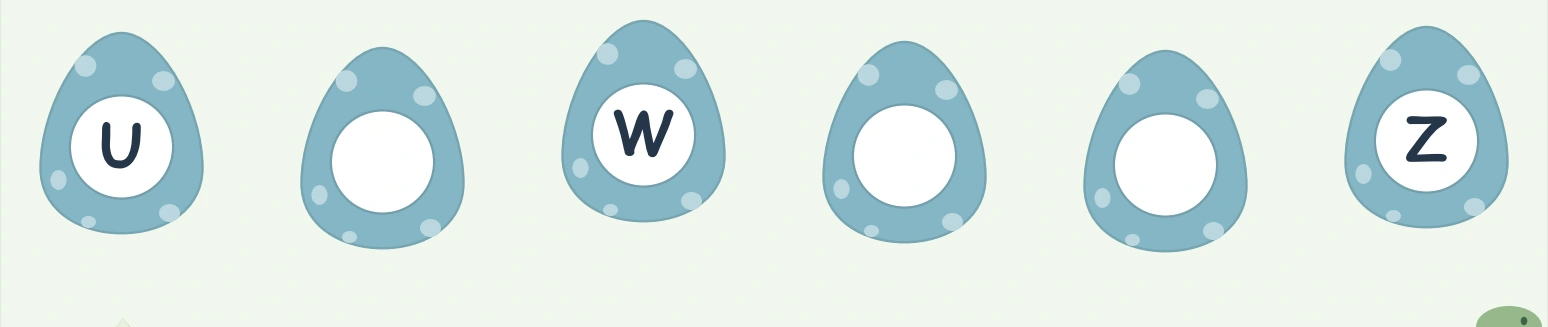
The final six positions cover U–Z. U, W and Z are supplied, leaving V, X and Y. Dino Missing Capitals asks the learner to separate one missing letter after U from the two-letter run before Z. Pointing at both X and Y places first can keep the child from skipping one in the rush to finish.
An adult may see a backwards shape and assume the alphabet choice was wrong. Ask the learner to name the intended letter before revising it. Dino Missing Capitals is suitable for many children around four to six who recognize some capitals, with cards or dictation available as needed. Younger participation can be limited to naming and pointing; older learners may revisit one troublesome sequence.
Keep investigation comfortable and repeatable
If frustration rises, save a successful explanation and stop. Dino Missing Capitals offers enough separate runs for short return visits, and completion is not a race. On another day, revisit one uncertain pair with the same familiar reference strip. Remove a cue when it is no longer needed rather than abruptly withdrawing every support.
For capital formation beyond Dino Missing Capitals, choose the A tracing adventure when the first letter needs a model, or K writing practice for a different shape. The Z tracing page gives the ending capital its own writing task. Select one next step instead of assigning all three at once.
Adult reading and Dino Missing Capitals downloads
Explore Reading Rockets' introduction to knowing the alphabet for broader letter-learning context. For everyday opportunities to record ideas, see the family writing resource at NAEYC. Bring any ideas back to the specific response you observed, whether it involved naming, recognizing or forming a capital.
The original free sample retains its uploaded website marks. A clean premium Dino Missing Capitals PDF is available through the member download controls for eligible active memberships. The premium sheet has no website name, no watermark branding and no added advertisements among its activities. Sign in for that edition, or select the original free sample, then save the file you intend to print.
Use US Letter paper for Dino Missing Capitals and examine one test print for complete shells and readable anchors. Choose page fitting if a printer trims the border. Keep the alphabet strip nearby for the first session. A thoughtful proposal followed by a careful check is a worthwhile discovery even when a child needs help writing the final capital.
Popular Worksheets
Printable resources families and teachers are downloading now.
 Free
 Free
 Free
 Free