
Builder Letter Check: 4 Wonderful Hard Hat Repairs
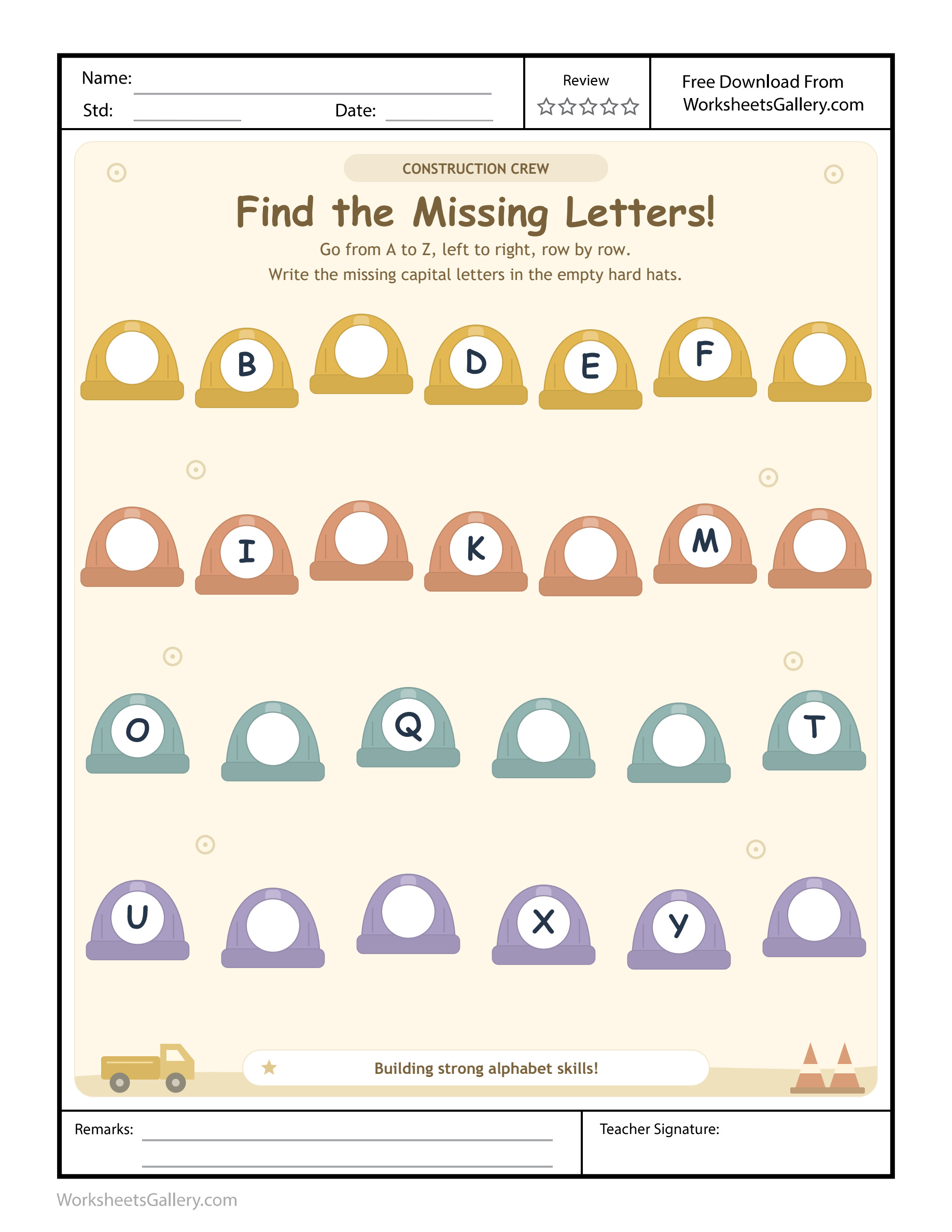
Inspect the alphabet before signing off on the hard hats. Builder Letter Check gives young learners thirteen missing capitals to supply, with printed neighbors available for testing each choice. The construction theme makes a checking role easy to imagine: a capital needs the right place as well as a recognizable shape. Some children know the answer but need a writing model; others form clear letters that belong elsewhere in the sequence. Start by asking which capital is intended. Then decide together whether its position, its written shape, or both need another look.
🏗️ Builder Letter Check starts with two inspection questions
“What letter did you choose?” comes before “Can we read its shape?” Tomas's neighbor uses that order when he draws an uncertain R. Tomas can say R and point between Q and S, showing that the alphabet decision makes sense. On Builder Letter Check, a formation model can now address the writing need without making him repeat a sequence he already understands.
The reverse can happen too. A beautifully formed S in R's position still needs an alphabet repair. Builder Letter Check asks children to fill missing capitals, not merely decorate hats with recognizable marks. Read the neighboring run together before changing the answer. The inspection concerns this particular choice, rather than whether the child is a “good writer.”
Examine the Builder Letter Check worksite
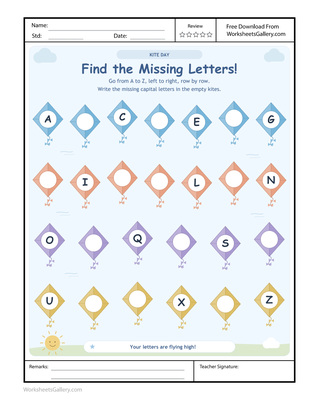
The twenty-six hard-hat positions form four rows. A–G and H–N occupy seven places each; O–T and U–Z occupy six each. Builder Letter Check has thirteen supplied capitals and thirteen empty centers. Move across a row toward the right, then return to the left below. The pictures invite a construction story, while the alphabet supplies the actual order.
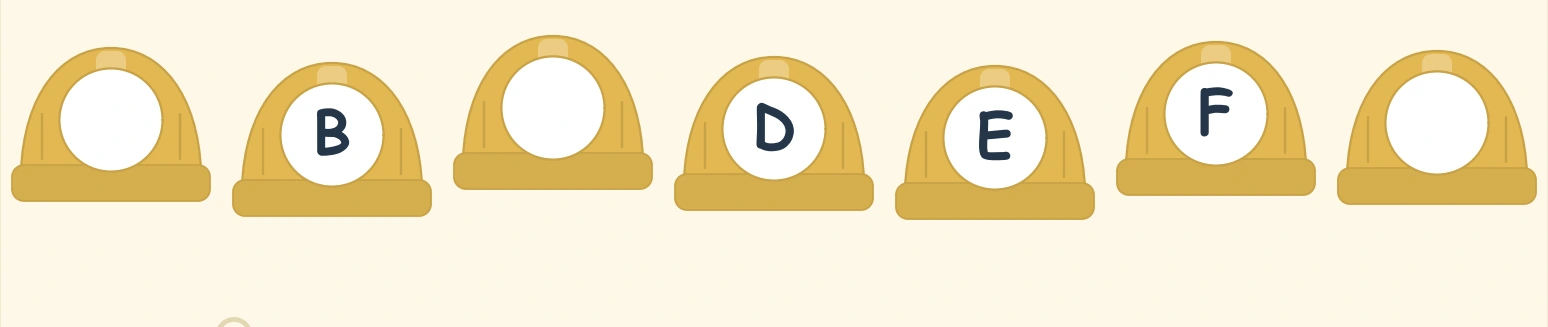
B, D, E and F are visible in the top row. A begins the route, C fits between B and D, and G ends it. Builder Letter Check therefore asks the child to supply both the starting capital and the final capital of the first row. If the learner wants a clue for A, direct attention to B and ask which letter opens the alphabet before it.
| Inspection | Ask the learner | Possible support |
|---|---|---|
| Letter identity | Which capital were you thinking of? | Let the child name or select it. |
| Alphabet location | Does it connect these printed neighbors? | Read a short run on a capital strip. |
| Readable shape | Can another person recognize your capital? | Provide a separate writing model. |
| Page route | Where does the alphabet continue? | Trace the return to the next left edge. |
Builder Letter Check has a private adult reference
The missing capitals, grouped by row, are A C G / H J L N / P R S / V W Z. Use this reference after a proposal or when you need to locate a difficult segment. Builder Letter Check is more useful when a child can test a choice than when an adult dictates the entire list of absent letters.
The second row covers H–N, with I, K and M supplied. H, J, L and N fill the openings. On Builder Letter Check, N is a row-ending response, followed by printed O at the next left edge. Demonstrate that return with a finger. There are no dotted capitals to trace; an unfamiliar written shape needs its own model away from the response area.
Five gains from a careful Builder Letter Check inspection
Builder Letter Check separates knowing from recording
A learner who can name H but needs help writing it has shown useful alphabet knowledge. Notice that success explicitly. The next support can target the written form rather than asking the child to relearn the entire sequence merely because the pencil response is unclear.
Builder Letter Check gives comparison a purpose
The child can compare a proposed R with Q before it and S after it. The goal is deciding whether the run makes sense. A visible capital strip offers another reference, allowing a learner to investigate a choice instead of waiting for an adult to pronounce it correct.
Builder Letter Check supports motor planning
Beginning a capital inside a hard-hat center requires a decision about space and movement. A steadying hand and comfortable pencil matter. Encourage a readable size; forcing capitals into tiny print-sized copies can distract from the letter-order task and make writing unnecessarily demanding.
Builder Letter Check invites precise language
“I chose S, but R goes before it” names both an idea and its revision. A child can communicate the same relationship with cards or pointing. Respond to the meaning before asking for a longer explanation, particularly when the sequence itself still takes effort to recall.
Builder Letter Check makes revision ordinary
Inspectors are expected to notice things that need adjustment. The theme offers a calm way to discuss a missing or misplaced capital. Praise a learner who spots a skipped letter and returns to repair it. That checking action is worth noticing even before the replacement is written.
Run Builder Letter Check at a home repair bench
Set the page on a flat board or uncluttered table, with a capital strip beside it. Start Builder Letter Check by having the child select one gap to inspect. Ask for its letter name, check the neighboring sequence, and then invite a written response. Dictation or a capital card can replace writing when you want to observe the alphabet decision on its own.
Tomas chooses the two openings between Q and T. He says S for the first, then pauses because there is another hat before T. His neighbor asks him to read Q–R–S–T from the strip. Builder Letter Check gives the extra opening a clear purpose: R had been skipped. They place R and S cards beside the hats before Tomas decides to write.
- Agree on a short section of the route to inspect.
- Let the child propose a capital before offering the answer.
- Test the proposal against one or two printed neighbors.
- Provide a shape model only if that is the remaining difficulty.
- Record the choice and let the learner review the completed run.
Builder Letter Check in a classroom review corner
At a literacy station, partners can take the roles of chooser and inspector. The chooser selects a capital card; the inspector points to the surrounding letters and reads the short run with support. Swap roles after one inspection. Builder Letter Check gives each learner a reason to attend to a partner's reasoning rather than competing to complete more hats.
For a teacher's individual observation, ask about a selected response before correcting it. Builder Letter Check can reveal whether an ambiguous mark represents the right intended capital. Note “named R, needed a model to form it” or “formed S, revised sequence after checking Q.” These observations lead to more specific follow-up than a general judgment about a page looking tidy.
Builder Letter Check repairs the Q–T span
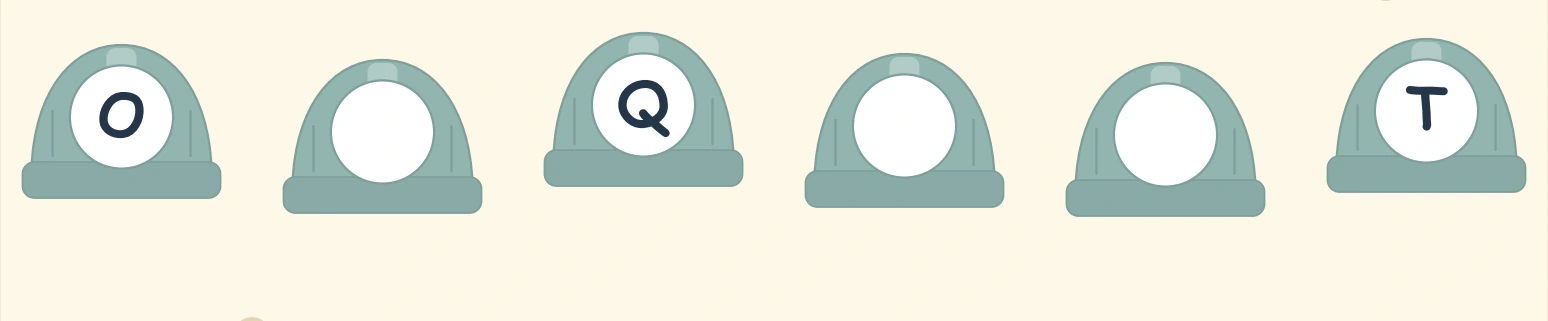
The O–T row shows O, Q and T, leaving P, R and S. P is a single gap between O and Q. The R–S pair then bridges Q and T. Builder Letter Check offers two different inspection sizes on the same row. A child may manage the single gap confidently yet need to rehearse the linked pair before writing either response.
If R and S are reversed, use loose cards to test the run Q–R–S–T. Avoid repeatedly erasing until the learner has agreed on the sequence. Builder Letter Check also presents O in an alphabet context, where its oval shape should be named as a letter rather than zero. The construction drawings do not provide a rule about beginning sounds or the names of tools.
Four Builder Letter Check repairs away from the worksheet
-
1. Builder Letter Check with an inspection strip
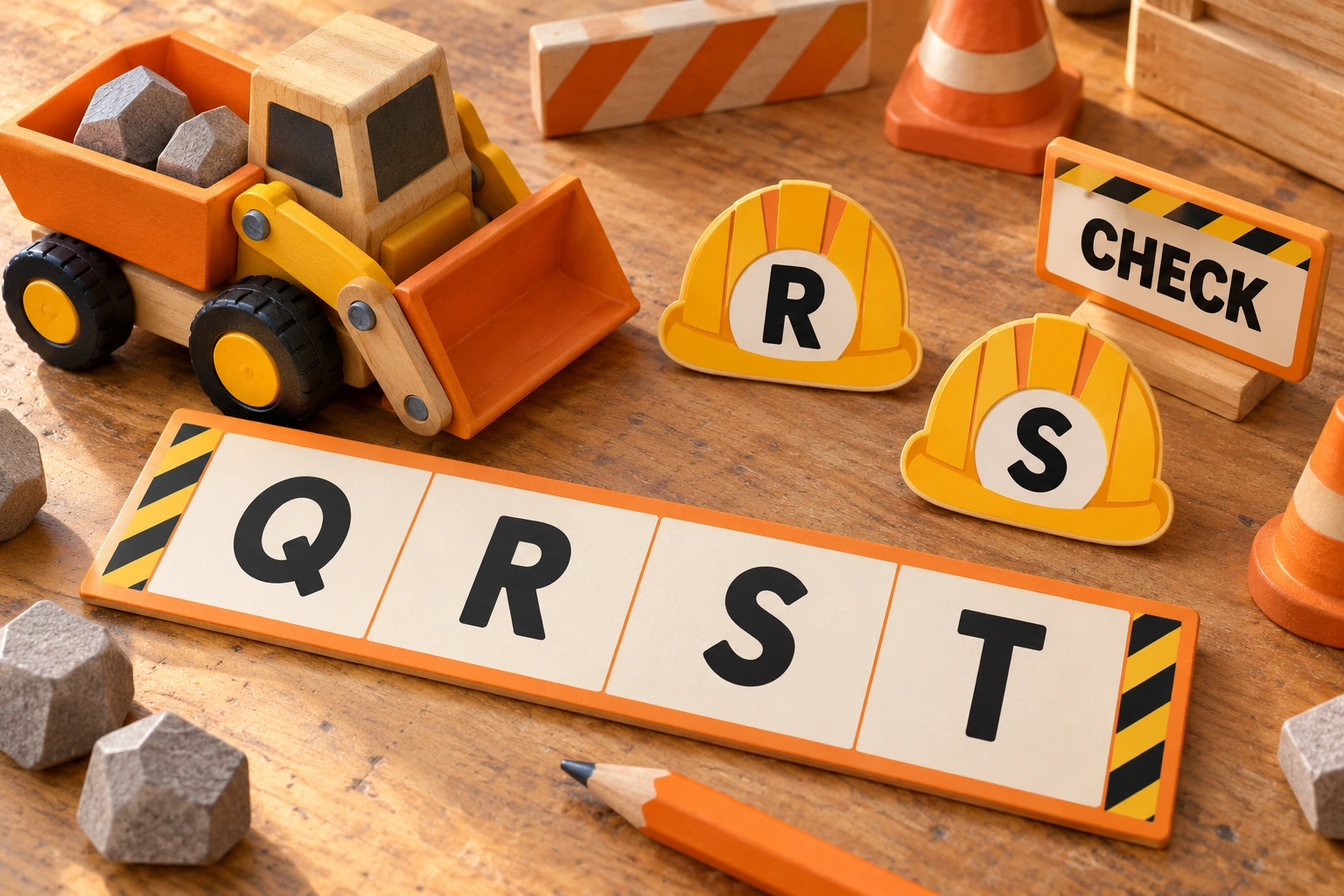
Place Q, R, S and T cards beside a toy truck. Move the truck one stop per spoken name, then remove R and S for the learner to restore. Say what confirms the placement before returning to the printed pair. The truck is a pointing prop, so keep it on a clear tabletop without racing it toward the sheet.
-
2. Builder Letter Check at the capital model board
Choose one capital the learner can already identify and demonstrate it large on scrap paper. Ask the child to name the recognizable features, then attempt a comfortable version nearby. Transfer that practice to one worksheet opening if wanted. This game is for shape rehearsal; keep an alphabet reference present whenever the sequence itself is uncertain.
-
3. Builder Letter Check with a start-and-finish crew
Assign A to one toy worker and Z to another. Put a few beginning and ending capitals between their marked stations. Ask the child to complete a short run at each end. Compare those endpoints with the worksheet's missing A and Z. The crew gives the alphabet boundaries a role without demanding all twenty-six names in one turn.
-
4. Builder Letter Check signs a repair note
Prepare a small card reading CHECKED. The learner chooses one repaired run and demonstrates how its letters now connect. Place the note beside that run rather than awarding it for the prettiest writing. An adult can act as the visitor who needs the explanation, giving the child a chance to lead a short inspection.
Finish the Builder Letter Check route thoughtfully

U, X and Y are printed in the last six-position row. V and W fill the pair after U, while Z finishes the whole alphabet. Builder Letter Check ends with a missing letter rather than a printed final model. Ask what follows Y, and let the child use a strip if recalling the name is difficult.
Some children expect another seventh hat because of the upper rows. Count the six actual positions on Builder Letter Check and identify the final Z place. Decorative equipment around the route is not another response area. If lowercase z appears, acknowledge the letter identity, then compare its capital form using a model. Keep the requested alphabet and the writing support clearly connected.
Match Builder Letter Check to the learner today
The page is intended for preschool readiness and kindergarten practice, often around four to six years old. Readiness includes recognizing some capitals and following a short sequence with support. Builder Letter Check can also serve a younger interested child through pointing and adult recording, or an older learner who wants a focused review of a few positions.
Look for effort before adding another Builder Letter Check demand. If holding the pencil is tiring, continue Builder Letter Check with cards. If choosing letters is uncertain, keep the alphabet strip and reduce the run. If a child is upset about an erased response, use a fresh scrap to test the next idea first. A repair is something people plan; it need not be rushed.
Return to Builder Letter Check with a small purpose
On the next visit, choose one previous uncertainty: perhaps N before the row return or R–S between Q and T. A short inspection is enough. Builder Letter Check becomes a useful routine when the learner understands what is being practiced and can stop after a meaningful review. Invite the child to choose a familiar run to explain before ending.
If a written model is the next need, try the K tracing lesson for a supplied capital on this sheet, or a dedicated Z writing activity for the missing ending. The ten-path line practice sheet offers a different task when pencil control deserves attention before another Builder Letter Check session.
Adult references for Builder Letter Check
For broader information about capitals and early reading, visit the Reading Rockets alphabet knowledge resource. For ways to invite writing within family life, explore home writing ideas published by NAEYC. Use those resources to inform a practical next step after Builder Letter Check, while keeping the child's actual responses at the center of your decisions.
Save a printable Builder Letter Check edition
Two PDF editions are available through the download area. The free sample keeps the original uploaded worksheet with its existing website branding. The clean premium Builder Letter Check version removes the website name and watermark marks, with no added advertisements on the activity page. Premium access requires an eligible active membership; sign in before selecting that download.
After saving Builder Letter Check, open the one-page PDF and match the paper setting to US Letter. Examine the printer preview for complete hat outlines and the page border. A fit-to-page setting can help when a printer's margins would otherwise clip the sheet. Test one copy before making classroom sets, and keep a capital strip available for the first inspection.
Check the intended letter before judging the written result. Builder Letter Check gives a child room to explain, revise and record a capital with the right support. A single well-understood repair can tell you more about the next useful lesson than a hurried page full of adult-supplied answers.
Popular Worksheets
Printable resources families and teachers are downloading now.
 Free
 Free
 Free
 Free