
Seashells Sight Word Them: 4 Clever Collect-and-Read Turns
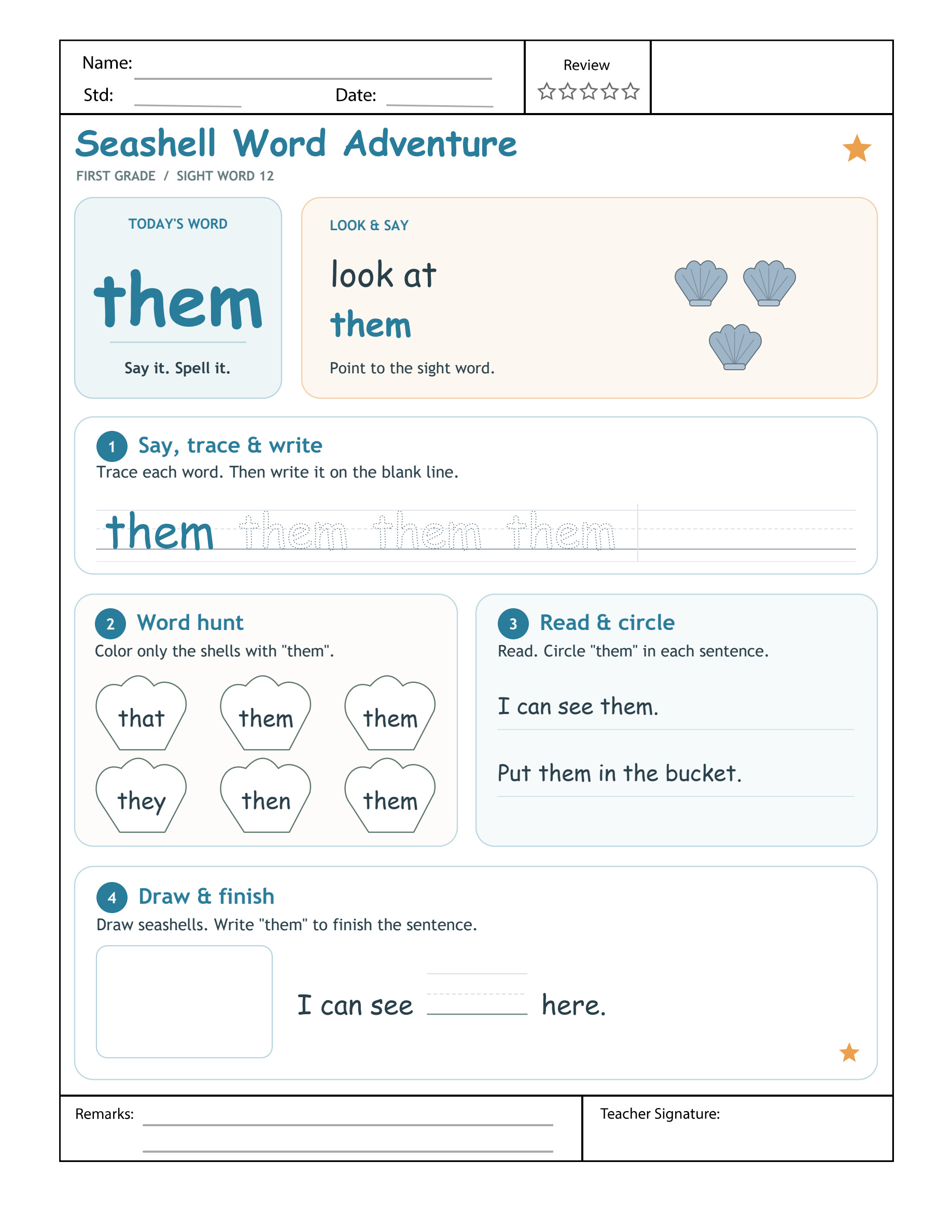
Find them on sheet 12 in the $4 Dolch First Grade set, alongside the other supplied words from of to know.
See the opening model and all four them exercises inside the original frame.
The full 12 preview shows the illustration, handwriting guides, coloring hunt, sentence panel and finish line.
Tari puts three shells near the edge of a paper bucket. A helper asks him to put them in, but a second pile of shells is sitting nearby. Before starting the task, Tari asks which shells the helper means and gives them a name both people can use. Bring out Sight Word Them after the reader can explain the situation. The Seashell Word Adventure sheet lets a child talk through a picture, check one line of spelling, and use the same word in a message of their own.
What Sight Word Them tells the reader
Them stands for things or people that a listener can identify from the conversation. Use the worksheet's phrase look at them after naming the shells. The two sentences show a speaker seeing shells and a helper being told to move them. A child can act out the verb and point to the objects together.
Read the large example from the Seashell Word Adventure sheet, look at them. Invite the learner to repeat the complete phrase, pausing at a natural break if there is one. They can show what the phrase means with the example already on the page. Put a finger on them after the child has heard how the phrase comes together.
Read the phrase a second time while the child follows just below print. If they say the pictured object immediately, ask them to return to the written words and read the small word the picture does not show by itself. Check whether they can connect them to what someone is saying or doing in the seashells scene.
Read the seashell lines all the way through
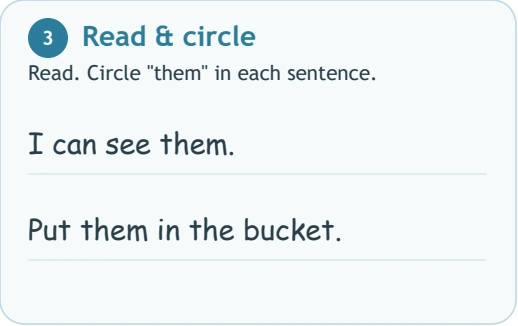
I can see them.
Put them in the bucket.
Let an adult read these two them sentences while the child follows the print. Give the child a second turn in which they read as much as they can and get help with unfamiliar words. When they circle them, ask them to reread the sentence so it still sounds like something a person could say.
On a third turn, read the lines in reverse order and ask which one the child remembers by meaning. Look again at where them shows up. If finding it by sight was easy but making sense of the sentence was hard, return briefly to the opening situation before tracing again.
A slow rehearsal of the spelling them
Start them with the voiced th heard at the start of then. Follow e with the final m, which is the only letter that differs between the two printed words. They ends differently and normally has another vowel. Let the reader check the whole word on each shell before coloring one.
Start the them tracing panel with an adult demonstration on the first pale model. Let the learner point at each letter and then write a single guided example. If the finished model is readable, use the independent space when the child has the letter order in mind. Point back to the large spelling after the new word is written.
Use the blank end of the line for one complete them. A child who leans very close to the dots can first write on a larger scrap of paper. Give them a moment to compare shapes and positions. Ask which letters are easy to identify and which need a fresh look at the larger model.

Four ways to check the seashells reading
| What you hear or see | One cue for them | What to check next |
|---|---|---|
| The reader marks that too. | Read every letter against them once. | Wait for the comparison before using color. |
| The start of them looks cramped. | Point to the spacing of the large them. | Have the child make a separate attempt on scrap paper. |
| The short word disappears from the seashells sentence. | Read the first complete phrase aloud together. | Ask the learner to point at them when it is heard. |
| The picture makes sense before them is added. | Invite a partner to read the written message. | Add them and listen to how the line changes. |
Which seashells labels should get color?
The search choices on this sheet are that, them, them, they, then, them. Read across the top row and then the bottom. Have the child pause on that and then to explain something visible that makes each a different spelling from them. Color only once the group can show the exact match.
Let a partner cover one row of the Seashell Word Adventure search, leaving the other row and the large reference in view. Check the labels with a finger before asking for any color. Reveal the covered row after the first row is settled. That keeps the child from counting pictures they already checked during a second pass.
Use the search as two separate jobs. One child reads the them candidate out loud and another compares it with the model from left to right. When the children agree, use a soft color so a later reader can still see the whole word inside the picture.
Try the seashells conversation in two settings
At home. Gather paper shells on a plate and say where the learner should put them. If a child picks up a different group of objects, give the shells a name before repeating the same instruction. Then have the child give an instruction back.
With a class. A group labels the first pile smooth shells and the second striped shells. A reporter says which pile is in view and reads Put them in the bucket. A listener holds up the complete intended group so the class can verify the reference.
A first grade reader around ages six or seven may need oral rehearsal for a them sentence but manage the spelling with little help. Keep a pencil turn brief in that situation. Have an adult point to a clause or phrase and let the child finish reading it before asking them to repeat a more difficult part.
Finish the seashells picture with a readable line
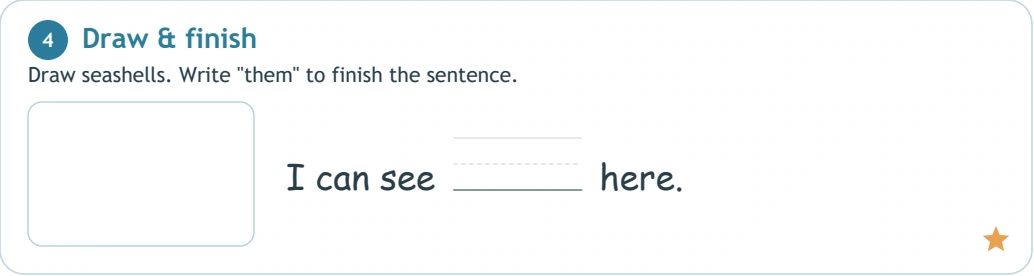
The source prompt says Draw seashells. Write "them" to finish the sentence. Start with a sketch that makes the sentence easy to discuss. Talk through the phrase before choosing a pencil for the gap. The missing word is them, and it belongs in the original sentence frame, I can see ___ here..
After writing, have the illustrator hand the page to someone who did not watch the drawing. That person reads the finished message and selects one detail in the picture that helps explain it. The learner can point out the space holding them and read the line a second time with the new word in place.
Keep a separate space for a second seashells message. Some children will be ready to dictate it, and others will be ready to write part of it. Help with longer spellings if needed so the reader has enough attention left to use them accurately.
Five signs of a stronger them reading turn
- Letter order. Ask the child to explain one difference between them and they.
- Sound and print. Listen together, then revisit the part of them covered in the spelling rehearsal.
- Controlled movement. Compare the spacing of one fresh them with the model above it.
- Attention to sentence details. Pick one statement from the seashells lesson and have a partner act it out.
- Independent reading. Let a listener who missed the first seashells turn read the new caption.
Give them a short place in tomorrow's reading too. Let the child find it once in the worksheet or in a new sentence you have written. End on a successful read and invite them to choose one seashells task for the next visit.
Show which shells a visitor should collect
Try the same references with picture cards for crayons, blocks or leaves. Ask the reader to make a request using them and a location such as beside the book. A partner identifies the objects and checks where to put them. If more than one group fits, add an earlier sentence to set the reference before trying once more.
Give a learner a drawing of a mixed beach with groups of shells and stones. A partner reads an instruction with them after naming one group. Ask another listener to follow it without watching where the first person pointed. If different pieces move, reread the naming sentence and discuss where the reader could add a clearer reference.
Try a collection instruction with two possible groups of shells. Name the group on the left first, then ask the child to put them on a pretend display. Before the partner moves anything, have the reader restate which shells are meant. The reading practice ends with a new situation in which the pieces have already been moved and a learner points at the same group while reading I can see them aloud. Have the child say the group name again for someone entering the room.
More places to read after the seashells lesson
When the them lesson is finished, choose a brief next turn with a lesson with the ap word family, a printable lesson for leg, or practice with the five short vowels. Ask what changed when the new task moved to a different word or sound.
Adults planning the next seashells session can use UF Literacy Institute’s high-frequency word materials or Reading Rockets’ high-frequency word teaching guide.
Print and revisit worksheet 12
The original them PDF is the free download. An eligible membership also provides the clean Seashell Word Adventure PDF. Print on US Letter in portrait. Check the line guides and word labels on a single sheet before making a classroom stack.
The $4 set places them on page 12 of the twenty-sheet PDF. Use the collection when you want a single download for the supplied words from of through know.
Related Topics
Popular Worksheets
Printable resources families and teachers are downloading now.
 Free
 Free
 Free
 Free