
In Word Places: 4 Powerful Bag-and-Book Reading Games
Pack more than the bag-location word. For $5, obtain the clean collection containing ‘in’ and nineteen additional supplied targets. One twenty-page file keeps the separate word settings together.
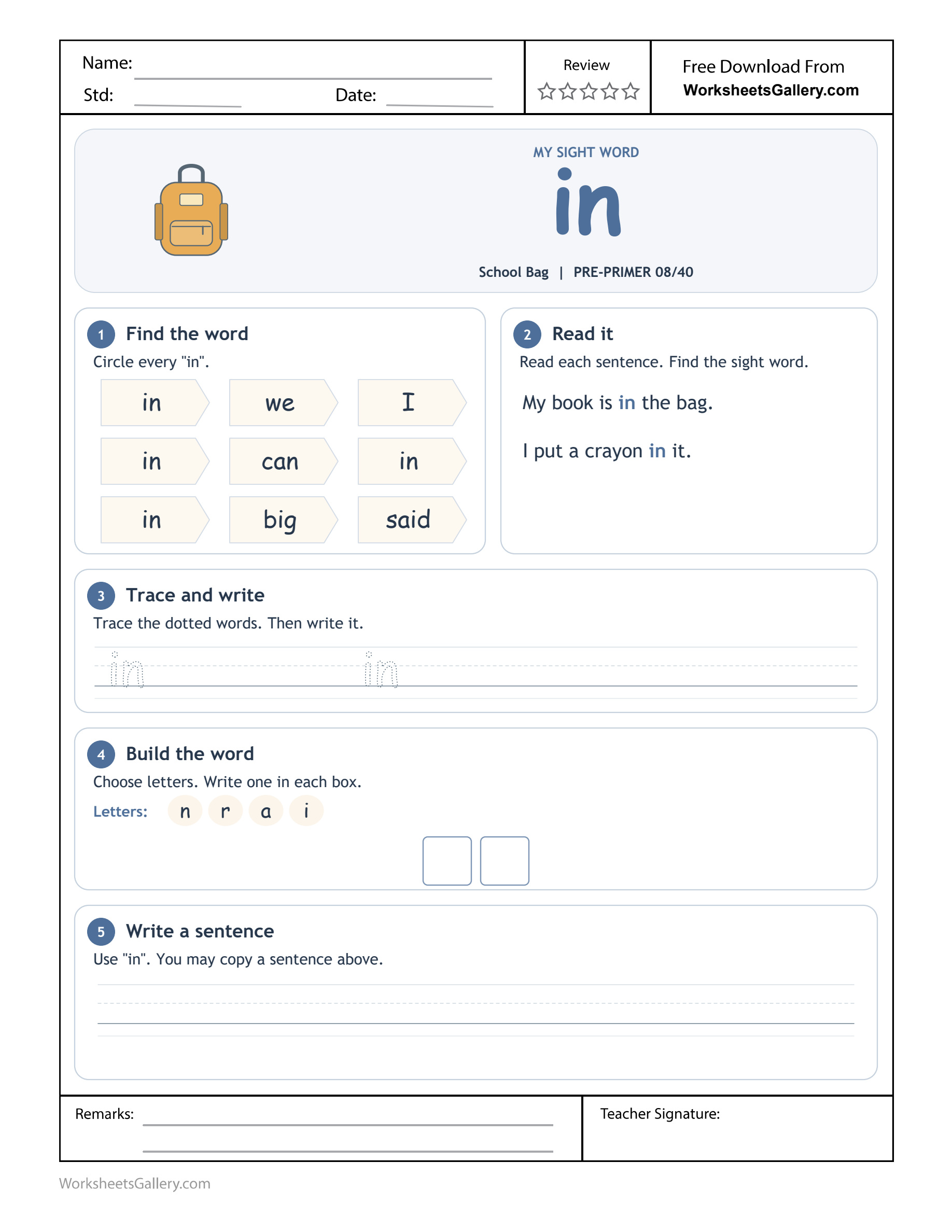
A book goes into a bag, and a short message can tell someone where to find it. In Word Places connects that familiar action with the printed sequence i-n on the School Bag worksheet. The learner can explore the location orally, compare the word with a model and try the source's five activities with adult assistance. A real bag is optional; the picture supplies a workable conversation setting. What matters is moving from a clear meaning to a careful print check, so the child reads the word rather than simply naming what the illustration suggests.
In Word Places starts with a location someone can show
Place a book inside an open bag and say where it is. Remove it and discuss how the situation changed. The learner can demonstrate the relationship without knowing a technical term for location language. An adult can supply that vocabulary later if it suits the child's instruction.
In Word Places then brings attention to i-n as a complete written word. Connect its letters with the sounds already taught and blend with support. If either correspondence is unfamiliar, provide a direct model rather than asking the learner to infer the spelling from the bag.
For In Word Places, demonstrating an inside relationship and recognising its printed word are related, separate tasks. Keep that distinction visible when observing progress. A child might understand a packing direction immediately while still needing help comparing the final n with another ending.
In Word Places offers a practical home routine before a long lesson
Kabir and his mother choose a book that fits easily in a bag. He places it inside, describes its position and watches her write a short message. She reads the message back, points out the target and compares it with the source model before inviting one search choice.
Their In Word Places visit can end after that comparison. On another day, they return to the saved message and the letter bank. A short sequence based on an actual purpose avoids treating every available box as work that must be finished at once.
In Word Places can also use a drawing when objects are inconvenient. Kabir points to the book in the source illustration while his mother models the phrase. The physical arrangement is a way to explain meaning, not a requirement for special equipment or independent sentence reading.
In Word Places makes its spelling model easy to revisit

The large source word sits beside the School Bag theme. Follow i and then n while saying the complete target. Ask the learner to identify each written character after an appropriate model, keeping the distinction between letter naming and reading the blended word clear.
In Word Places does not require long periods of visual memorisation. A direct sound-spelling explanation and an accurate short reread give the child something inspectable to use. Return to the model whenever a candidate word feels uncertain rather than hiding it to increase difficulty.
Seven In Word Places observations make progress more specific
- Spatial language: describe or demonstrate where an object is in relation to its container.
- Sound blending: use taught correspondences to read the short i-n spelling.
- Ordered attention: follow the first letter through to the final n.
- Word boundaries: choose the whole target rather than a familiar letter inside a longer entry.
- Planning: select two appropriate bank letters before writing them in sequence.
- Hand movement: trace or attempt the word with suitable paper and tool support.
- Communication: give someone a readable clue about an object's location.
In Word Places allows different strengths to appear. A child may describe the location through a gesture while the adult reads the print. Another may recognise the spelling but need a larger writing area. Notice the current support instead of interpreting every response through one all-purpose score.
In Word Places searches for a complete i-n entry
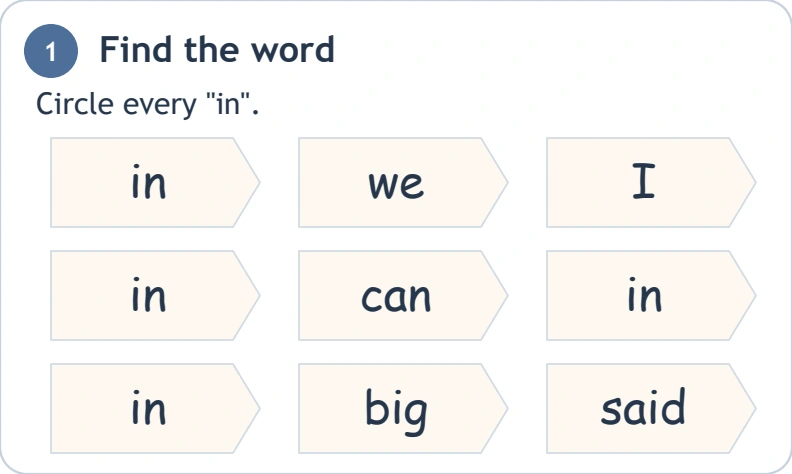
The In Word Places source supplies nine search cells with four in matches. The other choices are we, I, can, big and said. An adult can keep the count for review while the learner compares each whole candidate with the model and decides whether it belongs.
In Word Places can begin with a pointed response before adding circles. If a child selects big because it includes a familiar vowel letter, compare its complete spelling with i-n. State the difference clearly and model the target; asking for a faster second guess offers less useful information.
Read the In Word Places messages with enough adult support
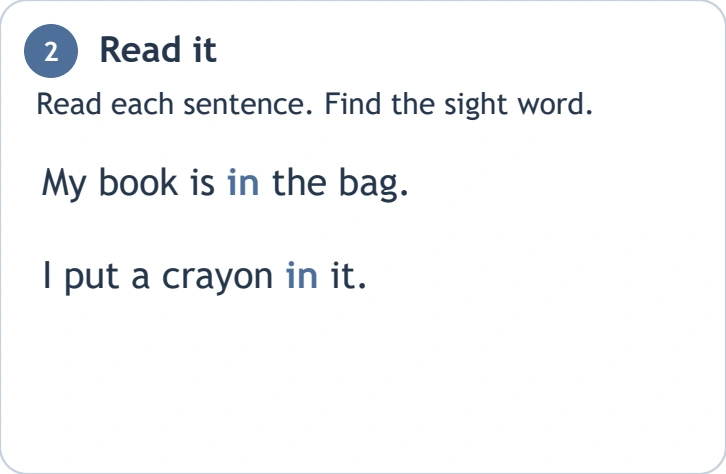
“My book is in the bag.” provides the first reading context. The next line places a crayon inside it. Read these actual source messages together, helping with unfamiliar words and locating the target after the whole meaning has been established.
In Word Places also creates a small opportunity to discuss what it refers to in the second line. The bag remains the container in the shared situation. Keep the primary focus on the location word, supplying the pronoun explanation only to make the sentence understandable.
Four In Word Places extensions turn print into a useful clue
Use a separate card for each chosen invitation. The adult can write every unfamiliar part and invite the learner to locate or build i-n. These additions are optional conversations beside the worksheet, rather than extra exercises claimed to be included in its PDF.
1. In Word Places writes a packing reminder
Choose one ordinary object to put inside an appropriate bag. Dictate a reminder that describes its intended location, and let the adult write it clearly. In Word Places gives the child a reason to check the target before a willing helper follows the message.
The In Word Places helper can ask a clarification question if the bag is unclear. Resolve that through naming or pointing, then reread the target. The exchange keeps written evidence and spatial understanding connected without treating either one as a substitute for the other.
2. In Word Places opens a container-label desk
Use two open containers with clearly different items inside. An adult writes a short location label for each. In Word Places invites the learner to find the same target in both labels while listening to the longer object and container names read aloud.
For In Word Places, compare only a manageable pair at first. The child can point to the correct container and then inspect i-n on the label. There is no need to hide items or turn the activity into a memory challenge.
3. In Word Places repairs a misplaced-object message
An adult reads a supported inside-location instruction but deliberately leaves the object beside the bag. Explain the mismatch and invite a correction. In Word Places lets the learner make the written message true through a clear action, then check the short target again.
An In Word Places repair can be directed verbally if moving the object is difficult. Keep the mistake cooperative and easy to understand. The adult is demonstrating how a message can be checked, rather than testing whether the learner will notice an unannounced trick.
4. In Word Places prepares a find-it note
The child chooses a visible item and dictates where it can be found inside a familiar container. An adult records and reads the note for a willing partner. In Word Places gives the target a genuine job: helping another person locate the intended thing.
Save the In Word Places note with the worksheet after the item is found. A later reread can be a complete practice visit. Change the object only when that makes the exchange interesting, rather than increasing complexity simply because the previous attempt went well.
In Word Places traces a short form after hearing the word

Two dotted models and writing guides provide the In Word Places tracing opportunity. Demonstrate the printed form at a comfortable pace, then invite an attempt that fits the learner's current hand control. Reading the word first helps keep the movement connected with a meaningful written target.
In Word Places can use a larger adult-written model beside the sheet if the narrow guides feel demanding. Paper stability, tool comfort and a shorter attempt may be more useful than additional repetitions. Stop the pencil task when it begins to interfere with the reading conversation.
In Word Places chooses and reorders its bank letters
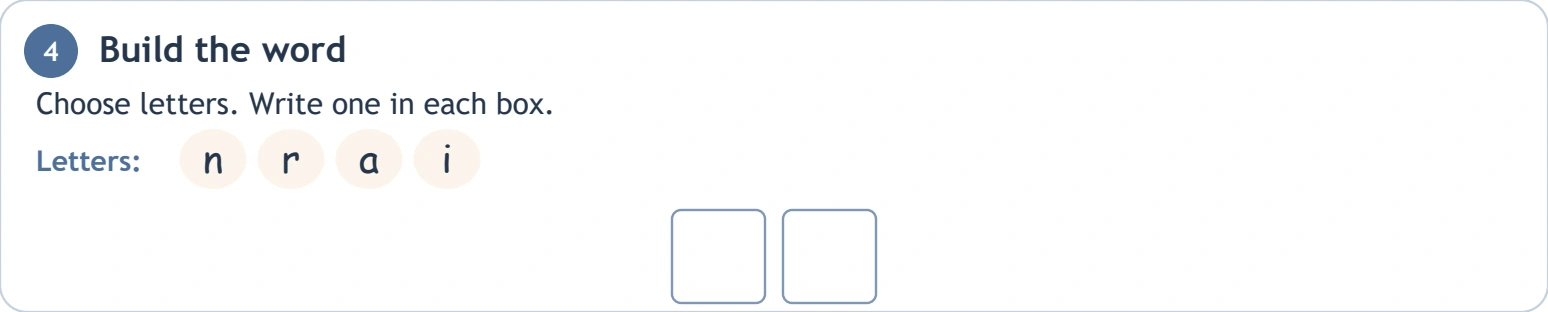
The In Word Places choices are n, r, a and i. The two answer boxes need i followed by n. Ask the learner to select the required characters before putting them in sequence, making clear that bank order is not an instruction to copy the first two entries.
In Word Places finishes with a sentence using the target, and the source allows copying a reading line. Dictation, oral rehearsal or a supported copy can separate composition from handwriting. The adult need not require an entirely new independent sentence to consider the task worthwhile.
In Word Places fits a classroom message-and-check station
A teacher sets an open bag and book where everyone can see them, models the target and reads one source line. Individual learners then choose a search entry or build the spelling on their own sheets, with help matched to their current reading instruction.
During In Word Places, the teacher can note whether the learner needed a location demonstration, a final-letter comparison or a movement adjustment. A partner may follow an adult-supported note afterward. Keep those jobs clear so a confident partner does not supply every response for the learner.
A filled In Word Places display adds another way to explain

The supporting scene shows a book partly inside a yellow bag beside completed word and phrase cards. It is an invented demonstration setting. Its labels are filled, while the source worksheet's writing spaces remain intentionally open for the child's responses.
In Word Places may be inviting because packing and finding familiar things have an immediate purpose. Let the child choose a suitable object and celebrate a precise observation, such as “Your note told me where the book was.” Interest can guide another short visit without making full-page repetition compulsory.
In Word Places changes support when a common mistake appears
| A sticking point | What to clarify |
|---|---|
| The bag picture supplies every answer. | Return to both printed letters. |
| The bank is copied as n-r. | Select first, then order i-n. |
| Sentence spelling exceeds current knowledge. | Read those words for the learner. |
In Word Places can suit early learners around ages four to six with adult participation. Match the challenge to current language, decoding and pencil experience instead of age alone. Offer a willing pause when effort becomes uncomfortable, and return through one useful message when interest comes back.
Obtain the In Word Places file that matches your plan
Use the original-source option for the retained sample. The separate clean individual PDF is delivered through the protected member route after sign-in with an eligible active plan. It contains no worksheet watermark, promotional domain or website-name marking, and there are no ads inside the downloaded activity. Confirm the US Letter border and margins in print preview before producing a copy.
In Word Places is also included in the paid twenty-sheet collection linked by this page's package card. Its $5 purchase supplies one merged clean PDF. This page's membership attachment supplies the individual sheet, so the selected download determines which file you receive.
Compare the final letter with the separate ball pronoun page. A destination relationship appears on the bus route activity, and the short-vowel printable offers a different sound-focused visit. Adult resources include the UFLI materials on regular and irregular frequent words and Reading Rockets' instructional account of word learning, used alongside the learner's established reading programme.
Popular Worksheets
Printable resources families and teachers are downloading now.
 Free
 Free
 Free
 Free