
Meet Letter E: 5 Powerful Discoveries for Happy Kids
🐘 A page for noticing, naming and asking why
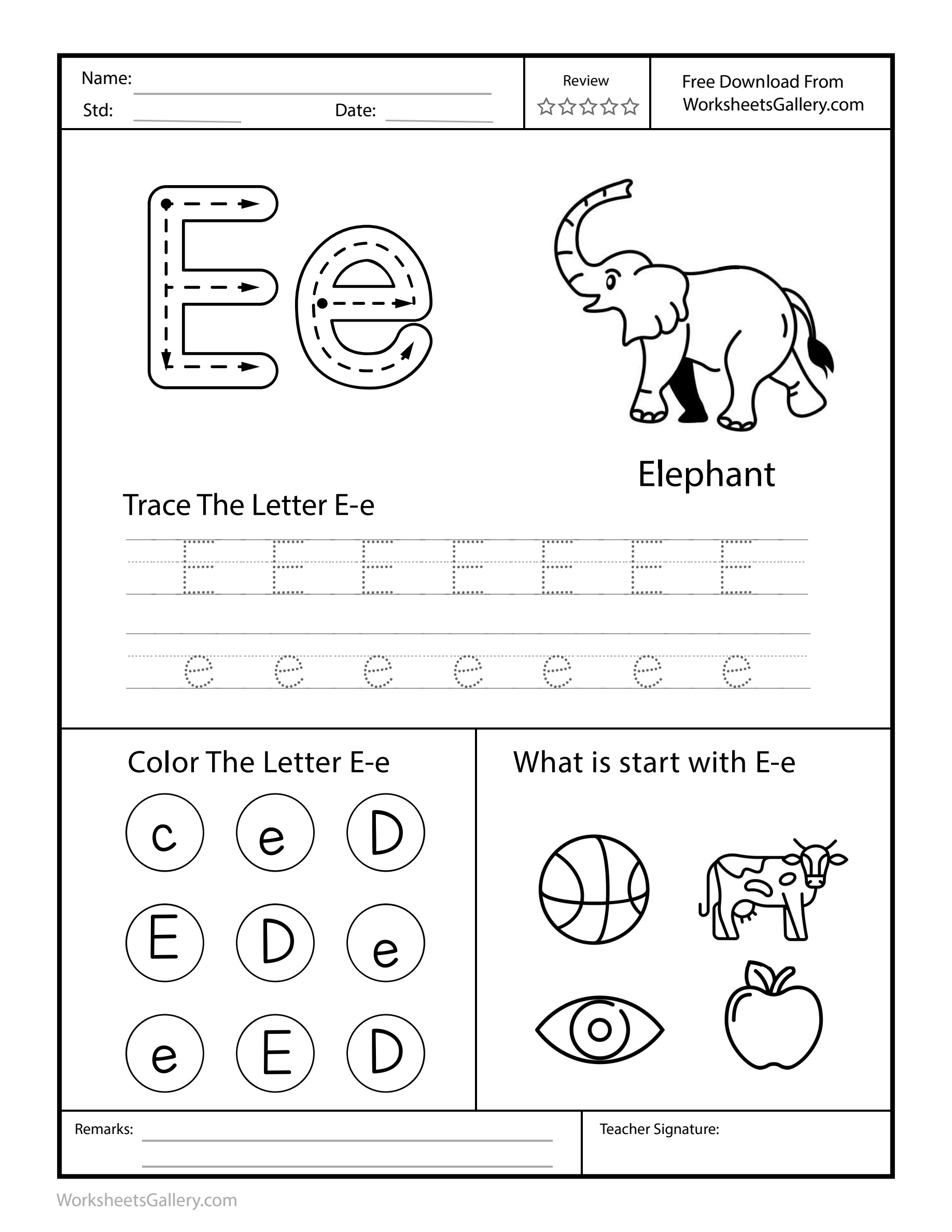
Elephant is a big word beside two very different little shapes. Capital E uses straight strokes; lowercase e curls around a small space. This Letter E page invites a child to investigate both, with dotted writing models and five matching letters to find. It also contains a picture prompt that deserves a thoughtful adult explanation: eye starts with E when written, although its spoken beginning differs from elephant. Bring a pencil, a curious voice, and permission to ask questions. The most useful response may be a careful observation rather than another completed row.
Letter E and the picture prompt's spelling distinction
The Letter E sheet introduces an elephant, then offers ball, cow, eye, and apple in its lower picture panel. Eye is the intended written-letter choice because the word is spelled e-y-e. It does not begin with the short e sound heard at the start of elephant. Treating those two spoken beginnings as identical would give the child an inaccurate example.
For a Letter E spelling conversation, write eye on separate paper, name the picture, and point to its first written letter. For a beginning-sound conversation, return to elephant or offer a spoken example such as egg. A learner who is not ready to inspect a written word can leave the eye panel for another day.
| Word | Written beginning | What the adult explains |
|---|---|---|
| elephant | e | Starts with short e, as in egg. |
| eye | e | Sounds like the letter name I; the spelling still begins with e. |
Five Letter E finds, with no need to guess the total
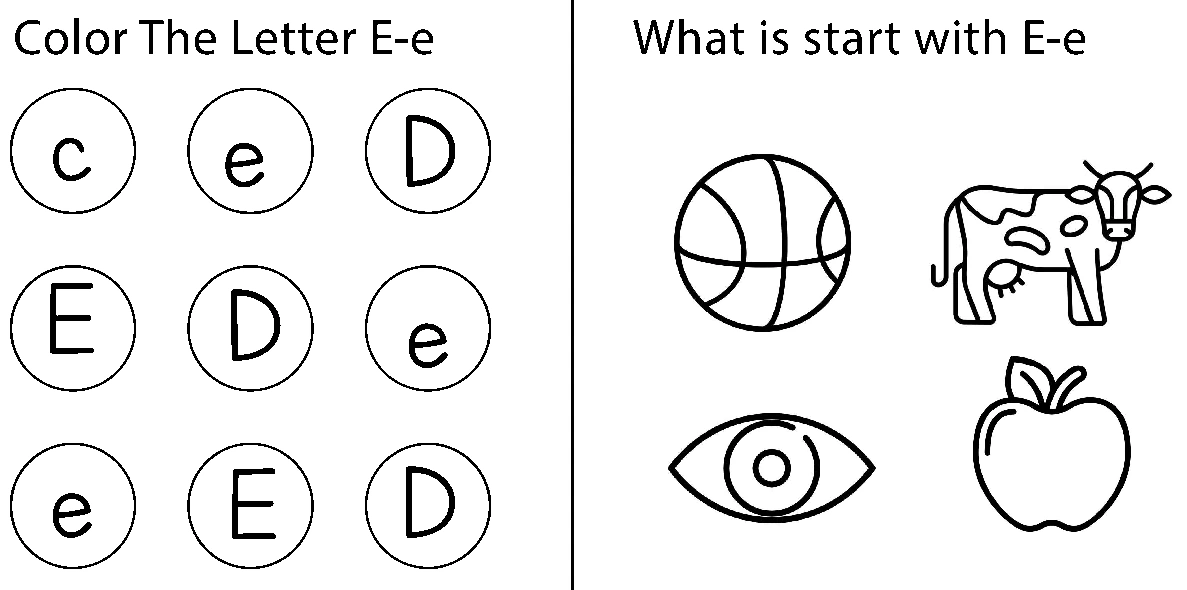
There are two capital Es and three lowercase es in the Letter E circles. The remaining entries are one c and three capital Ds. These counts are useful for adult checking, but the child does not need a target number before beginning. Ask them to identify each form through comparison with the models, then color the circles that belong.
- In the first row, only the middle circle contains Letter E.
- In the second row, Letter E appears in the left and right circles.
- In the third row, Letter E appears in the left and middle circles.
Lowercase Letter E can look less familiar than its capital partner. Its small cross-stroke matters when comparing it with the c distractor. Encourage the learner to look closely at one Letter E at a time. If every circle receives color, demonstrate a single match and a single nonmatch before handing the choice back.
Letter E has two different movement patterns
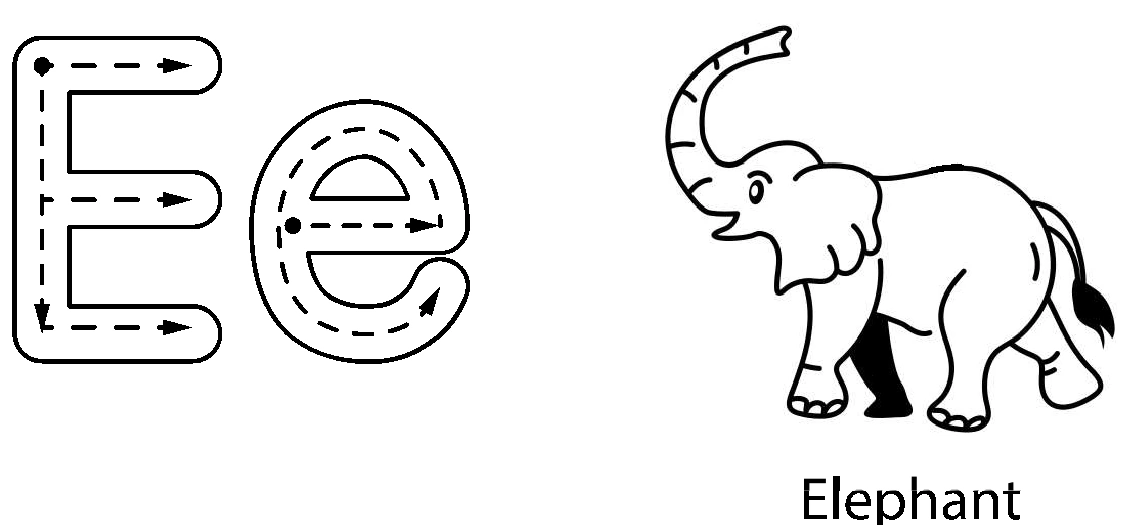
The upper Letter E models give different routes for the two cases. Capital Letter E combines a vertical stroke with three horizontal arms. Lowercase Letter E uses a short cross-stroke and a curved route around its interior space. Follow the printed arrows and your setting's handwriting approach rather than asking the child to shrink the capital into a lowercase letter.
Below this introduction are seven dotted capitals and seven dotted lowercase examples on separate ruled strips. Letter E practice is guided throughout those rows; the sheet does not provide an independent blank writing strip. Rehearse on a large model with a fingertip, then choose a small number of dotted letters to trace.
Watch the movement as well as its result. A child may produce a recognizable Letter E by joining dots in an unplanned order. Sit beside them and model the route from the same viewpoint. Let the other hand anchor the paper, and keep the writing tool comfortable enough that steering does not turn into pressing hard.
Five discoveries worth exploring with Letter E
Letter E offers a useful mixture of actions: inspect, move, compare, name, and explain. The value comes from attending to those actions, rather than expecting a single worksheet to establish a finished skill.
- Different shapes can share a letter name. Accepting both E and e encourages recognition across cases. The learner can compare two visibly different forms while keeping Letter E as the shared identity.
- Small features can change a decision. Finding the interior stroke in lowercase e directs attention to detail. In Letter E practice, the neighboring c provides a practical reason to inspect more than the overall curve.
- Eyes and hands can work toward the same route. Tracing the large and small Letter E models gives the pencil a visible path. The adult can observe direction changes, pauses, and paper support.
- A search can require a stable rule. Keeping Letter E in mind across three rows gives attention and working memory a modest job. Leaving D uncolored is part of the decision, even if that shape looks familiar.
- A question about a word can be productive. Discussing elephant and eye separates written beginnings from spoken sounds. The adult can welcome a child's observation without pretending that every E word follows the same pattern.
The cognitive demands of Letter E work involve feature comparison and switching between tasks. Motor demands include controlled straight strokes and a smaller curved movement. Language grows through naming elephant, describing its features, and discussing a written word. Keep those demands distinct enough that a correct spoken answer is not discounted because a pencil line wandered.
Choose a first visit that fits the learner
Supported Letter E exploration commonly suits preschool and kindergarten learners around three to six years. Readiness varies within that range. Pointing, finger tracing, and animal naming can be complete responses for a younger learner. A child comfortable with a pencil can compare cases and attempt several guided examples.
✎ When the hands are ready
- Say Letter E and point to each large model.
- Finger-trace one route, then trace two or three matching dotted examples.
- Find one capital and one lowercase form in the search before deciding whether to continue.
💬 When more talk is welcome
- Name the elephant and describe one feature.
- Ask the child to point to Letter E while you handle the pencil demonstration.
- Discuss the eye picture through its written word only if that distinction is useful today.
At either starting point, prepare a steady surface, a pencil, and one coloring tool. The name field can be filled by an adult. Give one instruction, allow a response, and decide what comes next from that response. Unused Letter E examples can stay available for a future session.
A question at home becomes the lesson
Owen studies the lower pictures and says, “Eye sounds like I.” His father agrees, writes the word eye on scrap paper, and points to its first letter. They compare that written e with the lowercase Letter E model above. Owen's observation has identified a real spelling-and-sound difference, not a failure to understand the worksheet.
For their listening turn, they use elephant instead. Owen names the animal, then follows one capital Letter E with his finger. His father keeps the written eye card nearby but does not ask Owen to memorize it. This Letter E encounter has supported a short discussion, an accurate sound example, and a physical rehearsal without turning an unexpected question into an argument.
If your child simply names the pictures, follow that interest. Adults can supply the spelling information as needed. A child is allowed to notice that a prompt is more complicated than it first appears. Specific acknowledgement keeps curiosity involved: “You heard something different in those two words.”
In class, compare materials before making marks
A teacher places four wide paper strips beside the Letter E model. The group arranges one upright strip and three arms to resemble the capital. Then the teacher points to lowercase e and asks whether the same straight-strip arrangement would describe it well. Children notice the curve and the smaller internal space before moving to their own sheets.
The Letter E writing task remains individual. One child traces a capital, another rehearses the lowercase route with a finger, and the teacher observes the starting movement. For the recognition panel, children point to their chosen circle before coloring. The shared construction has given them a feature to discuss while leaving each response visible to the adult.
Use the eye panel as an adult-guided spelling demonstration, not a short-vowel listening test. If the class is working only on initial sounds, name elephant again and reserve that panel. A later session with short-vowel practice can provide a different context for careful listening.
Four fresh ways to revisit Letter E
An elephant portrait conversation
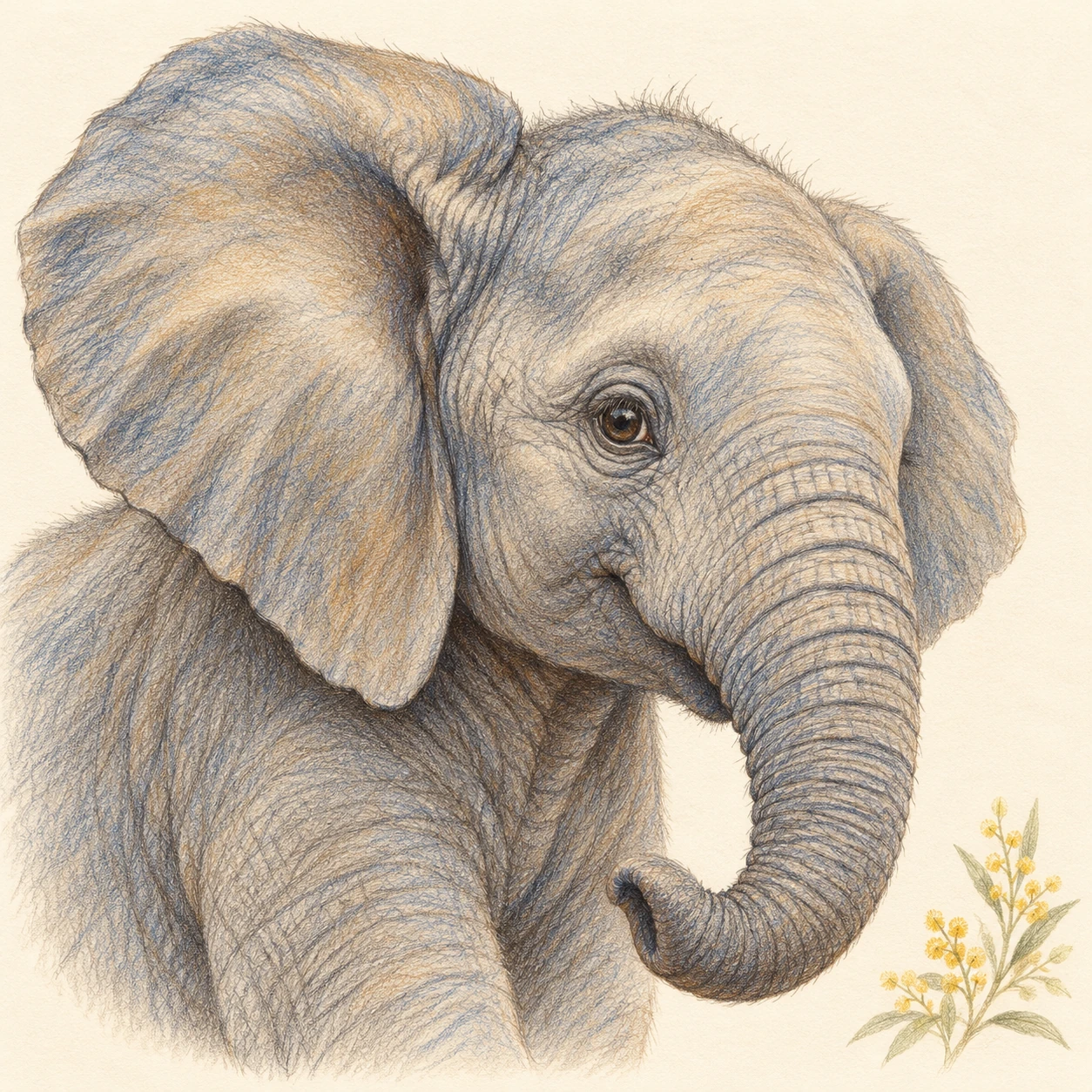
Use the illustration to name eye, ear, and trunk. Describe something visible without asking for a phonics answer. If the child wants a written label, supply it and compare its first letter with Letter E. Different body-part names make a useful vocabulary exchange.
A tiny museum of straight strokes
Make a small capital E from paper strips and place it beside the worksheet. Ask a visitor to count its horizontal arms. Then show the lowercase partner and explain what changed. Keep the display brief enough that the child can give the tour independently.
A lowercase lookout
Find one clear e in large book print. Compare its inner stroke with the worksheet's lowercase Letter E. Cover nearby print with scrap paper if necessary. Discuss any typeface difference instead of insisting that the two examples must be identical.
An unfinished pattern invitation
Draw E, e, E on separate cards and ask which case could come next in an alternating pattern. The goal is choosing a case, not writing from memory. Let the learner invent another short arrangement once the first pattern is understood.
Notice effort, fix one thing, and return another day
A missing Letter E arm calls for comparison with one large Letter E, not a page of repeated corrections. A lowercase e without its middle stroke needs a slow route demonstration. If D is colored as a match, point to the target model and discuss which parts differ. Choose the adjustment that answers the current difficulty.
Make Letter E practice predictable by revisiting a few spaces during a familiar drawing or book time. Notice a useful action, such as looking back at a model or explaining a choice. Repeatedly completing whole sheets is not necessary to observe progress. Stop when the learner has made an understandable attempt and can leave the activity with a sense of participation.
When writing becomes tiring, switch to pointing or spoken description. For simpler preparation, explore straight and curved pencil paths. For another contrasting pair, visit D and d practice on a different day.
Save a copy and check the whole print area
The Letter E PDF contains one portrait US Letter page. Its featured JPG shows the entire original sheet. Choose the free original if a branded sample meets your needs; the clean premium copy is available through an active membership. That member printable has no website watermark, promotional branding, or ads inside the PDF.
- Select the original download, or enter your membership account and choose the premium file when your plan is active.
- Save the PDF, open its print settings, and choose US Letter paper in portrait orientation.
- Inspect all four page edges. Use actual size if the border fits; otherwise scale to the printer's usable area and check the preview once more.
- Confirm that the lowest circles and both lower panels are included before printing. Begin with whichever Letter E route fits today's learner.
Popular Worksheets
Printable resources families and teachers are downloading now.
 Free
Free
 Free
Free
 Free
Free
 Free
Free