
Van to Violin: 6 Brilliant Letter V Wins for Kids
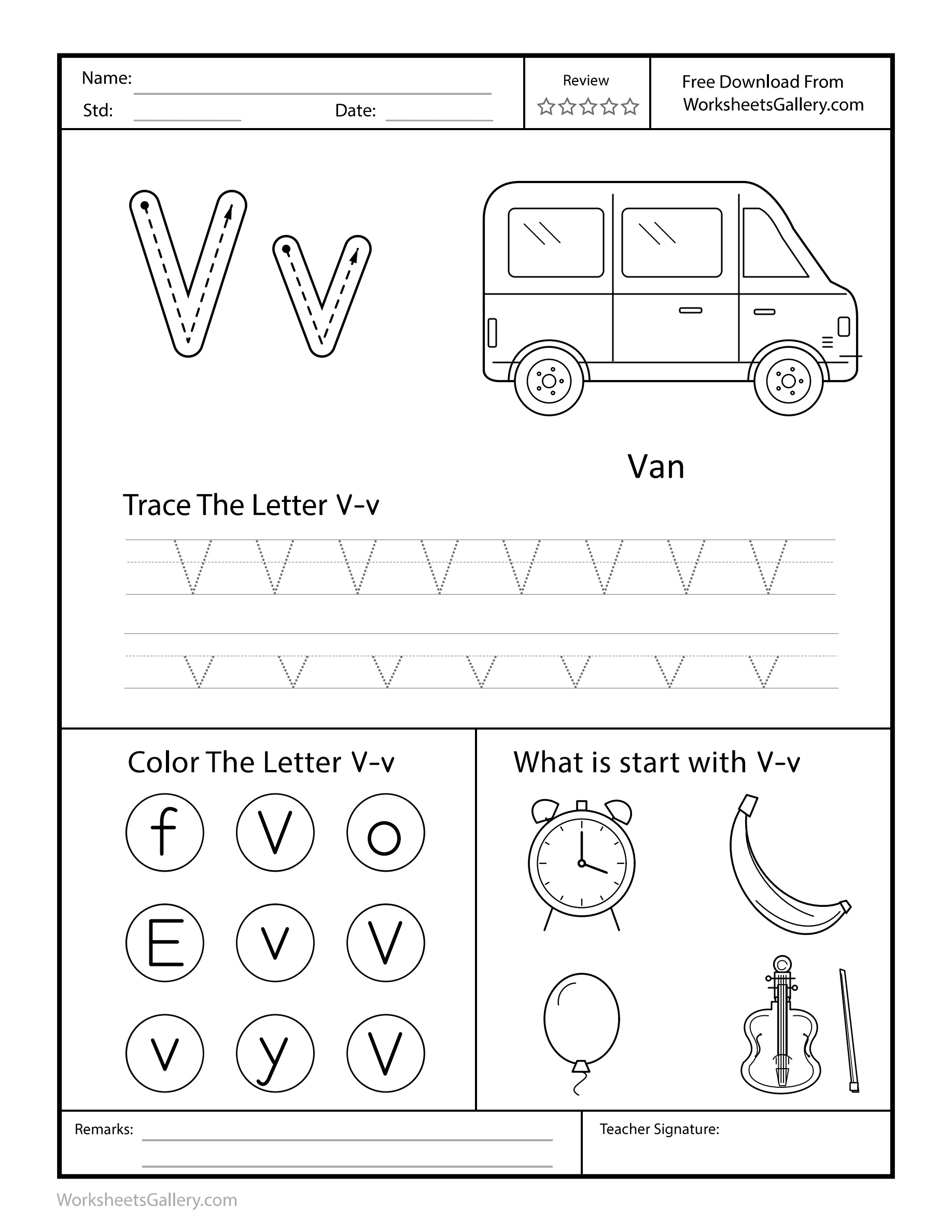
The lowest point is where the pencil trip changes direction. On this Letter V page, one slant leads down to that meeting place and another rises away from it. Van introduces the letter, while violin supplies a picture word for an imaginary music visit. Guided rows contain eight capitals alongside seven lowercase examples, and five matching circles invite a separate recognition decision. Follow the two slants with your eyes before tracing them. Letter V can give a child something precise to notice, explain and try at a comfortable size.
♬ Music-visit note: one low meeting point joins the two sides.
At the Letter V point, downward becomes upward
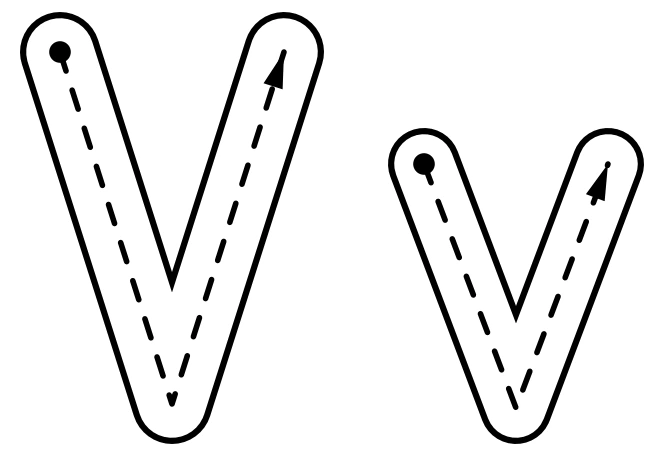
The two sides slope toward one another. They meet low down, leaving the upper space open. That arrangement creates the familiar Letter V form. A broad rounded bottom would resemble U; a gap between the diagonals would leave two disconnected strokes.
In these printed models, capital V and lowercase v share a similar construction. The ruled rows show the change in writing height: the upper examples are taller, and the lower examples are smaller. Size changes while the low meeting point remains.
Begin from the printed dot and demonstrate along the arrows using your usual handwriting approach. Let the child watch the change from descending to rising. The Letter V point is a place to coordinate direction, rather than a cue to press harder.
Seven Letter V observations make progress easier to see
Most suited to preschool and kindergarten learners, approximately ages three to six, the page can begin with pointing or talk. These seven observations offer useful evidence during Letter V practice.
- A planned Letter V diagonal. The learner follows a sloping route instead of treating every downward movement as a vertical line.
- A connected Letter V low point. Bringing the two sides together gives the hand a specific target and the eye a clear relationship to inspect.
- A purposeful direction change. Moving away from the bottom requires the hand to rise along another slant, rather than continue down.
- Letter V control at a smaller size. A lowercase example asks for a shorter movement while preserving the same recognizable arrangement.
- A reason for choosing a circle. Comparing the complete form with distractors reveals more than copying a neighbor's selection.
- A named sound connection. Van and violin link the visible initial with two words that share an opening /v/.
- Language for a plan. Explaining a pretend visit or describing where the lines meet gives the child a useful speaking role.
Letter V brings spatial thinking, hand control and language together. One hand steadies the sheet while the other changes direction; an explanation can reveal understanding before the pencil mark becomes consistent.
In class, watch Letter V rise from its lowest point
A teacher follows the first diagonal of a large V to its lowest point. Before completing the demonstration, she asks where the next part must go. Learners point toward the upper right, then watch her complete the route. The Letter V question concerns direction, not speed.
- Show the complete source model upright, with the point and both upper ends visible.
- Travel down the first slant in the demonstration, then show the rising slant.
- Invite a fingertip journey along a large Letter V before choosing a ruled guide.
- Let the learner make one pencil attempt while keeping the paper steady.
- Inspect whether the two sides meet and whether the second side rises.
If a learner rounds the bottom, compare that result with the printed point. Enlarge the example on separate paper and demonstrate again. If the child can explain the intended route but cannot yet control it, preserve that Letter V understanding while choosing an easier movement size.
Violin is the Letter V picture to name and choose
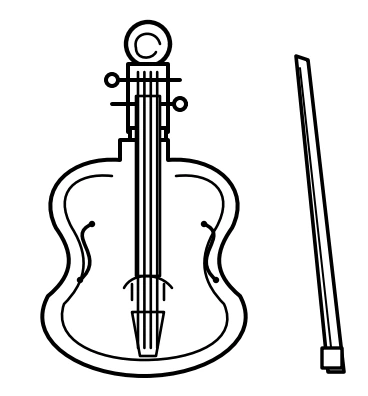
The lower-right object is a violin, with its bow drawn beside it. Name the instrument before asking about its beginning. A child who says “music” recognizes a connection, but needs the specific word violin to make the intended Letter V choice.
Say van and violin naturally, then briefly model their opening /v/. The words belong together in this activity because of that beginning. A van is a vehicle; a violin is an instrument. Their meanings supply different things to discuss while their names connect with Letter V.
The clock and balloon elsewhere in the picture box offer familiar contrasts. Let the child identify the violin by pointing, speaking or coloring after the decision. The worksheet concerns the word and its initial; it does not require knowledge of how to play the instrument.
At home, plan a Letter V music visit together
Inez and her father make a pretend route for a toy van that will collect a violin. She chooses where it stops and explains who is waiting. A small box can stand for the instrument case; the important work is deciding what the visit needs and telling someone else the plan.
When they turn to the Letter V worksheet, Inez points to the lowest part of the large model. Her father asks which direction the next side goes. She traces the route with a finger, then chooses one of the smaller guides to try.
The toy story can resume after a short Letter V attempt. Let the child contribute a destination, a reason or a tracing observation. A real instrument and a long practice session are unnecessary for the conversation.
Six visit activities extend Letter V in different directions
1. Choose a sensible stopping place
Draw two places on scrap paper and decide where the van should collect the violin. Explain who might be there and what happens next. Locate the shared initial in van and violin afterward. This Letter V task adds planning to the familiar word pair.
2. Sort two sizes of visitor cards
An adult writes clear V and v forms on several cards. Group the cases, explain their different heights and then reunite them as one letter family. Point to the shared low junction on each Letter V card before choosing a guide on the worksheet.
3. Give the instrument a spoken introduction
The learner introduces an imaginary violin player to the visitors. An adult can supply the instrument name while the child decides what to say about the person or music. Revisit Letter V in the written word violin, without making independent spelling a requirement.
4. Compare the base of two letters
Place clearly written U and V cards beside one another. Discuss the rounded base and the pointed meeting place. Rearrange the cards and explain again. The Letter V answer should follow the shape even when its position changes.
5. Describe the visit in order
Tell what happens before the van arrives, when the violin is collected and after the visit. The child can choose one event or recall all three. Keep the sequence understandable, then return to a Letter V model if there is interest in writing.
6. Give a direction clue
Describe a route that goes down a slant and rises from one low point. Ask the child to find the matching model. Swap roles so the learner gives the explanation. This Letter V invitation works through speech and pointing before a pencil is needed.
Find five Letter V circles using the complete form
The printed rows read f, V, o / E, v, V / v, y, V. The answers comprise three capitals and two lowercase forms. Choose the central circle in row one, both the central circle and its right neighbor in the second row, followed by the two outer choices in the last row.
The lowercase y may attract attention because its upper part has a fork. In the printed y, a stroke continues below that junction; v ends at its low meeting point. Compare the whole shapes before adding color. The Letter V selection rule accepts both cases while excluding the distractors f, o, E and y.
Invite a reason for one chosen circle and one rejected circle. A learner who changes a decision after inspecting the lower part has used the model productively. Leave time for that Letter V comparison instead of treating the search as a race.
Pick the next Letter V attempt from what you observe
Across the two rows, eight capital examples accompany seven lowercase examples: fifteen routes in total. They provide options across several visits. Decide what would make the next Letter V attempt useful.
| What you notice | What to try next |
|---|---|
| A wide, rounded bottom | Compare the printed meeting point with a clear U on separate paper. |
| Two separated diagonals | Demonstrate where the rising side meets the descending side. |
| A clear explanation but an uneven trace | Offer a larger model or a pointing response before reducing the movement size. |
Pressure and a slipping page can also affect control. Adjust the setup and offer a pause when needed. Discuss one visible Letter V feature at a time, keeping the feedback small enough to act on.
Leave a reason to return to Letter V
Leave a visitor waiting in the story or set aside a fresh model. At the next sitting, let the learner decide between explaining the visit and following a route. A familiar choice can make the return feel manageable.
Notice what changed: a joined point, a second slant that rose, or an explanation of why y stayed uncolored. Children may enjoy directing the toy visit, choosing the van's destination or recognizing the instrument. Let that interest accompany Letter V practice without requiring a perfect page to continue the story.
For more room to rehearse sloping routes, try varied prewriting line paths. Compare this sheet with the separate V tracing format, or plan a later comparison through the complete A-to-Z practice selection.
Download Letter V and inspect the low points before printing more
Use the free sample for the original worksheet with its website branding. The clean premium Letter V PDF is available through an active qualifying membership. Website names, domain text and the website watermark are absent from this edition. The printable also has no added advertisements. All exercises remain present.
- Choose the sample or sign in to obtain the clean edition included with your eligible membership.
- Open the PDF and inspect the van, both writing rows, nine circles and four object drawings.
- Select portrait orientation and US Letter paper, using a scale that retains every outside border.
- Check the dotted diagonals and their lower meeting points on one printed copy before making a group set.
Set the Letter V page on a stable surface with comfortable space for the writing arm. Offer a slow look at the point, then let the learner choose a route or picture to explain.
Popular Worksheets
Printable resources families and teachers are downloading now.
 Free
 Free
 Free
 Free