
Watermelon Watch: 5 Brilliant Letter W Ways to Win
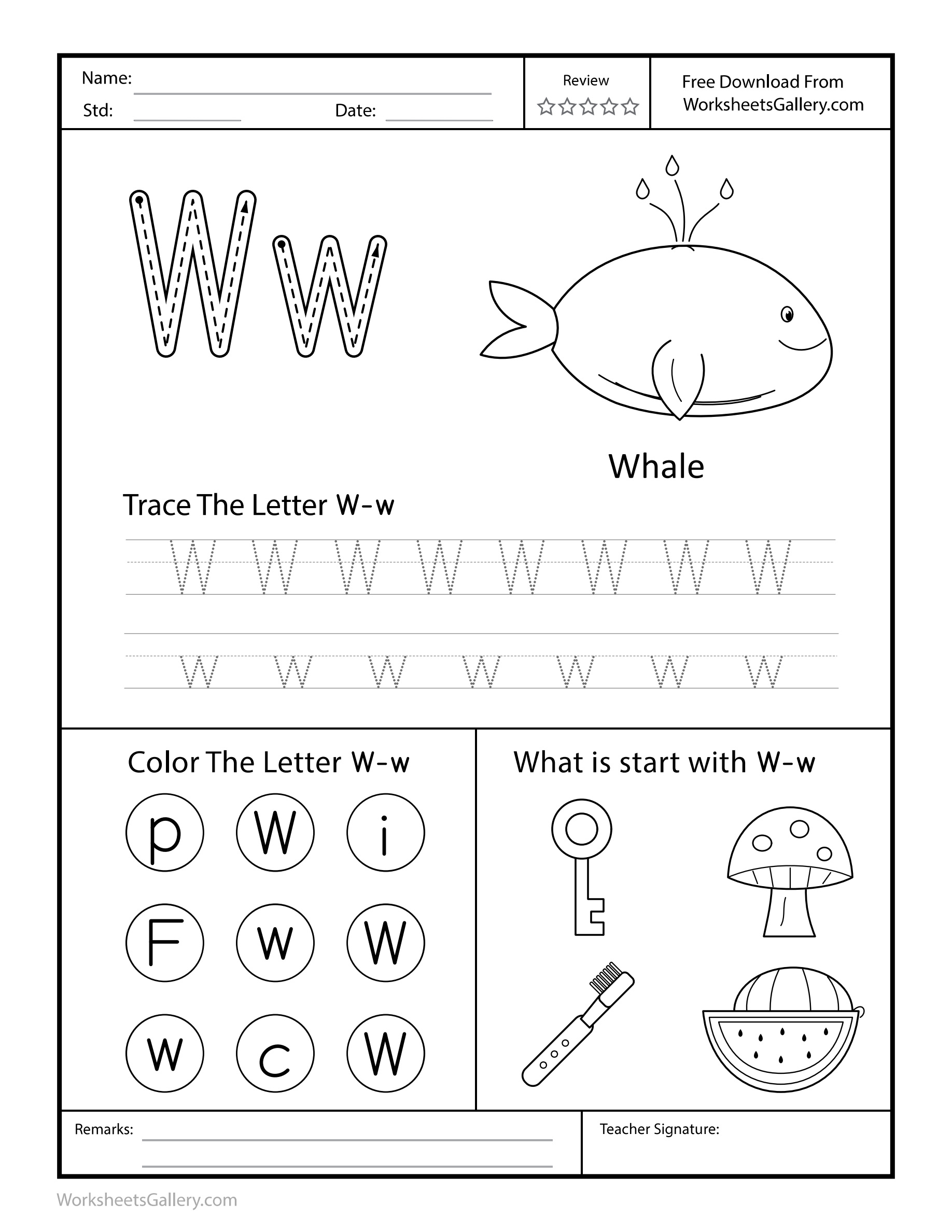
One dip is not the whole journey. Letter W carries the pencil down, up, down and up again, making two low places with a rise between them. This whale-themed sheet gives that route a tall version and a smaller version to compare. Watermelon adds a familiar picture word, while a nine-circle search asks children to select both cases. Bring Letter W into a pretend picnic plan, where a wooden whale can decorate the table and a child can explain a choice. A useful first success might be noticing the second dip before tracing it.
Follow Letter W until both dips are complete
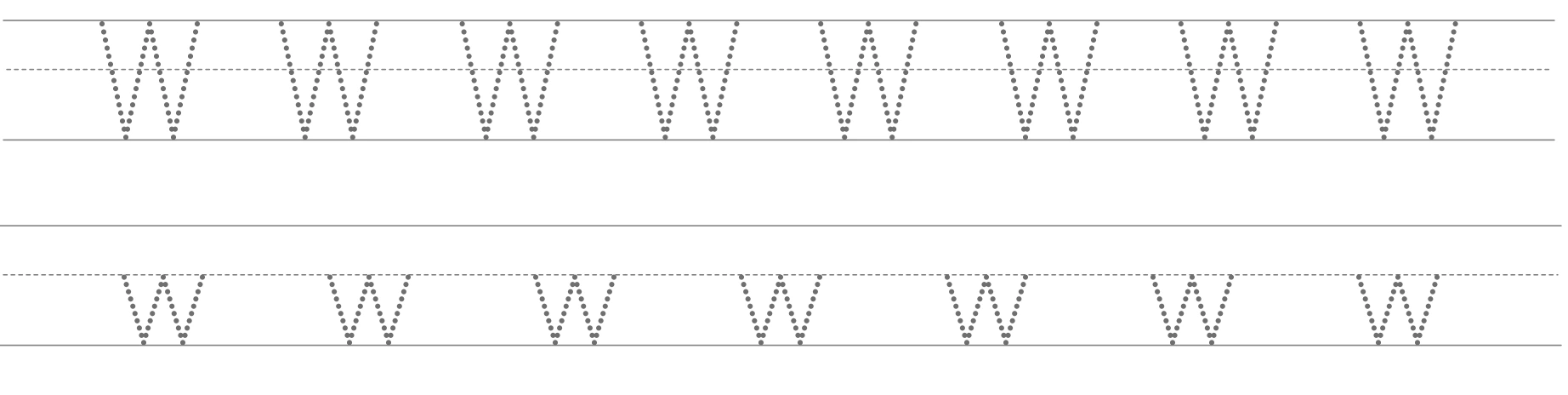
The printed Letter W forms use four slanting sections. The first two reach one low point and return upward; the next two make another dip and rise to the finish. A learner who stops after the first pair has made something resembling V. Letter W needs the second part as well.
Point to the central high place before the next descent. This is a useful moment to anticipate what comes next without pressing a pencil harder. The movement can become a down-up-down-up description, spoken slowly enough to match the demonstration. Keep the original arrows available as the route reference.
The Letter W rows offer eight capitals and seven lowercase examples. Letter W retains a similar arrangement across these cases, while the smaller models use less vertical space. Compare one tall guide with one small guide instead of assuming that reducing height means omitting a stroke.
A classroom can count the low places before drawing
A teacher shows a broad W on the board. Children indicate the first dip and then locate the second. She asks whether the central rise is an endpoint. Their pointing reveals whether they see the complete Letter W before they attempt to control it with a pencil.
Demonstrate from the worksheet's start mark, following the arrows with the handwriting method used locally. Describe each change as it happens. Let learners take a fingertip route first, then select a dotted example on their own sheets. The helping hand can anchor a page that otherwise moves under the writing hand.
When a child stops after one dip, point to what remains in the model. Give time to inspect the next slope. A clear Letter W explanation can precede an accurate trace, particularly for children who find several direction changes tiring.
For a group, ask different learners to explain different parts rather than having the quickest speaker supply every answer. One child might identify the start, another the middle peak and another the finishing rise. Each contribution refers to the same visible form, making participation possible through gesture as well as words.
Five Letter W learning gains to listen and look for
- Remembering the Letter W sequence. Four connected slopes give the learner a reason to remember what follows the first dip.
- Changing Letter W direction deliberately. The hand alternates downward and upward movement while the eye checks the intended route.
- Seeing a complete Letter W. Comparing W with a partial V-like shape encourages attention to what is still missing.
- Adjusting Letter W movement scale. A smaller lowercase guide preserves the structure while asking for shorter strokes.
- Explaining a Letter W decision. Naming watermelon or planning a picnic place connects vocabulary with a choice the child can describe.
These opportunities suit many preschool and kindergarten learners around ages three to six. Choose a starting task according to readiness: naming, pointing and tracing place different demands on the child. Letter W recognition should not be judged solely by pencil neatness.
Thinking, hand coordination and spoken language work together here. The learner compares the model, steadies the paper and explains an observation. A gain in one part of that combination is worth noticing even when another part still needs support.
Name watermelon before the Letter W picture decision
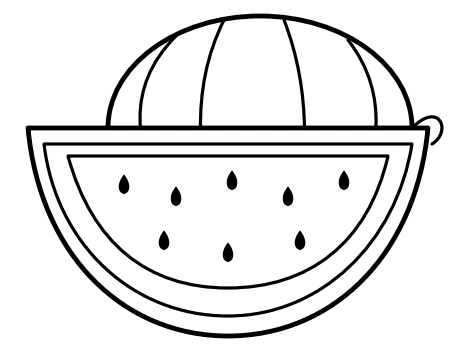
The source shows a whole watermelon behind a cut slice. Watermelon is the intended lower-right choice. The other options are key, mushroom and toothbrush. Establish those names so that unfamiliar vocabulary does not masquerade as a Letter W difficulty.
The introduction picture is whale, written with wh. Watermelon begins with w. In many English accents both open with /w/; some speakers pronounce wh differently. Use the words naturally in your own voice and keep the written W connection clear without requiring a child to imitate an unfamiliar accent.
An adult may write whale and watermelon separately and indicate their initials. The child can recognize the shared Letter W without reading either complete word. Naming the fruit, finding its picture and explaining the letter connection are useful responses before coloring begins.
If a child calls the slice “melon,” accept the meaning and supply watermelon for this task. Ask again after the name is familiar. The goal is a fair comparison between known words, rather than a surprise test of the adult's preferred label.
At home, let the picnic have a purpose
Luca and his aunt arrange two places for a pretend picnic. A wooden whale becomes the table ornament. Luca chooses where the watermelon plate should go and explains which guest will sit beside it. His aunt repeats his plan, giving him a chance to change a decision or add another detail.
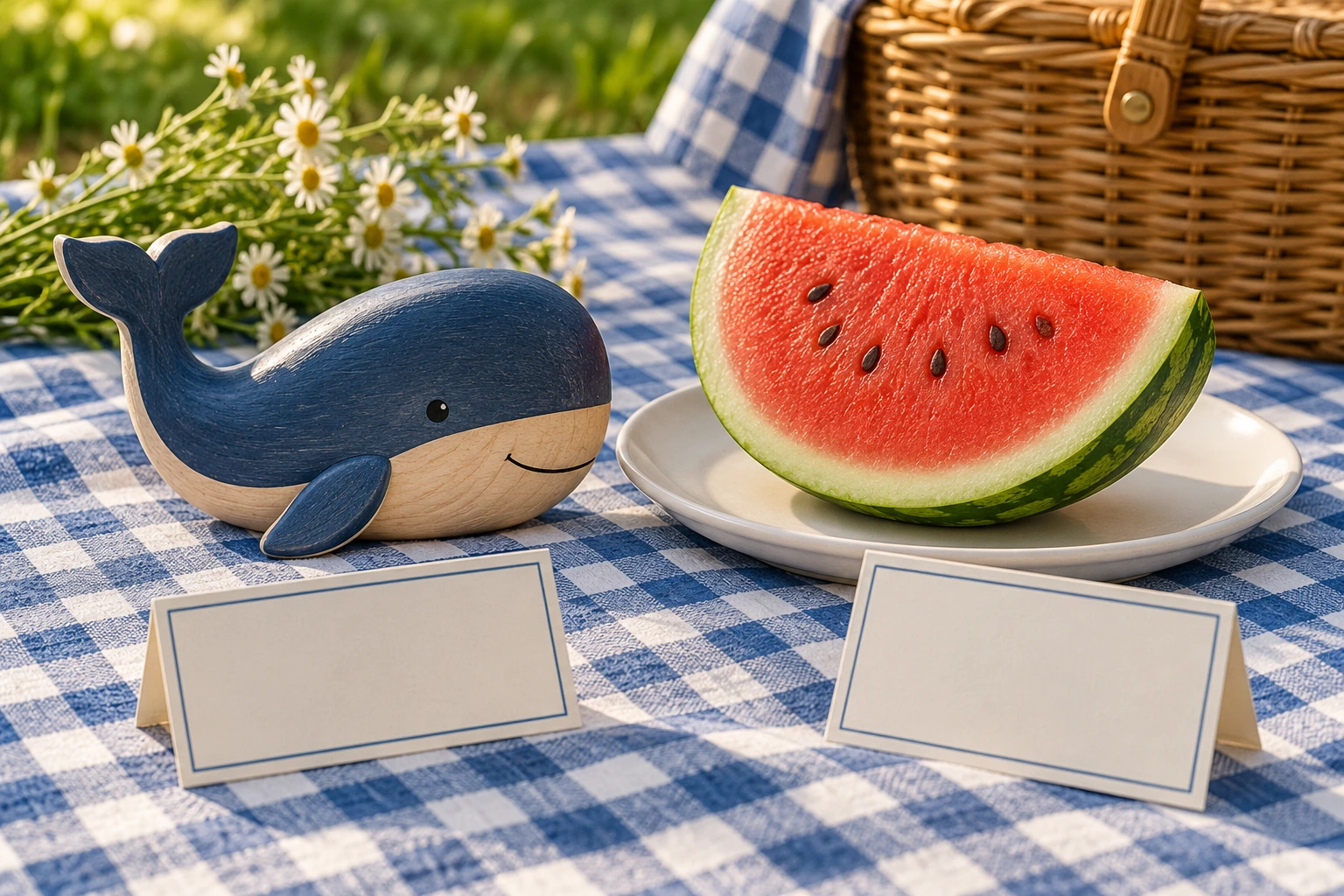
The picture is a play arrangement with a toy decoration. It makes no claim about a real whale's food. A drawn whale and paper fruit can serve the same storytelling purpose at home. Letter W enters through the names and through a later tracing choice.
After planning the places, Luca follows one large model with a finger. He notices that another dip remains after the middle rise. His aunt asks whether he wants to trace a smaller example or locate a matching circle. The picnic can continue after either response.
This gives the writing activity a natural stopping point. A child can leave a guest waiting for the next visit instead of feeling that the entire worksheet must be finished before the story counts.
Five picnic questions extend Letter W practice
1. Letter W picnic: who needs the nearer place?
Offer two pretend seats and let the child choose who sits where. Ask for a reason involving comfort, company or reaching the fruit. Then name the whale decoration and point to its written initial. This Letter W conversation gives spatial words a practical job.
2. What follows the first Letter W dip?
An adult traces the initial pair of slopes on separate paper, then refers to the complete model. Ask the learner to describe the remaining movement. Demonstrate the whole form afterward. Keep this Letter W prediction short enough that the child can still remember the question.
3. Which Letter W label belongs with the fruit?
Write watermelon and a second familiar object name beside their pictures. Point out W in the fruit label. The adult supplies the reading; the child identifies a visible initial and matches the named picture. Let the learner dictate a sentence about the picnic if interested.
4. Can Letter W sizes share one structure?
Prepare a large W card and a smaller w card. Compare their two low places, then place them beside different picnic props. Move the cards to new places and compare again. Letter W recognition should follow the letter, rather than the size of the object nearby.
5. What should the next Letter W guest bring?
Invite a sensible addition to the picnic and explain its use. The item need not begin with W. Return to watermelon or whale for the target initial after the child's idea has been heard. This keeps Letter W vocabulary connected to an understandable exchange.
Count five Letter W matches without coloring the distractors
The search reads p W i / F w W / w c W. Its answers are the central circle in the top row, the central and final choices of the next row, and the first and final choices of the bottom row. Together they give three W forms and two w forms.
Letter W has a repeated angular route. The distractors p, i, F and c do not share that complete construction. Ask a learner to justify a selection by pointing to the two dips. Another explanation might describe why the curved c does not belong.
If the child chooses only capitals, return to the smaller practice row. Both cases satisfy the search rule. A pointing round before coloring can leave room to reconsider a selection while the original options are still easy to see.
Decide which Letter W demand belongs next
| Today's focus | A manageable invitation |
|---|---|
| Sequence | Describe the movement after the middle peak. |
| Hand movement | Follow a wide model, then choose one dotted route. |
| Recognition | Explain one included circle and one excluded circle. |
| Words | Name the watermelon and identify its initial. |
A common Letter W mistake is turning two dips into one broad rounded bowl. Compare that result with the angular source route. Another is making extra tiny zigzags while trying to fill the space. Show the four intended slopes on a larger demonstration instead of asking for faster or heavier tracing.
Use an ordinary pencil and a firm surface. Check that the writing arm has space and that the child can see the guide. Letter W is a coordination task; an uncomfortable setup adds a separate difficulty that repeated rows will not solve.
Return for a specific discovery, not a perfect page
Save a fresh guide or an unfinished picnic question for a later short session. Describe a visible change, such as a second dip that appeared or a central rise the child noticed independently. That gives the next Letter W visit a concrete reason.
Some children enjoy the character, others the fruit, and others telling an adult where a guest belongs. Allow that interest to shape the entry point. The learner can contribute through talk, selection or a short movement attempt, with success measured against the chosen task.
For earlier movement exploration, use mixed tracing-line routes. Another format appears in the separate W tracing lesson, and the alphabet tracing set offers future comparisons.
Download Letter W with both dips visible on the print
The original branded sample is free. An active eligible membership supplies the clean premium Letter W PDF, without the worksheet website’s name, domain lettering or promotional watermark. This printable contains no added advertising, and its original learning tasks remain intact.
Choose the sample or sign in for the qualifying member edition. Open the file to check the whale, two writing rows and lower tasks. Use US Letter portrait paper, fitting the outside frame within the printer's usable space. Inspect a test copy before making several prints, especially the small central peaks and dotted slopes.
Offer the Letter W sheet beside a pencil and a few colors. Begin with the task the child can explain today, then leave time for another guest to arrive at the imaginary picnic.
Popular Worksheets
Printable resources families and teachers are downloading now.
 Free
 Free
 Free
 Free