
Pp Worksheet: 5 Powerful Penguin Post Pocket Games
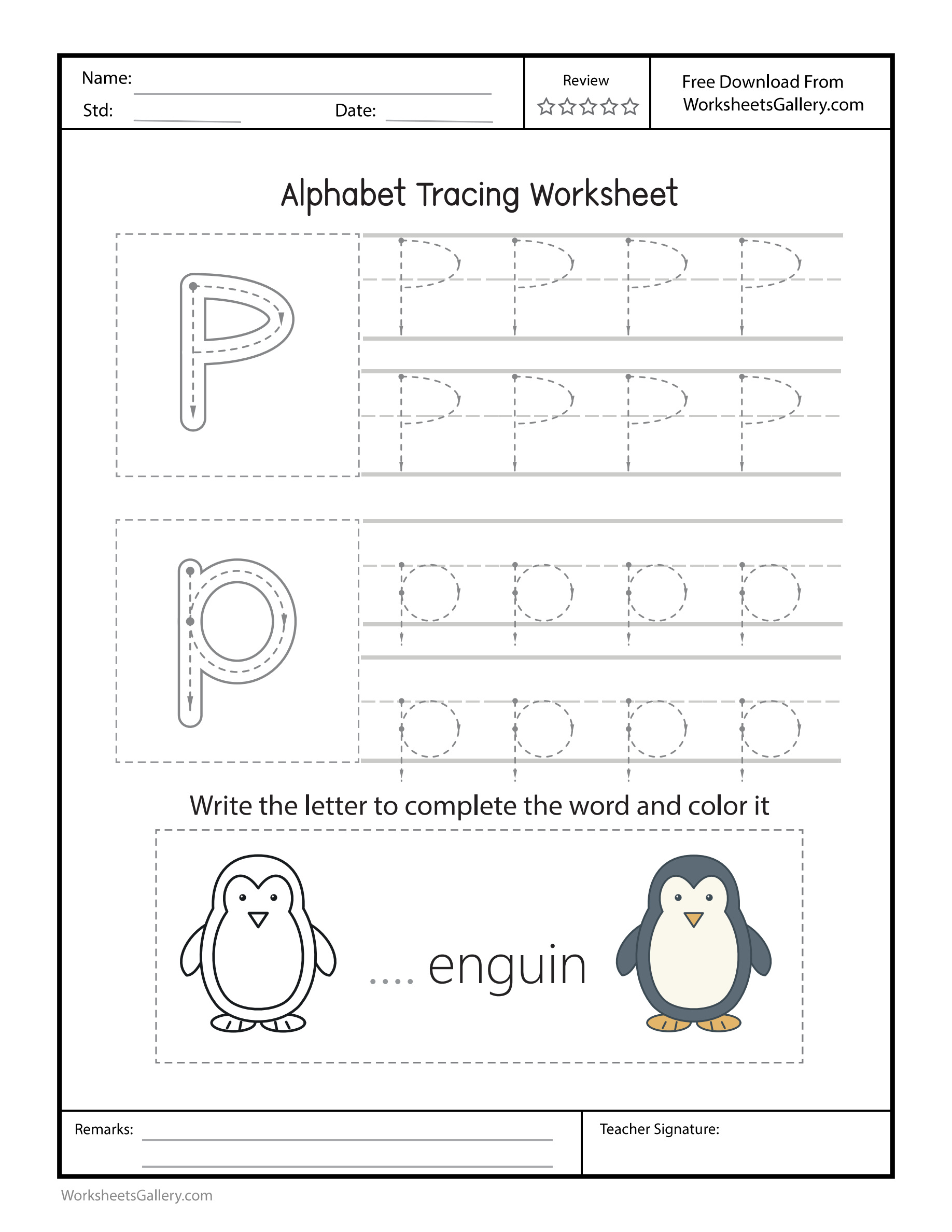
The Pp penguin activity belongs to the complete A–Z letter-pair collection. One $4 purchase supplies all 26 clean tracing pages in a single alphabetically ordered PDF, including this penguin post pocket lesson.
A post pocket can hide a letter's lower part, making a useful mystery for a pretend penguin mail desk. The Pp Worksheet gives children a complete reference before they investigate: capital P carries a high bowl, while lowercase p lets its stem continue below the writing line. The picture word penguin then waits for that small initial. Between ages three and six, a broad movement or an observation can come before matching the letter partners. The mail story supplies a reason to write, with an adult supporting the longer word rather than asking for independent sentence spelling.
Keep the Pp Worksheet stem in view
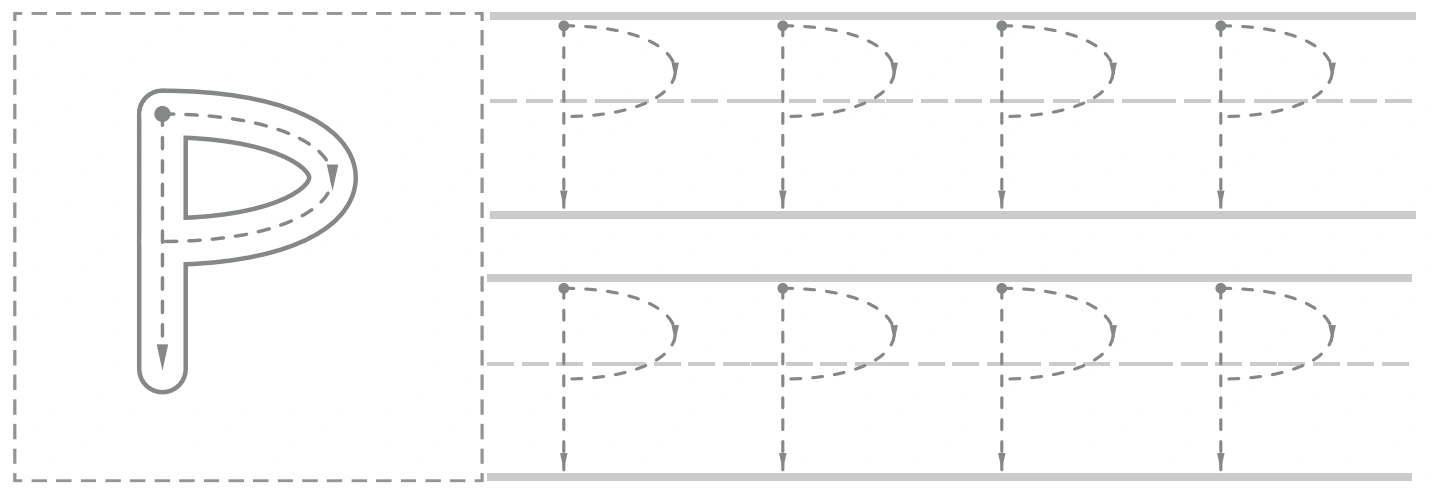
Look at the Pp Worksheet capital's upright and its single rounded bowl. The bowl belongs near the upper portion, leaving a long part of the stem below it. Follow the supplied starting marks and arrows before choosing one small model. A learner can point to the bowl's position even when joining the curve neatly is not yet easy with a pencil.
The Pp Worksheet upper rows offer eight guided capital examples. Try one and inspect where the rounded part meets the upright. A detached bowl suggests a specific joining place to revisit, not a reason to dismiss the entire mark. Use a larger card when that relationship is hard to see at the printed scale, then decide whether another small example would be useful.
Capital P on the Pp Worksheet has no second lower bowl. If one is added, compare the attempt with the actual source and show the open lower region. The learner may be drawing a familiar pattern from another letter. A visible reference makes the difference discussable without relying on an instruction to remember more carefully or erase every part.
A small Pp Worksheet partner reaches below its line
On the complete Pp Worksheet, lowercase p has a rounded body beside a stem that continues downward. Locate the ruled line and the lower continuation on the large guide. The extended part belongs to the letter. It should not be squeezed upward merely because other small letters stay within a shorter space, and it does not need a detached dot like a different familiar descender.
Eight lowercase models provide another set of Pp Worksheet choices. A child may finger-trace the large route before writing one smaller example. If the stem ends too soon, point to the source's lower space after the attempt is complete. Addressing that one feature can be more useful than asking for an entire new row while the same stopping decision remains unclear.
The Pp Worksheet pair shares a name even though its forms occupy different heights and positions. Try a pointing match before demanding both writing routes. A child who identifies the partner confidently but needs a broad movement for p is showing useful recognition alongside a motor task that still needs support. Those two observations should not be collapsed into a single finished-page judgment.
Read the Pp Worksheet penguin label together
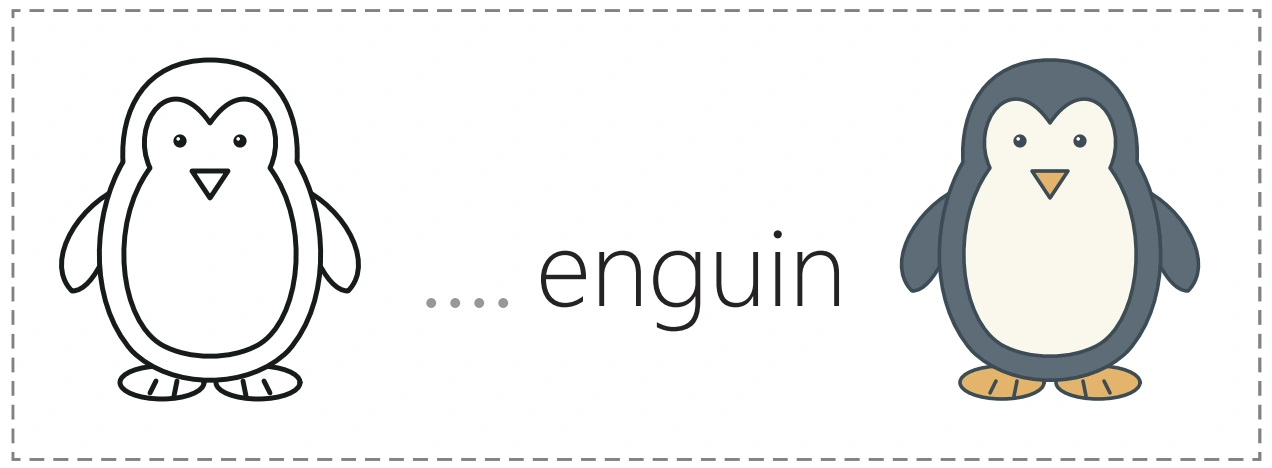
The Pp Worksheet already prints the letters after penguin's initial. Supply one lowercase p, then let an adult read the complete word while pointing across it. The picture supports naming, but the label still calls for attention to its written beginning. A learner does not need to memorize the whole longer spelling to contribute the missing letter meaningfully.
Listen to the brief /p/ at the beginning of penguin during Pp Worksheet talk, distinguishing it from saying the letter name P. An adult can model the word naturally without adding a long extra vowel to the initial sound. The outline and colored penguin can then prompt vocabulary such as beak, wing and belly while the writing responsibility stays focused on p.
The Pp Worksheet illustration is not a requirement to copy a particular color scheme. Let the child choose colors for the outline after locating the intended letter. A picture discussion can continue even when the pencil is put aside. The animal's features supply story ideas, while the formation guide decides the shape that belongs in the initial space.
Noah opens the Pp Worksheet post pocket
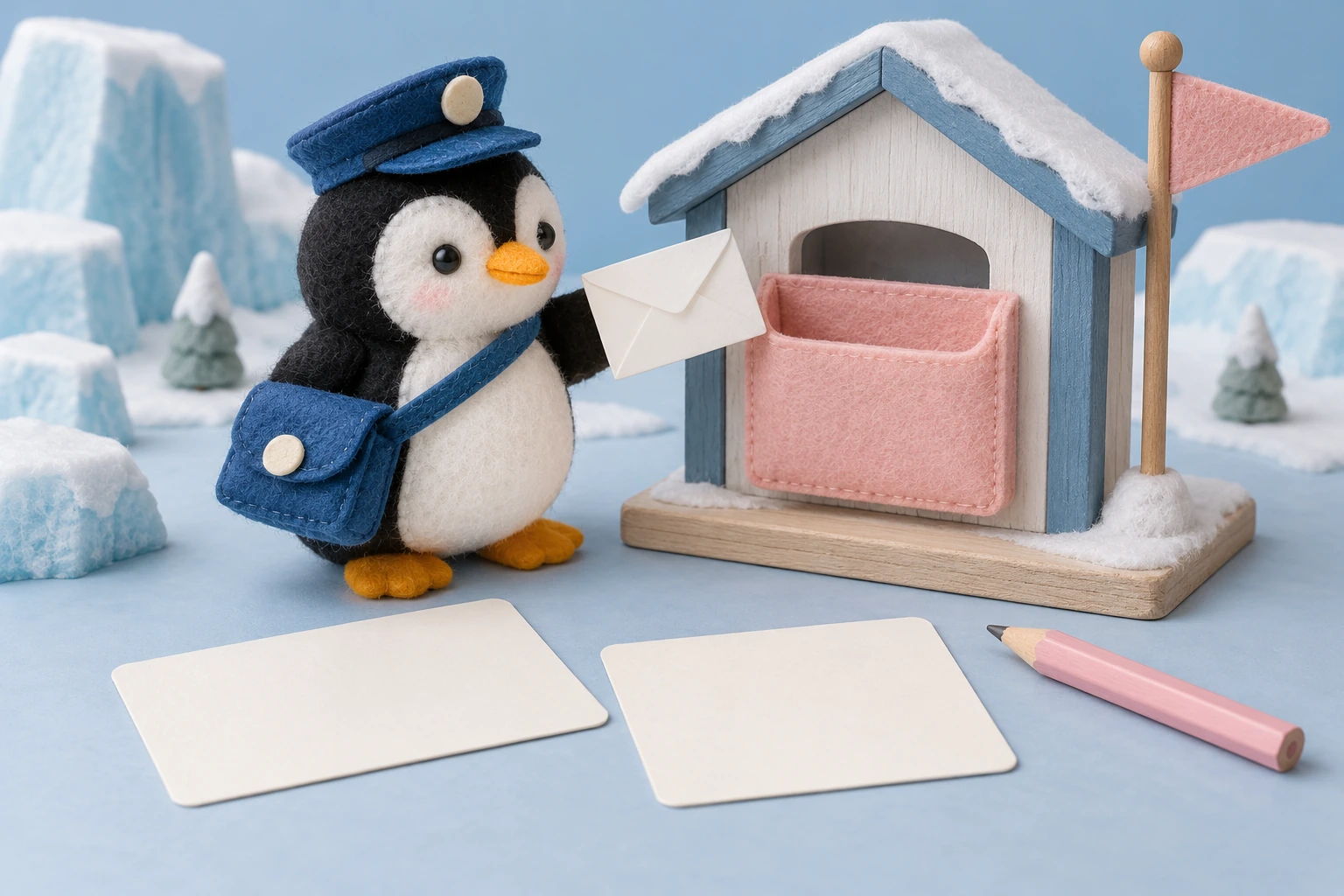
Noah and his father place a felt penguin beside an empty mail pocket for Pp Worksheet play. Noah writes a broad p on a loose card, then slides the card too far into the pocket. Its lower stem disappears. His father asks them to compare what can be seen with the complete small model, and Noah pulls the card outward until the whole letter is visible again.
The Pp Worksheet gives their mystery a concrete answer: the stem's low continuation belongs to the letter, even when a pocket temporarily hides it. Noah points to that part on the guide before trying another small p. His father reads the picture word and lets the initial be Noah's independent contribution, keeping the remaining spelling and any longer pretend address as shared adult support.
A family Pp Worksheet turn can use a folded paper pocket rather than special mail props. Begin with the whole model, inspect the hidden-versus-visible comparison and choose one label or tracing attempt. A child may prefer to color the penguin after a successful observation. The visit can end there without filling every remaining practice space simply because it is available.
Six Pp Worksheet observations for a mail-desk notebook
Pp Worksheet parts can extend below a familiar boundary
The small stem's lower space makes a descender visible. A learner can point to that continuation before consistently producing it. The observation helps an adult decide whether the next cue should concern where the route goes or how much physical room is available to draw it.
A Pp Worksheet bowl has a joining place
The curve connects with an upright rather than floating beside it. Finding the join gives feedback a concrete target. Compare the large model first, then choose whether a broad construction or another small attempt would make that relationship easier to inspect.
Pp Worksheet case recognition can stand on its own
Matching P with p does not require producing both forms neatly. A clear point or selection can show the connection. The adult can then support the specific movement that remains difficult, preserving the learner's successful recognition instead of treating the whole letter as unknown.
Pp Worksheet language can explain what was hidden
The mail-pocket story makes words such as below, whole and visible useful. A child can describe the missing lower part through a gesture before using a longer sentence. The spoken explanation can guide the next written attempt without becoming another demanding performance task.
A Pp Worksheet initial can name a story character
The supplied p contributes to penguin, which an adult reads as a complete label. A pretend recipient gives that small mark a purpose. Longer messages can remain adult-supported, so the beginner's useful role is not suddenly expanded into independently spelling an address or sentence.
Pp Worksheet revisits can inspect one remembered feature
Notice a lower continuation that is remembered without a cue or a clearer bowl-to-stem connection. Save that Pp Worksheet observation for the next visit. Comparing such features says more than counting filled spaces, particularly when learners use different writing sizes or amounts of adult help.
Five penguin-mail games beyond the Pp Worksheet
1. The Pp Worksheet pocket reveal
Write a large p on a card and slide its lower portion behind a paper pocket. Let the learner compare the visible part with the source, then reveal the complete letter. Ask what had been hidden. The game concerns the letter's actual parts, not a race to guess a symbol from a fragment without a reference.
2. A Pp Worksheet spoken postbag
Say familiar words such as penguin, paper and pocket, naming the shared beginning sound with adult support. Point to p after the spoken comparison. Keep the words clearly modeled rather than expecting a child to read new spellings. Another turn can include a word with a different beginning so the learner listens to the actual example.
3. Construct a Pp Worksheet bowl and stem
Arrange a broad straight strip and a curved piece on blank paper to explore the capital's high bowl. Move the curve until it meets the upright, then compare the arrangement with the small guide's lower continuation. Reversible pieces allow inspection of a relationship before the child commits to another permanent pencil mark.
4. Two Pp Worksheet contexts for a penguin card
An adult can name a pretend character Penguin on a separate card, using a capital beginning, while the source picture label keeps its lowercase p. Read both contexts aloud and show the case models. The learner need not learn a whole capitalization lesson; the comparison simply gives both partner forms a visible place in shared writing.
5. A Pp Worksheet label reaches its recipient
Offer the completed penguin label beside another adult-read picture word. A child selects the intended mail recipient, locates p and places the label near the toy. Exchange who points to the model and who carries the card. This gives the initial a communication role without claiming that the learner independently decoded every word in the pretend post office.
A Pp Worksheet classroom pocket station
Partners can alternate between finding the lower continuation and trying a broad or small p. At a Pp Worksheet mail desk, an adult notes whether the child needed the line position, bowl join or case partner pointed out. Different participants may choose different tasks. A useful comparison is whether the selected feature becomes clearer, not who finishes the greatest number of models.
| The model needs another look | A feature to compare |
|---|---|
| The small stem stops too soon. | The Pp Worksheet p continues into the lower space. |
| The bowl floats separately. | Locate where its curve joins the upright. |
| The capital gains another bowl. | The printed P uses only its upper rounded portion. |
Pp Worksheet feedback can be short and specific. Keep the entire lower continuation available. Children aged three to six may need a wide card or finger route before using the printed size. If pressure or frustration increases, leave the pencil aside and continue the mail story through pointing, speech or coloring rather than demanding another tight row.
Return to the Pp Worksheet with a new recipient or another pocket reveal when the learner is ready. A familiar prop and one remembered feature can make a brief repeat inviting. The post office does not need every letter finished in one delivery. Offer a choice about the next job and pause when attention is no longer on the model being explored.
Prepare a Pp Worksheet printable
The Pp Worksheet original is the free sample, and eligible active members can use its separate clean premium PDF. The clean file removes the printed domain, website identity and watermark text and carries no embedded advertising. The related alphabet collection offers all 26 clean letter sheets for $4 as one purchased PDF, providing a complete-set option alongside the individual membership download.
Use portrait US Letter settings for Pp Worksheet printing and inspect its frame and faint guides on a single copy first. Keep blank cards for a broad descender or paper pocket. Other visits may use brief foundation pencil routes, more varied line-following movements or a picture-backed number label. Adult ideas are available through PBS KIDS for Parents' activities for growing readers and NAEYC's practical family writing resources.
Popular Worksheets
Printable resources families and teachers are downloading now.
 Free
 Free
 Free
 Free