
Zz Worksheet: 6 Wonderful Zebra Zigzag Trail Games
The Zz zebra activity belongs to the complete A–Z letter-pair collection. One $4 purchase supplies all 26 clean tracing pages in a single alphabetically ordered PDF, including this zebra zigzag log lesson.
A zebra trail log can begin with a route that changes direction twice. The Zz Worksheet brings that route into a written mark: two horizontal sections connected by a diagonal. Kira and her grandfather keep the large guides beside a blank trail card while deciding which initial belongs in zebra. Both cases share a zigzag plan, but their heights need separate attention. A learner can inspect the turns, make a broad finger rehearsal and choose one small tracing form before adding color or dictating an imagined zebra journey for an adult to record.
Kira starts a Zz Worksheet pretend trail log
Kira sets a toy zebra beside an unprinted trail card. Her grandfather brings the Zz Worksheet close enough for a case comparison and reads the pictured name. Kira chooses a lowercase z for her log's beginning, but first shows its broad route with a finger. He writes the longer story she dictates on a separate page, making her initial a meaningful part of their shared message.
At home, Zz Worksheet play can use a drawn zebra and a simple paper log. Kira may imagine where the animal travels, choose a place for its label and decide which case to inspect. Her grandfather reads the complete word and handles any longer spelling. The child's creative idea remains central while the handwriting contribution stays limited to a manageable letter decision.
When Kira reverses the diagonal, her grandfather compares a fresh broad card with the Zz Worksheet model. They point to the upper route's ending and the diagonal's destination before choosing another attempt. A spoken explanation or clear gesture can finish the turn. They can continue through coloring or imagined trail talk when a smaller pencil copy would add tension instead of useful information.
Six Zz Worksheet observations to save in the log
The Zz Worksheet makes direction changes explicit
The route has two places where its movement changes. Locating them gives the learner a concrete plan to inspect. A gesture can show understanding before fine control reproduces the whole zigzag clearly within a narrow ruled area.
A Zz Worksheet diagonal connects two known places
The top and lower horizontal sections provide endpoints for the sloping connection. Pointing between them can clarify a reversal. This gives adult feedback a specific focus, allowing the next attempt to answer an observable question about where the route goes.
Zz Worksheet case knowledge can be shown by matching
Z and z keep related shapes at different heights. Match the two partners and only then compare their writing spaces. The child can demonstrate identity knowledge without being required to make both sizes equally controlled during the same brief visit.
The Zz Worksheet word gives the initial a reader
One supplied z completes a pictured zebra label. Reading it back connects the learner's mark with its communicative job. The beginner participates in shared writing while the remaining letters and any longer trail description receive adult support.
Zz Worksheet talk can accept familiar letter names
Zee and zed refer to the same letter in different English varieties. An adult can acknowledge that variation without interrupting the model comparison. Naming a letter and listening to zebra's initial /z/ are useful but separate parts of the conversation.
A Zz Worksheet return can compare a remembered route
Save a broad example and note a particular turn or endpoint. During another short visit, inspect the same feature with the learner. Regular practice gains a clear focus when the child knows which decision is being revisited rather than facing another whole row to fill.
Inspect the Zz Worksheet's two changes of direction
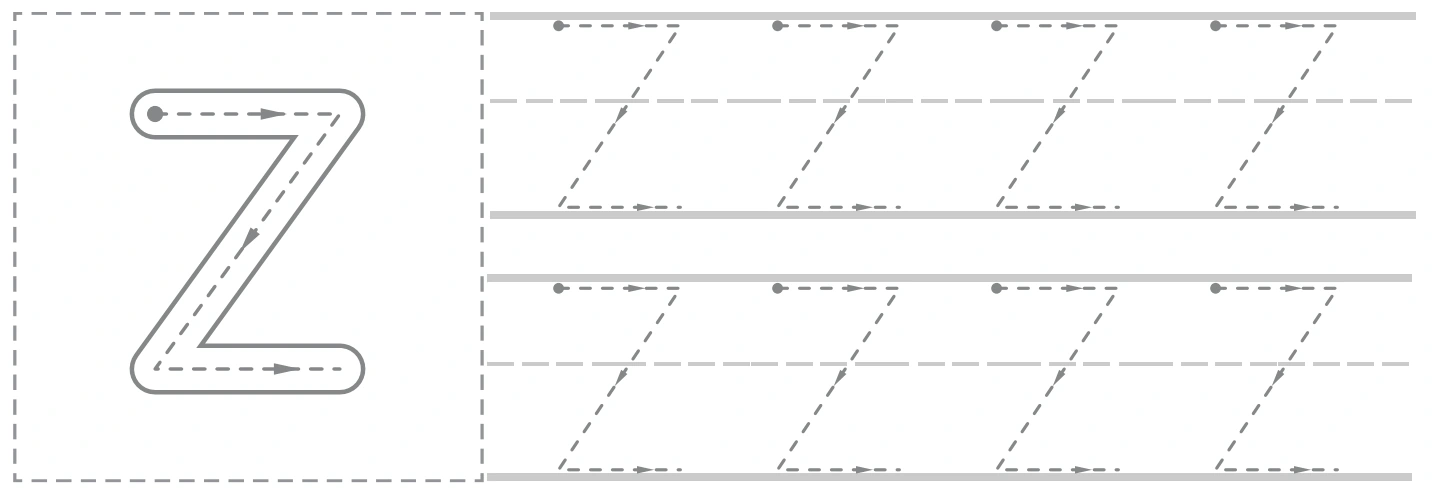
Capital Z on the Zz Worksheet connects a top horizontal route with a diagonal and a lower horizontal route. Locate the printed starting cue and follow the guide arrows. A broad finger movement can show where each change occurs before the hand manages the same route inside a small tracing space. Keep the source nearby rather than relying only on a remembered verbal description.
The upper Zz Worksheet rows provide eight small capitals. Choose one after inspecting the large model. If the diagonal slopes in the opposite direction, compare its endpoints with the source on a fresh broad card. The useful cue is where that connecting route begins and ends. Another dark layer over the first uncertain attempt may hide precisely the feature the learner needs to inspect.
Zz Worksheet partners keep the zigzag at two heights
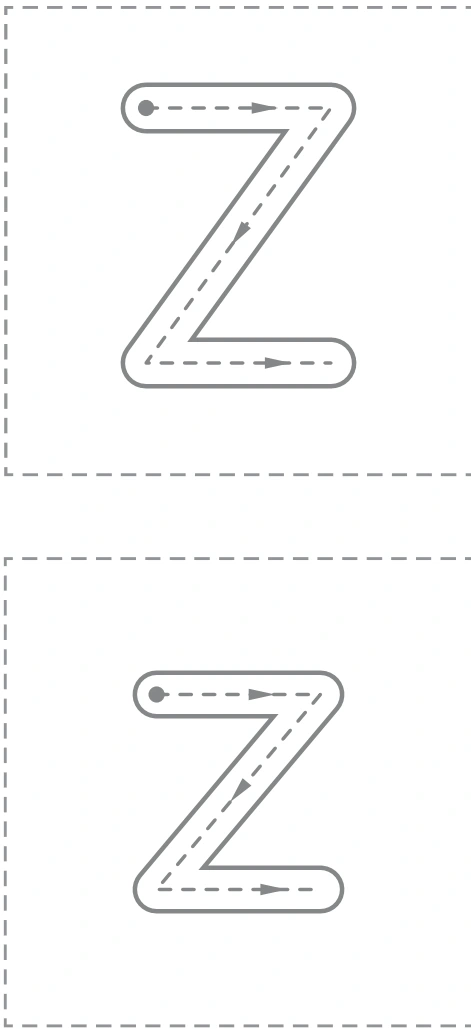
The large Z and z on the Zz Worksheet share a recognizable route pattern. Compare their ruled heights separately from identifying the case partners. A learner can know which forms belong together while still needing more room to coordinate the smaller diagonal. Case recognition and scaled pencil movement give an adult different kinds of information about the current task.
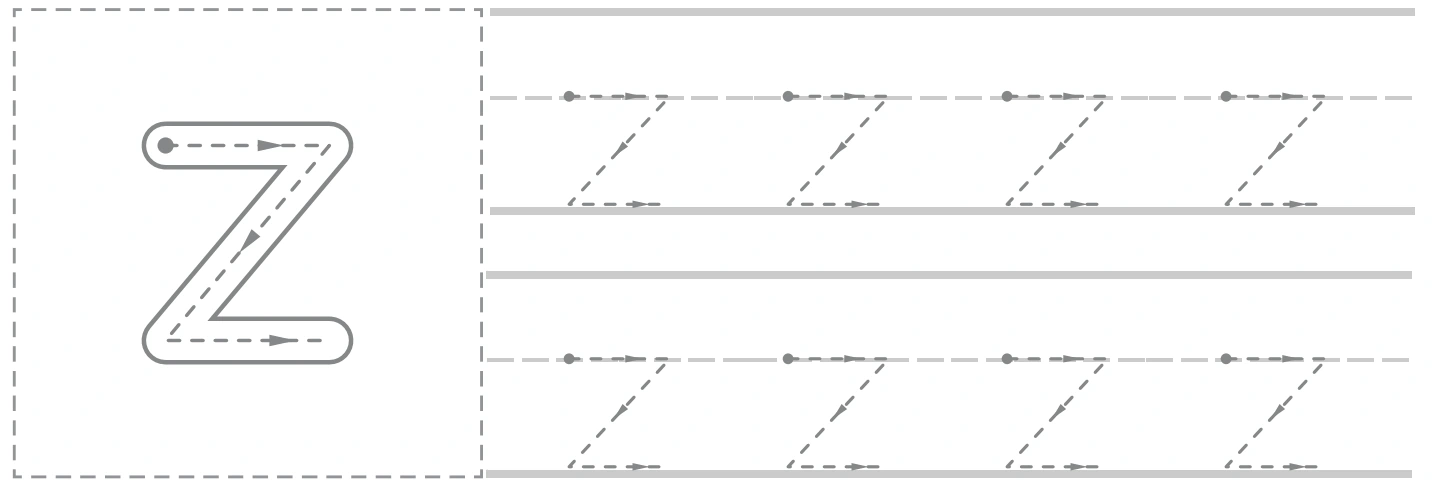
The lower Zz Worksheet panel includes eight little z guides. Notice the beginning and end of each horizontal section, then inspect how the diagonal joins them. If the small form becomes curved, return to its model and gesture to the direction changes. The source provides specific evidence for the next action instead of a general instruction to make the entire row look better.
Zz Worksheet practice can move between the printed guide and a roomy blank card. A child may show the route with a finger, draw a larger version or explain its two turns before choosing a small attempt. There is no requirement to complete all sixteen small forms in one sitting. Select the amount that keeps the intended diagonal and stopping place visible.
The Zz Worksheet log needs its first written letter
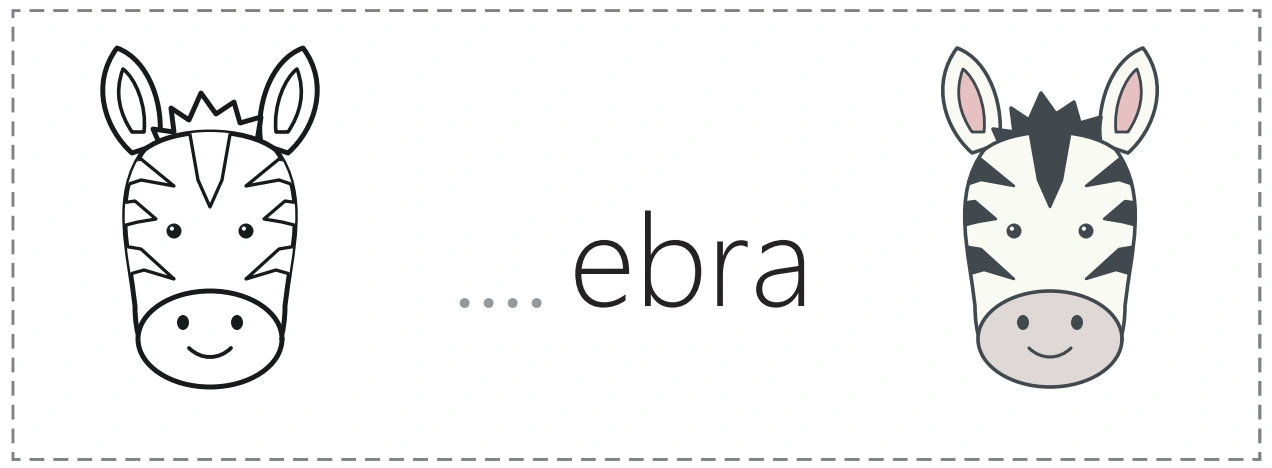
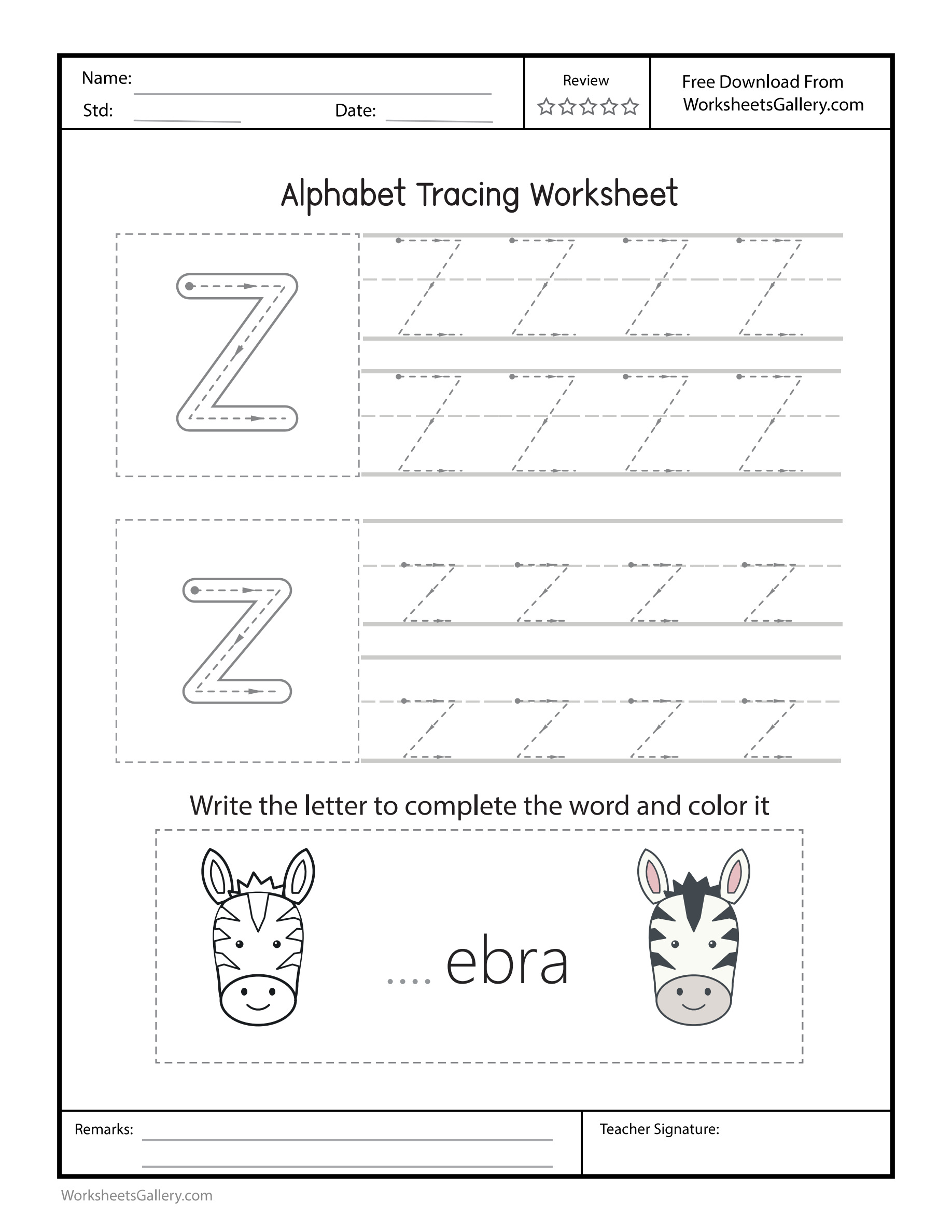
The Zz Worksheet picture section places an outline zebra beside a colored reference and an unfinished word. Lowercase z supplies the initial before the printed ebra. Read zebra naturally once the child has contributed the beginning. This gives one small mark a clear purpose, while adult support handles the complete label rather than expecting a beginner to decode every supplied letter independently.
For Zz Worksheet listening, zebra begins with /z/ in common English pronunciation. Distinguish the spoken beginning from the letter's name. Some families call Z zee and others zed; either name can identify the same written letter. Use the family's familiar name and explain another only if it arises naturally, keeping attention on the actual model and picture-word initial.
The Zz Worksheet outline supports a separate coloring choice. A child can discuss zebra stripes or imagine a new pattern without making the art a test of copying the colored companion. Keep the letter gap legible and let a completed initial provide a useful stopping place. The picture remains a way to talk about the subject when small pencil movements need a pause.
Share Zz Worksheet trail-log jobs in a classroom
For a Zz Worksheet class station serving ages three to six, rotate case matching, route observation and broad writing at a small log desk. Adult-read labels keep the picture-word job accessible. The Zz Worksheet supports speech, gesture, coloring and selected tracing, allowing an adult to record a particular useful decision rather than ranking the group by identical completed-letter totals.
| A trail-log clue | A precise return to the source |
|---|---|
| The diagonal runs the other way. | Locate its two Zz Worksheet endpoints. |
| The horizontal sections become curved. | Inspect each straight route before joining. |
| The small case uses capital height. | Compare z with its own lower guide. |
Name the route decision that became understandable. Zz Worksheet feedback can mention a turning place or diagonal destination. If the learner becomes upset or grips tightly, switch to movable strips or a broad gesture. A log entry can finish with one clear observation. Keep the reason to communicate alive, then return to a selected trace on another occasion if it would be helpful.
Six trail-log games to extend the Zz Worksheet
-
1. Assemble a Zz Worksheet route with three strips
Lay two broad horizontal strips and a diagonal beside the capital model. Let the child adjust how they connect and point to the two turns. An adult may shift the diagonal and ask for a source-based repair. Reversible pieces make the route easy to discuss before pencil marks need to hold the entire pattern at a smaller size.
-
2. Tell a partner the Zz Worksheet turning places
One participant follows a broad finger route while another points to the transitions in the source. Exchange moving and observing jobs. Use ordinary words or gestures that match the guide rather than demanding formal stroke vocabulary. An optional small trace can follow if it gives the learner a useful opportunity to apply the feature just noticed.
-
3. Choose a Zz Worksheet case for a zebra card
Prepare adult-written Z and z cards and ask the learner to find a named case. Compare their height and shared zigzag, then change their places before another turn. Recognition should depend on the letter's visible features. A pointing response can complete the task without requiring a pencil copy to prove that the correct partner was identified.
-
4. A Zz Worksheet label on an imagined trail
Let the child draw a pretend path for a zebra and dictate a brief log entry. An adult records the larger message and reads a complete zebra label. Invite the learner to add a separate z or identify its initial. The path may be creative; it is not a substitute diagram for the letter's precise printed formation route.
-
5. Listen for the Zz Worksheet zebra beginning
Say zebra and zoo with adult support, noticing their initial /z/. Compare a different spoken beginning next; the child can point to a Zz Worksheet model in response. Refer to Z with its familiar family name. The activity does not need independent reading, a perfect verbal explanation or a correction from zee to zed or the reverse.
-
6. Return to a Zz Worksheet card in the log
Take out a saved large attempt and ask which connection is easiest to see. Compare its diagonal with the model and let the learner choose a feature to revisit. Another written copy is optional. A specific explanation of a changed endpoint can show a useful development, even when the child prefers to finish the session through a dictated zebra story.
Download the Zz Worksheet and plan another entry
The original Zz Worksheet is offered as a free sheet. The clean Zz Worksheet premium file requires eligible active membership; its PDF has no printed website identifiers, domain references or watermark branding and contains no embedded adverts. The linked $4 alphabet collection places these 26 clean letter sheets together in a purchased PDF, making it possible to select individual tasks for future short sessions.
For Zz Worksheet printing, select portrait US Letter paper and check the perimeter and faint models in the preview. Related activities include introductory pathways for a first tracing routine, additional bends and turns to follow and five explored through tracing and a picture. Adults can consult Reading Rockets' guide to learning the alphabet and PBS KIDS for Parents' growing-reader ideas. Let the next zebra entry begin with a route the writer can recognize.
Popular Worksheets
Printable resources families and teachers are downloading now.
 Free
 Free
 Free
 Free