
10 Brilliant Ways Number 10 Tracing Worksheet Math Success

Unlock counting confidence and build precise motor control with our comprehensive, classroom-tested early math resource designed for early learners.
Have you ever watched a young child realize they have exactly ten fingers? It is a magical moment of self-discovery that bridges their physical body with abstract mathematics. Introducing the concept of double-digit numbers can sometimes feel intimidating to little learners, but using a high-quality Number 10 tracing worksheet turns this milestone into a joyful celebration. This foundational tool provides structured guidance, allowing children to master the transition from single digits to the base-ten system while keeping their little hands happily engaged in tracing, counting, and coloring.

Why Mastering the Number 10 Tracing Worksheet is a Milestone
The leap from number nine to number ten is one of the most significant intellectual hurdles in early childhood mathematics. Up until this point, every number has been represented by a single, distinct symbol. Suddenly, a child is introduced to the concept that two separate digits can sit side-by-side to form an entirely new value. Our specialized Number 10 tracing worksheet helps break down this barrier by providing a sensory-rich, visual experience that reinforces the connection between the numeral "1", the numeral "0", and the actual quantity they represent together.
When children practice with a physical template, they are not just memorizing a shape; they are building muscle memory for spatial orientation. Writing a number ten requires moving from a straight vertical line to a perfectly rounded circle. This combination of distinct geometric movements requires bilateral coordination and refined finger dexterity. By utilizing a comprehensive Number 10 tracing worksheet, educators and parents ensure that children gain deep exposure to both the motor practice and the numerical logic required for future kindergarten success.
💡 The Double-Digit Awakening
In the classroom, we often see children treat ten as two separate entities instead of a single unit. Regular practice on a dedicated number 10 tracing worksheet solves this by grounding the visual layout of the digits next to physical groupings like cute chickens or bright stars, transforming abstract ink into absolute comprehension.

Skills Gained Beyond the Pencil Points
What exactly happens when a child sits down with our printable Number 10 tracing worksheet? They are engaging multiple areas of the brain simultaneously. Let’s look at the breakdown of skills actively developed through this simple printable activity:
- Base-Ten Conceptualization: Children start to view ten as a complete set, laying the groundwork for understanding placeholders, double-digits, and future place value mathematics.
- Spatial Awareness and Line Control: Guiding the pencil precisely along the dashed lines teaches boundaries, proportions, and starting points.
- Subitizing and Counting Literacy: By looking at the grouping of ten chickens or counting ten stars on the page, kids learn to recognize the quantity of ten quickly without always counting from one.
- Fine Motor Endurance: Repeating the movement across multiple lines builds the small hand muscles required for long-form writing as they grow older.
- Hand-Eye Coordination: Synchronizing what the eyes see (the guided paths) with what the hand executes builds neural pathways central to artistic and written expression.
Is This Number 10 Tracing Worksheet Right for Your Learner?
Every child develops at their own unique pace, but structured resources work best when introduced during key developmental windows. Below is a guide to understanding how different age brackets interact with a Number 10 tracing worksheet:
| Age Group | Typical Stage | How They Use the Number 10 Tracing Worksheet |
|---|---|---|
| Ages 3-4 | Preschool / Early Pre-K | Focuses heavily on coloring the stars, pointing at the chickens, and using fingers or fat crayons to trace wide paths. |
| Ages 4-5 | Pre-K / Kindergarten Entry | Begins handling a standard pencil well, completes the line tracing accurately, and starts circling the correct hand displays. |
| Ages 5-6 | Kindergarten Review | Uses the sheet for speed, precision, handwriting refinement, and auto-correcting number orientation issues. |
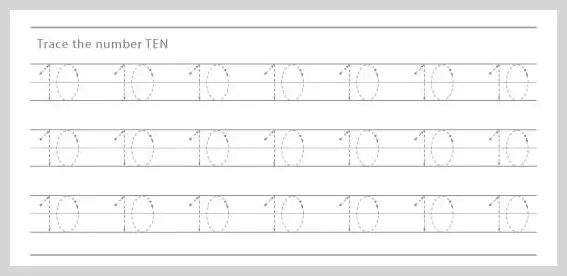
Step-by-Step Guide to Success with the Number 10 Tracing Worksheet
To extract maximum educational benefit from this tool, avoid just handing it over without setup. Turn it into an interactive experience. Here is a proven method used by master teachers worldwide to make the Number 10 tracing worksheet a complete success:
Step 1: The Multi-Sensory Warmup
Before touching paper, have your student high-five you with both hands. Count all ten fingers out loud together. Point out that it takes two whole hands to show this grand number!
Step 2: Exploring the Visual Clues
Look at the top right of the sheet. Ask your child to help you count the little baby chickens. Point to each one systematically to practice one-to-one correspondence before beginning to write.
Step 3: The Hand Amount Challenge
Direct them to the section showing hand gestures. Ask them, "Which of these icons shows all ten fingers?" Let them count across the hands until they find the pairs that combine to make ten, and circle them carefully.
Step 4: Systematic Line Tracing
Instruct them to start with the number one, drawing straight down. Next, move to the zero, starting at the top and making a smooth counter-clockwise loop. Complete the lines on the number 10 tracing worksheet row by row to form a productive habit.
Step 5: The Star Finale
Reward their hard work by letting them use their favorite colors to fill in exactly ten stars at the bottom of the page. This reinforces the actual value of what they just traced.
Mistakes to Dodge When Teaching with a Number 10 Tracing Worksheet
Even with the best tools, it is easy to slip into unhelpful teaching habits. When using a Number 10 tracing worksheet, keep an eye out for these frequent missteps:
First, avoid rushing the transition. If a child is still stumbling on a number 9 tracing worksheet, forcing them into double digits too quickly can lead to frustration. Ensure single digits are stable first. Second, don't ignore stroke direction. If your child starts writing the zero from the bottom upwards, gently correct them. Developing bad stroke mechanics early makes cursive and fast writing much harder to master later on. Finally, avoid over-correcting minor wiggles. The goal of using a Number 10 tracing worksheet is progress and confidence, not flawless mechanical perfection on day one.

Beyond the Page: Active Games to Pair with Your Math Lesson
Keep the excitement going long after the pencil is put away! Use these easy, zero-prep games to bridge paper learning with active physical play:
🏰 The Ten-Object Scavenger Hunt
Give your child a small basket and ask them to collect exactly ten specific items from around the room—like ten building blocks, ten socks, or ten small toy cars. Bring them back to verify the count alongside their completed number 10 tracing worksheet.
🦖 The Giant Footstep Count
Turn the hallway into a counting track. Have your child take exactly ten giant monster steps, counting each one loudly out loud, then turning around and taking ten tiny baby steps back to their study desk.
🎨 Playdough Number Building
Roll out long playdough snakes. Have your child lay the clay directly on top of the large display numbers on the worksheet to feel the curves and lines in three dimensions before writing.
👏 Rhythm Claps and Beats
Create a clapping pattern that stops precisely at ten. This auditory cue builds an internal rhythm for counting and serves as a quick physical brain break during desk work.
How to Cultivate a Continuous Practice Habit
Consistency is the absolute key to early childhood memory retention. To keep your young learner excited about completing their Number 10 tracing worksheet without making it feel like a chore, focus on positive reinforcement. Try creating a specialized "Math Mastery Wall" on the refrigerator where their best tracing sheets are proudly displayed with bright stickers.
Keep practice sessions short and highly energetic—five to ten minutes of focused work is much better than a long, grueling half-hour session. If they seem tired, switch from a regular gray pencil to a sparkly gel pen or a bright rainbow crayon. Changing up the writing medium instantly renews a child's interest and makes the repetition on the Number 10 tracing worksheet feel completely fresh and rewarding every single time.
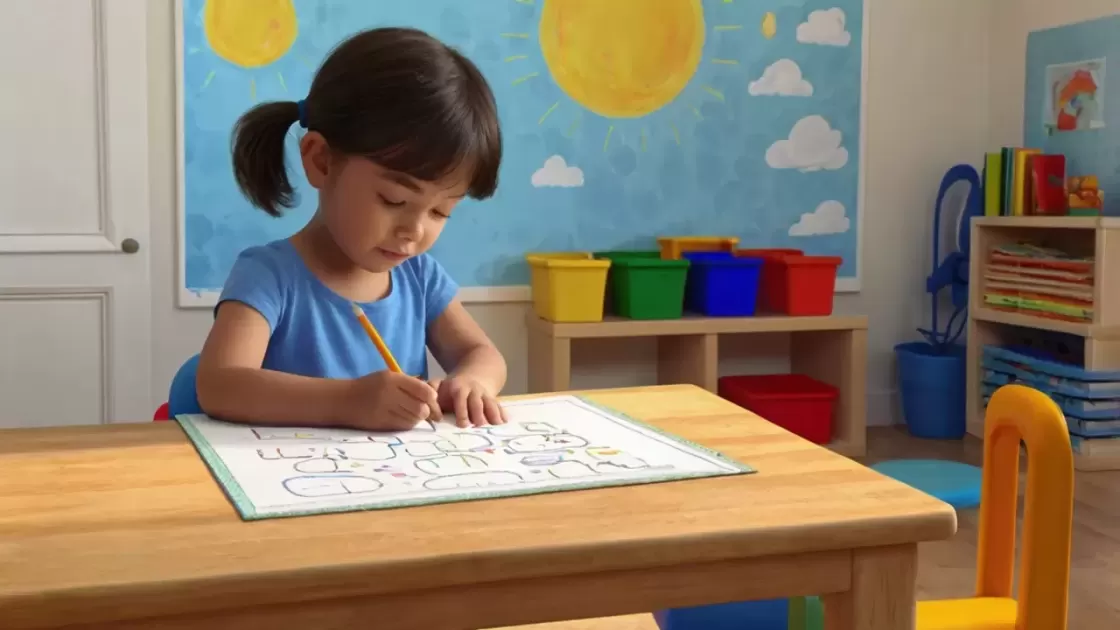
Get Your Clean, Ad-Free Number 10 Tracing Worksheet Instantly
We believe that educational materials should be completely accessible, beautiful, and distraction-free. That is why our premium printable pages are designed without messy background watermarks or chaotic advertisements that distract young minds. Ready to get started with your math lesson? Follow our quick download guide below:
📋 File Details & Features
- Format: High-resolution, print-ready PDF file
- Layout: Single page featuring tracing fields, coloring zones, and counting assets
- Quality: Zero watermarks, crisp black outlines ideal for standard home printers
- Compatibility: Fits standard Letter and A4 printer paper sizes seamlessly
Looking for other numbers? Explore our extensive catalog of comprehensive math printables for your classroom or home school routine.
Popular Worksheets
Printable resources families and teachers are downloading now.
 Free
Free
 Free
Free
 Free
Free
 Free
Free