
Aa Worksheet: 5 Brilliant Orchard Message Games
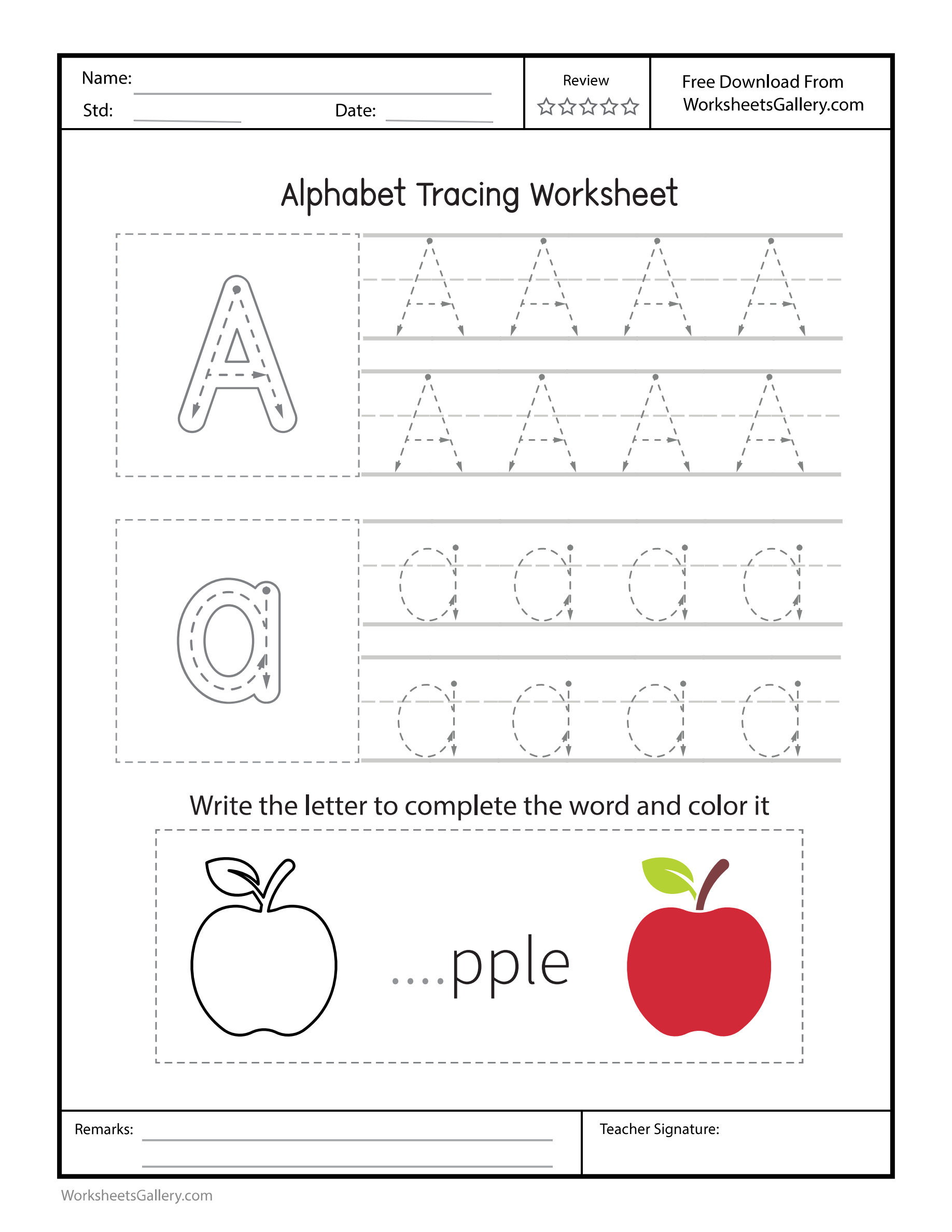
The Aa apple activity belongs to the complete A–Z letter-pair collection. One $4 purchase supplies all 26 clean tracing pages in a single alphabetically ordered PDF, including this orchard message lesson.
An apple stall needs a label that visitors can recognize, and a small writer can supply its missing beginning. The Aa Worksheet turns that little orchard job into a comparison of two letter forms: an angled capital A and a rounded lowercase a. Children trace their routes, finish the picture word and choose colors for an outline apple. For ages three to six, the activity can begin with pointing and conversation before pencil work. The aim is a useful written message, supported by the picture, rather than a page completed in a hurry.
A label is waiting on the Aa Worksheet
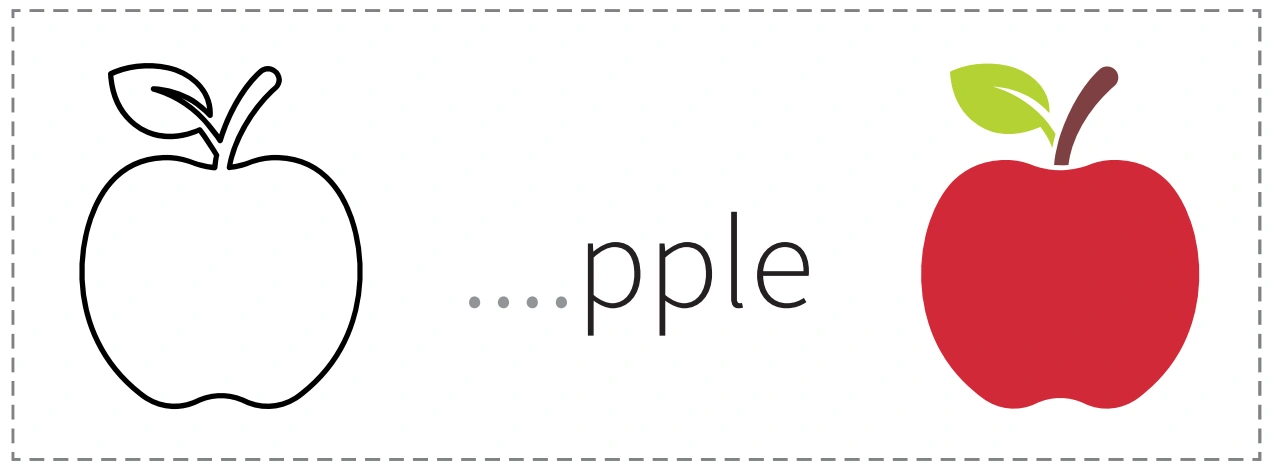
Look at the apple pictures before choosing a letter. On the Aa Worksheet, one apple is outlined and another is colored, with an unfinished word between them. The printed letters already say pple. A single lowercase a belongs in the leading space. Say apple naturally, then let the child point to the empty beginning instead of asking for an independent spelling of the whole word.
The Aa Worksheet combines a picture clue with visible print. An adult can read the completed label aloud and explain that the new letter belongs to a word people use. Keep the apple's leaf and stem in the conversation, too: those are parts of the fruit picture, not extra letters to copy into the gap. Decorating the Aa Worksheet outline can follow the writing job.
For this Aa Worksheet example, apple begins with the short a sound heard in ant. The letter name A sounds different. Name the letter when discussing its identity, and use the beginning sound when listening to apple. Neither task requires an adult to stretch the word into an unnatural pronunciation or claim that every word beginning with a uses this same vowel sound.
Aa Worksheet partners sign one orchard message
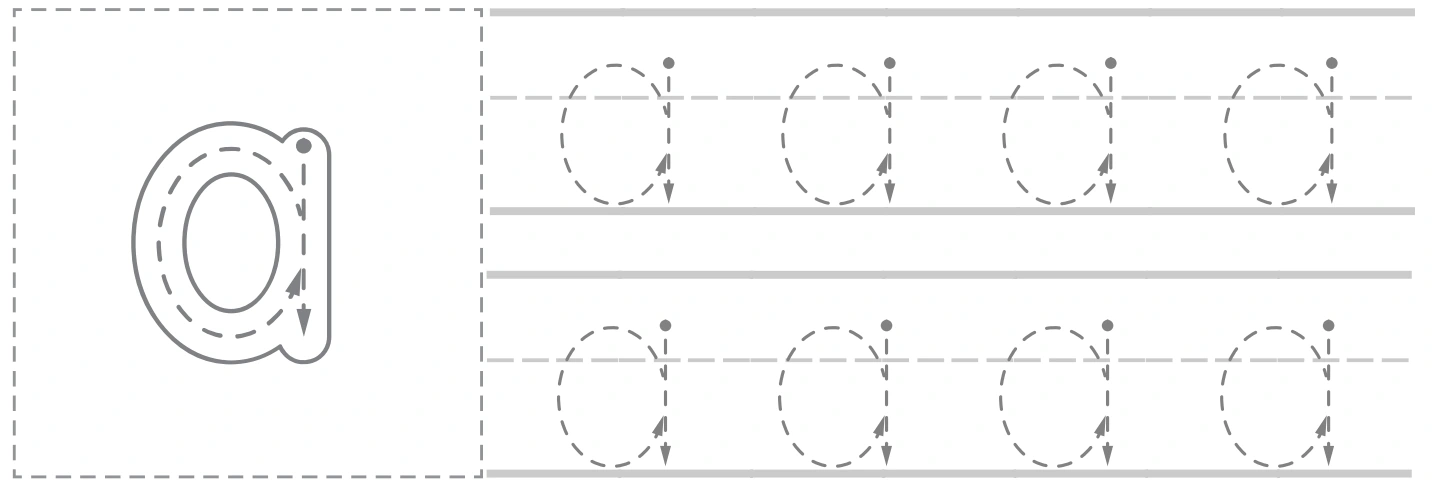
Lowercase a is the form needed for the Aa Worksheet word completion. Its printed shape has a rounded body and a short right-hand stroke. Trace the large model slowly enough to see where the round part closes and where the finishing stroke belongs. A child's first attempt may leave a gap; compare that one place with the model rather than criticizing the whole letter.
The Aa Worksheet uses a single-storey a, which can look different from the a in some books. If a child notices another style, acknowledge the connection: both represent the same letter. For this sheet's movement practice, return to the supplied form. A different printed font does not make a child's observation wrong, and recognizing a letter does not require knowing every typeface immediately.
Capital routes on the Aa Worksheet
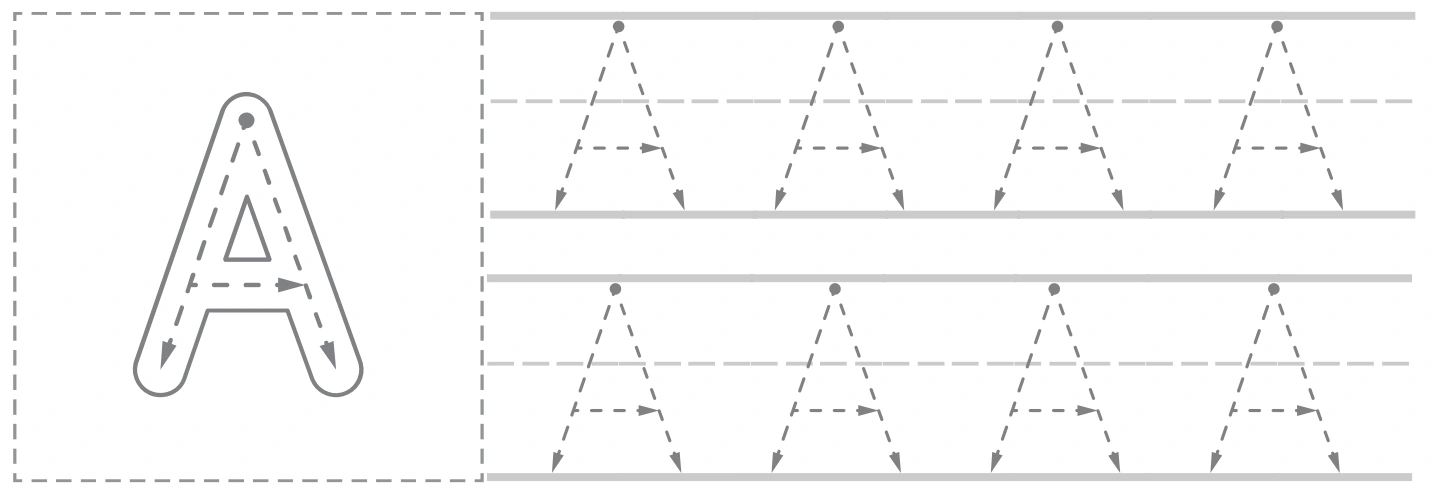
Capital A follows another route on the Aa Worksheet. Its two sloping sides meet high up, and a crossbar joins them. Point to each feature in the large model before moving to a small example. The change from rounded a to angled A is part of the lesson: these are partners with one letter name, even though simply enlarging the small shape would not produce the capital.
There are two uppercase rows and two lowercase rows on the Aa Worksheet, with four small examples in each. Those sixteen opportunities can be spread over several visits. Try one capital and one small letter, then compare them with the large guides. More marks are useful only while the child is still noticing what the pencil is doing.
Mira gives the Aa Worksheet an orchard job
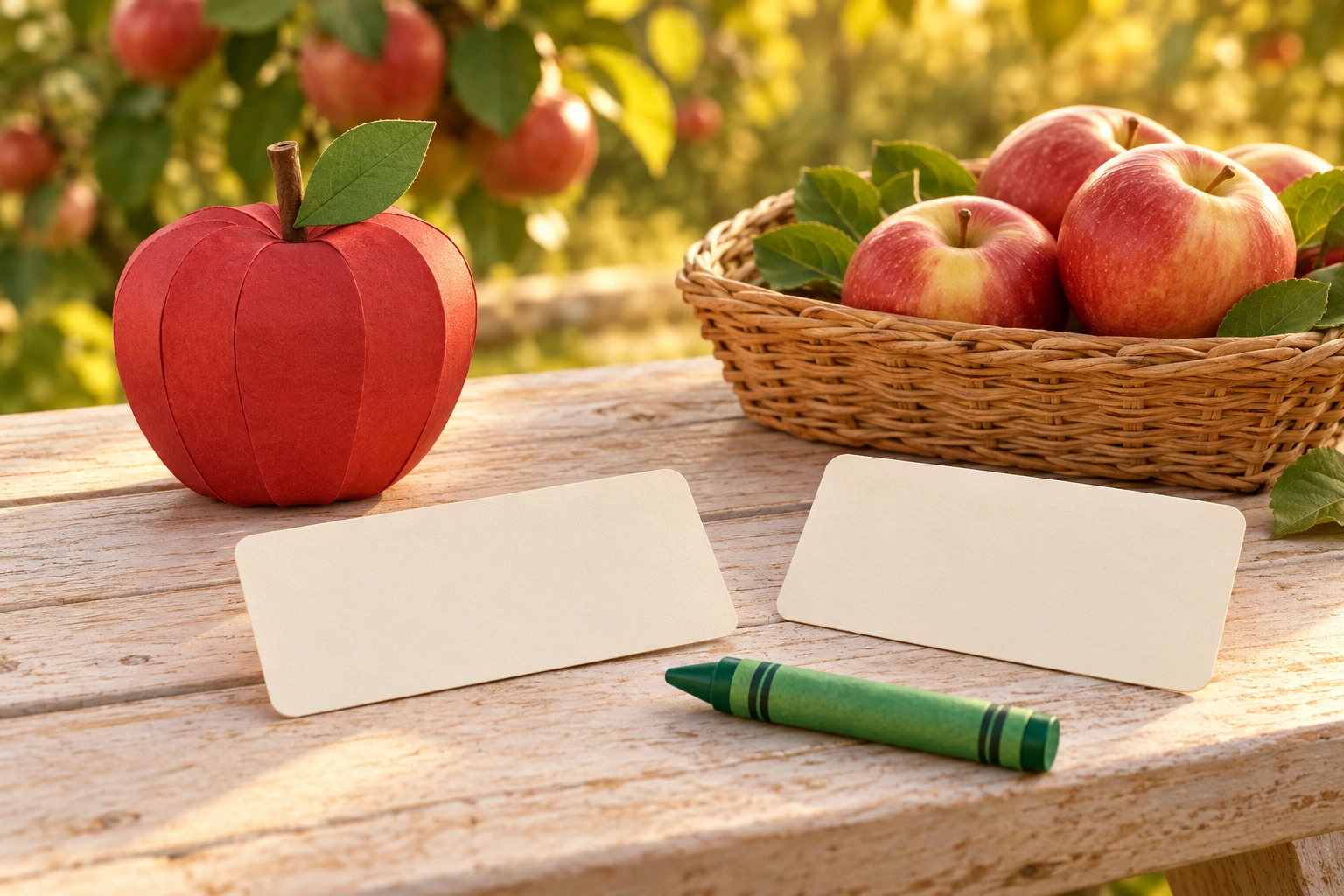
Mira and her uncle set up a pretend orchard tray beside the Aa Worksheet. He offers two blank cards and asks which one should name the apple. Mira points to the picture word and says that its first letter is missing. They compare the a model with the space, and her uncle reads the remaining letters for her. She is responsible for the beginning, not for reading an unfamiliar spelling alone.
After one Aa Worksheet attempt, Mira dictates, “These apples are for our picnic.” Her uncle writes that sentence on a spare card while she adds a large a nearby. The longer message shows another purpose for writing without increasing the tracing demand. If the first letter is difficult to control, she can finger-trace the large guide before returning to the pencil.
At a home Aa Worksheet table, keep the materials modest: paper, a comfortable pencil and a few coloring choices. Begin by naming the picture, offer the large lowercase path, and let the child choose whether the word gap or one short row comes next. An adult can hold the paper steady if needed while the learner uses a relaxed working position.
A classroom listener joins the Aa Worksheet orchard
Set up an Aa Worksheet partner turn with separate jobs. One learner finds the small a, while another points to the matching capital A. Both name the apple picture, and the writer supplies the missing initial. Swap the pointing role before offering more tracing. A child who is not ready to write a small letter can still participate accurately by identifying the form.
An Aa Worksheet observation note might say, “Found a independently; needed a reminder to close its body.” That gives the next adult a useful starting point. A score based only on completed rows would hide the difference between recognizing the letter and controlling the pencil. Look at the response to a specific cue, such as following the closing curve with a finger.
Six things an Aa Worksheet visit can reveal
The Aa Worksheet asks the eye to connect an angular A with a curved a. A successful match can be shown by pointing before a learner is ready to describe the differences aloud.
One Aa Worksheet initial changes an unfinished picture word into apple. The adult's spoken reading gives that small written contribution a clear purpose within the pretend orchard.
Aa Worksheet lowercase practice invites attention to the rounded body. Notice whether a child returns to the intended meeting place, rather than demanding a perfectly even oval.
The capital Aa Worksheet model offers a different planning job: the joining bar must reach between two sloping sides. Compare its placement with the example while accepting a developing hand's uneven pressure.
Aa Worksheet conversation can include peel, leaf, stem and orchard. New object words enrich the scene while the actual writing target stays one letter, avoiding an unnecessary spelling test.
Ask what an Aa Worksheet writer will try next: close the curve, add the bar or return to the starting dot. A gesture or brief phrase makes the plan visible without requiring a long explanation.
Five orchard jobs beyond the Aa Worksheet rows
1. The missing-label basket
Place a paper apple beside an unfinished label on a loose card. Use the Aa Worksheet as a reference while a child chooses between a and another familiar letter. Ask the child to place the chosen card at the beginning. Read the completed label together, then let the learner carry it to the pretend basket. There is no need to copy all five letters.
2. Round body, short finish
On a large spare sheet, invite an Aa Worksheet explorer to draw the rounded part of a with a finger first. Add its short finishing stroke using a crayon. Compare the result with the printed model rather than tracing over the child's marks repeatedly. The enlarged space is a temporary support, making the movement easier to discuss before it becomes smaller.
3. An A sign for the stall
Give the orchard a capital sign separate from its lowercase apple label. The Aa Worksheet can help a learner identify the two sloping sides and crossbar before arranging plain strips on paper. Move the strips when the bar does not join both sides. This reversible construction lets the child inspect the shape without an eraser becoming the main tool.
4. Deliver the right letter partner
An adult holds a capital A card, and a child delivers the lowercase partner from a small choice of cards. Check the pair against the Aa Worksheet, then swap who holds and who delivers. Add the spoken apple word only after the visual match. That sequence prevents a confident picture guess from hiding uncertainty about which small letter belongs with A.
5. Dictate a picnic notice
After an Aa Worksheet picture discussion, let the child dictate one short orchard notice. Write the full sentence as the adult scribe and invite an optional a contribution on the margin. Read the message back exactly as dictated. A beginner's useful participation can be a single recognizable letter within a shared writing activity, not an independently written sentence.
Spot the difficulty before repeating the Aa Worksheet
| What appears | A focused response |
|---|---|
| The a body stays open. | Follow its meeting point on the large lowercase guide. |
| The capital lacks its bar. | Point to the join between the two sloping sides. |
| A fills the apple gap. | Compare the small printed p letters with the lowercase a model. |
Aa Worksheet support should match the observed need. A child might recognize both cases and still find the curved movement difficult. Another may copy the path accurately without remembering that A and a share a name. Offer the missing connection, then watch a fresh attempt. Repeating every row would add effort without necessarily addressing the particular uncertainty.
Preschool Aa Worksheet practice works best with room for choice and an easy stopping point. Ages three to six describe a broad audience, not a fixed deadline for independent handwriting. Let younger learners point, trace with a finger or choose an apple color. Notice one deliberate action before asking for another, and pause when the hand or attention becomes tired.
Save an Aa Worksheet message for another visit
Return to the Aa Worksheet on a different day with a new purpose: a picnic label, an apple-tray sign or a message for a pretend customer. The familiar Aa Worksheet picture can make the return comfortable while the chosen action changes. Praise a concrete improvement, such as remembering the crossbar, and leave the rest of the page available for later rather than insisting on immediate completion.
The individual Aa Worksheet offers the original free sample and a separate clean premium PDF through eligible membership access. The premium edition removes website branding and watermark text; its printable file contains no advertisements. The complete A–Z collection is also available as one $4 purchase through this page's related package card. Choose the download option that matches the access available on the website.
For Aa Worksheet printing, preview US Letter portrait output and keep the frame inside the printable area. Check that the light tracing paths remain visible on one test copy. Use ordinary pencil pressure and keep coloring tools available for the outline apple. A smaller session can still finish a meaningful orchard job.
Pair the next visit with short pencil paths before letter work, a broader movement practice sheet or a counting-and-coloring change of pace. Adults looking further can explore Reading Rockets on alphabet knowledge and NAEYC's suggestions for family writing.
Popular Worksheets
Printable resources families and teachers are downloading now.
 Free
 Free
 Free
 Free