
Apple Letter Lab: 4 Brilliant Aa Picture Activities
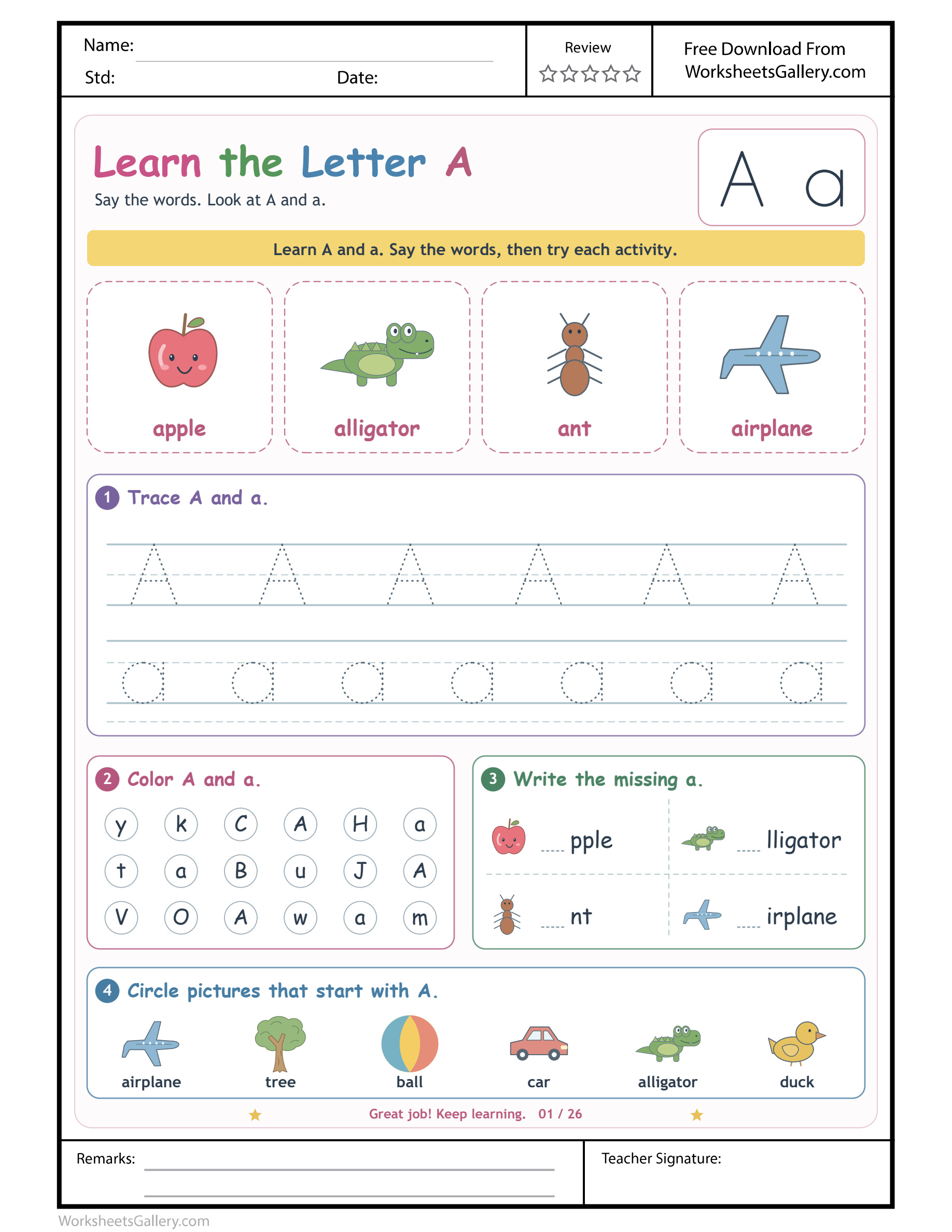
Apple Letter Lab: Use the word cards to restore the first a without filling every a already printed in alligator.
An alligator's long name can still need only one small letter in its waiting space. Apple Letter Lab brings apple, alligator, ant and airplane together on an Aa learning sheet with four different jobs. Children trace the supplied case models, colour matching letters, restore initial lowercase a and choose pictures whose printed names begin with A. The word cards stay visible above the activities, giving adults and learners a shared reference. Offer this page as a short, supported letter visit, with conversation about a familiar picture leading into whichever activity feels manageable today.
Find the waiting place before writing the whole name — Apple Letter Lab
The missing-letter panel in Apple Letter Lab already contains most of each word. Apple needs a before pple; alligator needs a before lligator; ant needs a before nt; airplane needs a before irplane. Each space asks for the same lowercase character, even though the resulting names differ greatly in length.
One gap calls for one initial a. The other letters printed inside alligator are not additional missing places. Point from the complete label above to the shortened version below before making a mark. The visible word bank is meant to be consulted, so looking back is a useful part of the task.
The Aa page at a practical glance: Apple Letter Lab
| Apple Letter Lab activity | Adult quick check | Source detail |
|---|---|---|
| Trace A/a | 6 A models;7 a models | Apple Letter Lab guide rows |
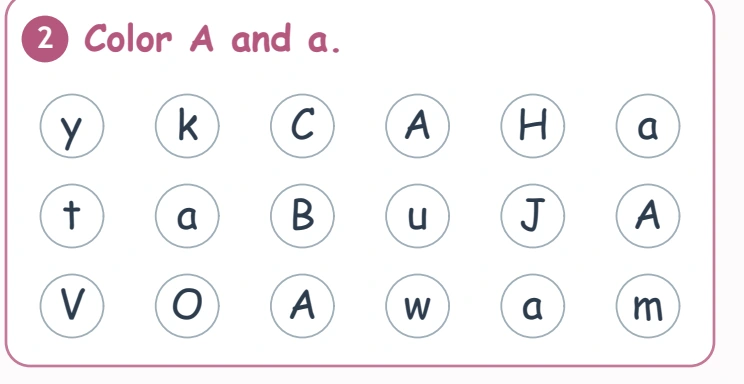
| Find Aa cases | 4, 6, 8, 12, 15, 17 | 6 matches in the Aa circle field |
| Complete apple through airplane | a | Aa: initial a |
| Picture-name check | airplane, alligator | 2 choices fit Aa |
Circle positions in this Apple Letter Lab guide are counted across each row from left to right. The three rows contain six choices apiece. An adult can use the table for a quiet check after a child has attempted a small section; the numbers are not printed directions that children must follow while searching.
Let the pictures supply names, not a pronunciation shortcut: Apple Letter Lab
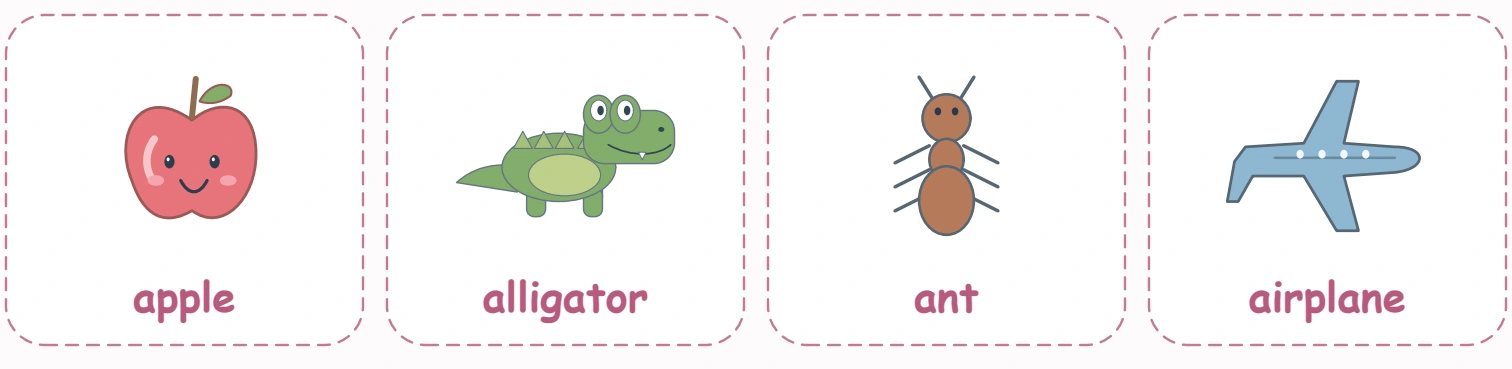
Apple and ant may be familiar, while alligator or airplane can invite a longer conversation. Say each label naturally during Apple Letter Lab. Ask the learner to point to the illustration that belongs to a spoken name, then show the written a at the beginning of that label.
These words share an initial letter, but airplane does not begin with the same simple vowel sound as apple. Keep the purpose clear: this is letter recognition and writing with picture vocabulary. It does not require a child to decode every label independently or to pronounce all four beginnings as though they were identical.
Capital A and lowercase a are a partnership: Apple Letter Lab
The large models on Apple Letter Lab give the child two forms to inspect. Their shapes differ, yet both belong to the target letter. In the colouring field, uppercase A and lowercase a both count. Finding a familiar capital does not mean the smaller form can be ignored.
Compare a chosen circle with the case model above. A child can point first and colour later. If another symbol looks similar, inspect its actual shape rather than guessing from where a previous match appeared. The source mixes both cases among eighteen symbols and supplies six matches altogether, with three of each case.
Six actions an adult might notice: Apple Letter Lab
- Reference matching. The learner checks a circle against a visible case model rather than colouring by position.
- Case inclusion. Both A and a are recognised as valid targets despite their different outlines.
- Initial placement. One small a is put before an existing word fragment instead of added somewhere inside it.
- Controlled movement. Tracing and letter-sized writing offer purposeful opportunities to aim and stop a pencil.
- Shared vocabulary. Naming an ant or alligator gives written print a concrete picture partner.
- Task switching. The child distinguishes colouring a letter circle from circling an entire picture below.
Treat these as possible observations during Apple Letter Lab, not promises of improvement after a set number of worksheets. A learner may identify a correctly with a finger while finding the small written version difficult. Recognise that visual decision separately from the steadiness of today's pencil mark.
Asha's imagined picnic-table word bank: Apple Letter Lab
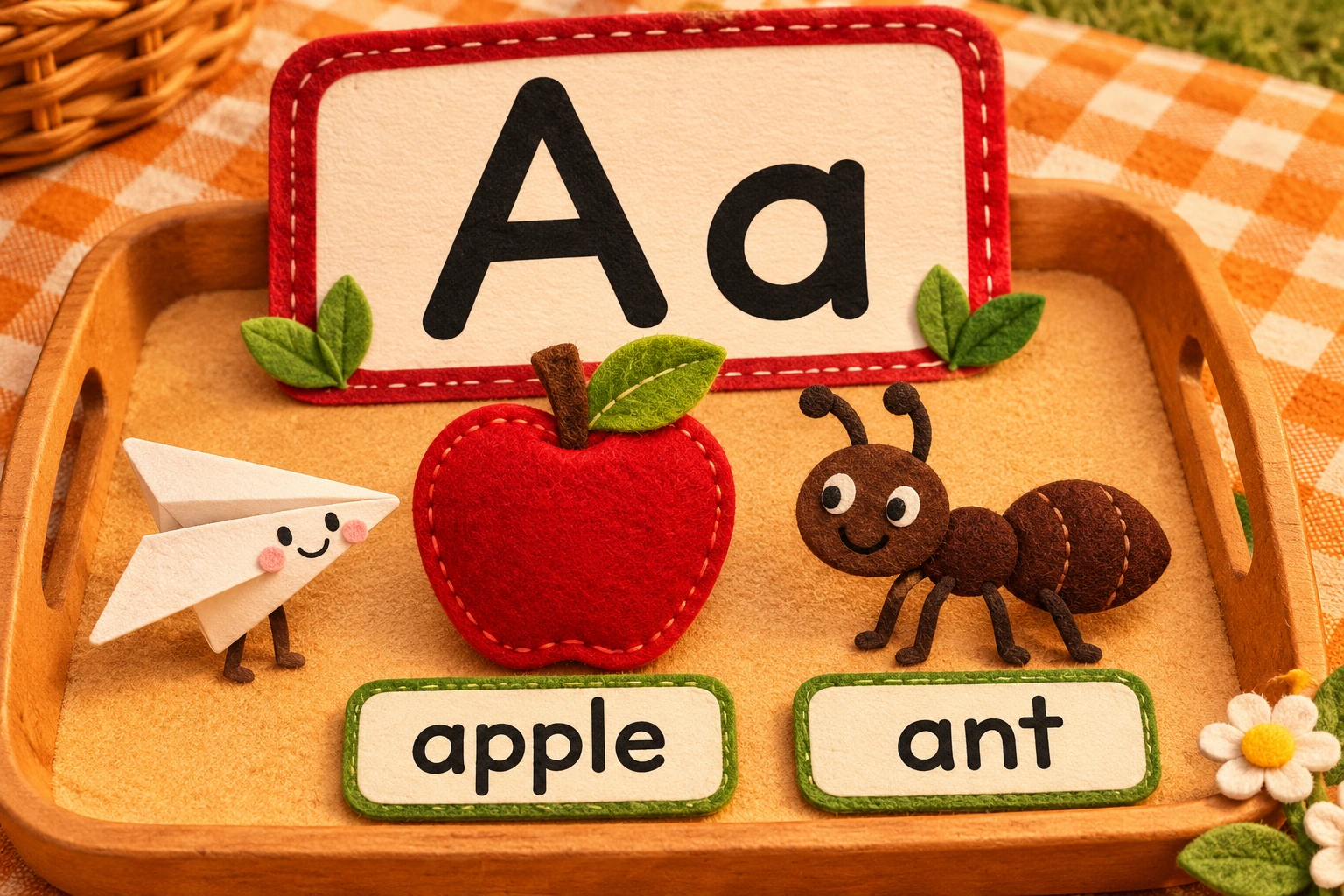
Picture Asha setting a toy airplane beside an apple at home. An adult opens Apple Letter Lab and reads the four picture labels. Asha points to airplane immediately, then studies the shortened irplane label in the writing panel. They compare it with the complete word before Asha attempts the waiting a.
This invented home example illustrates a conversation rather than a measured result. The adult can help name alligator without turning the long word into a reading test. Asha might write one initial and return to the airplane story. Leaving the remaining spaces for another visit keeps the small writing goal clear and manageable.
Trace a short stretch with the printed model in view: Apple Letter Lab
The Apple Letter Lab tracing section offers a row of six dotted A examples above seven small a guides on separate guide rows. Show which row the learner has chosen and let them follow a small amount. The page provides dotted forms without a compulsory numbered stroke sequence.
An adult may demonstrate a comfortable movement on larger spare paper before returning to the print. Keep the supplied letter form as the visual reference rather than demanding that the child copy a decorative letter from another object. If the close guide spacing becomes tiring, stop after a few models and continue with picture naming or pointing instead.
A classroom comparison between two different kinds of choice: Apple Letter Lab
For a possible classroom use of Apple Letter Lab, a teacher asks pupils to show the letter-colouring panel and then the picture-circling strip. Learners describe what receives the mark in each place: a circle containing a target case, or a complete picture whose name fits the direction. The adult names unfamiliar images before asking for a decision.
In this imagined lesson, children keep their own copies and may complete different amounts. One pupil could inspect a single row while another attempts a word gap. A teacher's note about consulting the Aa model gives a useful observation without comparing how quickly children fill the page.
Which pictures belong in the final decision?: Apple Letter Lab
The lower row of Apple Letter Lab contains airplane, tree, ball, car, alligator and duck. Airplane and alligator fit its initial-A request. Apple and ant remain part of the upper vocabulary bank, but they are not hidden elsewhere in that six-picture strip for the child to find.
Read a label if the child calls an image by another reasonable name, such as plane instead of airplane. Use the supplied name for the worksheet decision while acknowledging the spoken alternative. This keeps the printed comparison understandable and prevents a naming difference from being mistaken for a letter-recognition problem.
A page for supported early letter exploration: Apple Letter Lab
Children approximately three to six may investigate Apple Letter Lab in preschool or kindergarten with an adult nearby. Readiness for one panel does not imply readiness for all four. A child may enjoy naming pictures long before tracing every small dotted model feels comfortable.
Begin with an easy invitation: point to apple, compare A with a, or choose one circle to inspect. Offer a larger drawing surface if the small mark is physically difficult. Return to the printed task when the learner is willing. The sheet's unfinished spaces do not create an obligation to continue through tired hands or lost interest.
Five apple-and-airplane games beyond the page: Apple Letter Lab
Open a tiny airport label desk: Apple Letter Lab
Place a toy airplane beside a completed airplane word card on spare paper. A pretend passenger asks where its first letter is. The child points while an adult reads the name. Relate the label to Apple Letter Lab's initial gap without requiring another written answer.
Make an ant-sized and alligator-sized name display: Apple Letter Lab
Write the two complete words on separate large cards. Compare their lengths while finding the same initial a. The words do not need to be read independently. Their different sizes make the one-letter writing request easier to discuss.
Deliver a case partner to a picnic basket: Apple Letter Lab
Use a few large completed A and a cards alongside different letters. A toy courier brings a requested partner to the basket. Keep the printed Aa model available and allow the child to explain or point before moving a card.
Let a toy ask the wrong picture question: Apple Letter Lab
A pretend visitor points to car and asks whether its printed name begins with A. The child and adult inspect the label together. Keep the visitor's mistake friendly, giving the learner a reason to use the visible print rather than guess from the picture alone.
Build an original apple story: Apple Letter Lab
Offer spare paper for an invented picnic picture and an adult-written caption. Welcome extra characters and imaginative details there. Explain that this creative drawing differs from Apple Letter Lab's small reference-based choices, so both invention and careful comparison have a place.
Repair the particular Aa mix-up: Apple Letter Lab
Common Apple Letter Lab slips include selecting only capitals, colouring every circle, adding a capital A to a lowercase gap or searching for all four bank pictures in the final strip. Return to the specific direction and compare one example. A broad instruction to try harder does not show which kind of decision needs attention.
The full label can answer a small missing-letter question. If a child adds another a inside alligator, point to the actual waiting space before its printed fragment. Discuss the intended first letter without demanding repeated erasing. A spoken repair or a larger demonstration can finish the session constructively.
Give the next visit a familiar first choice: Apple Letter Lab
The recognisable pictures can make Apple Letter Lab inviting, while its four different actions allow a learner to return with a new purpose. Let the child choose between a short tracing attempt and another picture comparison. A predictable quiet opportunity can be more appealing when the amount is small and chosen.
Use feedback such as “You checked the complete airplane label before writing.” Alternate the worksheet with stories, objects and open drawing. Regular practice can involve one clear letter decision rather than another full page. Stop while the child can comfortably tell you what they noticed, leaving that discovery available as a starting point later.
Save an Aa edition and preserve its print size: Apple Letter Lab
Choose the supplied Learn the Letter Aa original with the free control, or use an eligible active member account for the clean Apple Letter Lab premium file. The latter keeps the apple activities and learner fields while removing website watermark, domain credits and promotional ads.
Want the other letters too? The linked library is a separate $5 purchase with twenty-six clean sheets merged into one PDF. Save your authorised Apple Letter Lab edition and inspect a US Letter preview before printing. Keep the source proportions with an unscaled setting where practical; the explanatory crops are viewing aids rather than the print master.
Another letter invitation and optional adult reading: Apple Letter Lab
Apple Letter Lab connections: Apple talk can continue in Aa Letter Finder. Compare the case pair again through Aa Worksheet, then try Kite Alphabet Gaps when an alphabet sequence feels more inviting than another apple initial.
Adults accompanying Apple Letter Lab can browse NAEYC's play information for families or explore everyday learning ideas from PBS Parents. These independent educational destinations offer optional activities beyond the download; their links do not imply endorsement or add files to this worksheet purchase.
Popular Worksheets
Printable resources families and teachers are downloading now.
 Free
 Free
 Free
 Free