
Zipper Z Zone: 4 Amazing Zz Letter Learning Games
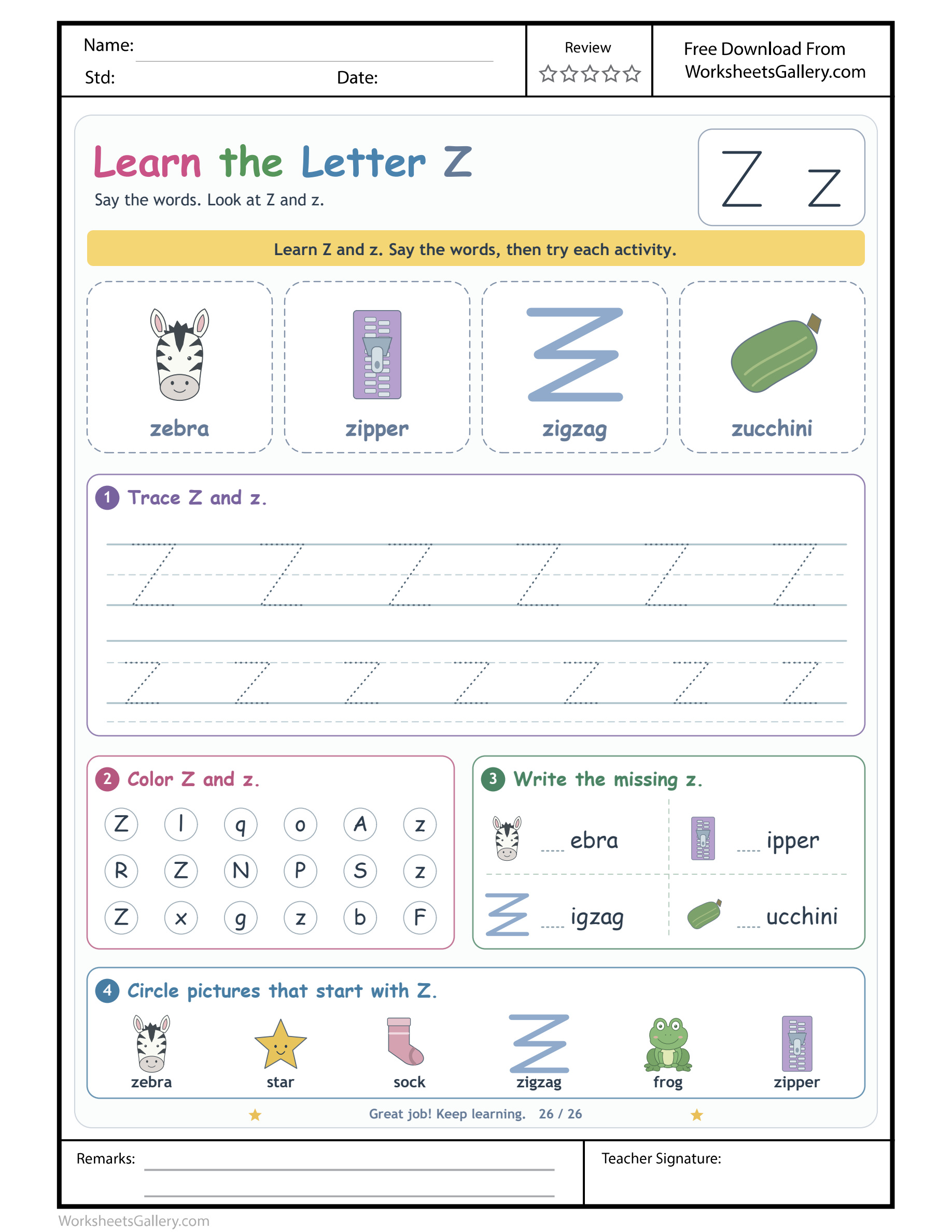
Zipper Z Zone: Follow Z and z changes of direction before using zebra, zigzag and zipper as picture-name matches.
Zippers and zebras can meet in a pretend tailor's shop, where a striped visitor needs a name label. Zipper Z Zone joins zebra, zipper, zigzag and zucchini through their first written z. Four numbered panels invite case inspection, a tracing choice, word-beginning repairs and named-picture selection, with adult reading available for every label. The zigzag drawing is a named example here, rather than a separate path the child must trace. Keep the complete references in view, welcome talk about the pictures and choose a manageable comparison or mark that gives today's Zz investigation a clear purpose.
A named zigzag is different from a new tracing route — Zipper Z Zone
Read zebra, zipper, zigzag and zucchini in the upper Zipper Z Zone bank. The zigzag drawing represents the word zigzag, whose first character is z. It does not add another numbered prewriting exercise. The actual tracing task below supplies letter models, so keep those two uses of a slanting shape distinct.
Zucchini may need adult introduction, and a child may know another familiar name for the vegetable. Read the source's chosen zucchini label before discussing its initial. Recognising that first letter does not require independently decoding its longer internal spelling or copying the full word.
Zuri's imagined striped customer: Zipper Z Zone
Picture Zuri putting a toy zebra beside a spare zipper in a pretend home shop. A grown-up reads zebra and zipper on Zipper Z Zone. Zuri finds the common beginning, then chooses one small model to inspect before deciding whether to try a written character.
This fictional scene offers a possible invitation rather than a child's documented result. An adult can write a dictated shop sign on separate paper and read it back. The toy customer can continue its story after a single print observation; completing every worksheet panel is not a condition for keeping the play going.
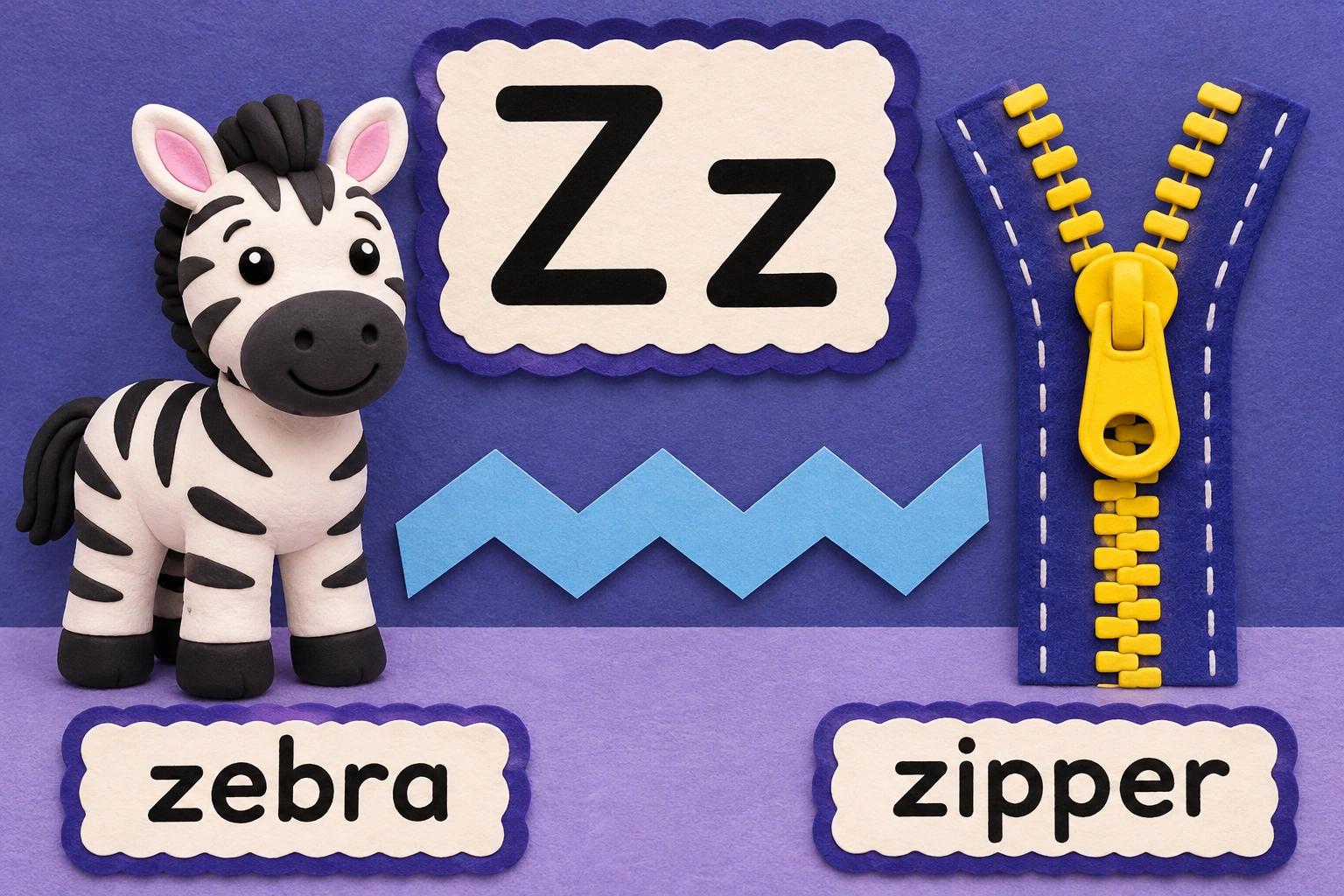
Inspect the bars and diagonal as a whole: Zipper Z Zone
Capital Z and lowercase z on Zipper Z Zone have related forms. Compare the full arrangement of upper line, diagonal and lower line, including the printed size of each case. A learner may need both references introduced even when their outlines seem similar to an adult.
Pointing to a visible feature can explain a decision without formal terms for letter parts. A candidate with one slant is not automatically a match. Leave the complete models in sight, so the child can compare actual print rather than trying to remember an example that has been hidden.
Keep a source-based adult check nearby: Zipper Z Zone
| Zipper Z Zone activity | Adult quick check | Source detail |
|---|---|---|
| Trace Z/z | 6 Z models;7 z models | Zipper Z Zone guide rows |
| Find Zz cases | 1, 6, 8, 12, 13, 16 | 6 matches in the Zz circle field |
| Complete zebra through zucchini | z | Zz: initial z |
| Picture-name check | zebra, zigzag, zipper | 3 choices fit Zz |
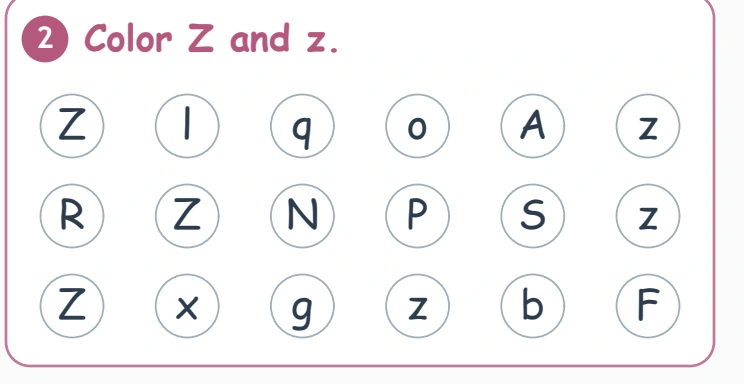
The Zipper Z Zone search has eighteen circles, counted across three rows of six. Six match Zz, with three of each case. The final strip contains three picture answers under its initial-letter instruction. These counts belong to separate panels and should not become a single marking quota for the whole page.
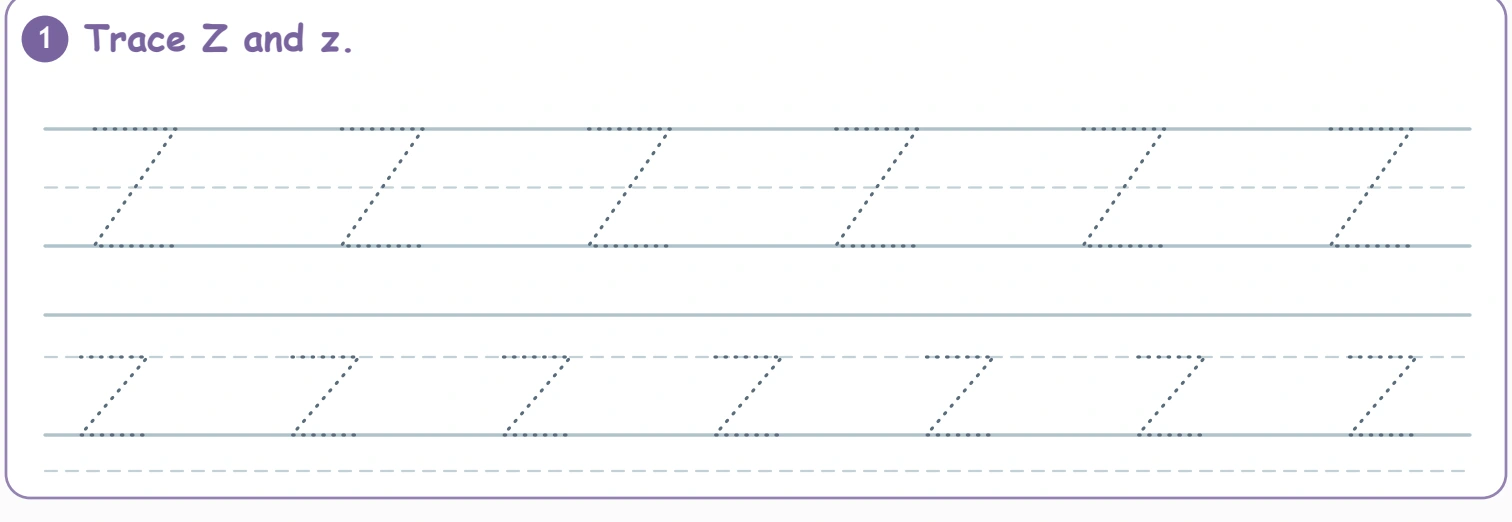
Trace a letter rather than the bank's zigzag picture: Zipper Z Zone
Six capital Z guides and seven lowercase z guides appear in the numbered tracing panel. Select a Zipper Z Zone example to examine, follow its outline by pointing and offer a pencil version when that movement feels comfortable. An enlarged Z drawn separately can make its diagonal and two bars easier to compare with the source.
The PDF has no numbered formation arrows. Keep extra adult guidance distinct from what the source itself prints. A stable page and manageable tool can support hand control, while permission to pause keeps the task comfortable. Thirteen models are available examples, not a requirement to trace through fatigue in one sitting.
Compare a circle before colouring it: Zipper Z Zone
Use both Z and z references during the Zipper Z Zone search. One row can offer enough choices to start, leaving unchosen Zz rows beneath a loose cover sheet when a smaller field helps attention. Ask what visible feature makes a candidate fit the complete target.
Verify the Zz selections against the six source matches after the search; leave a doubtful candidate for another comparison before colouring. If only capitals are noticed, show the small reference again. A candidate can be judged against the Zz model on its own. Unrelated letter names are not prerequisites for this target decision.
Five reasons to value a deliberate Zz look: Zipper Z Zone
- Instruction awareness. The named zigzag drawing can be distinguished from the separate letter-tracing task.
- Case connection. The learner can connect the large Z with its smaller partner and describe their source proportions.
- Vocabulary clarification. Reading zucchini establishes the exact label whose beginning matters.
- Reference-guided repair. The complete zipper name shows the missing initial below.
- Controlled movement. A chosen traced character offers the hand a bounded model with a clear stopping point.
These possibilities around Zipper Z Zone are not guaranteed outcomes after a fixed amount of use. Observe what the learner actually explains and how comfortable the movement feels. A correct oral selection can remain valuable when precise tracing needs more space or a different response method.
Four opening gaps take one lowercase z: Zipper Z Zone
The Zipper Z Zone fragments are ebra, ipper, igzag and ucchini. Consult the complete bank and add one small z before each chosen fragment. In zigzag, the internal z is already printed; only the initial one is absent. Leave every existing letter in place.
If capital Z is proposed, acknowledge Z as the related capital, then show the small z requested in the gap. An enlarged movable z can make the repair visible before a narrow written attempt. The learner can look back as often as useful, since the task is a comparison with a reference rather than an unaided spelling test.
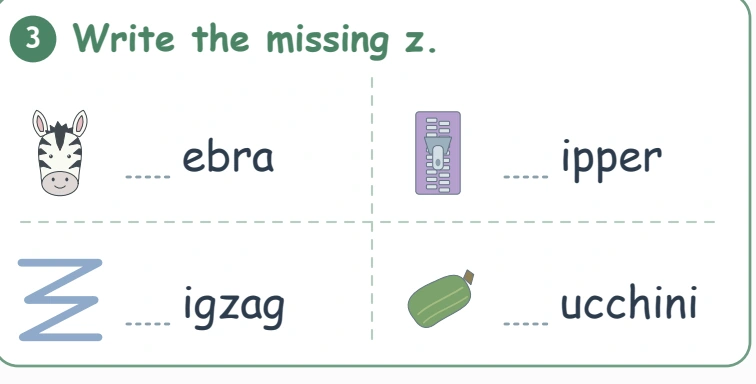
Zebra, zigzag and zipper fit below: Zipper Z Zone
The final Zipper Z Zone strip names zebra, star, sock, zigzag, frog and zipper. Zebra, zigzag and zipper meet the initial-Z instruction. Zucchini remains bank vocabulary rather than a bottom choice. Read zebra through zipper across the visible lower strip before marking any of its six pictures.
A zebra and frog could form an animal group, while sock and zipper could join a clothing conversation. Those are sensible associations in other play. In this Zz panel, membership depends on the opening character of the name printed under each drawing, so explain that rule before correcting a different meaningful connection.

A hypothetical classroom label-making counter: Zipper Z Zone
For a possible group invitation, a teacher displays a zebra picture, a zipper and completed name cards beside Zipper Z Zone. Pupils describe the objects, hear the labels and compare their first characters. Present the two Zz references at a larger size before offering individual sheets.
Give the imaginary shop visitors a choice of response: explain zebra’s initial, compare one circle with Zz or repair ipper. Ask what reference made that decision clear. Different answers can involve different amounts of handwriting in this suggested setting.
Four extensions for the striped customer's shop: Zipper Z Zone
Dictate the zebra's request: Zipper Z Zone
Invite a sentence about what a toy zebra wants from the shop. Write the striped customer’s dictated request on another sheet and read it to the storyteller. Look for zebra if the child used that name, while leaving every other part of the request open to invention.
Give a zipper a complete label: Zipper Z Zone
Place a written zipper card beside a spare zipper or picture. Read it and locate the first z. Return to Zipper Z Zone's fragment afterwards, with the full name still available so the print decision has a dependable reference.
Repair zigzag's opening only: Zipper Z Zone
Offer an igzag fragment, an intact zigzag reference and a large lowercase z. Ask which letters are already printed before placing the missing beginning. This keeps the one-gap instruction clear and avoids adding another internal z unnecessarily.
Change the counter's sorting heading: Zipper Z Zone
Use separate zebra, frog and zipper cards. First group animals, then initial-z names. Discuss what moves when the instruction changes. A different rule can make another connection relevant, with Zz's bottom selection still governed by its stated initial-letter direction.
Match the invitation to current readiness: Zipper Z Zone
Zuri’s striped visitor can introduce Zipper Z Zone in the approximate three-to-six age range, with an adult supporting the learner’s preschool or kindergarten print experience. Picture naming and pointing can be accessible before narrow tracing. Offer a stable surface, comfortable tool and larger models when needed, letting willingness and hand comfort guide the marking amount.
Common mix-ups include tracing the bank's zigzag as an extra task, accepting only capitals, adding uppercase Z to a lowercase gap or using an alternative picture name without reading its label. Show the exact instruction or reference needed to clarify the next decision. Pause or finish with an oral comparison when correction becomes frustrating.
Keep the next Zz encounter small and distinct: Zipper Z Zone
A later Zipper Z Zone visit might begin with zucchini after an earlier zebra story. One restored beginning or a single search row can give a fresh focus. Combine short worksheet encounters with books, pretend shops and everyday labels instead of requiring the same full four-panel routine every time.
Specific feedback could be “You noticed the middle z was already there before adding the first one.” Let the learner choose an interesting picture for next time and stop before fatigue dominates. An incomplete sheet can record a precise Zz observation. Return to the unchosen panels when the striped-customer story gives a fresh reason to look.
Obtain the Zz edition you can print: Zipper Z Zone
The free edition is the original supplied Learn the Letter Zz PDF. For the separate clean Zipper Z Zone file, use the premium control with a currently active eligible membership. It retains the zebra, zipper, zigzag and zucchini work while removing worksheet ads, website watermark and domain-name promotion.
The collection link leads to a distinct $5 library purchase with twenty-six clean sheets together in one PDF. Use that page for the full product. Save Zipper Z Zone through your permitted option and check US Letter paper at the source scale before printing. The downloaded PDF preserves the Z/z guides; supporting images explain them rather than replacing the print file.
Further places to look for print-rich play: Zipper Z Zone
Zipper Z Zone connections: Zipper and zebra discussions may continue through Zz Letter Spotting. Compare another Zz page in Zz Worksheet; Kite Alphabet Gaps changes the print task from one initial to a wider capital sequence.
Adults extending Zipper Z Zone can explore the play resources NAEYC provides for families and PBS Parents' collection for learning and growth. These independent sites do not endorse this worksheet or add extra files to its download.
Popular Worksheets
Printable resources families and teachers are downloading now.
 Free
 Free
 Free
 Free