
Picture Letter Library: 26 Brilliant A-Z Activity Pages
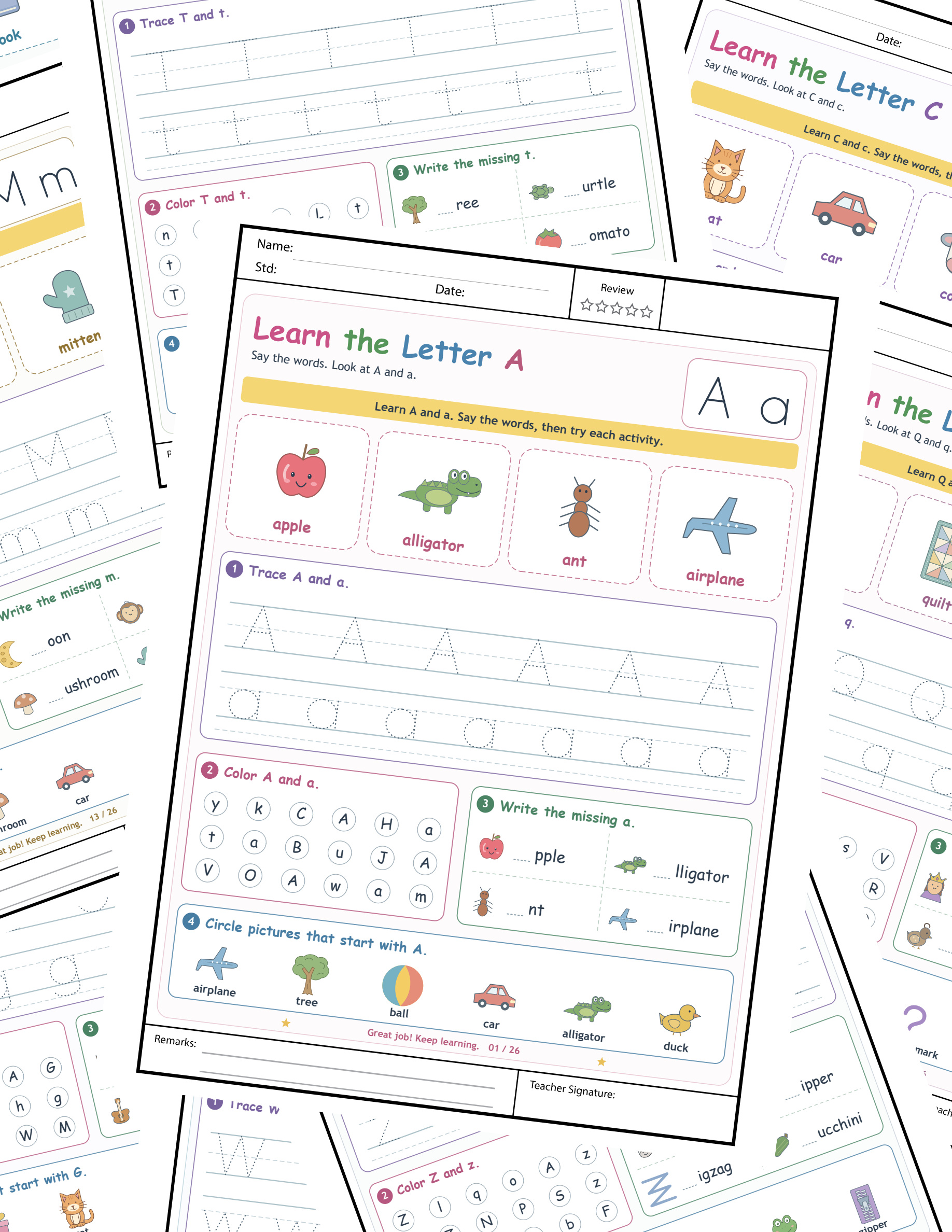
Opening an alphabet collection can feel like choosing a small conversation, rather than assigning a whole workbook. The Picture Letter Library combines twenty-six colourful letter sheets, each with a visible picture-word bank and four numbered activities. Children trace uppercase and lowercase models, find matching cases, restore one missing lowercase letter and inspect a row of picture choices. With Picture Letter Library, adults can select a single letter and a manageable task for the day. This clean A-Z collection costs $5 and keeps every supplied worksheet together in one printable PDF, including the specially worded final-x page.
Four jobs, with a picture bank to consult — Picture Letter Library
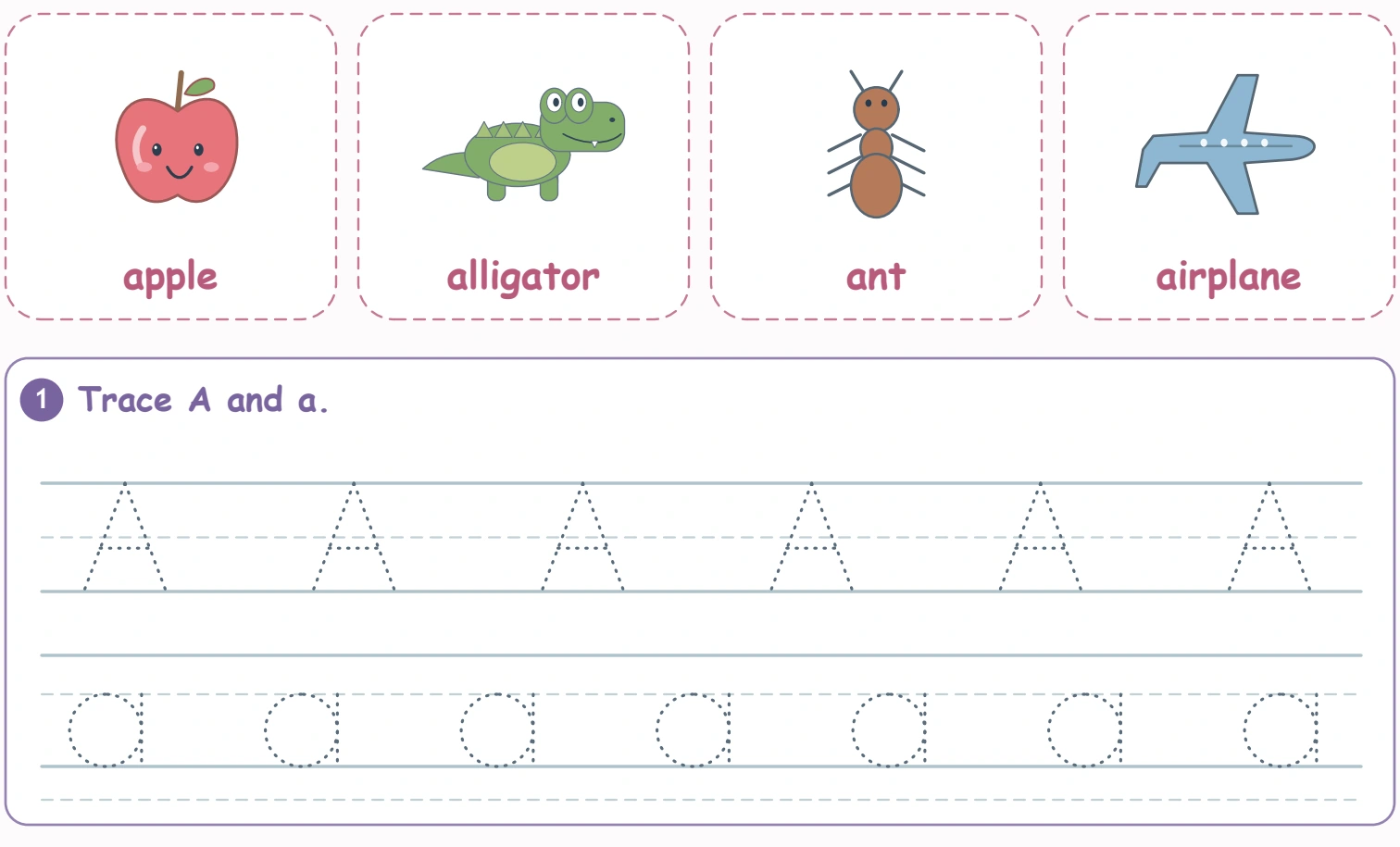
Each Picture Letter Library sheet places four named pictures above the activities. Those labels are useful references, not decorations. A child can look back at apple or bus before restoring a missing initial, and an adult can name an unfamiliar picture before asking for a decision.
The numbered panels use different actions. Tracing follows dotted letter models; colouring selects target cases among other symbols; writing restores a single lowercase letter; circling selects pictures whose printed names fit the direction. Explain the current action before handing over a pencil or crayon. Switching tasks can be interesting without requiring all four at once.
A-Z contents, kept in their supplied order: Picture Letter Library
Aa through Gg in Picture Letter Library
| Aa through Gg | Printed picture-word bank |
|---|---|
| Aa | apple, alligator, ant, airplane |
| Bb | ball, bee, book, bus |
| Cc | cat, car, cow, crayon |
| Dd | dog, duck, drum, dinosaur |
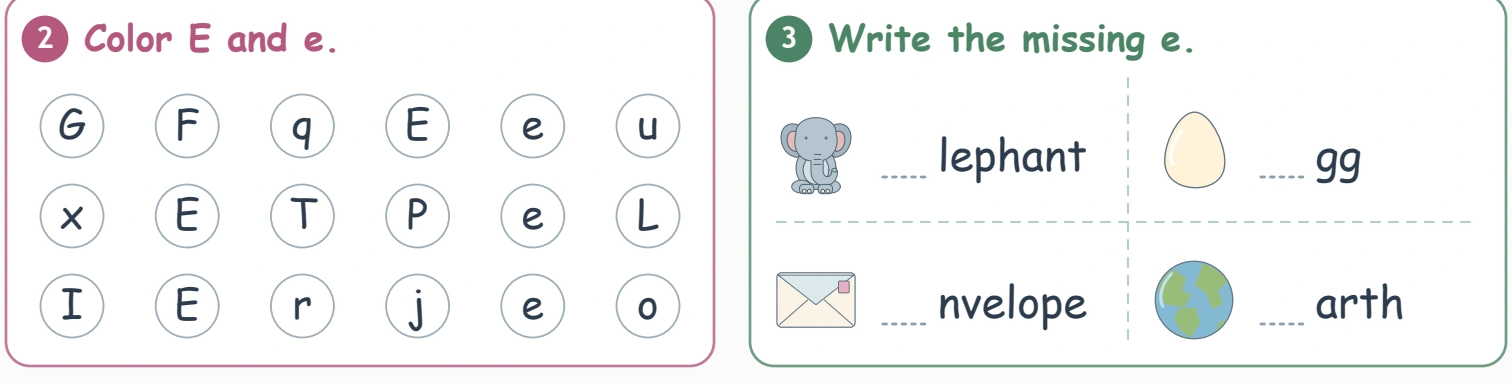
| Ee | elephant, egg, envelope, earth |
| Ff | fish, frog, flower, fan |
| Gg | goat, grapes, guitar, gift |
Hh through Nn in Picture Letter Library
| Hh through Nn | Printed picture-word bank |
|---|---|
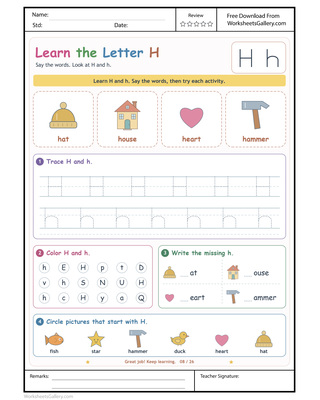
| Hh | hat, house, heart, hammer |
| Ii | igloo, ice cream, insect, ink |
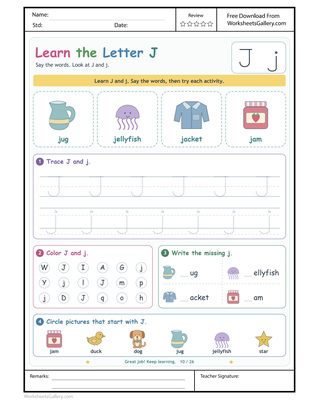
| Jj | jug, jellyfish, jacket, jam |
| Kk | key, kite, koala, kettle |
| Ll | lion, leaf, lemon, ladybug |
| Mm | moon, monkey, mushroom, mitten |
| Nn | nest, net, nose, nine |
Oo through Tt in Picture Letter Library
| Oo through Tt | Printed picture-word bank |
|---|---|
| Oo | owl, octopus, orange, ox |
| Pp | penguin, pear, pencil, pig |
| queen, quilt, quail, question mark | |
| Rr | rabbit, rocket, rainbow, ring |
| Ss | sun, sock, star, snail |
| Tt | tree, turtle, train, tomato |
Uu through Zz in Picture Letter Library
| Uu through Zz | Printed picture-word bank |
|---|---|
| Uu | umbrella, unicorn, unicycle, utensils |
| Vv | vase, van, violin, vest |
| Ww | whale, watch, watermelon, worm |
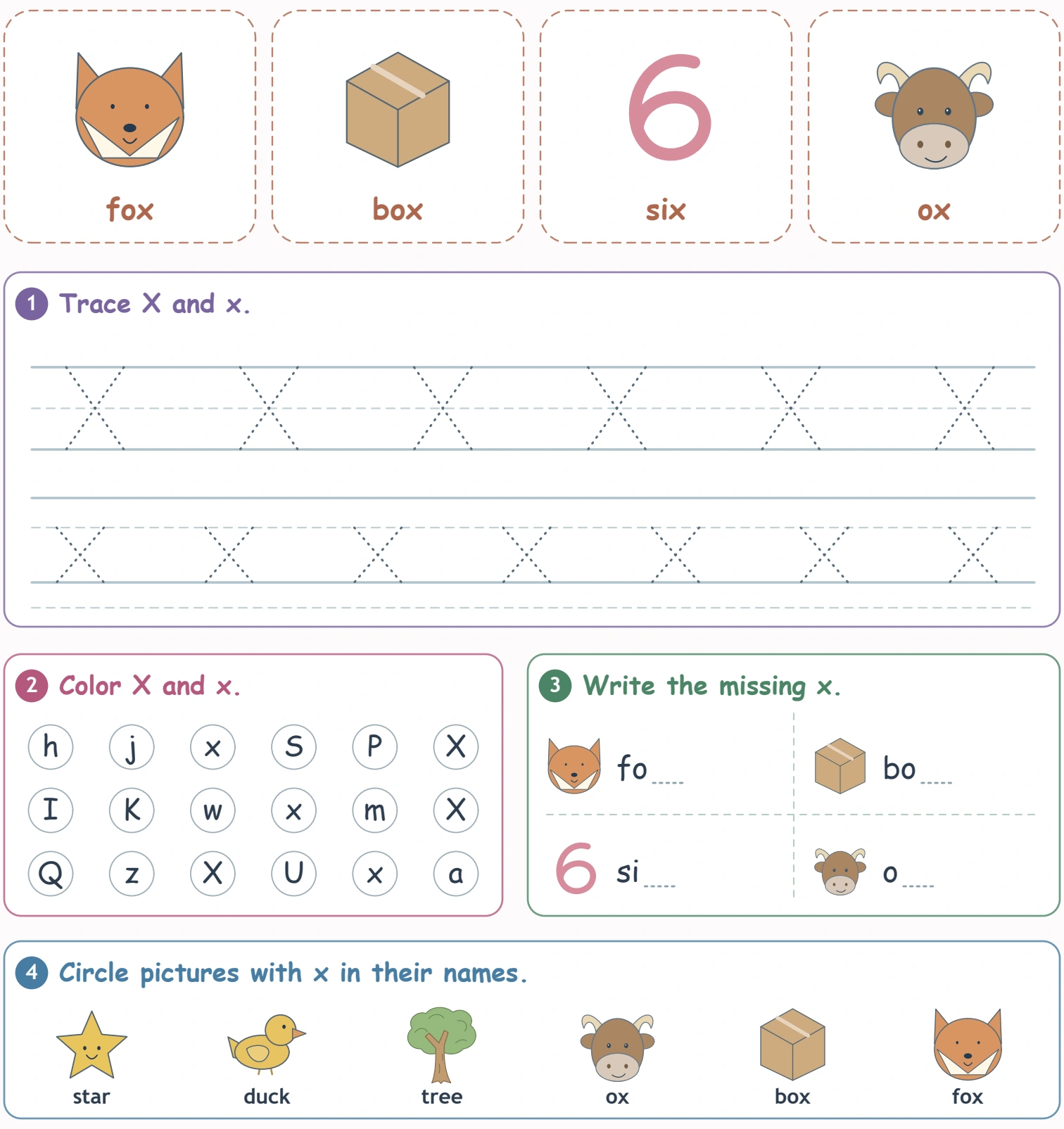
| Xx | fox, box, six, ox |
| Yy | yo-yo, yak, yacht, yarn |
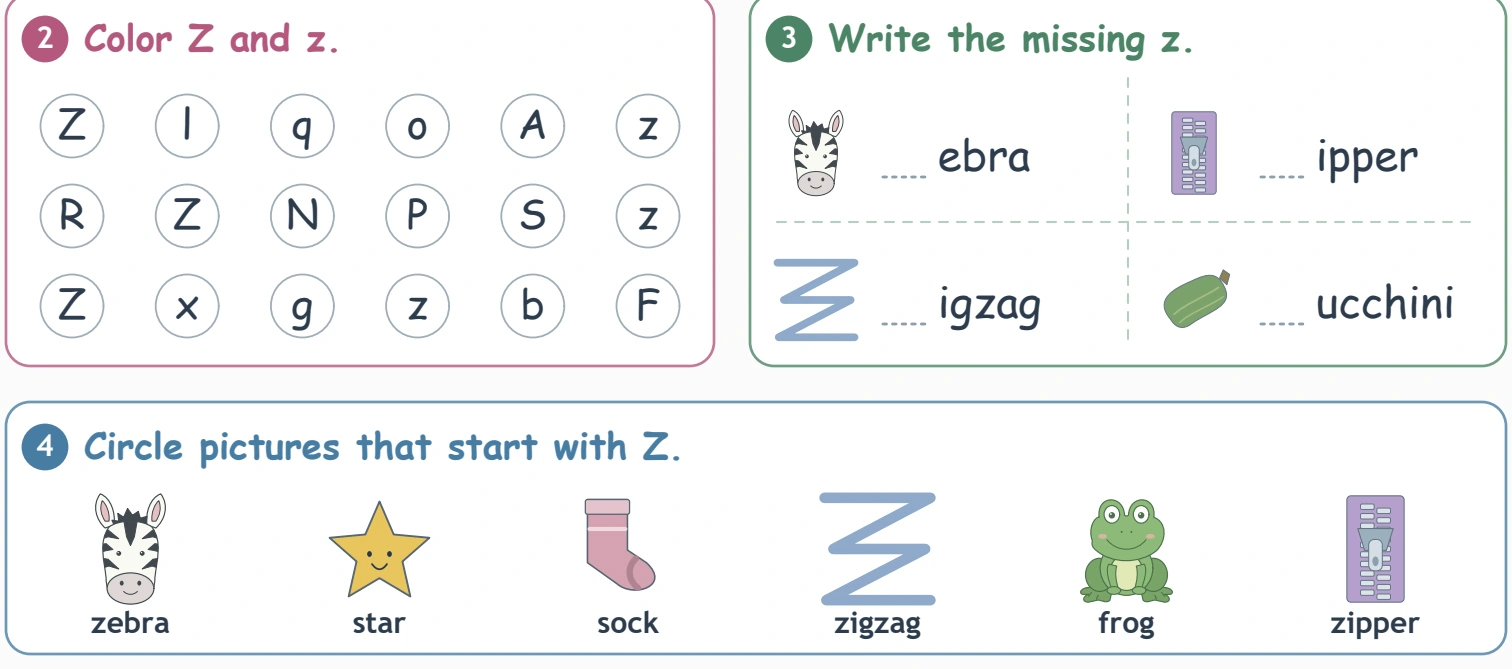
| Zz | zebra, zipper, zigzag, zucchini |
The Picture Letter Library contains these twenty-six activity pages and no invented extra letter sheets. Each complete page remains available for printing separately from the combined file. The overlapping preview shows actual cleaned contents; it is not another worksheet or an answer page to print for children.
A useful distinction between letters, names and sounds: Picture Letter Library
The Picture Letter Library centres on recognising and writing letters while discussing pictured vocabulary. That purpose matters with the vowel sheets. Igloo and ice cream share a printed initial without supplying one identical starting vowel sound. Umbrella and unicorn also deserve their own spoken names rather than being forced into one pronunciation rule.
Read a label naturally and identify the relevant written letter. Adults can make a simple sound connection where it fits the chosen word, but Picture Letter Library is not a promise that a child can independently decode every picture name. Long words such as alligator, jellyfish and zucchini remain appropriate shared vocabulary rather than reading tests.
X changes the location you inspect: Picture Letter Library
The X page in Picture Letter Library explicitly uses fox, box, six and ox. Its banner asks children to find x at the end, the writing gaps are final-letter gaps, and the picture strip asks for names containing x. Calling these initial-x examples would misdescribe the supplied activity.
Point to the final letter in a complete word before examining its incomplete version. Within Picture Letter Library, the same letter can be recognised in two cases while its word position differs from most other pages. This is a useful reason to read each worksheet direction rather than assuming the preceding letter's task wording applies unchanged.
Six things to notice during a short letter visit: Picture Letter Library
- Case partnership. A capital and lowercase form represent the same target letter even when their outlines differ substantially.
- Visual selection. The child inspects individual circles instead of colouring every symbol or relying on a neighbour's answer.
- Reference use. Returning to a complete picture label makes the word bank an active tool for the writing task.
- Controlled marking. Tracing, filling a letter-sized gap and circling a picture offer different, purposeful pencil actions.
- Vocabulary discussion. Naming an object, animal or symbol gives adult and child something concrete to talk about.
- Task awareness. Recognising whether the current job is trace, colour, write or circle supports a deliberate choice of action.
These are learning opportunities within Picture Letter Library, not guaranteed changes after a fixed number of printouts. Observe a particular choice: perhaps a child distinguishes lowercase b from a distractor or checks the word bank before writing. Such detail says more than a general judgement based on how much paper is finished.
Choose an entry point that fits the learner: Picture Letter Library
Children in preschool and kindergarten, broadly around three to six, may explore selected Picture Letter Library activities with adult support. Naming pictures and pointing to a target can come before small handwriting. A child interested in letters may still find the close dotted models tiring, so let physical comfort and willingness guide the amount attempted.
Start with one familiar picture name or one case model. If the learner is not ready to write, an adult can discuss the missing letter without turning the session into hand-over-hand completion. Larger letter constructions, stories and free marks can accompany the printable. The Picture Letter Library can wait for later visits; it does not set a deadline for mastering A through Z.
Set up a letter choice, not a completion pile: Picture Letter Library
Select a Picture Letter Library page that has a useful connection to the child's current interests, perhaps a train, a frog or a toy watch. Read the four picture labels together. Show the large case partners and ask which activity sounds inviting. Explain the relevant direction using the actual panel rather than a generic instruction to do the page.
For Picture Letter Library tracing, each sheet provides six uppercase models followed by seven lowercase models. For the circle search, both cases count. For the word task, one lowercase character belongs in each gap. The lower picture row contains six choices, but only two or three match, depending on the page. Revisit the word bank whenever a picture name is uncertain.
Noor's imagined breakfast-table letter shelf: Picture Letter Library
Picture Noor bringing a toy bus to a quiet home table. An adult selects the B sheet from Picture Letter Library, names ball, bee, book and bus, then invites Noor to locate the bus label. Noor recognises the object immediately but needs help deciding which small printed form is b.
This invented home situation illustrates a teaching exchange, not a report of measured progress. The adult using Picture Letter Library can point between the large lowercase model and the word's first letter. Noor may colour one matching case and return to bus play. A brief, understood connection is a reasonable result even when most activity spaces remain for another day.
An imagined classroom with different useful tasks: Picture Letter Library
In a possible classroom arrangement, a teacher offers several Picture Letter Library letters alongside books and construction materials. One learner names the Q pictures with an adult, another traces a few S models, and a third compares the W circle choices. Everyone need not be on the same letter or complete the same quantity of work.
The teacher observes a narrow action at each seat. Did the child inspect the uppercase partner as well as the lowercase one? Did they use the printed word to confirm an unfamiliar picture? These are plausible observation questions for this imagined lesson, not promises of a particular classroom outcome. Preserve time for conversation instead of making the collection a race through twenty-six pages.
The search has six matches, but picture answers vary: Picture Letter Library
Every Picture Letter Library letter field contains eighteen circles in three rows of six. Three uppercase targets and three lowercase targets make six matches. A child can inspect a row, pause and continue later. The printed distractors are part of the comparison; they are not extra letters to colour merely because they look familiar.
The Picture Letter Library picture strip works differently. Some pages have two matching names; others have three. Do not ask a child to find all four vocabulary-bank pictures in every strip. On the E page, egg and envelope are the selections, while elephant and earth remain useful reference words above. Reading the actual labels prevents the count from becoming a guessed rule.
Five letter-library games after the printed task: Picture Letter Library
Open a picture-name listening desk: Picture Letter Library
Choose two familiar objects from a selected sheet and name them naturally. Let a toy visitor ask which written label belongs to each one. The child can point while an adult reads. Connect the object and print without expecting independent reading of every word in Picture Letter Library.
Deliver a capital to its lowercase partner: Picture Letter Library
Make a few large completed case cards on spare paper. A pretend courier carries a capital to its matching lowercase home. Keep the pair models available for checking and use only a few choices at first. This broad-scale game can provide a break from small circle searches.
Curate an end-letter display: Picture Letter Library
After exploring X, arrange completed fox and box labels so their last letters are easy to inspect. Add a simple object or picture beside each. Discuss where x appears. This extension of Picture Letter Library keeps the final-letter purpose accurate without inventing an initial-x story.
Build a word-bank help counter: Picture Letter Library
A toy character forgets which letter belongs in a short gap. The child points to the complete reference word while an adult voices the question. Keep the activity light and cooperative, demonstrating that using a visible word bank is a sensible strategy rather than cheating.
Design a small letter exhibition: Picture Letter Library
Choose one completed circle search or one carefully traced case pair for a display. Ask the learner to explain a decision, perhaps distinguishing h from H. A spoken introduction can be recorded by an adult. Celebrate the Picture Letter Library explanation, not the number of finished Picture Letter Library pages on the wall.
Avoid shortcuts that change the learning request: Picture Letter Library
Common problems include colouring only capitals, filling a lowercase gap with a capital, choosing pictures by an alternative name or treating every vowel word as the same sound example. Check the supplied model and label together before correcting a mark. In Picture Letter Library, a picture is a vocabulary prompt with a printed name to consult.
A missing letter is a small writing job, not an invitation to rewrite the whole label. For Q, the following u remains printed; for X, the gap belongs at the end. If a small correction becomes frustrating, discuss the answer orally or return to a larger case model rather than requiring repeated erasing.
Give a return visit something familiar to begin with: Picture Letter Library
The colourful pictures can make Picture Letter Library welcoming, while the repeated four-activity arrangement provides a recognisable choice. Let a child revisit a favourite letter with a different action: a picture discussion one day, a short case search another. Familiarity need not mean doing an identical full page again.
Name the strategy you observed; for example, “You looked at the complete word before choosing your letter.” Mix short paper sessions with stories, objects and movement. Regular opportunities can be brief and voluntary. Close the library after an observation the child can explain, and use that remembered example to plan another letter invitation.
Purchase the complete clean collection for $5: Picture Letter Library
Use the Picture Letter Library purchase control, sign into the website if requested and complete the $5 checkout. Once the purchase is authorised, save the protected PDF through its download control. This separately priced collection uses purchase access; active membership alone does not unlock its primary file.
The purchased Picture Letter Library edition contains all twenty-six supplied sheets with website watermark, domain names and promotional advertising removed. Choose US Letter paper and keep the original dimensions using Actual Size or a 100% scale setting. Inspect a print preview before producing a class set. The PDF is the printable resource; the layered collage is a browsing preview of the included pages.
Related letter resources for another visit: Picture Letter Library
Picture Letter Library connections: The wider library can be compared with Alphabet Wordwork Collection. For a single Aa starting point, Aa Worksheet offers another invitation. Consider Kite Alphabet Gaps when the next question concerns alphabet order rather than one picture name.
Adults planning play around Picture Letter Library may explore NAEYC's family resources about play and PBS Parents' Learn and Grow activities. These independent education websites offer optional ideas beyond this collection. Their links do not imply sponsorship, supply additional purchased pages or change the worksheet directions.
Popular Worksheets
Printable resources families and teachers are downloading now.
 Free
 Free
 Free
 Free