
Yarn Y Yard: 4 Clever Picture-and-Letter Adventures
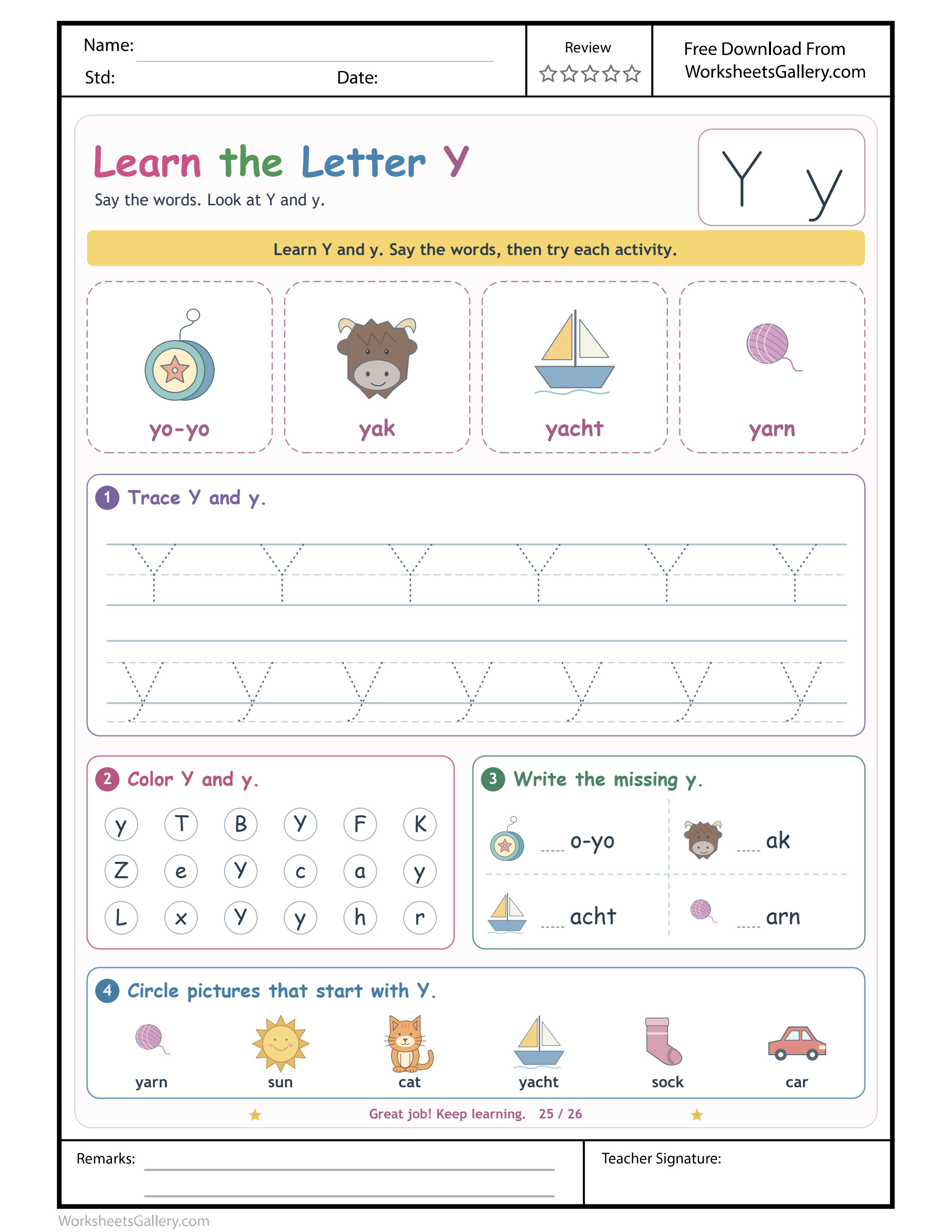
Yarn Y Yard: Use the supplied yacht and yo-yo labels as adult-supported vocabulary while keeping lowercase y in each gap.
Yarn can become a pretend harbour rope, linking a little yacht with a lively Yy conversation. Yarn Y Yard gathers yo-yo, yak, yacht and yarn around four numbered print tasks. Children can trace the cases, inspect letter circles, restore lowercase beginnings and select pictures by their names. An adult can read unfamiliar labels and keep the complete references available throughout. The aim is a clear comparison with one visible initial, rather than independent reading of every spelling. Begin with a drawing that invites talk, then offer speech, a pointed choice or a willing pencil mark for today's visit.
Read yacht before judging its first character — Yarn Y Yard
The upper Yarn Y Yard bank names yo-yo, yak, yacht and yarn. Yacht may be called boat or sailboat in ordinary conversation. Those names can be reasonable descriptions, while this particular source supplies yacht. Read that label aloud before asking the learner which initial belongs to it.
The spelling inside yacht need not become an independent decoding challenge. A child can identify its first written y with adult reading support. Yak may also need a brief animal introduction. Meaningful vocabulary gives the print a reference while keeping the worksheet's immediate letter task accessible.
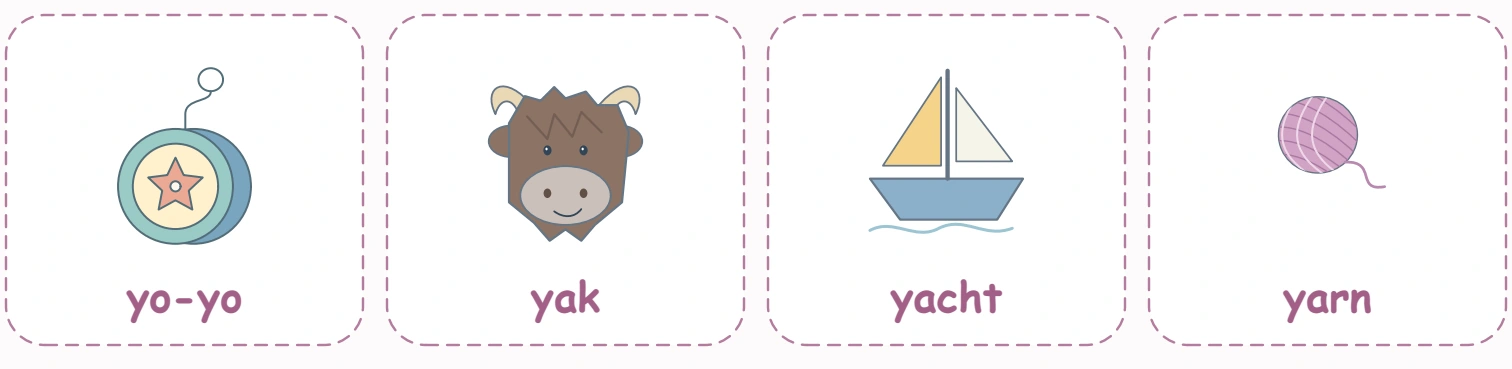
Two y characters in yo-yo do not mean two gaps: Yarn Y Yard
The complete yo-yo label contains y twice, but Yarn Y Yard removes only the first one in its writing panel. The remaining o-yo fragment is already printed. The learner adds one lowercase y at the beginning and leaves the second y and hyphen in place.
Pointing between the intact label and fragment makes that small repair clear. Do not ask for the entire word again or add a new character at every remembered y position. The activity concerns the actual waiting space rather than the total number of target letters inside a word.
Yarae's imagined yarn harbour: Yarn Y Yard
Picture Yarae arranging a short piece of yarn beside a paper yacht at home. An adult reads their Yarn Y Yard labels and compares the first characters. Yarae chooses the small y model to inspect, then points out where it differs from the capital nearby.
This fictional scene is an activity suggestion, not a report of a child's measured progress. The adult can write a dictated harbour sentence on spare paper while Yarae continues arranging the boats. One clear print comparison can belong in the play without requiring all worksheet panels before the story moves on.
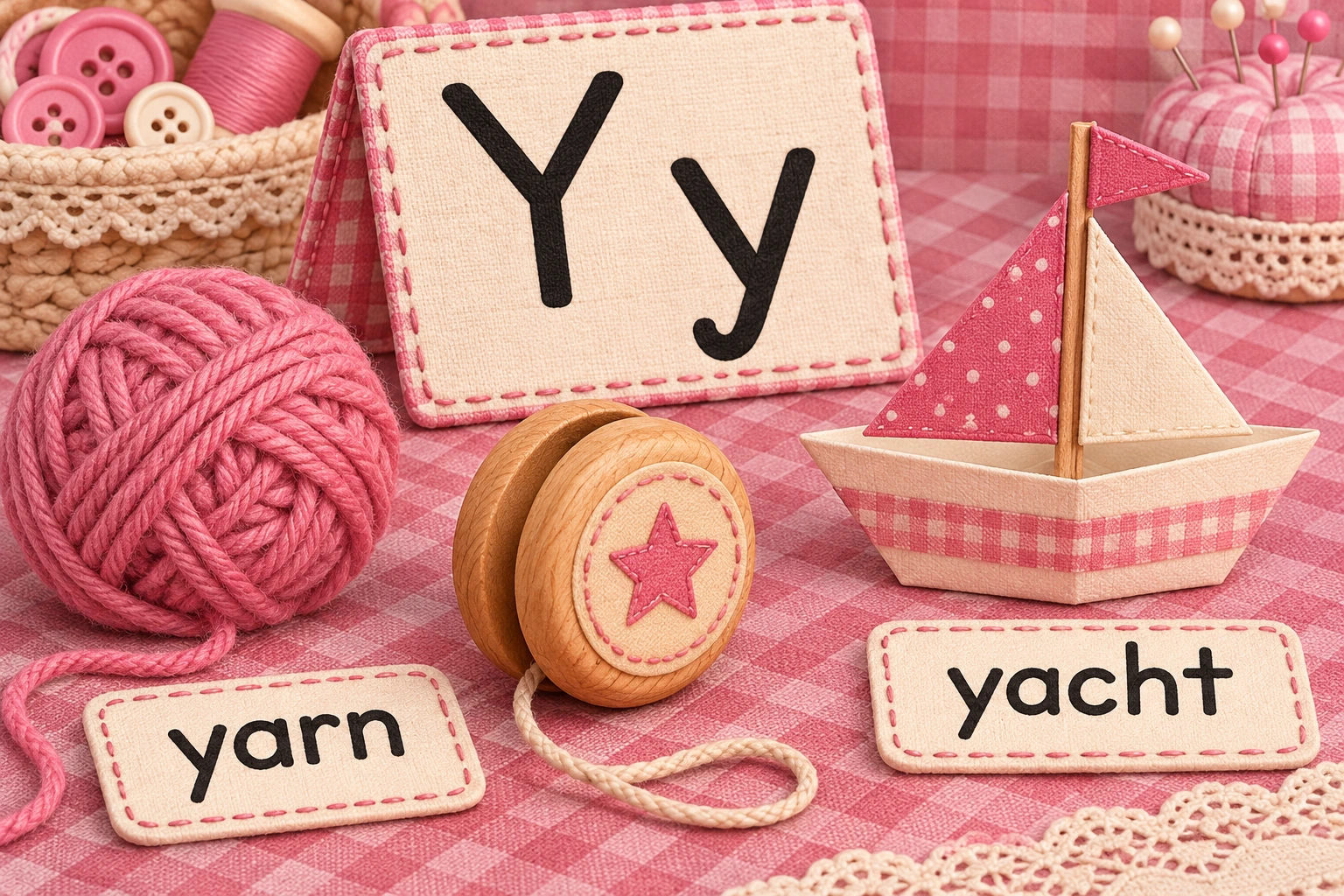
A compact adult reference for the four panels: Yarn Y Yard
| Yarn Y Yard activity | Adult quick check | Source detail |
|---|---|---|
| Trace Y/y | 6 Y models;7 y models | Yarn Y Yard guide rows |
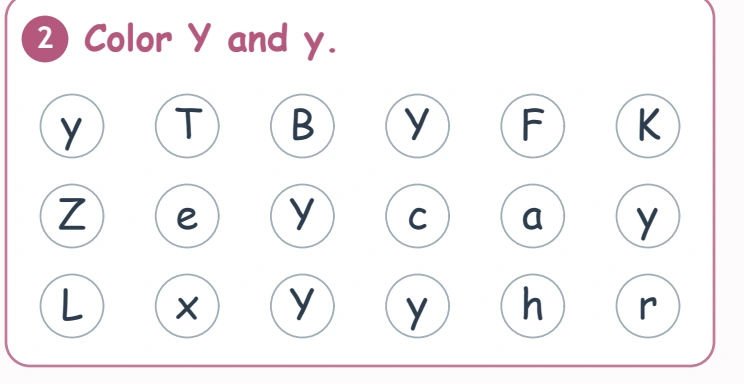
| Find Yy cases | 1, 4, 9, 12, 15, 16 | 6 matches in the Yy circle field |
| Complete yo-yo through yarn | y | Yy: initial y |
| Picture-name check | yarn, yacht | 2 choices fit Yy |
The Yarn Y Yard circle field has eighteen candidates in three rows of six. Three Y targets and three y targets fit the letter rule; the picture panel separately offers two matching names. Count positions across rows when checking, keeping the recognition count separate from the picture total and the number of y characters inside yo-yo.
Inspect the small y's lower extension: Yarn Y Yard
Capital Y and lowercase y on Yarn Y Yard need their own introductions. Compare the upper branching arrangement with the small model's extending lower part. A learner may know the letter name while needing help to see how the lowercase reference sits in the tracing guide.
Pointing can explain a difference without formal names for the parts. Use a larger adult example on separate paper when placement is hard to discuss at the printed size. Recognising y’s shape and placing its lower extension are two observations that can call for different help, so do not infer one solely from the neatness of the other.
Choose one tracing comparison to begin: Yarn Y Yard
Six capital Y guides and seven lowercase y guides appear on Yarn Y Yard. Choose one Yy guide to look at closely, then decide whether following it with a finger or pencil is comfortable. Keep the page steady and leave the larger case references in sight.
No numbered route arrows appear in the PDF. Any adult demonstration is extra guidance, rather than a sequence the source itself prescribes. If the hand tires, pause or switch to a pointed case choice. Thirteen printed examples are available models, not a compulsory workload for a single sitting.
Look across the circles with both cases in view: Yarn Y Yard
During the Yarn Y Yard recognition task, compare each candidate's full form with Y or y before colouring. One row can be a manageable starting area, and temporary separate paper can cover the others if eighteen choices feel distracting. Ask what detail makes a choice fit.
After the Yy search, an adult can compare the selections with the six source targets. Uncertain candidates deserve another look rather than a rushed mark. Finding only capitals may call for another small-case comparison, while a candidate sharing one slant needs its whole form checked. Naming every distractor is not necessary to answer the target question.
Five kinds of work to notice during Yy: Yarn Y Yard
- Label clarification. Reading yacht establishes the particular word whose beginning matters.
- Case awareness. The learner can connect a capital Y with its different-looking small partner.
- Spatial comparison. The lowercase extension provides a visible feature to inspect near the writing line.
- Precise repair. Noticing the existing o-yo fragment keeps a one-character task from becoming a rewrite.
- Controlled movement. A selected trace gives the hand a bounded job with a clear reference.
Yarn Y Yard provides invitations to observe Yy reasoning over several brief encounters, with the learner’s own responses supplying the useful evidence. Notice the actual explanation and hand comfort. A learner may make an accurate initial decision orally while needing a larger space for writing; preserving that response keeps the reasoning task meaningful.
Four beginnings take one lowercase y each: Yarn Y Yard
The Yarn Y Yard fragments are o-yo, ak, acht and arn. Match them to the complete names above, then put a small y in each selected opening space. Leave the remaining letters and the yo-yo hyphen unchanged. Longer yacht requires no more missing print than shorter yak.
If capital Y is suggested, acknowledge Y as a related case, then compare the little y required in this particular space. A large movable y can make the repair visible before narrow handwriting. Keep the bank available, since consulting a printed reference is a sensible part of this task rather than a failure to remember.
Yarn and yacht are the lower selections: Yarn Y Yard
The last Yarn Y Yard strip names yarn, sun, cat, yacht, sock and car. Yarn and yacht meet the initial-Y instruction. Both yo-yo and yak stay in the upper vocabulary bank; neither is offered as a lower selection. Read the actual six labels before deciding what to mark.
A yacht and car could form a transport group, while yarn and sock might share a clothing story. Those connections are meaningful under other rules. Here each provided name’s opening y decides membership, so explain the current instruction before correcting a different sensible association.
A possible classroom harbour-label discussion: Yarn Y Yard
For a hypothetical group invitation, a teacher places a paper yacht and yarn beside completed labels near Yarn Y Yard. Pupils describe what they see, hear the particular names and inspect their first y. A large case pair can introduce the two search targets before individual responses begin.
One child might point at a circle while another adds a missing small character. Let pupils describe how a label supported a Yy decision, whether their answer was spoken or written. The imagined harbour station accommodates that difference without prescribing equal handwriting amounts.
Four extensions from the Yy harbour: Yarn Y Yard
Dictate a yacht's destination: Yarn Y Yard
Invite a sentence about where a paper yacht is travelling. Record the learner’s chosen destination in a short caption. Read the caption aloud and inspect yacht when it occurs, keeping the rest of the voyage open to the storyteller’s ideas.
Clarify a name beside its picture: Yarn Y Yard
Place a completed yacht card beside a toy boat and discuss alternative names. Return to yacht for the first-letter comparison. This extends Yarn Y Yard's label-based rule without suggesting that boat is an unacceptable everyday description.
Repair only yo-yo's opening: Yarn Y Yard
Offer an o-yo fragment, an intact yo-yo reference and a large lowercase y. Ask what is already printed before sliding the character into place. This preserves the one-gap task and avoids adding a second y where one already exists.
Compare a larger small-case placement: Yarn Y Yard
Show an enlarged y against a wide ruled line, with a separate Y reference beside it. Inspect the lower extension, then look back at the source model. Keep the demonstration separate from any claim of numbered formation instructions on the PDF.
Adapt the demand to readiness: Yarn Y Yard
Yarae’s harbour play provides one context for Yarn Y Yard, generally around three to six years with preschool or kindergarten assistance suited to the child. Broad letter cards can let Yarae explain an initial before small tracing is comfortable. A steady table and manageable tool support any chosen marks; her interest and hand comfort determine when to pause.
Typical mix-ups include judging yacht by an alternative name without reading its label, adding an unnecessary second y, searching only capitals or writing Y in a lowercase gap. Show the particular existing print that resolves the uncertainty. If correction becomes frustrating, end with a clear spoken comparison rather than repeated erasing.
Make another harbour visit small and fresh: Yarn Y Yard
A later Yarn Y Yard encounter might focus on yak after an earlier yacht story. A single y repair may give the next harbour visit all the direction it needs. Combine those brief returns with books, pretend journeys and everyday labels rather than requiring an identical full-sheet routine.
Specific encouragement could be “You checked what was already printed before adding your y.” Yarae can nominate the next harbour label before attention fades. Her partly marked page can still preserve a useful observation, while remaining panels stay available for a future invitation.
Save the Yy file your account can access: Yarn Y Yard
The uploaded Learn the Letter Yy original can be downloaded using the free option. A member whose eligible access is active can choose the separate clean Yarn Y Yard premium PDF. The one-y gaps, hyphen and all other activities stay intact when the website watermark, promotional ads and domain text are removed.
The library page offers its complete twenty-six-sheet clean PDF through an independent $5 purchase. Choose that product for the whole alphabet. Save the authorised Yarn Y Yard file and inspect its US Letter page at original dimensions before printing. The PDF holds the intended guide spacing; harbour artwork and crops are explanatory page images.
More routes into meaningful written names: Yarn Y Yard
Yarn Y Yard connections: Yacht vocabulary can accompany Yy Letter Discoverer. A different Yy approach appears in Yy Worksheet. After the harbour labels, Builder Letter Check offers a separate question about capital order.
Adults extending Yarn Y Yard can explore PBS Parents' resources in the Learn and Grow area and NAEYC's collection on play for families. These independent education links do not endorse this worksheet or add content to its downloaded PDF.
Popular Worksheets
Printable resources families and teachers are downloading now.
 Free
 Free
 Free
 Free