
Fox Final X: 4 Brilliant End-Letter Learning Tasks
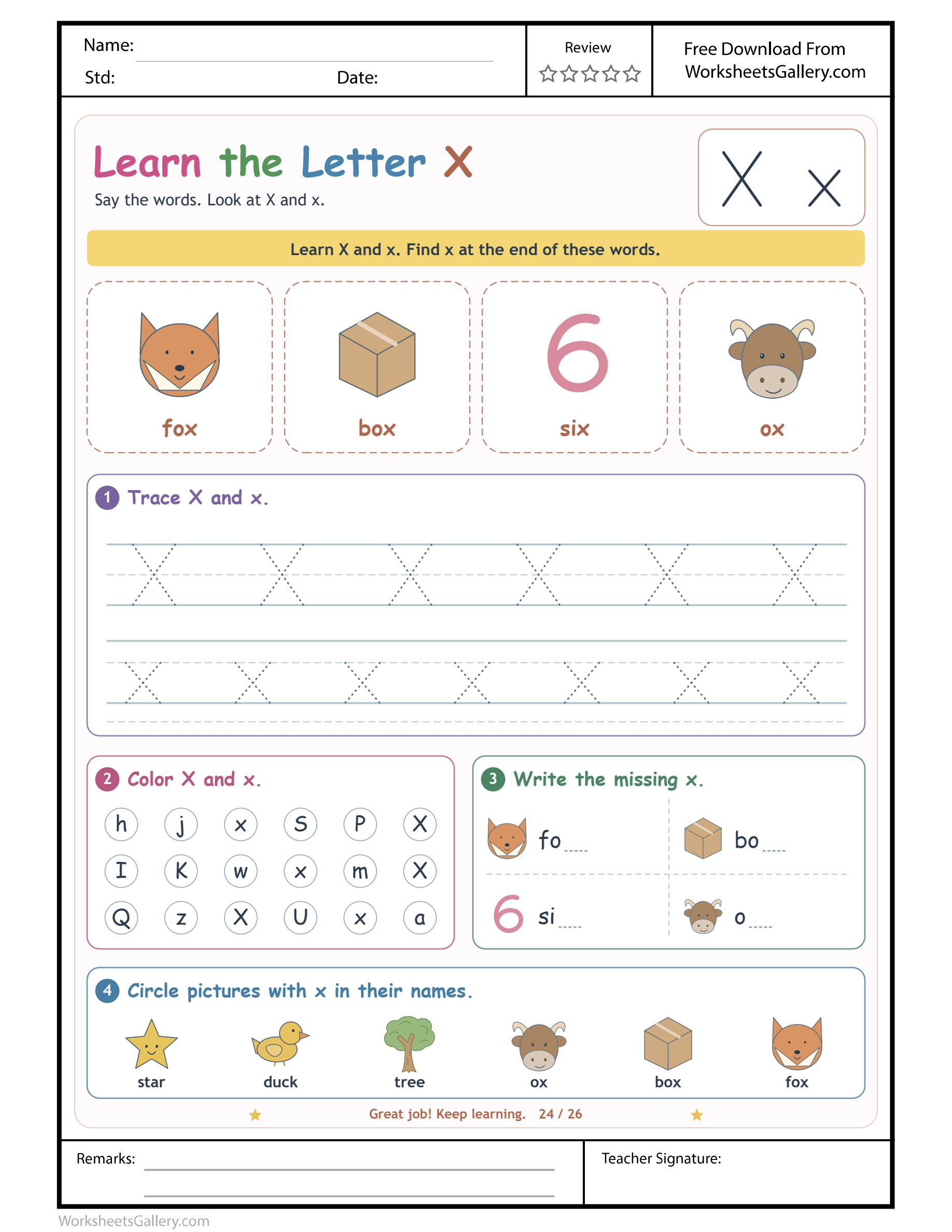
Fox Final X: Restore final x in fox, box, six and ox rather than pretending these are initial-x words.
Foxes make a useful surprise in an alphabet set: their names do not begin with x, but they end with it. Fox Final X follows the source's end-letter direction through fox, box, six and ox. Children can trace Xx, find the two cases, supply missing final lowercase characters and select pictures whose names contain x. An adult can read the complete labels and point to the right-hand end before a pencil is used. This page rewards checking where the letter belongs, rather than carrying an initial-letter rule over from another worksheet without looking again.
Begin at the end of a written name — Fox Final X
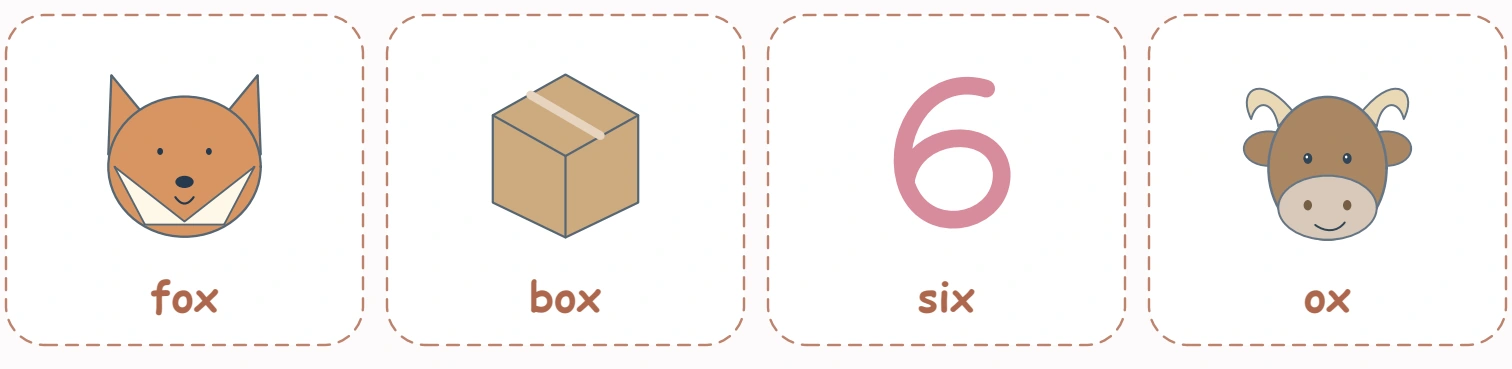
Read fox, box, six and ox in the upper Fox Final X bank. Point to the final x in each label. These are not examples of words beginning with x, and the PDF explicitly asks learners to find x at the end of words. Keep that position central in the explanation.
The instruction has changed within the alphabet collection. A child who looks first at f in fox is noticing a real letter, but this task asks for the other end. Show the complete label and locate its last character together, giving the learner a clear reference for the new rule.
Six is a number name used as a picture label: Fox Final X
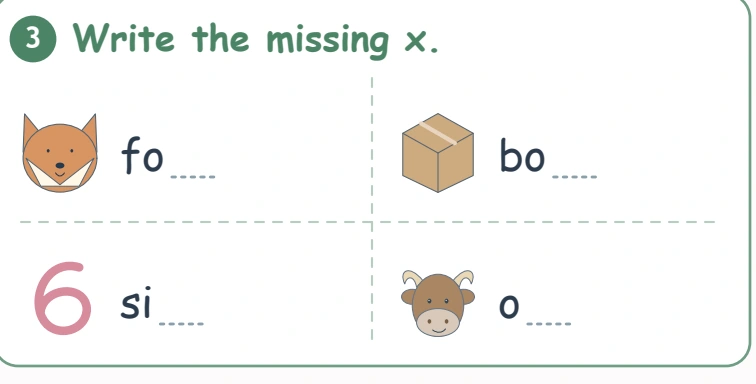
The Fox Final X numeral drawing is named six. Its written word ends with x, while the numeral itself is a different symbol. An adult can supply the name, then compare its final character with the Xx models. The picture does not prescribe six answers in every panel.
The circle search does happen to contain six case matches, but the picture panel contains three selections. Keep those facts separate rather than teaching that a pictured numeral determines an answer total. The relevant evidence for the picture choice is the supplied written name.
Xena's imagined fox delivery: Fox Final X
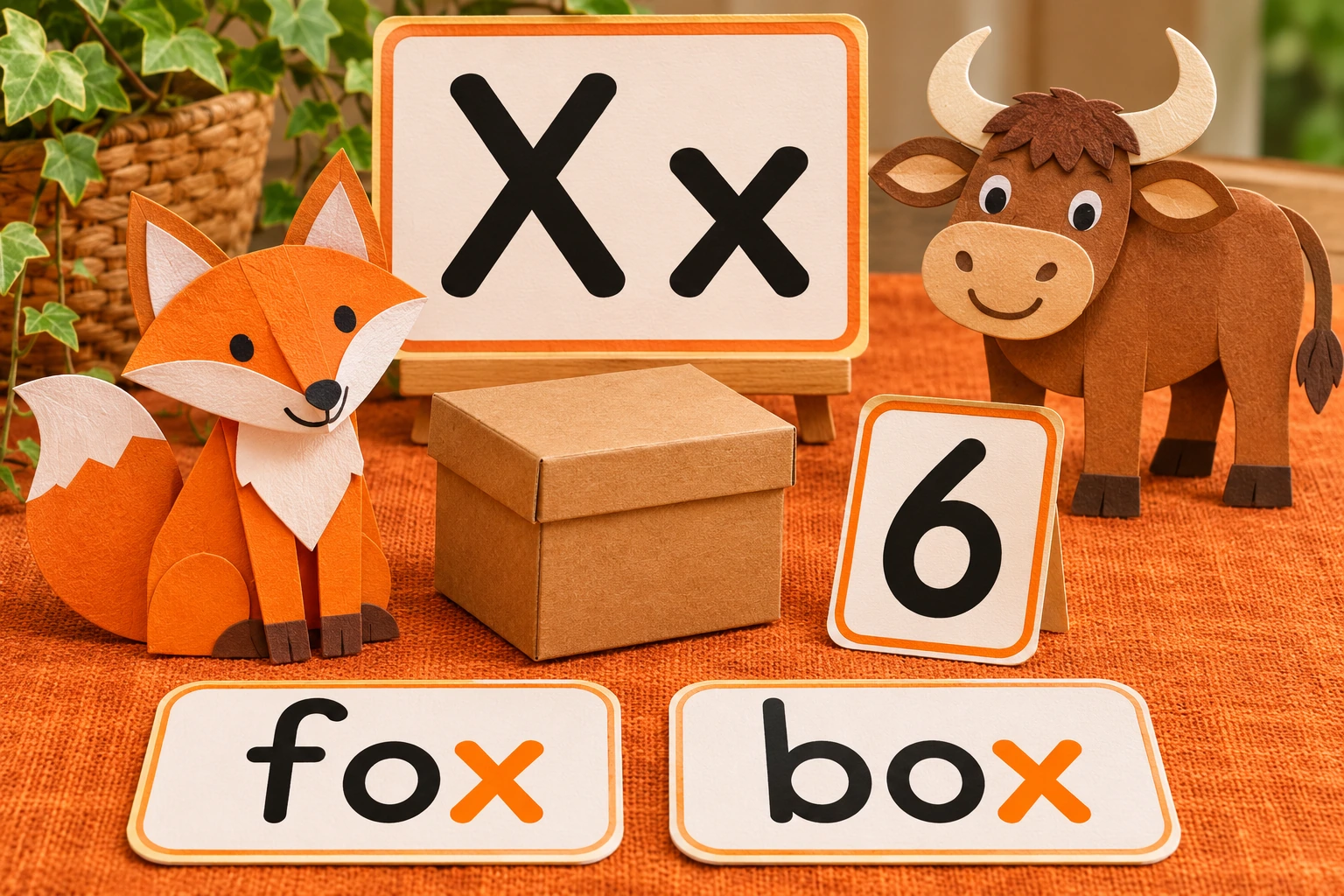
Picture Xena putting a toy fox beside a small cardboard box at home. A grown-up reads fox and box on Fox Final X, then asks where x sits in each written label. Xena points to the right-hand end and places a large x after a fo fragment.
The imagined delivery can continue while an adult records Xena’s message on another sheet. Read the note together and inspect a final x if one occurs. One explained end-letter decision gives the worksheet a purpose without requiring all tracing models to be completed before play resumes.
An adult checking map for the changed rule: Fox Final X
| Fox Final X activity | Adult quick check | Source detail |
|---|---|---|
| Trace X/x | 6 X models;7 x models | Fox Final X guide rows |
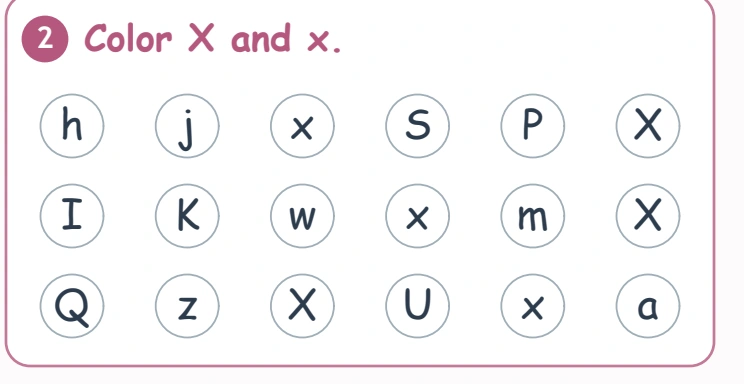
| Find Xx cases | 3, 6, 10, 12, 15, 17 | 6 matches in the Xx circle field |
| Complete fox through ox | x | Xx: final x |
| Picture-name check | ox, box, fox | 3 choices fit Xx |
There are three rows in the Fox Final X recognition panel, with six circles per row. Six Xx targets appear, evenly split between cases. Count positions left to right across rows for checking. The bottom panel asks for pictures with x in their names; its three matching labels all have final x.
Compare crossed lines in two supplied cases: Fox Final X
Look at capital X and lowercase x on Fox Final X. Their crossed forms are related, while the printed sizes and placements distinguish the case models. Introduce both, rather than assuming a learner who recognises one will automatically select the other.
Ask the child to point to the complete crossing rather than a single diagonal. Another printed choice might share one slant without being the target letter. Formal names for the line parts are unnecessary; a visible comparison can provide a sufficient explanation of why the candidate fits or does not fit.
Trace one model with time to inspect it: Fox Final X
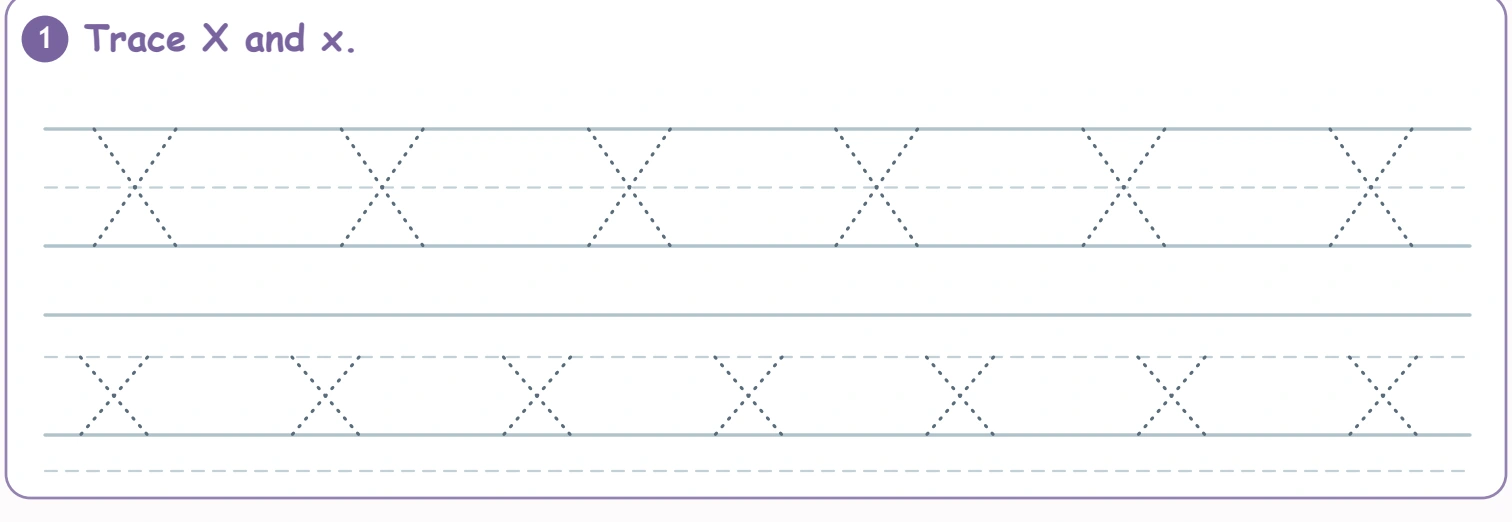
There are six capital X guides and seven lowercase x guides in Fox Final X. Select one dotted Xx outline and discuss its two crossing lines, then choose a comfortable finger or pencil response. A broad adult demonstration on separate paper can make the crossing easier to see.
The source has no numbered formation arrows. Keep any extra guidance distinct from what the PDF actually prints. A steady page lets Xena concentrate on the crossing; use a manageable tool and pause whenever the hand needs rest. One or several Xx guides can be chosen according to interest; the rest remain available for a later encounter.
Search for both cases without changing the letter's job: Fox Final X
The Fox Final X circle task is still a shape-recognition activity. It asks for X and x, regardless of their position within the picture labels elsewhere. Keep the two case models visible and compare each candidate's full form before adding colour.
One row may be enough at first. Separate temporary paper can cover other rows when the field feels busy. Ask what evidence supports a choice and let the adult check the total later. Naming every distractor or rushing to six marks is unnecessary; a careful comparison is the useful work here.
Six ways the end-letter task can invite thinking: Fox Final X
- Instruction checking. The learner notices that this page asks about an ending rather than an initial.
- Position awareness. Looking at the right-hand end of fox locates the particular character required.
- Case association. Capital X and small x remain connected in the recognition task.
- Symbol-and-name comparison. The numeral six can be distinguished from the written word used to name it.
- Reference-guided repair. The intact box label shows what belongs after bo.
- Crossed-line practice. Tracing Xx can be a few deliberate movements before the child compares the result with the source model.
These are opportunities in Fox Final X, not guarantees of a fixed outcome. Observe the actual explanation, looking behaviour and hand comfort separately. A learner may understand the final position clearly while needing a large movable letter instead of a narrow written response.
Add x after the fragment, not before it: Fox Final X
The Fox Final X unfinished labels show fo, bo, si and o with their waiting spaces at the end. Add one lowercase x after each selected fragment to make fox, box, six and ox. Keep the existing beginning in place and consult the complete bank whenever needed.
If the learner inserts x before fo, point to the ending space and compare the full fox label. If capital X is offered, identify X as the right letter, then compare its small partner. Placing a movable x after the fragment can resolve the positional decision before close handwriting is attempted.
Ox, box and fox are the final picture selections: Fox Final X
The bottom Fox Final X strip reads star, duck, tree, ox, box and fox. Its direction asks for pictures with x in their names. Ox, box and fox qualify, and each supplied label ends with x. Six is supplied above as bank vocabulary; the bottom strip does not offer its numeral picture.
Fox and duck could form an animal group, while tree and star could appear in a story scene. Those connections are reasonable under other rules. Here the written presence of x determines membership. Read all six labels and state the rule before correcting a selection based on another meaningful connection.

A possible classroom last-character station: Fox Final X
Imagine a classroom delivery table where the teacher places a fox picture and a cardboard box, each with its complete name card. Pupils hear the names and locate their final characters before looking at Fox Final X. The adult then shows a fo fragment with a waiting space after it.
Individual copies allow a pointed ending, a case-search choice or one written x. Ask where the child looked and which reference helped. This proposed arrangement allows different handwriting amounts and does not report results from a real classroom trial or imply a common pace for all pupils.
Four extensions that keep x at the correct end: Fox Final X
Deliver a labelled fox box: Fox Final X
Place complete fox and box cards beside pretend delivery objects. Read them and find each last x. Let the child dictate a delivery sentence on spare paper, with an adult writing while the story uses any other words it needs.
Repair a large bo ending: Fox Final X
Offer a bo fragment, an intact box reference and a large lowercase x. Place the character after the existing letters. This repeats Fox Final X's final-position decision with a broader hand action and avoids turning it into an initial-letter task.
Pair a numeral with its written name: Fox Final X
Show 6 and six on separate cards. Read the name and inspect the last character of the word. Keep this discussion separate from target totals, so the number picture does not become a general instruction to select six answers.
Change the rule for animal pictures: Fox Final X
Use separate fox, duck and box cards. First group animals, then names containing x. Explain what moves when the instruction changes. A familiar connection can be valid under one rule and irrelevant under another.
Support readiness while making the new direction clear: Fox Final X
Xena’s ending game may interest a child approximately three to six; offer Fox Final X with preschool or kindergarten support for its changed direction. A pointing choice lets Xena explain final x while her hand rests from small tracing. Use a stable surface, a manageable tool and a larger reference as needed, letting willingness guide the marking amount.
Likely mix-ups include using an initial-letter rule, putting x before a fragment, substituting a numeral for a written character or choosing only capitals. Show the exact location and printed model needed for that repair. If frustration rises, finish with an oral ending comparison rather than repeated erasing.
Revisit an ending through a different picture: Fox Final X
A later Fox Final X encounter can begin with ox after an earlier fox story. One final-character repair or one search row offers a fresh focus. Mix these short visits with books, labelled objects and pretend deliveries rather than repeating the entire sheet in the same sequence.
Specific feedback might be “You looked at the end because that was today's instruction.” End after an explained last-letter decision and let Xena suggest another name for a future look. Remaining Xx panels can wait while today’s positional discovery is recognised.
Save the Xx edition for printing: Fox Final X
The original Learn the Letter Xx supplied file is the free-download edition. The separate clean Fox Final X premium PDF requires active eligible membership. It preserves the final-x directions, end-position gaps and learner fields after removal of website-domain branding, promotional advertisements and watermark.
The linked $5 library is an independently purchased product with twenty-six clean sheets in one PDF. Use its checkout for the whole set. Before printing Fox Final X, save an authorised edition and check a US Letter view without resizing the source. Print from the PDF so the end gaps remain usable, rather than enlarging a fox or box image from the article.
Other ways to inspect meaningful print: Fox Final X
Fox Final X connections: Fox endings can be compared with Xx Letter Sleuth. Inspect another Xx invitation in Xx Worksheet, reading its own direction carefully. For capital sequencing rather than word position, consider Arctic Alphabet Route.
Adults planning beyond Fox Final X can visit NAEYC resources about play in families and PBS Parents' Learn and Grow information. These independent educational sources do not endorse this worksheet or add pages to its download.
Popular Worksheets
Printable resources families and teachers are downloading now.
 Free
 Free
 Free
 Free