
Yy Letter Discoverer: 4 Wonderful Yo-yo Word Finds
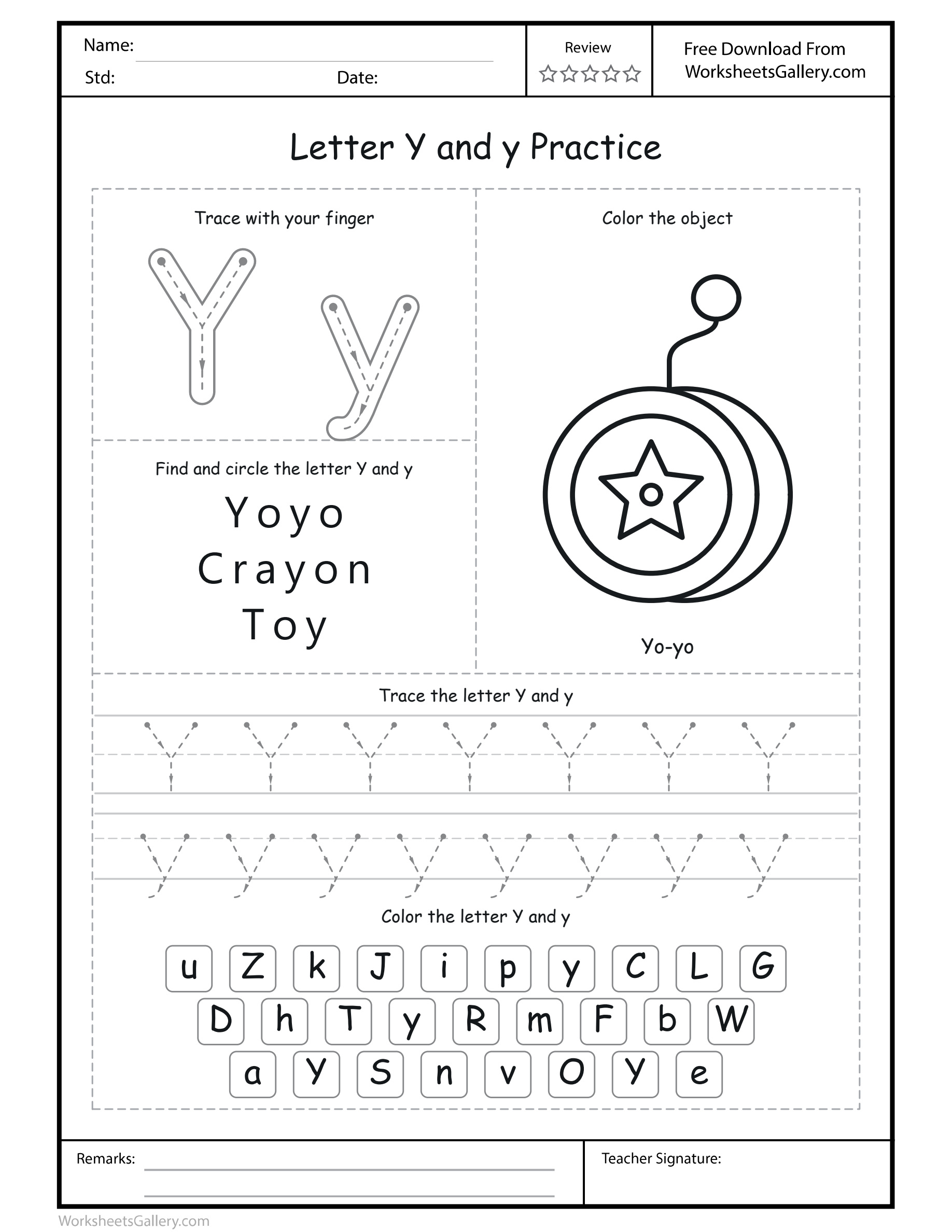
Yy Letter Discoverer belongs to the 26-page collection. Keep both Y/y occurrences in Yoyo and distinguish letter identity from changing sounds.
The word panel spells Yoyo with two target letters: its opening Y and an interior y. Yy Letter Discoverer preserves that printed form while adding Crayon's inside target and Toy's final one. The object caption uses Yo-yo, giving adults a useful reason to keep the explicit search labels distinct from the picture name. Children can compare a forked capital with a descending lowercase model, colour the toy and try selected guides. An adult reads alongside the learner, leaving time for pointing, discussion and a careful second look before the visit ends.
Keep the printed Yoyo spelling in view — Yy Letter Discoverer
Read Yoyo, Crayon and Toy in the word panel of Yy Letter Discoverer. Yoyo has Y at position one and y at position three. Crayon has y fourth. Toy ends with y as its third character. Four target characters belong in this panel, including both cases within Yoyo.
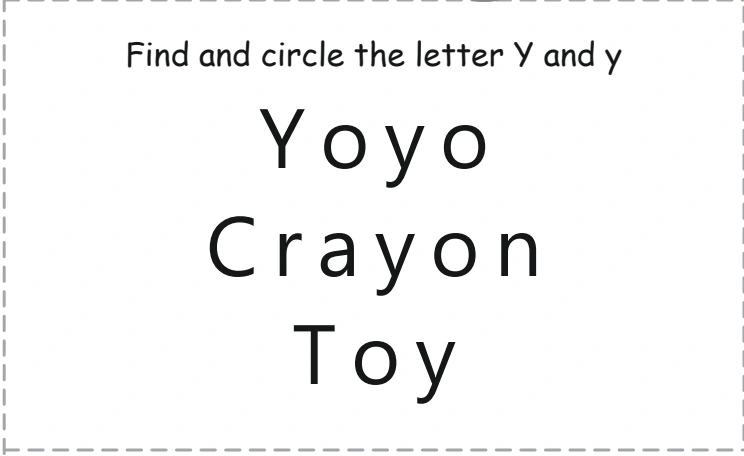
The explicit word label is Yoyo, while the object caption is Yo-yo. Keep those source forms accurate rather than silently changing the search word or adding the caption to its answer count. A small circle around each Y/y character shows the intended evidence. The whole label should remain readable afterward.
| Search label | Written targets | Discovery cue |
|---|---|---|
| Yoyo | Y first, y third | Look again after the first o. |
| Crayon | y fourth | Inspect after a. |
| Toy | y third and last | Follow the label to its end. |
Read these words naturally. The written y does not have to be assigned one identical spoken sound in every label to complete Yy Letter Discoverer. The learner is locating print, with adult reading support available. Pointing to the family and explaining a position can be useful before independent word decoding is secure.
A fork above, a tail below: Yy Letter Discoverer
Compare the supplied large Y and y on Yy Letter Discoverer. Capital Y has a fork leading into a stem. The lowercase model has a descending tail. Point to the place where movements meet and to the lower reach of y, then follow the sheet's starting cues and arrows with a finger.
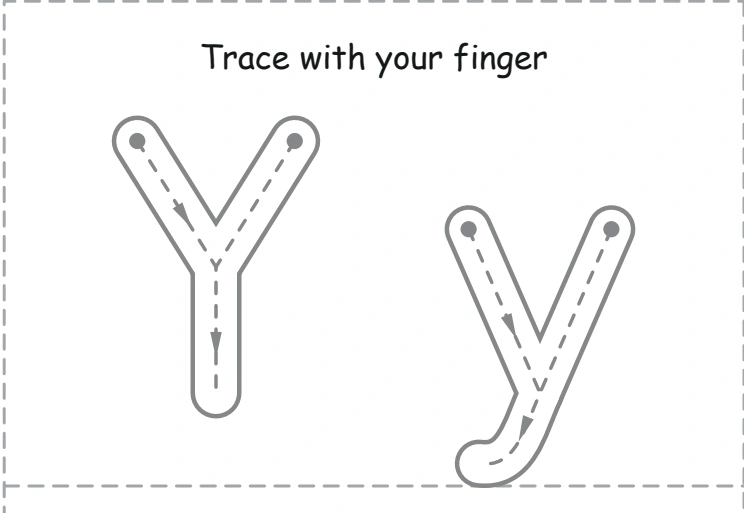
Keep the descender visible when positioning a hand or a comparison card. If an attempt stops too high, look at how the model continues below its upper part. If a capital loses one fork branch, compare that missing feature before another try. One clear observation is more useful than several corrections delivered together.
Name both cases as Y while showing their differences. Yy Letter Discoverer gives the adult a stable reference for a tile comparison or a tracing review. A learner can gesture toward the fork or tail even when describing it in a full sentence would be difficult.
A classroom toy catalogue, imagined: Yy Letter Discoverer
Imagine Yara helping make a pretend toy catalogue. The teacher reads completed Yoyo, Crayon and Toy cards beside corresponding objects. Yara finds the capital in Yoyo and begins to move away. A partner asks whether the label contains another member of the same family.
Yara tracks after the first o and notices lowercase y. She compares its descending tail with Yy Letter Discoverer. Crayon then offers an interior target in a longer label, while Toy offers an ending. Adult reading keeps the words available without requiring Yara to decode them all herself.
The class returns to the printable and marks the four word-panel characters together. This imagined catalogue gives the source spelling a meaningful place while leaving the object caption intact. The teacher records Yara's second inspection of Yoyo, which can guide a later return more specifically than a simple completed-page tally.
Six discoveries the catalogue can hold: Yy Letter Discoverer
Two cases within one word. Yoyo lets Yy Letter Discoverer connect capital Y and lowercase y inside a single explicit label. The child can show both before attempting to write them.
Search continuation. A first target does not finish Yoyo. Tracking after o gives the learner a concrete route to the second discovery.
Position variety. Crayon places y inside and Toy places it last. The family remains available across labels with different beginnings and lengths.
Feature awareness. The fork and descending tail offer visible evidence for case comparisons. Yy Letter Discoverer allows a reasoned choice based on the whole model rather than one familiar slant.
Planned movement. Finger tracing previews the joins and lower extension. That rehearsal can precede the extra control required for a small pencil mark.
Constructive checking. A missed target or incomplete tail can be reviewed against the reference. The learner has an action to take and a feature to discuss when revising the result.
Colour the yo-yo as a personal object: Yy Letter Discoverer
The toy drawing on Yy Letter Discoverer includes a star, string and small end loop. Invite the learner to choose colours and describe one part. The source supplies no fixed palette, so an invented pattern is a creative decision rather than a wrong answer.
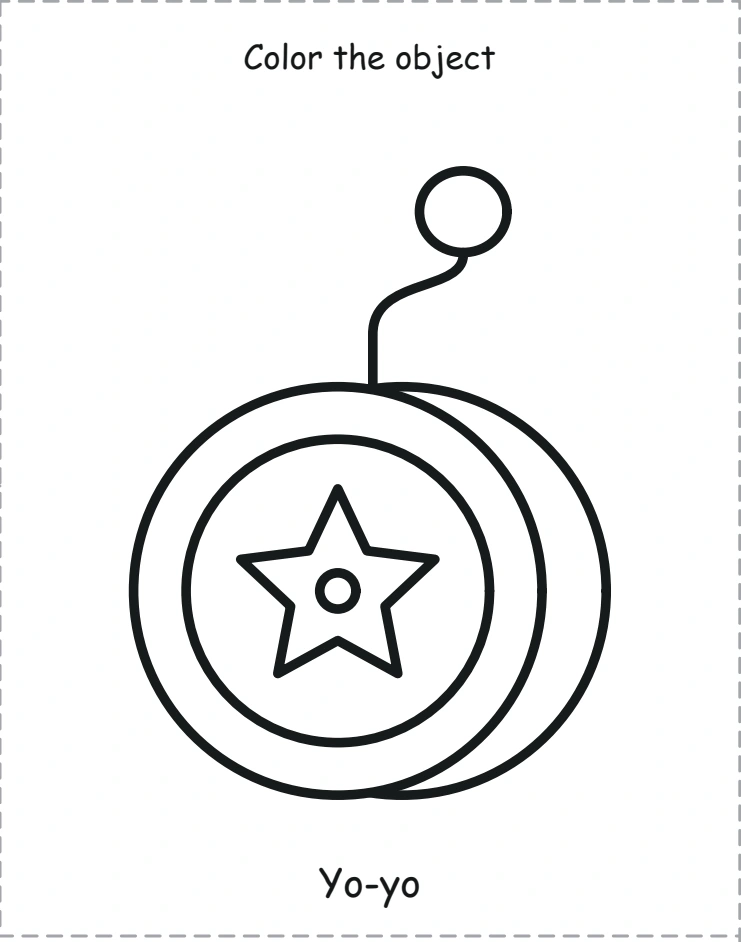
Use the picture caption Yo-yo when reading that caption, and use Yoyo when returning to the explicit search label. An adult can explain that both name the toy while preserving what is printed in each place. Record an extra Y/y story away from the sheet, leaving its three search labels easy to inspect.
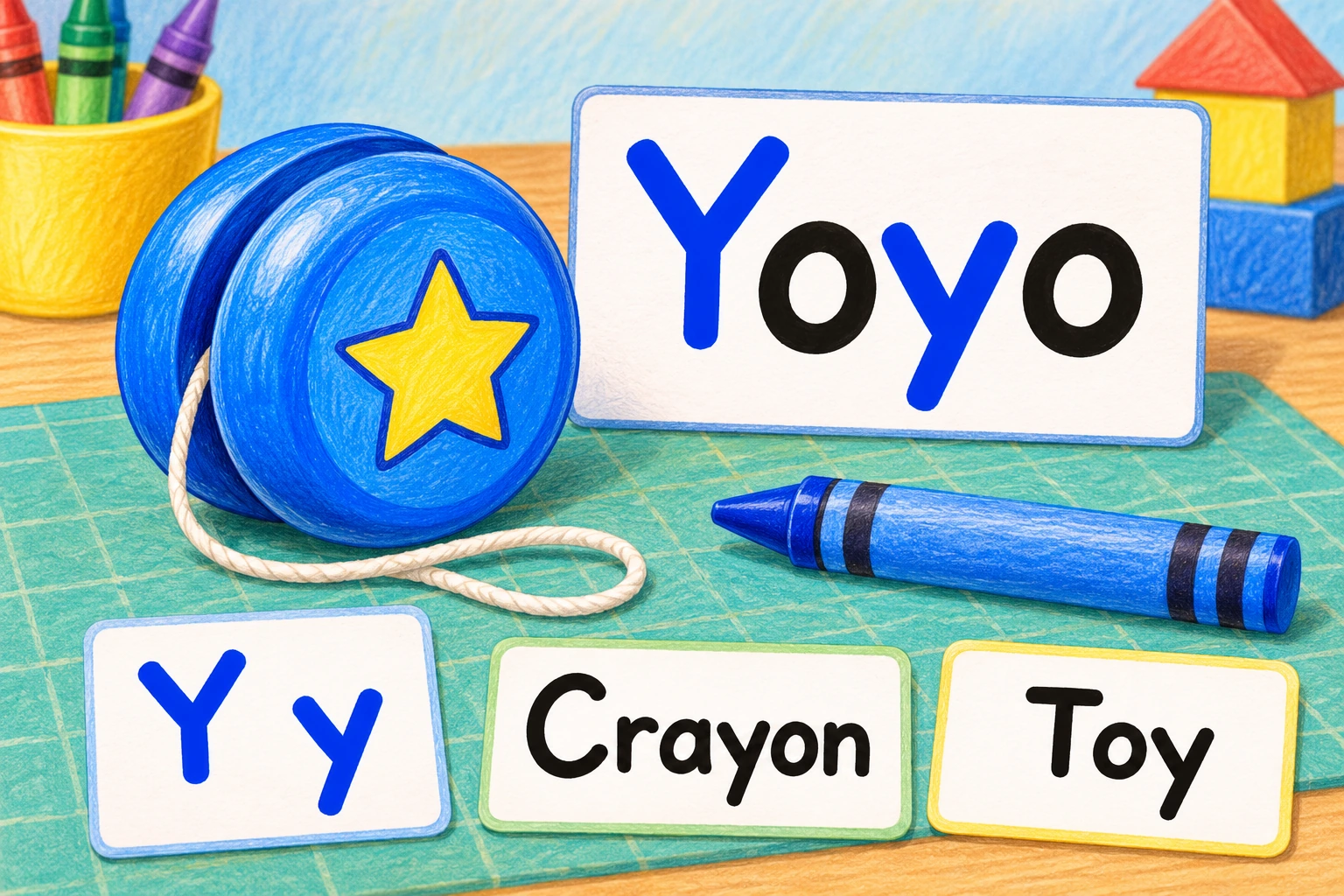
The supporting craft-mat illustration displays a completed Yoyo card with both Y/y targets visible, beside Crayon and Toy labels. It offers another setting for discussion. Return to ordinary black print on Yy Letter Discoverer after using the highlighted example, allowing the learner to apply the observation without that colour support.
Give the handwriting tail enough attention: Yy Letter Discoverer
The Yy Letter Discoverer writing panel offers seven Y models followed by eight y models. Preview their different routes, then select a few. A child can trace one capital fork and one lowercase tail before deciding whether further small movement feels comfortable.
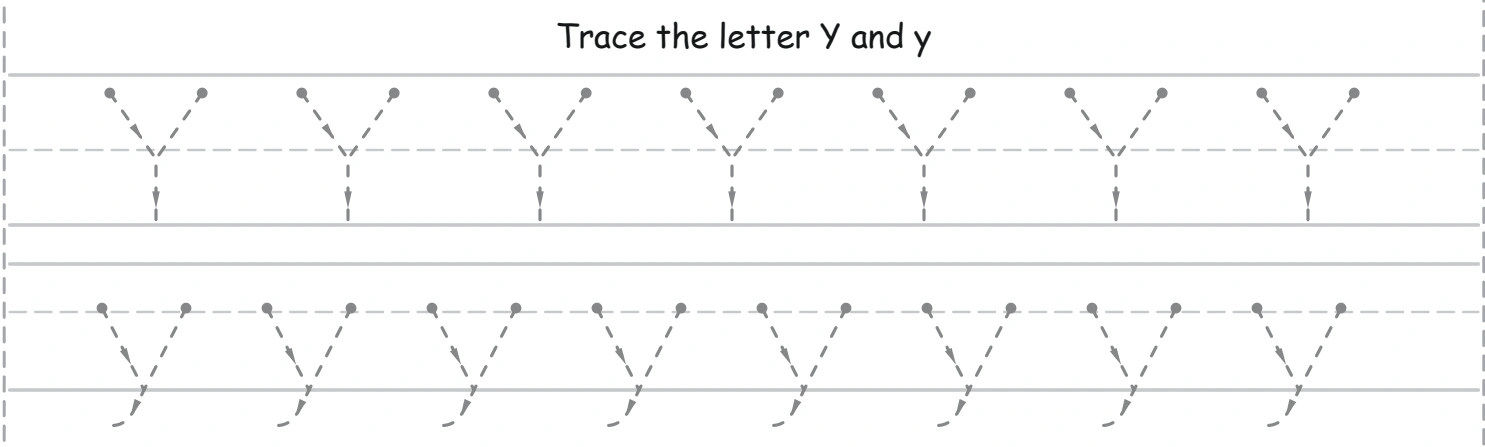
If the lower extension is missing, compare that area with the large model. If a fork branch is absent, point to the joining place and try a fresh guide. Keep the page steady and the hand relaxed. Feedback about the chosen feature can wait to expand until the learner has had a chance to act on it.
Ask which attempt shows the tail or fork clearly enough to discuss. A slightly tilted mark can still provide useful evidence. Yy Letter Discoverer does not need every guide filled in one sitting; unused examples can support a later movement visit after a colour or conversation break.
Four targets across the mixed rows: Yy Letter Discoverer
The lower field on Yy Letter Discoverer has twenty-seven tiles. Its top row holds ten characters, its middle nine and its bottom eight. Two capitals and two lowercase forms belong to Y/y. Adult whole-field checking positions are 7, 14, 21 and 26.
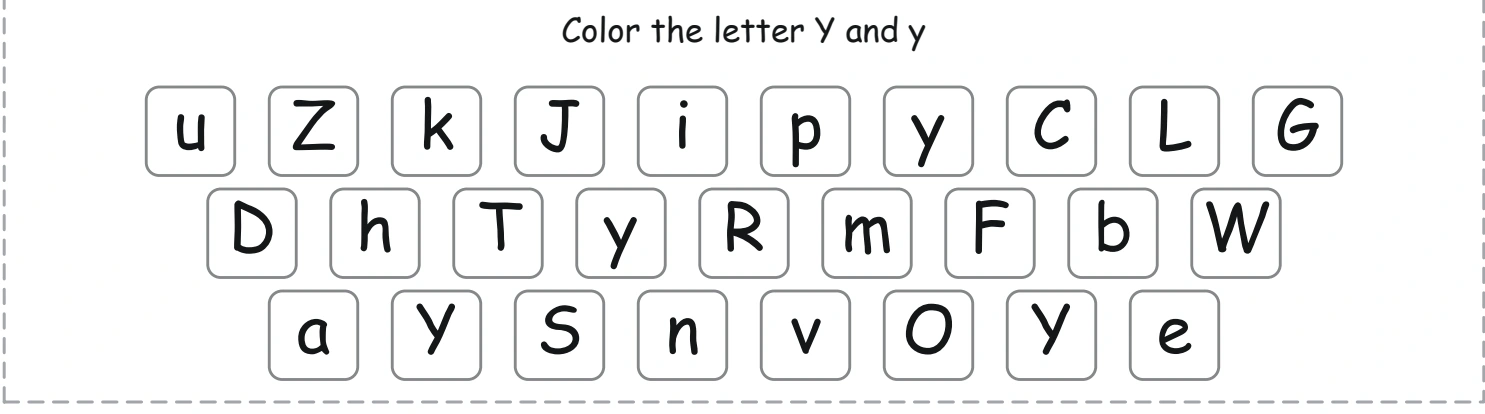
The learner can inspect visually rather than calculate those coordinates. Use a pointer to show the next unexamined tile while the large models stay visible. Compare both the upper branches and the lower extension of a candidate, choosing the relevant case reference.
The bottom row contains more than one target with other characters between them. Continue through that intervening print after a successful circle. Yy Letter Discoverer makes a complete second half of the row worth inspecting, with each candidate checked against the model rather than guessed from a partial outline.
Five Y/y catalogue games: Yy Letter Discoverer
Yoyo return ticket: Yy Letter Discoverer
Read a completed Yoyo card and locate the opening Y. Then track after o and locate y. Show both positions on Yy Letter Discoverer, making the second inspection the purpose of the game rather than adding a speed challenge.
Fork workshop: Yy Letter Discoverer
Arrange strips into a completed capital Y. Point to its joining place and compare with the large model. Clear the materials before following the source arrows with a finger or pencil.
Tail guide: Yy Letter Discoverer
Trace the supplied lowercase model with a finger and pause at its lower extension. Let a partner describe the movement in simple language. Exchange roles if desired, keeping the actual model as the reference.
Crayon interior stop: Yy Letter Discoverer
Read Crayon and track its print until y after a. Park a token beneath that character, then remove it and locate the same target in the worksheet word panel. Adult reading remains available throughout.
Toy ending inspector: Yy Letter Discoverer
Read Toy beside a toy object and let the learner show its final y. Compare the ending with Yoyo's interior y on Yy Letter Discoverer. A pointing answer can demonstrate the different positions without a written explanation.
A home crayon label, imagined: Yy Letter Discoverer
Picture Yara choosing a crayon at home. A family member writes Crayon on a finished label, reading the Crayon word for Yara. Yara follows the label beyond its opening and points to y. They compare its tail with the lowercase model on Yy Letter Discoverer, keeping the full printed form visible.
The adult brings back Yoyo and asks what made that word interesting. Yara points to its first and third characters. “You found both forms in one label” describes the evidence. This imagined return can end after the comparison, with no need for an independently written toy list or a new full worksheet.
Support the discovery that is happening: Yy Letter Discoverer
For children around three to six, Yy Letter Discoverer can involve shared pointing, supported circles or independent searching. A child may recognise the tail but need help drawing it. Let the response method show the letter decision while movement support is offered separately.
If Yoyo's second target is missed, resume after o. If the object caption is confused with the word-panel answer set, read each printed section in place. If a tail is lost, compare the lower model. If a tile row ends too early, point to its next unexamined character. Each response addresses a specific observation.
A later brief Y/y visit might recall the fork, tail or a chosen word. Let the learner choose between the capital fork and a word inspection, then stop with something they can show. Yy Letter Discoverer can remain familiar while its starting point changes, keeping repetition purposeful without turning the page into a long identical routine.
Reading connections and file choices: Yy Letter Discoverer
Compare Yy Letter Discoverer with Yy Worksheet. A listening follow-up to Yy Letter Discoverer is First Sound Choices. For Yy Letter Discoverer, explore Zz Worksheet.
Adults planning more active participation can consult NAEYC's play resources. Further family print and story ideas are available in PBS Parents' literacy collection. These optional links can inform another shared activity without changing the worksheet's source instructions.
The original Yy Letter Discoverer sample is reached using its sample control. For a clean Y/y single, qualifying members use the separately protected file choice. Inspect the full frame before printing and make sure the lowercase tails remain visible at the selected scale. Keeping those extensions clear supports the comparisons described on this page.
The premium card offers a separate Alphabet Wordwork Collection purchase at $5. Its A–Z document brings together twenty-six unbranded letter pages. Purchasing that collection is distinct from membership access to this clean single worksheet. The direct card route keeps the larger file available when practice is ready to move beyond Yy Letter Discoverer.
Popular Worksheets
Printable resources families and teachers are downloading now.
 Free
 Free
 Free
 Free