
Rr Letter Reporter: 4 Amazing Rabbit-and-Carrot Finds
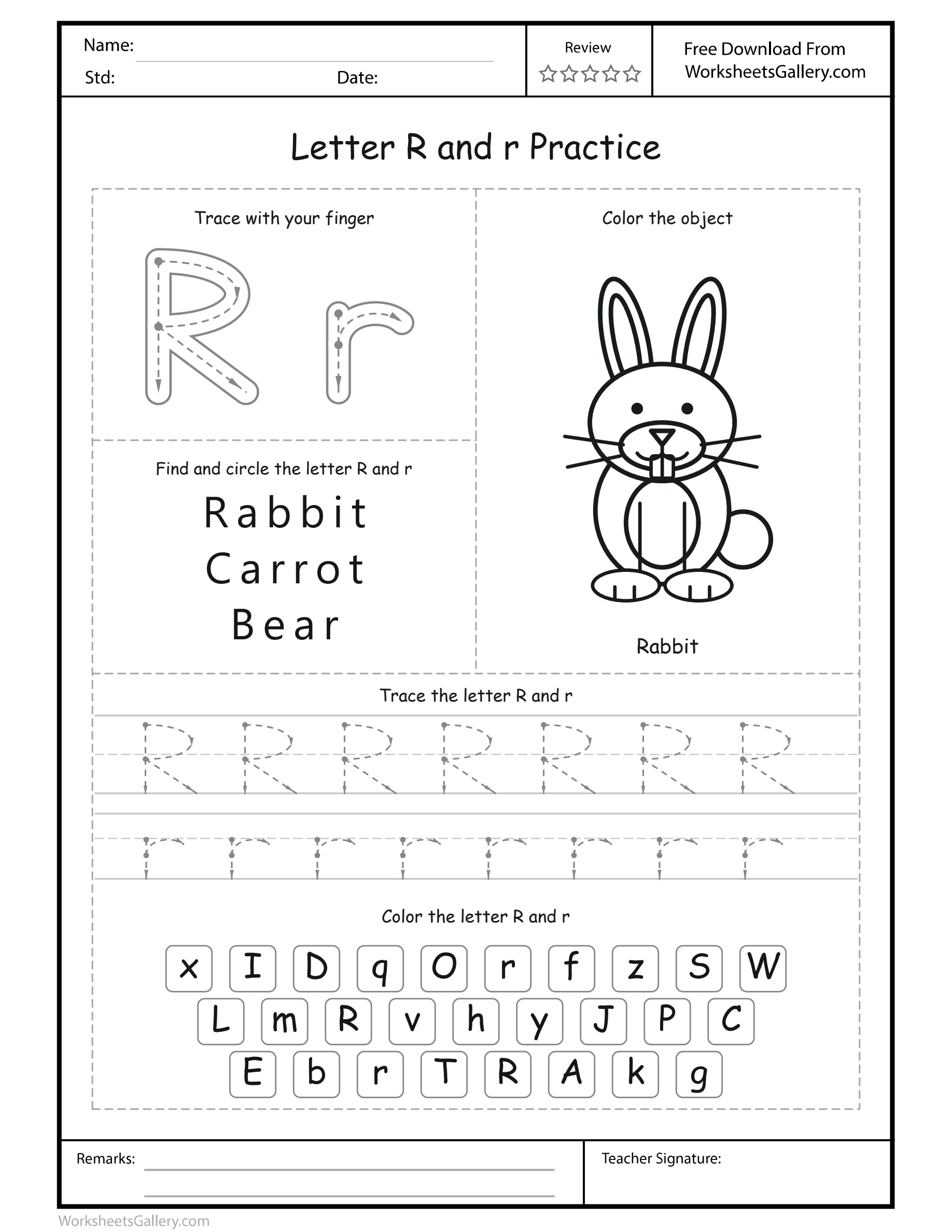
Rr Letter Reporter belongs to the 26-page collection. Report both r letters in Carrot before comparing a small shoulder with the capital leg.
Carrot gives a young letter reporter two neighbouring r characters to describe. Rr Letter Reporter places that pair between Rabbit's opening capital and Bear's final lowercase target. The page combines a large case comparison, word inspection, rabbit colouring, guided movement and a mixed-letter search. A grown-up can read the labels while a child points out the stem, shoulder or diagonal leg that supports a choice. The visit leaves room for curiosity and revision, with selected handwriting attempts rather than a rush to cover every guide before the conversation ends.
File a report from the middle of Carrot — Rr Letter Reporter
Read Rabbit, Carrot and Bear from Rr Letter Reporter. Rabbit has R as its first character. Carrot has r as both its third and fourth characters. Bear ends with r at position four. Four written targets belong in the word panel's answer set, including both members of the Carrot pair.
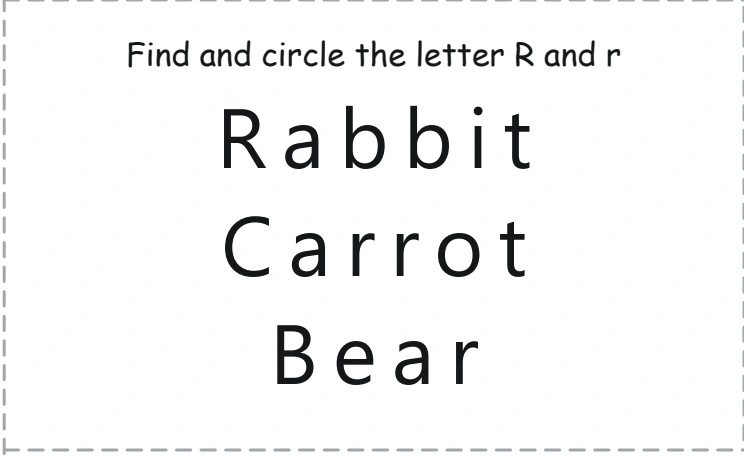
Invite a small circle around each R or r. A whole-word loop would show that the label contains the letter, but it would not show which characters the child inspected. After the first r in Carrot is circled, ask what sits directly beside it. The second r deserves the same comparison with the model.
| Report label | Evidence in print | Reporter question |
|---|---|---|
| Rabbit | R at the beginning | What feature marks the capital? |
| Carrot | r at 3 and 4 | Have both neighbours been checked? |
| Bear | r at the end | Did the inspection reach the last character? |
Adult reading can accompany every label on Rr Letter Reporter. The learner need not decode Rabbit or spell Carrot to recognise the target shape. Read normally, name R, and allow time to compare. The doubled spelling is a visual observation here, not a demand to pronounce two separate r sounds.
The capital leg and lowercase shoulder: Rr Letter Reporter
Study the supplied R/r models on Rr Letter Reporter. Capital R combines an upright, a bowl and a diagonal leg. Lowercase r has a shorter shoulder beside its stem. Point out the part that changes the silhouette, then follow the source arrows and start marks with a finger.
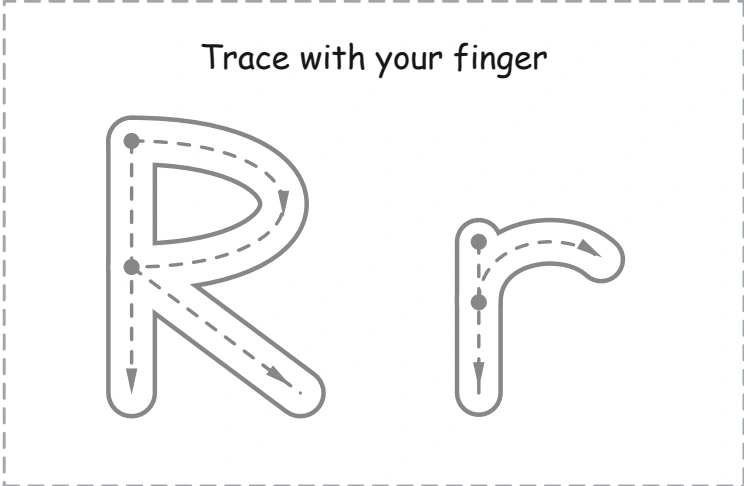
For a capital that looks like P, ask what the R model adds below the bowl. For a lowercase attempt that grows an extra arch, compare the small shoulder actually shown. Keep the correction tied to the printed reference. Formal descriptions are optional; a learner can show the relevant part with a fingertip.
The two cases share a letter name while their shapes differ substantially. Say the names together and let the child choose one feature to report. Rr Letter Reporter gives the adult a reference to return to whenever a tile or handwriting attempt seems uncertain, rather than relying on a remembered verbal rule alone.
An imagined classroom vegetable news desk: Rr Letter Reporter
Imagine Rafi sitting at a pretend news desk with a rabbit puppet and a carrot model. The teacher supplies completed Rabbit and Carrot cards and reads them. Rafi identifies the capital opening, then finds one r in Carrot. His partner asks whether the next character belongs in the report too.
Rafi compares the neighbour with the lowercase model on Rr Letter Reporter and adds it. The teacher asks him to show the pair to the puppet, accepting two pointing gestures as a complete explanation. A Bear card supplies an ending target for the final part of the report.
The class returns to the printable with a specific observation: Rafi continued after an initial find. He may choose one tracing guide or a short tile row next. This imagined news desk gives the search an audience without making it a performance judged by speed, independent reading or a perfect spoken sentence.
Six details worth reporting: Rr Letter Reporter
Repeated characters: Carrot's neighbouring r forms give Rr Letter Reporter a clear way to practise looking beside an answer. The adult can observe whether both are compared before attention moves elsewhere.
Position changes: Rabbit begins with the target, Carrot holds it inside and Bear places it at the end. The same family remains available across three different locations.
Case connections: naming capital R and lowercase r together links the forms without pretending their outlines are identical. Pointing can establish that connection before handwriting is secure.
Feature-based choices: the diagonal leg and small shoulder provide reasons for selections. Rr Letter Reporter encourages a child to inspect the whole form instead of accepting a single familiar upright.
Planned direction: the model cues give a hand a route to preview. A finger trace can introduce the joins while pencil pressure and small scale are temporarily set aside.
Revision language: “I checked the next one” describes a useful action. An adult can value that improved inspection without turning a missed target into a judgement about effort or ability.
Give the rabbit a colour identity: Rr Letter Reporter
Ask which colours the learner wants for the rabbit on Rr Letter Reporter. The source offers an open colouring opportunity, with no prescribed palette to follow. A patterned rabbit can become part of a story, while letter-search correctness remains a separate question based on print evidence.
If the child names the rabbit, an adult can write a completed name card away from the worksheet. Look for R/r only if the chosen name actually contains it. There is no need to force another target into the story or obscure the original three-word panel with extra adult writing.
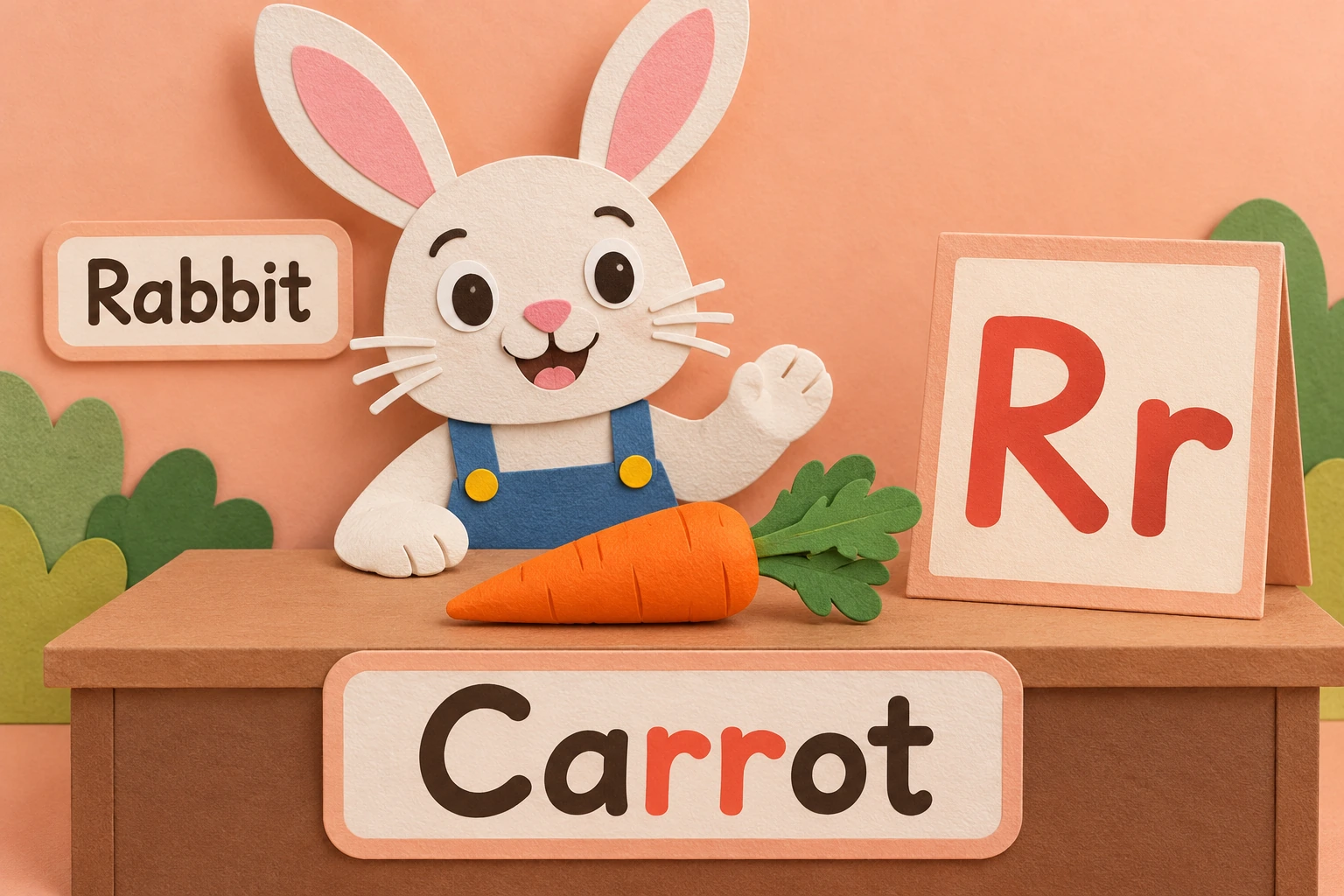
The supporting rabbit desk illustration presents a completed Carrot label with both r characters highlighted. Use it to discuss the pair, then compare the ordinary black letters on Rr Letter Reporter. The illustration offers a fresh setting; the full-page preview remains the direct guide to what will be printed.
Choose handwriting evidence, not a completion race: Rr Letter Reporter
The Rr Letter Reporter practice area offers seven R models followed by eight r models. Show the learner both rows, then select a few examples to try. Watch the capital leg or lowercase shoulder on one attempt before asking for another. The unused guides can be saved for a later encounter.
Follow the supplied movement cues and keep the paper steady. If the capital leg is omitted, compare that specific part with the large model. If the lowercase becomes an n-like arch, look at the shoulder's shorter route. A fresh guide can offer a clearer second attempt than a heavily erased first one.
Invite the child to choose a mark that shows the intended feature well enough to discuss. A slightly tilted letter can still provide useful evidence about the leg or shoulder. Rr Letter Reporter can support a short movement visit, followed by colouring or conversation when the hand needs a different task.
Search the field like a careful reporter: Rr Letter Reporter
The lower field of Rr Letter Reporter contains twenty-seven tiles, with ten on the upper line, nine on the central line and eight on the lowest. The R/r targets comprise two of each case. Adult checking positions, counted across all rows, are 6, 13, 22 and 24. Children can follow the printed rows visually without adding a coordinate-counting requirement.
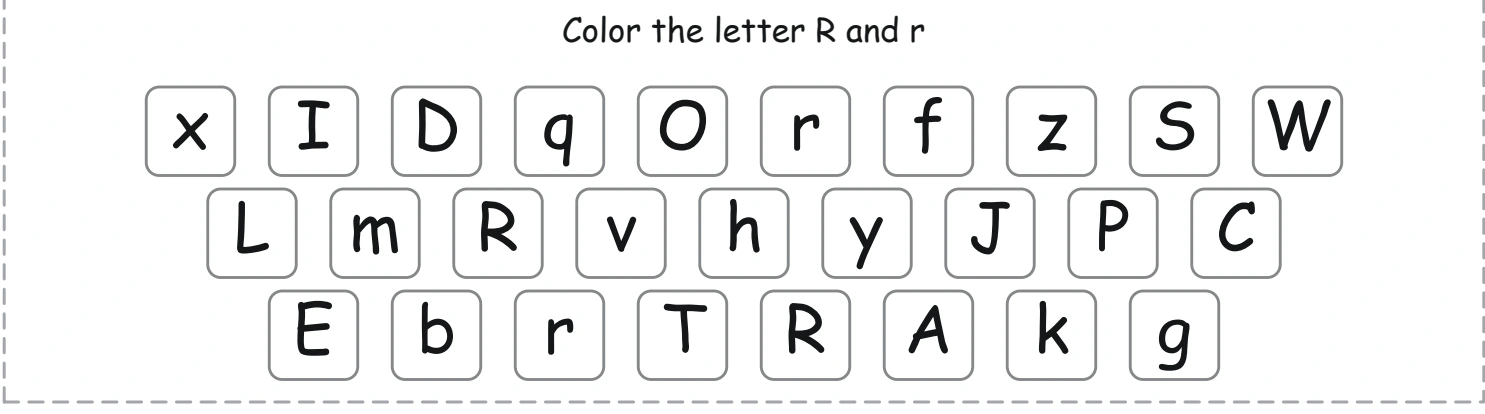
After each circle, inspect the following tile. In the last row, another target appears beyond an intervening character, so a first success does not complete the local report. A pointer can keep the current place while the child compares a candidate with the large models.
Ask what feature supports a choice. Capital candidates should be compared for the bowl and diagonal leg as well as the stem. Lowercase candidates need the supplied shoulder. Rr Letter Reporter leaves room to revise a report after a closer inspection, making the reference model a useful tool rather than a sign that the learner has failed.
Five R/r reporting games: Rr Letter Reporter
Carrot neighbour interview: Rr Letter Reporter
Read a completed Carrot card and ask the learner to introduce each r with a separate touch. Then find the same pair in Rr Letter Reporter. The game makes the written repetition visible without adding a new sound rule.
Capital leg workshop: Rr Letter Reporter
Arrange strips and a curved cord into a finished R. Compare what happens to its identity when the diagonal leg is covered, then reveal it again. Keep the correct model visible before tracing resumes.
Bear's final bulletin: Rr Letter Reporter
Read Bear on a card and move a token through the characters to the final r. Ask which part of the label supplied the answer. This provides a reason to inspect an ending rather than guessing from the picture.
Puppet fact checker: Rr Letter Reporter
Let a puppet ask to see an R and an r on Rr Letter Reporter. The child can point and explain one difference. An adult supplies the words when needed, so the learner can concentrate on the comparison.
Row report partner: Rr Letter Reporter
One child points through a tile row while a partner keeps the model in view. Exchange roles after the row is inspected. The shared report is about coverage and evidence, with no prize for finishing first.
A home bear label, imagined: Rr Letter Reporter
Picture Rafi reading with a family member beside a toy bear. The adult writes Bear on a finished card and reads it aloud. Rafi checks to the end and points to r. They compare the card with Bear in Rr Letter Reporter, noticing that the spoken object can have the same written label in two settings.
Next, the family member presents Carrot. Rafi locates one r and immediately checks its neighbour. The adult describes that particular habit and invites him to show it to another person. No independently written sentence is needed to make his explanation visible.
This imagined home activity may finish with a single finger trace of capital R's leg. Another visit can begin with the lowercase shoulder. The worksheet offers a stable reference while the entry point changes, allowing regular practice without insisting on an identical full routine every time.
Respond to the actual slip: Rr Letter Reporter
For learners around three to six, Rr Letter Reporter can mean shared pointing, supported circles or independent checking with an adult nearby. Letter recognition and pencil control may need different kinds of help. An adult can mark the child's chosen target while saving handwriting for a more comfortable moment.
If only one r is found in Carrot, inspect beside it. If only word beginnings are searched, track Bear to its final character. If R loses its leg, compare that extension. If r becomes another arch, inspect the supplied shoulder. These narrow responses give the learner something concrete to do next.
End a visit with an observation the child can show: both Carrot neighbours, Bear's final r or a capital leg. Return to Rr Letter Reporter briefly on another day and ask about that remembered detail. Comfortable repetition can support familiarity while keeping curiosity and willingness to participate in view.
Download the report sheet and explore further: Rr Letter Reporter
Compare Rr Letter Reporter with Rr Worksheet. A listening follow-up to Rr Letter Reporter is First Sound Choices. For Rr Letter Reporter, explore Ss Worksheet.
Adults can consult NAEYC's resources on play for further participatory ideas. PBS Parents' literacy pages offer additional reading and conversation activities. Choose an extension that fits the learner rather than treating the links as extra assignments.
The original Rr Letter Reporter sample can be obtained with the page's download controls. Eligible active members also have access to the separately protected clean individual PDF. In print preview, preserve the outer frame and make sure the small r shoulders remain readable. The adjacent Carrot characters should be distinct enough for separate inspection.
A collection card links to the $5 Alphabet Wordwork Collection, purchased separately as a combined PDF of twenty-six clean letter sheets. It suits a complete A–Z practice plan. Buying the R/r collection option and accessing the single member worksheet are separate decisions, and the card makes the larger file easy to locate from Rr Letter Reporter.
Popular Worksheets
Printable resources families and teachers are downloading now.
 Free
 Free
 Free
 Free