
Bee Case Builder: 4 Wonderful Bb Letter Connections
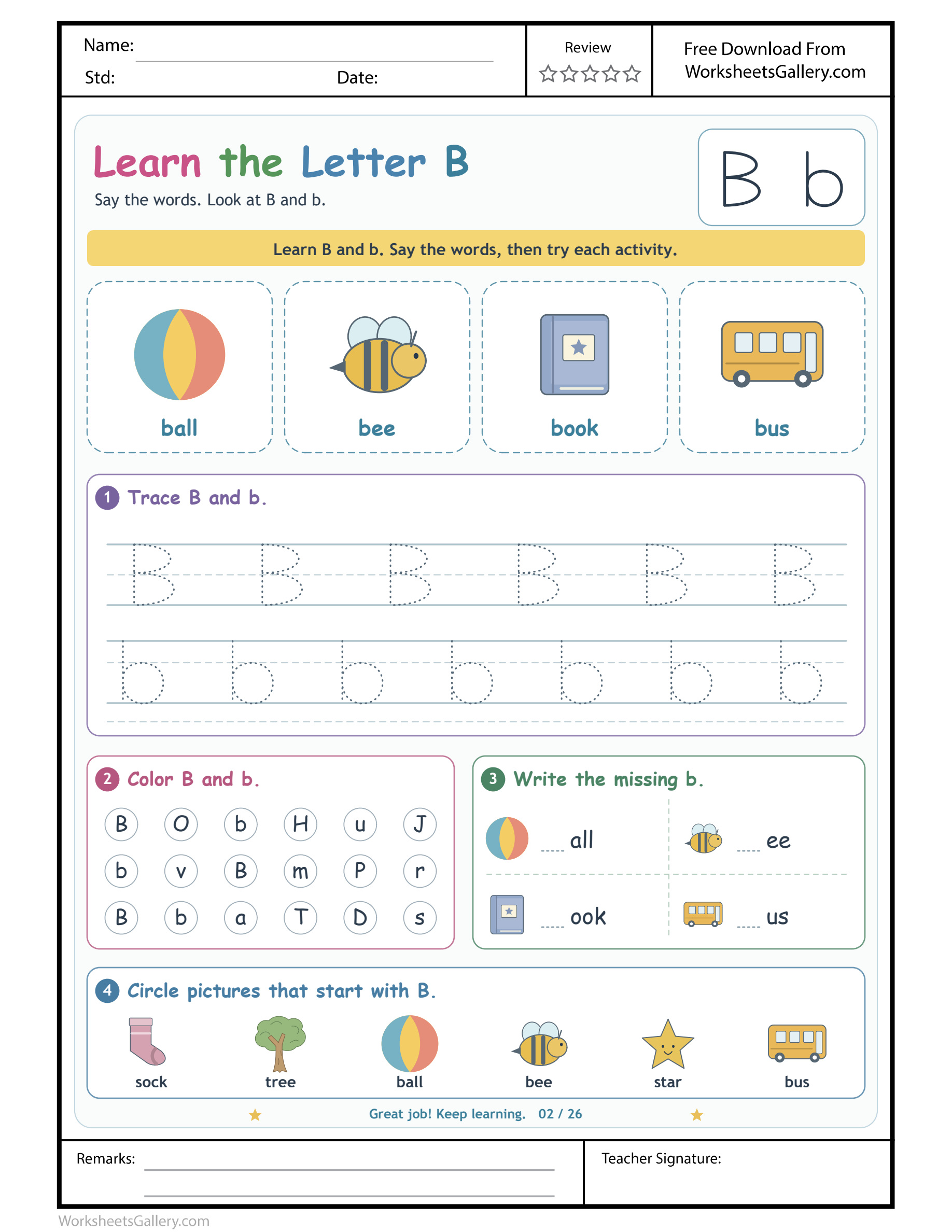
Bee Case Builder: Separate B from b while using ball, bee, book and bus as a visible vocabulary bank.
Bus play can lead naturally into a close look at B and b. Bee Case Builder pairs those two printed forms with ball, bee, book and bus, then offers tracing, letter colouring, word completion and picture selection. The actions are related without being interchangeable: both cases belong in the search, while the word gaps ask for lowercase b. Adults can keep the upper picture labels available as a reference and choose a small starting task. A short conversation about a familiar object can give this preschool printable a clear purpose before any writing begins.
Beni's imagined bus-stop book basket — Bee Case Builder
Imagine Beni arranging a toy bus beside a basket of books at home. An adult introduces Bee Case Builder and reads the four picture names. Beni chooses the book card, then notices that the lower picture strip contains a bus but no book. Together they inspect what the current circling task actually offers.
This home example is invented to show a possible exchange. Naming a favourite book can remain part of the conversation even when it is not an answer in that particular strip. Beni might circle the bus and leave tracing for another visit, making one understood decision rather than completing every panel automatically.
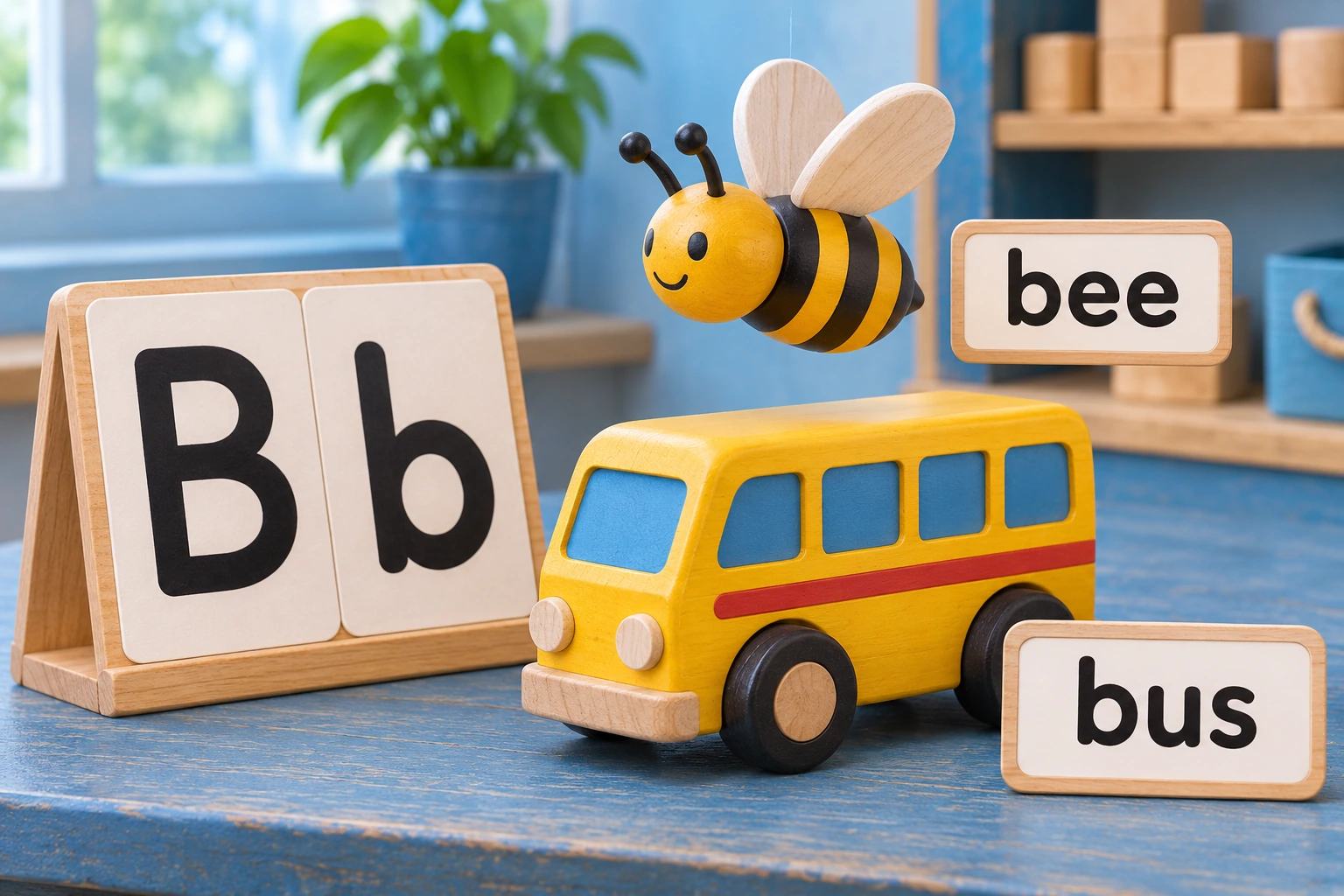
Two forms with different round parts: Bee Case Builder
Uppercase B has a tall upright with two rounded sections. The supplied lowercase b has its tall stem beside one lower rounded part. During Bee Case Builder, point between those visible models before asking the child to recognise smaller examples among the circle choices.
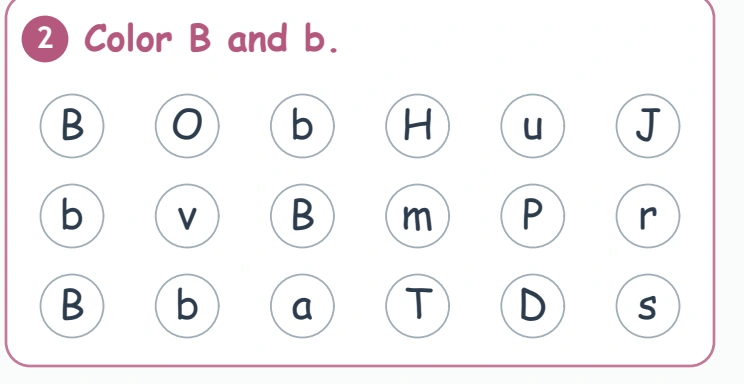
A matching letter does not need the same outline as its case partner. Both B and b count in the colouring field. The source also includes distractors such as P and D, so looking for any rounded shape is not enough. Compare the whole printed form, using the models as often as needed.
What each Bb panel asks you to notice: Bee Case Builder
| Bee Case Builder activity | Adult quick check | Source detail |
|---|---|---|
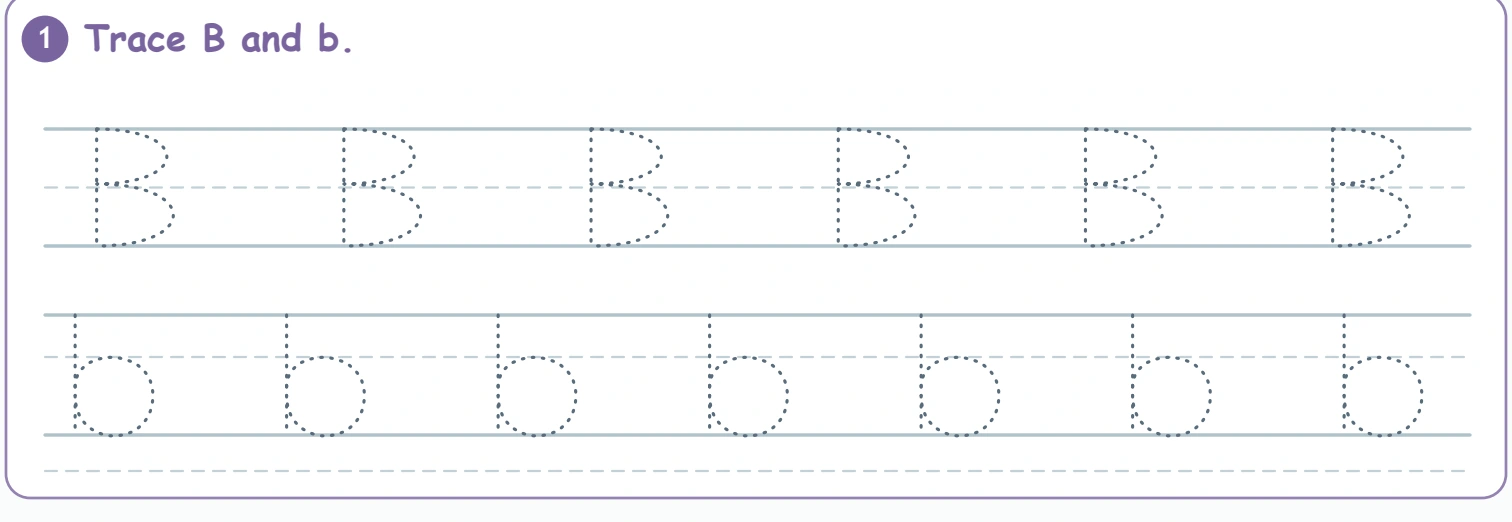
| Trace B/b | 6 B models;7 b models | Bee Case Builder guide rows |
| Find Bb cases | 1, 3, 7, 9, 13, 14 | 6 matches in the Bb circle field |
| Complete ball through bus | b | Bb: initial b |
| Picture-name check | ball, bee, bus | 3 choices fit Bb |
The Bee Case Builder search positions run across three rows, six circles per row. An adult can consult this compact check after a small attempt. Children do not need to read positional numbers or finish the full search before trying a different task on the same sheet.
Choose a tracing row and make its job clear: Bee Case Builder
The Bee Case Builder guide provides six capital B models followed by seven lowercase b models. Show the selected row and let the learner inspect a dotted form before moving the pencil. An adult can demonstrate a broad version separately if the small curves are unfamiliar.
There are no printed step numbers prescribing a stroke sequence. Use the supplied models for the letter's appearance and keep the amount comfortable. A few careful forms may be enough. If the child identifies B confidently but tires during the curves, switch to pointing or naming without treating the shorter handwriting attempt as a failure.
Five useful observations at the Bb desk: Bee Case Builder
- Whole-form comparison. Uprights and rounded sections are considered together instead of identifying a letter from one feature.
- Case grouping. Both B and b are accepted in the search despite their visibly different constructions.
- Small-scale writing. The child aims a lowercase b into an existing word gap rather than copying a whole long label.
- Picture vocabulary. Ball, bee, book and bus offer familiar names to connect with written initials.
- Instruction awareness. Choosing a picture below differs from colouring a circle containing a matching letter.
These experiences make Bee Case Builder useful for observation, not for assigning a general ability score. A child might explain which case matches while producing an uneven pencil curve. Respond to the recognition decision and the physical writing demand as separate parts of the attempt.
The word bank can do real work: Bee Case Builder
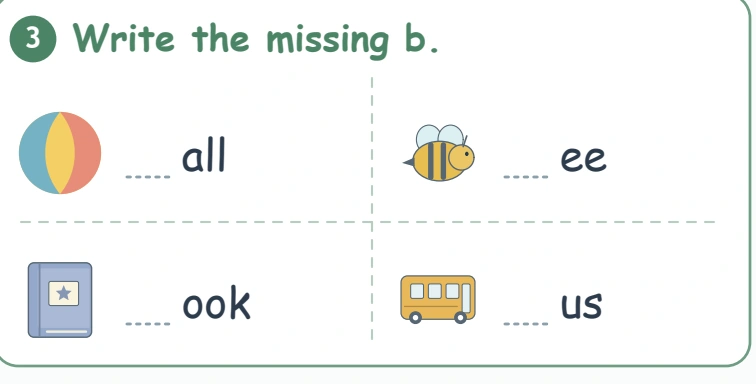
The four Bee Case Builder gaps require b before all, ee, ook and us. Each complete label above provides a reference. Invite the child to compare the first letter in book with the waiting space before ook instead of asking them to remember a spelling from a single spoken prompt.
The panel asks for lowercase b even though the sheet also teaches capital B. If the learner writes a capital, return to the small-case model and discuss the requested form. A larger demonstration can clarify the difference without repeatedly erasing a crowded little gap or turning the task into a spelling test.
A classroom naming counter, imagined: Bee Case Builder
In a possible classroom use of Bee Case Builder, a teacher places a ball, a book and a toy bus beside separate pupil copies. Children name an object, then find its printed counterpart in the upper bank. The adult introduces bee through the picture if no physical prop is available.
This imagined activity can lead to different small tasks. One learner traces a few lowercase forms; another inspects a single row of circles. The teacher might note that a child used the large b to reject a distractor. Keeping the reference visible makes the decision observable without requiring memorised answers or equal completion amounts across the table.
Three picture names fit the final strip: Bee Case Builder
The lower choices in Bee Case Builder are sock, tree, ball, bee, star and bus. Ball, bee and bus fit the initial-B request. Book remains in the vocabulary bank above and in its word-completion task, but it does not appear among those six lower choices.
Name each uncertain image before asking the child to select it. An adult can read the labels while the learner points. The child is comparing an initial letter with a supplied name, not proving that every word can already be read independently. Keep the task about the available printed choices rather than inventing an extra missing book picture.

An appropriate amount for an early learner: Bee Case Builder
Supported preschool and kindergarten children, broadly three to six, may explore Bee Case Builder. Some will be comfortable with the letter search before the close dotted curves; others may enjoy a short writing task but need help naming bee. Those differences can guide which panel to offer first.
Try one model, one circle or one picture decision. Larger case cards and object play can provide another scale when the page feels crowded. The worksheet can remain available across several visits. A child's willingness to inspect another choice and their hand comfort provide better stopping clues than the amount of unfinished print.
Six bus-and-book games after the paper task: Bee Case Builder
Run a two-case bus service: Bee Case Builder
Make large completed B and b cards as pretend passengers. A toy bus collects either partner when the adult names the letter. Include only a few contrasting cards, keep the model visible and let the learner explain a choice before moving the passenger.
Build a round-part comparison shelf: Bee Case Builder
Use large B, P and D cards drawn clearly on spare paper. Discuss which whole form has two rounded sections. This gives a physical comparison related to Bee Case Builder without adding another close search or suggesting that every rounded mark is B.
Open the book-label help desk: Bee Case Builder
A toy reader asks what belongs before ook on a separate large card. The child points to the complete book label while an adult reads it. The roleplay makes reference use purposeful rather than treating a visible word bank as something the learner should avoid.
Send a bee to its printed name: Bee Case Builder
Place a bee picture and a few completed word labels on a table. Read the choices together, then match the picture with bee. The activity can remain spoken and gestural, keeping the vocabulary connection without demanding independent word reading.
Invent a ball-and-bus story: Bee Case Builder
Let the child tell an original journey story with props. An adult can write a complete caption on spare paper. Welcome new characters there while keeping Bee Case Builder's printed picture-selection rule tied to its actual six choices.
Give a toy one friendly mistake: Bee Case Builder
An adult's toy selects star for the B picture task. Invite the learner to inspect the supplied label and explain a repair. Swap roles so the child can make a playful question for the adult. Keep the exchange cooperative rather than competitive.
Repair the kind of choice that changed: Bee Case Builder
Common Bee Case Builder mix-ups include colouring only B, overlooking lowercase b, accepting P because it has a rounded part or writing uppercase B in a small-case gap. Return to one visible model and compare the specific feature. Asking for a generally better page does not identify the decision that needs attention.
The search accepts both cases; the word gap requests one particular case. That difference deserves a short explanation before correction. If the learner is tired, let them point to the intended b or discuss a larger example. A clear oral repair can be a useful ending without completing every remaining mark.
Keep a small reason to revisit Bb: Bee Case Builder
The familiar objects can give Bee Case Builder a connection to everyday play. Let the learner choose whether the next visit begins with a book label, a bus picture or a short tracing row. A predictable invitation feels more manageable when its amount is limited and its purpose is clear.
Use encouragement such as “You checked both round parts before choosing B.” Alternate the page with stories, loose objects and free drawing. Regular opportunities do not require repeated full-sheet completion. Stop while the child can still explain a useful comparison, then build a later invitation around that understood detail.
Download a Bb print file with the right access: Bee Case Builder
For a printable Bb visit, the free button supplies the uploaded Learn the Letter Bb original. A signed-in account whose eligible membership is active can instead request the separate clean Bee Case Builder premium PDF. Its B/b models, word labels and student lines remain intact; the source watermark, promotional ads and web-domain credit are absent.
The collection card leads to the complete clean alphabet library, sold independently for $5. That purchase joins twenty-six sheets in a single file. Before giving Bee Case Builder to a learner, inspect the US Letter border and preserve the original scale in your printer's preview. Use the saved PDF for the printed copy.
More case practice and independent activity ideas: Bee Case Builder
Bee Case Builder connections: Bee and bus observations may lead to Bb Letter Detective. A different Bb sheet appears in Bb Worksheet. The shift from one case pair to capital order is available through Picnic Letter Order.
Adults extending Bee Case Builder can visit PBS Parents' learning activity library and NAEYC's family play articles. These optional education resources sit outside the download, imply no sponsorship and do not supply extra worksheets as part of the collection.
Popular Worksheets
Printable resources families and teachers are downloading now.
 Free
 Free
 Free
 Free