
Came Sight Word: 5 Brilliant Train-Arrival Tasks
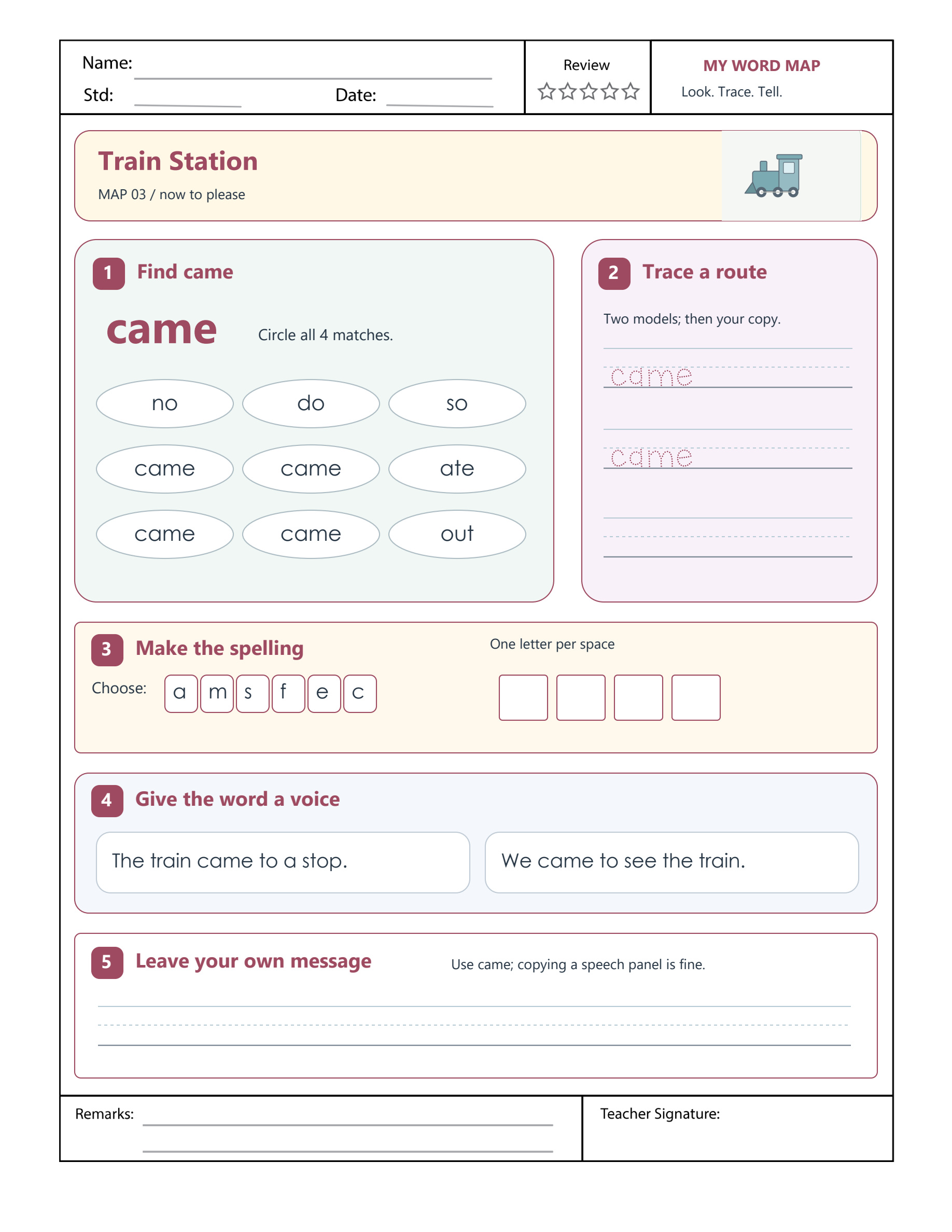
Explore came here, then choose the complete now-to-please Word Maps collection: 26 clean printable sheets together for $5.
The whole came map remains uncropped.
Train Station combines its came search hub, tracing side route, spelling rail, speech panels and message strip.
An empty toy platform becomes a busy station when Dalia's little train arrives. After it stops, she can tell someone what happened using came. This Came Sight Word worksheet holds that completed event still long enough to connect meaning, spelling and a written message. The Train Station lesson includes nine search choices, a shuffled letter bank, two dotted models and two source sentences. Its clean word-map interior gives those familiar tasks a different route while preserving the original frame and page size for a practical, adult-supported reading visit.
Talk about arrival after the wheels stop
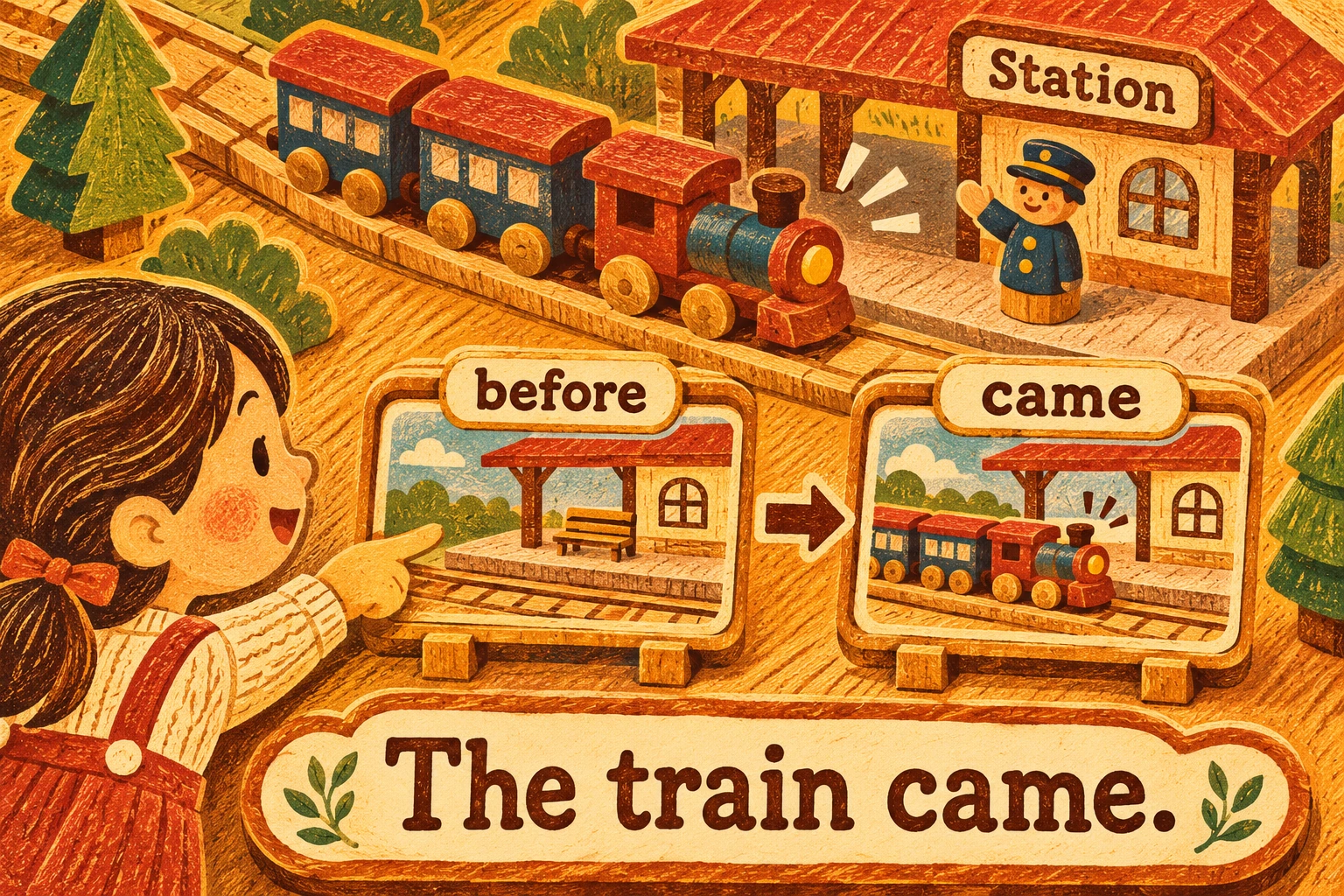
Came reports an earlier coming or arrival. The train does not need to keep moving while Dalia says the sentence. Move the toy into the station, stop it and recount its arrival. An adult can contrast an invitation to come with a report that someone came, but the first visit need not become a terminology lesson about verb forms.
The worksheet's first message describes the train coming to a stop. The second describes people coming to see it. Ask who is doing the coming in each line. That small change encourages attention to the sentence subject rather than treating the target as a label that belongs only to a train.
The a and final e are part of c-a-m-e even though the spoken word does not give every letter a separate audible beat. Read came naturally, then explain its written positions as appropriate to the learner's phonics knowledge. Avoid stretching an extra syllable onto the ending merely to account for the visible e.
A station story on the living-room floor
Prepare a short toy track, a station block and a figure waiting on the platform. Dalia chooses where the train begins. The adult moves it into place once, then asks the child to tell a listener what happened. If Dalia uses another suitable expression, acknowledge the idea and model the came sentence without pretending that her own wording was meaningless.
Now open the printed speech panels. Let Dalia identify whether the train or the visitors are being described. The adult can read the less familiar words while the child tracks came. Build the target with movable letters next, especially if writing four positions is demanding. Stop after an explained match or a short supported copy when that is enough for the day.
Six connections in the railway lesson
- Event memory: the speaker recalls the arrival after the toy has stopped.
Subject tracking: Dalia notices the difference between the train's action and the visitors' arrival. - Sound-and-print discussion: an adult connects the spoken form with all four written positions.
- Search accuracy: every oval is checked independently, including neighbouring matches.
- Hand control: the narrow tracing route supports a measured attempt without demanding a whole copied paragraph.
- Narrative expression: a remembered event becomes a message another person can understand.
A pencil route for the train station word
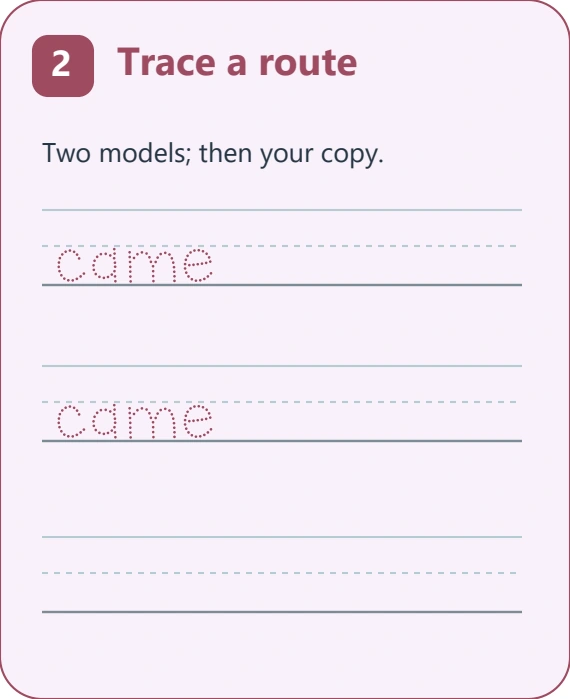
Two dotted came examples sit on separate train station guides. Follow c-a-m-e once while Dalia watches a useful demonstration. The third came band is for an untraced train station attempt. Choose a quantity of came practice that fits Dalia's hand control, rather than asking Dalia to fill the entire train station sidebar.
Understanding the train station message and writing came are different questions. Dalia may explain came correctly while its came letters still need motor support. Dictating came can preserve a train station idea when independent came writing is tiring. Keep came's model visible for Dalia; offer formation help on came separately instead of turning train station sentence practice into repeated correction.
Came Sight Word inspection on the train station map
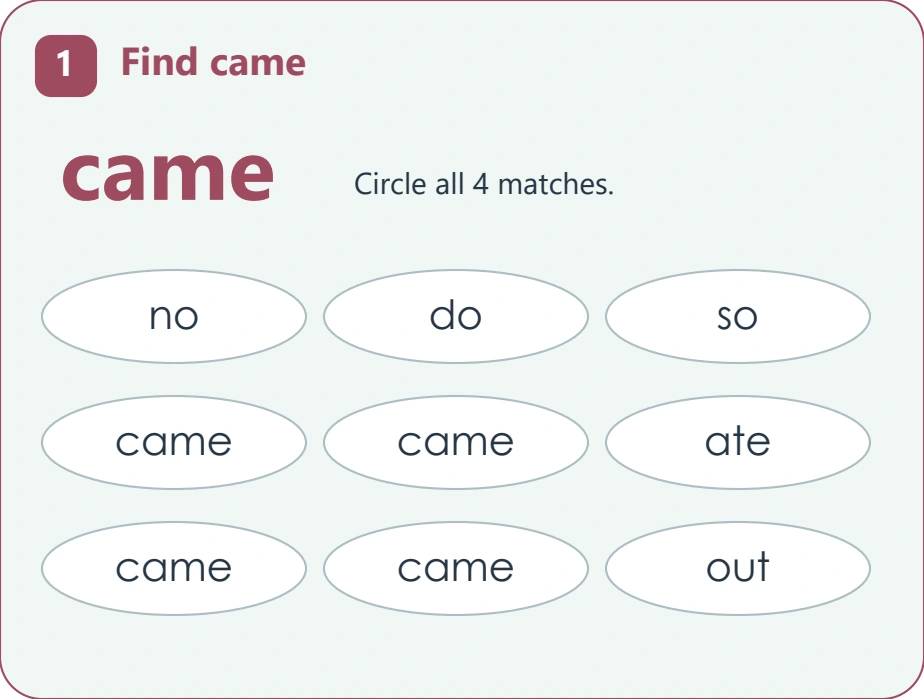
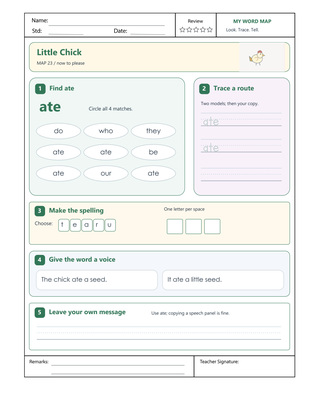
The train station search contains nine ovals. Begin at came's large model, then compare each came choice. For came, number the top row 1–3; continue the train station middle row 4–6, then the came bottom row 7–9. Review these train station notes after Dalia's own came attempt; reveal answers when that came comparison needs support.
| Came cell | Choice | Came check |
|---|---|---|
| 1 | no | Dalia: reject no when searching for came. no has n at position 1; came needs c there. Compare c-a-m-e before ruling out no on this train station map. |
| 2 | do | Dalia: reject do when searching for came. do has d at position 1; came needs c there. Compare c-a-m-e before ruling out do on this train station map. |
| 3 | so | Dalia: reject so when searching for came. so has s at position 1; came needs c there. Compare c-a-m-e before ruling out so on this train station map. |
| 4 | came | Came is complete at cell 4: c-a-m-e. Dalia can compare its final e with came's ending before making this train station circle. |
| 5 | came | Cell 5 holds another exact came. Let Dalia inspect came's neighbours too; one successful came find does not decide adjacent train station choices. |
Finish checking the train station choices
| Came cell | Choice | Came check |
|---|---|---|
| 6 | ate | Dalia: reject ate when searching for came. ate has a at position 1; came needs c there. Compare c-a-m-e before ruling out ate on this train station map. |
| 7 | came | This c-a-m-e matches came. Ask Dalia to show each came position before circling the entry on the train station map. |
| 8 | came | The fourth matching came occupies cell 8. Its c-a-m-e agrees with the model; Dalia can point to every came position before including it. |
| 9 | out | Dalia: reject out when searching for came. out has o at position 1; came needs c there. Compare c-a-m-e before ruling out out on this train station map. |
Four ovals match came. If Dalia circles a different quantity, revisit the train station choices. Compare each selection against c-a-m-e before adding a came circle. Ask Dalia to explain a selected came and a rejected train station candidate. Listen to Dalia's comparison as well as counting came marks.
The came speech windows
Read the first train station message: “The train came to a stop.” Its came companion says “We came to see the train.” Share the train station meaning before asking Dalia to locate came in print. An adult may supply other train station vocabulary, leaving Dalia to inspect the came positions. If Dalia guesses came from the picture, cover that train station illustration briefly and point back to c-a-m-e.

A train station message using came
The came finish accepts a copied train station example or a new came sentence. Let Dalia speak the train station message before writing came. Check how the listener understands Dalia's idea. Supply unfamiliar spellings around came if Dalia needs them. Preserve this train station thought while helping Dalia with print. Provide Dalia with spelling help that preserves came.
Assemble c-a-m-e on the spelling rail
The came bank presents a, m, s, f, e, c. Make 4 positions for c-a-m-e; leave s and f unused. Dalia selects the came sequence rather than transcribing the train station display order. Movable came pieces can reduce Dalia's pencil load during this train station spelling decision.
Point from came's large model to each c-a-m-e position. If Dalia misplaces a came letter, move that piece while the train station materials remain adjustable. Name c-a-m-e for the written sequence; read came naturally within its train station message. Check Dalia's completed construction, then offer a came pencil copy.

A classroom platform with a reporter's role
Three learners can operate a tiny railway scene: driver, station visitor and reporter. The driver brings the toy train to a stop, the visitor explains why they arrived and the reporter recounts one event. Change roles before returning to the worksheet so every learner has a reason to use the target, not merely watch a confident reader perform.
The teacher listens for a past-event report rather than a description of the train's colour. If Dalia says “It is red,” accept that observation and ask what happened when it reached the platform. Then locate came in the relevant speech panel. A short dictated report can show understanding even when the child needs help forming m or writing the surrounding train vocabulary.
Five railway retelling games
1. Remove the train, keep the report
After the arrival, put the toy away and tell a puppet what came to the station. The listener must rely on the report instead of watching movement. Restore the scene if recall is difficult, keeping the activity cooperative rather than turning it into an unexpected memory challenge.
2. Photograph an empty and a filled platform
Make two pretend station pictures and arrange them as earlier and later. Dalia explains the change using came. The adult writes a completed caption beneath the later picture. That caption can be reread after the scene changes again, showing how writing preserves a report.
3. Let different visitors arrive
A toy bear, a doll and a wooden person can take separate turns at the platform. Keep the target spelling visible while the subject changes. The child can hear that came describes an event rather than defining one particular visitor or vehicle.
4. Match an invitation with its recount
One puppet invites another to come and see the train. After the visitor arrives, retell that the visitor came. An adult supplies both spoken forms clearly. No additional worksheet is needed, and there is no requirement to memorise a grammar label before the contrast becomes useful.
5. Record the day's smallest arrival
Choose a familiar arrival in play, such as a puppet reaching a cardboard house. Dalia dictates a came message and illustrates it. Later, read it to a different listener. The change of audience gives the sentence a purpose beyond satisfying the adult who already watched the event.
Keep retelling distinct from copying
A learner may form a tidy c-a-m-e while still assuming it means train. Change the visitor and listen to the new explanation before adding more handwriting. Conversely, a clear spoken arrival report may coexist with hesitant letter formation. Demonstrate the difficult movement on spare paper and preserve the child's successful language contribution.
This lesson can suit preschoolers and kindergarten learners, often aged four to six, with adult help, with flexibility for experience. Revisit after another pretend arrival rather than requiring several consecutive identical copies. Celebrate a specific connection, such as noticing who came in the second sentence, and let the station story end while the learner still wants to tell it again.
Extend the event language thoughtfully
The went bus-journey lesson offers another completed travel event. The early short-word reading pack may provide a gentler entry, while the prewriting workshop sheets separate movement practice from narrative demands. For other play invitations, explore NAEYC's family activity guidance and PBS Parents' growing-and-learning ideas.
Download a railway sheet for the next arrival
Train Station offers its uploaded sheet free of charge. Members whose active plan includes premium worksheets can retrieve the clean came edition from their account. No domain lettering or website promotion appears on that practice map. A $5 purchase of the linked collection adds the other now–please lessons in the same merged download.
Try one US Letter print before preparing more. Check the final e in the dotted models, both visitor messages and every edge of the frame. Keep the clean file easy to locate, then choose the particular map area needed when another small train comes to a stop.
Related Topics
Popular Worksheets
Printable resources families and teachers are downloading now.
 Free
 Free
 Free
 Free