
Primer Word Maps: 26 Brilliant Everyday Reading Missions
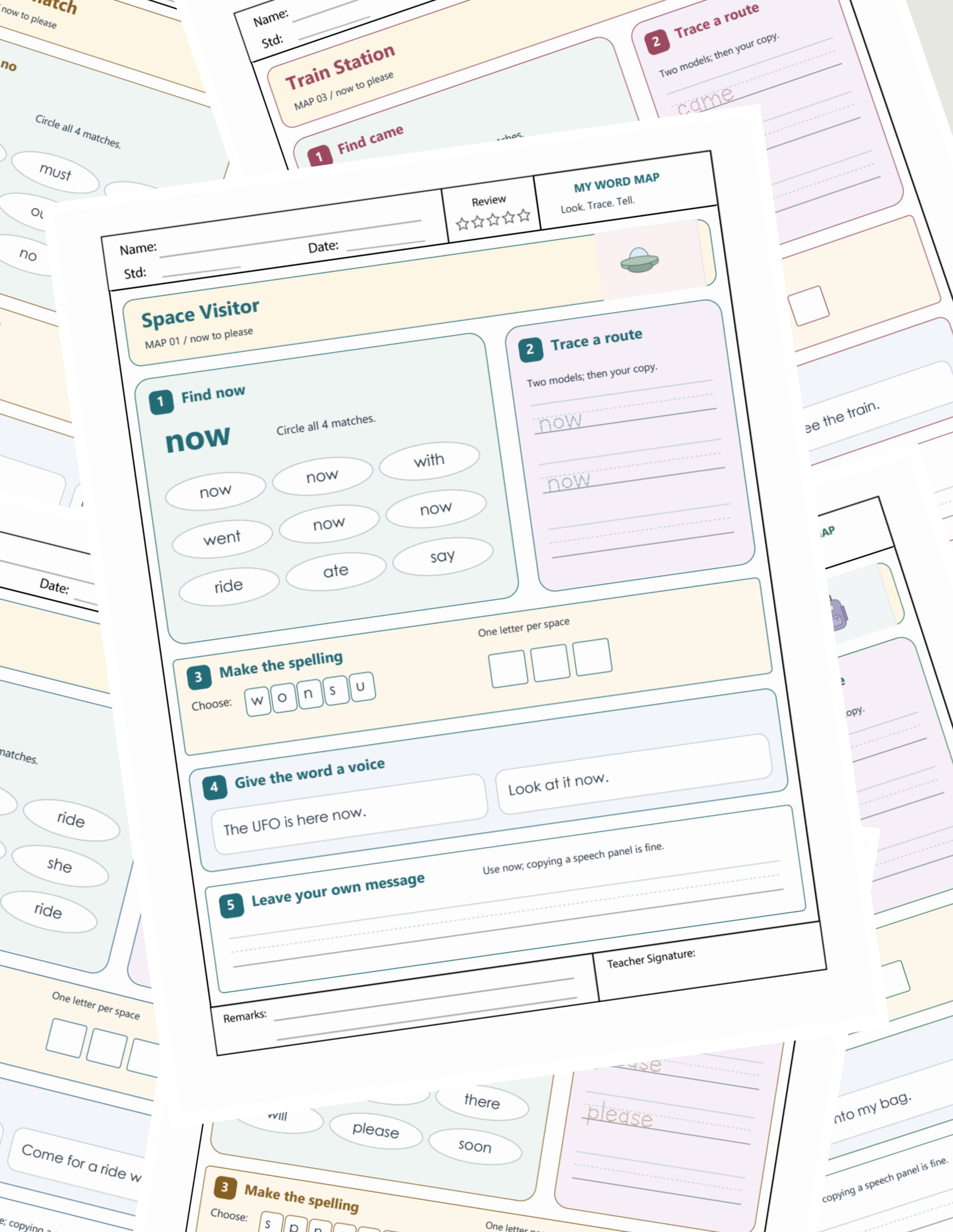
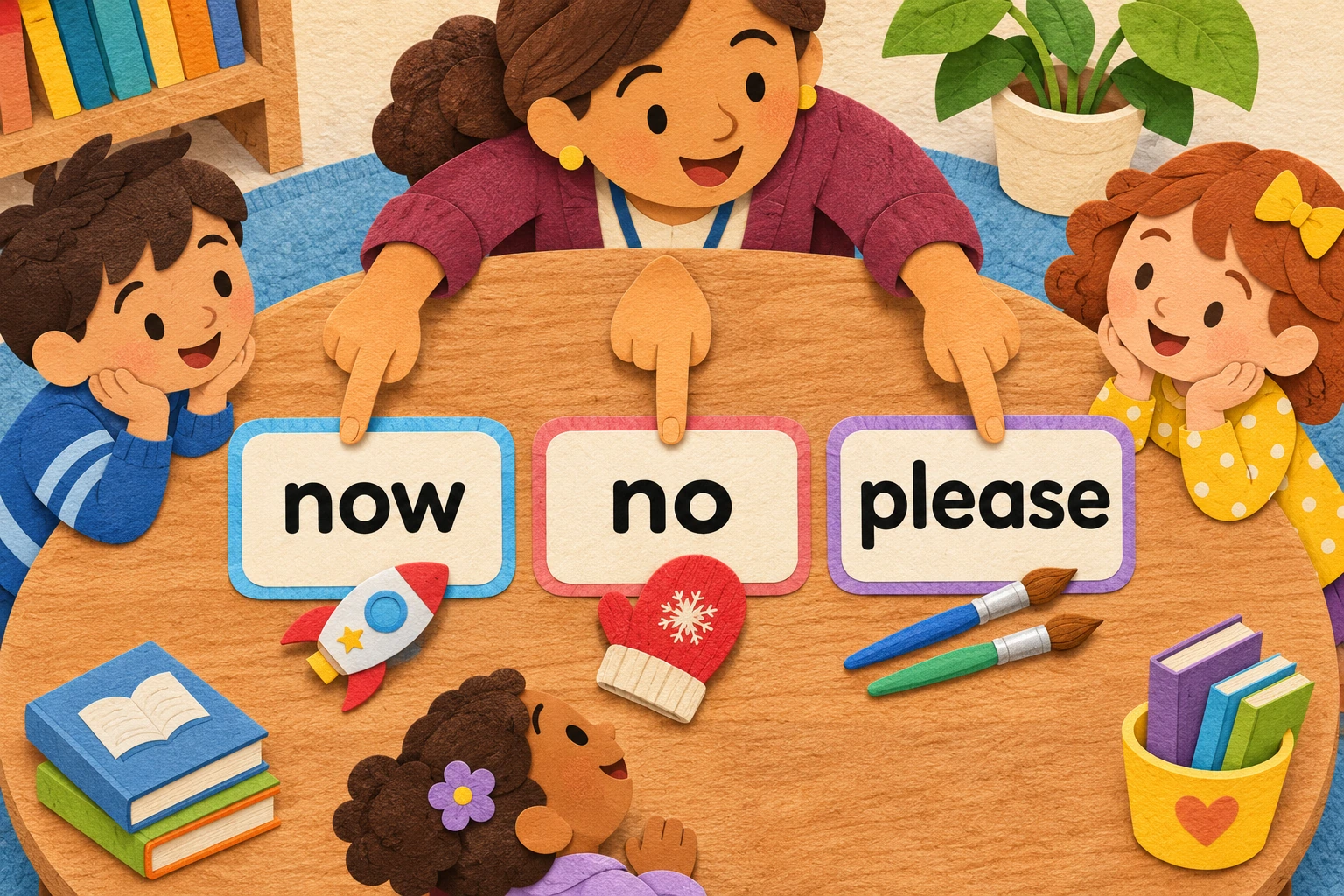
Real collection sheets overlap behind a whole now map.
The composition shows the clean now-to-please editions rather than invented worksheet artwork.
A request for paint, a remembered train arrival and a bug hiding below a flower call for different little words. Primer Word Maps brings those everyday purposes into twenty-six printable lessons, covering the supplied words from now through please. Each sheet keeps one spelling in view while children search, trace, build, read and compose. The clean collection costs $5 and contains twenty-six pages in numerical order. Its new map arrangement makes room for conversation alongside pencil work, so an adult can choose a useful starting place instead of demanding an entire page at once.
What this particular collection contains
The included sequence is now, no, came, ride, into, good, want, too, pretty, four, saw, well, ran, brown, eat, who, new, must, black, white, soon, our, ate, say, under and please. These are the supplied lessons numbered 27–52. The earlier he-to-are sheets belong to a different collection; this purchase does not silently combine both halves or promise additional worksheets.
Although the activities share a coherent interior, their language questions differ. Four connects print with a counted amount. Who requests a person's identity. Under describes a location relative to another object. Please changes the opening of a request, while no allows a meaningful negative response. Teaching every entry as a detached shape would overlook those distinctions.
Select a word because it suits a conversation the child can understand. Someone preparing a drawing table may have a reason to use want or please. A child recalling a journey may find came or ran more useful. There is no requirement to complete the collection in its printed order, and there is no score for finishing a particular number of sheets each week.
Take a tour of the Primer Word Maps
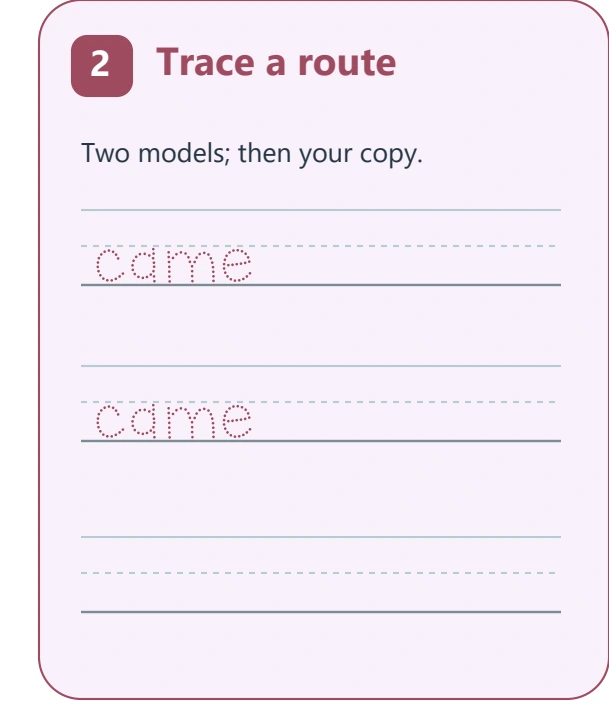
A spacious search hub occupies the upper left. Nine oval entries sit beneath a large target model; four entries match that model exactly. The right-hand route stacks two dotted versions above a guide for an untraced attempt. Across the middle, a spelling rail separates shuffled letter choices from the response spaces. Two speech windows then give the word complete sentence partners. A final message strip leaves room for the child's own writing.
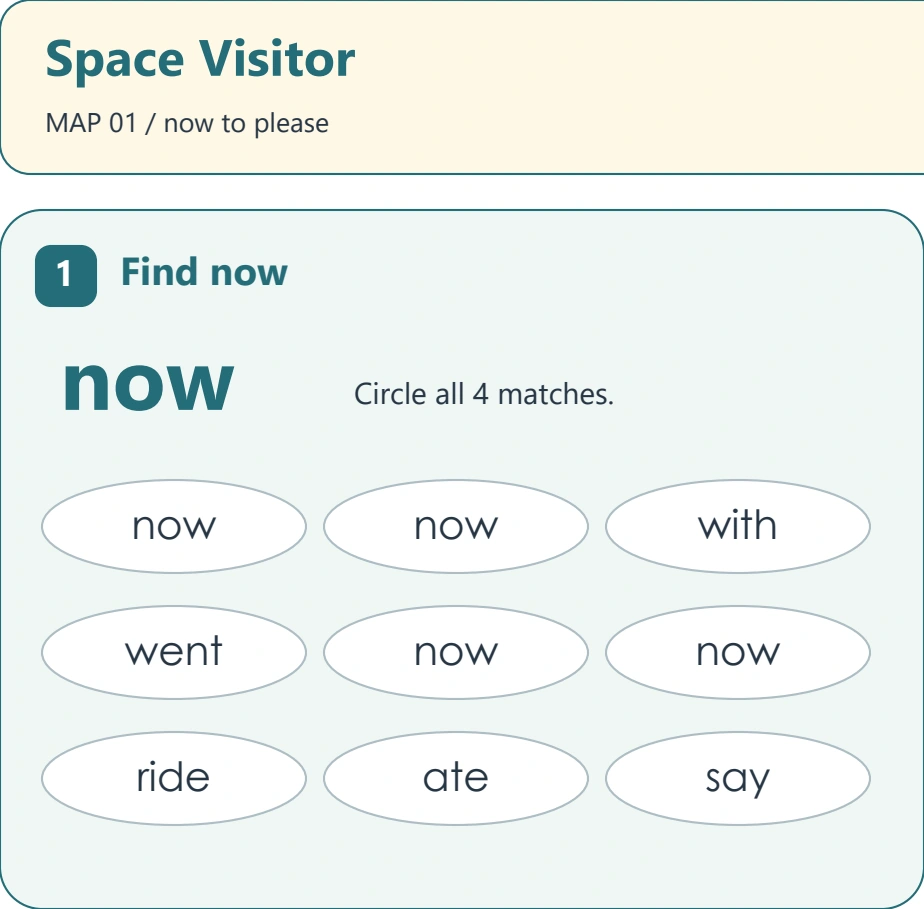
This arrangement differs from the supplied samples, which begin with a broad tracing band. All five original kinds of work remain, together with the source sentences, letter-bank choices and search entries. The established outer frame and US Letter page size remain in place. The change is an interior redesign, not an extra activity pack or a new answer key disguised as practice.
An adult may still begin at the speech windows. The printed map numbers organise the space, but they need not control the conversation. Read first when meaning is unfamiliar; investigate the letter bank first when a familiar word has an uncertain spelling. A small amount of appropriate work is more informative than completing every area through adult prompting.
Six reasons to connect the stations
- A reason to read: the two sentences show what the target contributes to a message, allowing discussion before isolated copying.
- Whole-spelling attention: nine separate choices encourage checking an ending or middle rather than recognising only a familiar first letter.
- Ordered construction: the spelling rail requires letters to occupy particular positions, including repeated letters when the word needs them.
- A manageable pencil route: stacked models provide two supported attempts and a separate place to try the word without dots.
- Expression with support: the message strip accepts a copied source sentence, an adult-supported composition or a dictated idea prepared for later writing.
- Useful adult observation: understanding, recognising and handwriting can be noticed separately, making it easier to choose the next kind of help.
These are learning opportunities rather than promises about a child's progress. A careful circle does not prove sentence comprehension, and a spoken explanation does not prove independent handwriting. Listen to the explanation and notice which support was needed. The resulting picture is more useful than a completion tick alone.
Repeated letters deserve separate places
Some targets make letter quantity especially visible. Good and too each contain two o letters. Pretty includes two t letters; well ends with two l letters. Soon has an o pair, and please requires e in two positions. The letter banks preserve those duplicates and add two spare choices. Removing a repeated piece because it looks redundant would make the intended construction impossible.
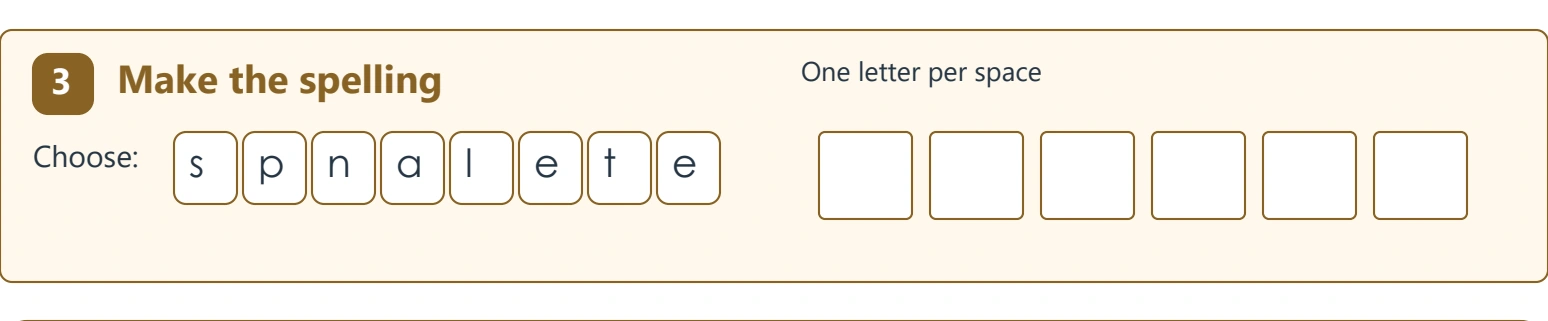
Have a learner speak the spelling while placing loose paper letters above the response spaces. Check the built word against its map's prominent spelling before any pencil copy. A wrong position can be repaired by moving a piece, which keeps pencil demands separate from the spelling decision. Avoid insisting that two written letters always represent two separately spoken sounds; the written sequence and pronunciation need adult explanation appropriate to the word.
Read the small words in their sentence jobs
Consider the difference between eat and ate. The pig page uses eat after can and see. The chick page recounts a completed feeding with ate. Both involve food, yet the spellings cannot be exchanged casually in the supplied messages. Stage a tiny pretend feeding, then recount what happened after it is over. The action gives the language contrast a reference.
Now and soon offer another useful comparison. A visible space visitor can be here now. An approaching model airplane may land soon, while its landing has not happened yet. Soon does not supply a fixed number of minutes. Keeping those meanings clear is more valuable than having children copy both words rapidly from neighbouring sheets.

Too in the crayon messages means also. A familiar sound may remind a child of two, but the worksheet's sentences are about an additional person or possession rather than a counted pair. Read the surrounding words aloud when needed. A beginning reader can investigate the target without being expected to decode every other spelling independently.
A home visit built around a real request
Imagine a family setting out paint. The adult selects please because a shared pot needs to move between two painters. They read the printed request and practise asking for a chosen colour. The listener may pass it, explain that it is still being used or offer another pot. Courtesy does not guarantee agreement, and the child should not be taught that a polite word removes someone else's right to decline.
After that exchange, the child builds p-l-e-a-s-e with loose letters and locates a target in one sentence. Pencil work can follow if the child is ready. An adult can write a dictated message on spare paper while the learner traces one model. Saving the search for another visit is acceptable; the useful result is a request whose words the child can explain.
Return to the same sheet when a different art material is being shared. A fresh request provides transfer beyond a memorised paint example. Keep the first attempt so the adult can compare the support needed later, without turning that comparison into a public chart or competition.
An observation station for a small group
Set up a teacher-led word-map table with two or three learners, pencils and a few large movable letters. One pair may discuss our using a shared class star, while another child explores who with named sock puppets. Give each learner an actual turn to answer before a confident partner supplies the response. The adult can read the surrounding sentence while the child points to the target.
Listen for the kind of answer being requested. Who needs a person, while under needs a relationship or place description. If a child answers every prompt with an object name, demonstrate the relevant contrast in the play scene. Returning immediately to more tracing would add work without addressing that language difficulty.
Collect one useful observation per learner: a second o noticed, a whole word checked, a person named accurately or a message dictated clearly. Record the event privately. The page can remain partly unfinished while still supplying enough information to plan a later visit.
Choose an entry point by need
The suggested range is roughly ages four to six with adult participation, depending on spoken language, letter experience and pencil stamina. Consider that range alongside the individual reader's experience; a birthday does not establish readiness for independent sentence writing. A learner who enjoys conversation may need an adult scribe, while a fluent copier may need more help explaining the message.
| What you observe | Try on the map | What changes next |
|---|---|---|
| Recognises the picture but guesses the word | Read a speech window, then cover the illustration briefly. | Look for attention to the printed target. |
| Selects the correct letters in another order | Use movable pieces beside the large model. | Check each position before copying. |
| Understands the message but avoids writing | Accept dictation and one supported trace. | Revisit the untraced guide later. |
| Copies smoothly without explaining meaning | Change one feature of the pretend scene. | Ask whether the same sentence still fits. |
Five invitations beyond the worksheet
1. Pack a miniature bag
Move a paper book into a toy bag, pause halfway and ask what is changing. Then look into the opening without moving the book. Those two actions give the into sentences related but distinct meanings. Point back to the same printed spelling after each demonstration.
2. Make a tiny arrival theatre
Use a toy train and an empty station picture. Move the train into place, stop it and retell the arrival with came. Swap speaker and listener roles. A completed-event report can be spoken while the train stays still; it need not describe movement occurring at that instant.
3. Build a colour description shelf
Choose familiar objects that are brown, black or white. Match an object with its written colour label, then find another object in the same colour family. Keep the words available for checking. Discuss colour as a property rather than treating a teddy or duck as the definition of its label.
4. Invite another crayon artist
Begin a shared drawing with one person and invite a second participant using too. The new artist adds a different mark while remaining part of the activity. Let both explain what the invitation meant, then reread the crayon sentence without converting it into a counting exercise.
5. Tell a before-and-after story
Draw a chick before feeding and after feeding, with a seed visible only in the earlier picture. Use ate when recounting the finished action. The listener can point to the evidence supporting the recount. A child may dictate the sentence instead of writing every unfamiliar word.
Keep revisits comfortable and specific
Offer a choice between two appropriate words and explain the purpose of the visit. “Would you like to tell the train story or ask the sock question?” gives a clearer invitation than demanding another completed page. End after a meaningful contribution, especially when pencil control is tiring. Praise an observable decision rather than declaring a child good at everything.
Leave time between revisits and try the word in a changed setting. A learner who uses under beneath a toy bridge has taken the idea beyond the flower picture. If the response still depends on the original illustration, restore the model and conversation. Extra pages are not the only way to provide another encounter.
Find a companion resource when the need changes
The earlier he-to-are primer collection offers another set of sentence purposes. For shorter starting words, explore the first twenty pre-primer lessons. Children who need a separate pencil-control visit can use the prewriting concept workshop. Alongside print, NAEYC's family play ideas and PBS Parents' learning resources offer possibilities for shared talk and practical play.
Purchase and print the twenty-six-map file
Use this collection's purchase control for the $5 USD download. After checkout, open the authorised file from your account. The bundle is a purchase-only product; membership access to an individual clean worksheet is a separate option. Its single PDF contains the twenty-six maps in source-number order, with no website watermark, domain name or advertising panel inside the printable pages.
Print selected pages on US Letter paper at a scale that keeps the complete frame visible. Check one copy for readable dotted models and all page edges before making additional copies. Keep the file where the adult can locate the desired word quickly. There is no need to print all twenty-six lessons just to explore one useful conversation.
Related Topics
Popular Worksheets
Printable resources families and teachers are downloading now.
 Free
 Free
 Free
 Free