
He Sight Word: 5 Brilliant Apple Practice Activities
Continue beyond he with twenty-six clean reading-first practice sheets in one $5 printable collection.
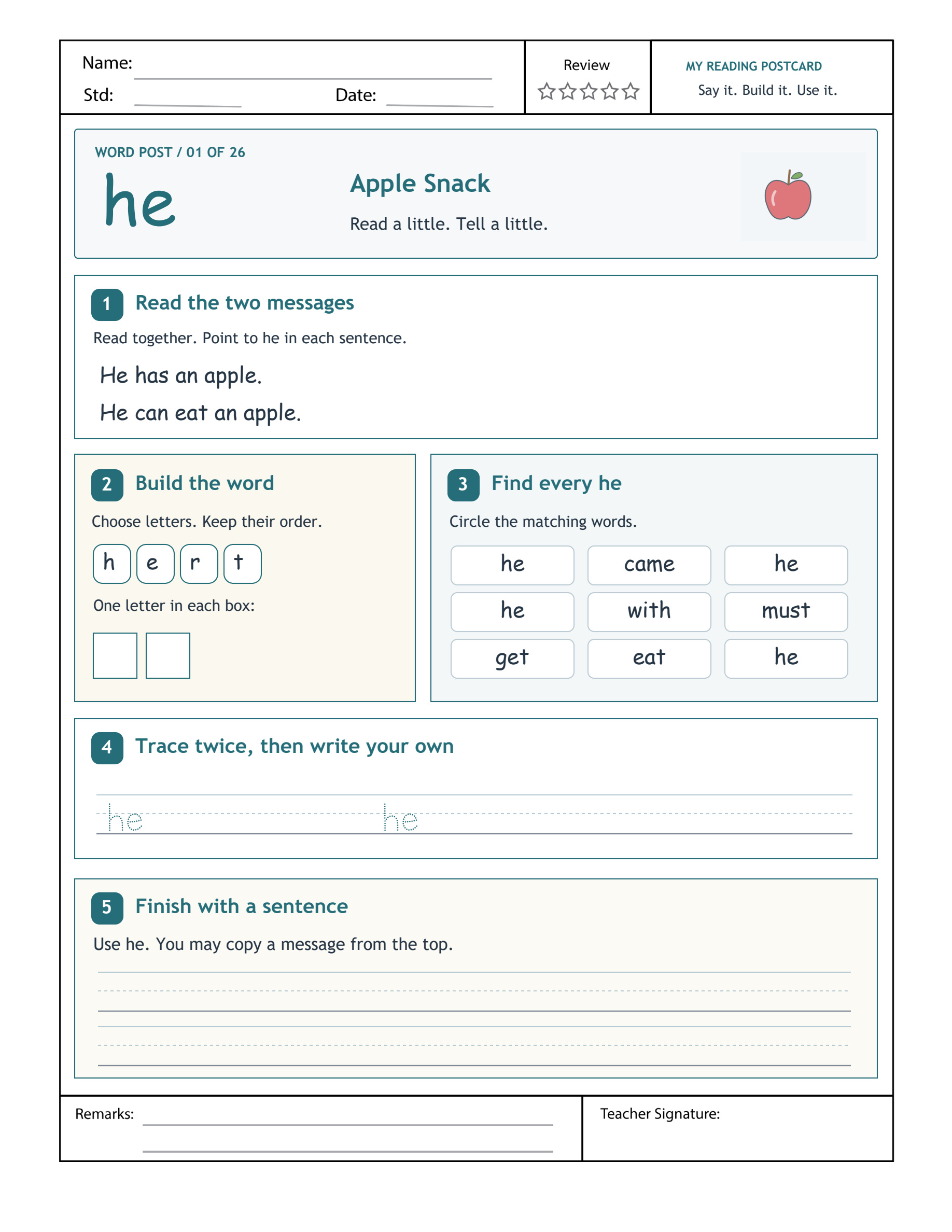
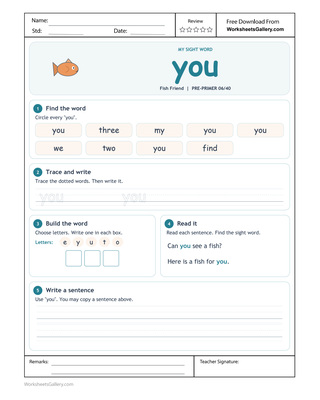
The full he sheet retains its US Letter frame.
Replace a named apple-snack character with a clear subject pronoun. The complete redesigned page appears without cropping.
Milo is holding an apple, and someone wants to tell a friend about him. Saying his name works; saying he works too, once everyone knows which person the conversation concerns. This He Sight Word lesson turns that small change into five connected reading and writing activities. An apple gives the sentences a familiar setting while the actual teaching stays with the pronoun and its two-letter spelling. Use the original sample or choose the clean, reading-first edition for a short, supported literacy visit with a preschool or kindergarten learner.
Let Milo's name open the conversation
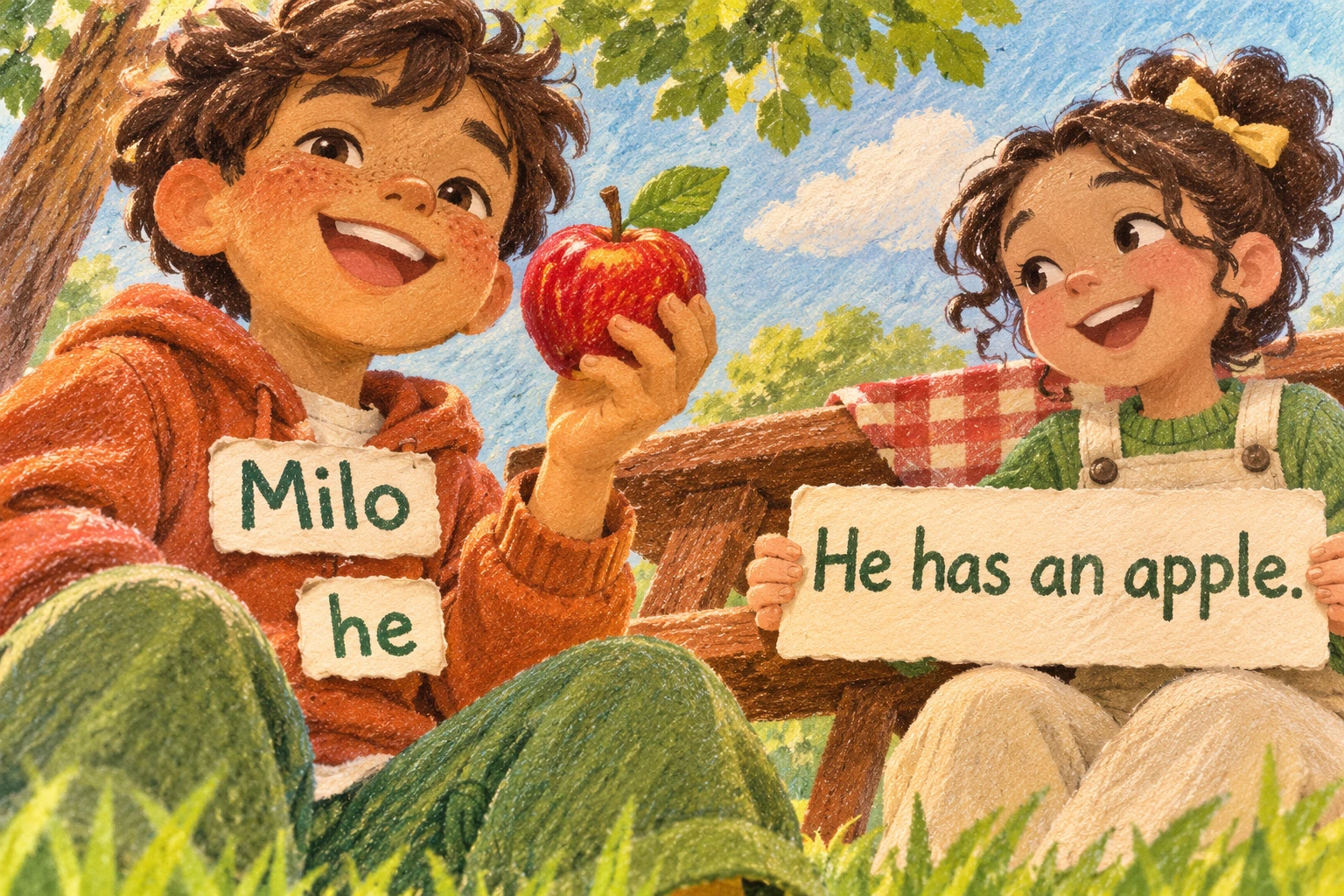
Introduce a character who uses he, such as the illustrated Milo. Say “Milo has an apple,” and then “He has an apple.” Ask whether the two messages can concern the same person. Point back towards Milo as you speak. This establishes a referent: the person the pronoun stands for in this particular conversation.
Do not ask children to determine someone's pronouns from a haircut, clothing or colour choice. An introduced character makes the intended reference clear. Nor does he always mean Milo. With another established character, the same word could refer to someone else. That flexibility is a central idea worth exploring gently through talk.
The apple remains important to the message, but its picture cannot identify the printed pronoun. A reader who says “apple” whenever the page appears needs help separating illustration vocabulary from the little word being practised. Show the large h-e model, read he aloud, and return to the complete sentence so that shape and meaning stay connected.
He Sight Word reading: possession and possibility
Two supplied sentences anchor the lesson: “He has an apple.” and “He can eat an apple.” The first tells what the character has; the second describes something he can do. Read each smoothly before inviting the child to echo it. If the apple caption needs unfamiliar words, an adult can write those while the learner supplies he for the introduced character.
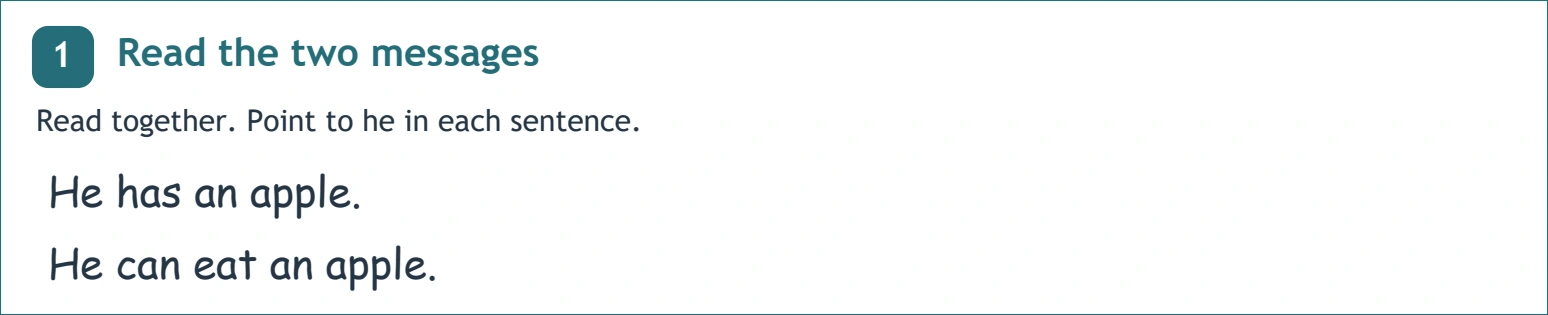
Both printed messages begin with a capital H. The big word model uses lowercase h. Place a fingertip under each form and explain that He starts the sentence while he is the same word shown on its own. Expect that connection to need more than one demonstration. It is a change in letter case, not a new spelling or a different character.
After the second sentence, ask a meaning question: who could eat the apple? The answer may be Milo's name, a gesture towards the illustration, or an oral sentence using he. Each response can demonstrate reference. Insisting on a particular rehearsed answer would make it harder to tell what the child actually understands.
The five jobs on this particular sheet
The clean apple lesson lets the reader meet Milo's messages first. Its middle pairs a spelling workshop with the matching grid; dotted he copies and a larger sentence space complete the route. The free original starts with tracing. Each version contains the same five activities on US Letter paper, with the established frame retained.
In the letter station, the bank is h, e, r and t. Only h followed by e fills the two response boxes correctly. The search has nine entries, four of them he. The other choices are came, with, must, get and eat. The tracing band gives two dotted models and space to attempt a copy. The final ruled area accepts either an original sentence or a copied source message.
This inventory matters when preparing support. There is no cutting activity, phoneme worksheet, colour-by-code key or independent storybook hidden in the download. Bring movable letters if you want a tactile rehearsal, and describe that as your additional activity rather than a supplied page feature.
Search by spelling instead of by a single letter
Start in the upper-left search cell and inspect each choice across its row. A child can touch a cell with a spare counter while comparing it against the model. Ask for both letters in order before a circle is drawn. The short target should remain available as a reference rather than being hidden to increase difficulty.
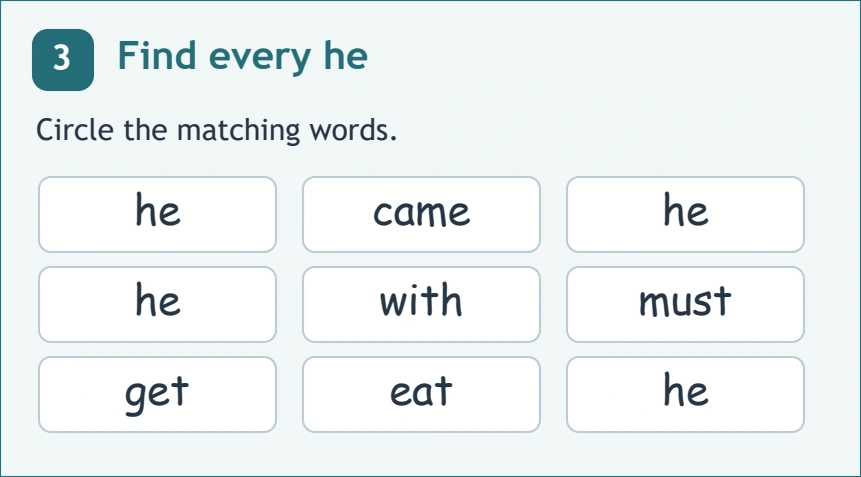
Adult he key: 1, 3, 4, 9. Giving those positions in advance removes the visual decision the activity offers. Instead, let the learner explain one selected cell. A clear “h, then e” is more informative than a fast sweep around the corners.
The distractor with contains h but does not spell he. Get ends with t, and eat begins with e; neither becomes a match because it shares a familiar letter. If a child circles a distractor, place it beside he, compare the complete strings and let the child revise the decision. An eraser or a small cross beside an earlier circle is sufficient.
Build h-e before asking the pencil to remember
Set out the four bank letters on small movable pieces or point to them directly on the page. Say he, name h, name e, then arrange them from left to right. The two spare choices, r and t, stay outside the response boxes. Moving the chosen letters is a rehearsal for writing rather than a substitute spelling task with a different answer.
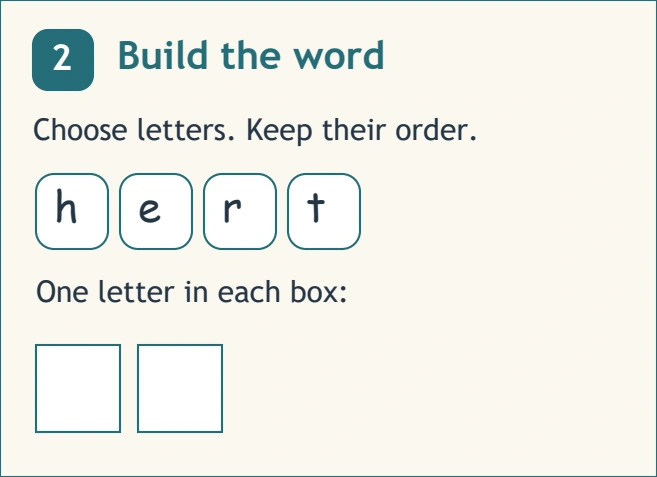
If the learner writes e-h, read the actual order together and compare its first letter against the model. Avoid simply saying “wrong.” The useful discovery is that the same two letters need a particular sequence. You can place a counter under the starting box and invite a second attempt.
Pronunciation can also be discussed without adding a long phonics lecture. Say he naturally and listen to its long e sound. Then show the written e as it appears in this word. One word is too little evidence for a child to invent a rule for every final e, so keep the explanation local and concrete.
Six gains adults can observe without a score
- A person stays in mind: the learner connects he with Milo after his name has been introduced.
- Two statements differ: having an apple and being able to eat it are related ideas with different information.
- Capital and lowercase meet: He in a sentence is connected with the standalone he model.
- Order becomes deliberate: h precedes e, even when the letter bank presents other choices.
- Whole-word attention grows: a familiar h inside with does not make that longer spelling a match.
- An idea reaches the ruled line: a spoken message can be copied, dictated or attempted in the child's own handwriting.
In your apple-lesson notes, distinguish a clear reference to Milo from an accurate h-e copy. Either can need support independently.
A home visit with a toy picnic
One possible session starts with a toy named Milo and a pretend apple. A family member says who Milo is, then asks the child to describe what he has. If the child repeats the name, the adult responds with the pronoun version and points towards the toy. Both ways of speaking can be accepted while he receives a clear introduction.
Only then does the family open the page. They share the first sentence and find its initial word. The learner chooses one task: arranging h-e or searching the top row. A reluctant writer can finish orally and return to the pencil band later. The picnic does not need to become a demand to complete every box before play continues.
At the end, ask the child to tell another person one true statement about the character. The listener should know who Milo is before hearing he. If the message is unclear, that is an opportunity to introduce the character again, not evidence that the reader has failed a vocabulary test.
A classroom exchange with two named characters
In a small literacy group, give two toy characters distinct names and establish that each uses he. Put an apple beside one character and a book beside the other. The teacher first names the apple holder, then invites a statement beginning with he. The group points towards the intended toy and checks whether the statement fits.
Change the topic explicitly before discussing the other character. This prevents a confusing pronoun-switching game in which the adult privately changes the answer. Children hear that a pronoun depends on shared context. One child can speak while another tracks the printed he with a finger, then the roles rotate.
The worksheet supplies a quiet follow-up after the exchange. Collect one observation per learner: a successful reference, an independently ordered spelling or a carefully checked search choice. There is no need to rank the group by completion time. Some children will be ready for a new sentence, while others benefit from rereading the first one.
A small decision table for the next attempt
| What you notice | Try during the apple lesson | Keep available |
|---|---|---|
| Says apple whenever shown he | Read the complete message, then point only to h-e. | A clear distinction between picture and print. |
| Chooses the correct letters in reverse | Rebuild from the starting box while naming h first. | The large word model. |
| Reads he but cannot identify the person | Name Milo again and pair his name with the pronoun. | A visible character reference. |
| Explains accurately but tires while writing | Accept a dictated sentence and one careful word copy. | A shorter pencil requirement. |
Five apple-word games after the worksheet
1. Make a two-line character announcement. The adult introduces Milo; the child adds a he statement about an object the toy holds. Change the object while keeping the referent stable.
2. Put h and e on separate large cards. Stand them in their reading order, say the word, and switch the cards deliberately. Let the child repair the spelling rather than repairing it silently for them.
3. Write “He has a book.” on a completed message card and give the toy a book. Compare this new statement with the apple message. The changed object makes transfer visible without changing the target pronoun.
4. Play a listener check. One partner speaks a short he sentence after introducing a character; the listener points to the person and explains the choice. Swap speaking and listening duties.
5. Create a tiny picture caption for a named story character. An adult can write the dictated words while the learner contributes he. Reread the caption to an audience who knows the character's name.
Readiness, comfort and another short visit
Milo's pronoun visit is intended for supported readers aged about 4–6; a clear character reference matters before the length of the written copy. A child who knows only a few letters can join the oral character activity. A more experienced writer may compose an additional message. Neither needs a longer worksheet merely to keep pace with someone else.
Avoid drilling the two letters until the original idea disappears. If the learner becomes frustrated, return to Milo and the apple, say one message together and stop at a useful point. On another day, check whether he can be recognised in a different sentence. Praise a concrete choice, such as noticing the order or making the character reference clear.
For additional short-word work, the earlier sight-word reading pack offers a separate starting set. The eat practice activity connects naturally with a snack conversation. If pencil control is the immediate challenge, consider the prewriting discovery collection before extending sentence copying.
Families seeking more shared-play ideas can browse NAEYC's play suggestions. The PBS Parents learning pages are another source of conversation starters to adapt around a familiar character.
Choose the sample or the clean reading postcard
For the apple lesson, the free control delivers the retained source file. Membership supplies a separate clean PDF to a currently eligible member. That edition has the reading-first interior and all five tasks, with the website domain, watermark and advertising removed. Choose the version before introducing Milo so the child follows one clear page route.
Set the printer to US Letter and inspect Milo's entire border on a single trial copy. Check that both dotted he models remain visible. Loose h and e pieces can accompany the pencil if useful. To keep the companion primer words together, follow the $5 collection card; its single file contains all twenty-six clean lessons in their supplied order.
Popular Worksheets
Printable resources families and teachers are downloading now.
 Free
 Free
 Free
 Free