
Be Sight Word: 2 Wonderful Bee-Themed Reading Messages
Continue beyond be with twenty-six clean reading-first practice sheets in one $5 printable collection.
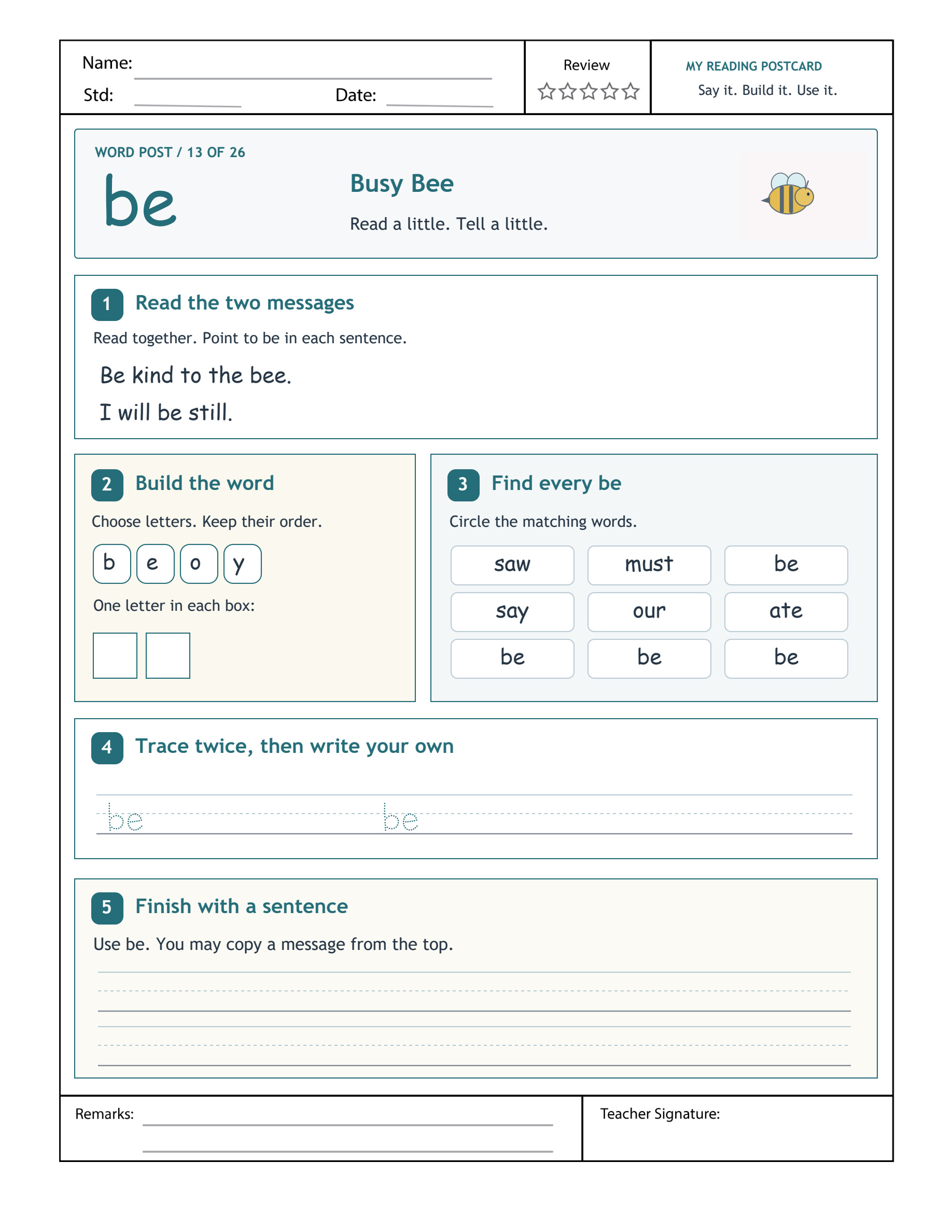
The full be sheet retains its US Letter frame.
Use a gentle instruction and a verb after will. The complete redesigned page appears without cropping.
Bea notices that be and bee sound alike, although they do different work in a message. That discovery makes Be Sight Word practice more interesting than copying a short spelling without context. The lesson pairs a kindness instruction with a statement about being still, then offers letter selection, matching and handwriting. A friendly bee picture supplies the setting, while the printed target remains b-e. Start with the two messages in the clean edition, choose a manageable pencil task and leave space for the child to explain what the speaker is asking or planning.
Listen alike, spell differently
The word bee names the pictured insect. Be is the target used in the two source sentences. Read “Be kind to the bee” aloud and point to the two spellings in turn. The same sound occurs, but one spelling names the insect while the other helps express the instruction.
Children do not need to learn a formal homophone definition before noticing this difference. Ask which written word has two letters and which has three. Then return to the message's meaning. Counting the letters is a spelling observation, not a substitute for understanding what the speaker says.
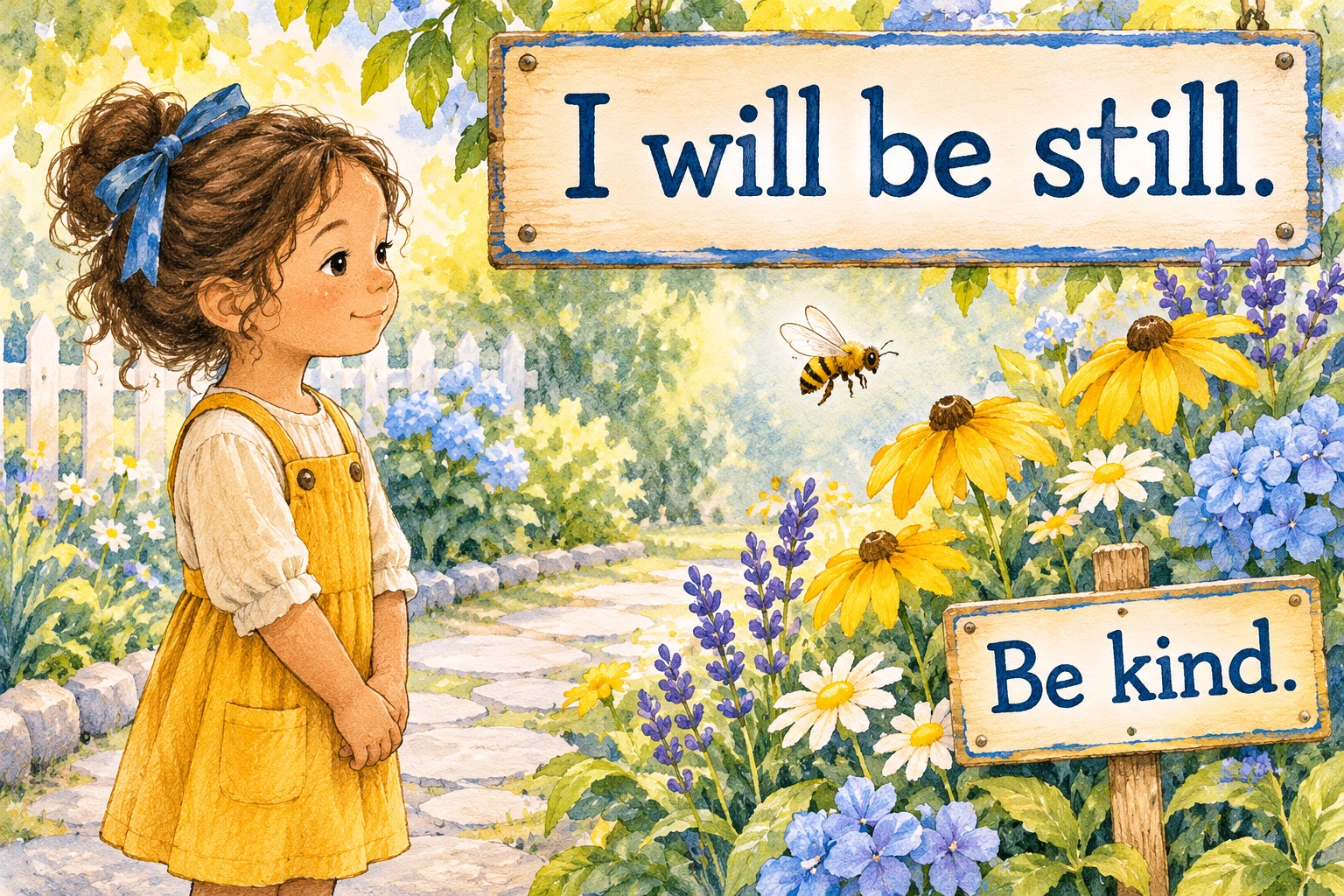
Use a picture or a toy bee for conversation. The page does not require interacting with a live insect. A pretend setting lets a child focus on language and print without an unpredictable event becoming the centre of the lesson.
Be Sight Word in a gentle instruction and a plan
The source messages are “Be kind to the bee.” and “I will be still.” The first asks for a way of behaving; the second states what the speaker plans to do. Discuss kind and still through familiar examples rather than expecting the small target to carry the entire meaning by itself.
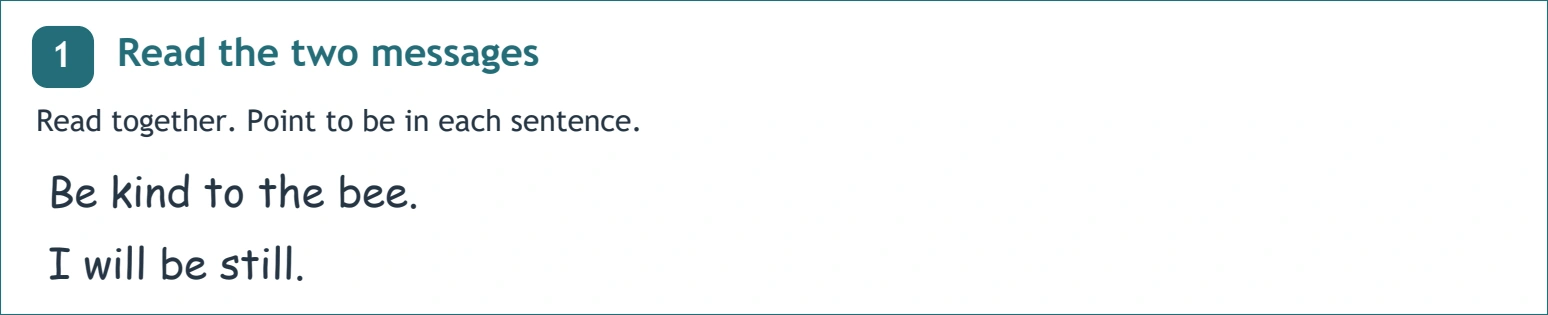
Capital Be begins the instruction, while lowercase be follows will in the plan. Connect both forms to the b-e model. An adult can read unfamiliar surrounding vocabulary while the learner finds the target and explains the message orally.
Do not teach be as another name for a bee. Try a spoken message such as “Be gentle with the book” using a different object. The target still works even when the insect picture is absent. This small transfer helps separate the source theme from the word's role.
A few decisions before the pencil begins
| What the learner shows | A useful be task | A response to listen for |
|---|---|---|
| Names the insect but misses the target | Compare b-e with b-e-e in the first message. | Recognises the different written forms. |
| Understands the instruction orally | Locate Be at the sentence opening. | Connects spoken meaning with the target print. |
| Knows b and e separately | Select them from the four-choice bank. | Keeps b before e. |
| Writes comfortably | Prepare another complete be message. | Uses the word for an understandable purpose. |
The options can be combined flexibly. A learner who writes neatly may still need more conversation about the two similar-sounding spellings. Another child may explain both messages accurately while requiring substantial pencil support.
Build a two-letter target from four choices
The bank contains b, e, o and y. Select b followed by e for the two response boxes, leaving o and y unused. Keep the large model visible while the child points to or moves the required letters. The bank's current order happens to place b and e first, but the learner should still compare them with the target.
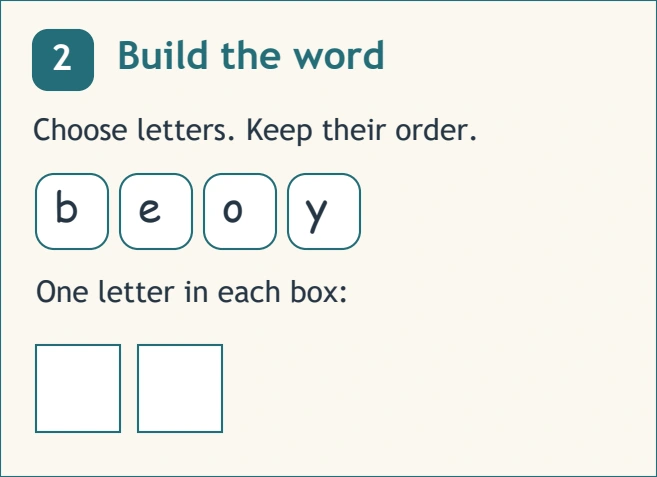
Name the selected letters and then say the completed word naturally. In be, the e represents the long vowel sound heard in the spoken example. Avoid suggesting that every e in every word has that sound. The immediate task concerns one useful spelling in two messages.
If b is reversed during writing, demonstrate its formation separately on spare paper. The child can then attempt the target with a model. A difficult pencil movement should not erase an accurate explanation of the instruction or turn into repeated full-line copying.
Four exact matches in the bee lesson's grid
The nine choices read saw, must, be; say, our, ate; be, be, be. Adult be key: 3, 7, 8, 9.
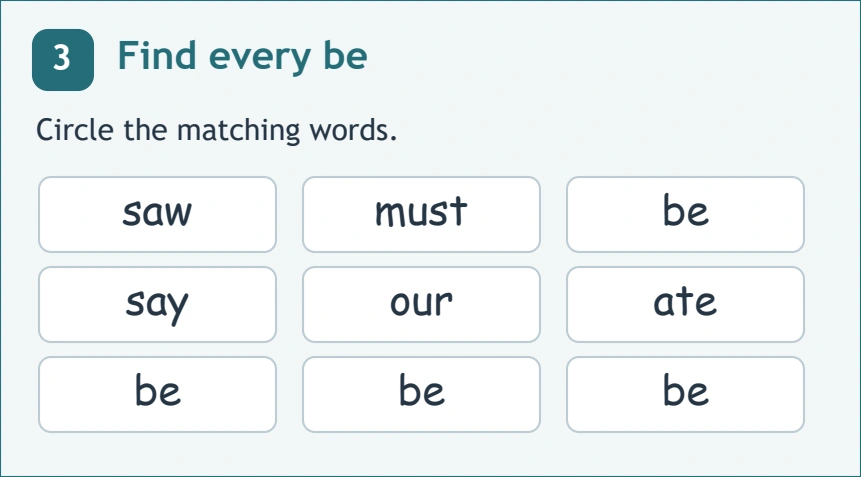
The last row contains three matches. Ask the child to inspect each cell even after identifying the first. There is no one-answer-per-row rule. A small counter can hold the current search place while the reader compares the entire b-e spelling.
Some distractors contain familiar letters but do not match the two-letter target. Ate ends in e, while saw and say are longer forms. A complete comparison matters more than a quick response based on a single visible letter. Let the learner explain one accepted choice and one rejection.
Trace, write and keep the message in mind
Two be guides keep b-e available while the writer prepares a separate undotted copy. For be, copying one of the printed reminder or plan messages is allowed. Rehearse an original idea aloud before deciding how much of it the child will write.
Supply harder instruction words on the child's behalf when b-e is the manageable written part of a meaningful reminder. If the child chooses “Be gentle,” discuss who the message is for and what gentle behaviour could look like in the pretend setting. A written instruction is more useful when it has a listener and a clear meaning.
The clean bee edition first separates b-e's messages from the insect name in context. The letter workshop and grid follow, with dotted copies and a roomier writing finish afterwards. The retained sample opens with tracing. Five source activities, the original frame and US Letter dimensions are preserved.
Six observations beyond a completed line
- A spelling distinction: b-e is separated from the three-letter insect name even though the words sound alike.
- An instruction is understood: the learner explains a gentle or kind action in the pretend scenario.
- A plan is recognised: the will-be statement is heard as something the speaker intends.
- Two cases: capital Be opens the instruction; lowercase be carries the same word within the plan.
- A whole-word choice: an e ending alone does not qualify ate as a search match.
- A purposeful written contribution: the learner records a short message that someone else can understand.
Keep the child's distinction between be and bee in your notes, then record any b formation support. Hearing alike does not make the two spellings interchangeable.
Bea's possible home scene: a toy garden
A family member might place a toy bee near paper flowers and read the kindness instruction. Bea suggests what kind behaviour could mean in the pretend story. The adult then voices “I will be still” from a toy character, establishing who is speaking and what that character plans.
They find be in the printed messages and compare it with bee. Bea chooses b and e, inspects one search row and makes a small written contribution. The adult can stop while the visit remains comfortable, leaving the rest of the sheet for another time.
For a final turn, Bea gives a toy a different be instruction involving a familiar object. The change shows that the target is useful outside the bee picture.
A classroom station for short, understandable instructions
The teacher establishes a pretend garden with toy characters and shares the two printed messages. One child explains the instruction, another identifies the speaker of the plan and a third tracks b-e in the text. Adults supply unfamiliar vocabulary so each learner has an appropriate role.
Next, introduce a completed instruction about a book or a classroom prop. Ask whether be still appears and what the new message asks of its listener. Keep the example concrete instead of demanding a formal definition from beginning readers.
The worksheet becomes an individual follow-up. Some learners compare the two spellings, others complete the bank and comfortable writers prepare another sentence. Record a specific observation rather than ranking handwriting or the time taken to finish all five tasks.
Five extensions for b-e and its message jobs
1. Make two completed labels, be and bee. Read the source instruction and point to each form where it belongs, discussing the difference in written length.
2. Give a puppet a short be instruction involving a familiar prop. Let the child explain the intended behaviour before looking for the target in print.
3. Arrange b and e with movable letters, then let the learner check their order against the large model. Change their positions and invite a deliberate repair.
4. Dictate a gentle reminder for a pretend story character. The adult supplies longer spellings while the child contributes be and helps read the finished message.
5. Compare an instruction with an I-will-be plan in a small acted scene. Establish the speaker clearly and ask what each message is trying to communicate.
Keep similar sounds from becoming a guessing game
Avoid asking children to identify be solely by listening when both be and bee are possible written choices without context. Supply a sentence and discuss its meaning. Likewise, do not present the insect picture as proof of which spelling appears in the reading line.
Near ages 4–6, a child may hear that be and bee sound alike while still needing help with b; keep those observations separate when selecting work. Pencil stamina, letter familiarity and oral language should guide the amount attempted. A learner who can explain a kind instruction may still need help forming b, while a careful copier may need another meaning demonstration.
For review, return to a short completed message on another day and invite one useful observation. Appreciate an accurate distinction between the spellings or a clear explanation of the plan. Repeating the entire sheet is not necessary for every revisit.
The earlier pack of short reading words offers another starting sequence. A different familiar action can be explored with the eat reading worksheet. For a shorter motor task before sentence writing, consider the prewriting discovery practice pack.
Families may find additional pretend-play contexts through NAEYC's play resources and everyday activity ideas at PBS Parents' learn-and-grow hub. Choose an idea that gives the child a real message to explain.
Download and print the bee-themed practice
Download the bee-themed sample for the supplied layout. An eligible membership account can choose the clean premium PDF, which brings its two messages ahead of the other practice. No website watermark, domain text or advertising remains in that edition. Its complete source activity set stays available inside the familiar frame for a clean printed reading visit.
Make one US Letter bee-page test and inspect the complete border and the two-letter dotted be models. A pencil is sufficient; any toy garden or alphabet pieces are optional. The $5 companion collection gathers the twenty-six clean primer lessons in order, offering another small word to discuss after the difference between the instruction's be and the insect's bee has been made clear.
Popular Worksheets
Printable resources families and teachers are downloading now.
 Free
 Free
 Free
 Free