
Was Sight Word: 2 Powerful Orange Memory Messages
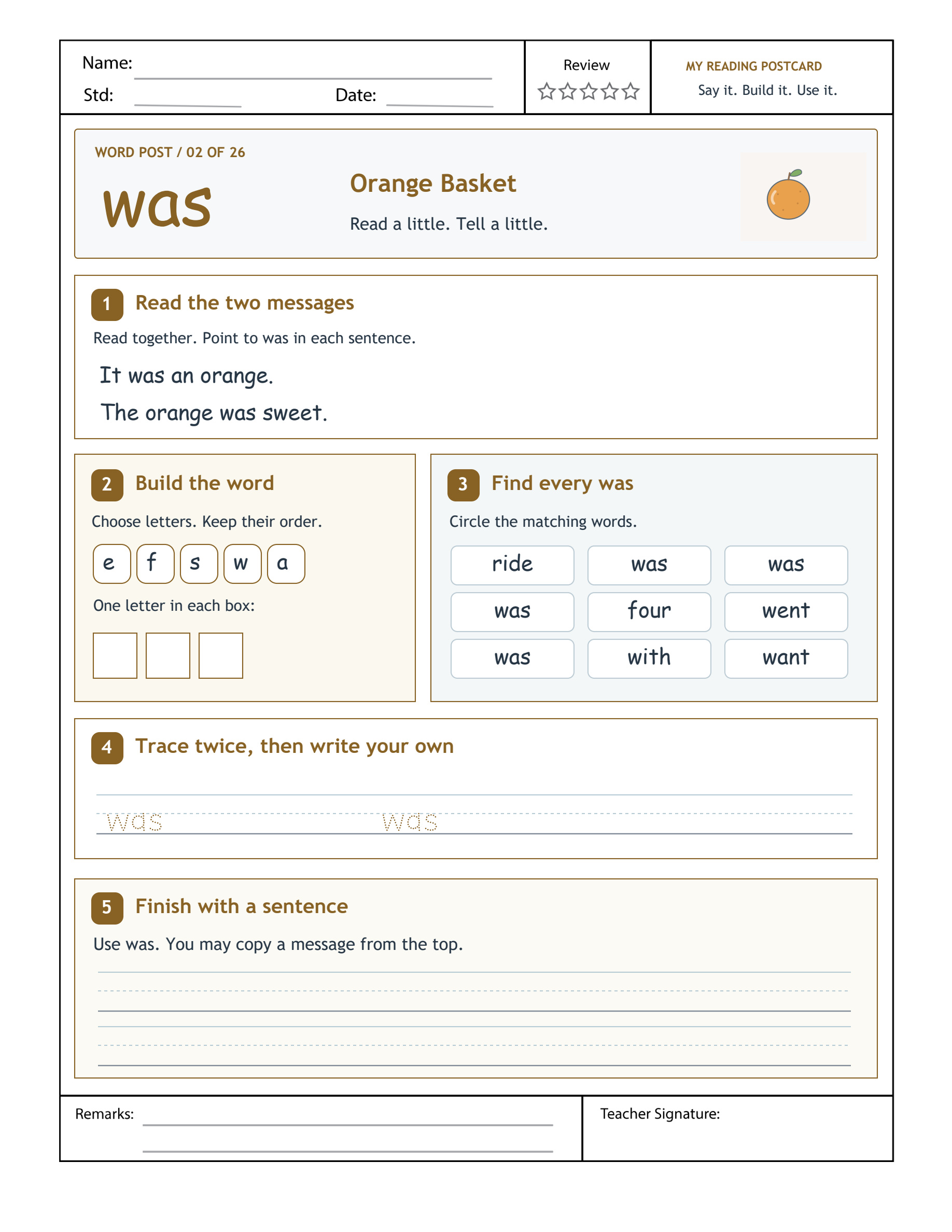
Continue beyond was with twenty-six clean reading-first practice sheets in one $5 printable collection.
The full was sheet retains its US Letter frame.
Tell what an orange was like before the present moment. The complete redesigned page appears without cropping.
Yesterday's orange can still be talked about today. That simple idea gives Was Sight Word practice a purpose beyond remembering three letters. Tessa's orange-basket lesson pairs two short statements with a shuffled letter bank, a nine-choice word search, dotted writing models and a sentence finish. An adult can connect the print with an ordinary remembered experience, then let the child inspect its spelling at a comfortable pace. The clean edition opens with reading, so the message arrives before the pencil work, while the free sample keeps the original arrangement.
An orange remembered rather than an orange renamed
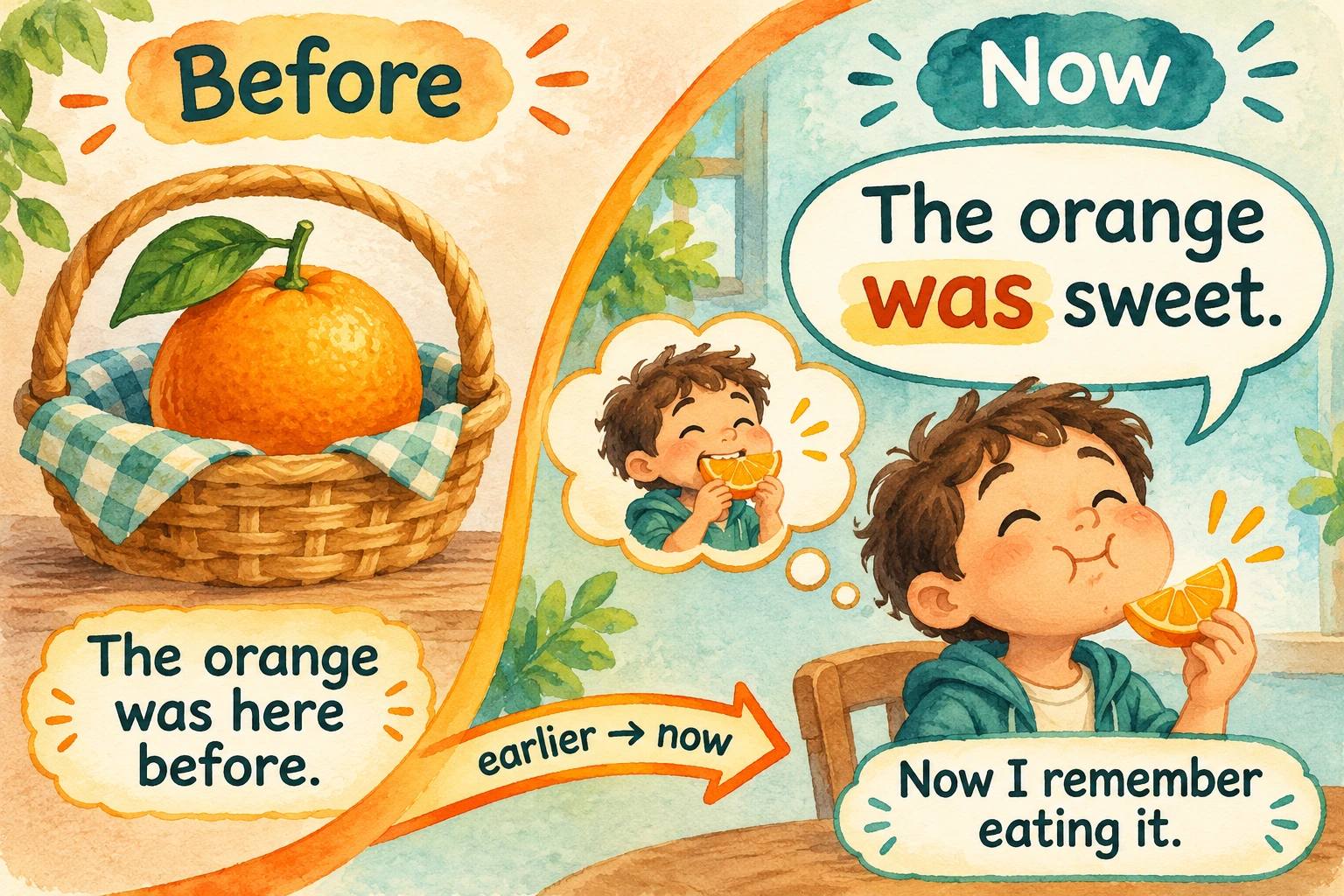
Was can describe how something existed or seemed at an earlier time. In “The orange was sweet,” sweetness is being remembered. The word does not name the fruit, and it does not mean orange. Place a picture of a snack beside a simple before card and talk about something already experienced. A pretend memory works if no food is being used.
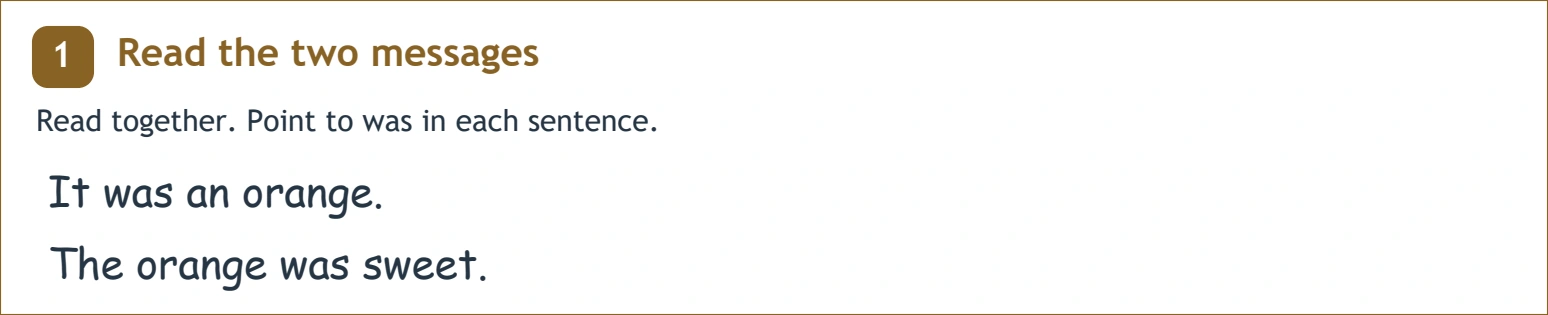
The other source statement, “It was an orange,” identifies an object in a past context. You might imagine an earlier mystery bag whose contents have now been revealed. That opening needs a little surrounding conversation; without context, a child may reasonably ask what it refers to. Supply the object or situation rather than requiring the reader to guess the adult's private story.
Avoid claiming that was means the object has disappeared. An orange can still be present when someone recalls where it was earlier. Likewise, a snack can have been sweet without the lesson establishing what it tastes like now. Keep the first explanation modest: this word helps us talk about something before the present moment.
First share the two orange statements
Read “It was an orange.” naturally. Track the words and pause under was without breaking the message into a string of disconnected labels. Next, read “The orange was sweet.” Invite the learner to locate the same target in its different sentence position. Was is not at the beginning of either supplied message.
A child might know the orange illustration but need help with sweet. Explain that vocabulary conversationally. You can describe a remembered taste without offering food or making tasting a condition of participation. Children with different food experiences still have access to the language activity.
After reading, ask which part tells us the statement concerns before now. Model the answer if necessary and reread the whole sentence. The page is practice material, so assistance is expected. Recording “recognised after a reminder” provides a clearer observation than marking the entire activity correct or incorrect without context.
What the worksheet contains, and what changes in the clean edition
The orange sample places its dotted word at the start of the activity sequence. In the clean edition, the remembered-orange messages lead into neighbouring spelling and search stations, followed by tracing and a roomier sentence area. Five source activities are preserved, as are the original US Letter dimensions and outer frame.
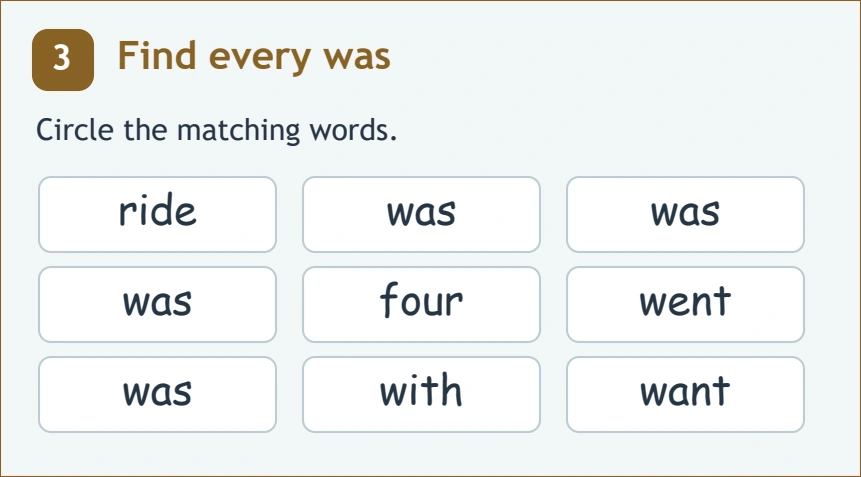
The bank presents e, f, s, w and a. Selecting w-a-s leaves e and f unused. The search rows contain ride, was, was; was, four, went; was, with, want. Four cells match exactly. These details make it possible to prepare loose letters, check an answer or support a child who has lost their place without inventing an additional exercise.

The downloadable file is a single-page printable lesson, not an animated time-line game. The before-and-now illustration on this webpage is an extra conversation aid. It does not add another worksheet to the download or provide a replacement for the actual printed search choices.
Was Sight Word spelling has a clear order
Put w, a and s in a line while saying the word. Then name the letters in reading order. With the complete model visible, ask the child to pick those letters out of the five-choice bank. The response boxes each receive one letter. A learner can rehearse with movable pieces before writing the sequence.
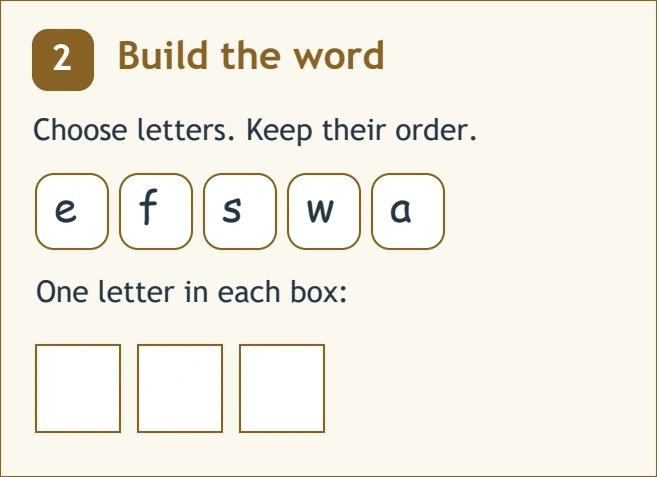
Was is not reliably learned by substituting an ordinary short-a pronunciation into its three letters. Say the word as it is used in your everyday speech and connect that spoken form to w-a-s. Pronunciation varies by accent and by whether a word is stressed in a sentence. There is no need to demand an exaggerated isolated pronunciation that makes the shared sentence sound unnatural.
If s is chosen first because it sits near the beginning of the bank, point out that a bank is a collection of options, not an already ordered answer. Return to the large model and begin with w. This distinction also prepares the child to handle other shuffled letter activities more deliberately.
A nine-cell search that rewards looking to the end
The exact matches occupy positions two, three, four and seven when counted across each row. Keep the answer locations out of the initial instruction; the useful work is comparing the written forms.
Went, with and want all begin with w, yet none spells was. Invite a child to identify the second and final letters rather than treating any w word as a match. Ride and four differ more obviously, but they still deserve a brief glance as part of an orderly search route.
If the child circles went, do not immediately switch into teaching a second past-time word. Both words can concern earlier events, but the search asks for one particular spelling. First resolve that visual task. A separate conversation can later compare “It was sweet” with “We went home,” using each in a complete meaningful sentence.
Six useful observations from an orange lesson
- Past reference: the reader links was with an earlier experience rather than using it as a fruit label.
- Sentence tracking: the same target is found after it in one message and after orange in another.
- Spelling sequence: w, a and s are selected and arranged despite their scattered positions in the bank.
- Distractor inspection: sharing an initial w does not make went, with or want an exact match.
- Controlled movement: the pencil follows dotted models and then attempts a copy on the guide.
- Recounting: a child communicates something remembered through speech, dictation or a short written sentence.
Record whether the child recalled an earlier orange experience and whether w-a-s was selected in order. Those observations answer different teaching questions.
Tessa's possible home session: remember a snack
A family member places an orange picture in a small basket and invites Tessa to recall an earlier snack. The adult says, “The orange was sweet,” then asks what Tessa remembers. A child who recalls a different fruit can talk about that fruit first; the shared worksheet sentence can follow as its own example.
They open the reading banner and find was together. Tessa chooses the letters, leaves the extras in the bank and checks one search row. The adult asks whether the two matching cells in that row really show all three letters. Writing may involve just one careful copy, with the sentence dictated aloud if the child's hand is tired.
Later, another family member hears Tessa retell the snack memory. The adult can show the printed word again to connect remembered language with print. This is a possible teaching sequence, not an account of a child's measured progress or a promise that a single visit produces independent reading.
A classroom mystery bag for an earlier object
During a small-group session, show an orange in a bag, then close the bag and set it aside. Tell the group that you are discussing what they saw a moment ago. Read “It was an orange.” Ask a learner to explain what it refers to and another to point towards was in the printed sentence.
Next, reveal a different object for a new brief turn. Keep the language accurate: “It was a block” can recall that earlier reveal. Do not require every object to become an orange just because the worksheet illustration remains on the table. The printed example is one instance of a useful sentence pattern.
Children then return to their own was sheet. One can build, another can search, and a third can prepare an oral sentence for the writing area. Adults listen for the link with an earlier event while accepting that letter formation may require separate support. Finish the station with a calm reread rather than a competition to produce the most circles.
Match your response to the difficulty you see
| During was practice | A helpful adult move | A small check afterwards |
|---|---|---|
| Calls the target orange | Separate the object picture from the w-a-s model. | Can the child point to the printed word you say? |
| Circles every w beginning | Compare want and was letter by letter. | Does the final s influence the decision? |
| Uses was without a past context | Revisit a specific event from a moment ago. | Can the learner say what happened earlier? |
| Understands the story but avoids writing | Accept a dictated memory and reduce copying. | Is one well-supported spelling manageable? |
Five extensions for a remembered word
1. Make a two-picture memory strip. Show a toy in one location, move it, and describe where it was. Keep the old and new pictures visible while the learner talks.
2. Play a reveal-and-recount game. Briefly show a familiar object, cover it, then use was in a complete identification sentence. Supply the spelling card after the oral response.
3. Build w-a-s from large paper letters and tuck the completed word beside an earlier-event drawing. The letters form the word; the drawing explains its use.
4. Dictate a one-sentence class memory about yesterday's weather or a previous story. Let the child contribute was to an adult-written sentence, then read it back together.
5. Ask a puppet to mix up now and before. Recall a toy's earlier location inside a box, then invite a was statement that repairs the puppet's account.
Plan a comfortable return to the orange basket
For a child around 4–6, a remembered orange conversation may be easier than the sentence copy, so choose the spoken and pencil demands separately. Explaining an earlier event can be within reach even when the adult supplies surrounding sentence vocabulary. A confident copier may need the reverse support: a stronger explanation of what the statement means.
Reserve a brief predictable time for revisiting the target. Begin with one memory rather than a demand to recall a spelling instantly. On a later day, show was in a different completed message and listen for a connection with its earlier use. Appreciate a precise observation, such as noticing the final s or explaining the remembered taste.
For another food-related word, consider the eat reading lesson. The pre-primer starter pack provides an earlier collection of short-word practice. Learners who need a gentler pencil task can visit the prewriting discovery pack before copying longer messages.
Additional ideas for shared activity appear in PBS Parents' learn-and-grow resources. For a broader view of learning through play, adults can explore NAEYC's family play pages and choose a conversation that suits their setting.
Download a version that fits your visit
The orange page offers its supplied PDF as the free sample. An eligible member can instead obtain the clean version through the premium control. Its interior begins with the source messages and retains the other four tasks. No website watermark, domain name or advertising appears on that printable edition, so select it when a clean practice copy is wanted.
Before printing an orange class set, open the PDF and examine the full US Letter frame. A trial sheet should keep the pale was guides readable. Bring a pencil and, optionally, loose w, a and s letters. The related $5 purchase combines this page with the other twenty-five clean primer lessons, allowing an adult to choose the next useful word from one file.
Popular Worksheets
Printable resources families and teachers are downloading now.
 Free
 Free
 Free
 Free