
Nose Letter Neighbours: 4 Joyful Nn Learning Tasks
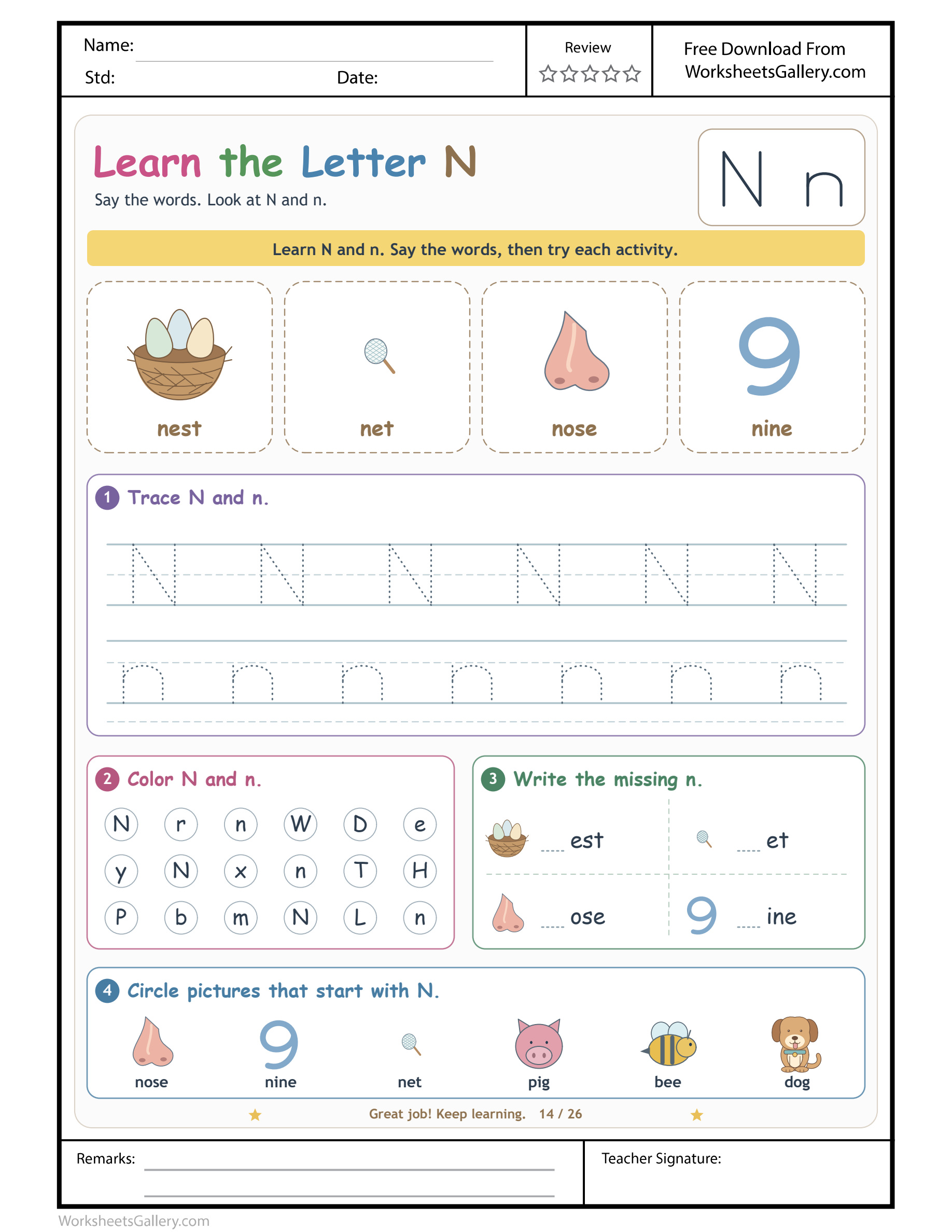
Nose Letter Neighbours: Use nose, nine and net to compare a printed initial across body, quantity and object pictures.
Noses, nests and nets offer plenty to name, while nine adds a number word to the conversation. Nose Letter Neighbours connects those four labels with Nn through tracing, case recognition, missing-letter writing and picture selection. The picture of a numeral is there for its name, not as an instruction to count nine answers. Read the labels with the learner and keep the large case references available. A child can begin by describing one drawing, finding a matching letter or trying a small written repair. Choose a route that makes today's print comparison clear and comfortable.
Nine is a name to read here — Nose Letter Neighbours
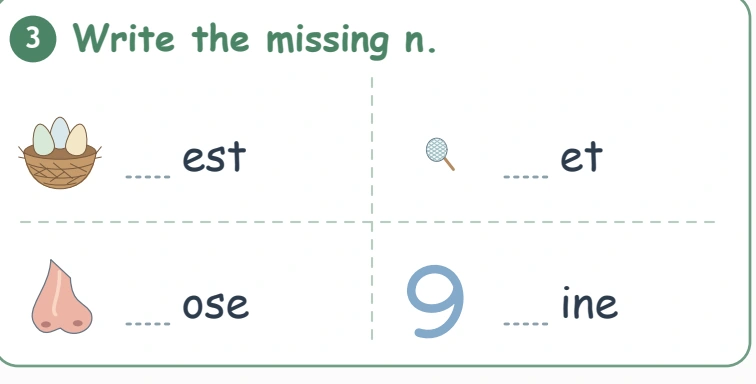
The upper Nose Letter Neighbours bank shows nest, net, nose and nine. The numeral drawing gives the last word a meaning, but the letter activity concerns the written n at the start of nine. The search below still has its own number of targets. Do not use the illustrated numeral to decide how many circles to colour.
This distinction can prompt a useful conversation about symbols and names. A child may recognise 9 before reading nine, and an adult can supply the spoken word while pointing at its initial. The page does not require solving a number problem or writing the numeral in a letter gap.
Five reasons to slow down and look: Nose Letter Neighbours
- Different representations. A numeral picture and its written name offer a concrete reason to distinguish a symbol from the word used to name it.
- Case association. Angular N and rounded n can be recognised as related forms.
- Vocabulary clarity. Naming a net establishes a specific word before its beginning is inspected.
- Hand movement with a purpose. A chosen trace or one-letter repair ties a small action to a visible example.
- Flexible rule following. The learner can move from comparing letter shapes to checking picture-name initials.
These are opportunities within Nose Letter Neighbours, rather than a prediction of fixed gains. Notice how the learner responds to each kind of demand. An accurate spoken explanation about nine may coexist with a need for a larger writing model; those observations can guide different kinds of support.
Nico's imagined numbered nest: Nose Letter Neighbours
Picture Nico constructing a pretend nest from paper strips at home. A grown-up places a completed nest label beside it and shows the word on Nose Letter Neighbours. They also name the nine picture, comparing the two written beginnings without expecting the nest to contain nine objects.
Nico might choose to find a lowercase n in a row, then return to arranging the paper nest. This fictional teaching scene gives the print a setting while keeping the worksheet instruction intact. The adult can describe a noticed comparison without claiming that a particular amount of progress has been measured.
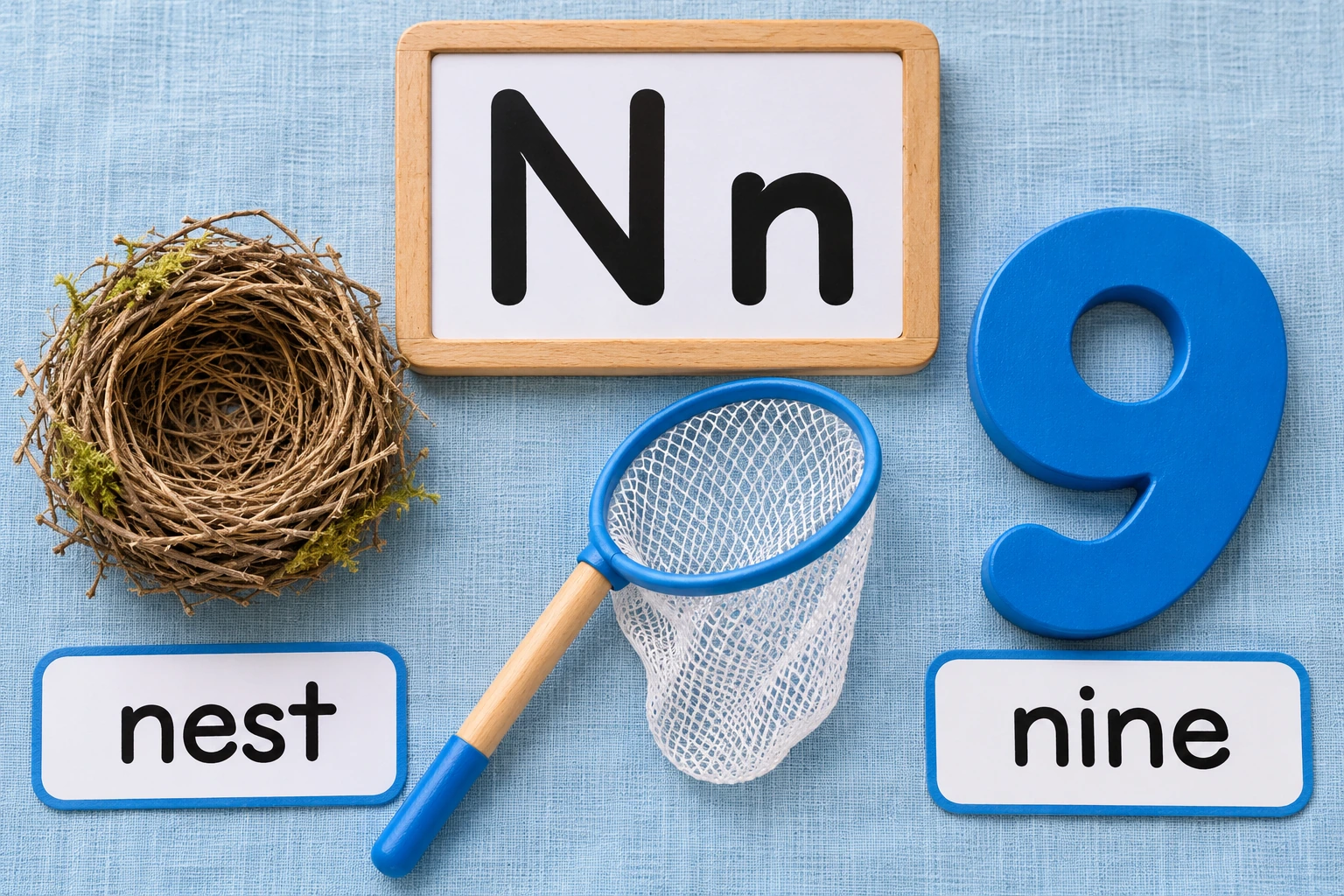
Compare a diagonal with a small arch: Nose Letter Neighbours
The capital N model in Nose Letter Neighbours has a diagonal joining its taller parts. The lowercase n uses a different rounded arrangement. Inspect each whole form, allowing the learner to show the difference with a finger rather than requiring formal terms for letter parts.
A child may try to find only a smaller capital N when asked for lowercase. Show the actual small reference instead of relying on a verbal reminder alone. The visible model gives the question a clear answer source and avoids turning case recognition into a demand to remember an unseen example.
All four panels in an adult checking view: Nose Letter Neighbours
| Nose Letter Neighbours activity | Adult quick check | Source detail |
|---|---|---|
| Trace N/n | 6 N models;7 n models | Nose Letter Neighbours guide rows |
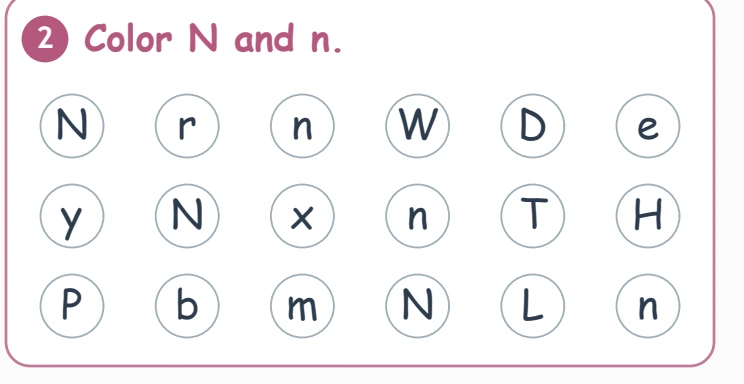
| Find Nn cases | 1, 3, 8, 10, 16, 18 | 6 matches in the Nn circle field |
| Complete nest through nine | n | Nn: initial n |
| Picture-name check | nose, nine, net | 3 choices fit Nn |
The Nose Letter Neighbours search contains eighteen circles in rows of six, with six Nn matches altogether. Count positions left to right and then down. The final strip contains three matching pictures. Keep this reference for checking rather than asking the learner to memorise positions or complete all four panels at once.
Give tracing a clear starting comparison: Nose Letter Neighbours
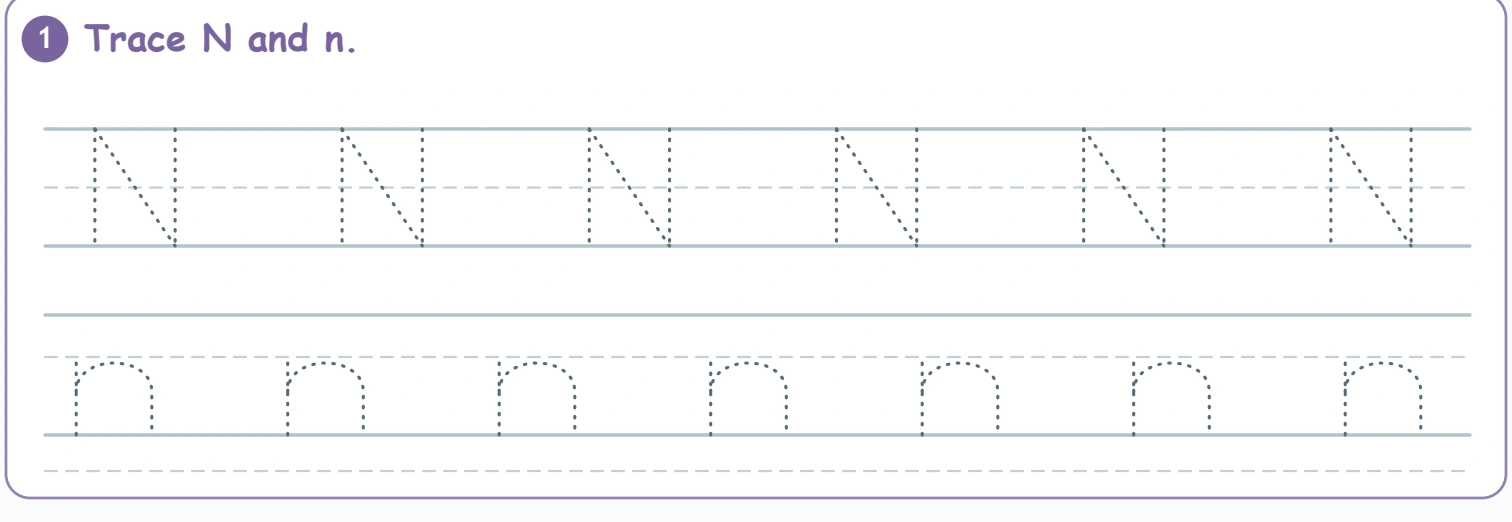
There are six dotted capital N examples and seven lowercase n examples. Before choosing one, compare the larger references on Nose Letter Neighbours. An adult can draw a broad model separately, then invite a finger movement over the printed guide or one comfortable pencil attempt.
The source has no numbered stroke arrows prescribing a route. Avoid presenting an invented sequence as if it were printed there. Keep paper stable and pause if the hand tires. A larger response or an oral description can preserve the shape comparison without requiring repeated tracing to produce a perfectly dark line.
Search by a complete shape, not one familiar part: Nose Letter Neighbours
Use both case references during the Nose Letter Neighbours circle task. Work across one row if that feels orderly, covering other choices temporarily with a separate sheet when necessary. Ask what makes a candidate resemble N or n before adding colour.
The adult total is a check, not a race. If a learner finds capitals but skips small forms, return to the arch of the printed n. If another letter seems close, compare it directly with the whole model. Naming every distractor is not required to make the target decision.
Restore the beginnings without rewriting the names: Nose Letter Neighbours
The incomplete Nose Letter Neighbours labels are est, et, ose and ine. Consult nest, net, nose and nine above, then add one lowercase n at the beginning of each selected fragment. The longer word and shorter word require the same amount of missing print: a single character.
If the child writes 9 before ine, read the full nine label together and show the difference between a numeral and its written name. If capital N is offered, explain the requested case. A movable lowercase n can make either repair clearer before a smaller pencil attempt.
Nose, nine and net are the picture choices: Nose Letter Neighbours
The bottom strip reads nose, nine, net, pig, bee and dog. Nose, nine and net meet the Nose Letter Neighbours initial-letter instruction. Nest appears in the upper vocabulary but is not an additional bottom choice. Read the six Nn options aloud before the learner selects a name.
The nine drawing again stands for a named picture, not a target count. A learner who groups pig and dog as animals is using a meaningful everyday rule, but this task groups by the first written letter. State that distinction respectfully before asking for another comparison.

A classroom label-and-symbol discussion
For a hypothetical classroom invitation, a teacher displays a large 9 card and a separate nine card beside Nose Letter Neighbours. Children hear the name, inspect the word and locate n. A nest picture then introduces another label with the same first character.
Pupils can choose a circle or gap on individual copies after the discussion. The teacher might note whether a child consulted the word reference, rather than comparing the number of completed marks. This proposed use illustrates support for different response methods and makes no claim about a real classroom trial.
Five extensions for a small Nn neighbourhood: Nose Letter Neighbours
Make a nest's name sign: Nose Letter Neighbours
Build a paper nest and add a completed nest card. Let the learner dictate a description while an adult writes it elsewhere. Return to Nose Letter Neighbours's initial only when that serves the conversation, rather than asking for a full copied label.
Pair a numeral with its name: Nose Letter Neighbours
Place 9 and nine beside each other and discuss what each represents. Find the first letter in the word. Keep this extra activity separate from the search answer count so the number illustration does not become a misleading marking instruction.
Give a toy a nose label: Nose Letter Neighbours
Put a complete nose card near a toy's face. The learner can point to n and compare it with net. A meaningful label provides a stable reference while picture naming remains playful and conversational.
Repair a large net fragment: Nose Letter Neighbours
Offer an et card, an intact net example and a large lowercase n. Slide the missing character into the first position. This recreates the written decision with a broader movement, allowing narrow handwriting to remain optional.
Change a grouping rule aloud: Nose Letter Neighbours
Use separate nest, net, pig and dog pictures. Try one sensible theme group, then try an n group. Talk about what moved when the instruction changed. A different rule can require a different selection, even when the earlier group made sense.
Support readiness without making a completion quota: Nose Letter Neighbours
Nico’s numbered nest can invite Nose Letter Neighbours work with adult assistance, usually for the preschool-to-kindergarten range of about three to six. Interest in numbers or picture naming does not automatically imply comfort with small writing guides. Begin with an accessible pointing or spoken task and offer a short trace when the learner is willing.
Common difficulties include confusing a numeral with its name, searching only for capitals or putting N into a lowercase gap. Show the relevant example before requesting a correction. Keep a comfortable tool and stable surface available, and pause rather than working through fatigue or a cycle of erasing.
Bring one discovery back another day: Nose Letter Neighbours
A later Nose Letter Neighbours visit can focus on net after an earlier nine discussion. One search row or one gap can be enough for a brief return. Combine those encounters with books, pretend play and ordinary conversations about labels rather than requiring the same full sequence each time.
Try feedback such as “You used the written nine label to check its first letter.” A specific observation gives the learner something clear to repeat. Stop while there is still a comfortable detail to describe, leaving the unchosen panels available for a future invitation.
Obtain the Nn print edition: Nose Letter Neighbours
Nine's label and the other Nn tasks remain in the free supplied Learn the Letter Nn original. The separate clean Nose Letter Neighbours premium file is delivered to accounts with an active eligible membership. Website-domain credits, promotional advertising and watermark are removed in that copy, while the actual numeral picture and exercises remain.
The complete clean letter library costs $5 as its own purchase and contains twenty-six pages in one PDF. Open the linked product for that set. Check Nose Letter Neighbours against a US Letter print preview, preserving original page size when practical. The authorised PDF supplies the printable content rather than a reduced article image.
More ways to notice labels together: Nose Letter Neighbours
Nose Letter Neighbours connections: Nine's named initial can be compared with Nn Letter Gatherer, then revisited through Nn Worksheet. For a new rule beyond the nest-and-net bank, open Arctic Alphabet Route as a separate ordering activity.
Adults planning beyond Nose Letter Neighbours can browse NAEYC articles on family play and the learning resources at PBS Parents. These organisations offer independent educational material, without endorsing this download or adding to its PDF contents.
Popular Worksheets
Printable resources families and teachers are downloading now.
 Free
 Free
 Free
 Free