
Orange O Observations: 4 Amazing Picture Activities
Orange O Observations: Treat O and o as letter partners while acknowledging that owl and orange do not share one simple vowel sound.
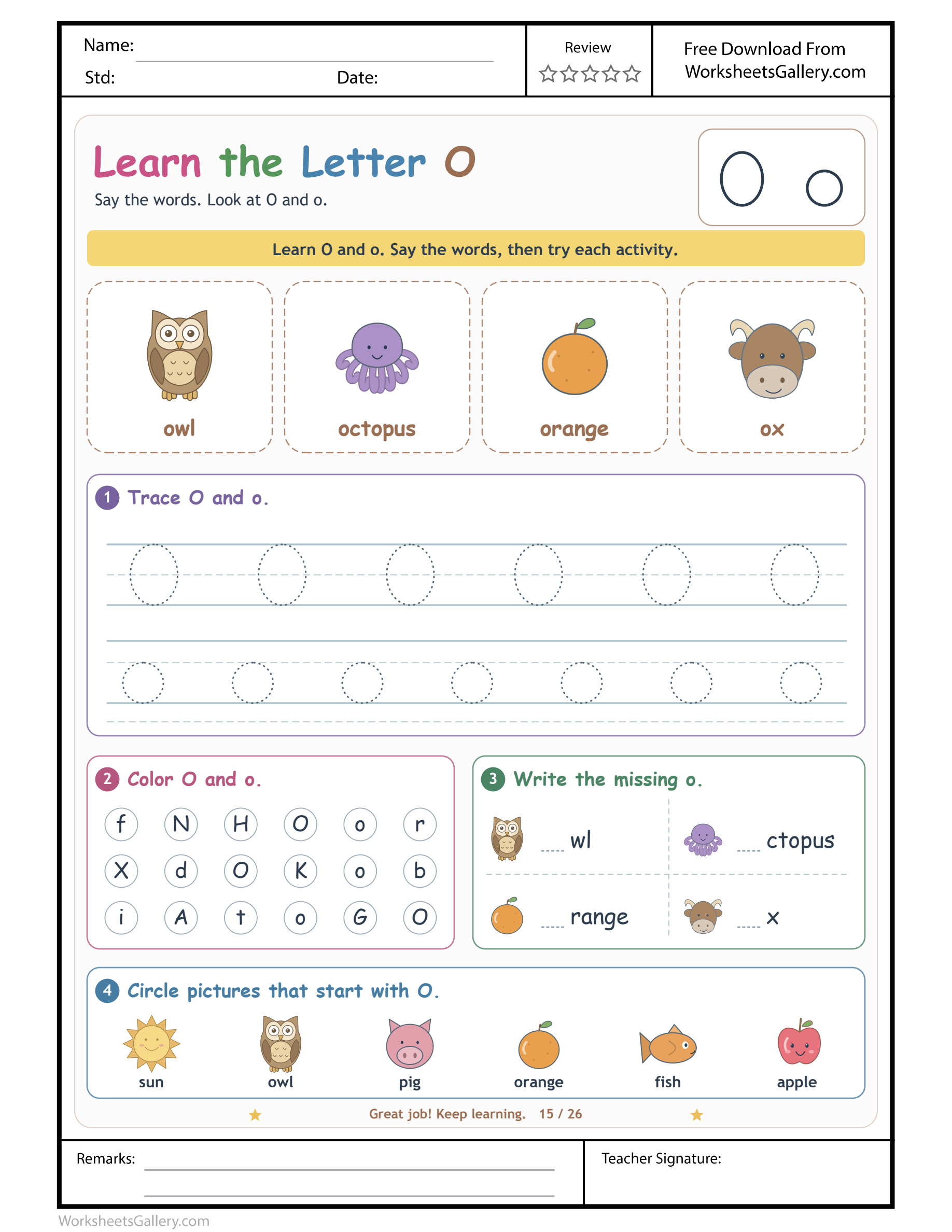
Oranges and owls invite different stories, yet their labels begin with the same written character. Orange O Observations places owl, octopus, orange and ox around an Oo investigation with four numbered tasks. Learners can follow dotted forms, compare circles, restore lowercase beginnings and choose pictures by their printed names. An adult can read every label and acknowledge the different spoken vowel beginnings. The shared initial is the page's connection, rather than a promise that all four words sound alike. Start with an interesting picture and let a clear comparison determine how much marking feels useful today.
Read orange and owl without making them sound alike — Orange O Observations
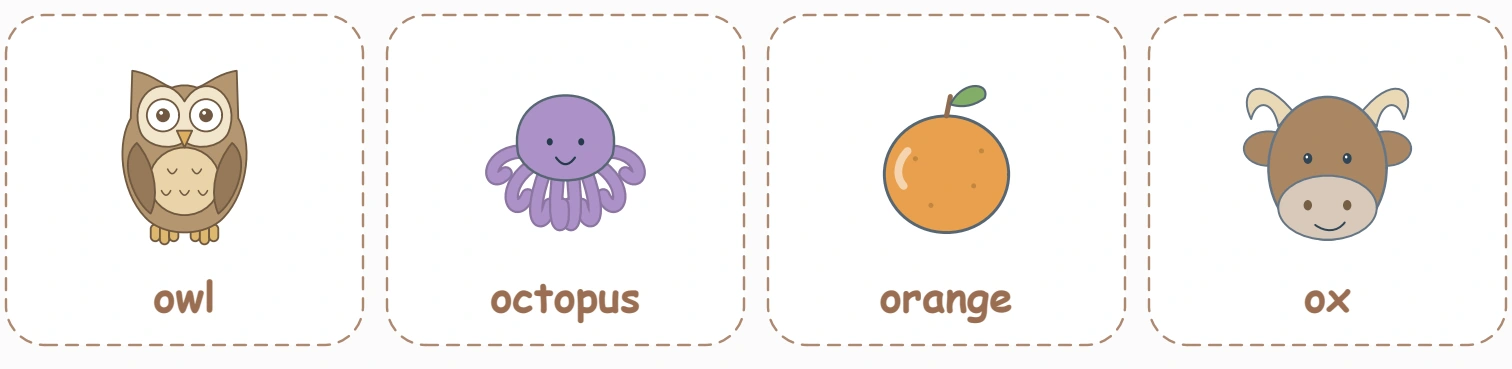
Say the four upper Orange O Observations names naturally. Owl and orange can have quite different spoken beginnings, and the task still makes sense: their labels share initial o. Keep that written comparison explicit rather than flattening the vocabulary into one supposed vowel-sound rule.
Octopus may encourage talk about arms or life in the sea, while ox may need a brief introduction as an animal name. Provide the spoken word before asking about print. Recognising an initial is a narrower achievement than decoding every letter of an unfamiliar label, so adult reading belongs naturally in the activity.
A circular outline can carry a letter identity: Orange O Observations
Compare the capital O and lowercase o models on Orange O Observations. Their resemblance can make the case connection easier to discuss, but size and placement still belong to the specific printed examples. Use those references when making search choices or checking the requested small character below.
Another round symbol, such as zero in a different setting, can prompt a reasonable question. Read the page's instruction and identify its letter models. A shape's meaning depends on the print context, so a child need not be told that every circular mark everywhere is automatically O.
Orla's imaginary orange stall: Orange O Observations
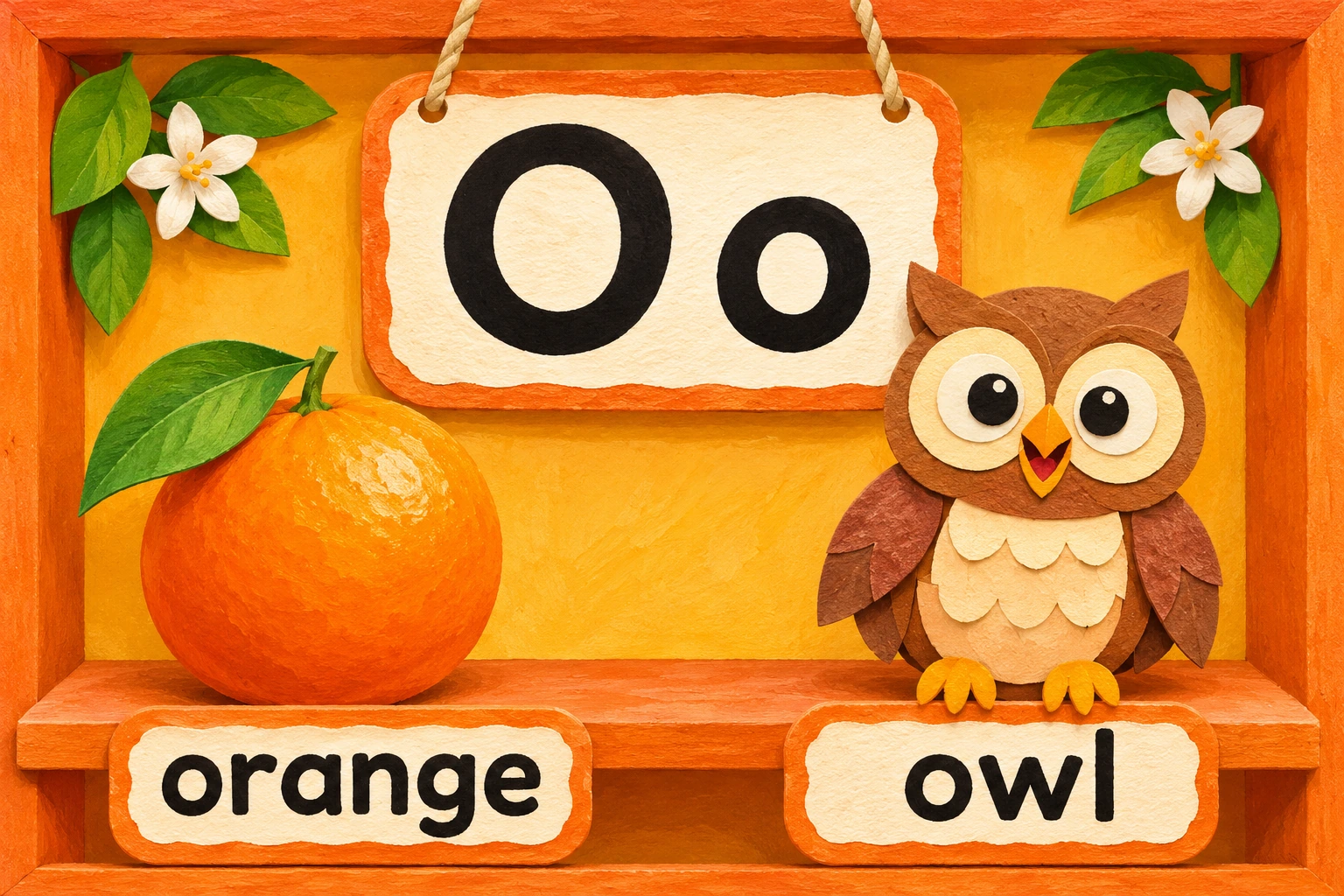
Picture Orla arranging paper oranges in a pretend home shop. A toy owl becomes the customer, and an adult places Orange O Observations beside the fruit labels. They read orange and owl, listen to their different openings and find the same first written letter in both names.
This invented scene offers a way to keep vocabulary meaningful. Orla might choose one gap to repair, then dictate the owl's shopping request on another sheet. The adult can notice the use of a reference without presenting the play as evidence of a measured result or requiring the entire worksheet before the shop reopens.
An adult map for the source page: Orange O Observations
| Orange O Observations activity | Adult quick check | Source detail |
|---|---|---|
| Trace O/o | 6 O models;7 o models | Orange O Observations guide rows |
| Find Oo cases | 4, 5, 9, 11, 16, 18 | 6 matches in the Oo circle field |
| Complete owl through ox | o | Oo: initial o |
| Picture-name check | owl, orange | 2 choices fit Oo |
The Orange O Observations case search has eighteen circles, read as three rows of six. Six positions match Oo, with three of each case. The final picture selection has only two answers. Keep these totals separate and let the learner inspect the relevant instruction rather than searching for one fixed number throughout.
Trace a round form with time to compare: Orange O Observations
Six capital O and seven lowercase o guides appear on Orange O Observations. Choose a model, look at its whole outline and invite a finger movement before a pencil attempt. An adult can show a larger version on spare paper if the small guide is difficult to follow comfortably.
There are no numbered route arrows in the PDF. Avoid describing a particular starting point as if the source prescribes it. Paper stability and an easy pause can matter more than completing thirteen forms. Stop or enlarge the task when fatigue makes the shape hard to discuss; a short deliberate movement can provide enough to compare.
Check the whole candidate before colouring: Orange O Observations
During the Orange O Observations circle activity, leave both case models visible. Rounded letters with extra parts or openings need to be compared carefully with the target. Ask the learner to show why a candidate fits rather than colouring every shape that feels generally round.
One row at a time may be a useful amount. Temporary separate paper can cover other rows without changing the original worksheet. The six-match total is for an adult's later check, not a reason to accept an uncertain choice. A pointed explanation can reveal attention even when the child does not know every distractor's name.
Five opportunities within this Oo visit: Orange O Observations
- Written-form comparison. The learner checks whether a complete rounded outline fits the provided letter.
- Case awareness. Capital O and small o can be associated while their printed sizes are noticed.
- Vocabulary listening. Hearing owl, octopus, orange and ox gives each initial a meaningful word.
- Reference-guided action. A visible orange label can guide the one-character repair below.
- Hand control. A chosen curved tracing movement offers a defined task without demanding a long copied word.
These possibilities around Orange O Observations are not guaranteed changes after one session. Observe the learner's actual comparison, language and movement separately. A correct oral decision can coexist with a shaky pencil line, while a smooth trace does not by itself show that the picture instruction has been understood.
Put a small o before each existing fragment: Orange O Observations
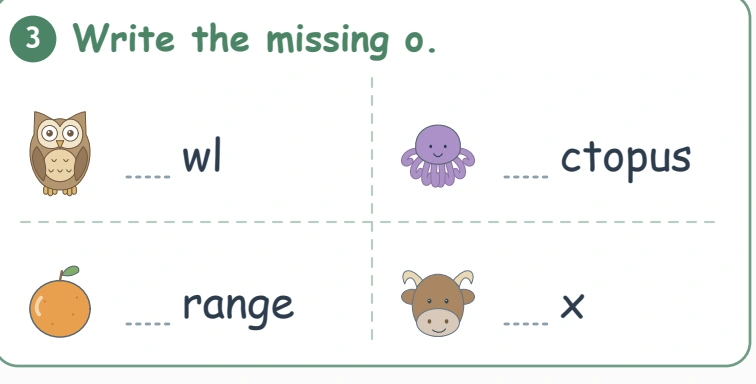
The Orange O Observations word gaps precede wl, ctopus, range and x. Consult owl, octopus, orange and ox above, then add one lowercase o. The short fragment x becomes ox in this particular panel; it is not an invitation to write a word beginning with x.
Keep the remaining letters untouched. A learner may recognise range as a word elsewhere, and that knowledge can be acknowledged while the orange drawing establishes the intended completion here. Show the full printed label whenever an alternative interpretation arises. The activity is a contextual comparison, not a memory test with the reference hidden.
Owl and orange are the two final selections: Orange O Observations
Sun, owl, pig, orange, fish and apple appear in the lower Orange O Observations strip. Owl and orange meet its initial-O direction. Octopus and ox belong to the bank but are not additional picture answers below. An adult can read the six names before the learner makes a mark.
Orange and apple could form a fruit group under another instruction. Here the initial letters decide membership, so the useful question is how the supplied names begin in print. Let the child explain the fruit connection, then clarify why the particular worksheet rule produces a different grouping.

A classroom circle-and-label discussion: Orange O Observations
In a hypothetical class setting, a teacher places a paper orange and an owl picture beside Orange O Observations, each with a completed name card. Pupils hear both labels and inspect initial o. A large capital model can introduce the related case before children choose their own response panel.
One pupil might point at a search candidate; another may write the missing small character. Ask which reference supported the decision. This suggested activity allows different amounts of handwriting and does not claim that a particular class has trialled the page or reached a common result.
Four extensions for an Oo observation table: Orange O Observations
Write the owl's shopping message: Orange O Observations
Invite the learner to dictate what an owl would buy from a pretend orange stall. Record the owl’s shopping sentence on another sheet, then read your writing to its storyteller. Enjoy the story without requiring every noun in it to begin with the target letter.
Compare fruit groups with letter groups: Orange O Observations
Use separate orange, apple and owl cards. Try a fruit grouping, then an o grouping. Discuss why an item moves. This makes Orange O Observations's final rule concrete without rejecting other reasonable ways to organise pictures during play.
Repair a large animal name: Orange O Observations
Put an x fragment beside a complete ox reference and offer a large lowercase o. Sliding it into the beginning makes the word repair visible. Explain that this activity supplies o; a different X lesson may inspect the final x for another purpose.
Listen to two labels while looking at print: Orange O Observations
Read orange and owl naturally beside their completed cards. Find the common written beginning while acknowledging the different spoken forms. This extends the source accurately without presenting all initial-O words as one identical pronunciation example.
Readiness and repairs can remain individual: Orange O Observations
Orla’s orange stall may suit a child of about three to six when Orange O Observations is adapted to current preschool or kindergarten readiness. Start with naming and pointing when small guides are demanding, and offer a comfortable writing tool on a steady surface when the child wants to try. Ability can vary across language, visual comparison and fine movement.
Typical mix-ups include marking every rounded candidate, choosing apple because it is fruit or writing a capital in a lowercase gap. Clarify the current rule with its visible reference. If correction becomes frustrating, choose a larger example or end with an oral comparison instead of repeated erasing.
Let another picture introduce the next return: Orange O Observations
An octopus discussion can bring Orange O Observations back after an earlier orange visit. Try one search row or a single initial repair rather than replaying every task in the same order. Books, object labels and imaginative stories provide other kinds of print experience alongside the worksheet.
Specific feedback might be “You checked the name before choosing the picture.” Keep an easy stopping point and let the learner choose what to inspect next time. A partly marked sheet can still show a clear observation worth remembering, without turning unused spaces into an obligation.
Select and print the Oo edition: Orange O Observations
Obtain the uploaded Learn the Letter Oo original from the free option, or select the clean Orange O Observations premium PDF with current qualifying membership. The premium copy retains owl, octopus, orange and ox work without worksheet website watermark, domain promotion or advertising.
All twenty-six clean pages are also combined in the separately priced $5 library. Its linked product page handles that purchase. Save your authorised Orange O Observations file and inspect the circular guides in a US Letter print preview at source dimensions. Downloaded PDF pages preserve the real writing space; the orange-and-owl illustration is a visual teaching companion.
Follow the printed names into other activities: Orange O Observations
Orange O Observations connections: Orange labels can be followed by Oo Letter Watch. Revisit the Oo pair in Oo Worksheet, or move from individual initials to the broader alphabet question in Builder Letter Check.
Adults extending Orange O Observations can consult NAEYC's family resources on playful learning and PBS Parents material in Learn and Grow. These external sources remain independent of this worksheet and neither endorse it nor add files to the download.
Popular Worksheets
Printable resources families and teachers are downloading now.
 Free
 Free
 Free
 Free