
Rainbow Color Paths: 5 Powerful Band-and-Kite Ideas
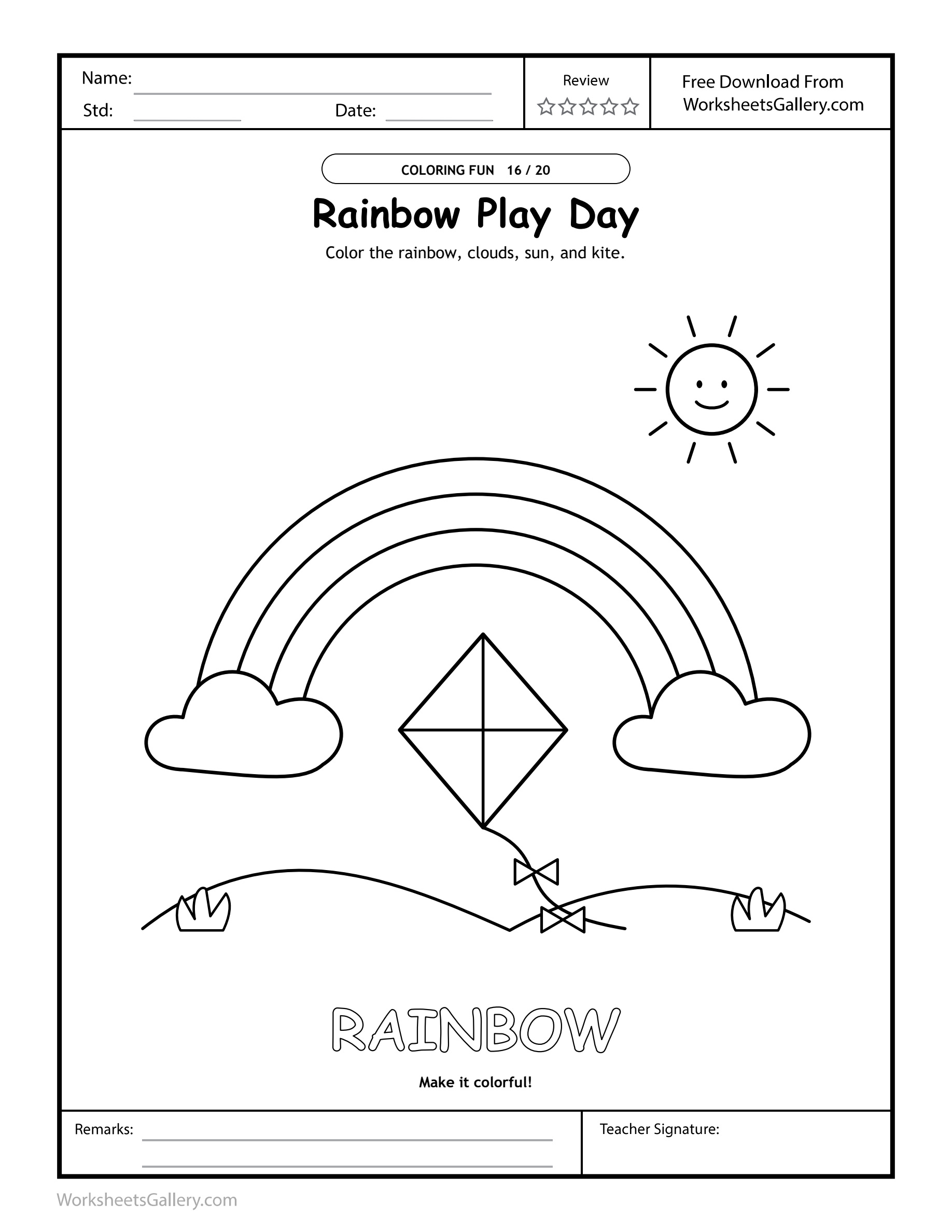
An arch can carry a child's own sequence of colors. Rainbow Color Paths uses the four broad bands in Rainbow Play Day as open art spaces, with clouds, a smiling sun and a divided kite nearby. The printable is a decorative scene rather than a seven-band spectrum diagram. Invite a learner to choose one band, test a hue and decide whether the next band should repeat, contrast or introduce something surprising. The main question is how the artist wants the picture to look. A whole completed sky is not required to explore that first relationship.
Rainbow Color Paths follows the bands actually printed

The nested curved regions supply visible boundaries from one cloud area toward the other. A child can indicate a band with a finger, then choose a comfortable section for marking. Coloring does not require a single uninterrupted sweep across its full length.
Rainbow Color Paths may use several short movements within one band or explore a larger arch on scrap paper first. These choices support the child's plan without turning the picture into a tracing route. The source asks for coloring, and its band interiors remain open to different textures.
Rainbow Color Paths can repeat one hue, alternate a chosen pair or use an invented sequence. No arrangement is mandatory here. If the learner asks about natural rainbows, keep that separate discussion distinct from the freedom offered by this decorative four-band drawing.
Neel makes Rainbow Color Paths a festival banner
Neel imagines that the sky picture will announce a little family art festival. He wants a lavender band beside a coral one, then pauses over the next space. His grandmother offers a scrap where he can test yellow and teal near the first two hues.
Their Rainbow Color Paths visit follows the trial he prefers. She writes his dictated banner title on a separate card, and he points to where each chosen hue should appear. Later he gives the kite a different arrangement because it is carrying an imaginary invitation.
Rainbow Color Paths can have a much quieter beginning. A learner may enjoy one blue band and no story. Neel's example shows a reason to compare neighbors, not a requirement to invent an event, use four particular hues or explain every mark aloud.
Five Rainbow Color Paths games about neighboring choices
Offer one extension when it fits the child's interest. Each supplies a larger or simpler study beside the actual worksheet, leaving the original picture available for coloring at the maker's own pace.
1. Rainbow Color Paths tests two band neighbors
Draw two wide curved spaces on a fresh scrap. Invite a different chosen mark into each and compare the shared edge. Rainbow Color Paths neighbor tests can explore strongly contrasting hues, close relatives or repeated color with different mark textures.
The Rainbow Color Paths maker decides whether the pair belongs in the main picture. Rejected combinations remain useful studies. Asking what the learner notices keeps the comparison concrete without requiring formal color theory or an adult's preferred sequence.
2. Rainbow Color Paths builds a filled palette strip
Make a row of large sample areas and let the child place their intended band colors in order. Add an adult-written title after the marks are visible. Rainbow Color Paths strips give a plan a temporary home without writing inside the printable.
Keep the Rainbow Color Paths strip revisable. The learner may swap a sample, return to a favorite hue or choose fewer colors than there are bands. Planning means making choices that can change, rather than promising to follow a rigid formula.
3. Rainbow Color Paths creates a kite reply
On another sheet, draw a large diamond with a few divided areas. Invite the child to decide whether its colors should echo the arch or answer it with a different palette. Rainbow Color Paths replies compare two picture groups using a simple story or visual intention.
For Rainbow Color Paths, matching is optional. A child may want a quiet kite below a strong arch, or a bright kite that attracts attention first. Ask which role the maker prefers before offering suggestions about harmony or contrast.
4. Rainbow Color Paths sends a cloud-side clue
The child chooses a band and dictates a clue about its position or color. An adult reads the clue to a willing listener who locates the intended region. Rainbow Color Paths clues make near, above, below and beside useful in an actual shared picture.
A Rainbow Color Paths listener may point instead of speaking. If several bands fit the clue, invite one more detail together. This supports clearer description without turning the exchange into a test of independent reading or exact position vocabulary.
5. Rainbow Color Paths explores a sun echo
Choose one arch hue and try a small sample beside a sun-like circle on spare paper. Compare repeating that hue with using a new accent. Rainbow Color Paths echoes investigate a relationship between separated features rather than filling the sun automatically after the arch.
The Rainbow Color Paths artist can reject the echo and keep the sun open or lightly marked. One comparison is enough. The game does not require a second complete sky, and a decision can remain visible on the sample card alone.
Rainbow Color Paths looks at the whole play-day scene
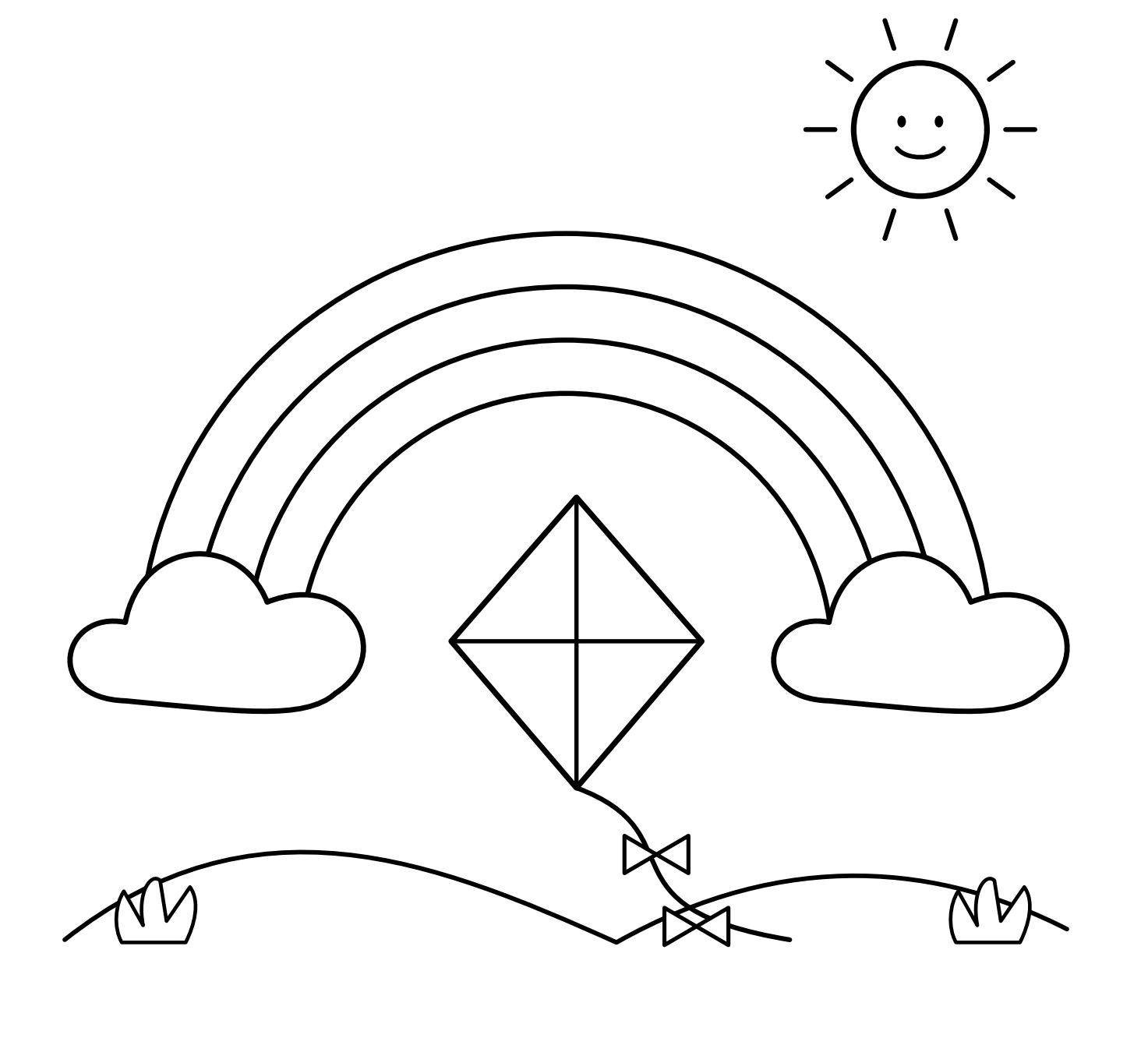
The source instruction names the rainbow, clouds, sun and kite. Its curved arch sits above the more angular kite, giving the scene two kinds of boundary. The outlined RAINBOW word below can be read by an adult during picture talk.
Rainbow Color Paths does not add mandatory tracing, spelling or letter coloring to that instruction. The learner chooses a region of the scene and an amount of work. An adult can help find the named feature without selecting its palette on the child's behalf.
Six Rainbow Color Paths opportunities within one picture
- Sequence planning: choose a personal order for the printed bands and revise it if a trial suggests another arrangement.
- Neighbor comparison: inspect how two hues appear along a shared curved boundary.
- Movement variety: change from broad arch regions to the kite's smaller angular spaces.
- Spatial talk: describe a selected band through its relation to clouds, other bands or the kite.
- Visual connection: decide whether a sun or kite detail should echo a color used elsewhere.
- Independent judgement: explain an invented palette without needing to reproduce a supplied model.
Rainbow Color Paths brings cognitive choices, coordinated hand use and language into the same art visit. A learner can plan an interesting order while needing large samples for comfortable marking. Another may show the intended sequence by pointing before describing it aloud.
Rainbow Color Paths turns at the diamond kite
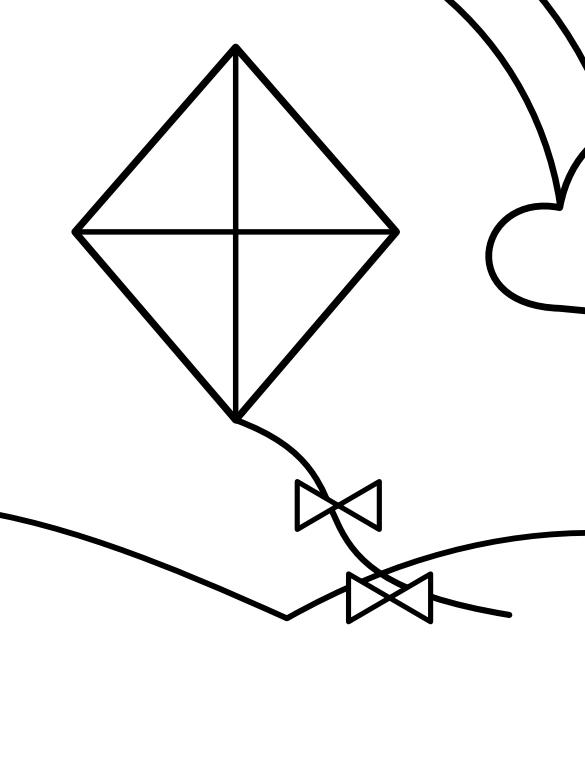
The divided diamond introduces corners after the long curves of the bands. Two little bows appear along its string. A child may want a separate palette for the kite, perhaps keeping one region quiet beside another that is strongly marked.
Rainbow Color Paths can leave bow details for later. If a corner feels cramped, try the shape at a larger scale on another sheet. Shorter marks are one available strategy, but preserving the child's interest matters more than demanding precise filling of every point.
Rainbow Color Paths at home begins with a selected band
Place the sheet where the learner can reach it comfortably, with a test scrap and familiar materials nearby. Read the direction aloud, find one band and offer a comparison if wanted. A small tool selection can make starting easier while keeping other colors available on request.
During Rainbow Color Paths, help with practical needs such as page movement. Give space for quiet coloring between questions. If the plan changes, ask where the new color belongs rather than reminding the child of the first sequence as though it were a contract.
Finish Rainbow Color Paths with a specific observation: “You used that teal again in the kite.” The maker may confirm an intended echo or explain another reason. Their answer supplies more useful information than a broad judgement about whether the colors are right.
A classroom Rainbow Color Paths palette exchange
A teacher prepares individual worksheets and large sample strips. Children select colors for an arch or another picture group, test the arrangement and dictate a short note. Partners hear the note and find the described relationship in the work.
Rainbow Color Paths exchanges can include repeating hues, unfamiliar sequences and partly colored scenes. Respond to the intention rather than ranking realism or completeness. A learner may share privately through pointing while the teacher reads the note.
Rainbow Color Paths gives the sun its own decision

The round smiling face and short rays occupy a separate place above the arch. Its small scale can make it a useful accent, or a quieter supporting detail. The source does not prescribe yellow or ask the learner to copy the supporting illustration.
Rainbow Color Paths can leave the face lines visible through lighter marks when that suits the artist. Ask whether a detail should stand out before changing its coverage. A pale sun can be intentional rather than unfinished.
Rainbow Color Paths support without extra rules
| A moment of uncertainty | A helpful invitation |
|---|---|
| The long band feels tiring. | Choose a short section and pause. |
| The palette changes midway. | Revise the sample strip together. |
| The kite corner feels crowded. | Try a larger diamond on scrap. |
Common Rainbow Color Paths mistakes include imposing a seven-color sequence on four spaces, demanding a continuous stroke or turning band choices into a memory test. Keep scientific explanations separate when they arise, and use the decorative worksheet for its actual open coloring invitation.
Rainbow Color Paths shows one optional craft version
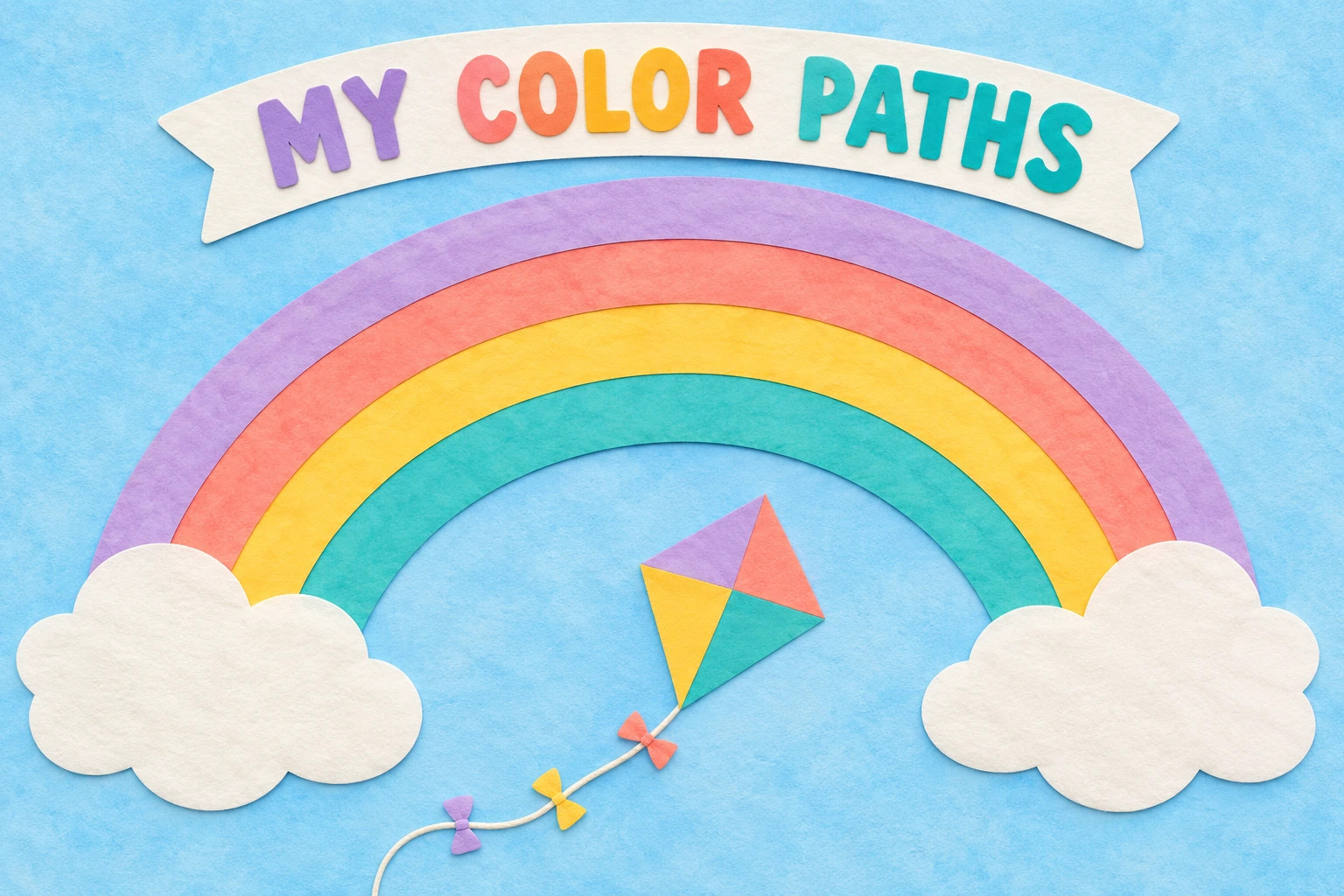
The pastel craft illustration displays four broad colored bands beneath MY COLOR PATHS wording. Its lavender, coral, yellow and teal sequence is invented. The little kite and clouds supply another material treatment, rather than a target solution for the printable.
Rainbow Color Paths can lead to independently drawn arches with different numbers of spaces or entirely new shapes. Children then control the outline as well as the palette, complementing the choices available on the supplied page.
Rainbow Color Paths can return through one fresh question
Around ages three through six, learners in preschool and beginning kindergarten may explore this picture with support reflecting their individual experience. Selecting a color, pointing to a band or making a broad sample are useful beginnings. Small bows and sharp corners can wait.
Revisit Rainbow Color Paths through a new neighboring pair, a changed kite reply or one sun accent. Keep the next invitation short and concrete. Stop when hands tire or the learner wants to move on, preserving art time as a willing opportunity rather than a fixed completion demand.
Save Rainbow Color Paths for an unhurried print session
Download clean Rainbow Color Paths from the premium attachment after signing in with an active membership that includes the file. Keep its member PDF distinct from your original sample copy. The clean printable has no watermark, website/domain branding or embedded advertisement. Check your printer's US Letter preview so the sun, bow details and lower lettering remain inside the usable page area. The PDF's content is separate from advertising around the download page.
For an explicitly guided palette, compare the chick's yellow-and-orange instructions or guided giraffe coloring. Kite String Slants is a separate mark-making task. Adults can browse PBS Parents' art activity collection and NAEYC's creative-experience article, with additional opportunities for children to invent their own drawings.
Popular Worksheets
Printable resources families and teachers are downloading now.
 Free
 Free
 Free
 Free