
Tomato T Toolkit: 4 Brilliant Tt Picture Missions
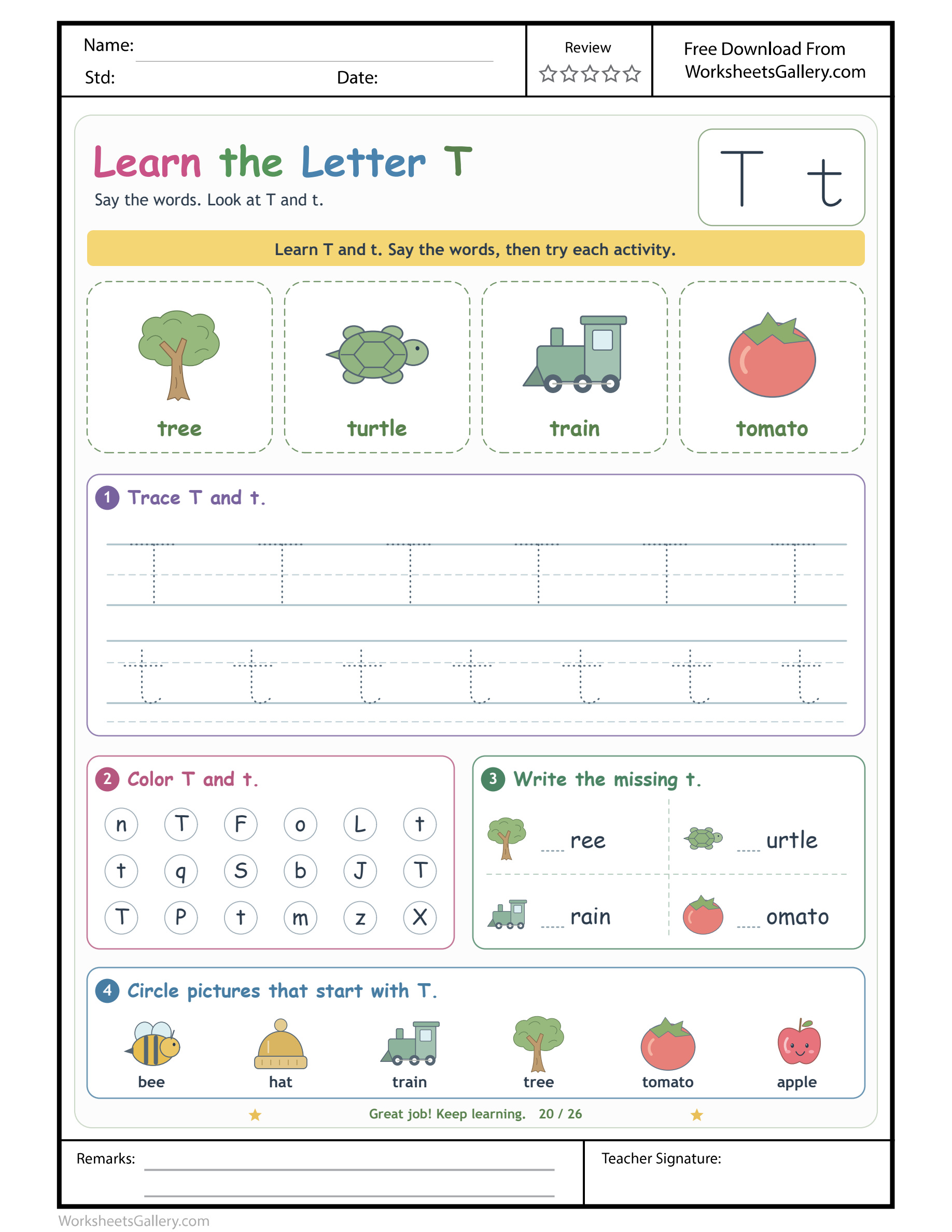
Tomato T Toolkit: Notice the placement of T and t crossbars while matching train, tree and tomato to their initial.
Tomatoes can travel on a pretend train, giving two familiar names a reason to meet in print. Tomato T Toolkit gathers tree, turtle, train and tomato around four Tt activities. Children can inspect case models, follow dotted examples, find matching circles and restore lowercase beginnings before selecting picture names below. Read the labels together and let a learner point out a detail before choosing a writing task. The page offers several ways to respond, so one useful comparison can be a sensible amount for today rather than a demand to mark every available space.
Load the word bank before the train leaves — Tomato T Toolkit
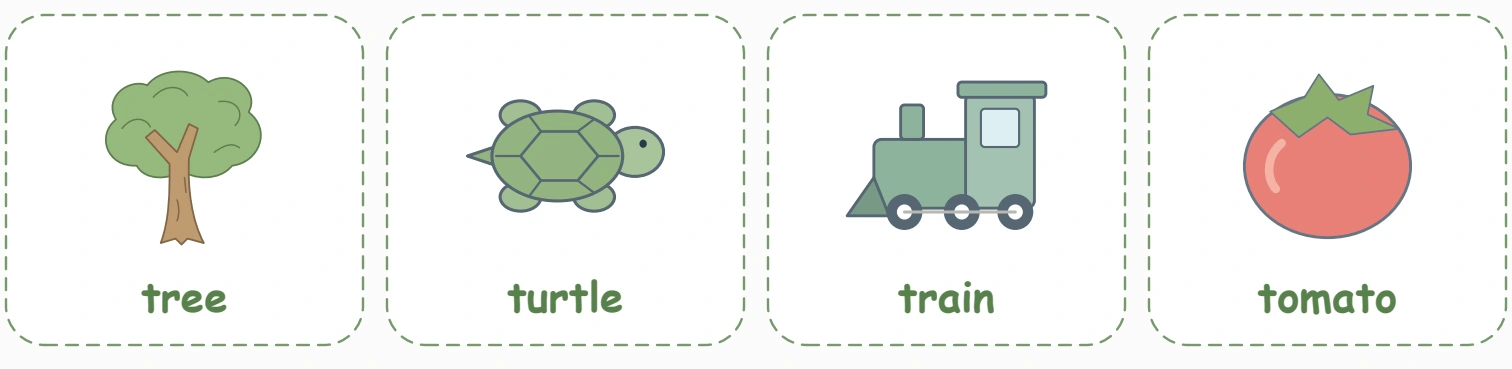
Read tree, turtle, train and tomato in the upper Tomato T Toolkit row. Ask what each picture represents, then look at its initial t. A train might carry tomatoes in a story, while a turtle waits beside a tree. Those connections give the labels meaning without changing their particular written names.
Tomato can be pronounced differently in ordinary speech, and a child need not read its whole spelling independently to find the first letter. Supply vocabulary naturally. The smaller print decision can stay clear while the picture conversation includes more complex ideas about places, movement or food.
A possible home station with Taro: Tomato T Toolkit
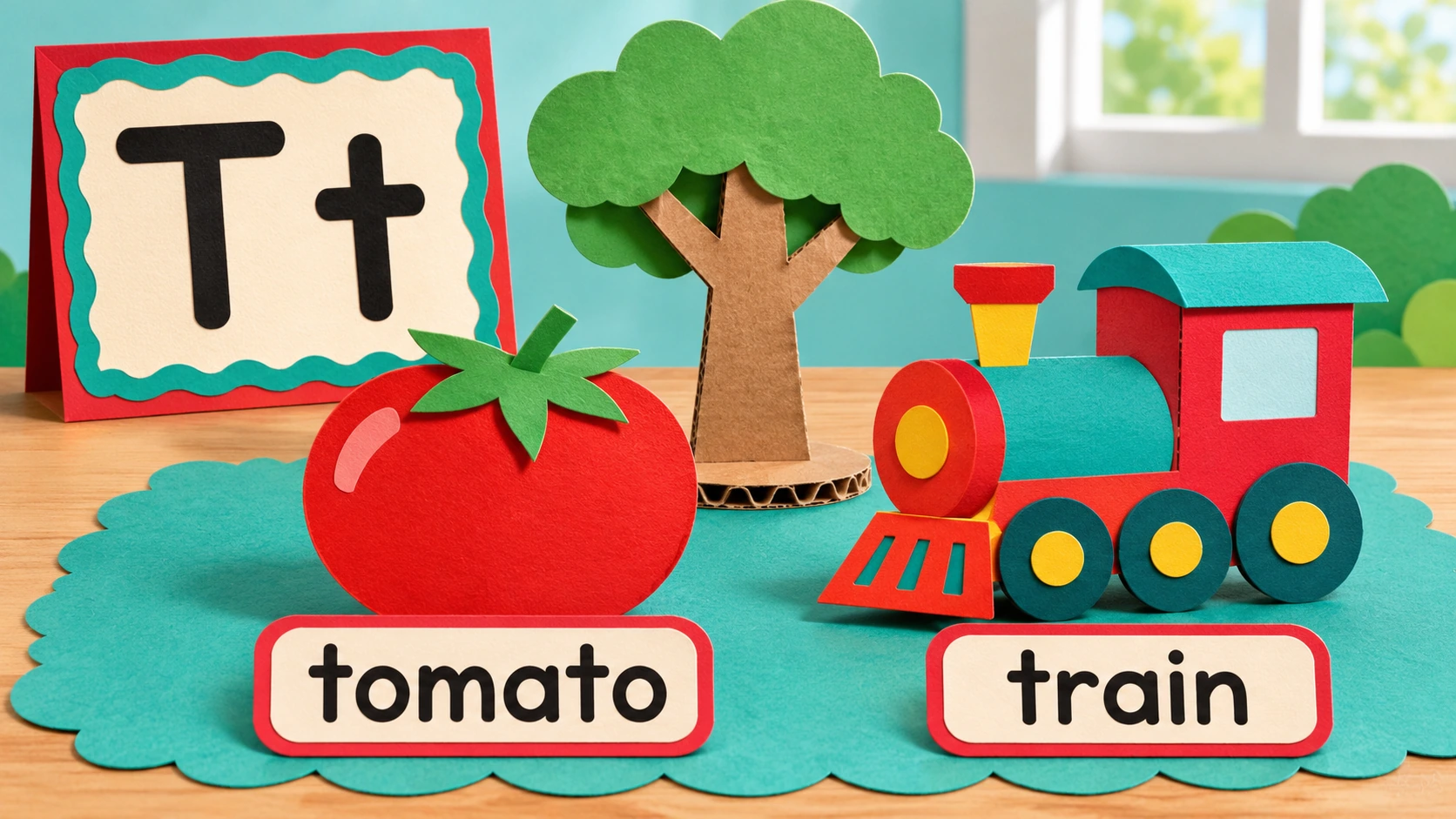
Imagine Taro putting a paper tomato into a toy train carriage. A grown-up reads both labels from Tomato T Toolkit, and they find the common initial. Taro chooses the lowercase model to inspect before trying a single t on the tracing line. The train can make another journey afterwards.
This invented invitation illustrates a teaching option rather than a real child's recorded success. The adult can accept an oral explanation if that is the comfortable response. Play does not depend on finishing all four panels; the print comparison is one purposeful stop along the imagined route.
Compare the crossbar in each supplied case: Tomato T Toolkit
The Tomato T Toolkit capital T has a top bar across its upright. The lowercase t uses a different placement and proportion in the printed model. Look at both complete forms before searching. A learner should not have to infer the small partner merely by shrinking the capital in imagination.
Pointing to where the lines cross can support a clear explanation. A formal term for that feature is optional. If another printed letter shares an upright, compare the whole arrangement instead of accepting a partial resemblance. The reference remains available throughout this shape decision.
Keep an adult route map nearby: Tomato T Toolkit
| Tomato T Toolkit activity | Adult quick check | Source detail |
|---|---|---|
| Trace T/t | 6 T models;7 t models | Tomato T Toolkit guide rows |
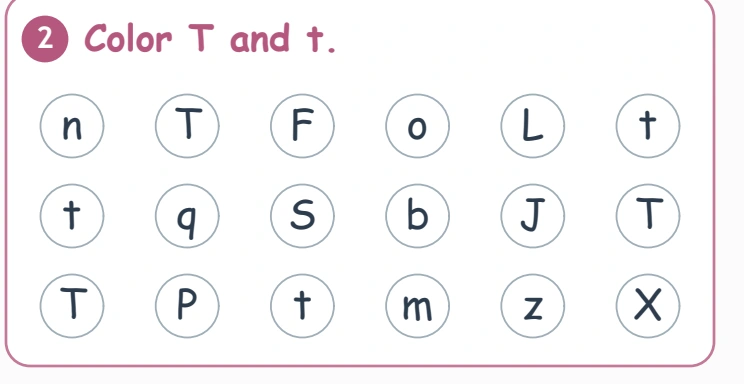
| Find Tt cases | 2, 6, 7, 12, 13, 15 | 6 matches in the Tt circle field |
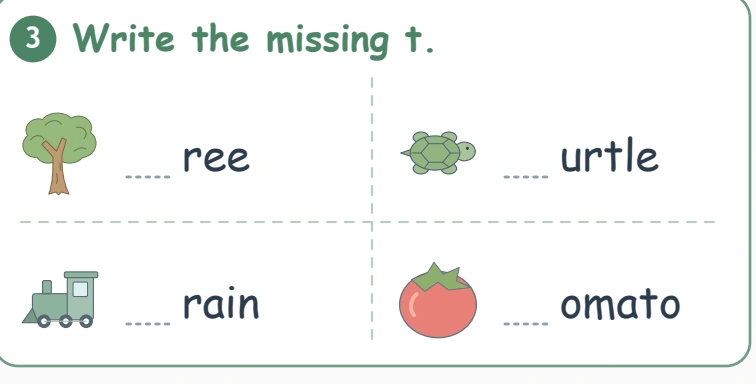
| Complete tree through tomato | t | Tt: initial t |
| Picture-name check | train, tree, tomato | 3 choices fit Tt |
The Tomato T Toolkit recognition positions run across three rows of six. There are eighteen candidates and six Tt matches, evenly split between cases. The final strip has three matching picture labels under its own rule. This table is checking support, not a list of positions for the learner to memorise.
Trace a small amount with a clear model: Tomato T Toolkit
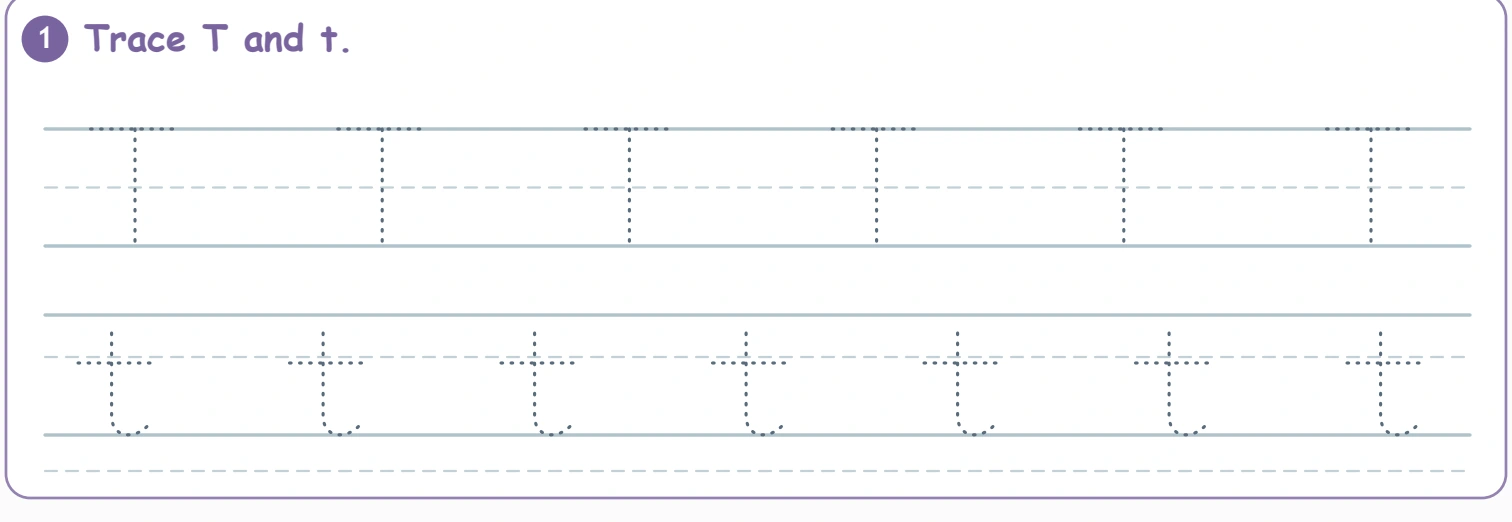
Six capital T guides and seven lowercase t guides appear on Tomato T Toolkit. Inspect one example and try a finger movement before a pencil is offered. A larger adult demonstration on spare paper can show the cross connection more clearly when the narrow guide is difficult.
No numbered formation arrows appear in the PDF. Describe any extra adult guidance as a demonstration beside the source, rather than as a printed requirement. Keep the paper steady, allow a comfortable tool and stop if the hand tires. One compared attempt can be more useful than many dark retracings made without attention.
Search as a comparison, not a colouring race: Tomato T Toolkit
Use both T and t references while looking through the Tomato T Toolkit circles. One row can provide enough choices at first, with other rows temporarily covered by separate paper. Ask what makes a candidate fit before colouring it.
The adult can check the six-answer total afterwards. Avoid using the total to pressure a child into marking an uncertain shape. If only capitals are found, show the small model again. If a candidate resembles part of T, compare its complete lines directly with the target. Naming all distractors is unnecessary for this decision.
Six kinds of work worth recognising
- Spatial comparison. Crossbar placement offers a visible difference to discuss between the two cases.
- Letter identity. T and t can be associated even when their proportions differ.
- Vocabulary grounding. A named turtle gives print a specific picture rather than an isolated sound cue.
- Reference habits. The intact tomato label can guide a one-character repair.
- Motor coordination. Following one Tt model sets a limited line-making aim that the learner can compare before continuing.
- Rule explanation. Selecting a picture by its name requires attention to a different instruction from tracing.
These opportunities around Tomato T Toolkit are not guaranteed gains or a fixed progression. Watch the actual response. A learner may understand an initial while needing help with a narrow movement, or enjoy tracing while still needing every picture label read. Adapt those demands independently.
Add one lowercase t to each chosen fragment: Tomato T Toolkit
The Tomato T Toolkit completion panel contains ree, urtle, rain and omato with an opening gap. Compare each with its complete name above and supply lowercase t. Rain already names something in other contexts; the train drawing and printed reference establish the intended word here.
Leave the remaining letters unchanged. A capital T answer identifies the right letter but needs a case adjustment for this panel. Show the small model rather than calling the whole response wrong. A large movable t can demonstrate the repair before the learner attempts the small writing space.
Train, tree and tomato meet the final direction: Tomato T Toolkit
The lower Tomato T Toolkit labels are bee, hat, train, tree, tomato and apple. Train, tree and tomato begin with t. Turtle is part of the upper bank but is not another picture choice in that bottom strip. Read the six available names before deciding.
Tomato and apple could belong together under a food rule, while bee and tree could share a garden story. The worksheet groups by the printed beginning instead. Explain the current rule respectfully, leaving other meaningful connections available for games outside the exact final instruction.

A hypothetical classroom delivery stop: Tomato T Toolkit
For a possible class activity, a teacher displays a toy train, a tree picture and completed labels near Tomato T Toolkit. Pupils name the objects with support, compare their initials and inspect both case references. A tomato card can introduce a pretend delivery without becoming an extra worksheet direction.
Children then choose one panel on individual sheets. Ask which visible evidence helped rather than comparing completion speed. Pointing at a crossbar, naming an initial and writing a small t provide different information about participation. This proposed scenario makes no claim about results from an actual classroom trial.
Four extensions for a Tt delivery route: Tomato T Toolkit
Dictate the train's cargo note: Tomato T Toolkit
Invite a sentence about where a tomato train is going. An adult writes it on spare paper and reads it back. Find a target beginning if it appears, while letting the story use any other words it needs.
Build two large case references
Draw T and t separately and ask where each crossbar appears. Compare the examples with Tomato T Toolkit's models afterwards. Keep the demonstration complete and visible; it does not need an invented numbered formation route.
Repair a broad tomato label: Tomato T Toolkit
Offer an omato fragment, a complete tomato reference and a movable lowercase t. Placing the missing character before the fragment keeps the decision the same while changing the hand movement. Fine writing can remain optional.
Change the station's grouping rule: Tomato T Toolkit
Use separate tomato, apple and train cards. Try grouping by food, then by t. Explain what moves and why. The instruction decides the current grouping, even when the learner's first connection was sensible under another rule.
Let readiness decide the size of the journey: Tomato T Toolkit
Taro’s delivery play may introduce Tomato T Toolkit between about three and six years, using the help appropriate to the learner’s preschool or kindergarten stage. Picture conversation and pointing can be comfortable before small tracing. Provide a steady surface and a manageable tool, and use a larger reference when close comparison is difficult.
Common slips include searching only for capitals, overlooking crossbar placement, writing T into a lowercase gap or selecting by a story theme. Show the particular model or label that resolves the uncertainty. If correction becomes tiring, end with a clear spoken observation instead of repeated erasing.
Give the next visit a different station: Tomato T Toolkit
Return to Tomato T Toolkit through turtle after an earlier train story, or try one word gap after a previous circle search. Brief varied encounters can fit alongside books, construction play and everyday labels without requiring the same full routine every time.
Specific feedback might be “You checked where the little t crossed before choosing.” Let the learner suggest the next picture to investigate and stop before fatigue dominates. Unmarked panels can remain available as later invitations, while the useful observation already made is recognised now.
Save the Tt print file that fits your access: Tomato T Toolkit
For a Tt delivery activity, the free button supplies the original Learn the Letter Tt upload. The separate clean Tomato T Toolkit premium PDF is available to members whose eligible access is active. It retains the tomato and train work while removing worksheet-domain text, website watermark and promotional ads.
The linked library product costs $5 for a merged PDF of twenty-six clean letters. Purchase it separately if you want the full set. After saving an authorised Tomato T Toolkit edition, examine the US Letter page at original dimensions, including its guide spacing. Print from that PDF rather than an enlarged train illustration or detail crop.
Follow another route into print and play: Tomato T Toolkit
Tomato T Toolkit connections: Tomato deliveries may lead to Tt Letter Trail, with Tt Worksheet offering another Tt visit. Leave the station for Builder Letter Check when a capital-sequence challenge feels like a useful change.
Adults extending Tomato T Toolkit can read PBS Parents resources on learning and growing and NAEYC's material on play for families. These independent education sites neither endorse the worksheet nor alter what is included in its PDF.
Popular Worksheets
Printable resources families and teachers are downloading now.
 Free
 Free
 Free
 Free