
Yes Sight Word: 5 Joyful Lollipop Conversation Activities
Continue beyond yes with twenty-six clean reading-first practice sheets in one $5 printable collection.
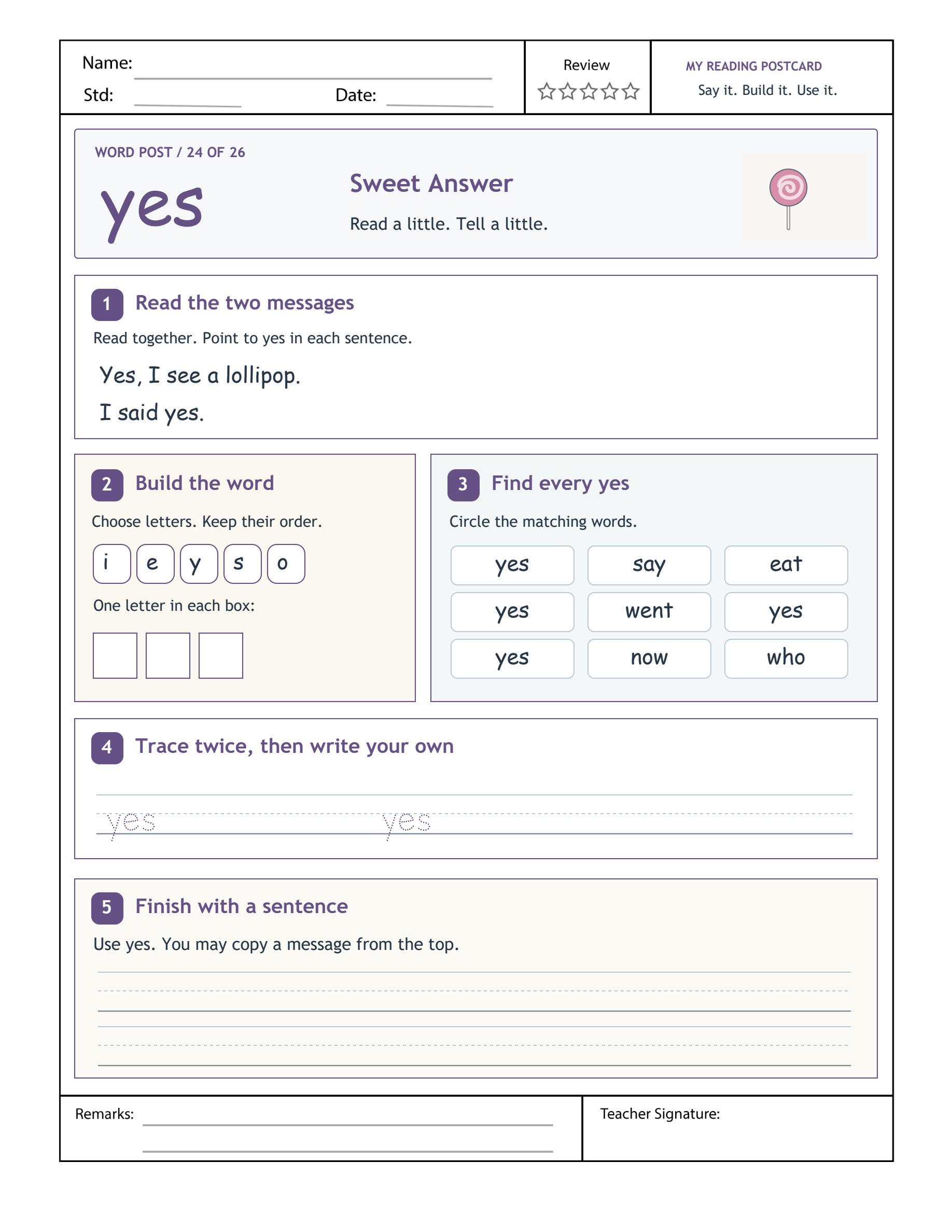
The full yes sheet retains its US Letter frame.
Give an affirmative answer that matches a question. The complete redesigned page appears without cropping.
Hugo can see the pictured lollipop, so yes gives a clear affirmative answer to a suitable question about it. Yes Sight Word practice connects that response with two short messages, y-e-s selection, a mixed-word search and a short writing finish. Children can listen to a question before deciding whether the printed answer fits the scene. The reply opens the clean lollipop page, with y-e-s pencil work following a shared listening context. A picture supplies the sweet-answer setting without requiring food, while an adult supports unfamiliar question words and leaves a comfortable amount of pencil work.
An answer needs a question and a situation
Show a lollipop picture and ask whether the listener can see it. The source response, “Yes, I see a lollipop,” fits when the object is visible to that listener. Read the whole reply rather than treating yes as a label for the sweet.
Then change the scene or cover the picture and ask a suitable new question. Yes is not automatically the right answer simply because the worksheet is practising that word. A learner should respond according to the established situation. The language goal includes listening and understanding, not habitual agreement with an adult.
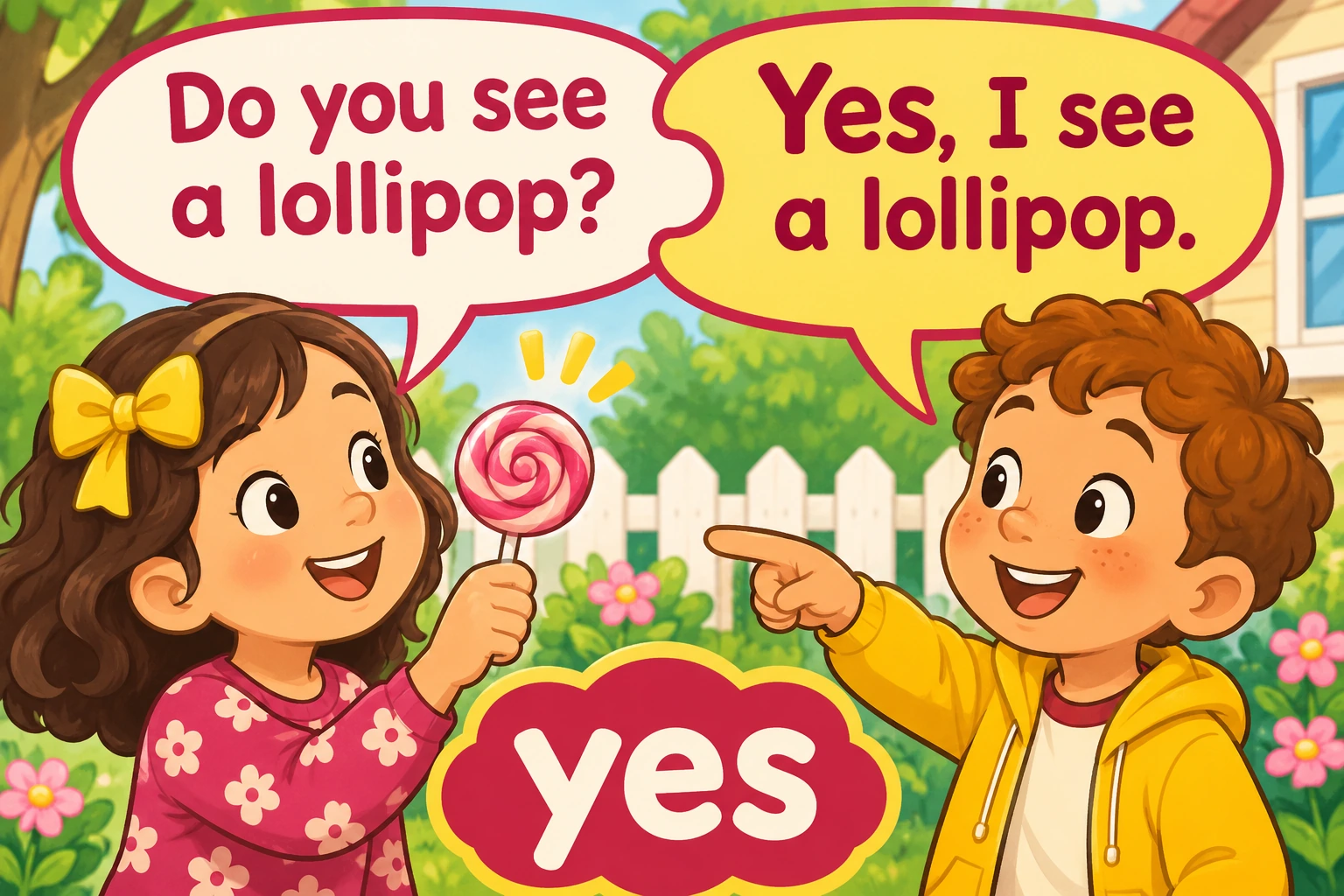
The second source statement is “I said yes.” It reports an earlier response rather than supplying the original question. Give it a small context, such as recalling the visible-picture exchange, so the child knows what response the speaker is reporting.
Yes Sight Word reading: respond, then report
Share the first line after an appropriate question. Pause briefly at its comma while keeping the whole reply natural. Ask what information the answer gives the questioner. Then read the second line as a report of what was said during the earlier turn.
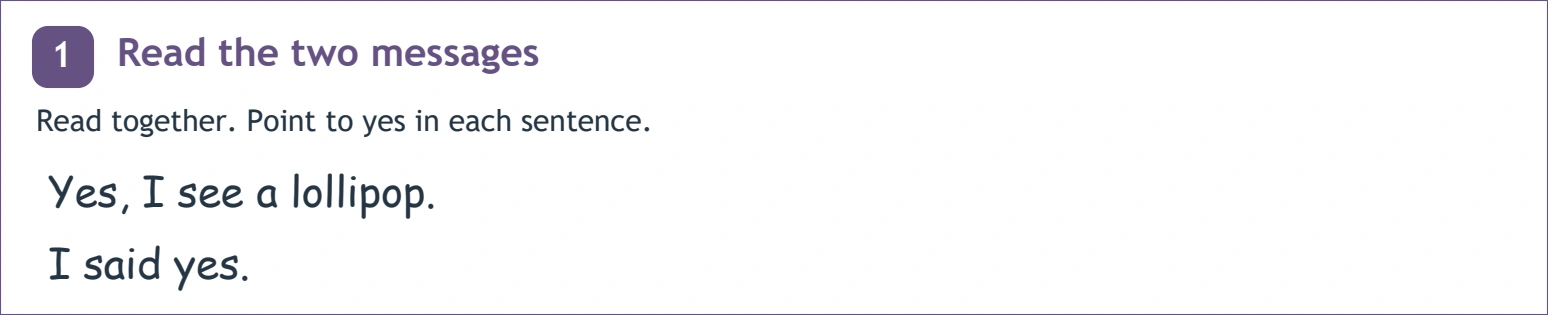
Capital Yes begins the first message, while lowercase yes appears later in the report and in the large model. Connect Y with y so the changed form does not hide a familiar target. Adults may supply lollipop or said while a learner locates yes and explains the response.
Do not infer independent word recognition solely from a sensible picture answer. The child may understand the scene while still needing help with y-e-s. Return to the actual printed sequence after the exchange so both meaning and spelling receive attention.
Choose support that keeps the answer meaningful
| A starting need | A useful lollipop-scene task | A response to observe |
|---|---|---|
| Needs a reason for yes | Ask a clear question about the visible picture. | An answer that fits the scene. |
| Agrees with every question | Change the visible arrangement and accept the fitting response. | Attention to meaning rather than habit. |
| Needs spelling support | Compare y-e-s with the large model. | All three positions retained. |
| Ready for a written contribution | Dictate or copy a complete reply or report. | A message with a clear context. |
These are options for adapting the visit rather than a chart of fixed ability levels. A child may understand affirmative answers before writing the descending part of y comfortably, while a neat copy may need more listening context.
A shuffled bank for y-e-s
The bank contains i, e, y, s and o. Select y followed by e and s for the three response boxes, leaving i and o unused. The target letters do not appear as a completed word in display order, so compare each position before writing.
Say yes naturally, then connect its spoken form with the written sequence. The adult can blend y-e-s for a reader who already recognises the relevant sound connections. Naming letters for selection and saying the complete answer are related activities with different immediate purposes.
If s is chosen first because it is familiar, ask where that letter appears in the model. It belongs at the end of yes. Loose copies can make the positional comparison easier before another handwritten attempt is required.
Nine choices, four exact affirmative spellings
The search rows read yes, say, eat; yes, went, yes; yes, now, who. Adult yes key: 1, 4, 6, 7.
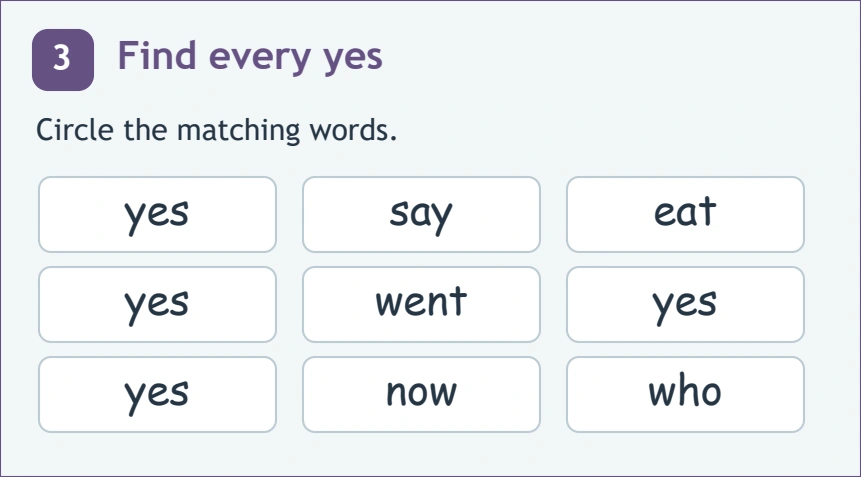
Say shares some letters with yes but has a different middle and order. A familiar y or s is not enough for a complete match. Ask the child to point through y-e-s in the model and compare the candidate from beginning to end.
The grid asks for the written target, not every word related to speaking or answering. A place-keeping counter can support an orderly scan when attention jumps between rows. Invite one explanation of a selected or rejected cell to see how the learner reached the decision.
Pencil work after a clear reply
Follow the dotted yes models through the descending y before a separate y-e-s attempt. The y may need a brief formation demonstration, while e and s should remain distinct letters. Keep the model available instead of adding a memory demand to the movement task.
The final ruled activity permits a sentence with yes, including a copied source example. For an original line, rehearse the reply or report orally and establish its context. Record the surrounding reply vocabulary when needed, leaving yes for the learner after a fitting question has been established. The written amount should fit pencil stamina rather than a need to fill every guide.
The clean lollipop lesson first connects its reply and report with a question context. A y-e-s bank neighbours the matching grid, then tracing and a sentence finish follow. Dotted practice opens the source sample. All five provided activities and the familiar US Letter frame remain.
Six observations from an answering lesson
- A question is heard: the learner considers what the speaker asked before responding.
- An answer fits evidence: yes is used when the established scene supports the affirmative reply.
- A report has context: the second source line is connected with an earlier spoken response.
- A case change is recognised: Yes at the opening is linked with lowercase yes.
- A sequence is exact: y-e-s is distinguished from another word sharing some letters.
- A written contribution communicates: the final line is an understandable reply or report, not merely an isolated copied label.
Record whether the answer fits the visible scene before judging y-e-s. Automatic agreement and a correct written sequence are not the same evidence of understanding.
Hugo's possible home picture-answer game
A family member might show a lollipop drawing and ask a clear visible-object question. Hugo answers according to what can be seen. The adult models the complete first source response if needed, then recalls that response using the second printed statement.
They open the worksheet and locate yes in both lines. Hugo selects y-e-s and inspects a search row. Pause before further yes writing if Hugo needs a break.
For a closing turn, change to another familiar picture and ask a suitable question. Accept the response supported by that scene, even when it is not affirmative.
Classroom possibility: a listener's evidence station
The teacher establishes a shared picture and a questioner-listener pair. The questioner asks about something actually visible, and the listener responds from the evidence. A later turn changes the scene so the group sees that listening matters more than automatically producing the target word.
Return to the source reply and report. Adults can read longer vocabulary while learners track yes, identify the question it could answer or explain what the report refers to. Children can contribute through pointing, speaking, letter selection or writing according to their current experience.
During search work, inspect the decision around say. A child who circles it has noticed some real shared letters but needs order and the middle vowel checked. A learner who answers unrelated questions affirmatively needs a clearer meaning exchange, not simply more tracing.
Five extensions for answering with purpose
1. Prepare two visible-object scenes and ask a suitable question about each. Accept the response that fits, then locate yes in a completed affirmative example.
2. Dictate a short report about a pretend character's earlier answer. Establish what the character was responding to before recording I-said-yes language.
3. Compare yes and say on completed word cards. Inspect the middle letters and their order rather than relying on a shared y or s.
4. Build y-e-s with large alphabet pieces, let a puppet start with the final s and invite a repair against the model.
5. Create a question-and-reply card for a family audience. Help write the longer question vocabulary while the learner supplies yes and rereads the finished reply.
Readiness, confidence and regular review
A listener around 4–6 may give a fitting answer before writing y-e-s comfortably; the question context should lead the choice of follow-up work. An appropriate spoken answer can be within reach before an independent sentence copy. A confident writer may still need help connecting a reply with its question.
Avoid teaching yes as a lollipop label, rewarding agreement regardless of meaning or treating a shared letter as a complete search match. Keep the scene and full spelling clear. Appreciate a specific contribution such as waiting to hear the question or explaining why say is different.
For another short-word route, explore the starter resource for early reading words. The pencil discovery practice collection can support motor needs before sentence copying. A familiar action can be discussed separately with the eat reading lesson resource.
Adults may find further listening-game contexts through NAEYC's materials for family play and PBS Parents' learning resources. Choose an exchange where the child's answer has a reason to be heard.
Download the lollipop-answer lesson
The lollipop sample stays free in its original activity order. Eligible members may choose the clean premium PDF, which begins with the reply and report before isolated tasks. The lollipop activities are preserved after their identifying website marks, including the domain and watermark, have been removed. Advertising does not appear in the clean worksheet used beside the question-and-answer picture scene.
On a US Letter lollipop test, inspect the y route and ensure no edge of the frame is lost. A pencil and optional picture cards can support the visit. For companion words, the linked $5 collection offers twenty-six clean primer lessons in order. Select another message purpose from that file while today's yes remains connected with a question and a fitting response.
Popular Worksheets
Printable resources families and teachers are downloading now.
 Free
 Free
 Free
 Free