15 Best Free Printable Preschool Worksheets for Kids in 2026
Match a child’s current curiosity with fifteen existing picture-counting, letter, colouring and tracing resources, with clear sample access and practical uses.
Fifteen open tabs can leave a parent less certain than one carefully chosen page. This preschool collection narrows the search to existing Worksheets Gallery resources with free printable samples, then explains what each one is useful for. You will find small picture counts, larger collections, familiar letter partners, colouring and early line practice. The selections were checked in October 2026; free samples carry site branding, while clean versions may require membership. Treat “best” as a practical shortlist for different starting points, rather than a ranking of children or a promise that every preschool learner needs every page.

Paper figures share an open activity corner, with a broad finger route, crayons and room for play beyond the page.
A preschool shortlist with a clear purpose
A printable can offer a stable picture to discuss, a mark to follow or a collection to count. Conversation, stories, building, movement and outdoor play give those symbols something meaningful to connect with. Choose a page because it fits something a child is already exploring, not because its number looks like the next step on a timetable.
NAEYC’s guidance on planning meaningful learning places play, individual interests and responsive teaching within a broad curriculum. That is the selection principle here. A page earns its place when you can name the invitation and adapt its size or amount without losing the purpose. A preschool child who counts objects confidently may still prefer an adult to write the numeral.
In a January 2026 Stanford DREME article about everyday mathematics, Herbert Ginsburg discusses children’s reasoning beyond formal instruction. The useful connection for this shortlist is to ask about an idea, then return to real objects. The activities below are suggestions for using the resources, not a tested intervention from either source.
Before printing: what “free” means in this collection
Each selected resource offers a free watermarked PDF sample at the time of checking. Its site branding remains on the page. Where a clean version appears, its access panel requires active membership; the separate paid bundles are not part of this free shortlist. Read the current label before downloading because access arrangements can change.
The number and letter pages, and the chick activity, list ages three to six. The lines-and-curves resource lists ages three to five. These are broad audience guides, not preschool readiness tests. Print a single sample first, inspect whether its guides are visible, and offer one manageable section. There is no need to buy a clean file to try the free sample.
Picks 1–3: establish what counts as one
1. One complete kite for a preschool beginner
Number 1 Worksheet: 5 Brilliant Kite Discovery Games gives preschool beginners one whole kite to identify. Its coloured sections belong to that single object. Ask a child to point around the outside before saying how many kites are present. Then find one whole toy nearby and compare the idea of “one.”
2. Two sailboats for a preschool dock
Look for Number 2 Worksheet: 6 Powerful Games for Happy Sailors. Two complete boats let you discuss one boat and another boat without counting their sails as extra objects. In preschool play, draw two large dock places on scrap paper and let two toy blocks stand for the boats. Match each block to a picture, then return to the printed collection. Keep the task about two boats rather than filling every numeral row.
3. A preschool rocket count before the launch
Number 3 Worksheet: 4 Brilliant Rocket Mission Wins shows a small rocket collection. Count the three whole rockets upward, touching each once; a launch countdown can be a separate playful ending. The distinction matters because “three, two, one” is not how the preschool learner establishes the total. Invite three large blocks to represent the rockets, then ask whether the same three remain after moving the blocks closer together.

Separate cards illustrate small whole-object collections; the colours and component shapes remain parts of their kite, boat or rocket.
Picks 4–6: make a small collection easier to track
4. A tidy teddy arrangement for preschool counting
Number 4 Worksheet: 5 Wonderful Teddy Picnic Tasks provides four bears arranged in a small square. For preschool practice, point along one row and then the next, keeping track of which pictures have already been counted. A child may choose another sensible route; ask them to show it. Four large blocks beside the page can make the quantity easier to handle before any numeral writing begins.
5. Five turtles and a preschool hand reference
Number 5 Worksheet: 6 Brilliant Turtle Trail Wins offers five whole turtles, with three above and two below. Five fingers can be an optional preschool reference, without requiring a particular hand movement from every learner. Point to each turtle and say the checked total. If the child notices the two rows, invite them to describe what they see rather than immediately asking for an addition sentence.
6. Select one duck group for preschool practice
Number 6 Worksheet: 4 Powerful Duck Pond Successes contains a six-duck picture collection and another separate count-and-write group. Choose one group for the preschool invitation. Counting every duck illustration across the whole page would answer a different question. After checking the selected six, let a child arrange six large objects beside it.
Picks 7–10: increase the amount only when it helps
7. Whole umbrellas for a preschool weather desk
Number 7 Worksheet: 5 Brilliant Rainy-Day Discoveries uses seven umbrella pictures. Name the whole unit before preschool counting begins: a canopy and its handle form one umbrella. If tracking seven is demanding today, choose a smaller real collection first and return later. A pretend weather desk may provide a reason to count, but the printed colours do not need to become a separate matching task.
8. Count whole cones in a preschool shop
Number 8 Worksheet: 6 Wonderful Ice Cream Shop Games has eight complete cone illustrations in two rows. Count each whole picture, rather than treating the scoop and cone as two items. In a preschool pretend shop, eight large paper orders can be checked against the collection, with adult support. Do not introduce eight simply because a child has finished a seven page; look for a useful reason to explore that amount.
9. Fish for a careful preschool counting route
Number 9 Worksheet: 4 Brilliant Fish Survey Adventures offers a fish collection alongside the printed numeral. Encourage a preschool learner to follow a route that reaches every fish once. A finger can move between pictures while an adult supports the counting words. Stop to check a skipped item rather than praising speed. One checked collection is a meaningful task even when the tracing, search and colouring sections remain untouched.
10. Ten balloons and a preschool numeral conversation
Number 10 Worksheet: 5 Powerful Balloon Party Wins gives preschool children a ten-balloon collection and the written form 10. Explain that the two characters together name this amount; they do not label two separate picture groups. Count the whole balloons, keeping strings attached to their balloon in the discussion. If numeral writing is not the purpose, an adult can record the total while the child points, moves objects or explains a counting route.

Distinctly spaced objects illustrate two possible quantities, with a wooden pointer available to support tracking each item once.
Picks 11–13: connect letters with a picture conversation
11. A moon cue for preschool letter partners
Mm Worksheet: 5 Brilliant Moon Peak Journal Missions presents uppercase and lowercase forms with a moon picture and a picture word to complete. For preschool letter exploration, compare the angular capital with the two humps in lowercase m before tracing a small chosen section. Say “moon” naturally and notice its first sound if appropriate. Naming a picture, recognising its initial letter and handwriting are related invitations; they need not all be completed in one sitting.
12. S bends for a preschool finger route
Ss Worksheet: 5 Brilliant Sun Bend Activities includes letter models, tracing and a sun cue. Ask a preschool child to follow the bending route with a finger before selecting a crayon. Keep the sun word as a conversation starter rather than asking the picture to reveal every sound in the word.
13. D and d as different preschool letter shapes
Dd Worksheet: 5 Powerful Dog Door Discoveries shows uppercase and lowercase partners with a dog cue. The capital’s upright and curved side differ from lowercase d’s round part and ascender. Use the printed model for preschool comparison, then trace only a manageable stretch. Avoid turning a reversed attempt into a judgement about ability. Point back to the visible form, model slowly on spare paper and offer another try when invited.

The separate letter cards show the uppercase and lowercase partners discussed in the article; the linked pages contain the actual tracing layouts.
Picks 14–15: leave space for marks and artistic choices
14. A chick and an optional preschool colour reference
Chick Coloring: 5 Brilliant Moves for Happy Artists pairs a roomy outline with a smaller finished yellow-and-orange example. A preschool artist can test a broad crayon on scrap paper, choose one part of the chick and decide where to stop. The reference is useful when a child wants a model, but it need not become an instruction to copy every colour. Keep blank paper nearby for a different chick, a nest or an entirely unrelated idea.
15. Preschool lines and curves before tiny letters
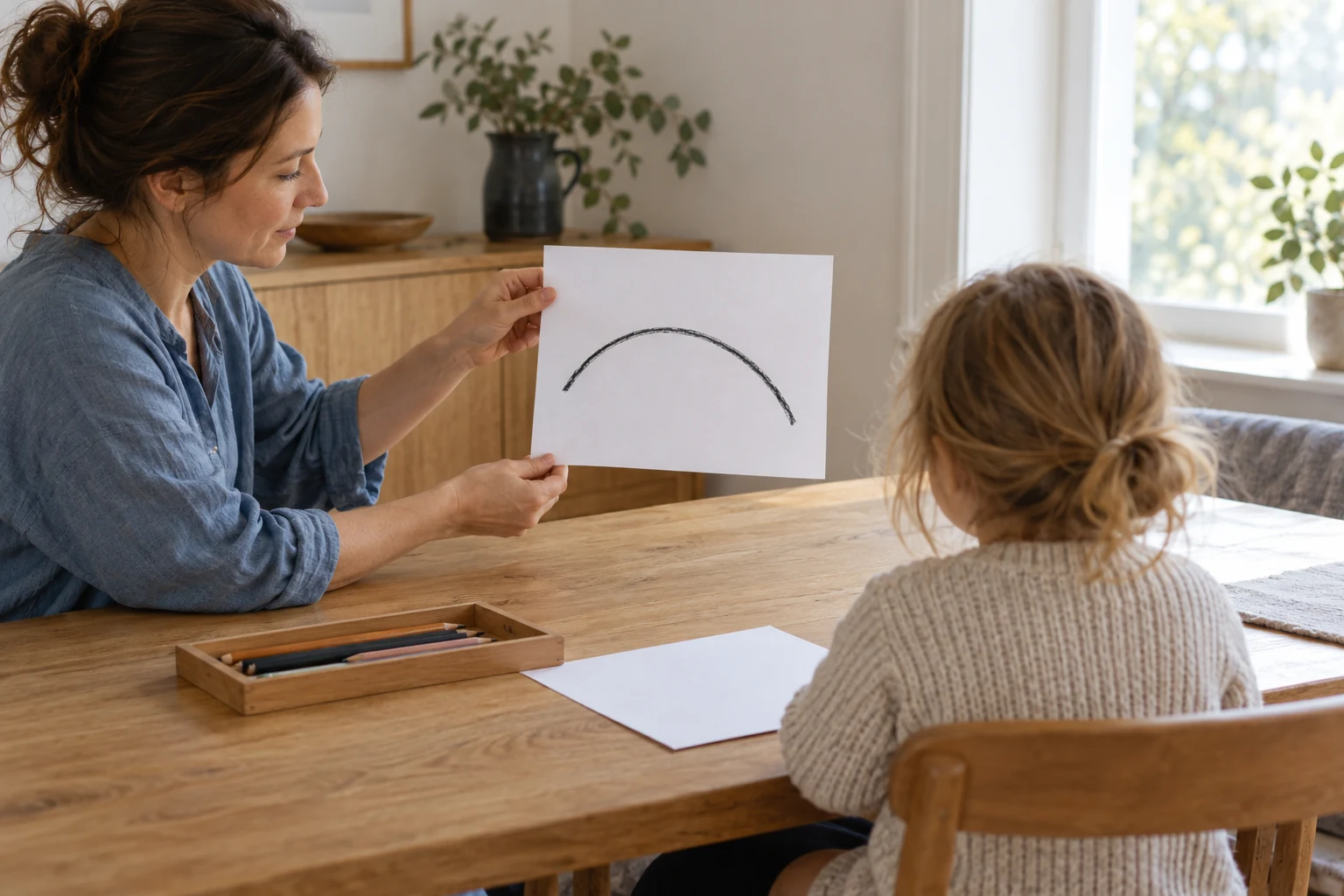
Trace 5 Essential Lines and Curves: Fun Paths for Little Hands (Ages 3-5) offers several path types rather than a single letter to reproduce. Its preschool invitation can be as small as one vertical path or one curve. Follow a chosen route in the air, then on the page, using its start cue if helpful. These movements provide practice; completing the sheet does not certify handwriting readiness.

A simple chick example and a practice scrap show how a broad tool can be tried away from the main picture before an artist chooses where to continue.
Build a preschool session around one page
- Name the preschool invitation. Decide whether today’s purpose is counting whole pictures, noticing a letter or trying a mark. Avoid asking for every task printed on the resource.
- Prepare one sample. Check the PDF’s paper size and print preview. Make one copy, look for clipped edges or faint guides, and adjust the print settings if necessary.
- Add something real to preschool practice. Place a few large toys beside the chosen count, a broad crayon beside the path, or blank paper beside the colouring outline.
- Show one example. Model a pointing route or a movement on your own scrap. A preschool child may choose to watch before joining in.
- Finish with an observation. Describe something you saw: “You went back to find the fish you missed.” Let the learner keep, revisit or set aside the paper.
Five useful gains to watch for in preschool
- Clearer attention to a unit. One whole kite or cone gives preschool counting a definite object. Watch whether the child can point to the complete picture.
- A visible route through a task. A printed collection stays still while a learner works out how to track it. Moving a finger can make the plan visible to an adult.
- Connections between models. Uppercase and lowercase partners invite comparison. A familiar picture supplies a reason to talk without replacing explicit letter teaching.
- Experiments with tools. Broad crayons, finger routes and spare paper let preschool learners compare movements before attempting smaller marks.
- Ownership of stopping points. Choosing a section and deciding when to pause keeps practice manageable.
Match the preschool resource to the moment
| What you notice | A sensible first choice | A preschool adjustment |
|---|---|---|
| Counts picture parts separately | One-kite or two-boat page | Trace around the whole object with a finger |
| Loses place in a collection | A small number page | Point or use matching large objects beside the sheet |
| Notices letters in a name | One relevant letter partner | Compare with the name before tracing |
| Enjoys broad drawing movements | Lines-and-curves page | Start with one large route and a broad tool |
| Wants to invent a picture | Chick outline and blank paper | Let the child choose which surface to use |
Two ways this preschool shortlist can work in real life
At home: the small collection wins
Imagine a parent printing the ten-balloon page because a child enjoys parties. The child begins counting balloon strings separately and becomes frustrated. The parent puts the page aside and brings out one kite picture, tracing its outside with a finger. Together they discuss one whole object. Returning to a smaller amount preserves the preschool purpose; it is not going backward. This is a hypothetical example of adjusting the invitation, not a reported result.
In class: different pages, one shared conversation
Picture a teacher offering a small group a choice between a turtle count, one letter model and broad line paths. Each preschool learner shows a partner something they noticed afterward. The teacher listens for the purpose each child understood, rather than comparing how much paper was filled. One child’s finger route and another’s spoken explanation can both guide tomorrow’s teaching.
Four fresh ways to extend a chosen preschool page
- Make a toy museum. Place a small real collection beside its picture count and dictate a label together. Keep objects large enough for safe supervised use.
- Send a letter postcard. An adult writes a short message using a familiar letter from the page. The child can add marks or choose a picture.
- Tell the picture’s next event. Invite a story about where a boat, rocket or chick goes after the printed scene. Write the child’s words without correcting the invented story.
- Draw a bigger route. Turn one practised curve into a broad pathway on scrap paper. Let a finger or large toy travel it before returning to a crayon.
Choose the page that leaves a useful question
There is no preschool prize for finishing all fifteen. Pick one resource, check its current access details and stay close enough to notice what the child is trying. “Shall we keep this idea for tomorrow?” can be a better ending than asking for another row. A small piece of paper has done worthwhile work when it helps a family or teacher see a learner’s next question more clearly.