
Ladybug Letter Look: 4 Clever Ll Picture Connections
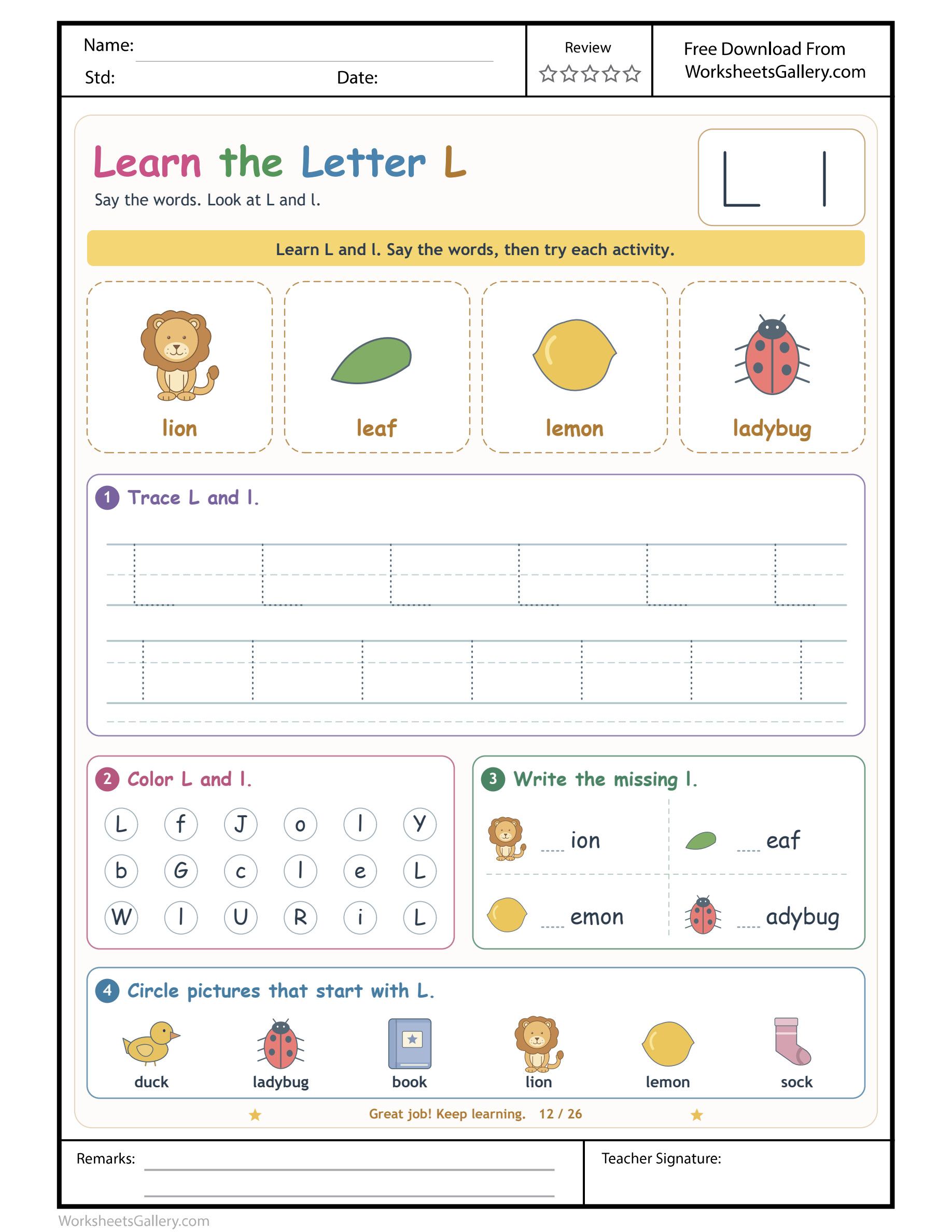
Ladybug Letter Look: Keep uppercase L and the simpler lowercase l distinct while naming four nature-themed cards.
Ladybugs bring tiny details into focus, and that is a useful mood for looking at Ll. Ladybug Letter Look joins lion, leaf, lemon and ladybug with four numbered print activities. There are case models to inspect, dotted forms to trace, circles to compare, unfinished names and a final picture selection. An adult can read each label while the child points out a beginning or explains a shape. Choose an inviting panel and keep the complete references nearby. A short, careful look can give this page a purpose without requiring every model to be traced straight away.
What is the learner looking for? — Ladybug Letter Look
The immediate target in Ladybug Letter Look is the written letter L in both cases. The capital model has an upright and a lower foot; the lowercase model is a simpler tall form. Use the actual printed examples rather than assuming that a smaller case must always look like a shrunken capital.
This distinction offers a useful conversation about different appearances belonging to one letter. Some fonts elsewhere may display lowercase l differently. When that arises, compare the new example openly, then return to this worksheet's reference for its own search task. The learner is allowed to consult that reference as often as needed.
Four labels for four very different things: Ladybug Letter Look
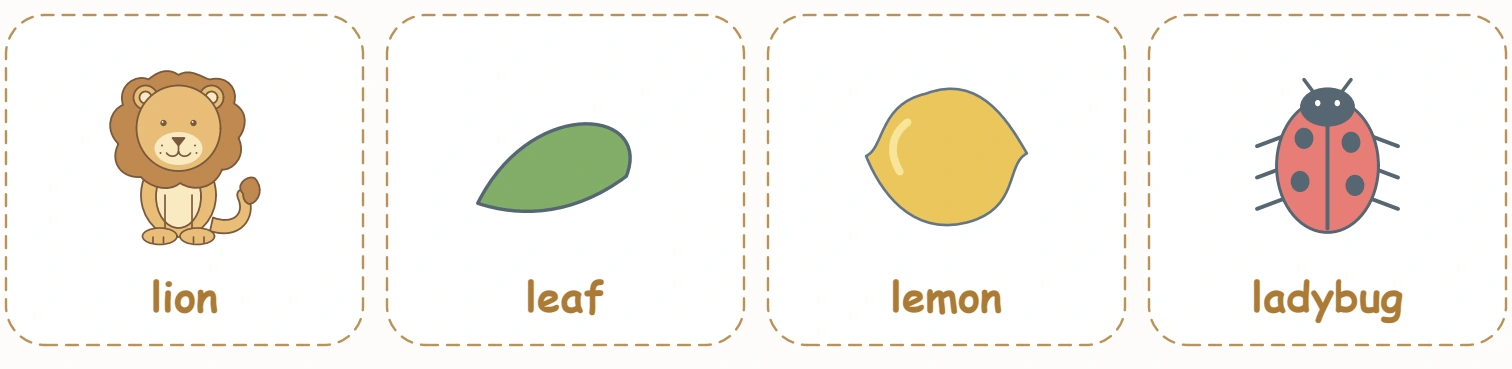
Lion, leaf, lemon and ladybug appear in the upper Ladybug Letter Look bank. Read the words together before asking about their first characters. A child might describe a leaf's edge, a lemon's colour or the spots on a ladybug. Those observations provide meaning for the printed names.
Ladybug is longer than leaf, but the initial-letter comparison remains small. Supply the name rather than expecting an early learner to read every internal letter. If the child uses ladybird, acknowledge that familiar alternative and show that this particular source uses ladybug. Both start with l, while the exact label still matters for matching the printed fragment later.
Lina's imaginary leaf collection: Ladybug Letter Look
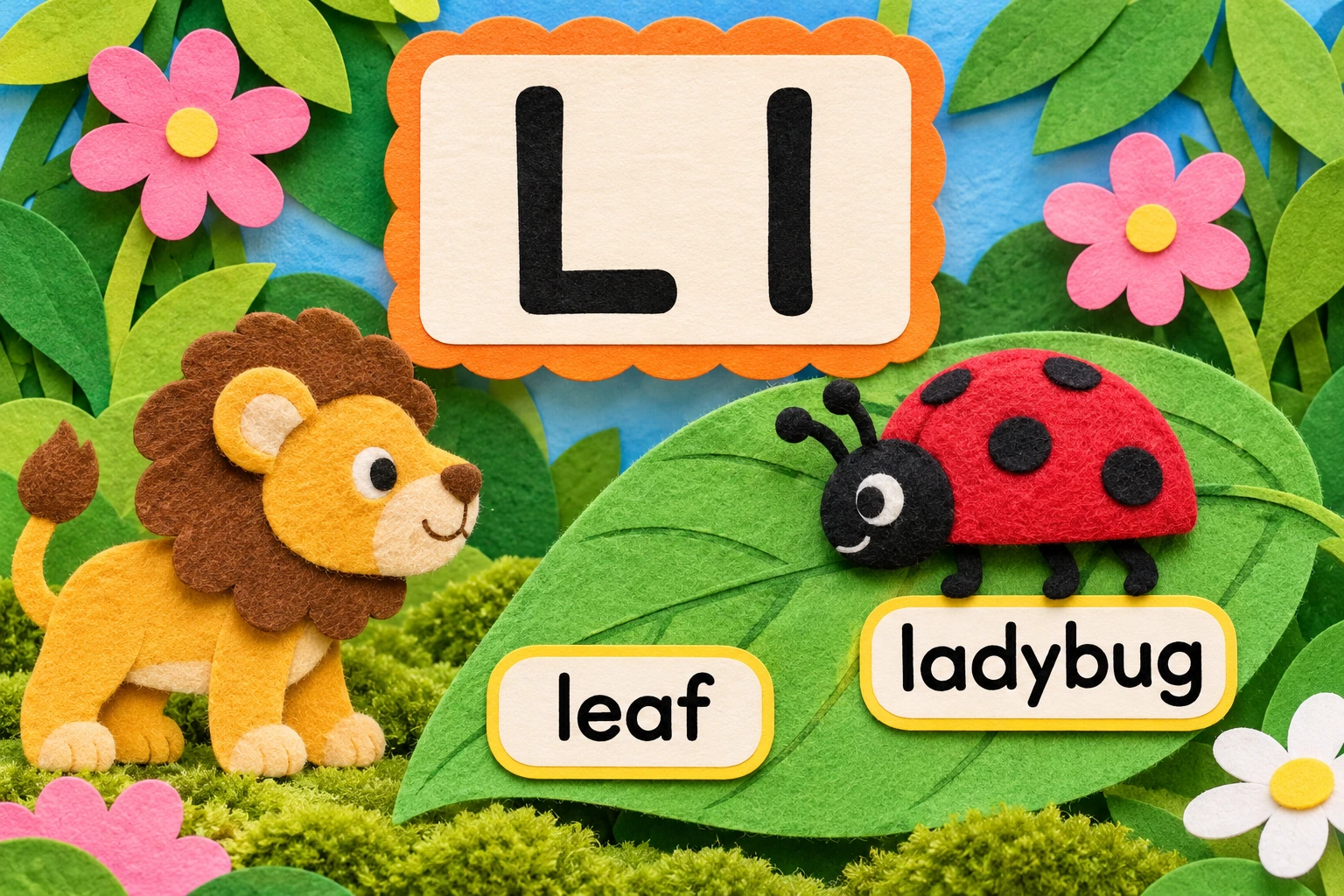
At an imagined home table, Lina places a fallen leaf beside a toy ladybug. An adult reads their Ladybug Letter Look labels and asks what the first letters have in common. Lina chooses a large lowercase model to point at before trying one word gap. The leaf's interesting texture can remain part of the conversation.
The adult might say, “You looked back at leaf to check its beginning.” That feedback describes an action rather than claiming a general ability. Lina can stop after this comparison and return to sorting leaves. The scene demonstrates an activity option, not a reported learning outcome.
Where do the answers belong?: Ladybug Letter Look
| Ladybug Letter Look activity | Adult quick check | Source detail |
|---|---|---|
| Trace L/l | 6 L models;7 l models | Ladybug Letter Look guide rows |
| Find Ll cases | 1, 5, 10, 12, 14, 18 | 6 matches in the Ll circle field |
| Complete lion through ladybug | l | Ll: initial l |
| Picture-name check | ladybug, lion, lemon | 3 choices fit Ll |
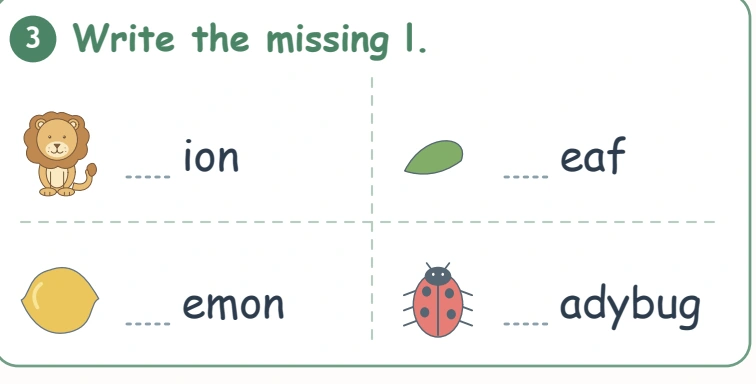
Count Ladybug Letter Look circle positions across three rows of six. Six circles match Ll, divided equally between the two cases. The final strip contains three matching picture names. These are separate checks: the number of targets in the search does not determine how many pictures to mark below.
How much tracing is useful today?: Ladybug Letter Look
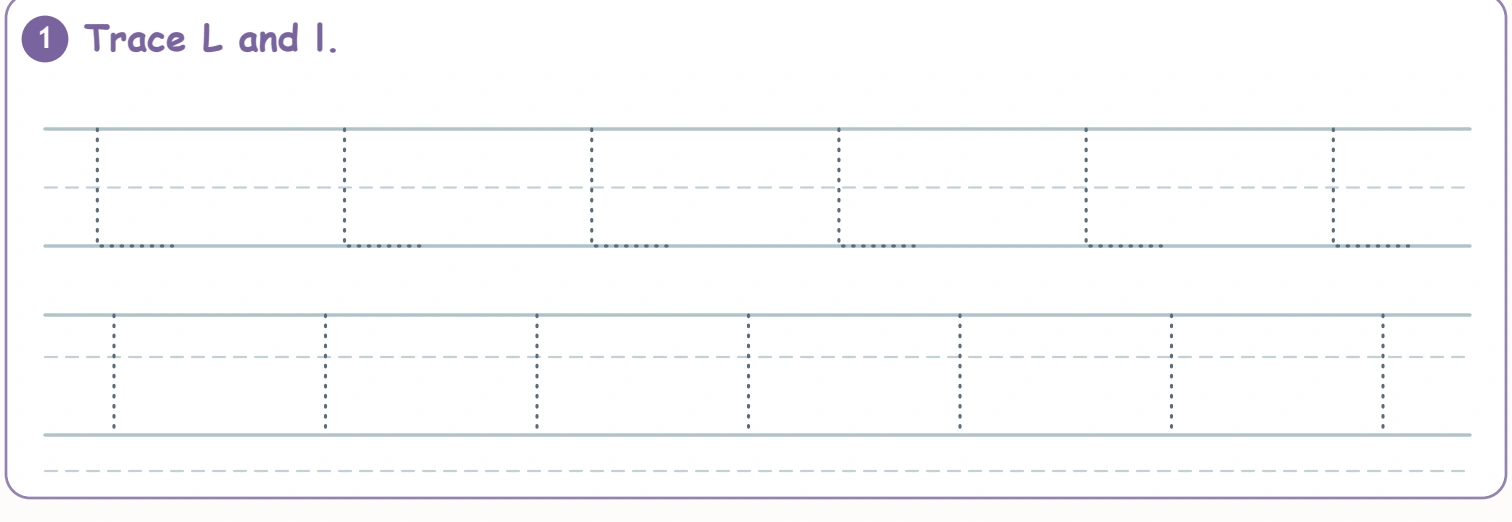
The PDF supplies six capital L tracing forms and seven lowercase l forms. Begin by inspecting the capital's lower foot and comparing it with the small model. A finger movement over one example may be enough to introduce the difference before any pencil work.
There are no printed stroke numbers or formation arrows on Ladybug Letter Look. Demonstrate a comfortable larger version on spare paper when necessary, and keep the source model visible. A learner who understands the contrast may still find a small guide awkward. Let that lead to a larger attempt or a pause, not a requirement to retrace the same form until the paper is dark.
How can a search stay orderly?: Ladybug Letter Look
Look at one Ladybug Letter Look row before moving to another. Keep L and l available as references, and compare a candidate's entire form rather than just its height. A temporary separate cover sheet can reduce the visible choices when eighteen circles feel busy.
Ask the learner to show why a circle fits. Pointing to the foot of L or the small form's outline is sufficient; specialist vocabulary is unnecessary. Do not insist on naming every distractor. The target decision is narrower, and a child can make it meaningfully while still learning other letter names.
Why does one missing character finish each name?: Ladybug Letter Look
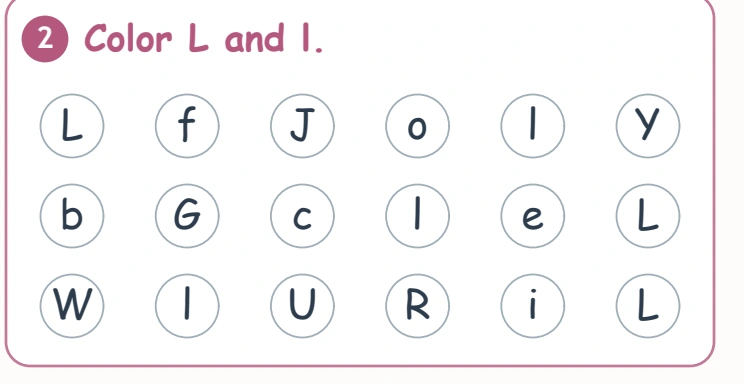
The Ladybug Letter Look fragments ion, eaf, emon and adybug are paired with complete labels above. Add a lowercase l at the start of each chosen fragment. The long ladybug name does not require a larger answer than leaf: both lack only their initial character.
Capital L names the same letter, but the writing instruction calls for the lowercase form. Show that distinction if it becomes relevant. Consultation is expected; hiding the bank would create a different memory task. A large movable l can represent the answer before a child decides whether to make a small written version.
Which names qualify in the last panel?: Ladybug Letter Look
The bottom Ladybug Letter Look strip contains duck, ladybug, book, lion, lemon and sock. Ladybug, lion and lemon meet the initial-L rule. Leaf remains a valid bank example while the final row offers no leaf picture. Read the available labels first, then decide among those printed options.
Book might feel connected to lion if it is a lion story, and ladybug may feel connected to duck as another animal. Those are sensible ideas in other games. Here the common feature is the first written character of the supplied name. Explain the rule before judging the learner's grouping.

Five kinds of evidence worth noticing: Ladybug Letter Look
- Attention to a small feature. The capital's foot can make a full-shape comparison more precise than a glance at height.
- Case understanding. The learner can recognise a related letter despite a changed outline.
- Meaningful vocabulary. Leaf and ladybug labels connect visible print with objects or pictures worth discussing.
- Purposeful hand movement. A short trace or one-character addition gives motor control a defined role.
- Using evidence again. Returning to the complete lemon label is a practical checking habit rather than a failure to remember.
These opportunities in Ladybug Letter Look do not guarantee a fixed pace. Notice the particular skill shown. A child who explains an answer orally may need more space for writing, while a child who enjoys tracing may still need the labels read aloud. Adjust each demand separately.
What might a classroom leaf station look like?: Ladybug Letter Look
In a hypothetical classroom, a teacher displays a leaf picture and a large leaf label near Ladybug Letter Look. Pupils describe what they see, then compare the initial with both case models. A ladybug picture introduces another l word and a reason to discuss long and short labels.
Each learner can select a search row or one gap on an individual copy. The teacher might ask which reference helped rather than comparing completion speed. This proposed arrangement supports different ways of responding, with pointing, speech and writing all available according to the child's comfort.
Four extensions for a closer look: Ladybug Letter Look
Make a leaf museum card: Ladybug Letter Look
Place a completed leaf label beside a collected leaf or a paper version. Read it and locate l. The learner may add a dictated description on separate paper, with an adult writing the words while the child supplies the observation.
Let a lion visit a lemon shop: Ladybug Letter Look
Invent a short exchange between a toy lion and a pretend shopkeeper. Read completed lion and lemon cards during play. The dialogue can use any vocabulary; it need not become an all-L story to provide valuable talk.
Sort with two different headings: Ladybug Letter Look
Try animal and plant-related groups with separate picture cards, then change to an l heading. Explain why the arrangement changes. Ladybug Letter Look's bottom task uses the letter rule, but other sensible ways of grouping can still be enjoyed elsewhere.
Rebuild a ladybug's beginning: Ladybug Letter Look
Set an adybug fragment beside its complete reference and offer a large lowercase l. Moving the character into place gives the same missing-initial decision a broader physical response. Small pencil writing can follow only if it feels inviting.
When should the page pause?: Ladybug Letter Look
For Lina’s leaf table, consider Ladybug Letter Look with adult company in the approximate three-to-six age range, while letting preschool or kindergarten readiness guide the particular demand. Begin with a task the learner can approach willingly. A stable surface and a comfortable tool can support hand movement; larger references can support visual comparison.
Pause when the child is fatigued or upset. A partly completed page can still contain a clear discovery. Typical mix-ups include finding only capitals, adding L instead of l or selecting an absent leaf below. Use the relevant model or visible choice to explain a repair. There is no need to restart all four activities because one instruction was misunderstood.
How can Ll remain familiar without becoming repetitive?: Ladybug Letter Look
Return to Ladybug Letter Look through a different picture on another day. A leaf label might introduce the first visit and a ladybug gap the next. Keep sessions short enough that a small success can be described, and let stories, outdoor observations and free drawing provide other kinds of print-related conversation.
The child can choose whether a later visit begins with looking, naming or writing. That choice keeps the task connected to interest while retaining its clear reference points. A routine of brief varied encounters is more flexible than expecting an identical fully marked sheet each time.
Which Ll download should you choose?: Ladybug Letter Look
For a leaf-and-ladybug printout, choose the free uploaded Learn the Letter Ll original or the separate clean Ladybug Letter Look premium variant. An eligible membership must be active for the member download. The clean sheet keeps its exercises and student fields, with website watermark, domain-name promotion and advertisements removed.
The library card points to all twenty-six clean letter pages, available together as a distinct $5 purchase. Save the authorised Ladybug Letter Look PDF and examine the full US Letter border in print preview. Keeping the original dimensions preserves the lower-case guides and small initial spaces; an article crop should not stand in for that file.
Where can the letter conversation go next?: Ladybug Letter Look
Ladybug Letter Look connections: Ladybug observations may continue in Ll Letter Inspector. The related pair in Ll Worksheet revisits Ll, while Picnic Letter Order offers a different capital-sequence activity after the leaf discussion.
Adults planning beyond Ladybug Letter Look can explore NAEYC's information on play with families and PBS Parents resources for learning through everyday experiences. Those external organisations provide independent material and do not endorse or expand this particular worksheet file.
Popular Worksheets
Printable resources families and teachers are downloading now.
 Free
 Free
 Free
 Free