
On Sight Word: 2 Amazing Melon Position Messages
Continue beyond on with twenty-six clean reading-first practice sheets in one $5 printable collection.
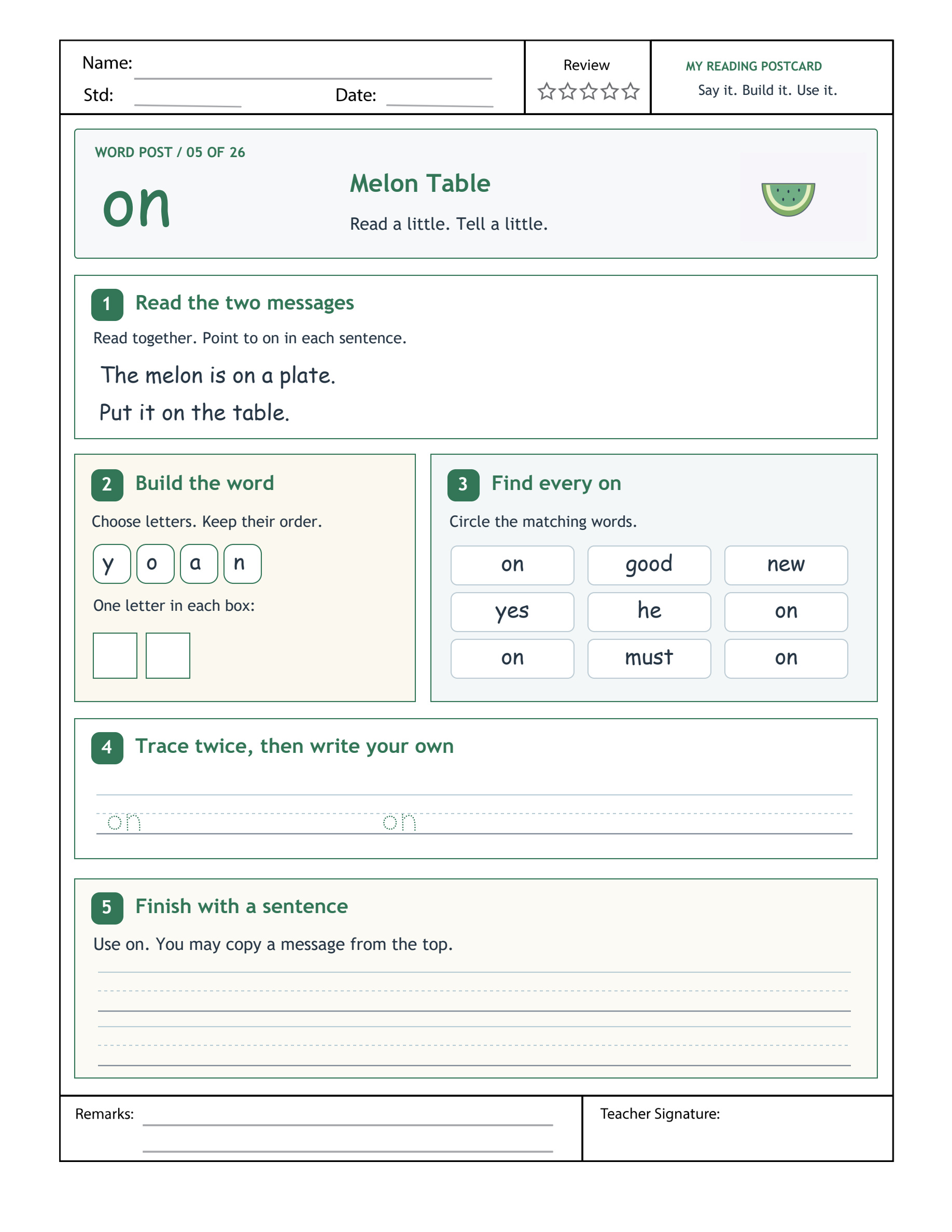
The full on sheet retains its US Letter frame.
Describe contact with the plate or table using a position word. The complete redesigned page appears without cropping.
Rest a pretend melon slice on a plate and a little relationship becomes visible. The slice has a place, the plate supports it, and on gives a listener useful information. On Sight Word practice connects that relationship with two printed letters and five manageable tasks. Children read a melon statement, follow a placement instruction, inspect matching choices and prepare their own short message. The clean edition introduces the sentences first, with spelling and pencil work afterwards. A parent or teacher can use the page alongside simple object play without needing special classroom equipment.
Make the position visible before opening the page
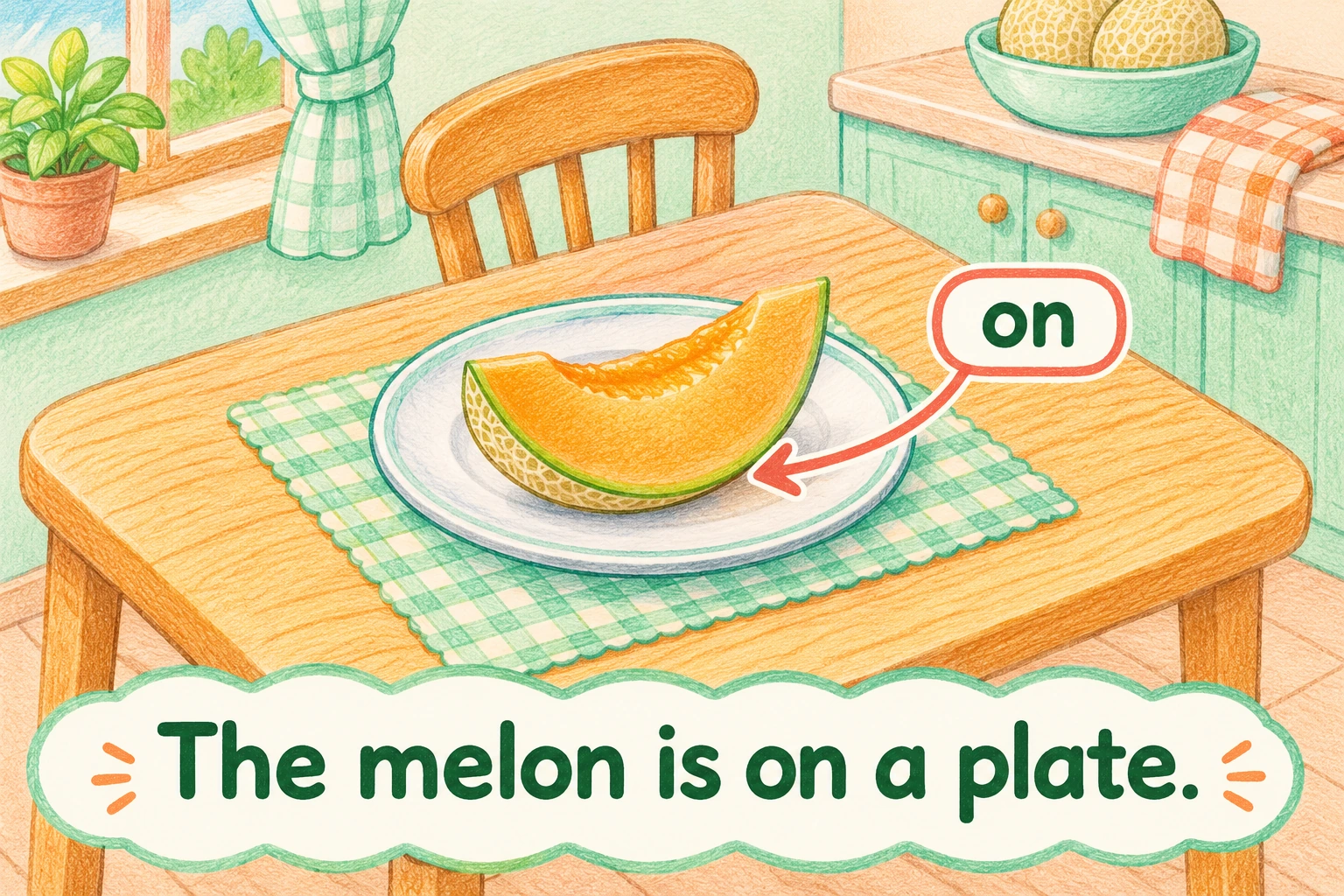
A paper melon and a small plate are sufficient for a demonstration. Put the melon on the plate, say where it is, and let the learner check the relationship. Then move it beside the plate and ask whether the same statement still fits. The change makes on useful as information, rather than a word recited whenever a melon appears.
For this introduction, choose a clear supported position. A picture of a slice floating somewhere above a plate would leave the intended relationship uncertain. Keep the objects in actual contact so the learner can see why the chosen word fits. Later examples can broaden the idea, but the first demonstration should be easy to discuss.
No actual snack is necessary. A block on a book or a toy on a tray can supply another example after the melon sentence has been shared. The target names a relationship, so it remains available when the objects change. That is a more useful transfer than repeatedly pointing to the same fruit illustration.
A statement and an instruction do different things
The source messages are “The melon is on a plate.” and “Put it on the table.” One describes a position; the other asks someone to create a position. Read the first while showing the supported melon, then read the instruction before moving the pretend item to the table.
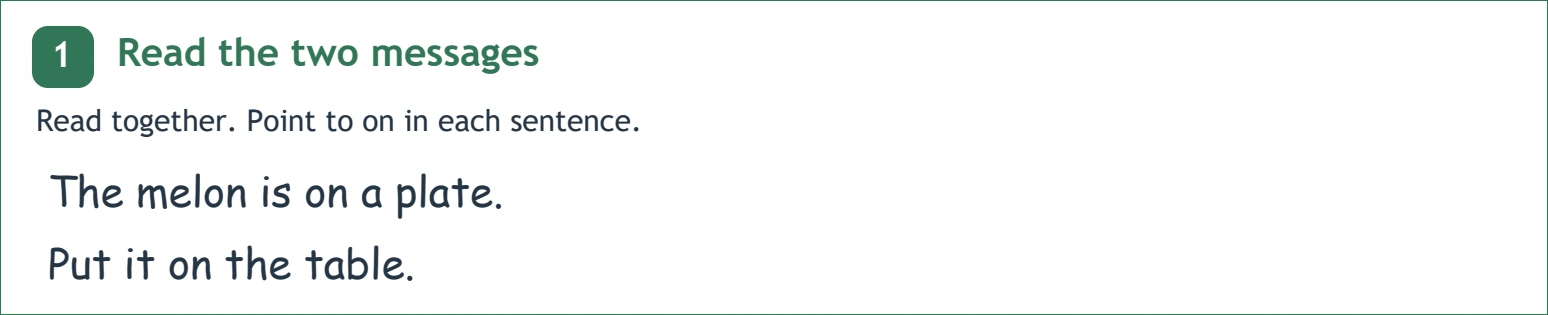
Explain what it refers to in the instruction. In your demonstration, establish whether you mean the melon or an item you have just named. Children should not have to guess a shifting referent in order to practise on. A clear pointing gesture can accompany the first oral reading.
Adults can supply the longer words in both sentences. Finding on within a supported shared reading does not require a child to decode melon, plate and table independently. After locating the target, return to the whole message and let the learner describe or carry out its meaning.
The two-letter order deserves a deliberate look
The word is o followed by n. The source bank scatters y, o, a and n, and the two response boxes require only o-n. Name the letters in sequence while tracking the large model. Then ask the learner to select the matching pieces from the bank.
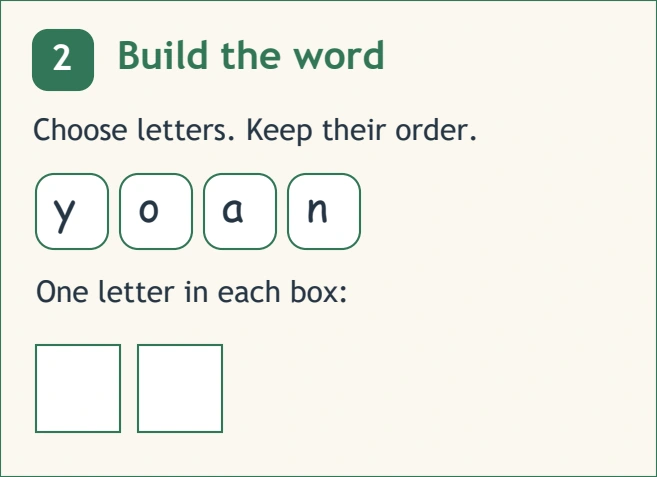
If n-o appears in the boxes, do not accept it merely because both letters are present. Read the printed sequence, point to its first position and invite the child to reorder the pieces. A two-letter word still has a direction and an exact spelling.
Say on naturally as you connect its sounds with the written letters. Depending on the learner's letter knowledge, an adult can model blending without making the page into an unfamiliar terminology lesson. The practical goal is a reader who can recognise the word and use it to explain an actual position.
On Sight Word inspection across nine choices
The search contains on, good, new; yes, he, on; on, must, on. Adult on key: 1, 6, 7, 9.
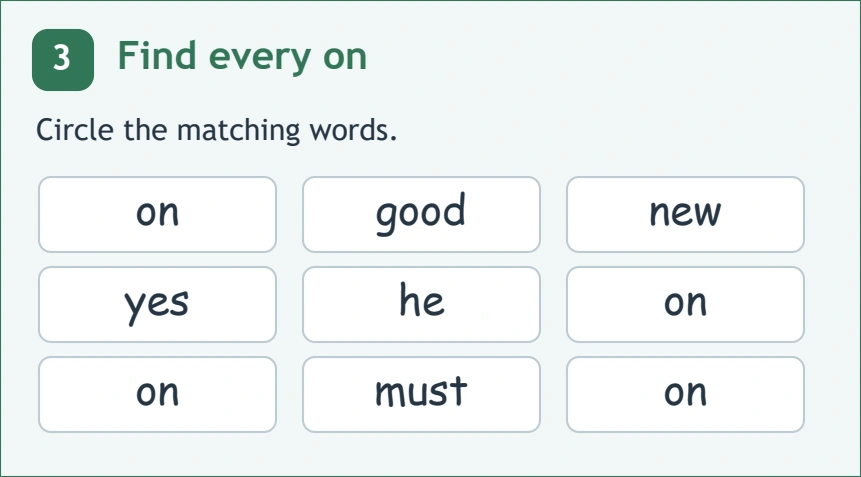
Good includes o letters but is a longer spelling. New contains n without the required initial o. These contrasts make it possible to ask a useful question: does the entire cell match o-n? The learner can compare the complete form against the model before circling it.
An orderly scan is helpful when a child finds the first match and then jumps around. Mark the current cell with a movable counter, inspect it, and shift the counter to the next choice. The counter is a place keeper, not an answer indicator. A child may decide that a cell does not qualify and still have made a valuable careful comparison.
Five source tasks, one redesigned route
The clean melon route starts by reading the position statement and placement instruction. Its centre combines o-n selection with visual matching; tracing and sentence writing close the lesson. The free original begins with the dotted models. All five provided tasks fit within the preserved outer border and unchanged US Letter page dimensions.
The dotted band supports two guided copies and an independent attempt. The final task asks for a sentence with on and allows a copied example. This gives adults a choice between practising an already understood message and supporting a newly spoken idea. Neither response requires completing an additional page.
The webpage's melon illustration is supporting conversation material. The PDF itself is a printable practice sheet. It does not include physical fruit pieces, detachable position cards or a separate answer-book download. Bring your own simple props if they help make the relationship clear.
Six opportunities within a position lesson
- Spatial meaning: the learner distinguishes a supported on relationship from an object sitting beside the plate.
- Instruction listening: moving an item after hearing the table sentence links spoken language with purposeful action.
- Sentence comprehension: describing a position and requesting a placement are recognised as different message purposes.
- Sequence control: o-n remains in order when chosen from the shuffled bank.
- Visual comparison: an o inside good is inspected as part of a different spelling rather than an automatic match.
- Written communication: a copied or dictated on sentence records a relationship someone else can check.
A useful melon note identifies whether the position was explained, the instruction was followed and o-n stayed in order; those need not progress together.
Home possibility: a small table-setting conversation
Arun and a family member might begin with a toy picnic. The adult puts a paper melon on a plate and asks Arun to describe the arrangement. After modelling the full source sentence, the adult moves the slice beside the plate. Arun decides whether the original message still describes what can be seen.
The family opens the worksheet when there is a relationship worth naming. They find on in the first statement and select o-n from the bank. Arun can inspect a search row before returning to the picnic. One careful written word may be enough for the pencil part of this visit.
For a final turn, Arun dictates a statement about a cup on a tray. Record the longer object names for a hesitant writer, leaving on as the child's small contribution to the visible placement statement. A different object gives the message a fresh application. This is a suggested activity sequence, not an account of a recorded learner outcome.
Classroom possibility: one speaker, one placement partner
A small-group teacher can offer a toy, a tray and a book. Establish an instruction such as putting the toy on the book. One learner speaks while a partner carries out the action. Both check the resulting position before roles change. Start with a single clear relationship rather than several directions at once.
Bring the group back to the melon sentences. The teacher asks which message reports a position and which one requests a change. Children can respond through acting, pointing or brief talk. Their understanding of the sentence can be visible even when the adult supports most of the reading.
The worksheet then holds the spelling still for individual practice. Some learners choose the letters, others inspect the grid and comfortable writers prepare a sentence. Record a specific observation about language or print. Avoid comparing children by the neatness of their entire page when they have different pencil experience.
When a response does not fit the position
| What happens | Try with the melon props | Check in the print |
|---|---|---|
| Says on while the slice is beside the plate | Demonstrate contact, then compare the two arrangements. | Point to on as the matching relationship is shown. |
| Fills n before o | Use two loose letters and a clear starting position. | Compare the finished o-n sequence. |
| Circles good because it contains o | Count the visible letters in both forms. | Inspect the whole spelling before deciding. |
| Acts correctly but cannot copy a sentence | Accept a spoken placement explanation. | Attempt only the target word on its guide. |
Five extensions that give on a new setting
1. Photograph a toy on a book and a toy beside a book. Discuss which image fits a completed on caption, then let the child change the caption's object orally.
2. Make a pretend delivery desk. A speaker requests that an item be put on a particular surface, and the listener checks the placement before accepting the delivery.
3. Build o-n using large letter pieces on a tray. Deliberately reverse the order for a puppet, inviting the learner to repair the written word.
4. Draw a funny but clear supported arrangement, such as a toy cat on a toy bus. Dictate a short caption and identify on inside the completed message.
5. Create a one-direction treasure clue for a classroom object. Keep the instruction simple enough to act on, and reread the target after the object has been located.
Keep the language goal comfortable
A learner near 4–6 can start with the visible melon placement even when sentence writing needs adult help; oral position language and pencil skills are separate. Oral placement play can begin before a learner writes a whole sentence. Strong pencil skills alone do not establish that the position word is understood.
Common problems include showing ambiguous pictures, changing what it refers to without explanation and asking for too many directions at once. Use a visible arrangement, a stable object and one message. When fatigue appears, return to a simple successful placement and save the remaining marks for another visit.
A regular review can begin during ordinary tidy-up: describe one toy on a shelf, then find on in a short written example. Praise the accurate relationship or the careful letter order you actually observed. There is no need to attach a reward to every circle or demand an entire sheet at each sitting.
For a different short-word starting point, see the pre-primer reading collection. A related eat lesson for snack talk can follow the pretend picnic on a later day. The pencil-control discovery pack offers another option when writing demands need to be reduced.
Families can draw additional activity ideas from PBS Parents' everyday learning resources. The NAEYC family play collection is useful for planning shared play that leaves time to listen to the child's own explanation.
Choose a printable file and check its frame
Download the free melon sample to keep the supplied order. The membership premium choice gives an eligible current member the clean reading-first PDF, preserving the other source tasks. That worksheet removes the website domain and watermark and carries no advertising. A printed version can then sit beside the pretend plate while the child discusses the actual relationship.
Preview the melon file at US Letter size and make one test copy with its complete frame visible. Check the two dotted on models before producing extras. A plate prop and loose o-n letters are optional; the pencil can be the only equipment. For the remaining primer words, the $5 collection offers twenty-six clean sheets together in their original sequence.
Popular Worksheets
Printable resources families and teachers are downloading now.
 Free
 Free
 Free
 Free