
Rainbow R Reader: 4 Clever Case-and-Picture Tasks
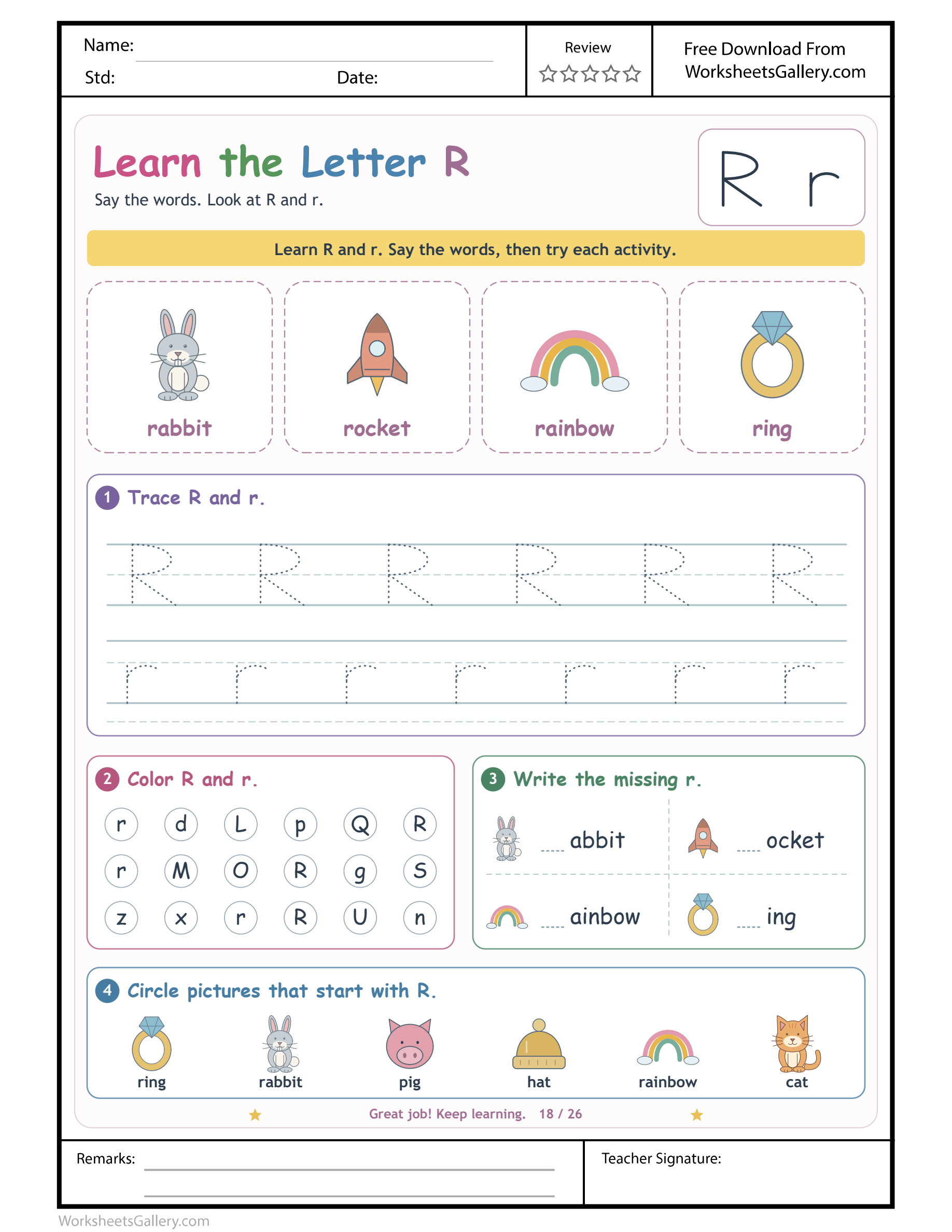
Rainbow R Reader: Compare the uppercase R leg with lowercase r before selecting ring, rabbit and rainbow.
Rainbows can frame a pretend gallery, with a rabbit arriving to admire a shiny ring. Rainbow R Reader gives those story ideas a printed connection through rabbit, rocket, rainbow and ring. Four numbered activities invite children to trace case models, inspect letter circles, restore lowercase beginnings and choose picture names. Read the complete labels with the learner and keep them visible as references. A small observation about Rr can be a worthwhile starting point, whether it is expressed with a finger, a spoken reason or a comfortable pencil mark before the story continues.
Curate the final picture group first — Rainbow R Reader
The bottom Rainbow R Reader strip names ring, rabbit, pig, hat, rainbow and cat. Ring, rabbit and rainbow meet the initial-R instruction. Starting here can give a learner a meaningful choice before any tracing. Read all six names and ask which written beginnings fit the page's target.
Rocket appears in the upper bank but not as an extra lower selection. A child remembering that word is making a real connection, yet the final activity asks about the pictures actually printed below. Locate the available options together before adding marks, rather than searching for an absent drawing.

A letter group differs from a story group: Rainbow R Reader
Rabbit, pig and cat could all join an animal collection. Ring and hat might belong in a dressing-up corner. The Rainbow R Reader panel uses a different rule: the first character of each supplied name. Explain that change so a sensible everyday category is not dismissed as meaningless.
The child can describe a story connection and then inspect the printed labels under the worksheet rule. This is an opportunity to talk about instructions, not merely right and wrong pictures. A pointed first letter can support an explanation before the learner has a formal vocabulary for grouping rules.
Rumi's imagined rainbow gallery: Rainbow R Reader
At an invented home gallery, Rumi places a rainbow drawing beside a toy rabbit and a pretend ring. An adult reads their names on Rainbow R Reader. Rumi chooses ring, compares its initial with the small model and finds a corresponding word fragment to repair.
This scenario illustrates a possible activity rather than a reported result. Rumi can dictate a label for the gallery on spare paper while the grown-up writes. The imaginative display can remain open even if only one worksheet choice is made, allowing print to serve the play instead of interrupting it.
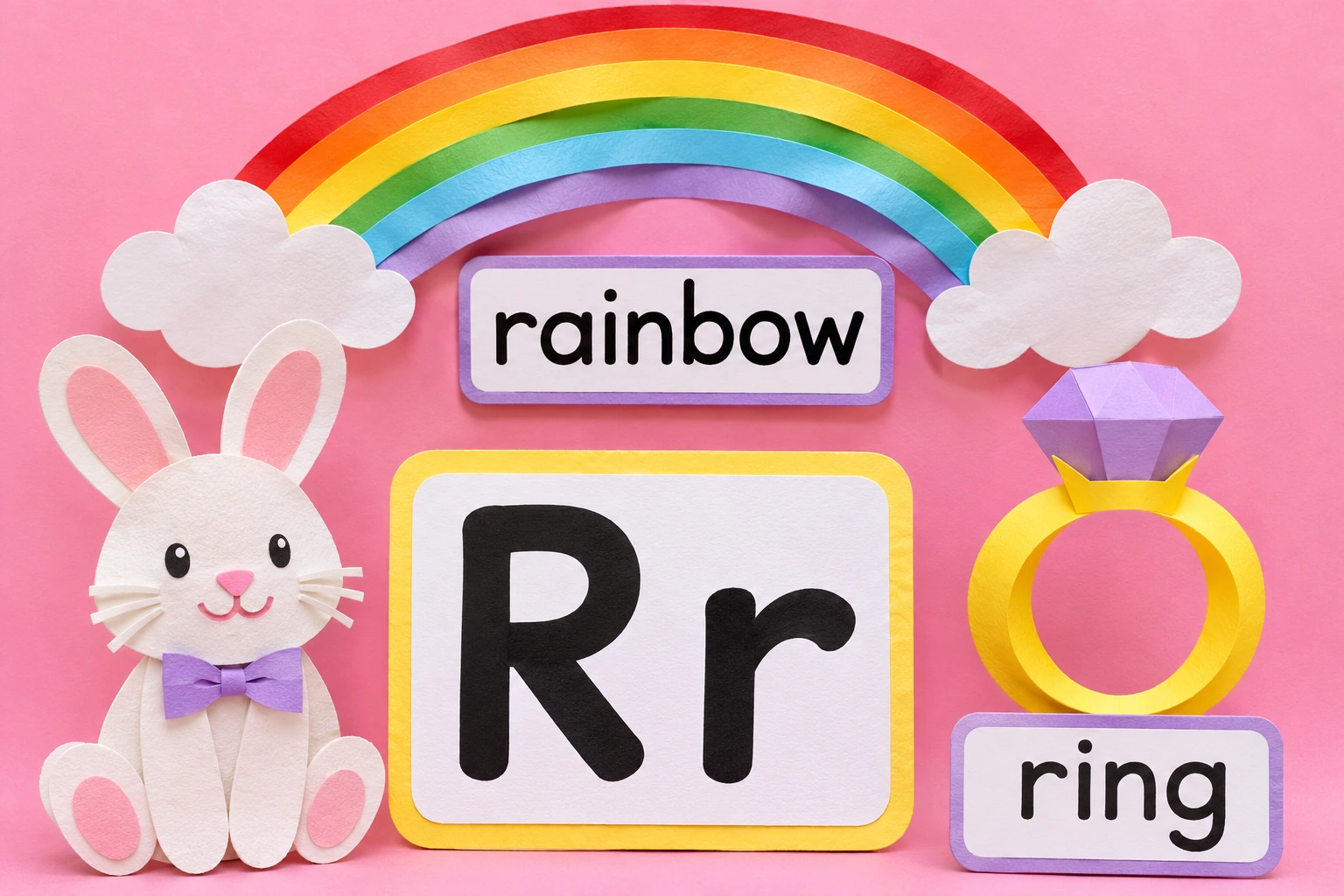
Know the source before checking a response: Rainbow R Reader
| Rainbow R Reader activity | Adult quick check | Source detail |
|---|---|---|
| Trace R/r | 6 R models;7 r models | Rainbow R Reader guide rows |
| Find Rr cases | 1, 6, 7, 10, 15, 16 | 6 matches in the Rr circle field |
| Complete rabbit through ring | r | Rr: initial r |
| Picture-name check | ring, rabbit, rainbow | 3 choices fit Rr |
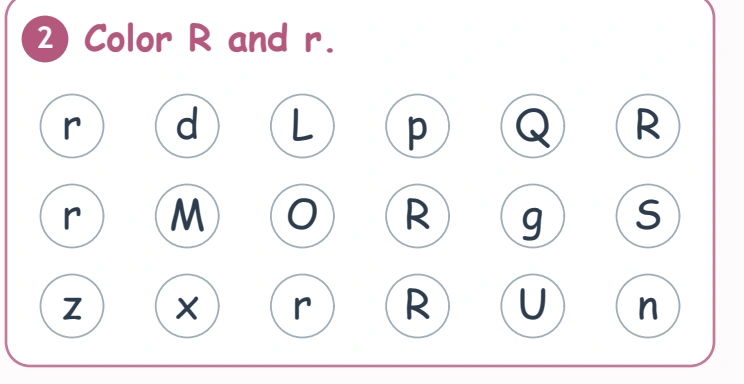
The Rainbow R Reader search field has eighteen circles in three rows of six. Six match the target cases, with three capital and three lowercase examples. Count positions across each row for an adult check. The picture answers follow the separate rule discussed above and should not be inferred from the search total.
Give all four bank names a spoken introduction: Rainbow R Reader
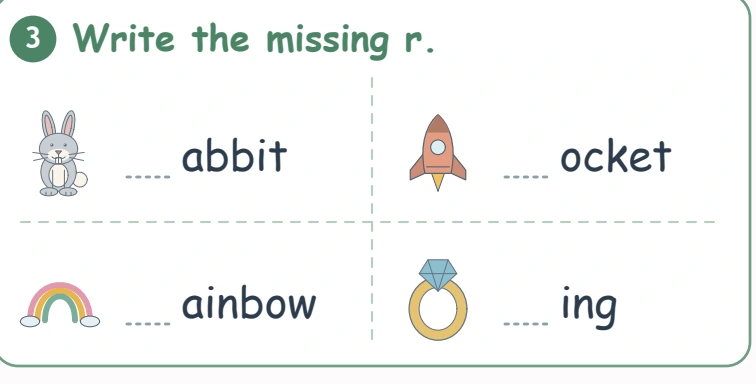
Rabbit, rocket, rainbow and ring are the complete upper labels in Rainbow R Reader. Read them naturally, inspect their initial r and welcome picture observations. A learner may talk at length about a rocket while needing only a short print comparison beside that conversation.
Rainbow and rabbit contain more spelling than ring, but the missing-letter task still asks for one initial. Supply unfamiliar whole words instead of demanding unaided decoding. Adult reading can keep the vocabulary meaningful while the learner concentrates on case recognition or a small written beginning.
Compare capital R's leg with the small r reference: Rainbow R Reader
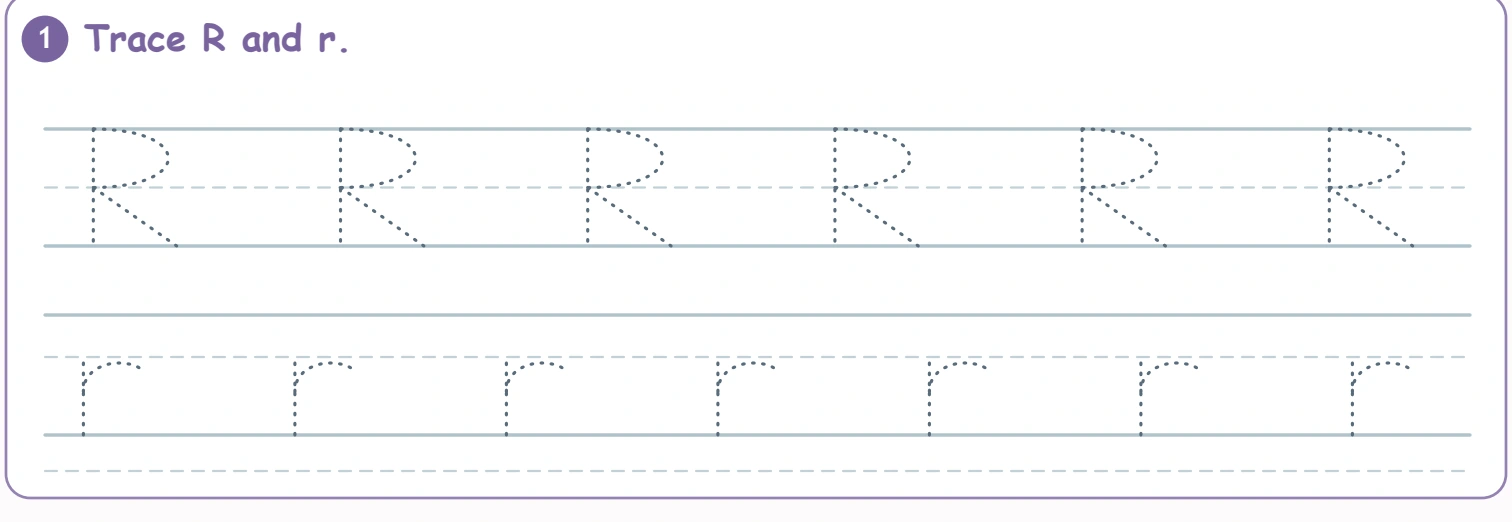
Capital R has a fuller arrangement than lowercase r in the supplied models. Inspect the capital's rounded upper part and slanted leg, then look at the small form separately. On Rainbow R Reader, a child should not have to guess how the lowercase partner looks from the capital alone.
Leave both examples available during search and writing. A finger can identify a visible detail without formal terminology. If a candidate resembles only part of R, compare the whole arrangement before accepting it. This evidence-based look is more useful than a fast guess based on a single familiar curve.
Use one trace to start a discussion: Rainbow R Reader
The tracing panel supplies six capital R forms and seven lowercase r forms. Choose one, compare it with the large model and try a finger movement or pencil attempt. An adult can make a larger demonstration separately if the narrow guide is demanding.
No numbered arrows prescribe formation order in Rainbow R Reader. Keep any adult guidance distinct from source content. Paper stability, a manageable tool and permission to pause help preserve comfort. Thirteen examples are available, but the learner need not complete all of them for the visit to contain useful letter work.
Search with two case references in view
Consider the Rainbow R Reader circles one row at a time if that feels orderly. Ask whether each candidate matches R or r, and invite a pointed or spoken reason before colouring. Keep unchosen Rr rows beneath a loose card until the learner wants another set of circles.
If only capitals are found, introduce the small model again rather than announcing a missing total. If another letter looks plausible, compare its complete form directly. The instruction does not require naming every distractor. The adult's six-target check should follow thoughtful decisions rather than pressure a child into marking uncertain circles.
One lowercase r completes each gallery label: Rainbow R Reader
The Rainbow R Reader fragments are abbit, ocket, ainbow and ing. Consult rabbit, rocket, rainbow and ring above, then supply lowercase r at the beginning of each chosen fragment. All remaining printed letters already belong to their intended labels and should stay as they are.
A capital R proposal shows a sensible letter identity but needs a case adjustment for this instruction. Show the small reference immediately. A large movable r can make the response visible before handwriting. There is no reason to hide the complete label and create a memory test that the source does not request.
Six useful things a gallery visit can reveal: Rainbow R Reader
- Rule awareness. The learner can distinguish an animal group from a group based on printed initials.
- Whole-shape comparison. The capital's leg contributes information beyond its rounded upper part.
- Case association. R and r can be recognised despite their different appearances.
- Vocabulary discussion. Reading rocket aloud gives a picture its specific printed name.
- Motor planning. A selected trace provides a bounded movement to compare with a model.
- Reference use. An intact rainbow label can guide a single-character repair below.
These opportunities in Rainbow R Reader are not guaranteed improvements or a fixed progression. Observe the child's actual explanation and hand comfort. A correct oral choice can remain valuable when a small pencil movement is still difficult, and a neat trace does not automatically establish understanding of the separate picture rule.
Imagine a classroom picture curator: Rainbow R Reader
For a hypothetical class invitation, a teacher displays separate rabbit, ring and rainbow cards beside Rainbow R Reader. Pupils name the pictures with support and decide what a letter-based display would share. A pig card can join an animal display in another round, making the changed instruction visible.
Learners then choose a circle or word gap on individual copies. Ask what reference helped rather than how quickly a page was finished. This proposed routine leaves room for speech, pointing and writing, without claiming outcomes from a real group using the download.
Four extensions for the Rr gallery: Rainbow R Reader
Write a rainbow's exhibition caption: Rainbow R Reader
Invite a sentence about a rainbow drawing and write the child's dictation on spare paper. Read it back and find a target initial if it appears. The caption can contain any useful words, rather than becoming an all-R writing restriction.
Move a rabbit between displays: Rainbow R Reader
Use separate rabbit, cat and ring pictures. Group by animals first, then by r. Describe what changes and why. This extends Rainbow R Reader's final decision while respecting that both grouping rules can be sensible in their own settings.
Repair a large ring label: Rainbow R Reader
Place an ing fragment beside a complete ring reference and offer a large lowercase r. Sliding the character into the opening position repeats the same letter decision with a broad movement. Fine handwriting can follow only when comfortable.
Compare two adult-size case cards: Rainbow R Reader
Show complete R and r cards and ask which features differ. Return to the worksheet models afterwards. Keep the demonstration visible rather than expecting the learner to remember a rapidly changed shape or invented arrow route.
Keep the invitation appropriate to readiness: Rainbow R Reader
Rumi’s gallery gives Rainbow R Reader a setting for approximately three-to-six-year-old learners, with support chosen for their current preschool or kindergarten experience. Naming and explaining can be accessible before narrow tracing. Begin with a willing response, provide a stable surface and let a larger model support the learner when small print is difficult to follow.
Common slips include accepting only capital R, overlooking the capital's leg, grouping by animals instead of initials, or inserting R where a small r is needed. Return to the particular reference that resolves the uncertainty. If correction becomes discouraging, finish with a clear spoken choice instead of another cycle of erasing.
Let the gallery introduce another brief encounter: Rainbow R Reader
A later Rainbow R Reader visit can start with rocket after an earlier rainbow conversation. One row or one word gap may provide sufficient focus. Mix those moments with books, drawing and pretend displays rather than repeating all four panels in an unchanging routine.
Specific feedback might be “You changed your group when the rule became first letters.” Ask which picture the learner wants to inspect next time and stop before fatigue takes over. A useful observation gives a reason to return, even when the rest of the sheet remains unmarked.
Obtain an Rr file for the printer: Rainbow R Reader
The free Rr option provides the supplied Learn the Letter Rr original. Members with a current eligible plan can use the separate clean Rainbow R Reader premium download. Its rainbow, rabbit and other activities remain, while domain promotion, worksheet ads and website watermark are removed.
The native library card opens the twenty-six-sheet clean collection, a separate $5 purchase delivered as one PDF. Choose that product for the entire alphabet. For an individual Rainbow R Reader copy, save the edition authorised for your account and examine the US Letter boundary at its original scale. A browsing image describes the gallery theme; the PDF carries the print-ready guide rows.
Look for further picture-based print ideas: Rainbow R Reader
Rainbow R Reader connections: Rainbow displays can make room for Rr Letter Reporter. Another Rr approach appears in Rr Worksheet, while Dino Missing Capitals introduces a separate sequence decision after the gallery's picture groups.
Adults planning beyond Rainbow R Reader may explore PBS Parents' learning resource collection and the family play pages from NAEYC. Those independent education sources do not endorse this worksheet or alter the contents of its download.
Popular Worksheets
Printable resources families and teachers are downloading now.
 Free
 Free
 Free
 Free