
This Sight Word: 5 Brilliant Ice-Cream Identification Jobs
Continue beyond this with twenty-six clean reading-first practice sheets in one $5 printable collection.
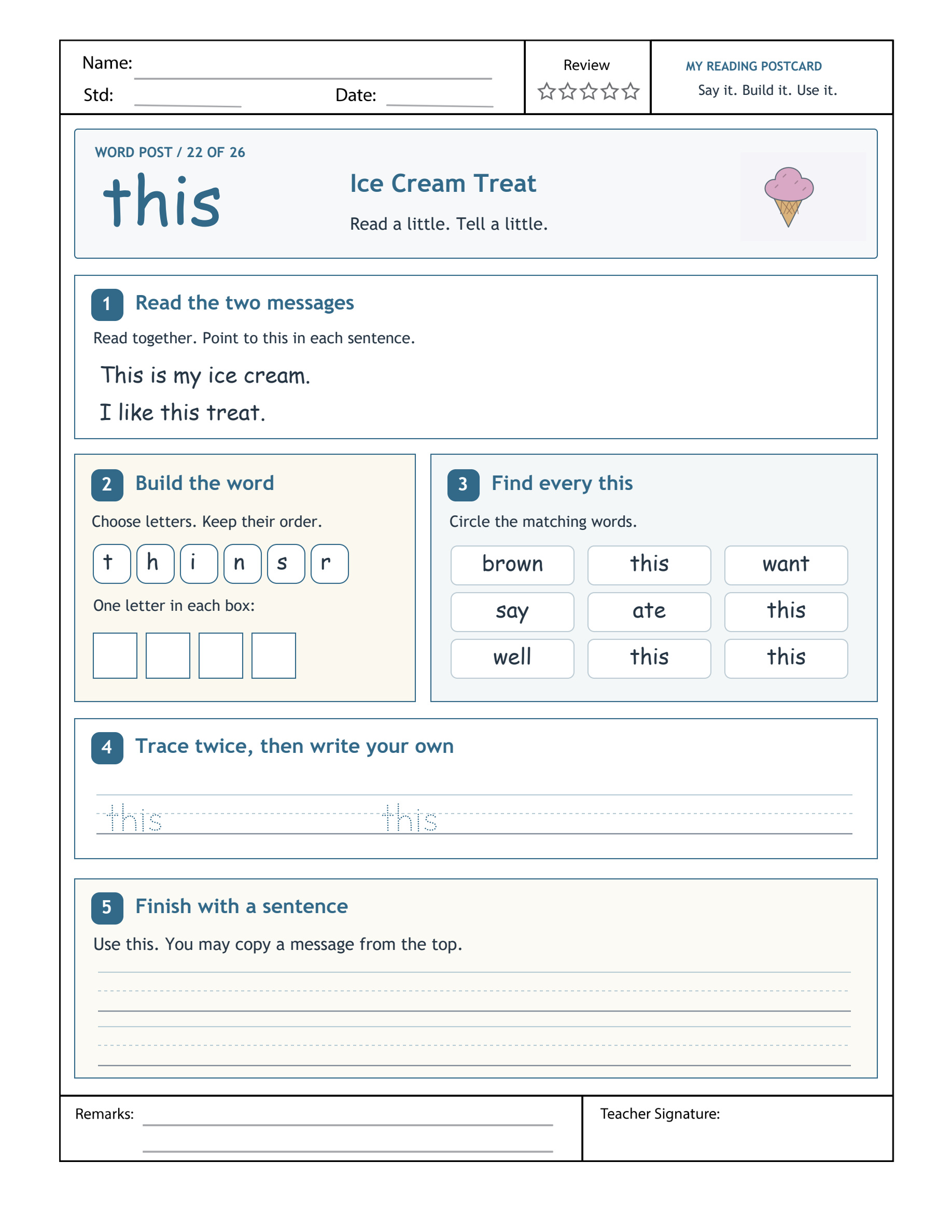
The full this sheet retains its US Letter frame.
Identify a nearby ice-cream treat with a pointing word. The complete redesigned page appears without cropping.
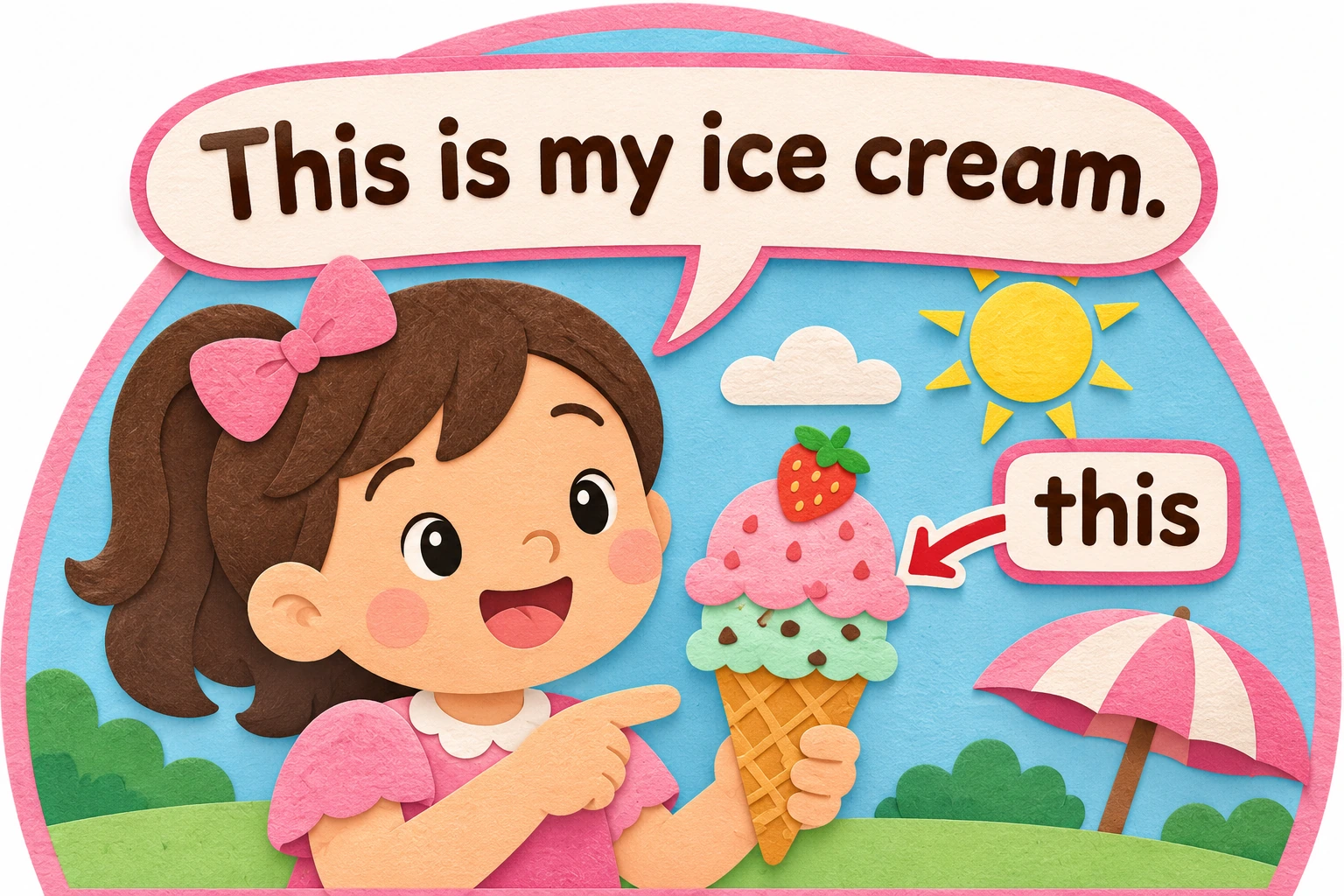
Cleo holds a pretend ice-cream cone nearby and identifies it for a listener. The word this makes that particular treat the subject of the message. This Sight Word practice connects the pointing reference with two complete sentences, a four-letter bank task, matching and handwriting. Children can establish the intended object before inspecting its printed word. Identification leads the clean ice-cream layout; t-h-i-s is examined after the particular object is established. Use a pretend cone or picture to establish the reference, then support unfamiliar ice-cream vocabulary before a comfortable writing attempt.
Make the intended treat clear
Introduce a speaker holding a pretend cone or pointing to a nearby ice-cream picture. Read “This is my ice cream.” The listener should know which item this identifies. A clear gesture and a shared view supply that reference in the example.
The other source statement, “I like this treat,” concerns the same established item. Explain that treat refers to the ice cream already introduced. The speaker expresses a preference in that line, while the first message identifies something as belonging to the speaker.
The word is not another name for ice cream. A child can identify this book or this toy in a different conversation. Start with a clear nearby object, then extend the use when the learner understands how the speaker selects a particular item for the listener.
This Sight Word reading joins identification and preference
Share the two messages with an announced speaker. Ask which item is being identified and what the second line tells us about it. An adult can read ice cream or treat while the learner tracks this and explains the reference.

Capital This begins the identification sentence. Lowercase this appears later in the preference sentence and in the large word model. Connect T with t explicitly so the changed letter form does not hide the familiar target.
If several objects are visible, make the gesture or context specific enough to identify the intended one. An ambiguous adult point can cause confusion that has nothing to do with reading ability. Clarify the reference before asking for a more independent print response.
Four positions chosen from six letters
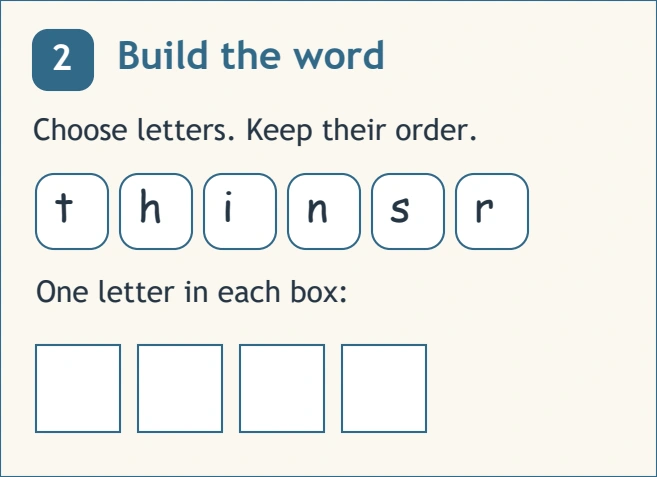
The bank contains t, h, i, n, s and r. Select t-h-i-s for the four boxes, leaving n and r unused. The first three target letters appear together in the bank, but s must still be selected from its later position. Compare the completed sequence with the large model.
Read this naturally. The th opening represents a joined sound in this word; naming t and h for spelling should not force two separate beginning sounds into the completed spoken form. A familiar sentence keeps the pronunciation and meaning available while the letters are inspected.
A learner who writes t-h-i-n may have copied the first four bank choices rather than built the target. Point to the final model letter and let the child revise the selection. This is a useful distinction between following display order and making an evidence-based choice.
Search the complete spelling in nine cells
The search rows read brown, this, want; say, ate, this; well, this, this. Adult this key: 2, 6, 8, 9.
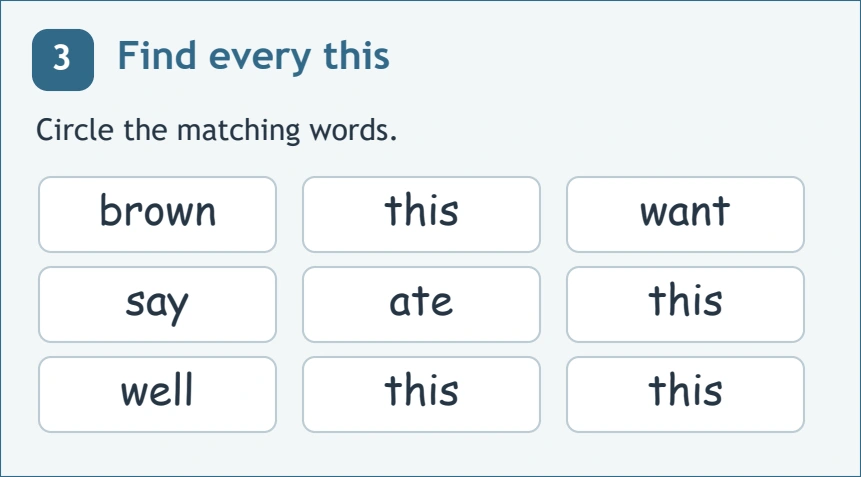
Each candidate needs the complete t-h-i-s comparison. Want includes t but is a different sequence, and ate shares familiar letters without becoming a match. A single recognised component is an observation, not yet a reason to circle the whole cell.
The final two entries both qualify. Inspect them independently rather than stopping after one nearby match. A place-keeping counter can help maintain a row route. Ask for one explanation using actual letters to learn how the child made the decision.
Trace the target before recording a message
The dotted this pair finishes with s, not the bank's n; keep that ending in the untraced copy. The remaining guide supports a separate attempt with the model visible. The tall t and h and smaller i and s may need individual demonstrations according to the learner's pencil experience.

For this, a copied identification message is an accepted writing response. For an original idea, introduce the object and rehearse the complete message orally first. An adult may help record the object description after the learner has made this refer to one clearly indicated item. The listener or reader should have enough context to identify the intended item.
The clean ice-cream page establishes its particular-object messages first. A t-h-i-s workshop stands beside the search, with dotted copies and the sentence finish following. The original sample starts with tracing. The redesign keeps all five activities and the same established frame at US Letter size.
Six observations from a pointing-reference lesson
- A particular item is selected: the learner can identify what the speaker means by this in the established scene.
- A reference continues: treat in the second line is connected with the ice cream already introduced.
- Two messages differ: identifying an item and expressing a preference are heard as different purposes.
- A case connection is made: This at the opening is linked with the lowercase model.
- A selection is deliberate: s is chosen instead of copying the bank's first four letters.
- A written idea is understandable: the final sentence supplies a clear reference for its reader.
Record whether the intended cone is clear and whether s replaces the bank's n in the final box. Reference and ordered selection call for different prompts.
Cleo's possible home identification game
A family member might introduce a toy character with a pretend cone and read the first source sentence from that character's point of view. Cleo identifies the item. The adult then reads the preference statement while keeping the same speaker and object established.
They locate this in both printed lines and select t-h-i-s from the bank. Cleo inspects a search row, then makes a short pencil contribution if comfortable. The adult can preserve the sentence area for a later visit rather than requiring every station immediately.
To finish, Cleo uses a different familiar toy in a new this message. A listener must be able to identify the item from the shared context.
Classroom possibility: a clear show-and-tell turn
At a small-group station, a learner holds or indicates a familiar object and offers a short identification message. The teacher establishes who is speaking before I or my appears. Partners identify the intended object and ask for clarification when the pointing reference is unclear.
Return to the source ice-cream statements and compare their purposes. The adult can voice the cone message while the reader locates this or identifies the item called treat. Different learners may contribute through speaking, pointing, letter selection or writing.
During bank work, notice whether s is deliberately selected. A child who copies t-h-i-n needs a final-position comparison, while a child who cannot identify the object needs better shared context. Respond to the specific issue rather than assuming both call for more tracing.
A guide for the next prompt
| Observed response | An identification-lesson adjustment | Recheck |
|---|---|---|
| Points to a different item | Clarify the speaker's gesture and shared view. | The intended reference. |
| Uses this only as an ice-cream label | Identify a familiar book or toy with a new message. | The word's transferable purpose. |
| Builds t-h-i-n | Inspect the final s in the model. | A complete t-h-i-s sequence. |
| Recognises the target but tires copying | Accept dictation and one short written attempt. | A manageable contribution. |
Five extensions for making a reference clear
1. Create a show-and-tell message with a familiar object. A listener identifies the intended item before the target is found in print.
2. Prepare completed this and that word cards. Compare the shared th opening and the different i-s and a-t endings, without claiming that the second word appears in this worksheet's grid.
3. Ask a puppet to choose the first four bank letters for this, then compare its answer with t-h-i-s. Repair the final position using the model.
4. Dictate a caption for a character holding a particular item. Establish the speaker and object before the adult supplies unfamiliar spellings.
5. Place two pictures in view and read a completed identification message with a clear gesture. Discuss whether the listener can tell which one is meant.
Readiness, common mistakes and another visit
An identification visit near ages 4–6 should first make the intended cone clear, then add only the amount of t-h-i-s writing the learner can manage. Understanding a pointing reference may precede independent sentence reading. Pencil quantity should reflect actual letter formation and stamina, with the target model kept available when needed.
Avoid vague gestures, treating the picture as the only cue or accepting the bank's display order without comparison. A child can make a sensible object choice while still needing help with the printed spelling. Notice when the listener identifies the same treat across both messages, or when the writer checks the closing s.
For regular review, use a different familiar object in a brief completed message. The early-word starter reading collection offers other language visits. The discovery pack for pencil preparation can support motor needs, while the eat reading resource page provides another familiar action to explore separately.
Adults can adapt everyday activity ideas from PBS Parents' learning pages or play contexts from NAEYC's family play guidance. Select a setting where a listener has a reason to understand the child's reference.
Download the ice-cream identification worksheet
The free ice-cream sample preserves the supplied activity route. A member with eligible access can obtain the clean ice-cream PDF, where identification opens before the remaining four practice stations. Website domain lettering, watermarks and advertising are removed from that clean worksheet. Choose the edition before establishing the speaker and the particular object being identified.
Inspect one full US Letter ice-cream print for an intact frame and all four dotted letters. A pencil is sufficient, with a picture prop optional. The $5 collection linked here contains the twenty-six clean primer lessons together in their supplied order, allowing another useful sentence job to follow once the listener can tell what this identifies.
Popular Worksheets
Printable resources families and teachers are downloading now.
 Free
 Free
 Free
 Free