
Closet Symbol Trails: 5 Delightful Sock-and-Boot Routes
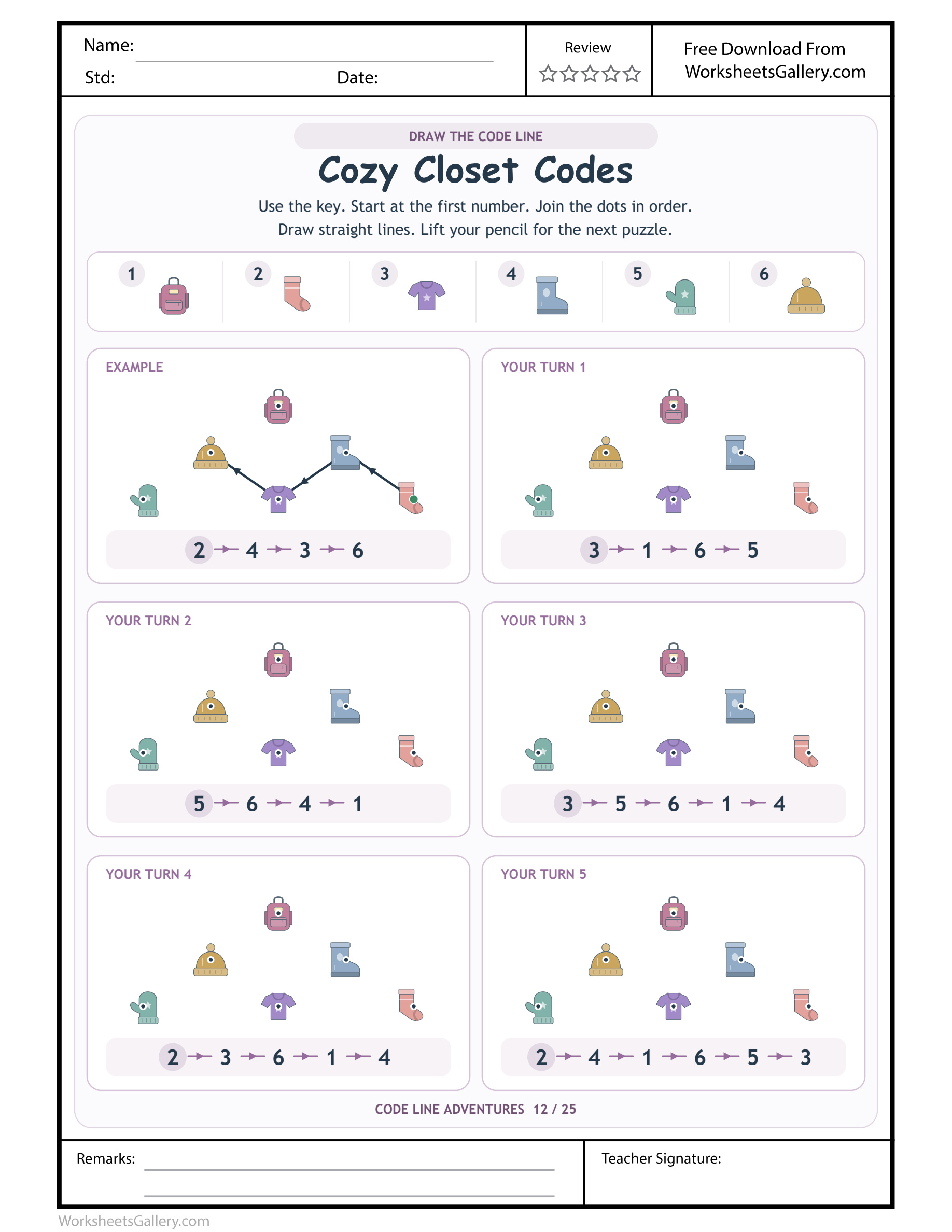
The wardrobe routes travel with the $3 full collection. All 25 clean sheets share one PDF, so a short clothing-picture journey can be followed on another day by a different object or patterned-shape key.
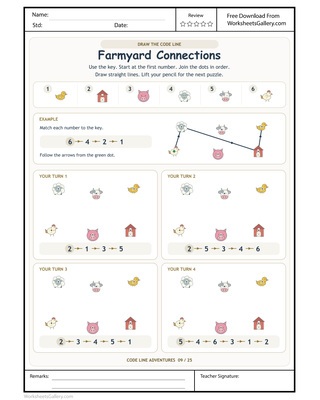
Before the first line, there are two places to find. Closet Symbol Trails turns a familiar collection of clothing and accessories into five small route puzzles, each interpreted through a numbered picture legend. Children locate the first requested symbol, check the second and only then move the pencil between their centre dots. A finished example shows the method. Backpack, sock, shirt, boot, mitten and hat offer friendly names for the journey, while the initial pair gives a young learner a manageable starting decision instead of a whole strip to remember at once.
Two looked-up stops make one first stroke — Closet Symbol Trails
For Closet Symbol Trails, finding a starting picture is only half the preparation for a line. The next numeral tells the child where the pencil should go. Invite them to show both destinations with a fingertip while the pencil waits. Once that pair is clear, a straight centre-to-centre movement has a visible beginning and goal.
The first Closet Symbol Trails practice code begins with shirt and backpack. It does not begin with the sock that starts the worked example. Read this panel's first pair before borrowing a remembered start. An adult can read the numerals aloud, leaving the child responsible for matching the symbols.
A comfortable place in the morning routine
Children around four to seven can explore Closet Symbol Trails with support suited to their number knowledge and hand comfort. Familiar clothing names may make the pictures easy to discuss, but a child still needs time to understand how the numeral assignment works. Naming a boot alone does not establish which number selects it.
At home, prepare Closet Symbol Trails on a stable surface, with the upper key uncovered. Follow the example's existing arrows, then choose one practice box. Point to the initial pair, draw it and inspect the next numeral. Let a partly completed page wait if attention fades; a brief accurate beginning can be enough practice.
Closet Symbol Trails legend at a glance
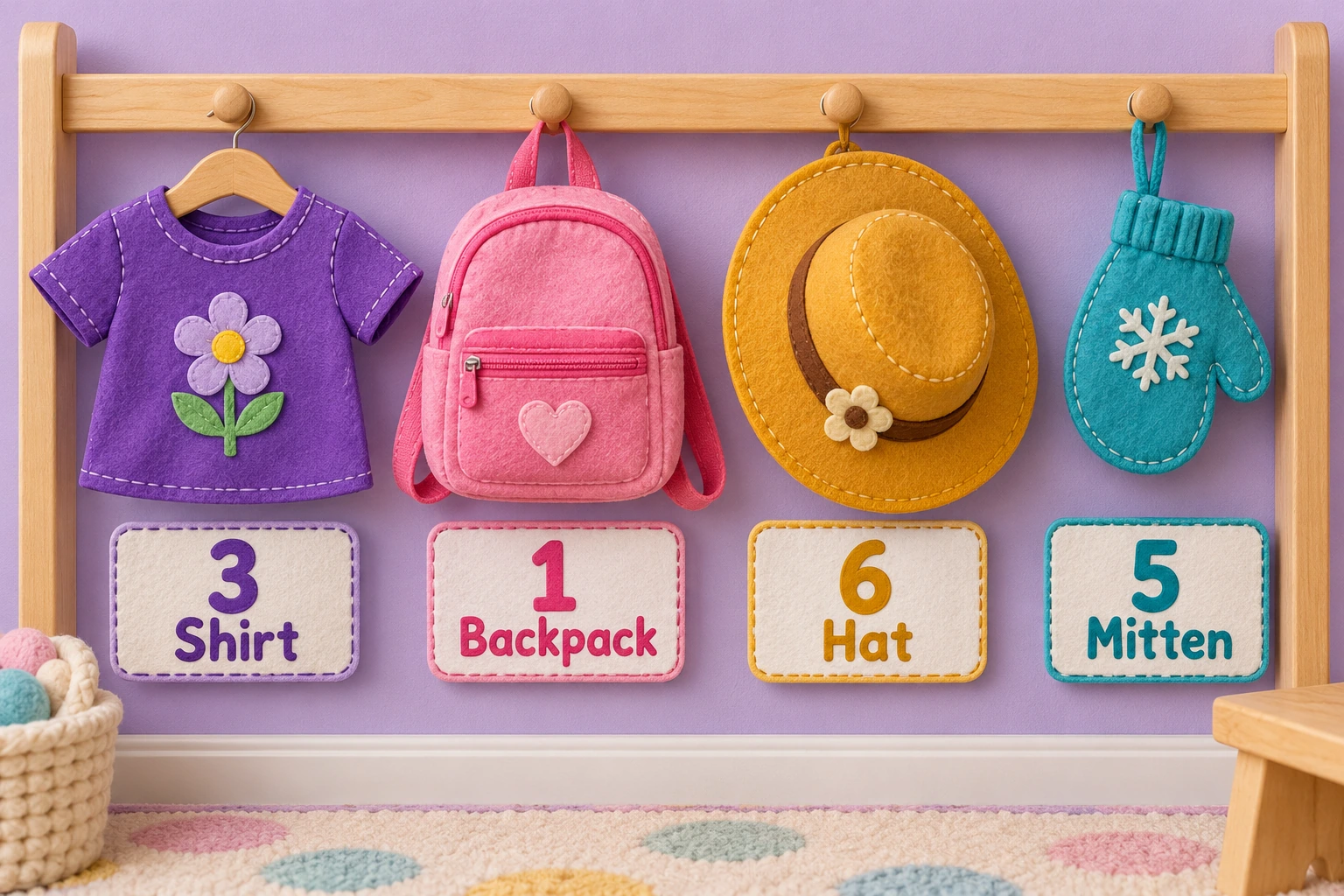
| Cozy Closet Codes numeral | Keyed picture |
|---|---|
| 1 | backpack |
| 2 | sock |
| 3 | shirt |
| 4 | boot |
| 5 | mitten |
| 6 | hat |

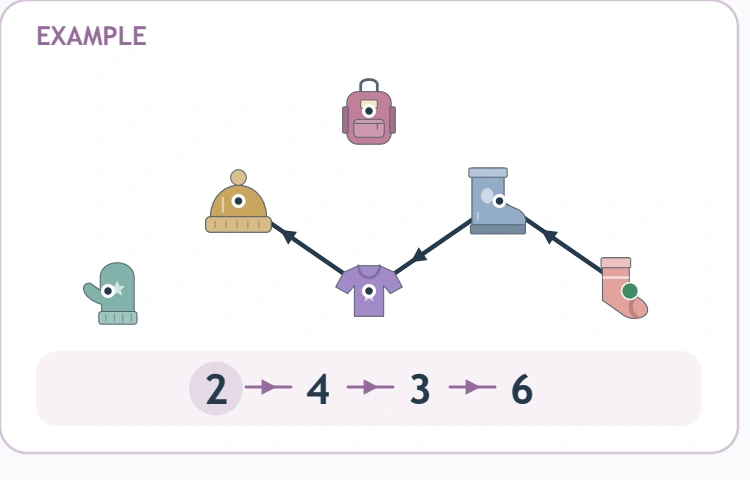
Cozy Closet Codes example before independent drawing
Cozy Closet Codes demonstrates 2 → 4 → 3 → 6. The Cozy Closet Codes itinerary is sock → boot → shirt → hat. In Cozy Closet Codes, the green start selects sock. Cozy Closet Codes arrows lead to hat. Cozy Closet Codes has 3 worked segments. The Closet Symbol Trails example supports finger rehearsal. Inspect the Cozy Closet Codes practice strip separately.
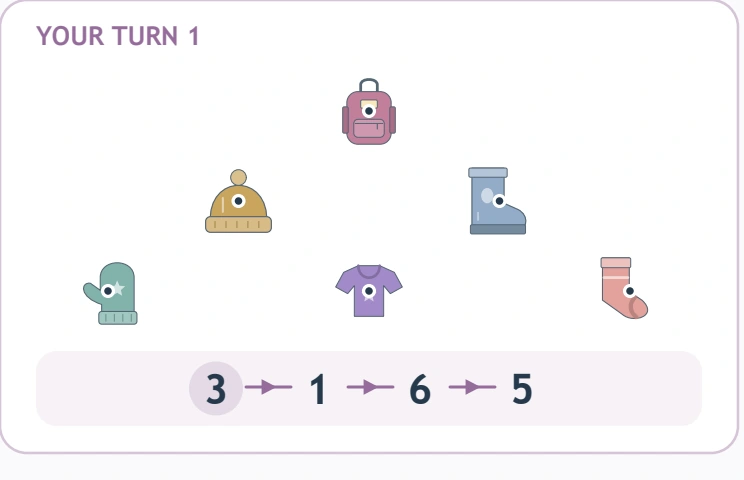
Cozy Closet Codes — practice 1
Practice 1 on Cozy Closet Codes: 3 → 1 → 6 → 5. Translate those Closet Symbol Trails destinations as shirt → backpack → hat → mitten. Begin on shirt for Cozy Closet Codes; next locate backpack. The Cozy Closet Codes centre-to-centre connections are shirt onward to backpack; backpack onward to hat; hat onward to mitten. Segment count for Closet Symbol Trails: 3, from 4 listed stops. The Cozy Closet Codes endpoint is mitten. Against the Cozy Closet Codes strip, verify final 5.
Closet Symbol Trails leaves sock, boot outside practice 1. Leave these Cozy Closet Codes alternatives unvisited. Practice 1 for Cozy Closet Codes requests 3 → 1 → 6 → 5.
Cozy Closet Codes — practice 2
Practice 2 on Cozy Closet Codes: 5 → 6 → 4 → 1. Translate those Closet Symbol Trails destinations as mitten → hat → boot → backpack. Begin on mitten for Cozy Closet Codes; next locate hat. The Cozy Closet Codes centre-to-centre connections are mitten onward to hat; hat onward to boot; boot onward to backpack. Segment count for Closet Symbol Trails: 3, from 4 listed stops. The Cozy Closet Codes endpoint is backpack. Against the Cozy Closet Codes strip, verify final 1.
Closet Symbol Trails leaves sock, shirt outside practice 2. Leave these Cozy Closet Codes alternatives unvisited. Practice 2 for Cozy Closet Codes requests 5 → 6 → 4 → 1.
Cozy Closet Codes — practice 3
Practice 3 on Cozy Closet Codes: 3 → 5 → 6 → 1 → 4. Translate those Closet Symbol Trails destinations as shirt → mitten → hat → backpack → boot. Begin on shirt for Cozy Closet Codes; next locate mitten. The Cozy Closet Codes centre-to-centre connections are shirt onward to mitten; mitten onward to hat; hat onward to backpack; backpack onward to boot. Segment count for Closet Symbol Trails: 4, from 5 listed stops. The Cozy Closet Codes endpoint is boot. Against the Cozy Closet Codes strip, verify final 4.
Closet Symbol Trails leaves sock outside practice 3. Leave these Cozy Closet Codes alternatives unvisited. Practice 3 for Cozy Closet Codes requests 3 → 5 → 6 → 1 → 4.
Cozy Closet Codes — practice 4
Practice 4 on Cozy Closet Codes: 2 → 3 → 6 → 1 → 4. Translate those Closet Symbol Trails destinations as sock → shirt → hat → backpack → boot. Begin on sock for Cozy Closet Codes; next locate shirt. The Cozy Closet Codes centre-to-centre connections are sock onward to shirt; shirt onward to hat; hat onward to backpack; backpack onward to boot. Segment count for Closet Symbol Trails: 4, from 5 listed stops. The Cozy Closet Codes endpoint is boot. Against the Cozy Closet Codes strip, verify final 4.
Closet Symbol Trails leaves mitten outside practice 4. Leave these Cozy Closet Codes alternatives unvisited. Practice 4 for Cozy Closet Codes requests 2 → 3 → 6 → 1 → 4.
Cozy Closet Codes — practice 5
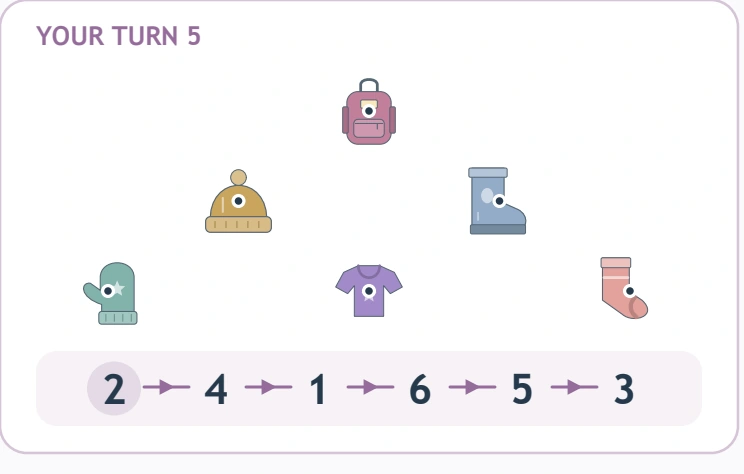
Practice 5 on Cozy Closet Codes: 2 → 4 → 1 → 6 → 5 → 3. Translate those Closet Symbol Trails destinations as sock → boot → backpack → hat → mitten → shirt. Begin on sock for Cozy Closet Codes; next locate boot. The Cozy Closet Codes centre-to-centre connections are sock onward to boot; boot onward to backpack; backpack onward to hat; hat onward to mitten; mitten onward to shirt. Segment count for Closet Symbol Trails: 5, from 6 listed stops. The Cozy Closet Codes endpoint is shirt. Against the Cozy Closet Codes strip, verify final 3.
Cozy Closet Codes uses every Closet Symbol Trails entry in practice 5 of Cozy Closet Codes: 2 → 4 → 1 → 6 → 5 → 3. First Cozy Closet Codes selection: sock; final selection: shirt.
Six observations from a well-prepared beginning
The child checks before acting
A pause during Closet Symbol Trails can show useful planning. Notice whether the child locates both intended centres before the pencil moves. A rushed start is not more independent simply because it happens without a question or reference check.
A familiar word serves a new role
The sock in Closet Symbol Trails is a destination selected by two, rather than an item to count or colour. Discuss that role with a direct point to the key. Adults can add a precise object word while accepting a recognisable home-language name.
A pair reduces memory demand
Working in adjacent pairs keeps Closet Symbol Trails manageable. The child can read the present and following numeral, draw their link, then advance. There is no need to recite the entire strip from memory before showing an understanding of its order.
The eyes give the hand a target
Each Closet Symbol Trails line aims at a little centre inside a picture. Encourage a comfortable grip and controlled arrival. A slightly uneven stroke may preserve the correct route, so separate symbol-selection feedback from comments about drawing quality.
A new field receives a fresh start
Five Closet Symbol Trails boxes carry five separate instructions. Lifting between them prevents a completed route from flowing into another field. Ask the child to inspect the next pair even if a familiar clothing picture appears at both transitions.
A correction can stay local
If a Closet Symbol Trails line joins shirt to hat too early, compare that pair with the relevant numerals. Repair the mismatch rather than restarting all five panels. A child who notices the disagreement has already used an important checking strategy.
Luca's imagined getting-ready table
Imagine Luca trying Closet Symbol Trails after putting away a coat. He locates shirt from the first practice code but begins drawing without checking the next numeral. His caregiver asks where the line is meant to land. Luca consults the legend, finds backpack and rehearses the connection with a fingertip.
They try that Closet Symbol Trails stroke once, then decide together whether to continue. The caregiver praises the named destination, not a perfect line. Luca can explain another pair without drawing it if his hand is tired, keeping the thinking part available without requiring more small movements.
A classroom wardrobe guide, imagined
Picture a teacher using Closet Symbol Trails at a small-group station. Children show the first two destinations silently before discussing them. This allows a child with brief spoken language to participate fully. The teacher models a short explanation linking numeral and picture, then lets each child make a line on their own copy.
During Closet Symbol Trails, the teacher watches for different needs: numeral reading, symbol identification or movement planning. She supplies only the needed support. Partners compare one pair after drawing, with no race to finish the five boxes and no expectation that everyone use the same amount of paper time.
Four wardrobe games for later
Pack a two-item pretend bag
Use large labelled clothing cards inspired by Closet Symbol Trails. Name two items in order and let a toy pack them. Then swap roles. The short request rehearses preparing an initial pair without adding a new written worksheet or requiring real clothing to be moved around the drawing space.
Give one object a useful clue
Describe a Closet Symbol Trails picture through visible features, such as the sock's shape or the hat's top. A partner identifies its key entry. Compare a broad clue like clothing with a more specific description, keeping the focus on information that singles out one symbol.
Let a puppet start too quickly
A puppet points to a Closet Symbol Trails starting symbol and pretends to draw before choosing a destination. The child can ask the helpful question: where next? Use the current strip to answer, giving the pause a playful purpose rather than calling it a rule to obey.
Retell the first connection as a tiny errand
Choose a completed Closet Symbol Trails pair and invent why a traveller moved between those two pictured items. Keep the sequence intact while the story grows around it. The child can narrate in a phrase, point through the drawing or invite the adult to supply the words.
Keep the pause helpful, not demanding
Common Closet Symbol Trails mistakes include drawing from a favourite item, carrying over the example's start or visiting every picture despite a shorter code. Review the initial pair with the legend. If the child has selected correctly, encourage the motion rather than repeating a full explanation of all six entries.
Return to Closet Symbol Trails through small invitations around a story or a quiet getting-ready game. Let one panel be enough. Knowing where the pencil will land is a meaningful achievement. A calm stopping point, a choice of pencil and permission to request a clue can keep regular practice inviting.
Download the clothing-code printable
Select the original sample of Closet Symbol Trails, or obtain the cleaned Cozy Closet Codes edition after signing in with qualifying active membership access. Its printable PDF has no website domain, no ads and no watermark. The twenty-five-sheet collection is separately offered for $3 if you want the full range in one download.
Save Closet Symbol Trails, inspect portrait printing and preserve the full page frame and top legend. Clear colour helps distinguish its small clothing symbols. Use a single test copy to confirm your printer's margins, adjusting fit only if an edge is being clipped.
Follow a different reference another day
Compare Closet Symbol Trails with Exact Path Detective. After Cozy Closet Codes, try Castle Color Codes. For Cozy Closet Codes, consider Number Letter Switching.
For activities accompanying Closet Symbol Trails, explore NAEYC's family-focused learning pages or PBS Parents' suggestions for play. Adults can choose related conversation or movement while returning to this worksheet's current numeral strip for the actual drawn itinerary.
Popular Worksheets
Printable resources families and teachers are downloading now.
 Free
 Free
 Free
 Free