
Seashell Shape Cipher: 4 Brilliant Geometric Routes
These geometric seaside signs belong to the $3 full set. The clean 25-page collection retains the actual diamond, hexagon and other shape entries on this sheet, plus the other supplied picture-key themes.
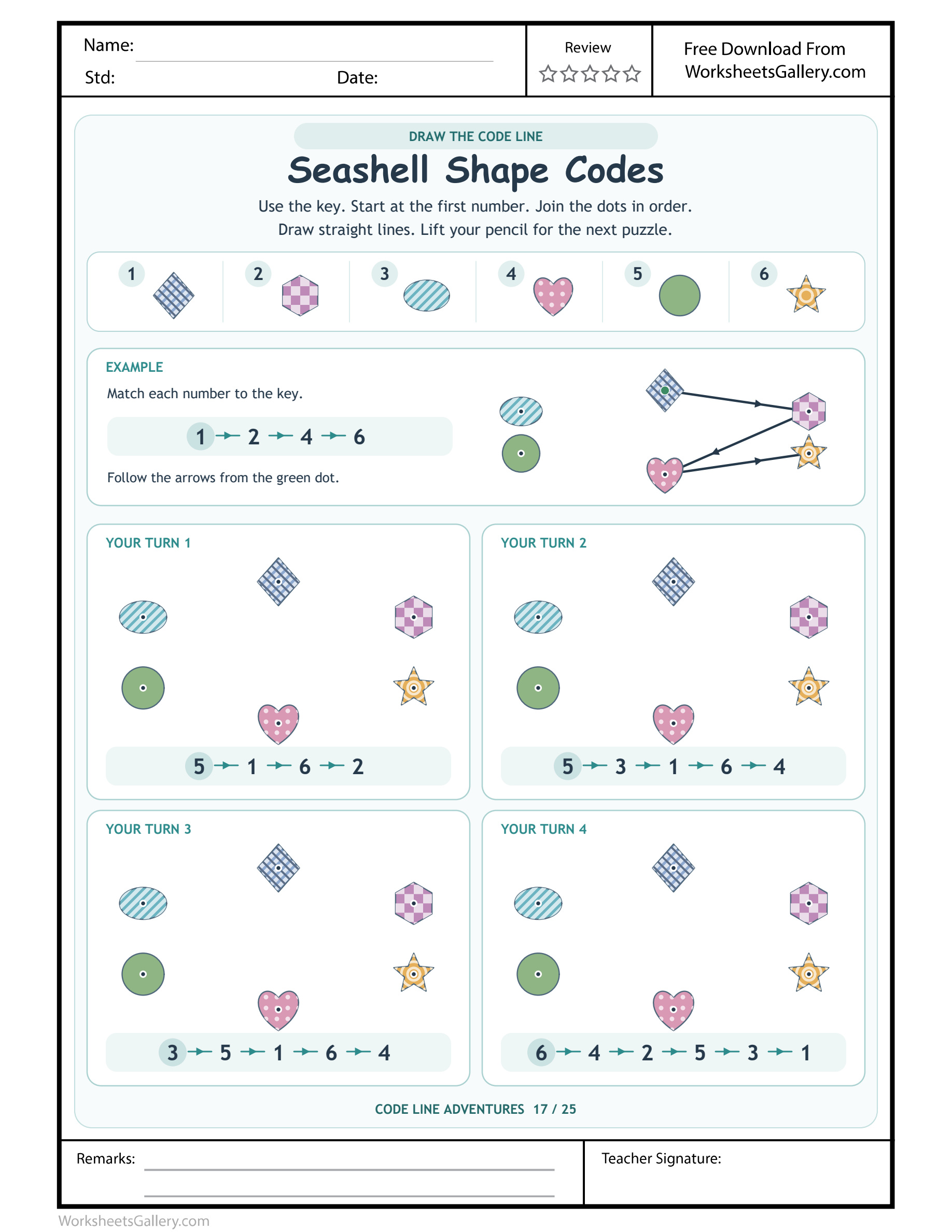
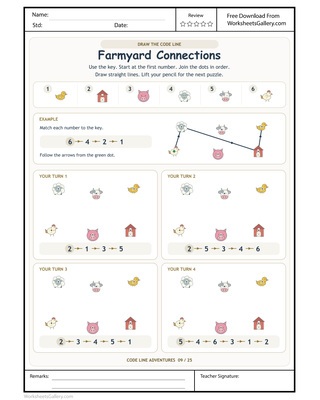
The title suggests a seaside outing, but the key contains patterned geometry. Seashell Shape Cipher uses a diamond, hexagon, oval, heart, circle and star as six numbered destinations, with four practice routes beneath a wide example. Children inspect both outlines and interior details, translate the printed numeral strip and join the requested centre dots. Naming what is actually visible makes the activity clearer than expecting shell pictures that are not there. The seaside theme can frame a story while the supplied shapes, their legend assignments and the current code decide each drawn connection.
Inspect the pictures rather than guessing from a title — Seashell Shape Cipher
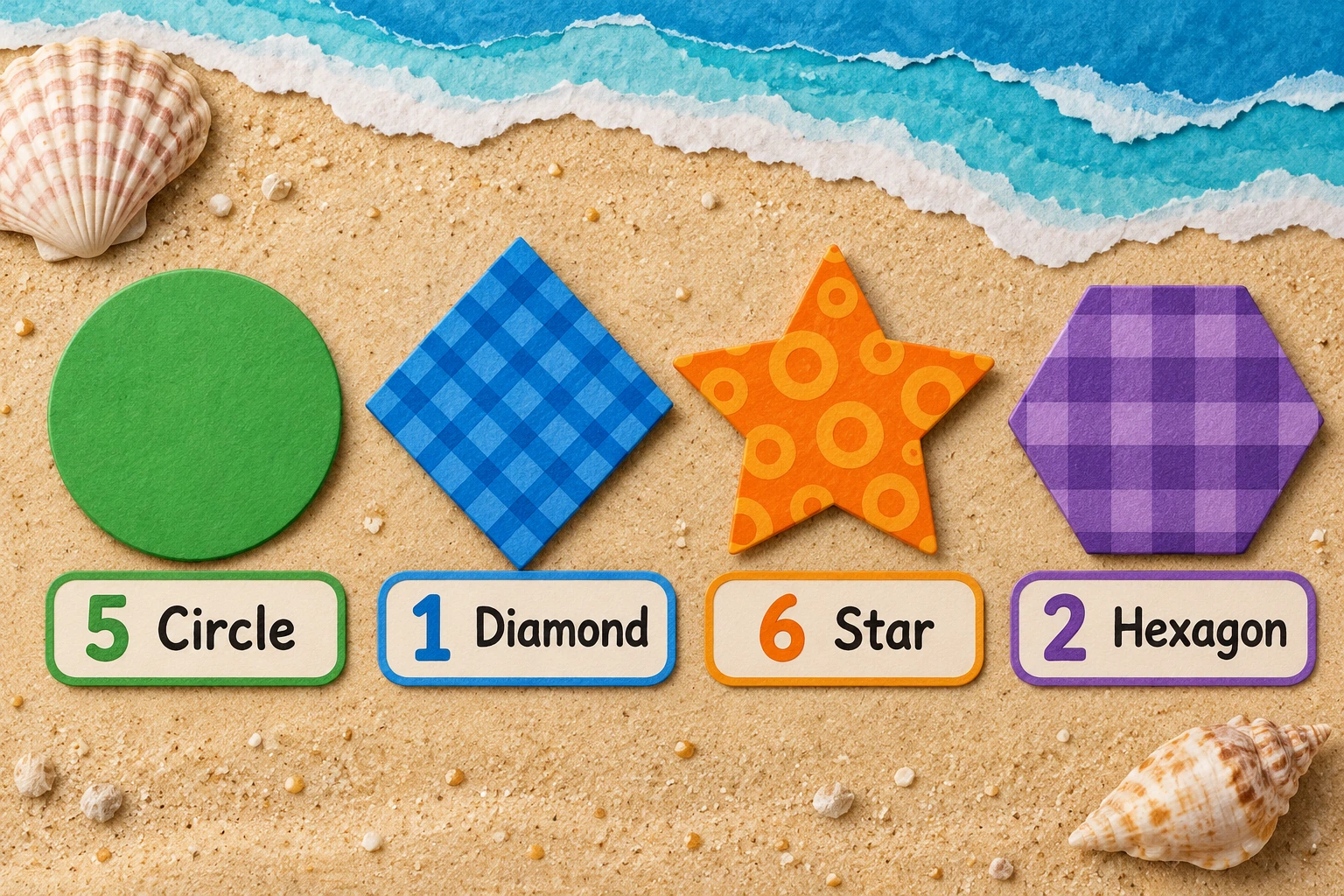
On Seashell Shape Cipher, the diamond contains crossing lines, the hexagon has checks, the oval has stripes, the heart has dots and the star has rings. The circle is plain. Describe those visible features together, using a child's own words before adding more precise shape or pattern vocabulary.
The Seashell Shape Cipher task is still an ordered drawing exercise. It does not ask children to classify shells, continue a decorative series or colour every shape. Use the six geometric entries printed in this key. A clear legend lookup is more useful than making the pictures fit an expected seaside category.
Seashell Shape Cipher legend at a glance
| Seashell Shape Codes numeral | Keyed picture |
|---|---|
| 1 | diamond (cross) |
| 2 | hexagon (checker) |
| 3 | oval (stripes) |
| 4 | heart (dots) |
| 5 | circle |
| 6 | star (rings) |

Seashell Shape Cipher example before independent drawing
Seashell Shape Codes demonstrates 1 → 2 → 4 → 6. The Seashell Shape Codes itinerary is diamond (cross) → hexagon (checker) → heart (dots) → star (rings). In Seashell Shape Codes, the green start selects diamond (cross). Seashell Shape Codes arrows lead to star (rings). Seashell Shape Codes has 3 worked segments. The Seashell Shape Cipher example supports finger rehearsal. Inspect the Seashell Shape Codes practice strip separately.
Seashell Shape Cipher — practice 1
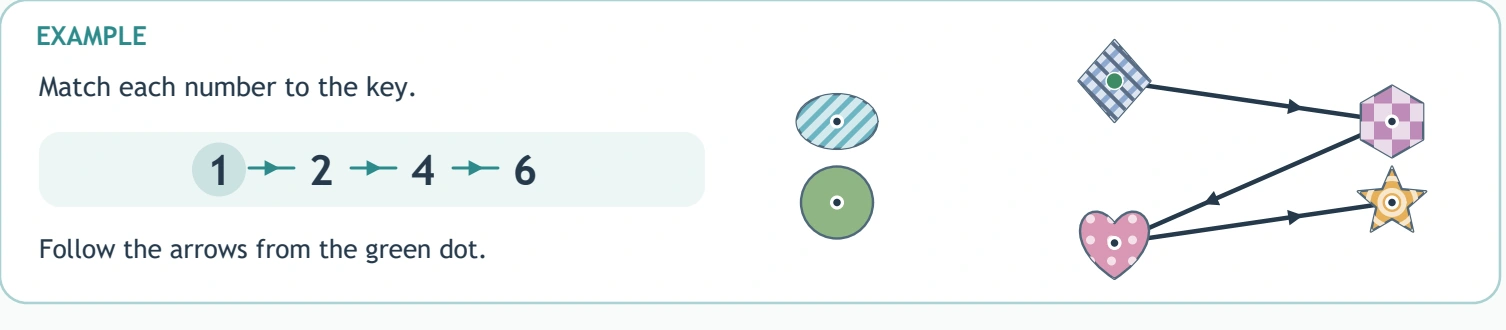
Practice 1 on Seashell Shape Codes: 5 → 1 → 6 → 2. Translate those Seashell Shape Cipher destinations as circle → diamond (cross) → star (rings) → hexagon (checker). Begin on circle for Seashell Shape Codes; next locate diamond (cross). The Seashell Shape Codes centre-to-centre connections are circle onward to diamond (cross); diamond (cross) onward to star (rings); star (rings) onward to hexagon (checker). Segment count for Seashell Shape Cipher: 3, from 4 listed stops. The Seashell Shape Codes endpoint is hexagon (checker). Against the Seashell Shape Codes strip, verify final 2.
Seashell Shape Cipher leaves oval (stripes), heart (dots) outside practice 1. Leave these Seashell Shape Codes alternatives unvisited. Practice 1 for Seashell Shape Codes requests 5 → 1 → 6 → 2.
Seashell Shape Codes — practice 2
Practice 2 on Seashell Shape Codes: 5 → 3 → 1 → 6 → 4. Translate those Seashell Shape Cipher destinations as circle → oval (stripes) → diamond (cross) → star (rings) → heart (dots). Begin on circle for Seashell Shape Codes; next locate oval (stripes). The Seashell Shape Codes centre-to-centre connections are circle onward to oval (stripes); oval (stripes) onward to diamond (cross); diamond (cross) onward to star (rings); star (rings) onward to heart (dots). Segment count for Seashell Shape Cipher: 4, from 5 listed stops. The Seashell Shape Codes endpoint is heart (dots). Against the Seashell Shape Codes strip, verify final 4.
Seashell Shape Cipher leaves hexagon (checker) outside practice 2. Leave these Seashell Shape Codes alternatives unvisited. Practice 2 for Seashell Shape Codes requests 5 → 3 → 1 → 6 → 4.
Seashell Shape Codes — practice 3
Practice 3 on Seashell Shape Codes: 3 → 5 → 1 → 6 → 4. Translate those Seashell Shape Cipher destinations as oval (stripes) → circle → diamond (cross) → star (rings) → heart (dots). Begin on oval (stripes) for Seashell Shape Codes; next locate circle. The Seashell Shape Codes centre-to-centre connections are oval (stripes) onward to circle; circle onward to diamond (cross); diamond (cross) onward to star (rings); star (rings) onward to heart (dots). Segment count for Seashell Shape Cipher: 4, from 5 listed stops. The Seashell Shape Codes endpoint is heart (dots). Against the Seashell Shape Codes strip, verify final 4.
Seashell Shape Cipher leaves hexagon (checker) outside practice 3. Leave these Seashell Shape Codes alternatives unvisited. Practice 3 for Seashell Shape Codes requests 3 → 5 → 1 → 6 → 4.
Seashell Shape Codes — practice 4
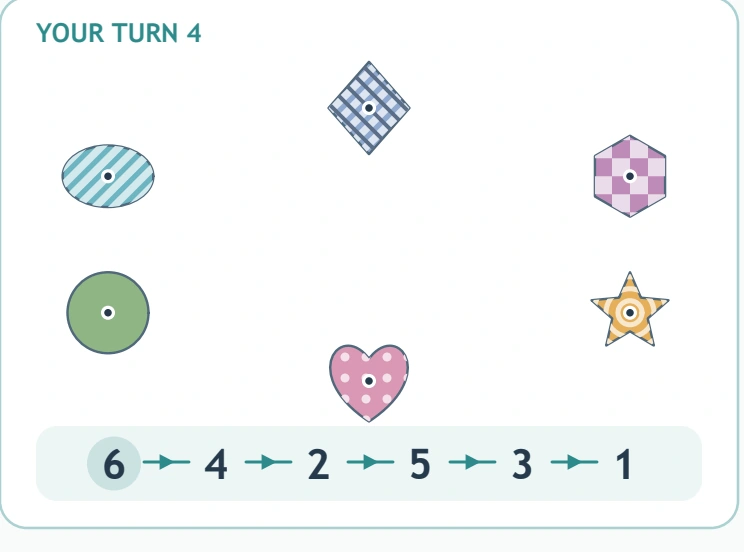
Practice 4 on Seashell Shape Codes: 6 → 4 → 2 → 5 → 3 → 1. Translate those Seashell Shape Cipher destinations as star (rings) → heart (dots) → hexagon (checker) → circle → oval (stripes) → diamond (cross). Begin on star (rings) for Seashell Shape Codes; next locate heart (dots). The Seashell Shape Codes centre-to-centre connections are star (rings) onward to heart (dots); heart (dots) onward to hexagon (checker); hexagon (checker) onward to circle; circle onward to oval (stripes); oval (stripes) onward to diamond (cross). Segment count for Seashell Shape Cipher: 5, from 6 listed stops. The Seashell Shape Codes endpoint is diamond (cross). Against the Seashell Shape Codes strip, verify final 1.
Seashell Shape Codes uses every Seashell Shape Cipher entry in practice 4 of Seashell Shape Codes: 6 → 4 → 2 → 5 → 3 → 1. First Seashell Shape Codes selection: star (rings); final selection: diamond (cross).
Six helpful outcomes from looking twice
Two features can confirm one symbol
During Seashell Shape Cipher, an outline and its interior can both identify an entry. A child may find the heart by shape and confirm it through dots. That paired comparison makes a choice more explicit without requiring formal geometry language.
A title and an instruction have different roles
The seaside name frames Seashell Shape Cipher, while the legend specifies the actual destinations. Discussing that distinction encourages looking at the provided evidence. A child can enjoy a beach story without adding shell symbols to the printed code.
A numeral supplies a reference label
Six identifies the ringed star in Seashell Shape Cipher. The child can consult that assignment whenever needed, even if another shape is closer to the pencil. An adult can read the numeral while leaving the picture match to the learner.
An itinerary preserves order
The same Seashell Shape Cipher shapes can be visited differently across panels. Naming the first pair before drawing helps keep the new route distinct from the model. A tracking finger supports the next decision without demanding full-strip memorisation.
A small centre guides the hand
The intended Seashell Shape Cipher line lands inside each figure. Looking ahead to that target supports deliberate pencil control. A slightly wobbly stroke can communicate the correct itinerary, so acknowledge the chosen symbols separately from the smoothness of the mark.
A correction can refer to a visible detail
If a Seashell Shape Cipher route selects the wrong figure, compare the requested entry with the chosen one. A pattern or outline difference can explain the mismatch. Repair that local pair before considering whether the rest of the route needs attention.
Rina's imagined seaside-table discovery
Imagine Rina opening Seashell Shape Cipher at home and asking where the shells are. Her caregiver points to the actual legend and names the patterned shapes with her. They decide that the shapes can be seaside signposts in a pretend story, while agreeing that the numeral strip chooses which signpost comes next.
Rina follows one Seashell Shape Cipher route with a finger before drawing. When she forgets hexagon, she calls it the checked shape and points correctly. The adult accepts that description and adds the shape name, allowing a useful vocabulary exchange without interrupting the route decision.
Set up for a clear first comparison
Children roughly four to seven may enjoy Seashell Shape Cipher with support adjusted to number recognition, shape vocabulary and drawing comfort. Read numeral names aloud when needed. A child can demonstrate a correct symbol match by pointing before being ready to make several precise centre-to-centre strokes.
Use Seashell Shape Cipher on a stable surface, keeping the legend visible. Finger-follow the example, choose a practice box and identify its initial pair. Draw one connection at a time, checking the code between movements. Keep other panels for later when attention or hand endurance suggests a shorter session.
A classroom shape-signpost discussion, imagined
Picture a teacher presenting Seashell Shape Cipher to a small group. Children describe a figure without naming its colour, then find its legend numeral. The teacher accepts terms such as spotty heart and supplies dotted as another option. They inspect the real pictures rather than listing sea creatures absent from the page.
Each child then works on an individual Seashell Shape Cipher copy. The teacher observes whether an error arises from reading the numeral, matching the patterned figure or controlling the pencil. A focused clue addresses that particular need, and children can explain one successful match without finishing every route.
Four extensions for geometric seaside play
Make labelled shape signposts
Use large separate cards inspired by Seashell Shape Cipher, with complete readable shape labels. A toy follows a short spoken itinerary between them. Keep this tabletop game distinct from the downloadable sheet, which contains fixed practice panels rather than movable signpost pieces.
Give two clues for one destination
After Seashell Shape Cipher, describe a figure using its outline and interior: heart with dots, for example. A partner locates its legend entry. Then try one clue alone and discuss whether it still identifies the symbol clearly enough.
Let the beach storyteller keep the code
Invent a short beach tale around a completed Seashell Shape Cipher itinerary. The child may add a traveller or a reason for visiting the signs, while preserving the drawn order. Check the printed stops before adding story details that might change the route.
Help a puppet expecting a shell
A puppet searches Seashell Shape Cipher for a shell instead of inspecting its key. The child can show a real printed entry and explain how a numeral selects it. The puppet joins the geometric journey, keeping the title mismatch playful rather than confusing.
Keep accurate looking enjoyable
Common Seashell Shape Cipher errors include inventing shell destinations, selecting by outline without checking the legend or tracing a shape's border. Return to the relevant numeral and centre dot. If the child has chosen correctly, provide a movement rehearsal rather than more naming practice.
Return to Seashell Shape Cipher briefly after shape play or a seaside story. Offer one panel, permit a clue request and end at a comfortable point. A clear description is a useful success. Regular practice can mean revisiting an unfinished sheet, with no need to make all four journeys in one sitting.
Download the geometric route sheet
Choose the original Seashell Shape Cipher sample or obtain its cleaned premium PDF through eligible active membership access after sign-in. The premium page has no watermark or ads, with website domain branding removed. The full twenty-five-theme collection is separately priced at $3.
Save Seashell Shape Cipher and inspect portrait print preview for every key entry and page edge. A clear colour copy helps confirm the patterned figures. If the printer trims a margin, adjust fitting and check a test page before preparing more copies.
Other ways to match a pictured rule
Compare Seashell Shape Cipher with Castle Color Codes. After Seashell Shape Codes, try Number Letter Switching. For Seashell Shape Codes, consider Exact Path Detective.
For broader play beside Seashell Shape Cipher, adults may explore NAEYC's educational family resources or PBS Parents' ideas for shared activities. Use those optional sources for conversation and pretend play while the actual six-shape legend supplies this worksheet's destinations.
Popular Worksheets
Printable resources families and teachers are downloading now.
 Free
 Free
 Free
 Free