
Uu Letter Searcher: 3 Joyful Umbrella-to-Sun Finds
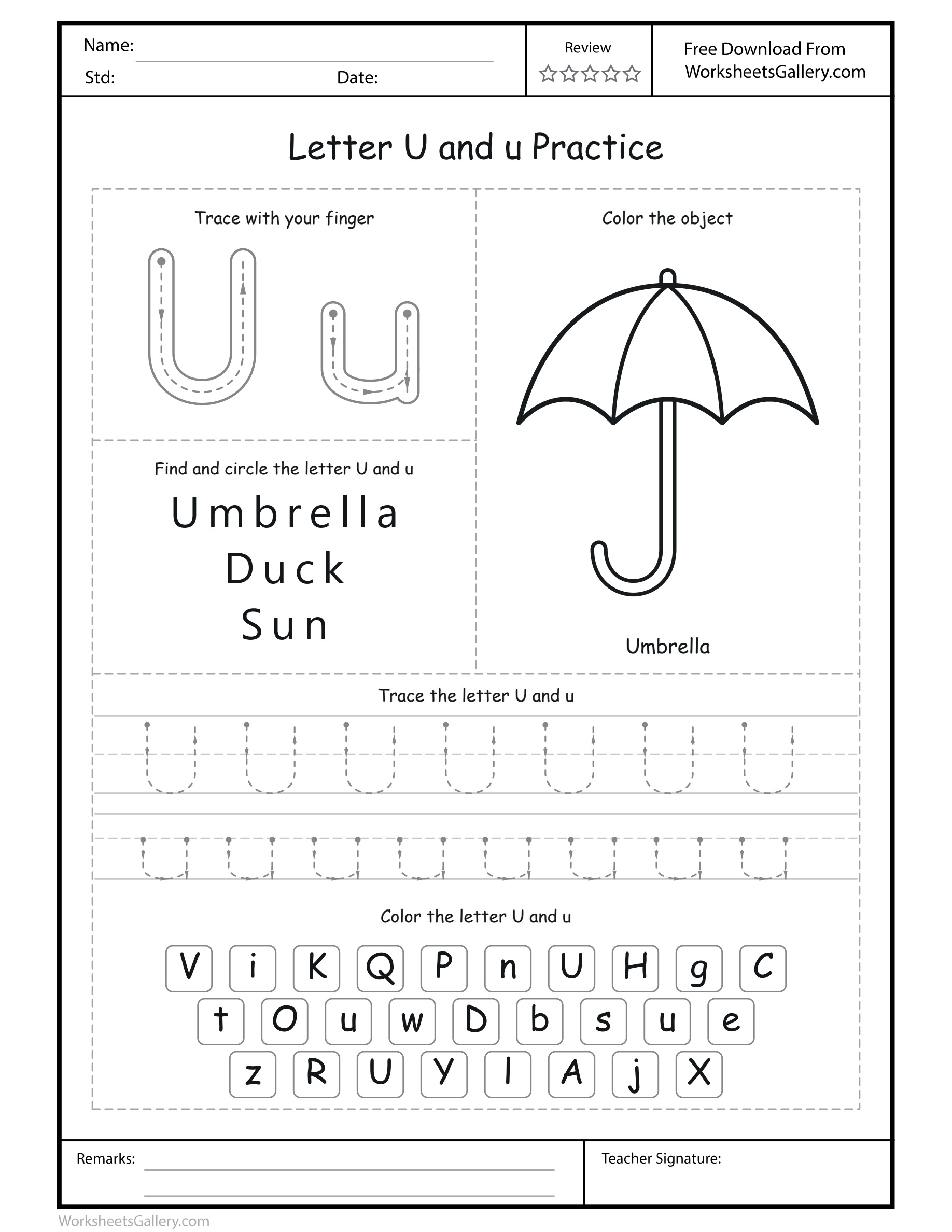
Uu Letter Searcher belongs to the 26-page collection. Relate the large open-top U/u forms to the middle letters in Duck and Sun.
Duck and Sun place u just after their opening letters. Uu Letter Searcher uses those two interior discoveries alongside the capital in Umbrella, giving a child several ways to recognise the family. The open-top models invite a rounded movement, while an umbrella picture offers a colour pause. An adult can read the labels and help inspect mixed tiles without requiring independent word reading. The page suits a short shared visit with selected tracing, a clear comparison and enough time for a learner to reconsider a shape that first looked uncertain today.
Begin beneath the umbrella — Uu Letter Searcher
Read Umbrella, Duck and Sun in the search panel of Uu Letter Searcher. Umbrella begins with capital U. Duck contains lowercase u as its second character, and Sun also contains lowercase u second. Three targets belong in this panel, each available for a small circle around the character itself.
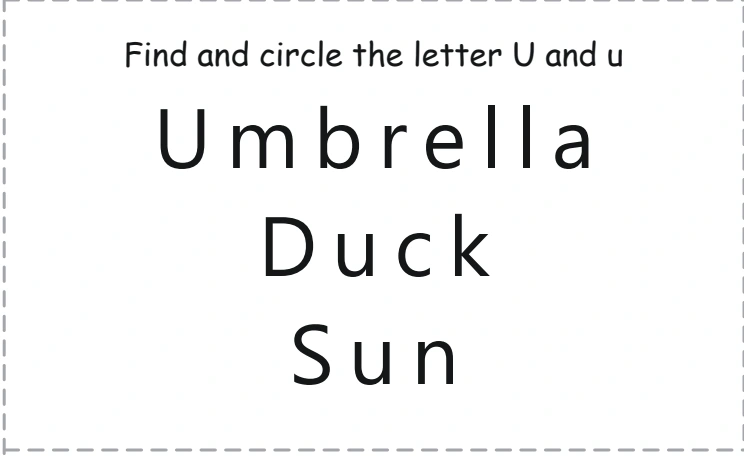
The shared interior position is a useful question: what comes immediately after D, and what comes immediately after S? An adult names the whole words while the child compares the visible character. A learner who recognises the objects but cannot read the labels alone can still participate fully in this shape-and-position task.
| Label shown | U/u position | Inspection cue |
|---|---|---|
| Umbrella | First character | Meet the opening capital. |
| Duck | Second character | Move one place beyond D. |
| Sun | Second character | Move one place beyond S. |
Keep the complete labels visible after marking. Uu Letter Searcher is asking for U/u characters rather than whole-word circles. If the learner selects D or S because it comes first, acknowledge that opening character and track onward to compare the next one with the supplied lowercase model.
A round bend with an open top: Uu Letter Searcher
Compare the large U and u on Uu Letter Searcher. Both show an open-top form with a rounded lower bend, with their own case proportions. Use the source arrows to preview the rounded U/u route by touch. Notice the turn at the bottom rather than making a pointed V-shaped corner.
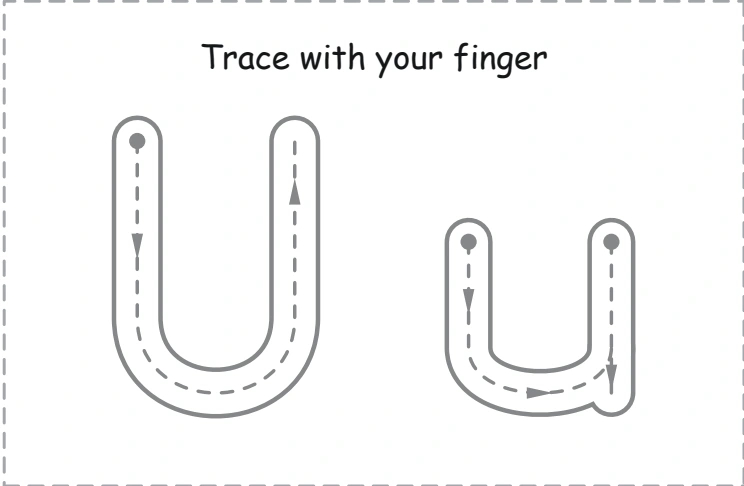
If the curve becomes a point, place the attempted shape beside the large reference visually and discuss the bend. One feature can guide the next movement. A learner does not need a formal lesson on every curved letter to recognise that this model stays rounded below and open above.
Name capital U and lowercase u while comparing them. In Uu Letter Searcher, the relation between the cases can be shown through pointing before small writing is comfortable. A finger trace previews the route, allowing attention to the bend without the added demands of pencil pressure and staying within a guide.
An imagined classroom weather corner: Uu Letter Searcher
Imagine Uma helping arrange a weather corner with an umbrella, a duck picture and a sun ornament. The teacher reads completed Umbrella, Duck and Sun cards. Uma locates the first U, then searches only the opening characters of the other labels and wonders where the target has gone.
The teacher brings the lowercase model from Uu Letter Searcher into view and asks Uma to inspect after D. She finds u, then tries the same one-step move after S. The repeated second position becomes a strategy she can show to a partner. Adult reading keeps the word meanings available throughout.
The children then pick a U/u tile row from Uu Letter Searcher. Uma can point while another child compares with the model, then exchange roles. This imagined weather corner gives the search a social purpose without adding a requirement to read a weather chart or finish every handwriting guide.
Six observations under one umbrella: Uu Letter Searcher
Interior attention. Duck and Sun show that the target can follow a different opening letter. Uu Letter Searcher gives a child two chances to use that one-step inspection route.
Case association. The capital in Umbrella connects with the lowercase interior forms. Naming U and u together supports their shared identity while their proportions remain visible.
Curve discrimination. A rounded lower bend differs from a sharp point. The supplied model gives a specific feature to discuss when a candidate or tracing attempt looks uncertain.
Movement planning. Finger work can preview the bend before pencil control is introduced. Uu Letter Searcher lets a learner separate understanding the route from producing a small finished mark.
Position vocabulary. After, second, open and below describe evidence the learner can point to. An adult can add those words naturally to a gesture.
Checking confidence. Returning to the model offers an action when a first choice is doubtful. The adult can describe the useful comparison instead of valuing only immediate answers.
Give the umbrella a chosen pattern: Uu Letter Searcher
The umbrella drawing on Uu Letter Searcher has no required colour key. Invite a child to choose stripes, panels or favourite colours and describe one decision. A bright invented pattern belongs to the creative part of the visit, separately from the print evidence used for letter answers.
When Uma asks about the picture name, read Umbrella and show its opening U. An adult can write a completed extra label on separate paper when requested. Keeping new writing away from the original word panel preserves the source's three clear target positions for the next inspection.
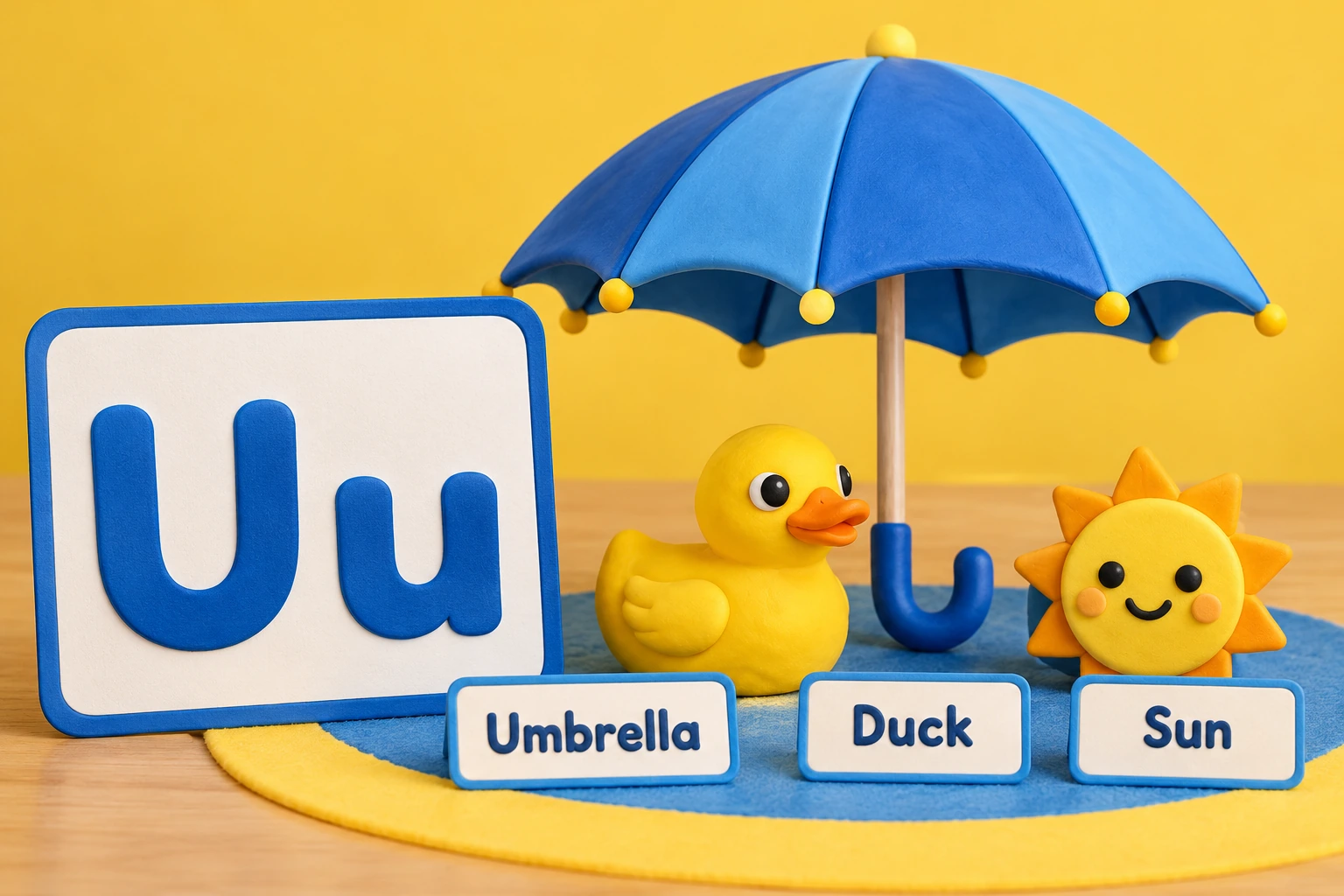
The supporting umbrella scene presents completed labels for Umbrella, Duck and Sun beside a U/u reference. It adds a fresh setting for talking about the same letter family. Compare the scene with Uu Letter Searcher, using the actual full-page preview to understand the printable's precise layout and exercises.
Select traces that keep the bend visible: Uu Letter Searcher
The handwriting rows in Uu Letter Searcher provide seven U guides plus eight u guides. Take a look at their start cues, then choose a few examples. A child may trace one capital, pause to discuss its round bottom, and try one lowercase guide before choosing the next amount of U/u movement practice.
Steady the paper if it moves and keep pressure comfortable. If an attempt narrows to a point, compare the bottom with the large model. If the route feels confusing, return to a bigger finger movement. Avoid combining several corrections about size, grip, speed and shape when one bend is the useful focus.
Ask which U/u attempt keeps a recognisable curved bend. It need not be a perfect copy to support a discussion. Uu Letter Searcher can be revisited later with unused guides, making the practice area a series of opportunities rather than a single-session completion demand.
Four U/u targets in the tile field: Uu Letter Searcher
The lower search area of Uu Letter Searcher contains twenty-seven mixed characters. Its rows step from ten tiles to nine and then eight. Four are targets, shared equally between capital U and lowercase u. Adult checking positions across the complete field are 7, 13, 18 and 22.
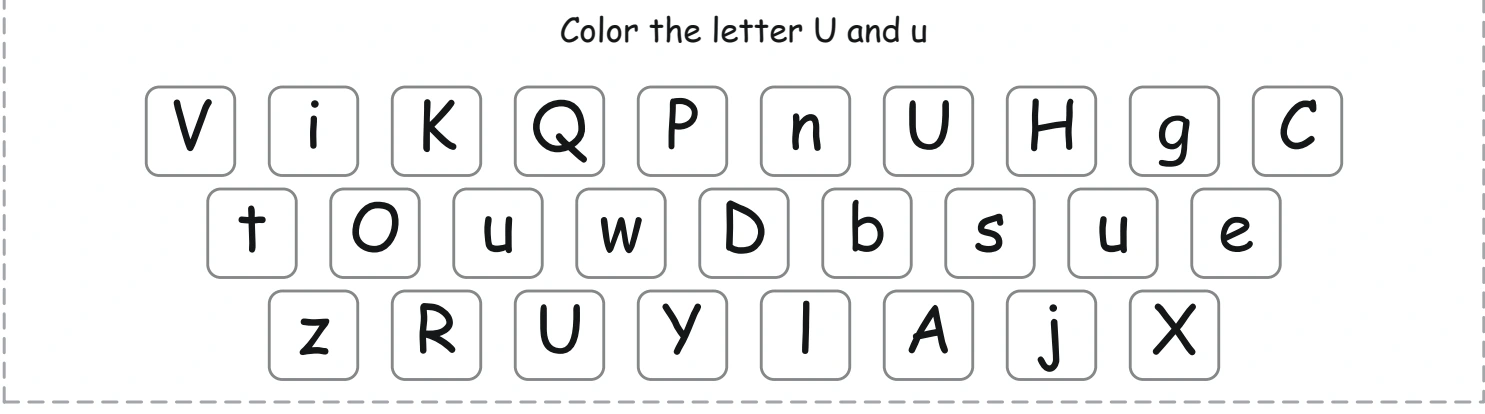
The child can inspect visually rather than count to the adult coordinates. Keep the large models close, compare the candidate's whole outline and move to the following tile after each decision. A small pointer beside the current tile can show where to resume after looking up at the model.
Look particularly at the open top and rounded lower turn. A character sharing one upright is not sufficient evidence. Uu Letter Searcher invites a learner to show what fits, then reconsider if another part does not. The middle row contains two targets with other print between them, so continued inspection matters after a find.
Five weather-corner extensions: Uu Letter Searcher
Second-place duck: Uu Letter Searcher
Read a completed Duck card, touch D and move to the following u. Compare it with the model on Uu Letter Searcher. The game focuses on position and shape while adult reading supplies the word.
Sun partner: Uu Letter Searcher
Repeat that one-step move with Sun and ask what stayed the same. The learner can point to the second position on both cards. Naming every other character is optional.
Rounded cord: Uu Letter Searcher
Arrange a cord into a finished U shape with an open top and curved bottom. Compare it with the capital model before clearing the material. The worksheet arrows remain the reference for the tracing route.
Umbrella nameplate: Uu Letter Searcher
Place a completed Umbrella label beside a toy or picture. Let the child show a partner its opening U, with Uu Letter Searcher available as a reference. A gesture toward the open-top shape can be the explanation.
Middle-row rain check: Uu Letter Searcher
Inspect every middle-row tile, including the characters between its matches. One partner points and another compares with the models. Exchange roles without using a timer or awarding points for speed.
A home sunny-window visit, imagined: Uu Letter Searcher
Picture Uma beside a sunny window with a family member. The adult writes Sun on a completed card and reads it. Uma checks after S and locates u, then compares the card with Sun in Uu Letter Searcher. A Duck card gives her another chance to demonstrate the same second-position route.
The family member asks what the bottom of u looks like. Uma traces a round bend with her finger. “You kept it curved” names an observable feature. This imagined home return can finish with that one comparison, leaving the pencil guides for a later moment.
Choose support and a useful stopping place: Uu Letter Searcher
For learners around three to six, Uu Letter Searcher can use adult-assisted marking, joint pointing or a search directed by the child. Recognition may be comfortable before the rounded pencil movement is. Let the child demonstrate the letter decision in an accessible way and offer handwriting as a separate opportunity.
If only the first character is inspected, track one place farther in Duck or Sun. For a whole-label circle, use another U/u example to demonstrate the smaller intended mark. If U becomes pointed, revisit the bend. If a row is left early, mark the next unexamined place with a pointer. Each response addresses a particular observation.
On another day, start Uu Letter Searcher with the shared second position or a single finger trace. Short, regular returns can vary between talk, colour and movement. Finish while the learner can still show a useful discovery, keeping the next encounter inviting rather than treating the page as a long test.
File routes and further literacy ideas: Uu Letter Searcher
Compare Uu Letter Searcher with Uu Worksheet. A listening follow-up to Uu Letter Searcher is First Sound Choices. For Uu Letter Searcher, explore Vv Worksheet.
Adults can browse NAEYC's play resources for ideas about active participation. For family conversation and shared print activities, visit PBS Parents' literacy collection. Choose a relevant extension when it fits the learner's curiosity; these resources are optional background.
The page controls provide the original Uu Letter Searcher sample. Members with qualifying current access can obtain a clean U/u single PDF through its protected control. Check the print preview for an intact outer frame and readable small curves. Keeping the lower bends visible helps the child compare the features described throughout this visit.
The premium card links to a separate $5 purchase, the Alphabet Wordwork Collection. The purchased U/u collection route supplies one clean A–Z PDF with a sheet for every letter. That purchase is distinct from membership access to this single clean sheet. The card makes the full set available directly from Uu Letter Searcher when broader practice is wanted.
Popular Worksheets
Printable resources families and teachers are downloading now.
 Free
 Free
 Free
 Free