
Vv Letter Viewer: 3 Wonderful Vase-and-Glove Checks
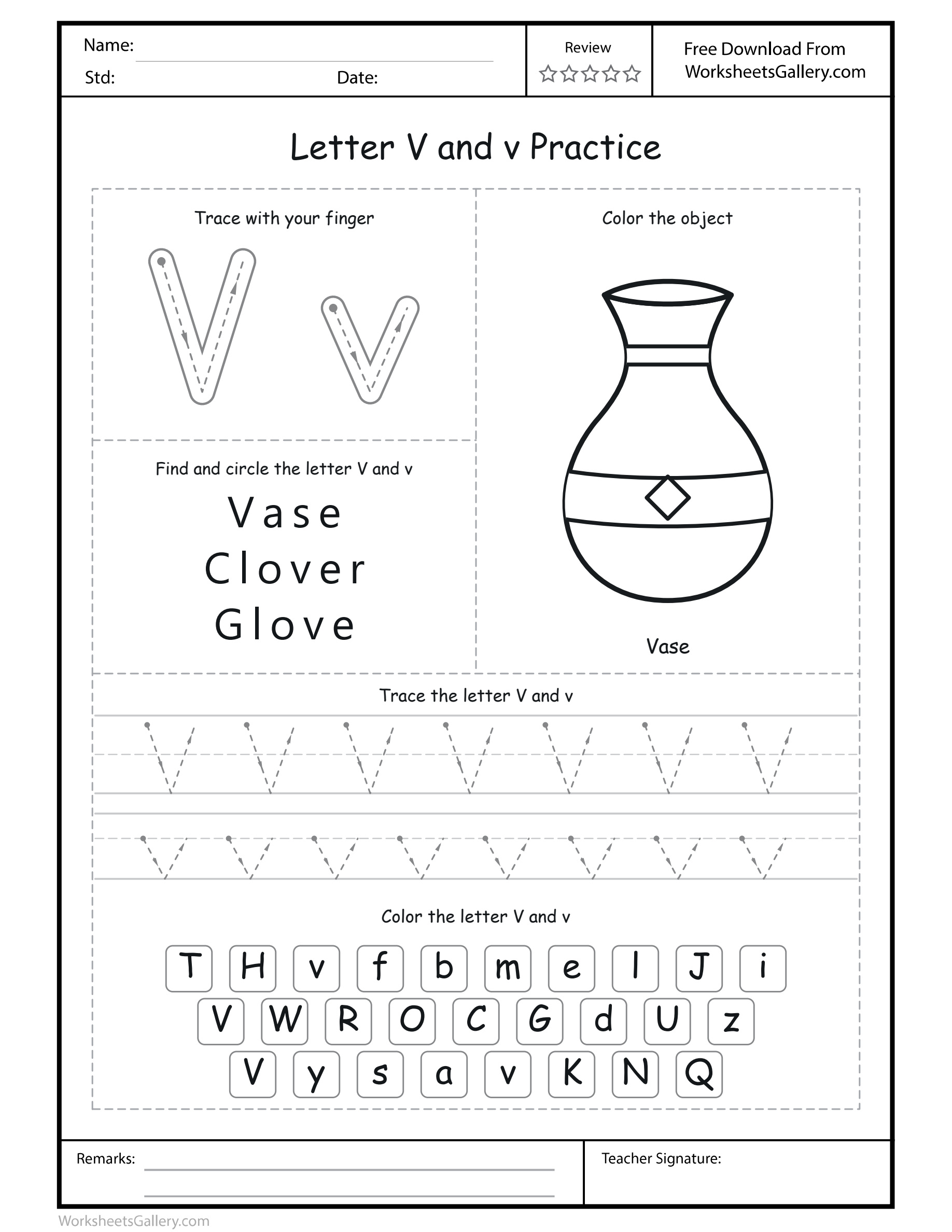
Vv Letter Viewer belongs to the 26-page collection. Compare similar case silhouettes while locating internal v in two longer word labels.
Vase displays its V at the front, while Clover and Glove keep v inside their labels. Vv Letter Viewer asks children to inspect those quieter interior places, using a pointed letter model as their reference. An adult reads alongside the learner, leaving the shape decisions open to pointing, circling or a spoken explanation. The vase picture adds a creative colour choice, and the tracing guides offer short movement practice. A mixed field gives another opportunity to compare the complete letter, with time to look again when a rounded candidate seems close.
An interior v beside the vase — Vv Letter Viewer
Read the three labels on Vv Letter Viewer: Vase, Clover and Glove. Vase starts with capital V. Clover contains lowercase v at its fourth character, and Glove contains lowercase v fourth as well. Three targets belong in the explicit search panel. Circle the relevant character in each label rather than the whole word.
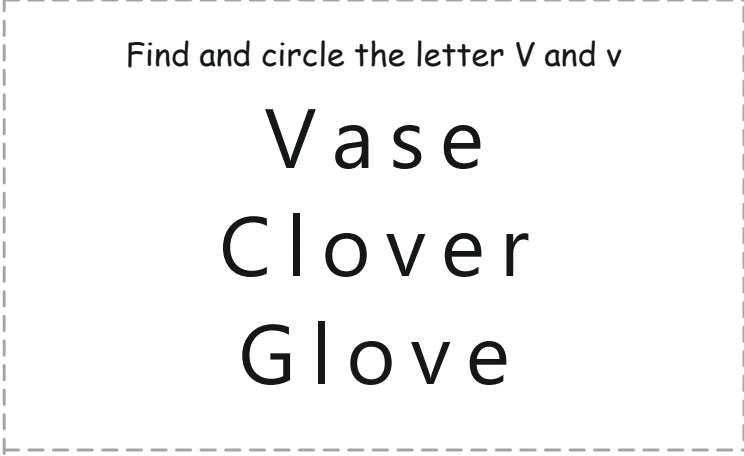
The shared fourth position is an adult reference, not a prerequisite counting task for the child. Track the print and pause at v, then compare the visible outline with the model. A learner may know the spoken names and still need the adult to read their written labels. That support keeps the task focused on letter evidence.
| Label | V/v evidence | Viewing question |
|---|---|---|
| Vase | Capital first | Which opening has a pointed base? |
| Clover | Lowercase fourth | What comes after o? |
| Glove | Lowercase fourth | Can you find the point before e? |
In Vv Letter Viewer, Clover and Glove make “look inside” practical. Start at the opening and continue through the label, keeping the target model nearby. If the child selects C or G, name that opening and invite a further inspection instead of treating the entire response as meaningless.
A sharp lower meeting point: Vv Letter Viewer
The supplied V/v models show slanting sides meeting at a pointed base. Compare the capital and lowercase proportions while naming the same family. Follow the sheet's arrows and start cues with a finger. The turn at the lower point is the feature to watch before attempting small pencil marks.
A rounded U-like bend can be compared directly with the V model on Vv Letter Viewer. Ask whether the lower meeting place is pointed or curved. A child can answer by touching the spot. Avoid a broad lecture about several letters when this one visible distinction provides a useful next step.
The word labels offer a chance to recognise the same shape at a smaller scale. Name V when it is found, then read the whole label naturally. “The letter is inside this word” can accompany a point to Clover or Glove, connecting the shape decision with its printed location.
A home flower stand, imagined: Vv Letter Viewer
Imagine Vera helping a family member arrange a small flower stand. The adult sets out completed Vase, Clover and Glove labels and reads each one. A gardening glove beside the vase makes the objects easy to discuss. Vera finds Vase's initial V and compares it with Vv Letter Viewer.
The other labels begin differently. The family member tracks Clover past its opening and asks Vera to compare the character after o. She finds v and points to its lower tip. Glove offers the same interior position with a different opening. Vera can demonstrate the match through pointing while the adult makes a circle if needed.
This imagined stand gives the labels a shared setting without pretending that the child must read them independently. The return to Vv Letter Viewer can be brief: one interior target and a finger movement may be enough before the picture or another activity becomes more inviting.
Six visible outcomes from a pointed comparison: Vv Letter Viewer
Looking beyond the opening. Clover and Glove both reward an interior inspection. Vv Letter Viewer gives the learner repeated experience finding a familiar shape after other characters.
Linking cases. Vase supplies the capital, while the other labels supply lowercase examples. Naming V and v together connects their identity across the page.
Noticing a meeting point. The lower tip distinguishes the supplied form from a rounded bend. A learner can use that feature to explain a tile choice.
Planning a direction change. Finger tracing previews the two slants and their meeting. In Vv Letter Viewer, that rehearsal can happen before pencil pressure and small guide size become additional demands.
Using location language. Inside, after and before describe the v positions. Adults may pair those V/v location words with pointing, so a written explanation is unnecessary.
Reviewing constructively. Comparing an uncertain candidate with the model gives the child an action to take. A changed choice can reflect better evidence rather than a failed first attempt.
Colour choices for the vase: Vv Letter Viewer
The vase drawing on Vv Letter Viewer has an open palette. Invite a colour or pattern plan and ask about one chosen detail. The source does not provide a fixed colour key. A multicoloured vase belongs to the creative conversation, separately from whether the printed V/v targets were located correctly.
Read Vase if the learner wants to connect the object with its label. An adult can write a completed extra caption on separate paper. Keep that extension clear of the original search panel so the three target locations remain available for a later look.
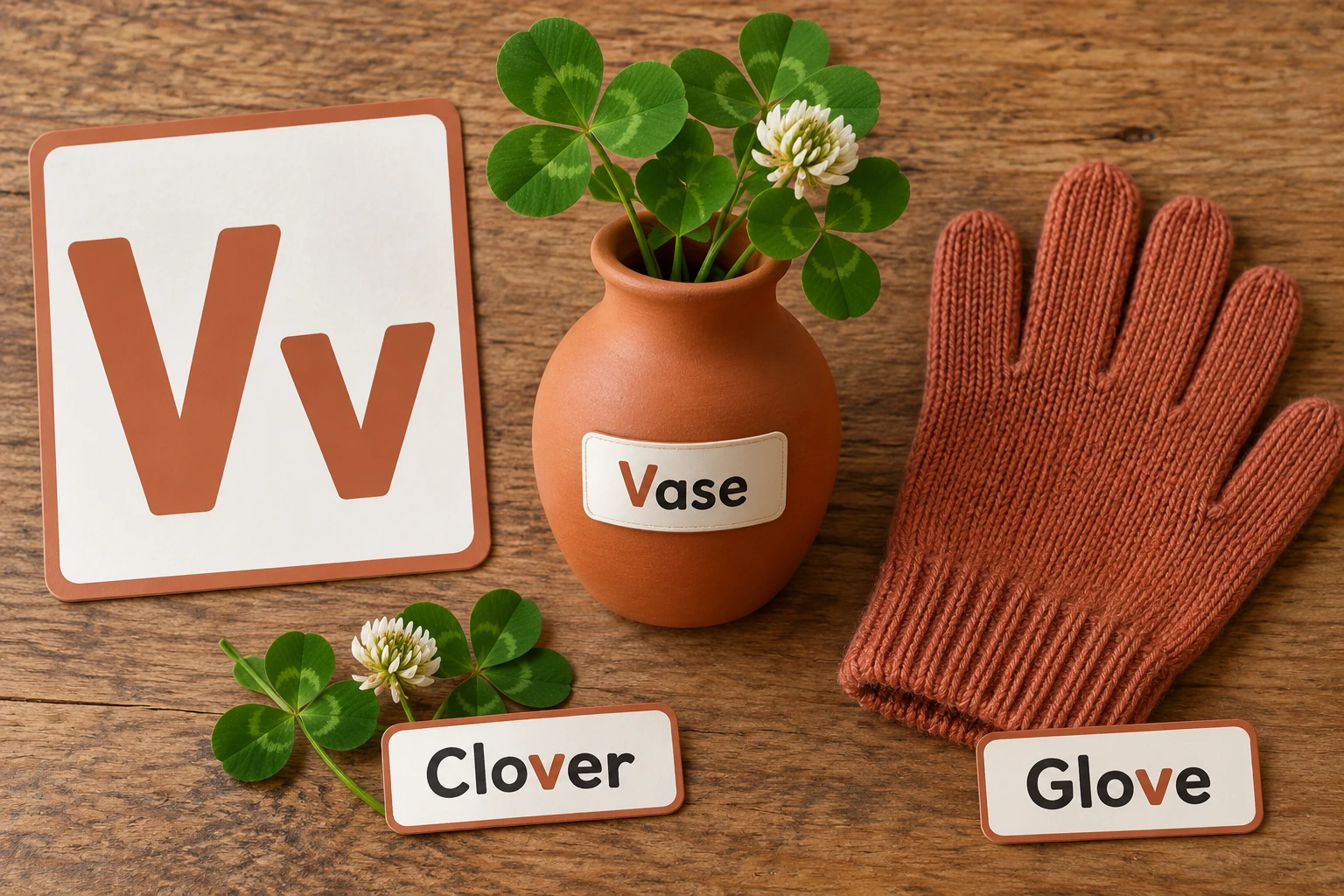
The supporting vase arrangement presents completed Clover and Glove cards, with their internal v letters emphasised. It gives the word panel another setting for discussion. Return to the unhighlighted labels on Vv Letter Viewer afterward, allowing the learner to locate the targets without the scene's colour support.
A small plan for the handwriting guides: Vv Letter Viewer
The practice area contains seven uppercase guides and eight lowercase guides. Preview the printed starting cues and choose a manageable number. One capital and one lowercase attempt can provide enough evidence to discuss the pointed turn. Save unused guides on Vv Letter Viewer for another visit.
If the lower point becomes a curve, compare that part with the large reference. If the slants feel difficult, use a larger finger movement before another pencil attempt. Keep the paper still and the hand comfortable. A correction about the point is easier to act on when it is not bundled with several demands about size and speed.
Invite a review of the V/v attempt whose lower meeting point is clearest. It may lean or vary in width and still offer a useful comparison. Vv Letter Viewer supports observing one feature thoughtfully, then taking a different kind of task when the hand needs a break.
Four V/v forms in the mixed field: Vv Letter Viewer
The tile field on Vv Letter Viewer holds twenty-seven characters. Its upper row spans ten tiles; the middle spans nine; the lower spans eight. The V/v answer set contains two examples from either case. For adult verification, its complete-field locations are 3, 11, 20 and 24.
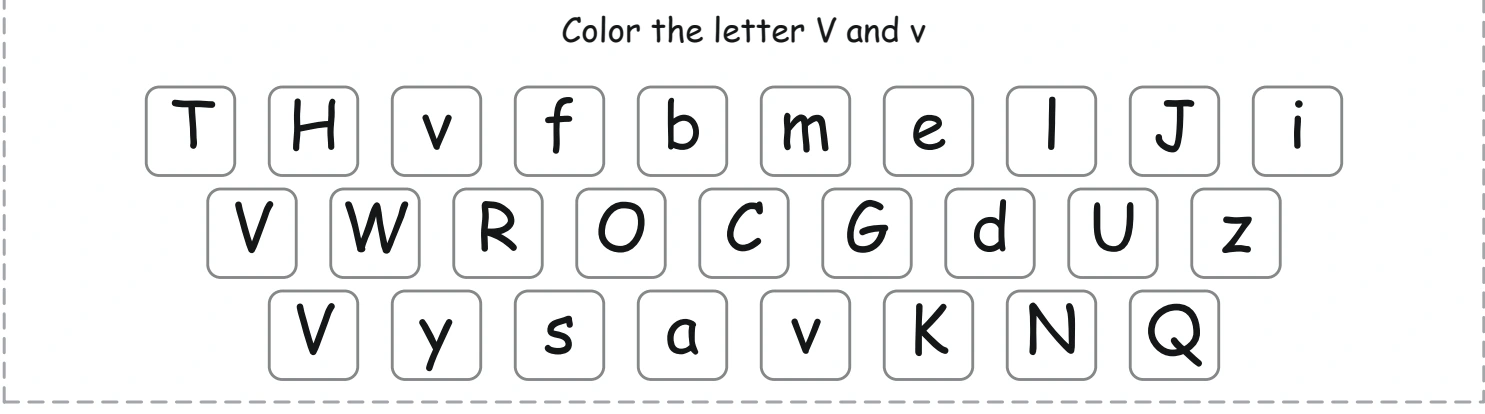
Let the child follow a visual route rather than calculate those positions. Compare each candidate with the large pair, check the lower meeting point, and continue after a match. A pointer placed beside the next character can help the learner resume after looking back at the model.
The first character of the middle row is worth checking, as is the opening of the last row. An edge does not make a tile irrelevant. Vv Letter Viewer gives the entire row an inspection role, including print before, between and after found targets. Ask for a reason when a similarly shaped character is selected.
A classroom garden label station, imagined: Vv Letter Viewer
Picture Vera at a classroom garden station. The teacher reads Clover on a completed card beside a clover picture, then reads Glove beside a small gardening glove. Vera compares the two labels with Vv Letter Viewer and finds v after o in each.
A partner holds the large lowercase model while Vera points. The teacher asks what the bottom looks like, and Vera shows its tip. They then inspect Vase's opening capital. The cases can be connected without asking either child to spell the whole labels or write a gardening sentence independently.
The group chooses one tile row to inspect cooperatively. The teacher notes whether Vera checked the pointed base and continued after a target. This imagined station provides specific observations for the next visit rather than using a finished sheet as the only record of participation.
Five V/v viewing games: Vv Letter Viewer
Point builder: Vv Letter Viewer
Join two strips into a completed V and compare the lower meeting place with Vv Letter Viewer. Name the capital, then show the supplied lowercase form. Clear the strips before tracing so the source arrows remain easy to follow.
Clover interior stop: Vv Letter Viewer
Read Clover on a finished card and track through its print to v. Park a token beneath the target, then remove it and find the same position on the worksheet. The adult supplies the word reading throughout.
Glove comparison: Vv Letter Viewer
Put Glove beside Clover and locate their v characters. Ask what matches and what differs about the complete labels. A pointing answer can show the common target without requiring the child to name every neighbour.
Vase colour guide: Vv Letter Viewer
Let the learner describe a chosen vase colour to a partner, then introduce its initial V using the model on Vv Letter Viewer. Keep the colour decision creative and the letter decision based on print.
Edge visitor: Vv Letter Viewer
Inspect the first tile of each row deliberately before continuing across. Partners can exchange pointing and comparison roles. The purpose is to include edge positions, with no score for faster searching.
Make the next action specific: Vv Letter Viewer
For children around three to six, Vv Letter Viewer can be approached through shared pointing, supported circles or independent inspection. A learner who notices an interior v may still need help producing its pencil turn. Keep the recognition task accessible and offer movement support separately.
If the search stays at first letters, track inside Clover or Glove. If an entire label is circled, model a character-sized loop elsewhere. If the base becomes round, compare the tip. If a row edge is skipped, point to its first unexamined character. Each response gives a clear action tied to the observed difficulty.
Regular short returns can begin with a remembered feature, such as the pointed base or the shared position after o. Let the child choose between two small sections of Vv Letter Viewer. Finish with an observation they can show, leaving room for the next encounter to continue the investigation comfortably.
Printable access and education links: Vv Letter Viewer
Compare Vv Letter Viewer with Vv Worksheet. A listening follow-up to Vv Letter Viewer is First Sound Choices. For Vv Letter Viewer, explore Ww Worksheet.
Adults considering another playful setting can explore NAEYC's play collection. For shared print conversations, PBS Parents offers literacy resources. These links provide optional background, with no additional reading required to use the three source labels.
The original Vv Letter Viewer sample is provided by the download controls. An eligible active member can reach its separate protected clean single-sheet file. Inspect the print preview for an intact page frame and clear small v tips. Those details should remain legible at the chosen scale before the worksheet is placed in front of a learner.
For a separately purchased $5 A–Z file, use the Alphabet Wordwork Collection card; the combined document supplies twenty-six clean sheets. It can support a full A–Z plan. This collection purchase is different from membership access to the clean individual worksheet, and its card gives a direct route from Vv Letter Viewer when the larger file is wanted.
Popular Worksheets
Printable resources families and teachers are downloading now.
 Free
 Free
 Free
 Free