
Cc Letter Explorer: 3 Wonderful Word-and-Curve Visits
Cc Letter Explorer belongs to the 26-page collection. Separate the visible c search in Chicken from assumptions about a single c sound.
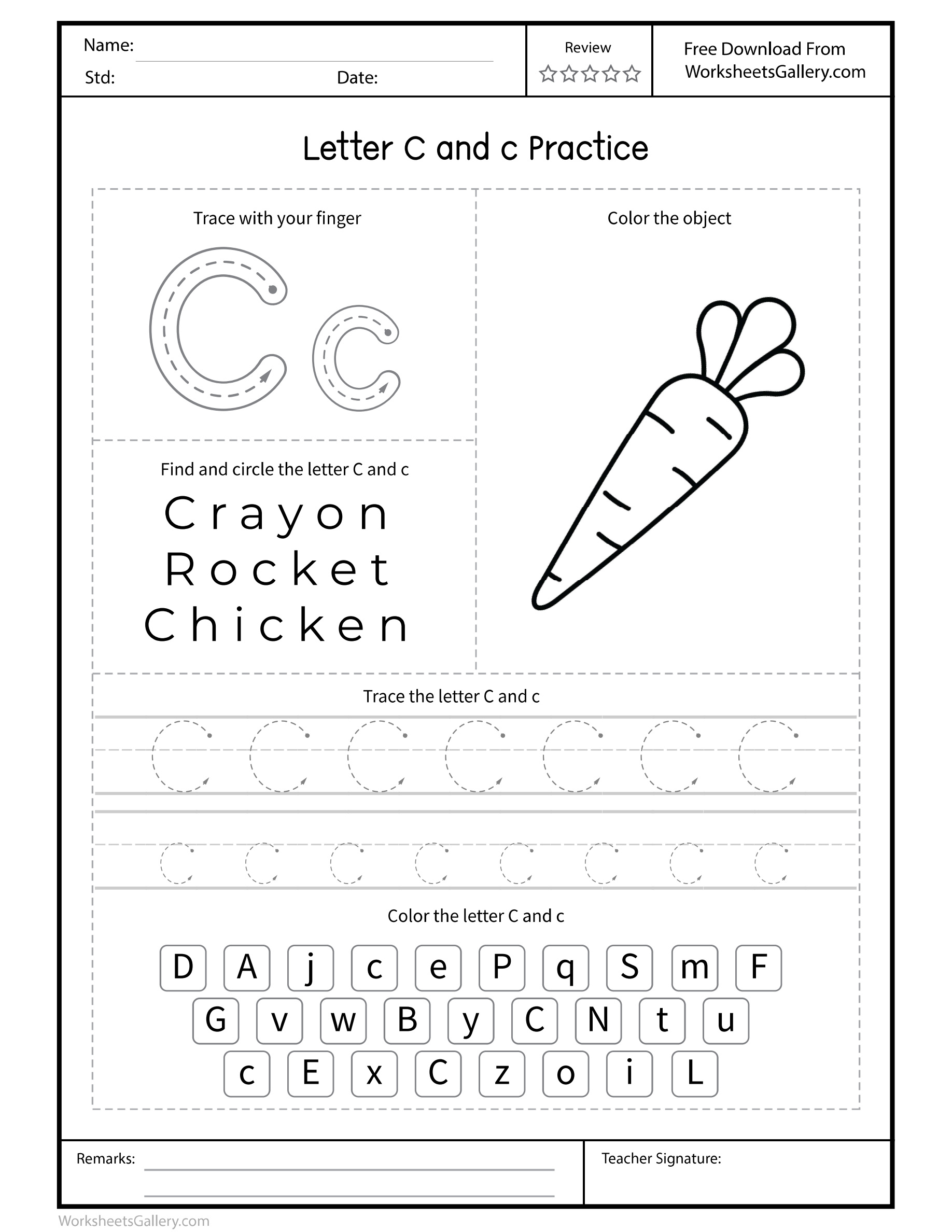
Leave the curve open on its right side. That simple observation gives Ciro a practical way into Cc Letter Explorer, where large C and c models lead into three printed words, a carrot drawing, smaller tracing guides and mixed-letter colouring choices. Crayon, Rocket and Chicken place the target in different spelling contexts, so an adult can read the words while the learner searches their visible characters. Begin by inspecting the model's opening, then carry that observation into a selected word or tile before making a careful mark.
The opening is part of the letter — Cc Letter Explorer
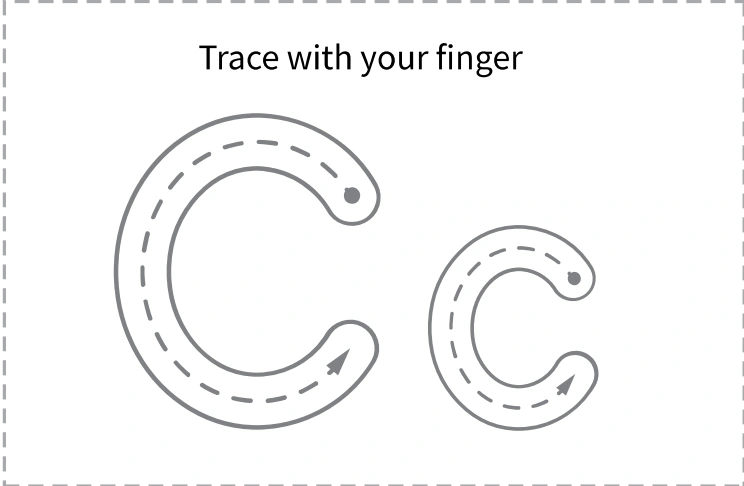
The supplied capital C and lowercase c both curve around an open area. Their right-side gaps distinguish them from closed round forms. Let Ciro point to that gap on the large models in Cc Letter Explorer before trying to trace a smaller guide.
A finger can follow the dotted route and stop where the model stops. Joining the two ends would change the supplied shape. Ciro is comparing a particular printed form with the target model, rather than devising a classification for every curved mark elsewhere on the sheet.
Notice the start as well as the outline: Cc Letter Explorer
The large guides include starting dots and arrows. Invite Ciro to locate those cues and describe where his finger will go. A short rehearsal can make the planned movement clear before a pencil introduces pressure, grip and control demands.
Three word labels invite a closer print inspection: Cc Letter Explorer
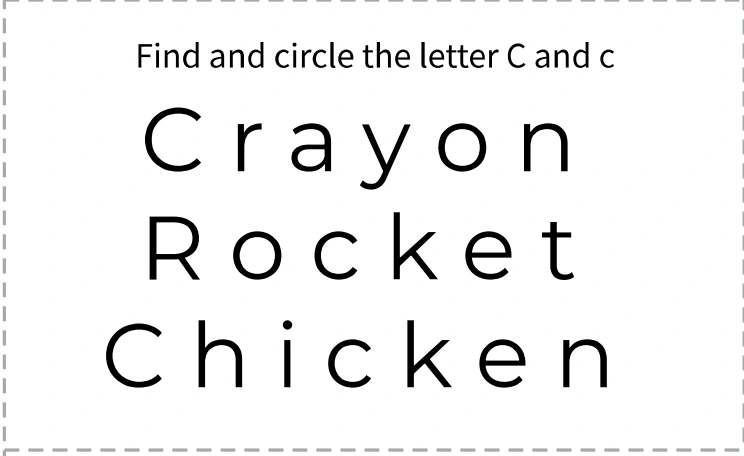
| Printed word | C/c positions from the left | A useful comparison |
|---|---|---|
| Crayon | 1 | Capital C begins the label. |
| Rocket | 3 | Lowercase c occurs inside the word. |
| Chicken | 1 and 4 | A capital and a lowercase target both appear. |
The Cc Letter Explorer panel therefore contains four target occurrences in three words. Read each label aloud if needed, then allow a complete visual scan. Finding the first C in Chicken does not finish that word's search because a smaller c appears later.
Circle a letter rather than the object it names: Cc Letter Explorer
The instruction in this area concerns characters in the printed labels. A circle around the whole word or an imagined crayon would not identify the intended targets. Ciro can point to one character, compare it with the case model and then draw around that selected letter.
Chicken is a reason to keep the task precise: Cc Letter Explorer
It is tempting to tell a child that every c on Cc Letter Explorer says the same sound. The source does not require that claim. The opening Ch in Chicken belongs to a different spelling context from the C in Crayon, yet the capital C remains a visible target for this letter-search instruction.
An adult can say the complete words naturally and return attention to the requested printed forms. A child who notices that the words sound different has made a worthwhile observation. Acknowledge it without changing the task into a requirement to pronounce every selected c in isolation.
Visual recognition can come before independent reading: Cc Letter Explorer
Ciro may recognise C/c in Rocket while relying on an adult to read Rocket. Those abilities can develop with different amounts of support. Keeping a readable model available allows the learner to participate in the actual search without being asked to guess an unfamiliar word first.
A carrot-colouring pause with a different purpose: Cc Letter Explorer
The illustration on the supplied Cc sheet is a carrot with leafy tops and short marks along its tapered body. It provides an object to name and colour, while the word-search labels are Crayon, Rocket and Chicken. Do not replace those labels with Carrot merely because that is the pictured object.
For Cc Letter Explorer, Ciro may choose the carrot's colours. The source has no number-colour legend and no requirement to reproduce the supporting illustration's palette. Naming the leaves, point and body can give the picture conversation a concrete focus without turning an imaginative colour choice into a letter-recognition mistake.
Seven small observations that can guide the next prompt: Cc Letter Explorer
An open curve remains open: Cc Letter Explorer
Notice whether Ciro follows the model without closing its gap. Ask him to show where the printed route ends. A comparison with the large reference can make a specific pencil revision more understandable.
The case partner is recognised at a new size: Cc Letter Explorer
The smaller c looks related to C, but the supplied case models occupy different heights. Cc Letter Explorer offers a visible comparison rather than requiring a remembered verbal definition. Ciro can point to the model that supports a chosen letter.
A search continues after the initial: Cc Letter Explorer
Rocket has an internal c and Chicken has a second target later in its spelling. Watch whether the child inspects the whole sequence. A finger scan can reveal a systematic method before any circles are made.
Two targets can share one word: Cc Letter Explorer
Chicken contains both C and c in distinct positions. Invite one point to each occurrence. The learner is identifying separate letters rather than assigning one discovery to every printed word.
Spoken names support the print task: Cc Letter Explorer
Reading a label aloud can remove an unnecessary guessing demand. In Cc Letter Explorer, the adult's voice supplies the word while the visible characters supply the search evidence. Both contributions can remain available together.
A mark can be explained to another person: Cc Letter Explorer
A circle that touches nearby letters may be ambiguous. Ask Ciro which character he intended to select. His pointing or short explanation can distinguish a movement difficulty from an uncertain recognition choice.
A revised choice follows a visible feature: Cc Letter Explorer
If Ciro first selects a closed round distractor, ask him to compare its right side with the large c. A changed decision then has an inspectable reason. The revision is more useful than an unexplained instruction to erase the mark.
A home desk for a crayon and a model card: Cc Letter Explorer
Imagine Ciro at a drawing desk with his father. His father writes Crayon on a separate card and reads it while Ciro compares the first letter with the worksheet's capital C. They keep the card visible rather than expecting its spelling to be remembered.
Next they inspect Rocket on Cc Letter Explorer. Ciro does not see a target at the left edge, so his father asks what the rest of the label contains. Ciro follows the sequence and locates the c inside. The two words now give him different locations to describe.
They finish with a free carrot drawing on spare paper. Ciro dictates a short description, and his father records it. This provides a creative audience for the picture while leaving the source's three-word search and tracing panels unchanged.
The four colouring targets have specific locations: Cc Letter Explorer
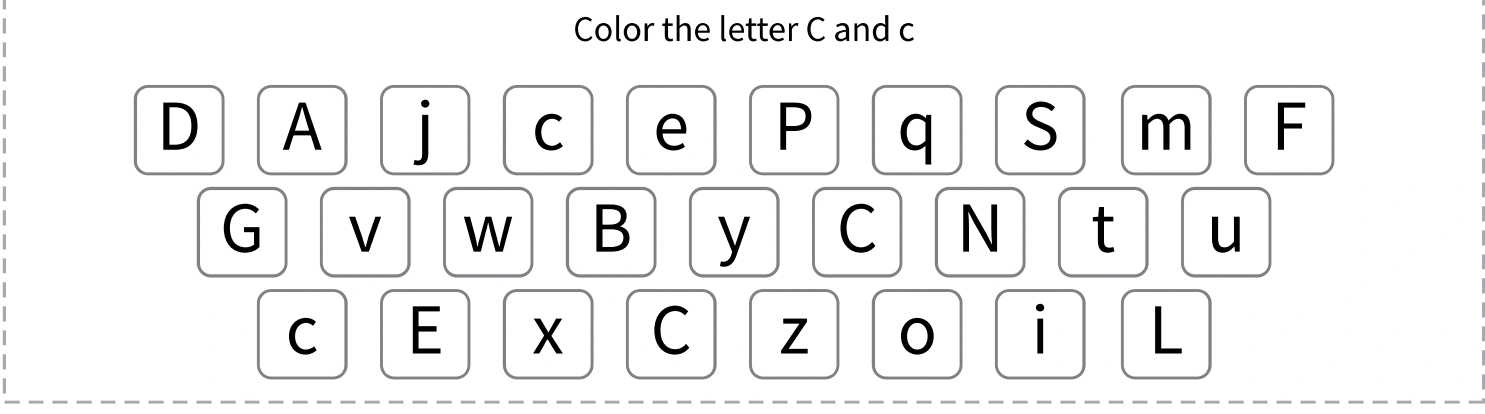
The mixed-letter field in Cc Letter Explorer is arranged in rows of ten, nine and eight tiles. Reading those rows in order, its C/c targets are at positions 4, 16, 20 and 23. These adult coordinates refer to the supplied Cc layout rather than a rearranged alphabet display.
The first row contains c in column four. The second row has C in column six. In the final row, c appears first and C appears fourth. Children colour the matching letters after checking their forms; they are not asked to write these position numbers.
Use a row-sized search if the full field feels busy: Cc Letter Explorer
An adult can point out the current row while keeping the large case models visible. Ciro can indicate a candidate before colouring. A smaller inspection area changes the amount of attention required at once without silently changing which letters count as targets.
A classroom explanation begins with one chosen gap: Cc Letter Explorer
For a hypothetical small group, the teacher shows a clear C and a clear closed round letter on spare cards. Children describe one visible difference, then inspect their own Cc Letter Explorer page for the supplied C/c references. This prepares a specific comparison rather than an indiscriminate search for anything curved.
Partners can discuss one source label at a time. One learner points to a target while the other checks whether another remains. They switch roles for the next word. The teacher reads the labels and listens for explanations involving the whole spelling, case form or right-side opening.
When a child chooses a tile correctly but colours outside its border, the teacher can separate the recognition decision from the movement record. Asking what the learner selected preserves the useful explanation while making room for later pencil-control support.
Four open-curve invitations on spare paper: Cc Letter Explorer
1. Make a cord model with an intentional gap: Cc Letter Explorer
Arrange a short piece of thick cord as a C on a table and point out the opening. Ciro can compare it with the printed model. This tactile example is an extension, so it need not replace the source's own start dots and arrows.
2. Give the rocket a letter address: Cc Letter Explorer
Write Rocket on a model card beside a toy rocket. Ask where its c sits and let the child indicate that position with a counter. A listener can check the explanation against the complete visible word.
3. Report two Chicken discoveries: Cc Letter Explorer
An adult writes Chicken clearly and reads it aloud. Ciro finds both C/c occurrences and explains how he knows they are separate. Keep the discussion about the printed characters rather than forcing one sound claim across the word.
4. Send a carrot picture to a class toy: Cc Letter Explorer
Draw a carrot on new paper and dictate a short message about its shape or colours. The toy can ask a simple question about the drawing. The extension gives the child's expressive choices a purpose beyond reproducing a model.
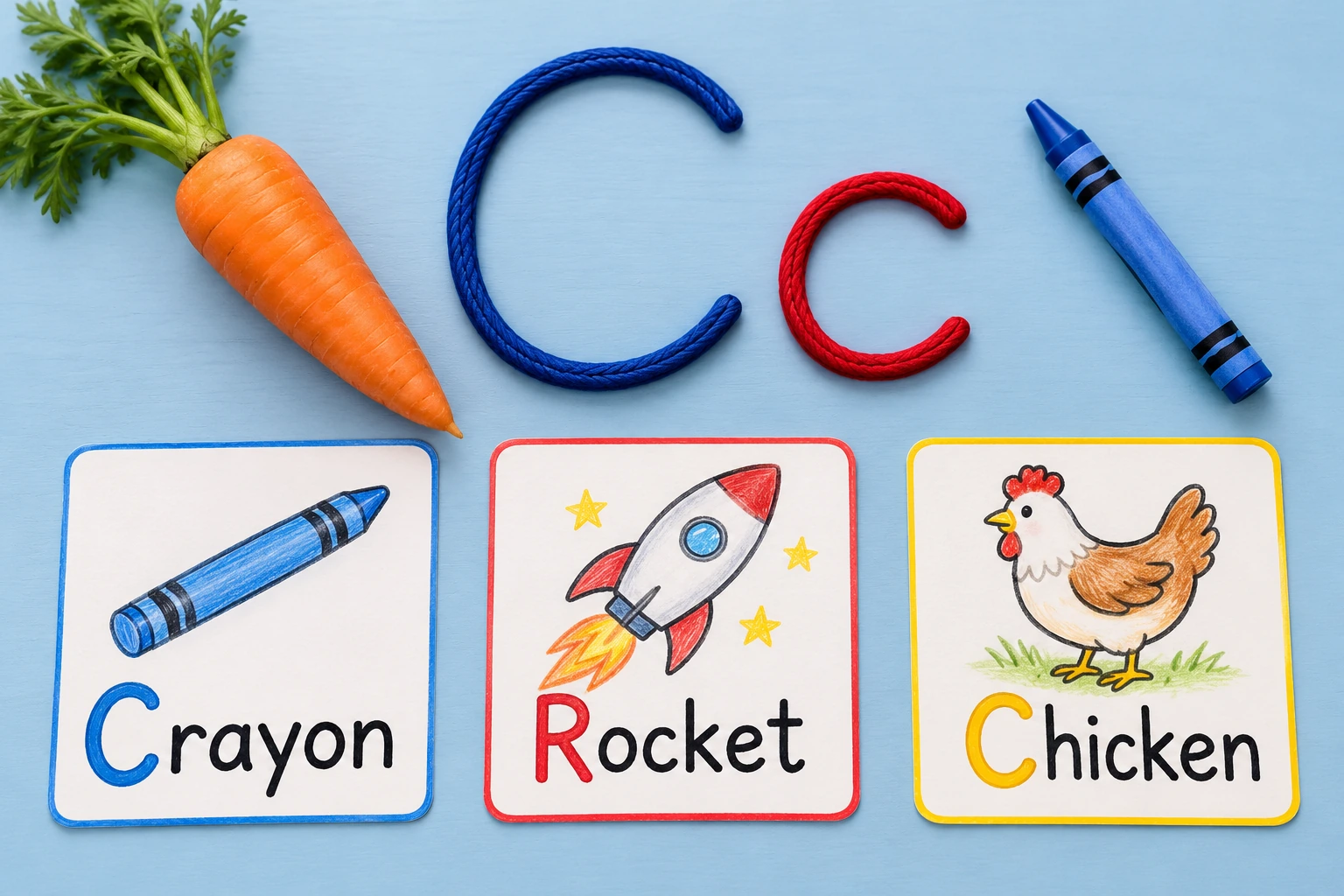
Cord curves and named pictures make C/c available beyond a pencil row.Two open cord forms sit above Crayon, Rocket and Chicken picture cards, with an orange carrot at the edge of the desk.
Choose the next amount of tracing deliberately: Cc Letter Explorer
The handwriting rows offer seven capital C guides and eight lowercase c guides. Select a manageable few and inspect how the starting point leads around the curve. Ciro can pause after a form and compare the gap with the original before adding another attempt.
For children roughly three to six, an adult can adapt Cc Letter Explorer through naming, finger rehearsal, pointing and shorter panel-sized visits. A younger learner may stay with a large model and the carrot picture. When ready for a fuller explanation, Ciro can discuss the later c in Chicken as another search target.
Common problems include closing the curve, searching only first letters, overlooking the second Chicken target or colouring a round distractor without checking its opening. A useful return visit revisits one of those decisions with a clearer strategy. It need not require tracing all fifteen guides again.
Download the Cc page with its supplied layout preserved: Cc Letter Explorer
An active member plan that grants eligibility unlocks the clean Cc Letter Explorer single-sheet PDF. The premium edition excludes website watermark, domain promotion and embedded advertisements. The original Cc upload stays available as a distinct sample selection.
Inspect the portrait printing view for complete model openings, all three word labels and every tile at the bottom. This separately supplied Cc activity is included in the $5 Alphabet Wordwork Collection with the other twenty-five clean A–Z sheets, sold together as one PDF through its own purchase control.
More chances to compare a letter carefully: Cc Letter Explorer
Compare Cc Letter Explorer with Cc Worksheet. A listening follow-up to Cc Letter Explorer is First Sound Choices. For Cc Letter Explorer, explore Dd Worksheet.
For additional shared-language ideas, explore PBS Parents' resources for talking about early print. NAEYC's family article about supporting children's written expression can inform the spare-paper message activity. With Cc Letter Explorer, notice the open curve, the actual character within its word and the reason given for a selected tile.
Popular Worksheets
Printable resources families and teachers are downloading now.
 Free
 Free
 Free
 Free