
Dd Letter Spotter: 4 Clever Dog-to-Ladder Clues
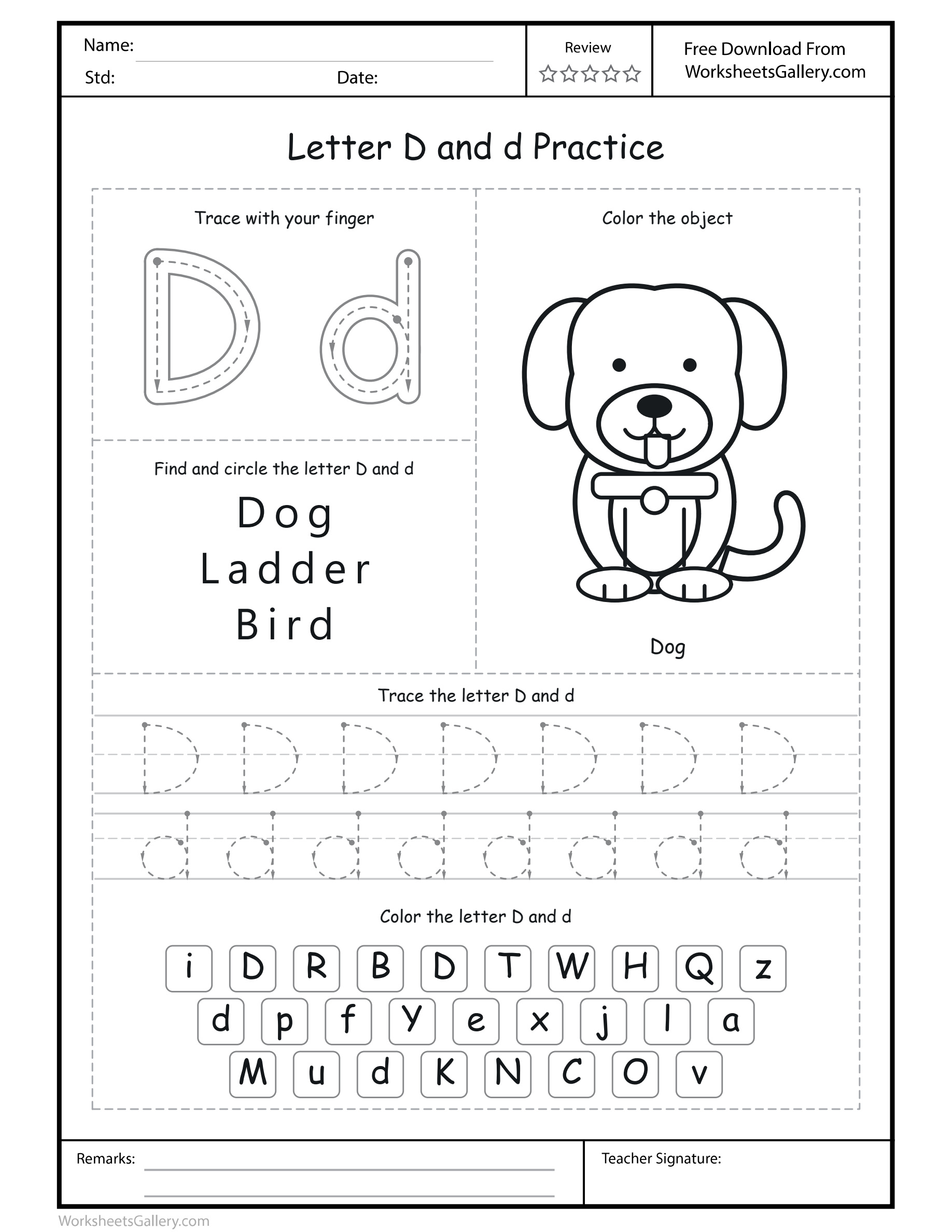
Dd Letter Spotter belongs to the 26-page collection. Compare neighbouring d letters in Ladder with the single final d in Bird.
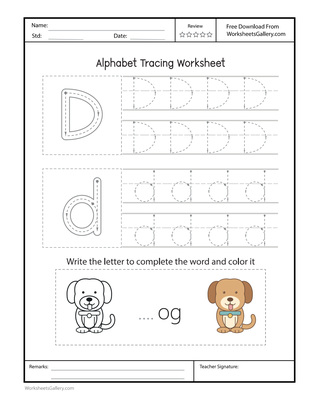
The dog has one D at the beginning of its label, while Ladder has two d letters together and Bird saves its d until the end. Dd Letter Spotter turns those differences into a print investigation. Dalia can compare large case models, circle letters within the three words, colour the dog, trace smaller guides and select matching tiles. An adult can read the labels while she concentrates on their visible characters. Start by asking where a discovery belongs, then let a point or circle make that location clear.
Make a short report about each word — Dd Letter Spotter
Instead of asking Dalia to announce a total immediately, invite a small report: which word did she inspect, where was its D or d, and has the rest been checked? Dd Letter Spotter supplies three labels with different target arrangements. Those arrangements give her something specific to describe.
Dog begins with the capital. Ladder contains a neighbouring pair inside the word. Bird ends with one lowercase target. A search that stops after the first successful match would leave Ladder incomplete, while a search restricted to initials would overlook both later-word examples.
Let the printed sequence settle a disagreement: Dd Letter Spotter
If Dalia says Ladder has one d, follow the word together without changing its spelling. She can point to each character and compare both adjacent d letters with the large reference. The visible label provides a way to check the claim rather than asking her to accept an adult's unexplained total.
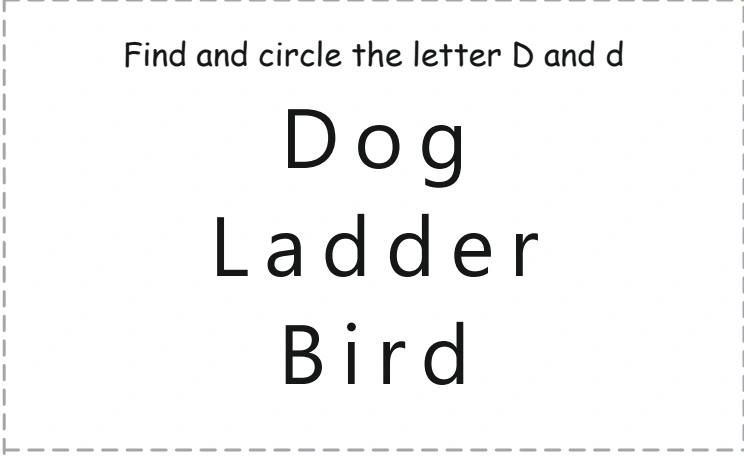
Adult notes for checking four discoveries: Dd Letter Spotter
| Label | Positions of D/d | A possible child's report |
|---|---|---|
| Dog | 1 | The big D is first. |
| Ladder | 3, 4 | Two small d letters sit together. |
| Bird | 4 | The last letter is d. |
Use this Dd Letter Spotter note after Dalia has inspected the source. The coordinates count characters from the left and are not printed answer numbers she must copy. The panel asks her to circle matching letters, so each of the four intended characters should have an identifiable selection.
A whole-word circle answers a different question: Dd Letter Spotter
Encircling Bird shows that the label attracted attention, but does not reveal whether Dalia selected B, i, r or d. Ask her to point to the intended character. A precise point can guide a smaller circle without assuming that a loose mark means the letter itself was misunderstood.
A home delivery for a toy dog: Dd Letter Spotter
Imagine Dalia and her mother making a pretend delivery label for a dog puppet. Her mother writes Dog on spare paper and reads it. Dalia identifies the capital D, then compares it with the supplied model in Dd Letter Spotter.
The puppet next needs a ladder, so they inspect Ladder. Dalia places a small counter beneath the first d and then discovers its neighbour. Her mother asks whether both counters refer to separate characters. They keep the complete word visible throughout the conversation.
Finally, the puppet receives a Bird picture card. Dalia describes its final d to someone who has not been watching. The imagined delivery gives her a listener and a reason to report a position, while the original worksheet remains the reference for the actual circles.
Watch the side of the lowercase stem: Dd Letter Spotter
The large d model places its rounded part beside a tall right-hand stem. A superficially similar lowercase b would arrange the bowl differently. In Dd Letter Spotter, ask Dalia to compare the whole form with the supplied reference instead of choosing any letter with a loop and an upright.
The capital D uses a broad curve joined to a straight side. Its relationship to the lowercase model is a shared letter identity, not an identical silhouette. Dalia can show which case reference she used when explaining a tile or word choice.
Follow the page's own movement cues: Dd Letter Spotter
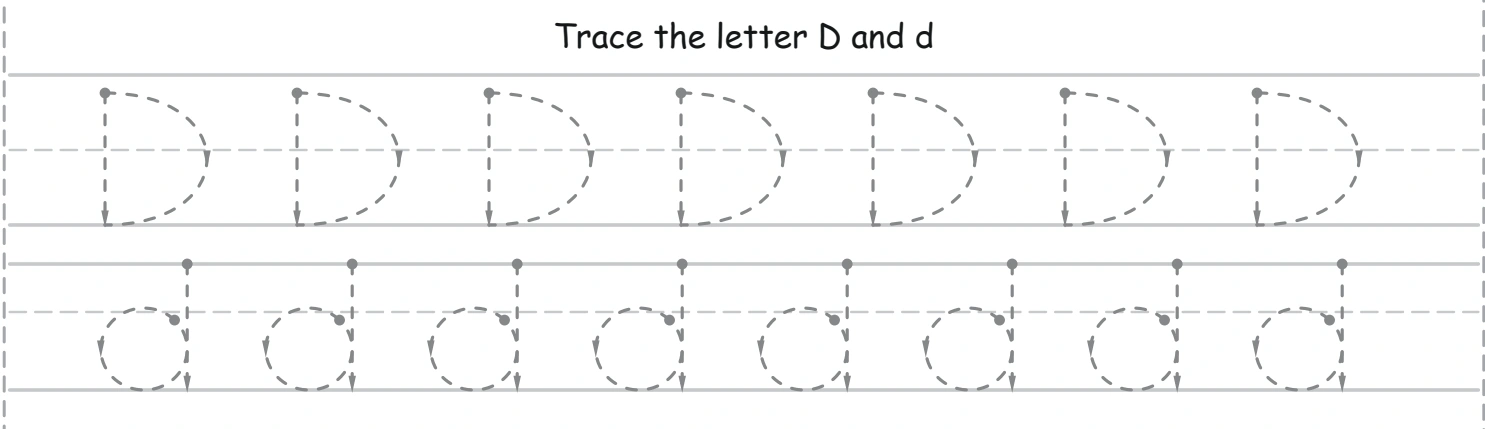
Starting dots and arrows remain visible in the large models. Use a fingertip to inspect the path before a pencil attempt. A child can understand the intended shape while needing additional time to coordinate the smaller movement that records it.
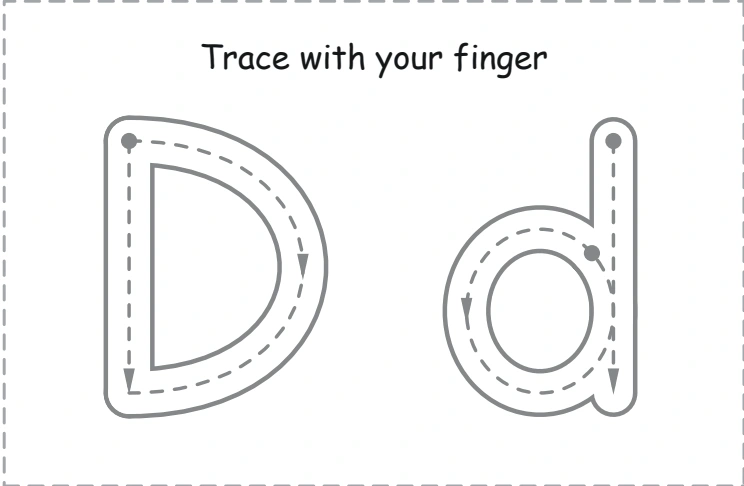
Six useful things the dog page lets an adult notice: Dd Letter Spotter
A report names its evidence: Dd Letter Spotter
“I found d at the end of Bird” identifies a visible place. Dd Letter Spotter gives Dalia a chance to make that explanation through words, pointing or both. A listener can then locate the same character.
Adjacent letters are checked individually: Dd Letter Spotter
The two d letters in Ladder should each be inspected. One successful match does not account for its neighbour automatically. Notice whether Dalia continues the scan before declaring the label finished.
A stem and bowl are compared as an arrangement: Dd Letter Spotter
A loop by itself is insufficient evidence for d. Encourage a look at which side carries the tall stem. This makes a possible b/d confusion a concrete shape comparison rather than a reason to repeat the letter name louder.
The case reference stays available: Dd Letter Spotter
Returning to a large model during Dd Letter Spotter is a useful checking strategy. Dalia does not have to keep its whole appearance in memory while inspecting smaller print. Ask how the model supports her selected character.
A circle has a clear intended target: Dd Letter Spotter
The letter decision comes before the mark around it. If a circle crosses another character, Dalia can explain what she meant. An adult can then support the movement without dismissing the recognition shown by her point.
A second look can produce a better explanation: Dd Letter Spotter
Revisiting Ladder or the tile field can expose a missed match. Describe what changed in the search method. A thoughtful revision gives the practice value beyond whether the first attempt happened to be complete.
Inspect the colouring field row by row: Dd Letter Spotter
The Dd Letter Spotter mixed-letter tiles form three rows containing ten, nine and eight choices. Its four D/d targets are at positions 2, 5, 11 and 22 when the rows are read consecutively. Two are capitals and two are lowercase.
In row one, D appears in columns two and five. Row two begins with d. The third row's d is at column three. These source-specific coordinates let an adult verify a marked page after the child's search rather than direct each selection in advance.
Compare before adding colour: Dd Letter Spotter
Dalia can point to a candidate tile and show the matching large model first. The instruction is to colour D and d, leaving other letters as alternatives. Selective colouring has a different purpose from freely filling every box with a favourite crayon.
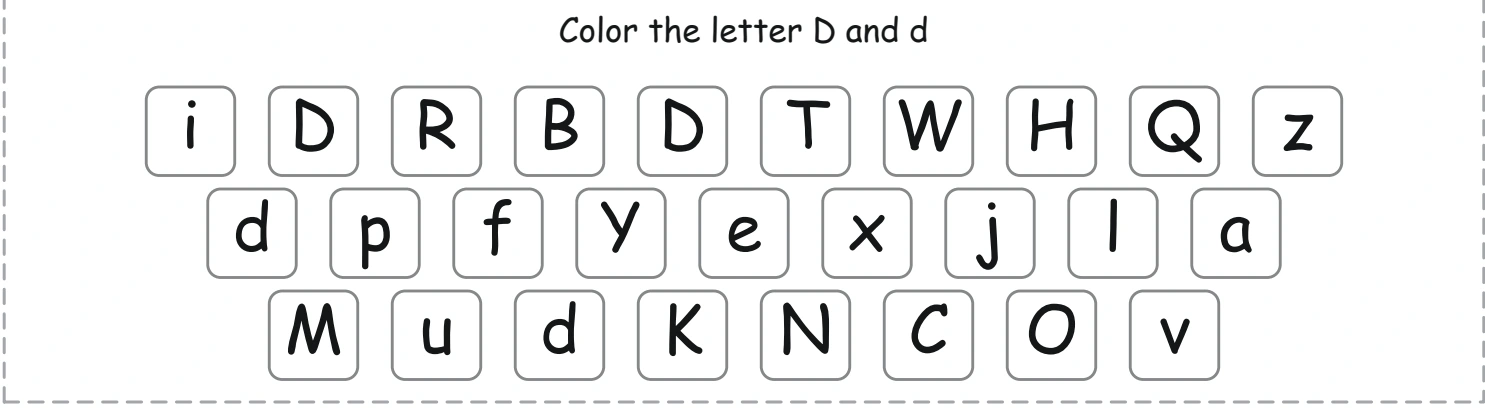
Let the dog illustration keep its open choice: Dd Letter Spotter
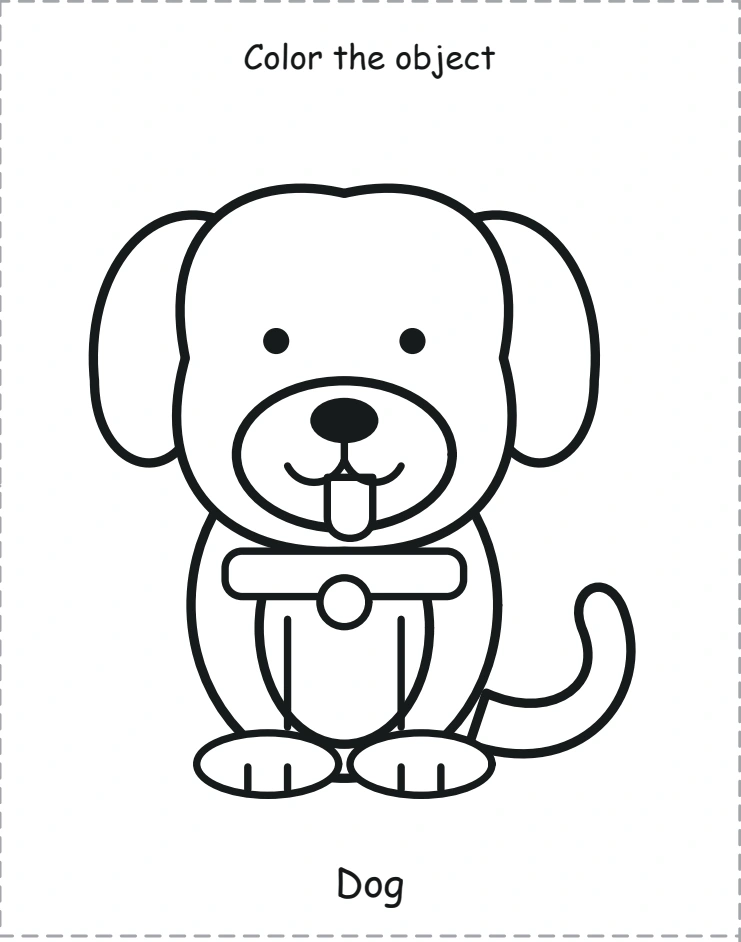
The dog has floppy ears, a collar, visible paws and a curved tail. Dalia can describe those features and choose colours for them. The Dd Letter Spotter object panel supplies no fixed colour code, so an imaginative dog remains an acceptable response to its colouring invitation.
An adult can name the collar or ask which region the child wants to colour next. Keep that conversation distinct from checking the D/d selections. A non-realistic colour does not establish a letter-search error, just as a correct letter circle does not require the entire picture to be finished.
A classroom listener follows a positional explanation: Dd Letter Spotter
For a hypothetical classroom activity, one child describes a target from Dd Letter Spotter without pointing immediately. A partner listens and locates the character. The teacher can ask whether beginning, inside or last makes the report clearer.
When two learners disagree about Ladder, have them inspect the entire spelling together and point once per target. They can then return to their own sheets for the circles. The shared reasoning supports participation without turning one child's record into a copied answer.
At a writing station, the teacher might ask each learner to choose one small D guide and one d guide to discuss. The resulting marks can be considered alongside their spoken plans, especially when letter identity is clearer than pencil control.
Five deliveries to extend the letter report: Dd Letter Spotter
1. Put counters beneath a pair: Dd Letter Spotter
Write Ladder clearly on a spare card and invite one counter below each d. Dalia explains whether both counters belong to different positions. The counters make the record movable before a permanent circle is attempted.
2. Send a beginning-letter parcel: Dd Letter Spotter
A toy receives a card labelled Dog. The child identifies the initial D and points to the matching large reference. An adult reads the label so the parcel game stays within the intended recognition task.
3. Make a final-letter postcard: Dd Letter Spotter
Draw a bird on new paper and supply its word label. Ask Dalia to show the last d to a listening toy. She can dictate an additional message while an adult writes any unfamiliar words.
4. Check a reversed stem-and-bowl example: Dd Letter Spotter
On separate cards, show clear b and d forms. Dalia compares them with the worksheet's lowercase model and explains one visible difference. Use a simple orientation comparison, rather than rotating the actual worksheet letters into a new puzzle.
5. Give the dog a new colour story: Dd Letter Spotter
Invite a freely drawn dog with a chosen coat and collar. The child tells someone about the design. Keep that creative message separate from the source's fixed word-search and tile answers.
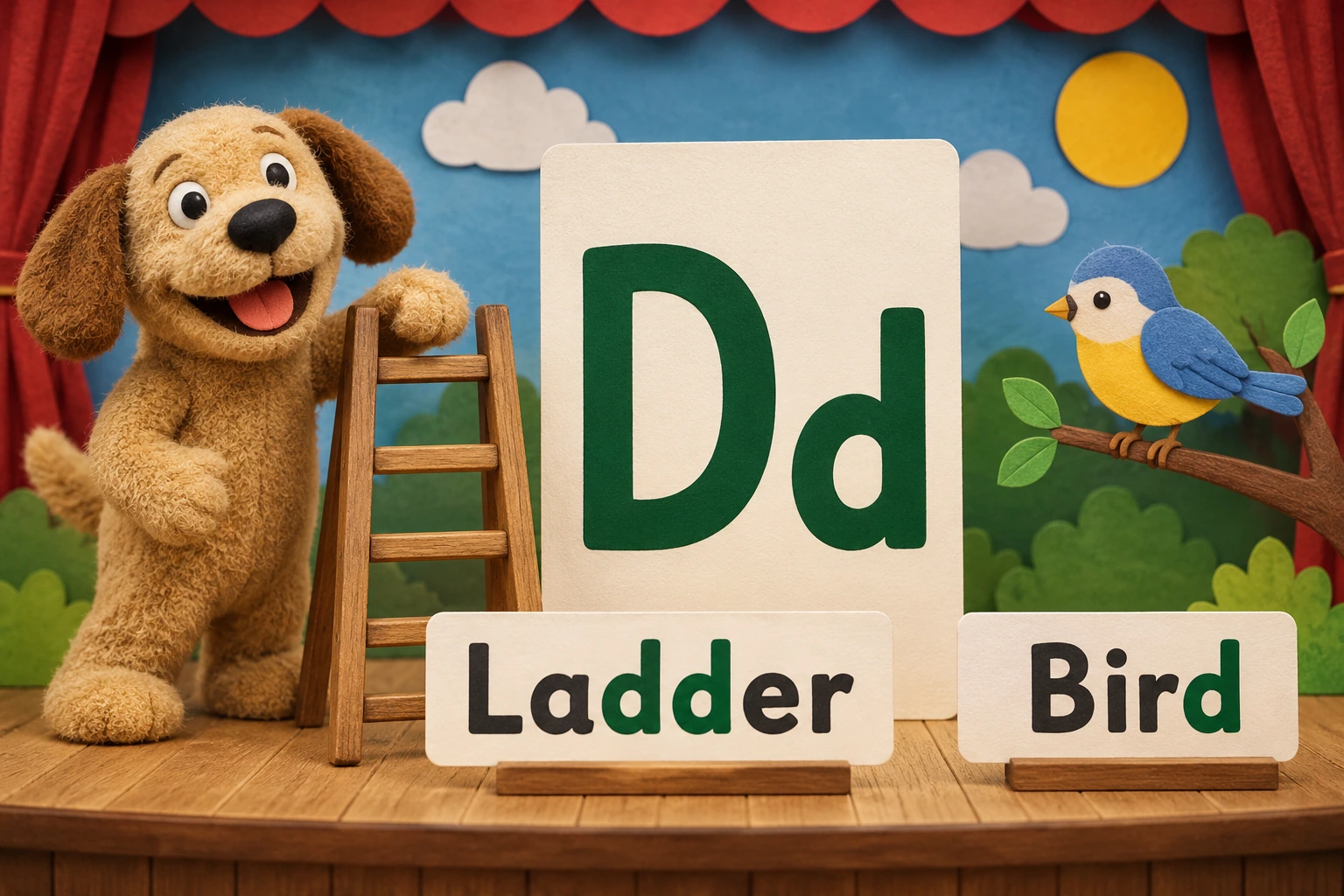
Ladder and Bird supply different places to inspect d.A dog puppet and wooden ladder accompany Dd, Ladder and Bird; highlighted d letters distinguish the spelling locations.
Keep handwriting short enough to inspect: Dd Letter Spotter
There are seven small capital D guides and eight lowercase d guides on Dd Letter Spotter. Start with a selected form, locate its dot and rehearse the route. After tracing, ask which curve or stem the child wants to compare with the model.
For learners aged about three to six, adult support can range from reading every label to helping organise a small panel-sized visit. A comfortable tool and stable page can support the movement. A younger child may prefer finger rehearsal and naming the dog before attempting several pencil guides.
Common obstacles include omitting one d in Ladder, overlooking Bird's final letter, selecting a loop without checking its stem or colouring all the tiles. Revisit the particular decision and its visible evidence. On another day, let Dalia report one discovery more clearly rather than automatically repeating every handwriting guide.
Choose the clean dog-page download: Dd Letter Spotter
The premium Dd Letter Spotter edition is a printable single-page PDF for members whose active plan permits access. The dog-page member edition removes the promotional header and footer, leaving the learning panels unobstructed by website branding. A separate sample control retains the original uploaded page.
Check the portrait print preview for the complete dog illustration, all three word labels and the lower tile rows. The related $5 Alphabet Wordwork Collection includes this sheet in its clean twenty-six-page A–Z PDF, available through a separate bundle purchase.
Follow a report with another print task: Dd Letter Spotter
Compare Dd Letter Spotter with Dd Worksheet. A listening follow-up to Dd Letter Spotter is First Sound Choices. For Dd Letter Spotter, explore Ee Worksheet.
For ways to give a child's explanation an audience, see NAEYC's family ideas for purposeful marks and messages. PBS Parents' suggestions for everyday literacy talk can support the pretend-delivery conversation. In Dd Letter Spotter, connect the word being inspected, the exact d position and the feature that confirms its identity.
Popular Worksheets
Printable resources families and teachers are downloading now.
 Free
 Free
 Free
 Free