
Square Size Copying: 6 Delightful Corner Studies
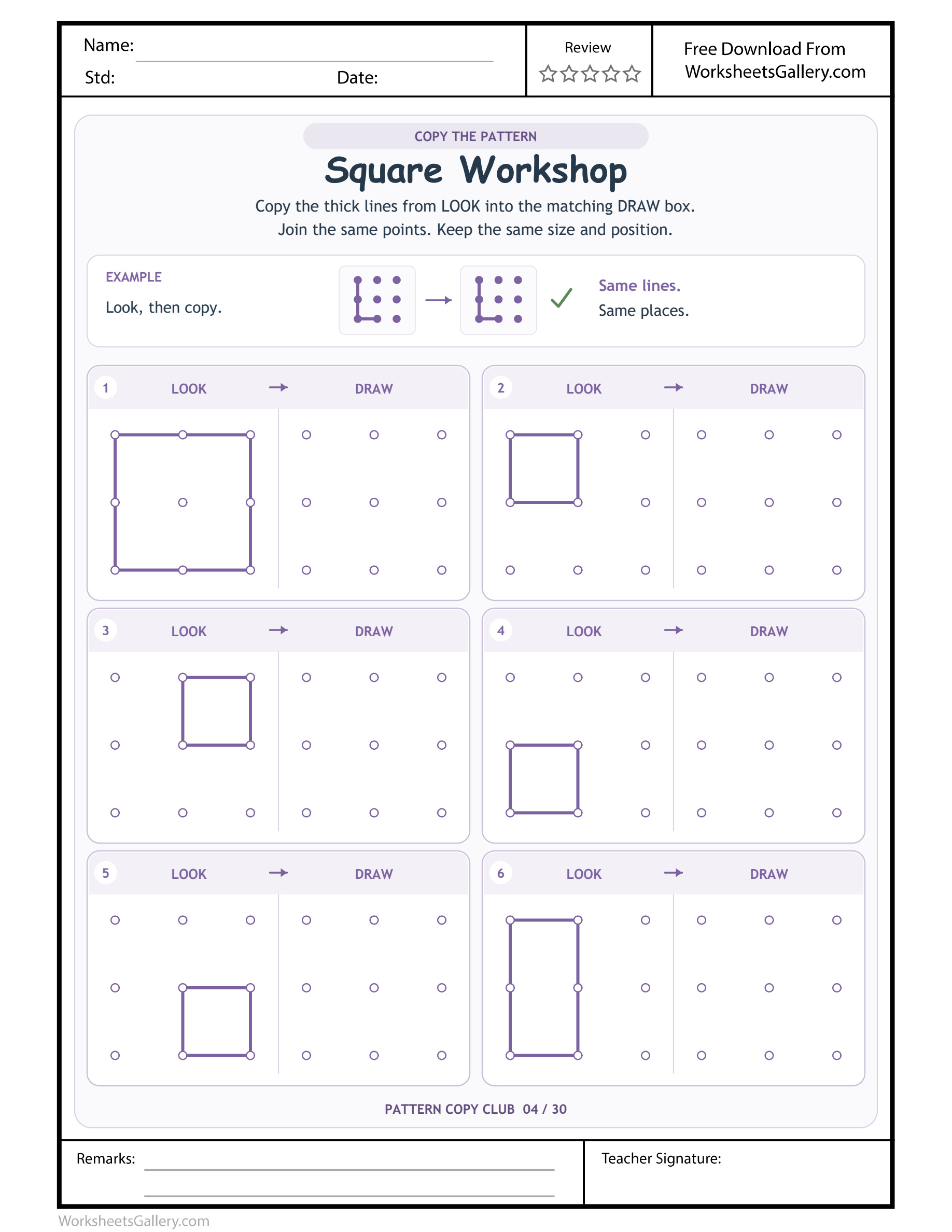
Square Size Copying: Compare large, small and offset boxes while keeping their original spans.
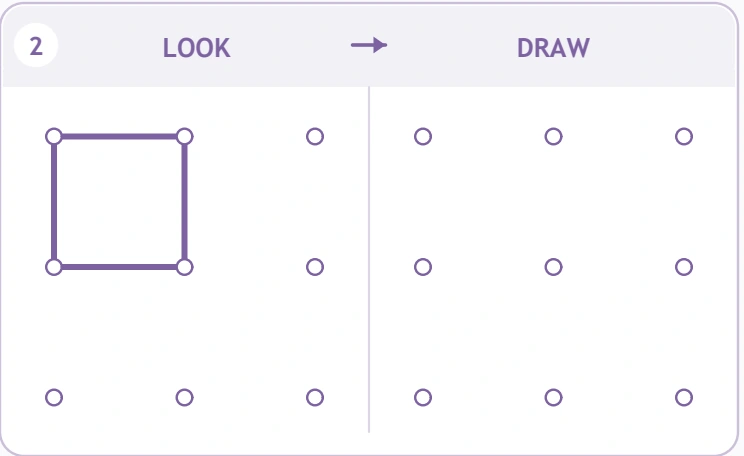
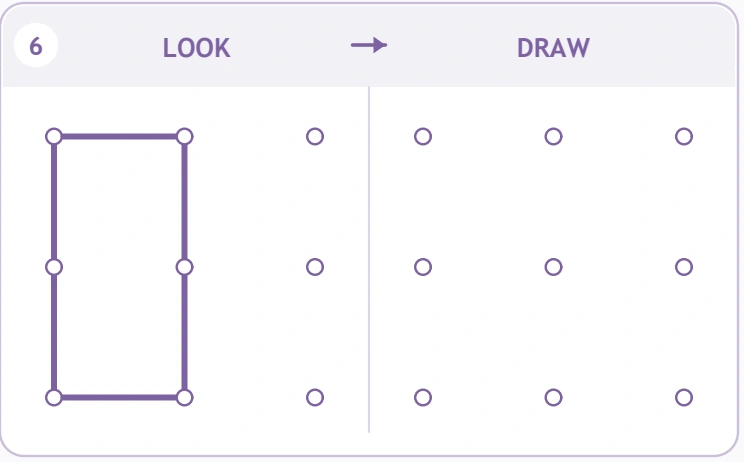
Size is easier to discuss when the corners stay in view. Square Size Copying presents a large square, several smaller offset squares and a tall rectangular outline on matching nine-point fields. Children compare each purple LOOK model with the points in DRAW, keeping its span and position as they recreate it. The Square Workshop source sheet includes six practice pairs and a completed copying example. This printable gives families and teachers a quiet way to explore large and small, upper and lower, while the pencil practises stopping and turning at chosen locations.
Welcome to a workshop of measured-looking choices — Square Size Copying
No ruler or written measurement is required for Square Size Copying. The points provide a visual frame: one small square reaches across a single interval, while the large outside square stretches across the field. Children can compare those spans through pointing and conversation before drawing them.
The final model is a rectangle rather than another square. That matters when using Square Size Copying; drawing six identical little boxes would miss the page's changes. Inspect both width and height. A model can share a left edge with another yet extend farther downward, giving adults a concrete reason to ask for a second look.

What's on each workbench?
| Square Size Copying pair | Visible Square Workshop model | Model structure |
|---|---|---|
| 1 | Large outside square | 9 anchors / 8 bold pieces in Square Workshop |
| 2 | Small upper-left square | 9 anchors / 4 bold pieces in Square Workshop |
| 3 | Small upper-right square | 9 anchors / 4 bold pieces in Square Workshop |
| 4 | Small middle-left square | 9 anchors / 4 bold pieces in Square Workshop |
| 5 | Small lower-right square | 9 anchors / 4 bold pieces in Square Workshop |
| 6 | Left-side rectangle | 9 anchors / 6 bold pieces in Square Workshop |
The Square Size Copying table identifies bold segment totals as an adult aid. A large square side runs through an intermediate point, while a small square side may cover just one gap. The child can draw a longer side in one movement if comfortable. The page's purpose is matching the outline, not producing a fixed number of separate pencil strokes.
Find the footprint before drawing a wall
With Square Size Copying, start by locating the model's upper-left and lower-right corners. Compare those places with the adjacent field. They describe the outline's footprint: how much room it occupies and where that room begins. Then let the learner choose a corner to start from.
Draw one edge, identify its next corner and turn. Close the box only where the model closes. Look across to compare the upper and lower edges before moving to another pair. A copy that is square but shifted one row is a different arrangement; Square Size Copying keeps the question about correspondence as well as shape recognition.
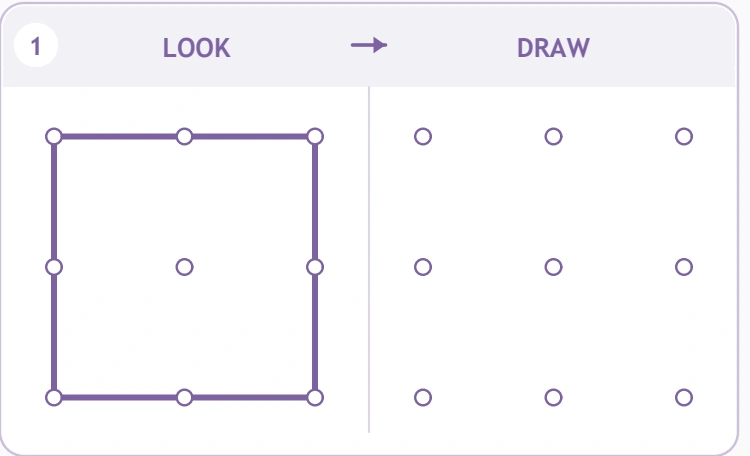
Is this the right drawing invitation today?: Square Size Copying
For many learners around four to seven, Square Size Copying offers approachable straight-line copying. Choose according to the child's ability to hold a pencil comfortably, compare two point fields and attempt a short corner. A child may recognise squares long before they can control four connected sides on a small printed grid.
Large blocks or square frames can introduce the idea first. If a child is frustrated by the printed scale, offer a big homemade dot arrangement on separate paper. Return to Square Size Copying when a smaller field feels manageable. An adult's support can narrow the amount to one model without turning the session into a test of persistence.
Six workshop habits worth noticing: Square Size Copying
- Comparing dimensions. A learner checks the vertical span separately from the horizontal span, especially in the last rectangle.
- Locating an offset shape. A small square belongs in a particular part of the field rather than automatically at the centre.
- Maintaining a course. The pencil follows a straight row or column until the intended corner.
- Returning to a starting point. Closing the fourth edge invites a final visual check of the outline.
- Using descriptive contrasts. Large, small, tall and low make the differences between models easier to explain.
- Making a selective repair. A child can adjust one side that ended too soon instead of discarding the whole attempt.
In Square Size Copying, these habits connect spatial reasoning with pencil control and spoken comparison. They are practice opportunities rather than a promise of immediate handwriting gains. Watch how the child chooses a corner; that decision can reveal more than the finished box alone.
Try a pretend frame shop at home
Imagine Dara arranging small photographs inside cardboard frames. An adult offers Square Size Copying and asks which printed box would need the largest frame. Dara points to the outside square, then chooses a small upper-right model to copy. They compare its location before making any marks.
This imagined family scene suggests a practical use, not a claim about an actual child. The adult can let Dara design colourful frames elsewhere while keeping Square Size Copying's exact copying fields undecorated until checked. Finishing one accurately placed square may be a satisfying end before the photographs return to the pretend shop.
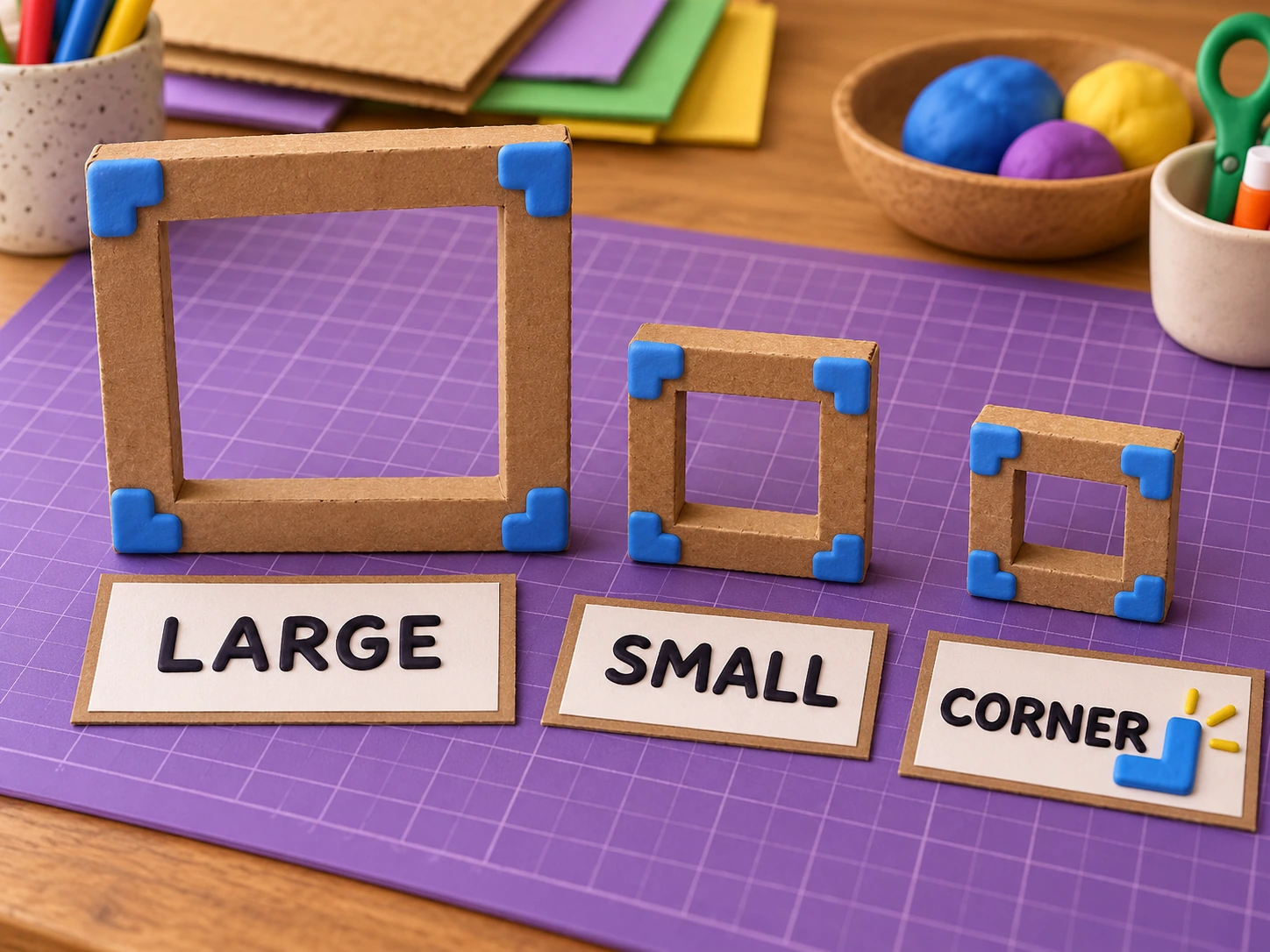
A classroom survey of small boxes
In a possible classroom session, children examine Square Size Copying in pairs and describe where their chosen square sits. One child chooses an upper box; another selects the low model. Each then works on an individual sheet while the partner listens to the description.
The teacher might ask which model is taller than it is wide. That question draws attention to the final rectangle without announcing that every outline must be a square. During Square Size Copying, a short observation such as “compared the two spans independently” gives the teacher a useful record. Speed and the number of completed pairs can remain outside that judgement.
Keep a comfortable hold and a visible target: Square Size Copying
Place Square Size Copying so the child's drawing hand does not hide the reference for longer than necessary. The other hand can hold the lower edge of the paper. A familiar pencil is sufficient; extra-fine points, special pens or a ruler are not needed to begin.
Explain the sample L at the top as a copying demonstration. Its shape does not belong inside the square answers. Read LOOK and DRAW aloud and show the partnership between fields. A child should be able to return to the reference whenever needed; covering it would introduce a memory demand that Square Size Copying does not ask for.
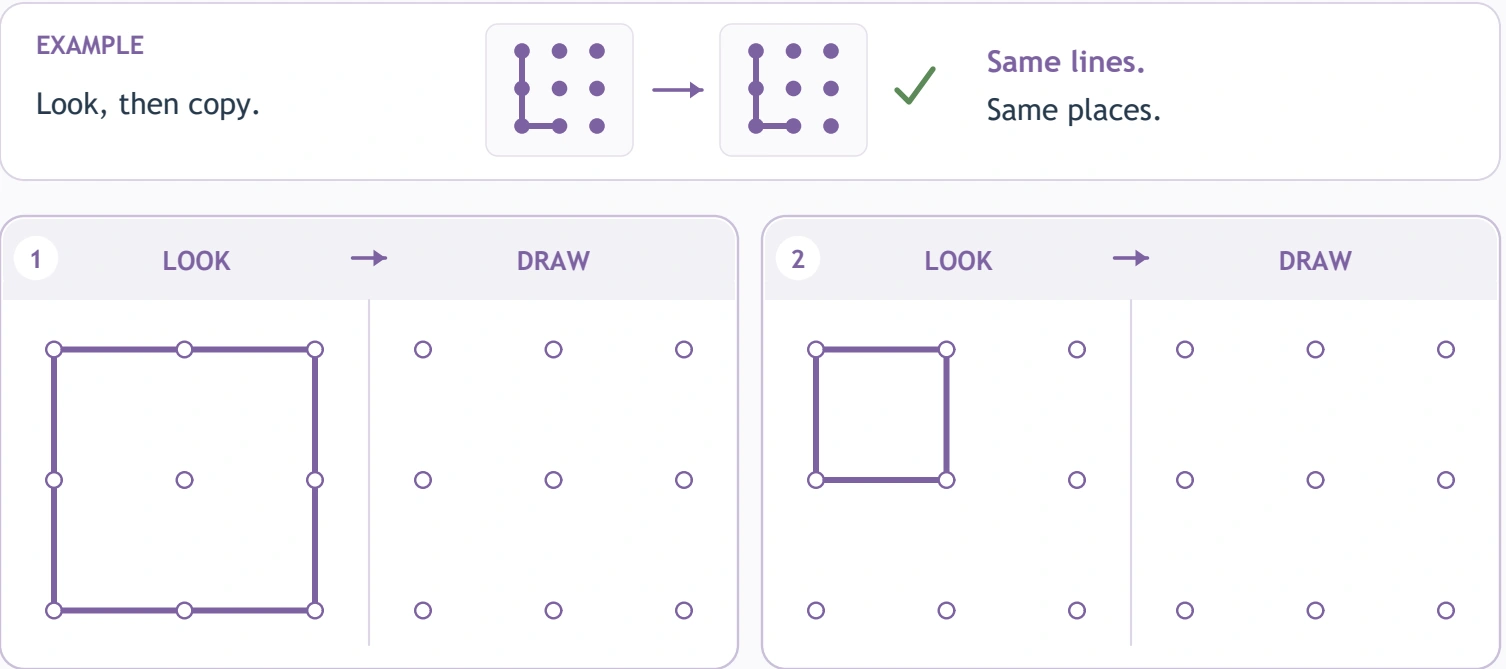
Five frame-shop games to extend the idea
Arrange a shelf of square windows: Square Size Copying
Place square paper frames at different positions on a large mat. Ask a partner to recreate the arrangement using another mat. Discuss location before colour. This makes the offset positions in Square Size Copying tangible without asking for more small pencil work.
Build a tall doorway
Use blocks to construct a rectangle taller than its width. Compare it with a square building opening. Let the child explain which dimension changed. The contrast echoes the final workshop model while allowing free building after the comparison.
Give the frame an address: Square Size Copying
On a homemade three-by-three board, describe a small frame as upper-left or lower-right. A partner points to its corners. Swap descriptions and check them together. Use Square Size Copying only as a visual reminder of how one point field can hold several positions.
Examine an unfinished picture frame: Square Size Copying
Set out three sides of a large stick square with a completed model nearby. Ask which final edge would close it. After checking the construction, invite the child to invent a different open frame, keeping exact copying and invention as separate turns.
Curate a large-and-small display: Square Size Copying
Choose household objects with square or rectangular outlines, such as a small lid and a book. Compare their shapes without expecting exact printed measurements. Draw a favourite on spare paper. Return to Square Size Copying with a fresh reason to inspect span rather than simply repeat a name.
What if every box becomes the same size?: Square Size Copying
That response to Square Size Copying often means the child has recognised the shape family but has not yet used the point locations as evidence. Compare two models side by side and ask how many spaces one edge crosses. Keep the count small and spoken; no written numeral answer is required.
Another common error is dragging the last edge toward the starting point diagonally. Pause at the preceding corner and check its column. Four matching corners provide the outline's plan. If the line wobbles while reaching the intended point, acknowledge the correct placement before offering a chance to redraw more steadily.
A calm return to familiar corners: Square Size Copying
The clear frames in Square Size Copying can feel satisfying because the child sees a shape close after four edges. Preserve that pleasure by making the target attainable. Suggest revisiting one small square next time rather than requiring a fresh complete sheet at every session.
Date an attempt, discuss one well-placed corner and allow the child to choose a future workbench. “This edge stayed in its column” gives useful feedback. If repeated erasing begins to dominate Square Size Copying, take a construction break. A short willing comparison is a better foundation for regular practice than finishing the page under pressure.
From the preview to a printable workshop
Download Square Size Copying's original sample through the free option, or use your account with qualifying membership currently active to obtain its separate clean premium PDF. The clean member edition contains no website watermark, domain wording or promotional advertisements. The native package card provides access to the thirty-sheet collection, available as a separate $3 product.
Save the authorised PDF and check the printer preview on US Letter paper at 100% or Actual Size. Keep the page portrait and preserve its outside border. Once printed, compare the first large outline with a small one before choosing a single Square Size Copying model to copy. The browsing images are references, not substitutes for the printable file.
Continue comparing shapes in everyday play
Compare Square Size Copying with Path Copy Thinking. After Square Workshop, try Drawing Size Choices. For Square Workshop, consider Shape Border Journeys.
Adults using Square Size Copying can complement the page with NAEYC family resources on playful learning. For additional home activity inspiration, explore PBS Parents' learning and growing ideas. Those educational links are optional outside reading, without suggesting sponsorship or providing extra worksheets to this download.
Popular Worksheets
Printable resources families and teachers are downloading now.
 Free
 Free
 Free
 Free