
Diamond Line Comparisons: 6 Amazing Slant Studies
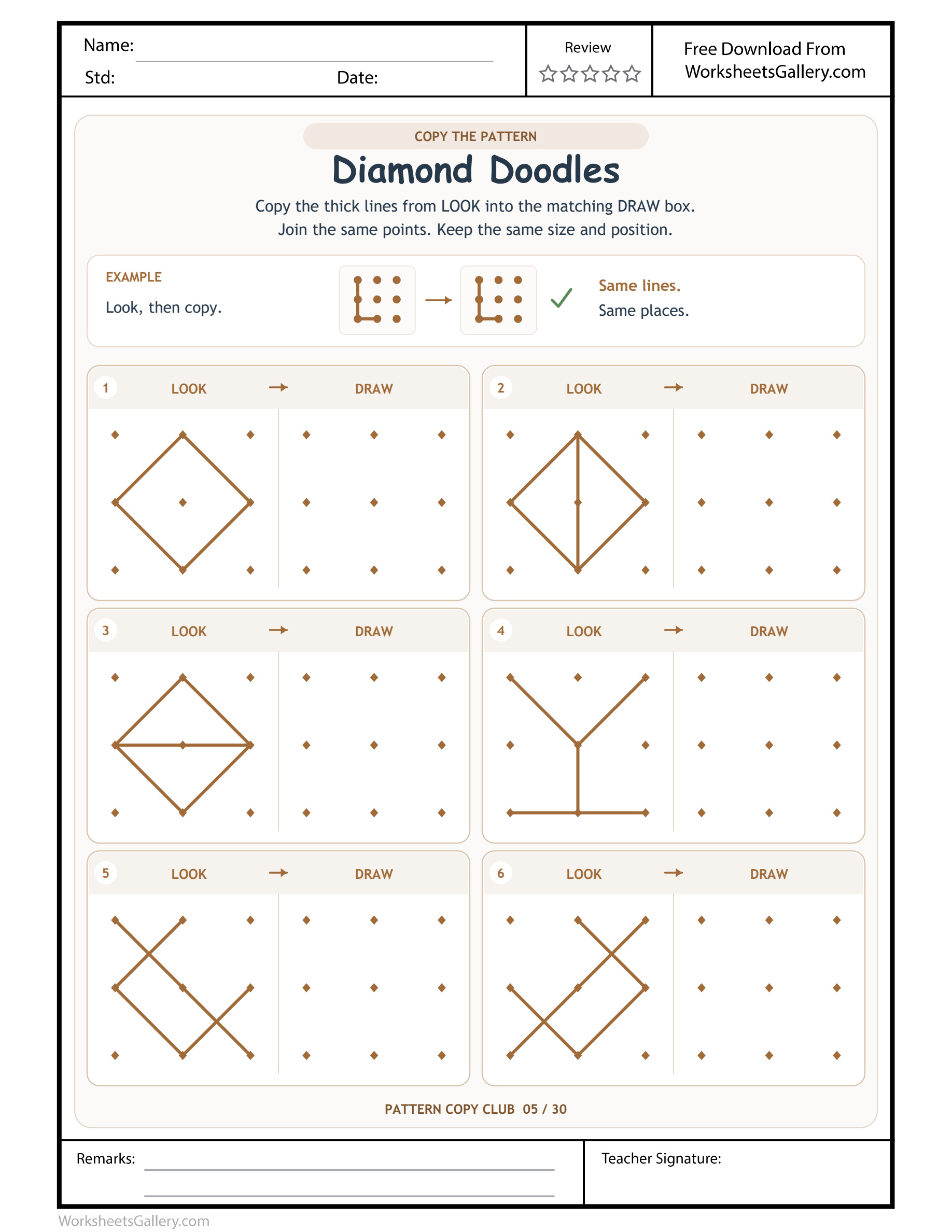
Diamond Line Comparisons: Separate a diamond outline from extra dividers, crossing strokes and open branches.
An extra line can change a diamond into a very different drawing. Diamond Line Comparisons invites children to compare amber outlines, internal dividers, crossing slants and open branches before copying them onto matching point fields. The Diamond Doodles sheet contains six independent designs below a completed example. Its nine markers make each model's location visible, while the varied strokes discourage drawing one familiar diamond repeatedly. Bring this printable to a quiet drawing session when a child can follow short sloping lines and is ready to notice which details belong inside or beyond an outline.
First decide whether the model is closed — Diamond Line Comparisons
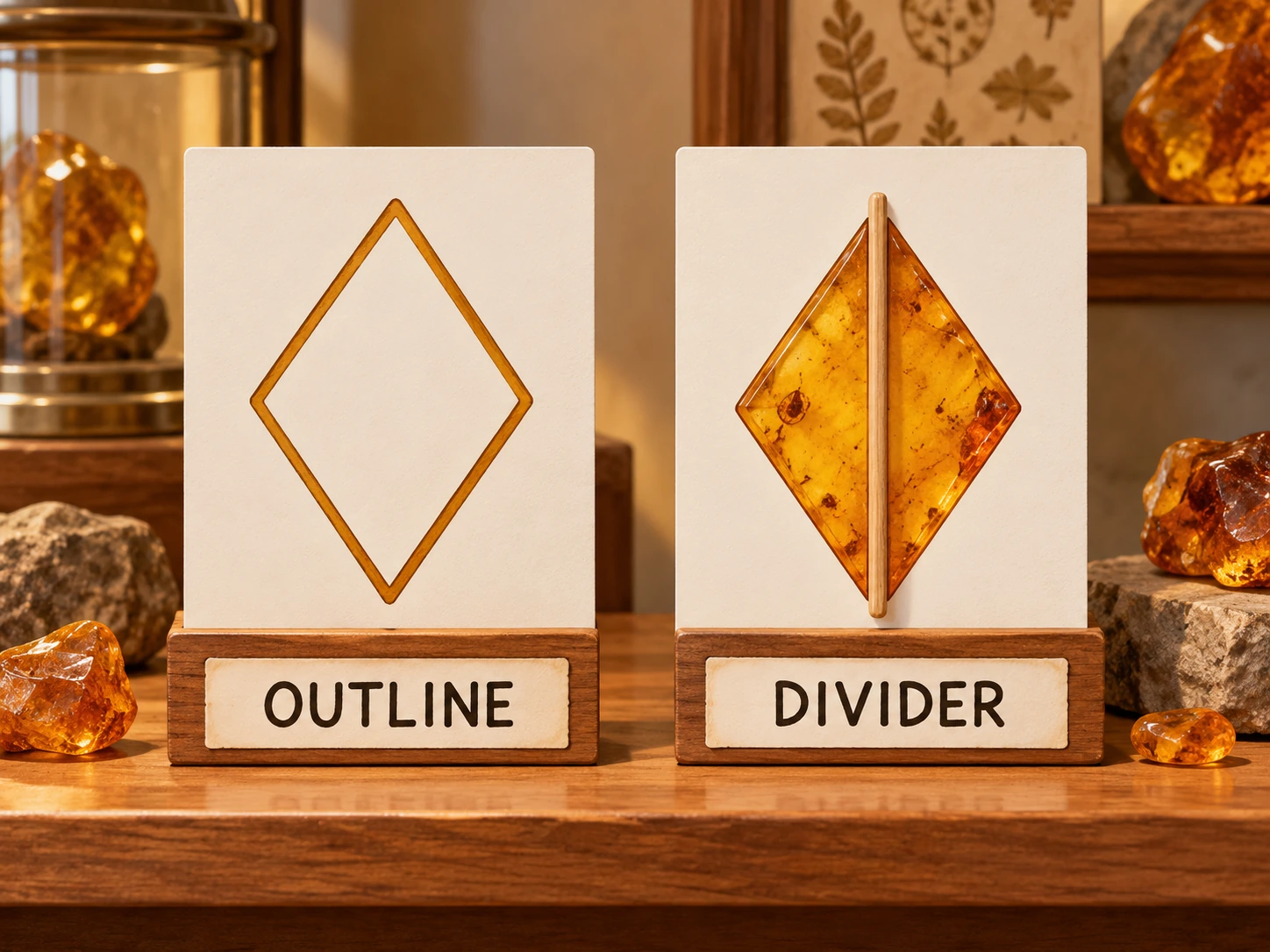
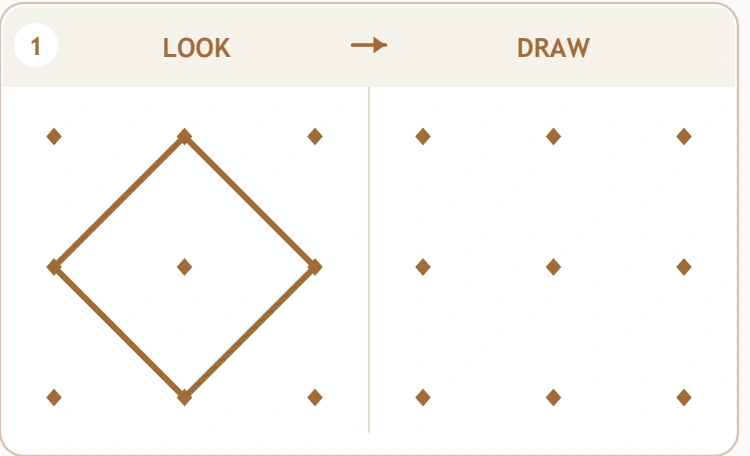
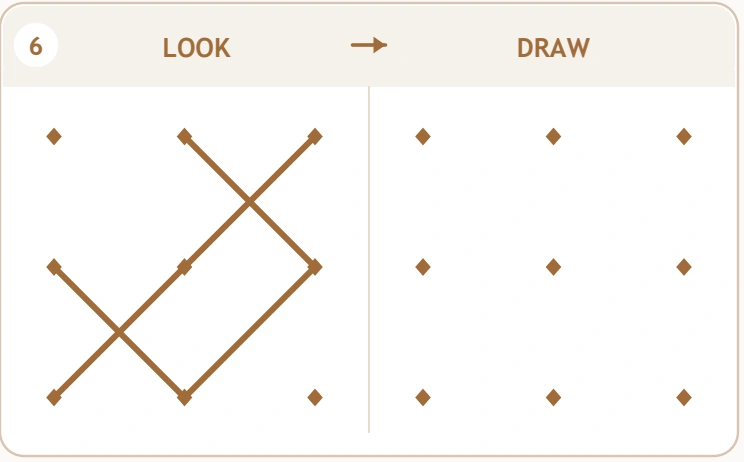
The opening Diamond Line Comparisons pattern is a complete diamond around an unused central point. Later designs add a vertical divider, a horizontal divider or slanted extensions. One model looks more like a fork above a low crossbar than a closed gem. Those differences deserve attention before the pencil starts.
Ask which parts meet and which stop openly. A child using Diamond Line Comparisons may recognise a diamond and fill in missing-looking edges automatically, even though those edges were never printed. The model decides what belongs. A name such as gem or diamond can introduce the activity, but it should not overrule the actual line arrangement.
An outline, a divider and an extension
Three useful Diamond Line Comparisons words describe different jobs. An outline forms the outside of a closed shape. A divider travels through its interior. An extension continues beyond a familiar shape or joins another part. Use a finger to locate one example of each idea without expecting a child to remember formal definitions.
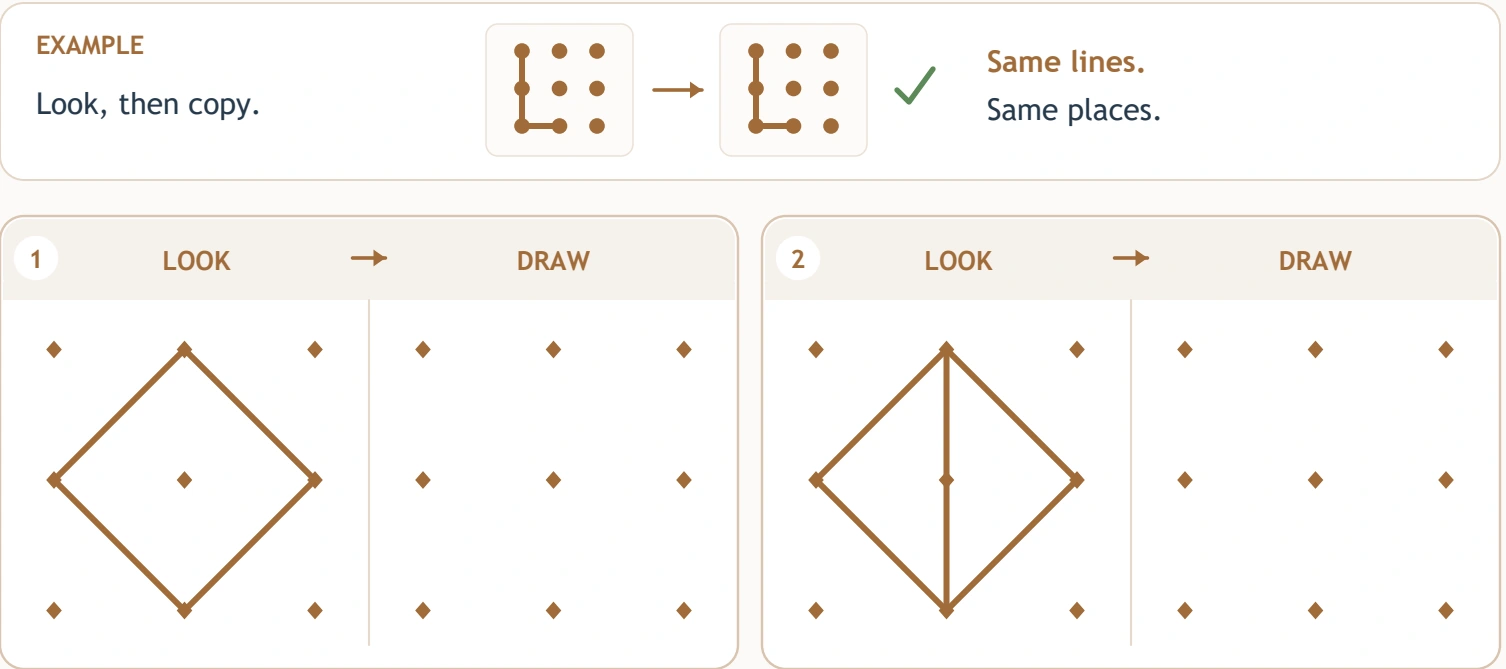
For the second model, compare the closed boundary first and then the upright through its centre. For the third, the inside connection runs horizontally. In Diamond Line Comparisons, the same broad diamond silhouette can therefore hold two different answers. This gives an adult a concrete reason to ask what changed between neighbouring models.
Check the six printed designs
| Diamond Line Comparisons pair | Visible Diamond Doodles model | Model structure |
|---|---|---|
| 1 | Closed diamond around an unused centre | 9 anchors / 4 bold pieces in Diamond Doodles |
| 2 | Diamond with a vertical divider | 9 anchors / 6 bold pieces in Diamond Doodles |
| 3 | Diamond with a horizontal divider | 9 anchors / 6 bold pieces in Diamond Doodles |
| 4 | Fork over a low crossbar | 9 anchors / 5 bold pieces in Diamond Doodles |
| 5 | Crossing slants around a low diamond | 9 anchors / 5 bold pieces in Diamond Doodles |
| 6 | Diamond crossed by an extended diagonal | 9 anchors / 5 bold pieces in Diamond Doodles |
The source's bold segment counts include short pieces that share a straight course. They do not require a separate pencil lift for every piece. Diamond Line Comparisons uses the matching points to preserve size and placement; children may choose a practical drawing order and return to the model whenever they need to compare another connection.
Avoid completing an imagined gem: Diamond Line Comparisons
One common Diamond Line Comparisons mix-up is closing every open branch into a diamond. Another is copying the outside accurately but forgetting its internal divider. Rather than saying “something is missing,” identify the part being checked: outside boundary, centre upright, middle crossbar or extended slant.
A crossing does not always provide a printed destination point. Let the pencil continue along the model's straight course when that is what the reference shows. Do not turn every overlap into an elbow. Compare the stroke through the crossing, not just the intersection. If the child becomes uncertain, inspect a single diagonal before attempting the whole model again.
Six gains to look for in the comparison
- Detail selection. The child notices which inside connection distinguishes one diamond model from another.
- Boundary tracking. Following the outline separately can prevent an internal stroke from being mistaken for an outside edge.
- Diagonal planning. Choosing both endpoints gives a slant a specific destination across the point field.
- Crossing awareness. The learner can recognise that two lines may overlap while keeping their own directions.
- Inhibition of additions. Leaving an intentional opening unchanged practises respecting the reference instead of completing a familiar shape by habit.
- Precise conversation. Words such as divider, centre and extended help explain a small difference without criticising the entire drawing.
These Diamond Line Comparisons opportunities combine visual attention, motor decisions and language. They are not a timed measure of skill. A child who can point out the correct divider but wants a break from drawing has still supplied useful information about what they noticed.
Choose an approachable amount: Diamond Line Comparisons
Many children in the four-to-seven age range can explore selected Diamond Line Comparisons models with support. Comfort with short slants matters more than knowing a formal shape vocabulary. If the opening diamond is already difficult to place, postpone the crossed designs and use large stick constructions first.
An adult can read LOOK and DRAW aloud, show the completed L example and invite one small attempt. The sample L demonstrates matching positions; it is not an extra shape to insert inside the practice models. Keep the page's orientation clear and the partner field close enough for an easy glance across.
A practical copying order
For a closed model in Diamond Line Comparisons, point to its outermost top, bottom, left and right anchors. Locate those positions in DRAW. Copy the boundary in a comfortable order, then pause to examine any interior line. Add that detail only after comparing where it begins and ends.
For an open model, choose a distinctive endpoint or junction instead. Break the design into a few connected parts and allow pencil lifts between them. This approach keeps Diamond Line Comparisons manageable without imposing an invented stroke sequence. A slightly uneven line can be discussed separately from a misplaced endpoint, so the learner knows which decision to reconsider.
Eli's gem counter, an imagined home scene: Diamond Line Comparisons
Imagine Eli arranging pretend gems on a shelf. An adult brings Diamond Line Comparisons and asks which model contains a line through its middle. Eli points to the vertical divider but starts drawing it horizontally. They compare the middle connection with the next model and notice the difference together.
This illustrative home scene is not a report of results. Its useful feature is a focused comparison between two nearby designs. Eli can describe the divider before changing the mark. After that single Diamond Line Comparisons pair, the family might return to the pretend counter and sort the physical gems by a completely different rule, such as colour.
A classroom detail detective table
In an imagined classroom workshop, a teacher invites children to inspect Diamond Line Comparisons before collecting pencils. Each learner chooses one design and names a distinguishing detail. One child notices an open top branch; another chooses the horizontal middle line. The teacher models descriptive words where needed.
Once drawing begins, ask children to compare the feature they named. This makes the review purposeful rather than a search for general neatness. A classroom note about whether a learner preserved an extension can guide the next invitation. Children need not complete all six Diamond Line Comparisons models or agree on what the abstract designs resemble.
Six gem-studio games for another kind of practice: Diamond Line Comparisons
Build a divided window: Diamond Line Comparisons
Make a large diamond frame from paper strips and place a removable strip inside it. Change the divider from vertical to horizontal while a partner watches. Describe what altered, then connect that observation with the neighbouring Diamond Line Comparisons designs.
Offer an open-shape exhibition: Diamond Line Comparisons
Arrange a few unfinished-looking stick constructions. Give each a name without adding more sticks. This playful permission to leave an opening can counter the urge to close every Diamond Line Comparisons model into a standard diamond.
Become a crossing inspector: Diamond Line Comparisons
Lay two ribbons diagonally across one another. Follow one ribbon from end to end with a finger, then the other. The ribbons overlap but each keeps its course. Keep this demonstration large and separate from the printed point field.
Swap the detail curator: Diamond Line Comparisons
One partner chooses a physical model and describes its special inside line. The other finds the model among two or three choices. Reverse roles. This game uses language to identify a feature instead of treating all gem outlines as interchangeable.
Invent a jewellery label
After exact copying, draw a freely designed gem on another sheet and give it a spoken name. Add a written label with adult help if wanted. Making invention explicit keeps creative additions welcome without changing the answer expected in Diamond Line Comparisons.
Repair a misplaced divider: Diamond Line Comparisons
An adult sketches a diamond with an intentionally offset middle stroke beside a correct physical model. Ask the child to explain which endpoint should move. Celebrate the explanation, then let the child create a new comparison for the adult.
Keep the studio inviting across several visits: Diamond Line Comparisons
The gem theme can make close inspection enjoyable, especially when adults show interest in the child's descriptions. Avoid declaring every design “beautiful” before looking at it together. With Diamond Line Comparisons, a comment about a well-matched divider provides a clearer connection between effort and a specific decision.
Store the page where it can be chosen again, and revisit one model after a short gap. A learner might want to improve a slant or simply explain the fork-shaped pattern this time. Noticing a difference is progress worth discussing. Stop when concentration fades; the remaining Diamond Line Comparisons pairs can wait without becoming unfinished homework.
Choose an original sample or a clean member file: Diamond Line Comparisons
Use the free sample control for the supplied Diamond Doodles original. The clean premium Diamond Line Comparisons PDF is a separate member download: log in, confirm an eligible active membership and choose the premium variant. That file removes website watermark and domain branding along with promotional advertisements, while preserving every drawing model.
The page's related package card opens the complete thirty-sheet collection at $3. If you select that product, its checkout is separate from the individual member option. Save the authorised PDF, select US Letter at Actual Size or 100%, and examine the printer preview before using Diamond Line Comparisons. Keep its border and point spacing intact for comfortable comparisons.
More looking, building and explaining: Diamond Line Comparisons
Compare Diamond Line Comparisons with Drawing Size Choices. After Diamond Doodles, try Shape Border Journeys. For Diamond Doodles, consider Path Copy Thinking.
For play ideas surrounding Diamond Line Comparisons, adults can consult NAEYC's family play collection. The PBS Parents Learn and Grow resource offers additional everyday learning suggestions. These popular educational sites are outside references, not sponsors or included worksheet files.
Popular Worksheets
Printable resources families and teachers are downloading now.
 Free
 Free
 Free
 Free