
free
Classroom Equal Totals: 5 Brilliant Same-Value Games
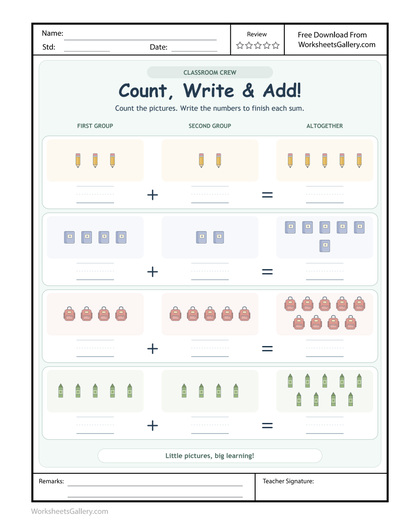
Check why backpacks and crayons both total nine instead of assuming every new row must have a larger answer.
Showing 1-18 of 18 worksheets in addition.
Check why backpacks and crayons both total nine instead of assuming every new row must have a larger answer.
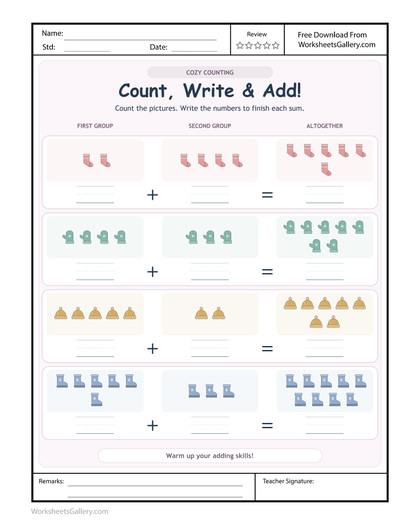
State individual socks, mittens, hats or boots as the unit so that a useful pairing habit does not change the addition question.
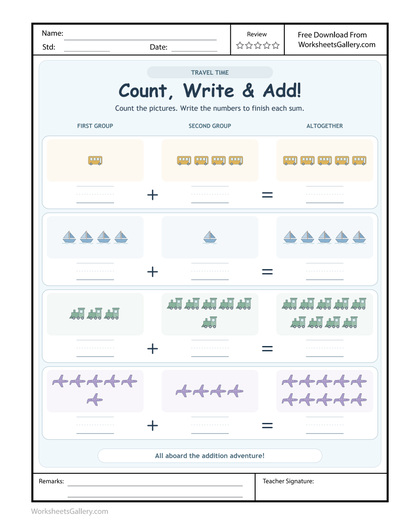
One plus four buses and four plus one boats reach the same amount while the written parts keep their pictured order.
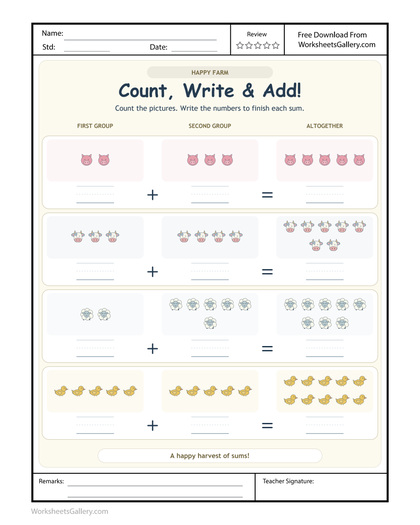
Turn a static farm equation into a before, more and now story, then map each quantity back to its pictured group.
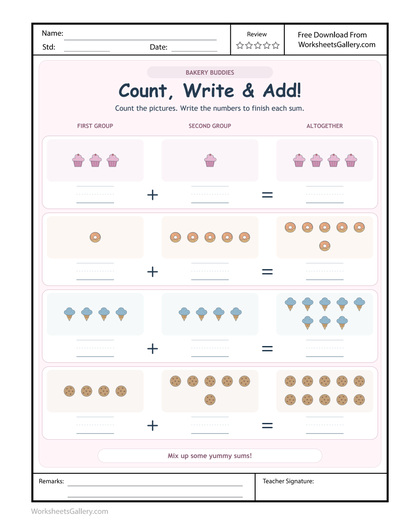
Compare two equal cone batches with unequal cupcake, doughnut and cookie groups before recording each pictured equation.
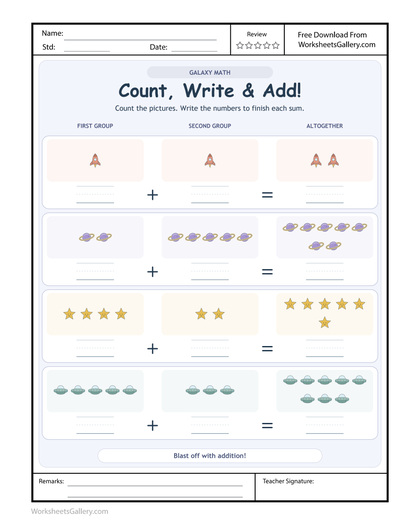
A mission report needs two checks: combine the starting space groups, then compare that quantity with the pictured result.
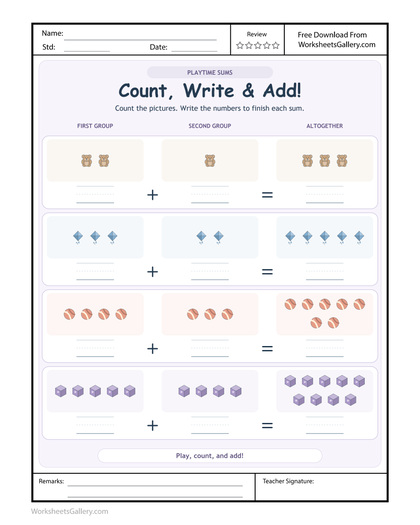
Keep a known toy quantity while counting the new arrivals, with a full picture recount available whenever it is useful.
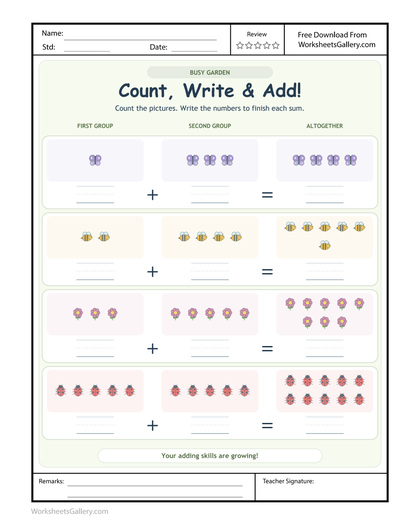
Give every written numeral a specific picture panel, separating a counted value from the hand movement that records it.
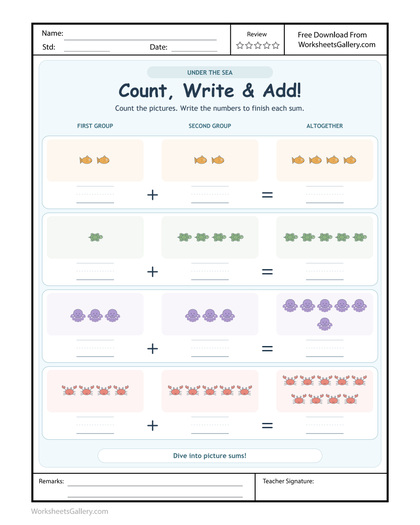
A sea-picture equation gives equals a meaning: two counted groups and the shown whole describe the same quantity.
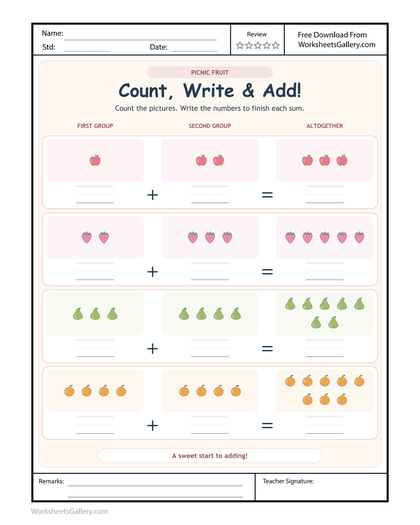
Read three fruit panels as two starting parts and one represented whole, keeping the total from becoming an extra addend.
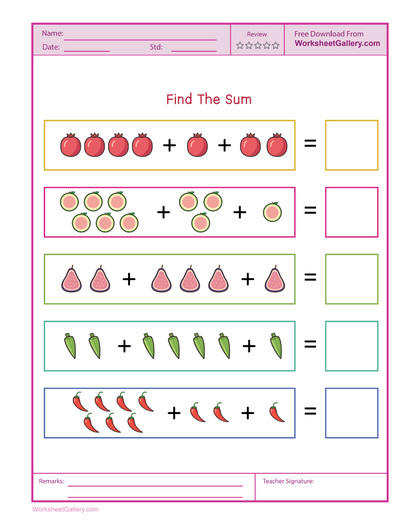
Pomegranates total seven, guavas ten, figs six, okra seven and chilies ten. Two equations reach nine before their final single picture completes the amount.
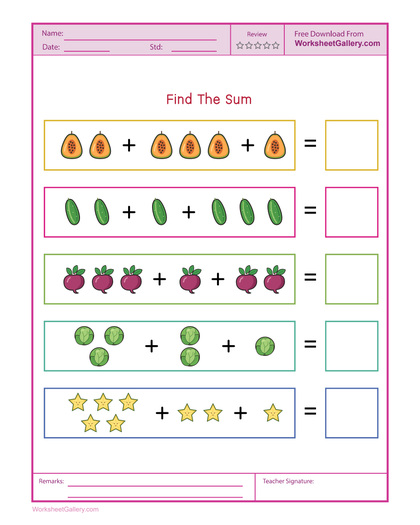
Papaya pictures show 2+3+1; cucumbers 2+1+3; beets 3+1+2; leafy heads 3+2+1; star-shaped slices 5+2+1. Include the last group before recording six or eight.
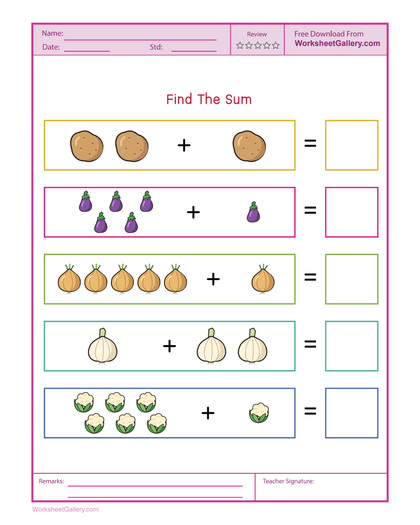
Potatoes make three, eggplants and onions each make six, garlic makes three and cauliflower makes seven. Compare the quantities in both parts before recording a total.
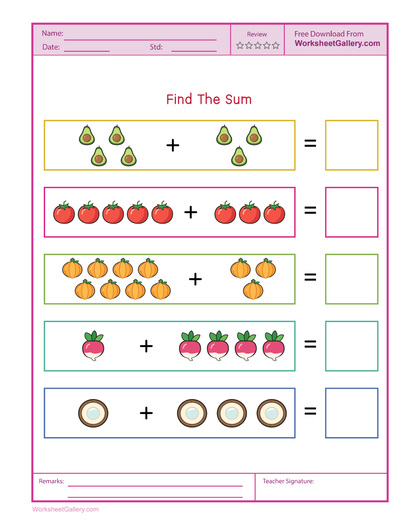
Avocado pictures make seven, tomatoes eight, pumpkins eleven, pink-and-white roots five and coconut pictures four. Select a starting row and keep the counting sequence connected.
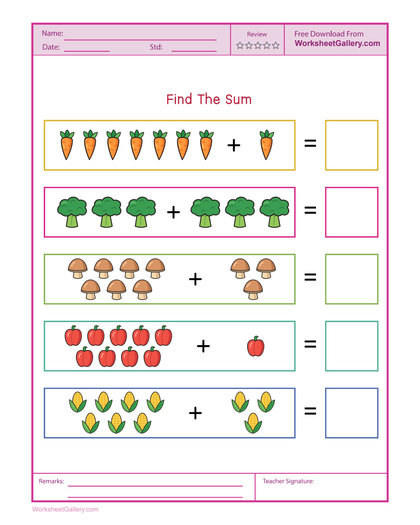
Seven carrots gain one; three broccoli pictures meet three; seven mushrooms gain three; nine peppers gain one; seven corn cobs gain three. Notice the added group before counting.
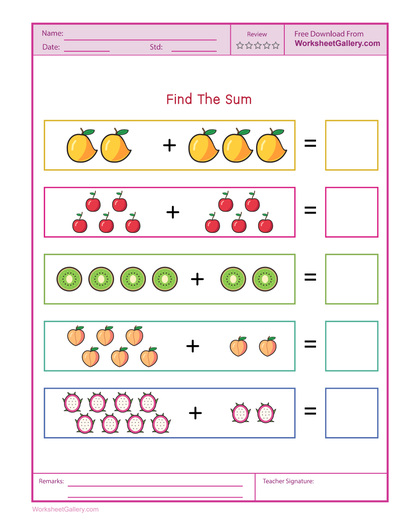
Mangoes make five, the red-fruit groups make ten, kiwi slices make six, peaches make eight and dragon fruit pictures make ten in a second arrangement.
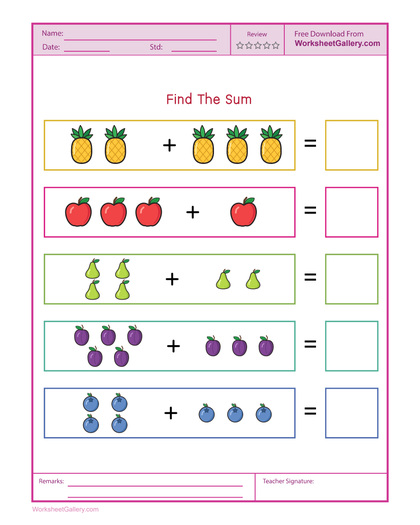
Five colored picture equations combine pineapples, apples, pears, plums and blueberries. Count both groups, track two-row arrangements and record totals from 4 to 8.

Boost early math skills with this engaging Fruit Picture Addition Worksheet! Perfect for young learners, it makes mastering sums up to 10 an exciting fruit-filled adventure.