
Bunny Picture Tracing: 3 Joyful Outline Adventures
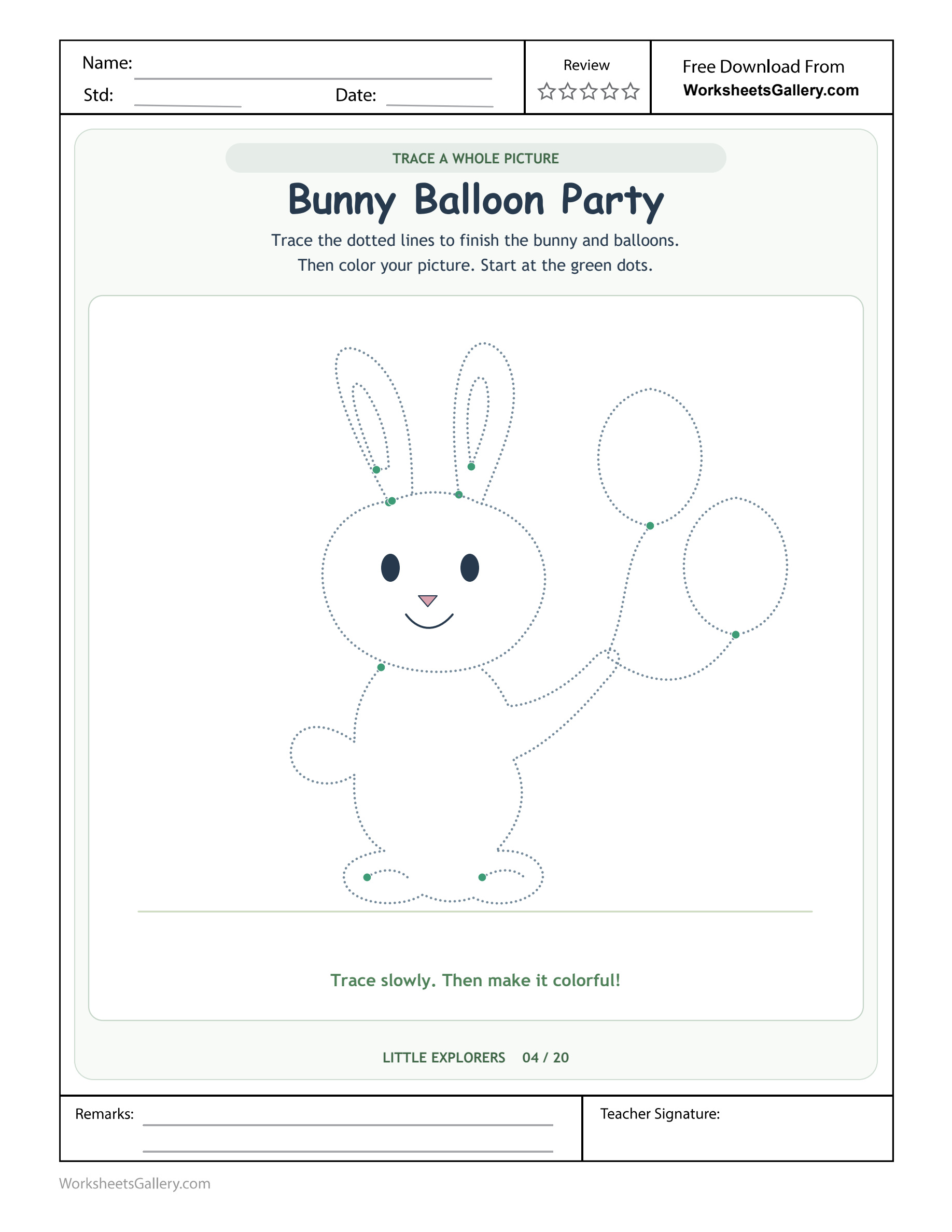
$5 collection companion: Bunny Picture Tracing. Follow green starting points through a bunny and two balloons before choosing colours.
Two balloons give this bunny plenty of curved lines to follow before the colouring begins. In Bunny Picture Tracing, children trace dotted picture contours from the green starting points, then make the finished scene their own with colour. The page combines recognisable shapes, small changes of direction and a cheerful reason to keep looking at the pencil's next movement. It is suitable for supported preschool and kindergarten drawing practice. An adult can help choose a manageable section without taking the pencil away or insisting that the entire bunny be completed in one uninterrupted stroke.
Look over the party picture before tracing — Bunny Picture Tracing
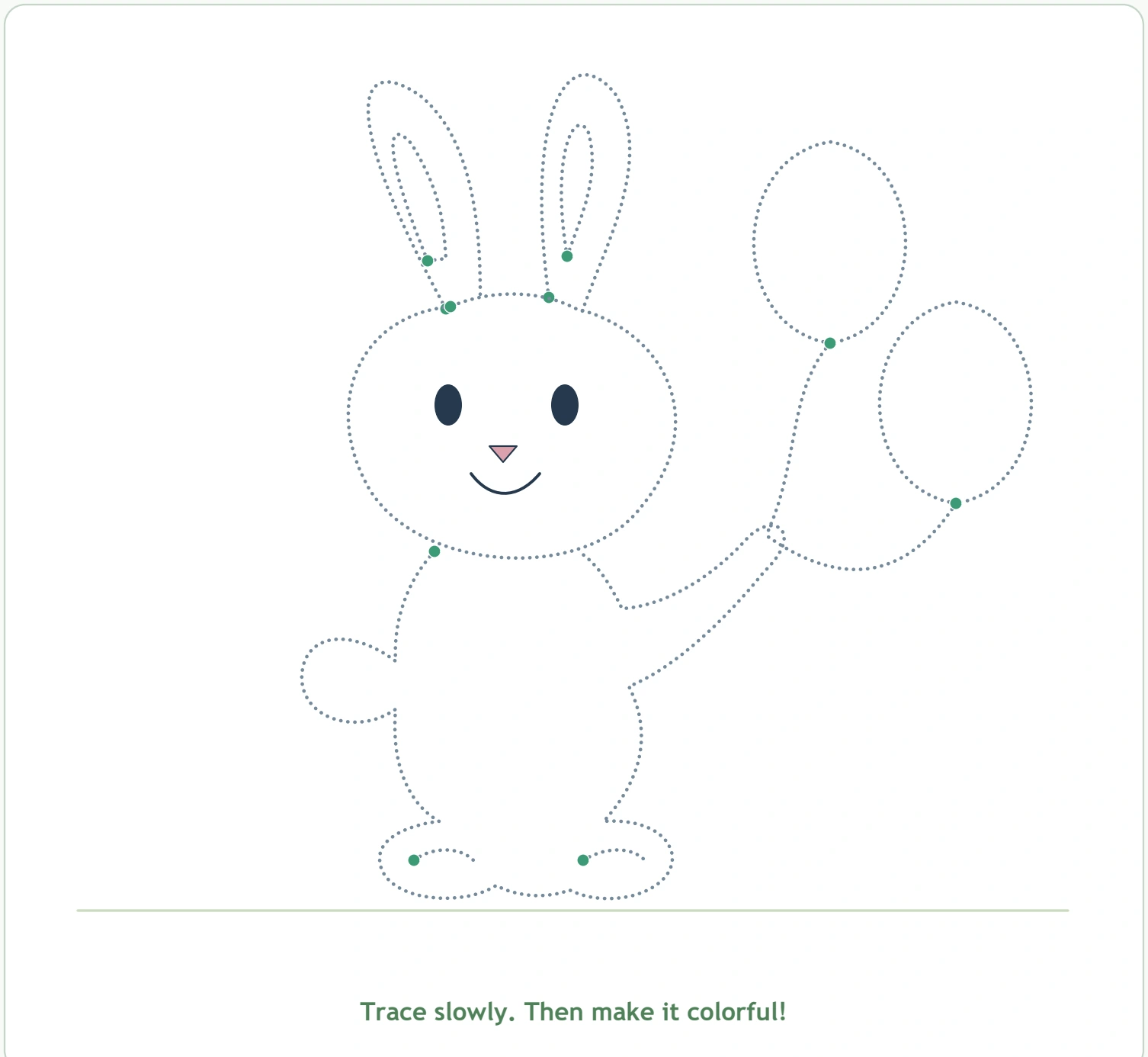
The supplied Bunny Picture Tracing sheet shows a bunny, two balloon outlines and their strings. Several green dots indicate useful starting places on the dotted contours. The facial features are already present, so the child is completing a picture rather than drawing every feature from an empty page.
Invite Davi to point out a balloon, a long ear and a foot. Then ask where a chosen dotted line begins and which way it travels. This first look gives the movement a destination. A child who recognises the bunny immediately may still benefit from inspecting the difference between an outer contour and a nearby string.
Do not turn the preview into a long adult demonstration. One finger-followed section can be enough. Bunny Picture Tracing remains the child's drawing invitation; the adult is helping make the visual information usable, not proving how neatly a grown-up can trace.
Make the first green dot easy to find: Bunny Picture Tracing
Place the paper so that Davi can see the selected contour clearly. Offer a comfortable pencil, crayon or other suitable drawing tool and a stable surface. He can follow a short section with a finger before choosing whether to add a visible line. A tracing attempt may include pauses and lifted marks.
In Bunny Picture Tracing, the green dot is a starting cue rather than a target that needs repeated colouring. Ask Davi to notice where the dotted path goes next. If his mark heads toward another nearby outline, return to the particular contour he selected and look at its next bend together.
Follow the line that belongs to this shape
A balloon boundary loops around a broad oval, while a string travels toward the bunny. At their meeting area, a child can be tempted to continue onto a different part because the two are close together. Name the current purpose: “We are following the balloon edge now.” That reminder can clarify the route without prescribing a rigid pencil speed.
Three kinds of movement inside one drawing: Bunny Picture Tracing
| Part to inspect | What the eye notices | A useful invitation |
|---|---|---|
| Bunny contour | Rounded body sections and smaller turns around ears and feet | Choose one short section and find its next change of direction. |
| Balloon outline | A long closed curve around an open interior | Look slightly ahead of the mark as the edge bends. |
| Balloon string | A narrower curved route linking parts of the picture | Keep following the selected string when another outline is nearby. |
The Bunny Picture Tracing picture brings these movements together, but they need not be practised in the same order by every child. One learner may enjoy a broad balloon before approaching a small foot. Another may want to complete the bunny first because it makes the picture feel recognisable.
A pause can protect the intended route
Stopping to look is compatible with tracing. If the hand has travelled ahead of the eye, pause and identify the next dot or curve. An adult can say which section is being inspected, then wait. Repeatedly urging the child to keep the pencil moving may make it harder to notice the intended boundary.
Let colouring remain a personal choice
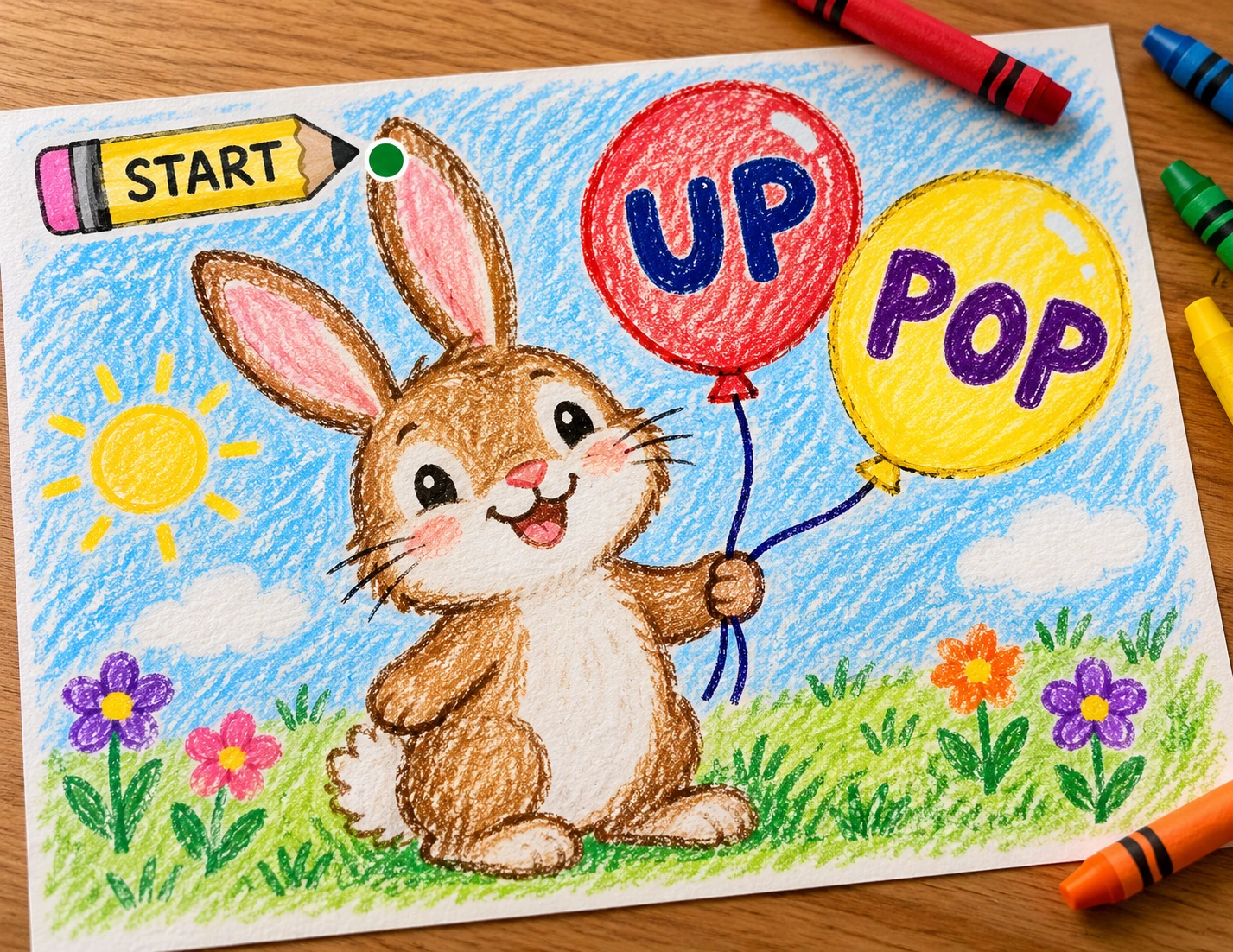
After tracing, Bunny Picture Tracing invites the child to colour the picture. The source does not assign compulsory colours to the bunny, balloons or background. Ask whether Davi has an idea for his party picture. A blue bunny or two differently patterned balloons can be an intentional choice rather than an error to correct.
The supporting illustration shows a finished bunny with the balloon words UP and POP. Those labels belong to that additional play example; they are not missing words the child must copy onto the supplied worksheet. Use the illustration to start a conversation about a completed picture, while keeping Davi's own decisions open.
Choose one colouring region at a time: Bunny Picture Tracing
The balloon interiors offer relatively broad spaces, while ears and feet provide smaller areas. A child can choose a region that feels manageable and leave another for later. If a mark crosses an edge, talk about the intended area when useful, but do not let repeated corrections erase the pleasure of making the scene colourful.
Six things a grown-up might notice: Bunny Picture Tracing
Finding a start independently: Bunny Picture Tracing
Bunny Picture Tracing gives a child visible green cues rather than asking them to invent a starting location. Notice whether Davi can locate a cue for the section he wants. Naming the cue and using it are related but distinct steps.
Looking ahead to a bend: Bunny Picture Tracing
A line around a balloon changes direction continuously. Watch whether the child occasionally looks at the upcoming curve instead of attending only to the pencil tip. A short pause can make that visual planning easier to see.
Adjusting movement to the space
An ear or foot needs a smaller turn than a broad body curve. Bunny Picture Tracing offers a context for noticing those changes. The observation is about how the child approaches a particular contour, not a demand that every part look equally smooth.
Keeping separate paths separate: Bunny Picture Tracing
The strings and outlines belong to different picture parts. A child may need to point out the chosen path before drawing it. An explanation such as “this is the string” can support the intended movement even when the resulting mark is uneven.
Describing a finished idea: Bunny Picture Tracing
After colouring, invite Davi to name a choice he made. “The purple balloon is for the bunny” connects colour and story. Bunny Picture Tracing provides a visible subject for conversation without requiring a written description on this sheet.
Deciding when to rest: Bunny Picture Tracing
A learner who chooses a stopping place is participating in the activity's pace. A completed balloon can be a satisfying first visit. Leave the remaining Bunny Picture Tracing sections available rather than treating a pause as refusal to finish.
A home scene: one balloon is enough for today: Bunny Picture Tracing
Imagine Davi selecting the larger balloon during a short drawing time at home. His parent points out its green starting cue, then asks him to follow the oval with a finger. Davi notices the string beside it and says which line he wants to trace first.
When the pencil reaches a difficult bend, the parent asks where the balloon edge continues. Davi stops, points and resumes. The adult does not hold his hand over the paper or draw over his attempt. They can recognise that he returned to the intended outline even if a small section remains outside the dots.
After colouring that balloon, Davi wants to tell a story about the party. The Bunny Picture Tracing page can stay partly complete while the conversation continues. On another visit, he may choose an ear or a string. The earlier success gives him a familiar way to begin without promising that every future section will feel equally easy.
A classroom scene: model the question, not the whole picture: Bunny Picture Tracing
For a hypothetical small-group session, the teacher places Bunny Picture Tracing where everyone can see a green cue. She models asking “Which line am I following?” and points to a short dotted section. Then each child chooses a picture part on their own copy.
Children can describe their chosen section to a partner before tracing. One may name an ear, another a foot. The partner's job is to listen and point to the same part, not judge whose outline is neatest. This brief exchange adds purposeful language to a drawing decision.
The teacher can note a specific observation: a learner located the balloon start independently, or needed help distinguishing a string from the body contour. Such a note is more useful than describing the whole group as “good at tracing.” Keep colouring materials available for children ready to move into their own picture choices.
Five further invitations with curves and pictures: Bunny Picture Tracing
Draw a balloon road on another sheet: Bunny Picture Tracing
Make one large oval and invite a finger to travel around its edge. Add a separate winding string afterwards. Compare which line loops back and which travels away. This makes one visual distinction from Bunny Picture Tracing larger and easier to discuss.
Give a curve a sound
Use a quiet spoken sound while a finger follows a broad drawn curve, pausing when the finger pauses. Let the child decide when to restart. The play can draw attention to pacing without introducing a race or requiring continuous movement.
Plan a party palette: Bunny Picture Tracing
Choose two or three drawing materials and name which picture regions they might colour. The plan can change once the child starts. Discussing that change gives the child authorship over the finished scene rather than responsibility for copying an adult sample.
Invent another balloon message
On separate paper, draw a balloon and dictate a short word for it. An adult may write the word while the child chooses a colour. This extends the labelled illustration beside Bunny Picture Tracing; it is optional language play beyond the worksheet's actual tracing instruction.
Tell the picture's next moment: Bunny Picture Tracing
Ask what the bunny might do after the party picture is finished. A child can answer with gestures, speech or an extra drawing. Keep the story invitation open so that a tracing page can lead into imagination without becoming an additional handwriting assignment.
When the dots stop feeling helpful: Bunny Picture Tracing
Suggested use for Bunny Picture Tracing is supported drawing with many children around four to six. Comfort with a tool, interest in the picture and willingness to follow a visible contour matter more than age alone. A learner may prefer a finger route before making pencil marks, or use a broad crayon for colouring after a short tracing attempt.
Common difficulties include trying to trace every printed facial feature, colouring the green dots repeatedly, jumping between a string and a body edge or treating an uneven line as a reason to stop enjoying the page. Return to one selected dotted section. Printed eyes and the face are already part of the illustration; they do not all need to be overwritten.
For another Bunny Picture Tracing visit, offer a concrete choice such as an ear or a balloon string. Invite the child to show where to begin and what to look at next. Appreciate the plan and the effort to follow it. A comfortable short session can leave more interest for tomorrow than a demand to perfect every contour today.
Print the dotted picture clearly: Bunny Picture Tracing
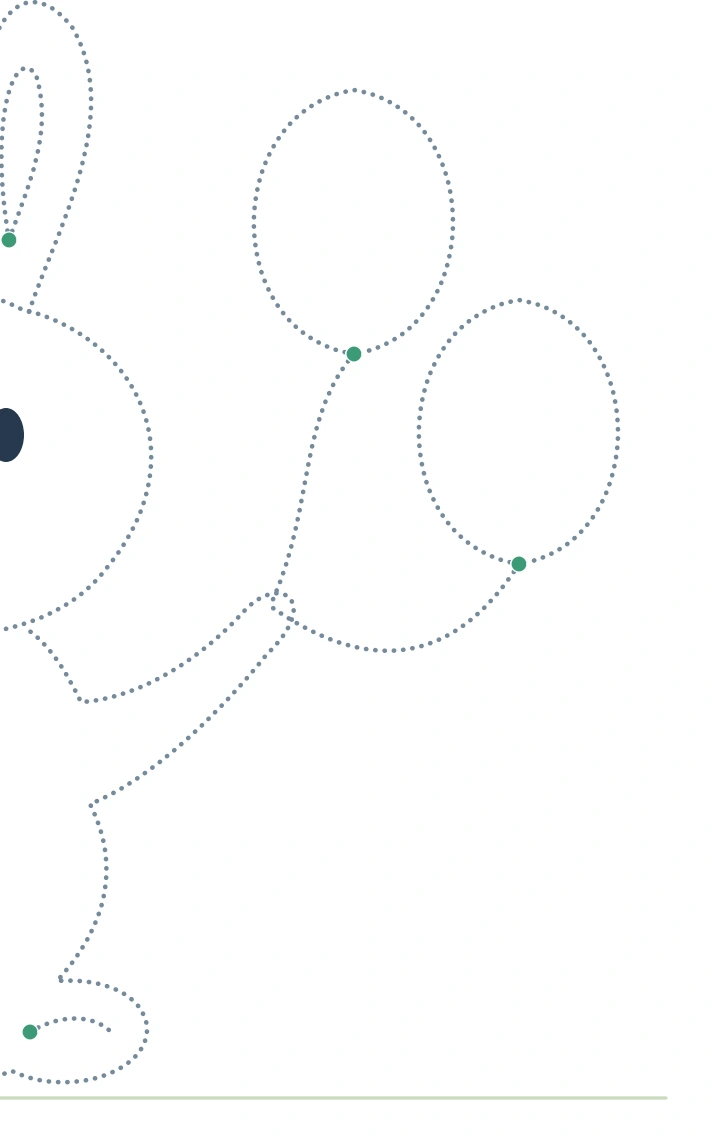
The original Bunny Picture Tracing upload can be inspected through its sample control. A qualifying active membership provides the separate clean premium PDF, with domain branding and website watermark removed. The premium printable contains no embedded advertising. Save that edition when a clean single sheet is wanted.
Check the portrait printer view for the complete bunny, both balloons, all strings and the green cues. Faint dotted guides should remain visible on the paper. This sheet is also included in the $5 Little Explorers twenty-page clean collection, reached from the related package link and purchased through its own checkout.
Other ways to give a pencil a purpose
After Bunny Picture Tracing, explore Picture Detail Tracing beside Bunny Picture Tracing, Pencil Lift Practice after Bunny Picture Tracing, Grid Drawing Growth beyond Bunny Picture Tracing. Keep each new instruction separate from Bunny Picture Tracing.
Adults can read NAEYC's ideas about early writing experiences at home and explore PBS Parents play ideas for emerging language and literacy. With Bunny Picture Tracing, notice a chosen contour, an intentional pause and the personal picture that grows from those small decisions.
Popular Worksheets
Printable resources families and teachers are downloading now.
 Free
 Free
 Free
 Free