
Double Ring Mapping: 4 Brilliant Inner-Point Copies
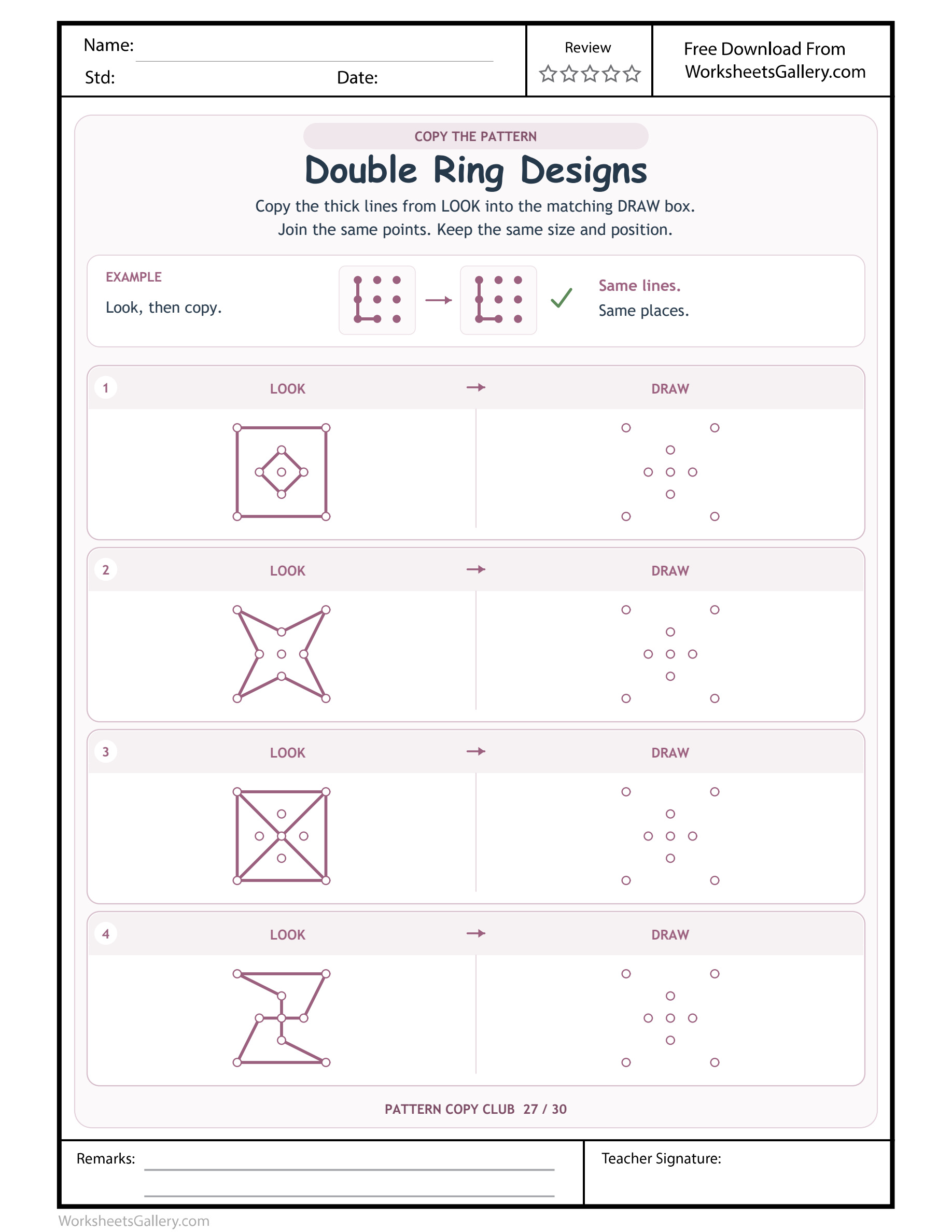
Double Ring Mapping: Tell inner-ring anchors from outer corners when copying nested and crossing designs.
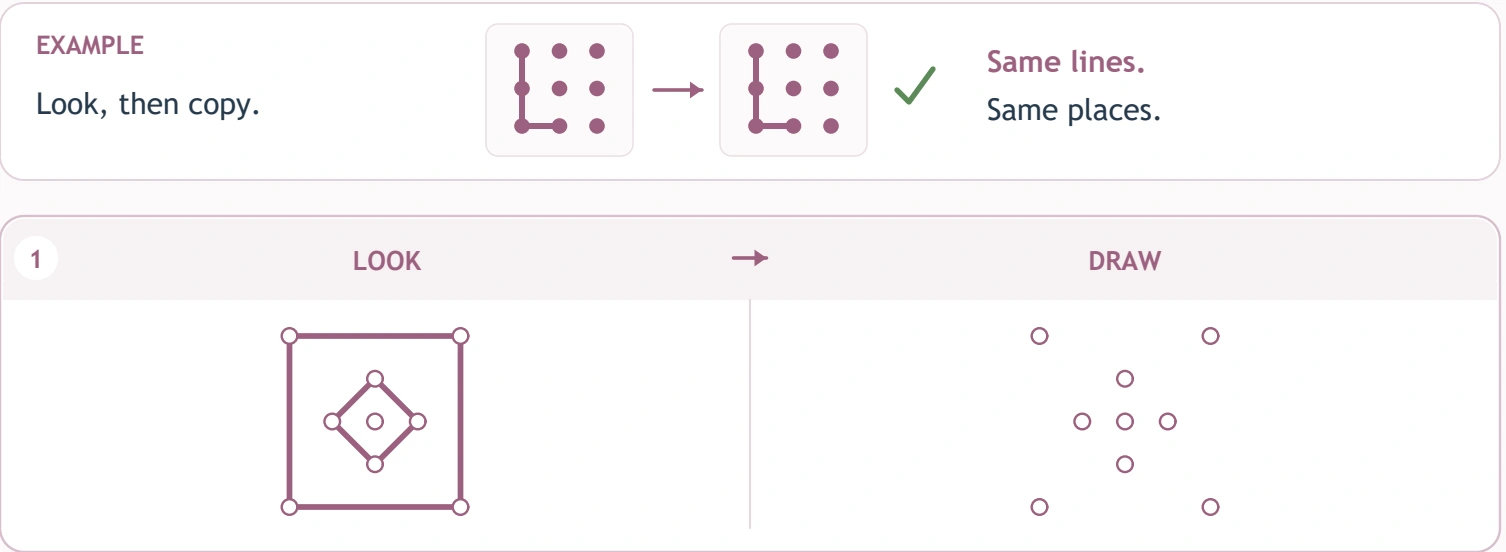
Levels of points can be easy to confuse when one arrangement sits inside another. Double Ring Mapping presents four geometric designs built from a central hub, four inner diamond positions and four outer corners. Children recreate the selected bold connections in matching nine-point fields. The Double Ring Designs source includes square-and-diamond layers, an inward star, crossed hub lines and an angular bow-like form. A completed example introduces the copying format. Offer this page to a learner ready to inspect whether a line reaches an inner point, an outer corner or the centre.
Outer and inner are different destinations — Double Ring Mapping
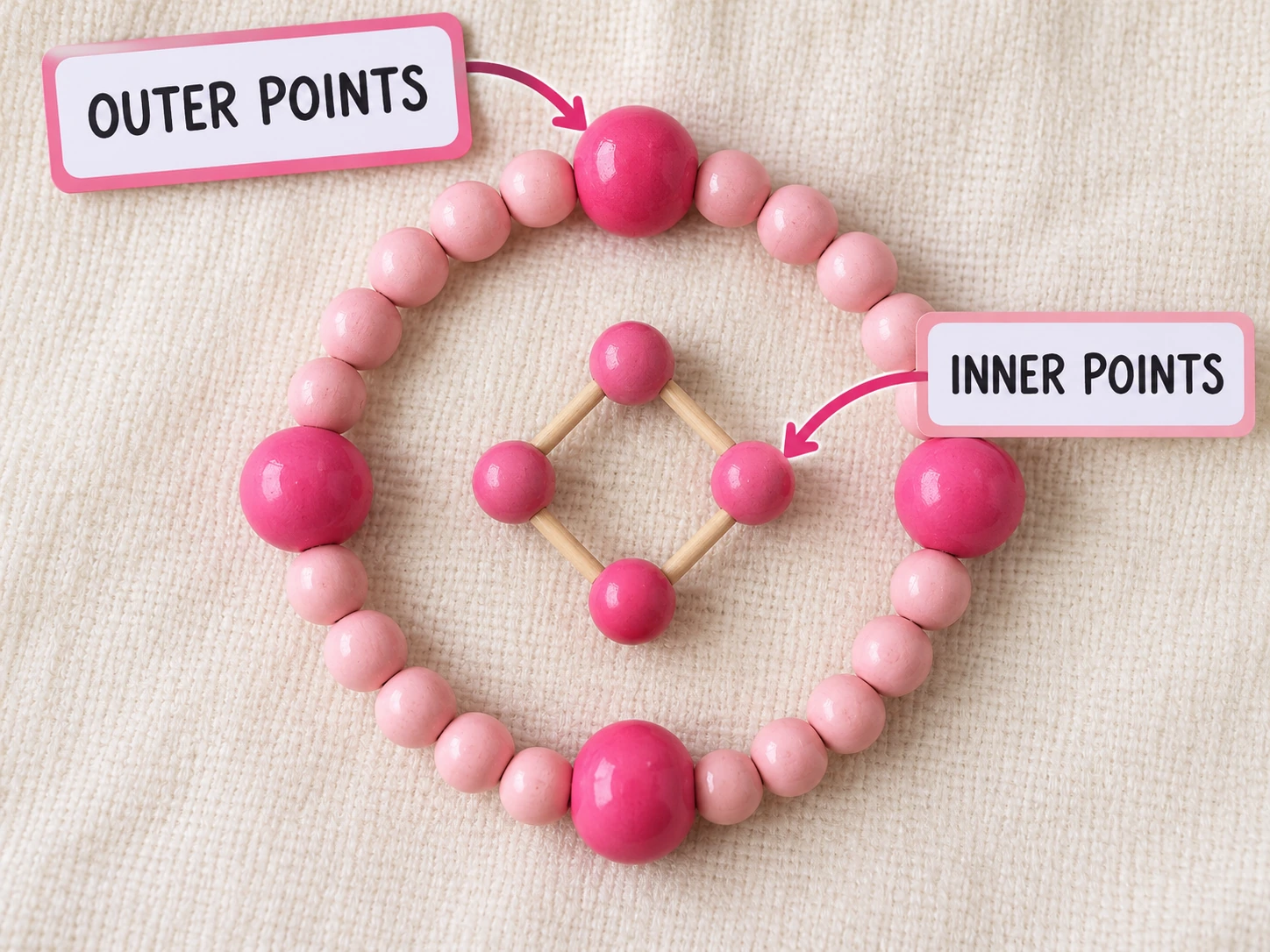
The nine markers in Double Ring Mapping do not form an ordinary three-by-three array. Four lie at outer square corners, four create an inner diamond and one occupies the centre. A line aimed in a generally correct direction can still stop at the wrong level of the arrangement.
Before drawing, point to one inner marker and compare it with a nearby outer corner. Name the intended destination before joining the points. A child can use words or gestures. The purpose is to distinguish positions clearly, not to memorise a formal numbering system for the page.
Four designs from the same point family: Double Ring Mapping
| Double Ring Mapping pair | Visible Double Ring Designs model | Model structure |
|---|---|---|
| 1 | Outside square enclosing a small diamond | 9 anchors / 8 bold pieces in Double Ring Designs |
| 2 | Inward-pointing four-corner star | 9 anchors / 8 bold pieces in Double Ring Designs |
| 3 | Outside square crossed through the hub | 9 anchors / 8 bold pieces in Double Ring Designs |
| 4 | Opposed angular bow around the centre | 9 anchors / 10 bold pieces in Double Ring Designs |
The Double Ring Mapping segment counts refer to bold printed pieces. They do not ask a learner to make a fixed number of pencil lifts or to join every possible pair of markers. Where several pieces share a straight direction, inspect their actual extents and copy them in a comfortable practical grouping.
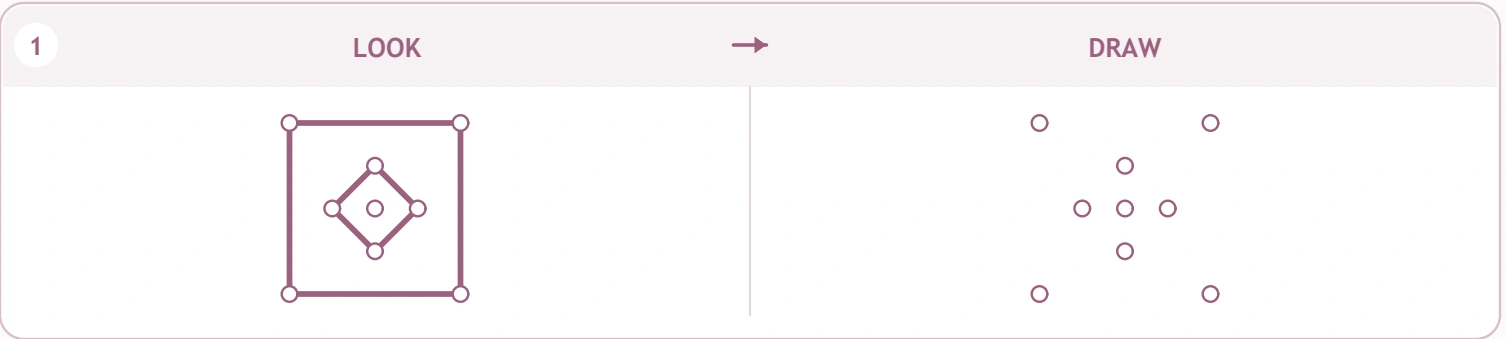
Separate a layer before following its edge: Double Ring Mapping
For the first Double Ring Mapping model, identify the outer square and the smaller diamond as distinct components. Choose a corner from one layer, locate its partner in DRAW and compare the next endpoint before drawing. Work around a short portion of that same component before shifting attention.
Keeping one layer in focus can reduce accidental jumps to a neighbouring marker. A pencil lift is allowed when moving to another component. The source does not impose an uninterrupted route. Keep LOOK visible and return to a known corner whenever the overlapping arrangement becomes difficult to follow.
Alma's imagined frame shop: Double Ring Mapping
Picture Alma arranging a large square frame around a smaller diamond-shaped frame at home. An adult brings Double Ring Mapping to the table and asks which corners belong to which layer. Alma initially points to an inner marker when describing an outside corner, then checks the broad physical construction.
This invented situation illustrates a useful comparison, not a documented learning result. Alma chooses one outer edge to transfer onto paper. The remaining frames can become an original display afterward. Keeping that inventive work separate makes it clear why the printed copy preserves a particular level rather than any attractive nearby connection.
Six small decisions with wider learning value: Double Ring Mapping
- Depth of position. Inner markers and outer corners are considered as distinct locations within a flat arrangement.
- Component attention. A learner can follow one shape while recognising another shape beside or across it.
- Endpoint precision. Similar directions may lead to different destinations, encouraging a deliberate final anchor choice.
- Movement planning. Straight edges and changing slants invite purposeful starts, stops and pencil lifts.
- Visual checking. The reference remains available for testing a proposed connection instead of relying on expectation.
- Relational vocabulary. Inner, outer, central and opposite provide concrete ways to describe a selected feature.
These possibilities within Double Ring Mapping are observations an adult can explore, not guarantees of improvement. A child might explain the layers accurately while drawing an uneven edge. A larger construction can support that understanding when the small answer field places too much demand on hand control.
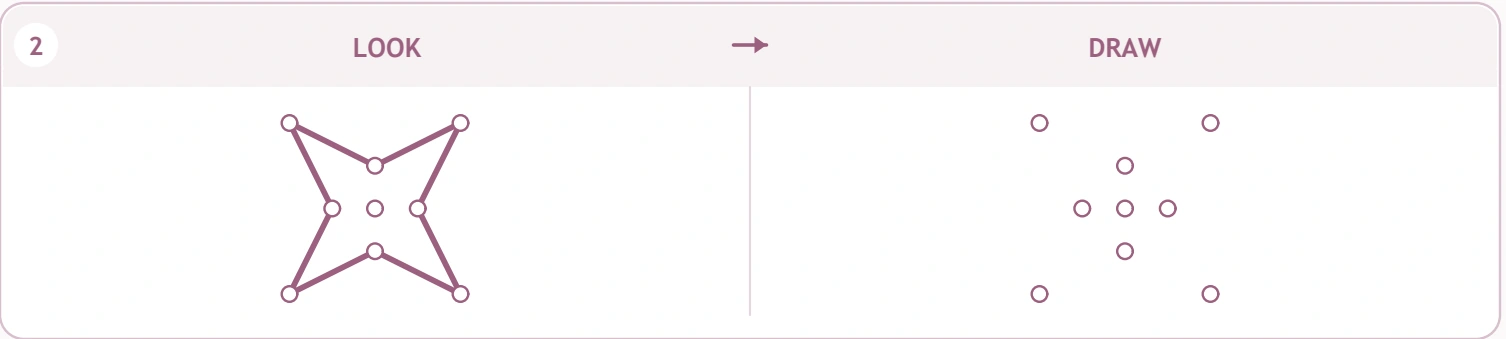
The inward star needs its actual corners: Double Ring Mapping
The second Double Ring Mapping model turns inward between outer positions. It is tempting to replace those turns with the familiar inner diamond from the first model. Compare a distinctive point where the outline changes direction and inspect whether it belongs to the inner or outer group.
Ask the learner to describe a single turn before continuing. There is no need to demand a formal star definition or a perfectly symmetrical invented figure. The printed arrangement supplies the relevant connections. A short comparison can keep one model's plan from being carried automatically into the next field.
A classroom layer-inspection station: Double Ring Mapping
In a possible classroom session, a teacher displays broad inner and outer frame models beside Double Ring Mapping. Pupils point to a chosen level and explain their clue. The adult then demonstrates comparing a single edge on spare paper. Each child chooses a manageable section on their own copy.
This imagined teaching situation leaves room for different starting points. Observe whether a learner checks the destination level before making a slant. An explanation that distinguishes an inner marker from an outer corner is useful evidence for planning the next activity; completing every pattern is not the only meaningful classroom outcome.
Decide whether the layered layout is comfortable today: Double Ring Mapping
Supported children roughly four to seven may explore Double Ring Mapping during later preschool and early primary learning. Familiarity with a square grid does not automatically make this ring arrangement easy. Begin by asking the learner to show the centre and a chosen outside corner without a pencil.
If nearby levels are confusing, build the arrangement with large counters and wide strips. Discuss the relationship there before returning to print. A child may inspect one component and stop. The four designs can wait across several visits, with willingness to compare and physical comfort guiding the length of each session.
Five frame-shop games after the copy: Double Ring Mapping
Deliver a frame to the correct level: Double Ring Mapping
Arrange a large square and smaller diamond on a table. A pretend customer requests an edge from a named layer. The child identifies it and explains the choice. This offers a broad physical counterpart to Double Ring Mapping's inner-outer distinction.
Compare two destinations on one direction: Double Ring Mapping
Place an inner and an outer marker along a broad visual direction from a starting point. Ask which one a supplied strip reaches. Keep the construction visible, then swap the strip. The comparison makes endpoint extent a specific observation rather than a guess about general direction.
Build a new layered emblem: Double Ring Mapping
Use spare paper or movable strips for an original design with two levels. Let the child choose connections freely and describe a rule. A partner recreates it while looking. Explain that this invention is a new model, while Double Ring Mapping preserves the supplied one.
Run a corner-repair counter: Double Ring Mapping
An adult copies a large arrangement but ends one edge on the wrong level. Invite a child to identify the changed endpoint and repair it. Reverse roles. Keep the mistake deliberate and friendly, making comparison a shared investigation.
Give a gallery guide's description: Double Ring Mapping
A child describes a visible construction using inner, outer and central where helpful. A partner points to the mentioned parts. The conversation supports location language without requiring another small pencil task or a memorised set of instructions.
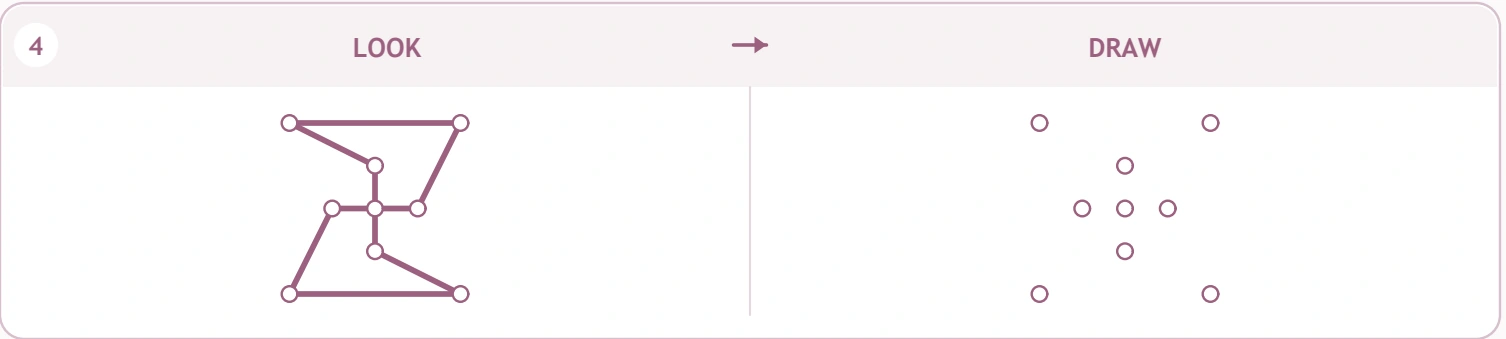
Crossed lines and the bow-like final form: Double Ring Mapping
The third Double Ring Mapping reference uses an outer frame with lines crossing through the hub. The final model forms opposed angular parts around the centre. Follow each selected connection to its actual endpoint rather than assuming all designs share the same layered square-and-diamond recipe.
Where lines cross, inspect whether a marker is present before treating the crossing as a new destination. A child can understand this through pointing, without formal intersection vocabulary. Keep the explanation tied to the particular edge they are copying so the discussion supports the next concrete drawing decision.
Correct the level before correcting the appearance: Double Ring Mapping
Common Double Ring Mapping changes include ending on an inner point instead of an outer one, replacing an inward turn with a diamond edge or adding an expected connection. Compare the affected endpoints first. A local question about which layer receives the line is more useful than asking for a generally neater shape.
Two similar-looking slants can reach different anchors. If repeated corrections crowd the answer field, discuss the intended repair with a large frame model. A child can finish the session by explaining that relationship. Avoid insisting on dark retracing when it makes the original distinction harder to see.
Return with one layer-sized goal: Double Ring Mapping
The nested shapes may make Double Ring Mapping feel like a small visual discovery. Let the learner choose a component that interests them, perhaps an outer edge or an inward star corner. Specific feedback such as “You checked which level that line reached” identifies an observable strategy.
Offer brief revisits among construction, free art and movement. Regular practice need not mean reproducing all four patterns each time. End while the child can still explain a clear distinction comfortably. The next visit can begin with that familiar layer before another component is added to the copying plan.
Obtain the layered design PDF for your account
The free Double Ring Designs PDF is the supplied original. A signed-in account with eligible active membership can request the separate clean Double Ring Mapping file through the premium download. That edition removes website watermark, domain names and promotional advertising, while preserving the complete models, student fields and activity instructions.
The native collection card opens the thirty-sheet clean PDF at its separate $3 price. Save the authorised file and check the printer preview. Select US Letter with scale held at 100%, or use Actual Size. Keeping Double Ring Mapping's original proportions preserves the small gaps between inner and outer anchors that matter to the comparison.
Further comparisons and adult reading: Double Ring Mapping
Compare Double Ring Mapping with Drawing Size Choices. After Double Ring Designs, try Shape Border Journeys. For Double Ring Designs, consider Path Copy Thinking.
Alongside Double Ring Mapping, adults may browse PBS Parents' learning resources and play information for families from NAEYC. These independent educational links provide optional ideas beyond this download and do not indicate sponsorship or include extra collection materials.
Popular Worksheets
Printable resources families and teachers are downloading now.
 Free
 Free
 Free
 Free