
Mosaic Point Copying: 4 Delightful Triangle Tasks
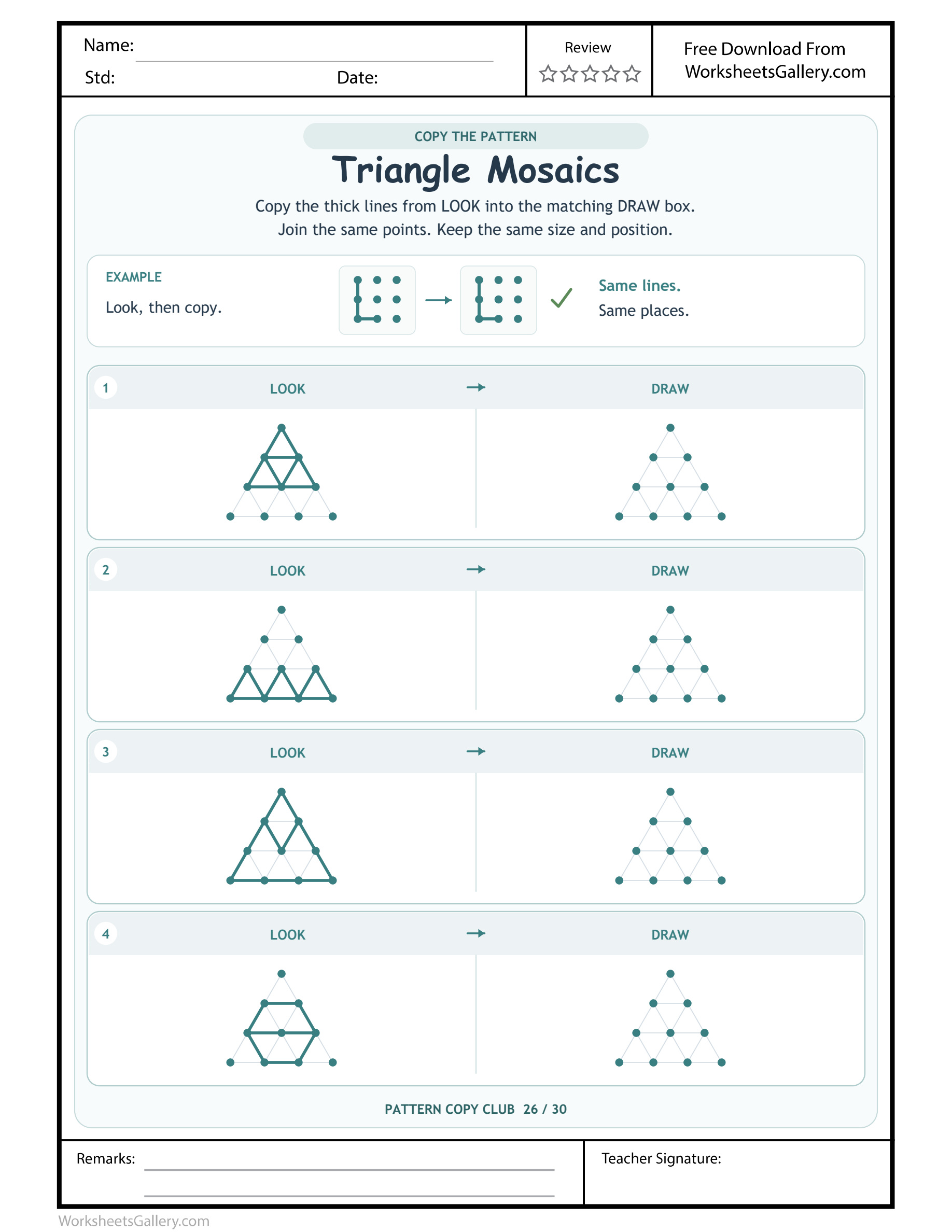
Mosaic Point Copying: Locate tiers in a ten-point triangular scaffold and select only the thick model segments.
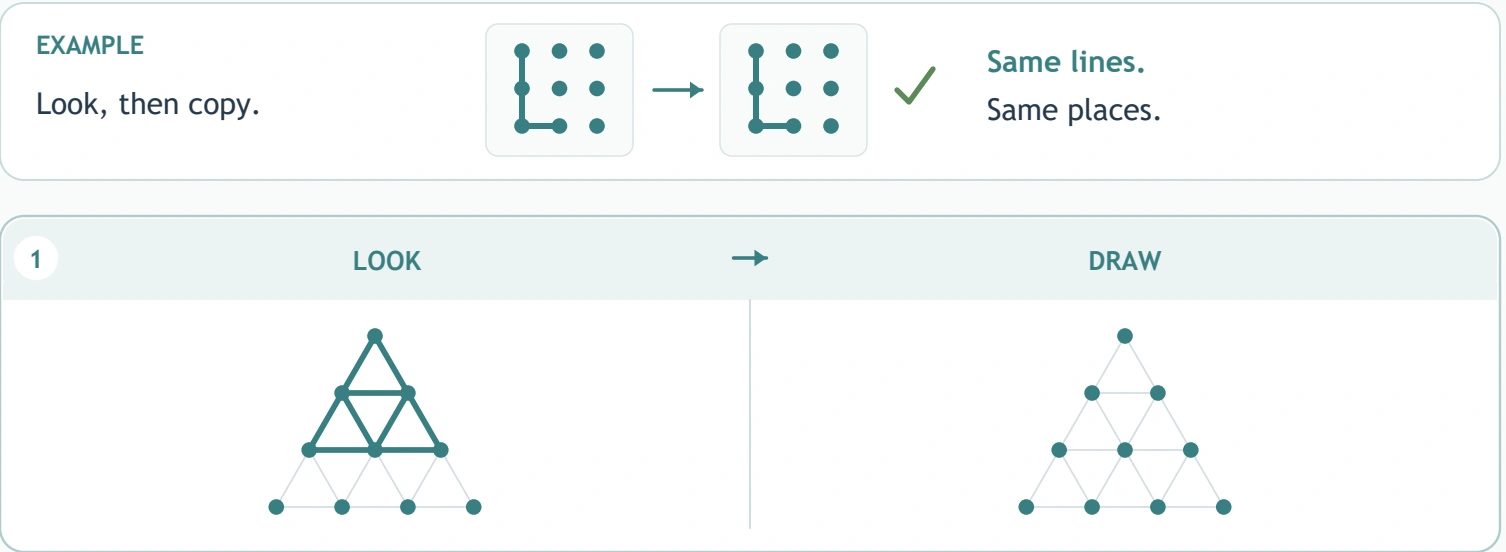
Ten anchors form a triangle rather than a square on this copying sheet. Mosaic Point Copying invites children to inspect four bold line models and reproduce their selected connections over pale triangular guides. The Triangle Mosaics source arranges its points in four tiers of one, two, three and four, supporting small triangles, an outer triangular design and a divided central shape. A completed example introduces the copying relationship. Choose this printable for a learner willing to distinguish a dark model from its light scaffold and locate matching positions within an unfamiliar point arrangement.
First separate the scaffold from the selected design — Mosaic Point Copying
The pale mesh in Mosaic Point Copying makes many possible connections visible. The bold model chooses only some of them. Ask the learner to point to a dark edge and then a light guide before attempting a copy. That simple distinction establishes what the drawing task actually requests.
Transfer the bold design, not every pale line. The answer field already supplies its own scaffold. Darkening the whole web would hide the particular model instead of reproducing it. Keep LOOK available as the child decides which of the possible connections belongs in the selected pattern.
Understand the four-tier point family: Mosaic Point Copying
The Mosaic Point Copying fields contain ten markers: one at the top, then two, three and four across the lower tiers. They do not form a three-by-three square grid. A learner using a familiar square-grid shortcut may therefore choose the wrong neighbouring point even when the general slant looks plausible.
Try identifying the lone top point and the broad bottom row with a finger. Then inspect where a chosen bold edge begins and ends. Words such as upper tier, next point and bottom corner can support the comparison without introducing formal coordinate labels or requiring the child to count every point aloud.
A compact inventory of the four mosaics: Mosaic Point Copying
| Mosaic Point Copying pair | Visible Triangle Mosaics model | Model structure |
|---|---|---|
| 1 | Small triangles inside the upper scaffold | 10 anchors / 9 bold pieces in Triangle Mosaics |
| 2 | Three triangles across the lowest tier | 10 anchors / 9 bold pieces in Triangle Mosaics |
| 3 | Large outer triangle with an inward top triangle | 10 anchors / 11 bold pieces in Triangle Mosaics |
| 4 | Central hexagon split along its middle | 10 anchors / 8 bold pieces in Triangle Mosaics |
The Mosaic Point Copying totals describe bold source segments, not the complete pale triangular web. Several aligned pieces may belong to one longer edge, and the totals do not prescribe a pencil-lift count. The learner can copy the selected construction in practical portions, returning to LOOK between them.
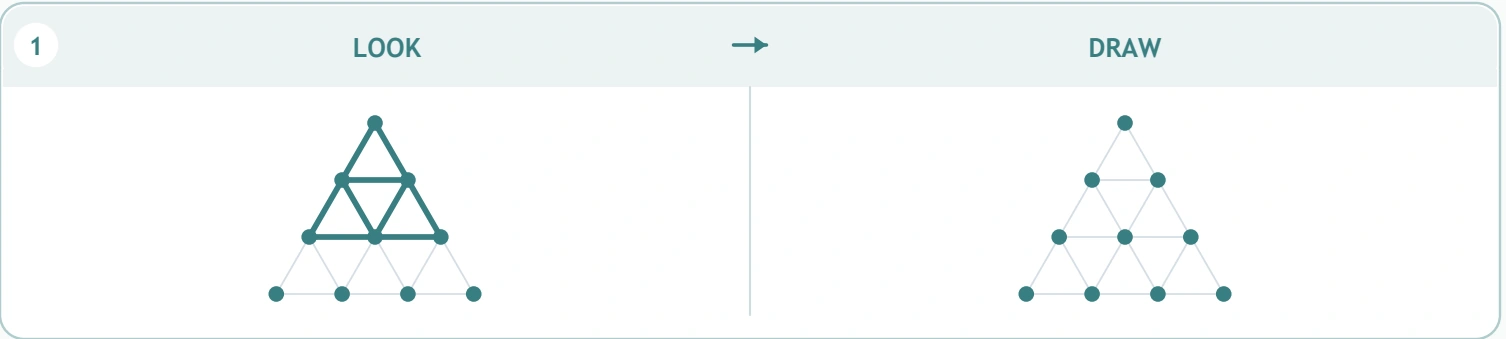
Start with a small triangle the learner can inspect: Mosaic Point Copying
Choose one clear group in Mosaic Point Copying, perhaps a small upper triangle or a short lower edge. Locate the matching anchors in DRAW before making a mark. Copy a single edge, compare its ends and continue only when the intended relationship is understood.
There is no required route through the mosaic. Some children prefer an outside boundary; others find a compact inner group easier to hold in attention. Accept either entry point. A pencil lift can separate one component from the next, avoiding an invented connecting line simply because the hand wants to keep travelling.
Five observations that go beyond a finished pattern: Mosaic Point Copying
- Figure selection. A learner distinguishes the bold target from a lighter background of possible connections.
- Tier awareness. The triangular arrangement encourages attention to changing row lengths rather than a square-grid assumption.
- Part recognition. Small triangles and larger boundaries can be considered as related groups within one model.
- Directed control. Straight slants ask the hand to aim toward chosen anchors and stop deliberately.
- Explanatory comparison. A child can describe why a bold connection belongs while a neighbouring pale guide remains light.
These are possible experiences with Mosaic Point Copying, not guaranteed gains or a developmental test. A learner may correctly explain which lines are bold while finding their small-scale drawing difficult. Offer a larger model when needed, recognising visual understanding separately from current pencil steadiness.
Zed's imagined triangular bead board: Mosaic Point Copying
Imagine Zed placing ten large counters in a triangular arrangement at home. An adult uses strips to show a selected design and places Mosaic Point Copying nearby. Zed first wants to join every neighbour. Together they compare one bold group with a pale connection that remains outside the target.
This invented home situation illustrates an adult's explanation, not a documented result. Zed can build a complete triangular web afterward as a different activity. For the copying attempt, choosing one small triangle may be enough. The larger construction supplies a comfortable way to discuss the selection before working among the printed anchors.

A classroom conversation about dark and light information: Mosaic Point Copying
For a hypothetical classroom use, invite pupils to inspect Mosaic Point Copying without drawing immediately. Ask them to show one light guide that the selected bold design does not use. Children can respond by pointing, then explain with words if comfortable. The teacher demonstrates comparing one bold edge on a larger triangular field.
Each learner chooses a manageable portion on their own page. Watch whether the child follows the selected model or continues darkening the surrounding mesh. A short observation about distinguishing those two kinds of line can guide the next invitation. There is no need to make identical completion amounts the classroom's measure of success.
A page for learners ready to inspect an unusual layout: Mosaic Point Copying
Supported children around four to seven may try Mosaic Point Copying during later preschool and early primary learning. The unfamiliar triangular field can demand more explanation than a simple row or square grid. Begin by seeing whether the child can identify the top marker and a chosen bottom corner comfortably.
If the pale mesh feels visually busy, construct a broad counter-and-strip version away from the paper. Let the child compare selected lines through speech or gesture. Revisit Mosaic Point Copying when a short portion is appealing. Its four models can be explored over several sittings rather than treated as one required block of fine pencil work.
Six mosaic games with meaningful choices: Mosaic Point Copying
Build the tier staircase: Mosaic Point Copying
Arrange counter rows containing one, two, three and four pieces. A partner recreates the layout while looking. Discuss how each tier grows. This makes Mosaic Point Copying's ten-point family tangible without requiring another small drawing.
Run a dark-line selection desk: Mosaic Point Copying
Use broad pale strips for possible connections and darker strips for a chosen design. Ask a child which dark piece belongs next. Keep the model visible and discuss why nearby pale possibilities can remain unused.
Exchange a tiny triangle order: Mosaic Point Copying
A pretend mosaic maker requests a small triangle in a particular part of a large field. The child identifies its anchors and builds it. Swap roles so the learner can describe a position as well as follow one.
Compare two nearly matching panels: Mosaic Point Copying
Make two broad triangular designs with one changed edge. Ask which part differs and whether that change alters a small enclosed shape. The game encourages local inspection rather than a general judgement about which design looks nicer.
Invent a new ten-point picture: Mosaic Point Copying
On another surface, let the child select original connections among ten large anchors. A partner recreates the invention while the reference stays visible. Explain that inventing a new model is welcome here, while Mosaic Point Copying preserves its existing bold plan.
Tell a mosaic-restorer story: Mosaic Point Copying
A toy restorer discovers that one dark piece has been placed along an unused guide. The child compares the model and proposes a repair. Keep the mistake playful and reversible so finding it feels like useful investigation rather than blame.
An extra pale edge can become the wrong bold line: Mosaic Point Copying
Typical Mosaic Point Copying slips include tracing the entire scaffold, assuming equal-length square rows, closing an intentional opening or overlooking a small selected divider. Compare the bold reference first. Ask which exact endpoints define the disputed edge and whether that edge is dark in LOOK.
A visible guide is a possibility, not automatically part of the answer. If repeated erasing blurs the distinction, pause and inspect the same relationship with larger movable pieces. The child can explain the intended repair without finishing every paper line immediately. Avoid asking for darker repeated tracing when clarity is already decreasing.
Make the next mosaic a voluntary small investigation: Mosaic Point Copying
The changing triangular designs may appeal because one point family supports several recognisable arrangements. Let the learner select a small group that interests them. A clear choice between an outer edge and an inner triangle is more manageable than facing four entire models at once.
Use feedback like “You left that guide light because it was not in the model.” Offer brief returns among building, collage and open drawing. Regular opportunities can involve one inspected group each time. End with enough comfort for the child to describe a choice, and let that explanation become the starting point for another visit.
Download the clean or original edition accurately: Mosaic Point Copying
The free option supplies the original Triangle Mosaics PDF. The clean Mosaic Point Copying file can be requested using a qualifying account with membership in active status. It removes website watermark, domain branding and promotional advertisements while retaining the complete bold designs, pale scaffolds, instructions and student fields.
The native collection panel links to thirty clean sheets in one PDF, available separately for $3. Save the file permitted by your account. Use US Letter paper and choose Actual Size, or retain a 100% scale setting. Inspect the full border in print preview so Mosaic Point Copying's pale guides and small anchors stay correctly spaced.
Further ways to compare selected patterns: Mosaic Point Copying
Compare Mosaic Point Copying with Path Copy Thinking. After Triangle Mosaics, try Drawing Size Choices. For Triangle Mosaics, consider Shape Border Journeys.
Adults extending Mosaic Point Copying can browse family play resources published by NAEYC and PBS Parents' Learn and Grow ideas. These independent educational sites offer optional reading outside the collection; their links do not imply endorsement or include additional files in the download.
Popular Worksheets
Printable resources families and teachers are downloading now.
 Free
 Free
 Free
 Free