
Patchwork Line Puzzles: 3 Clever Overlap Studies
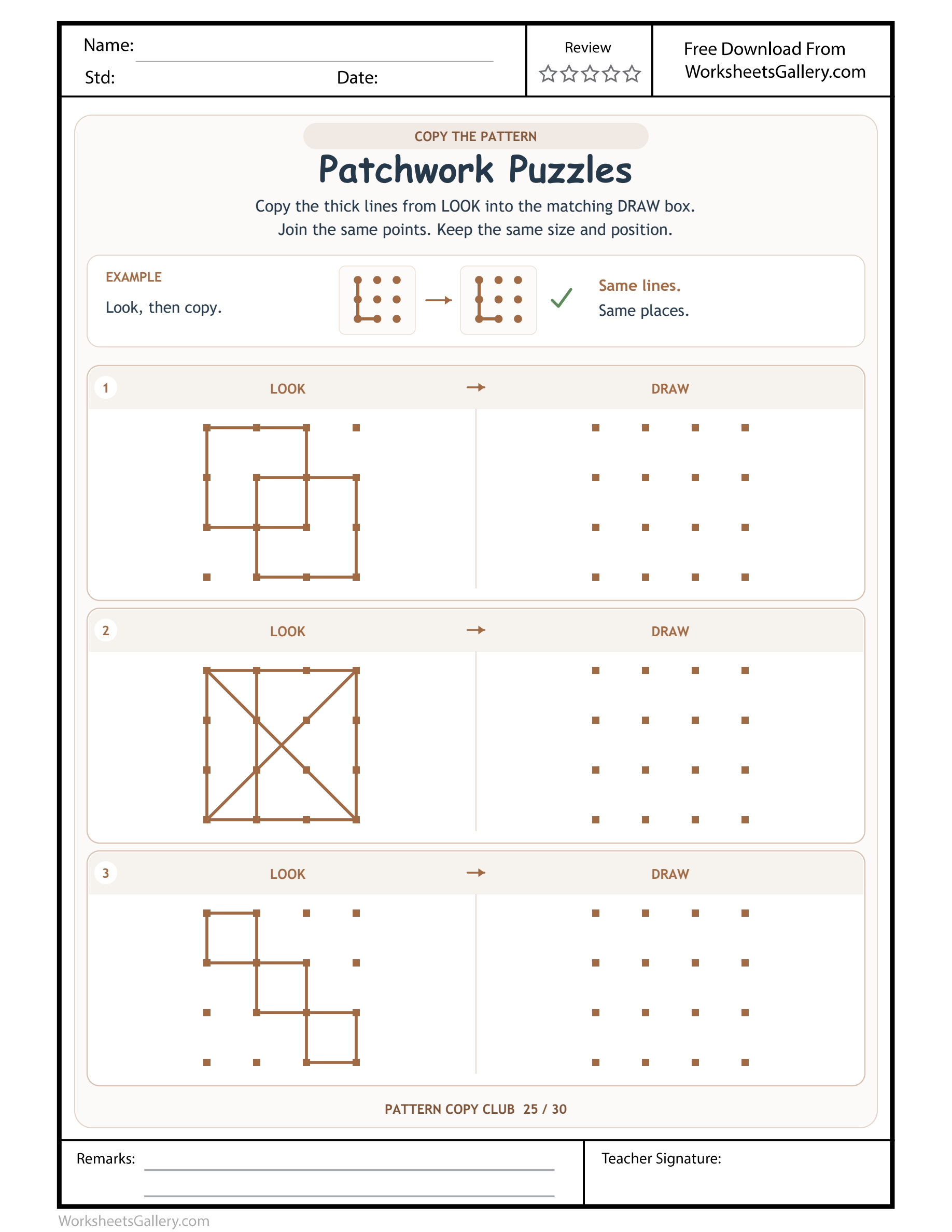
Patchwork Line Puzzles: Trace the identity of each square where outlines overlap or cross.
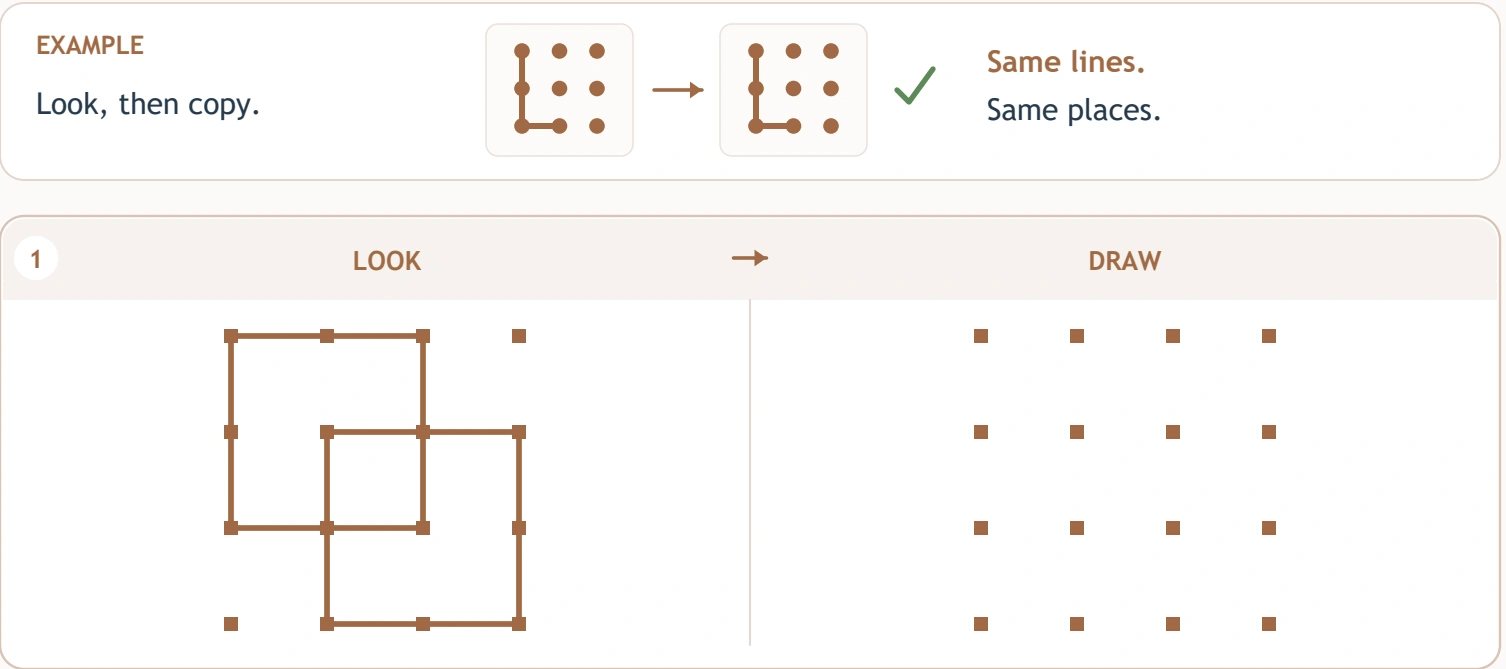
Overlapping frames can make a simple collection of squares surprisingly interesting. Patchwork Line Puzzles contains three line designs for children to recreate on sixteen-point fields. The Patchwork Puzzles source moves between offset squares, a divided outer frame and a descending group of small squares. A worked L demonstrates copying into the neighbouring field. This page invites close inspection of shared edges and crossings rather than colouring fabric or filling a repeating sequence. Use it when a learner can follow a short outline and is ready to compare how separate shapes occupy one space.
A classroom conversation about two visible frames — Patchwork Line Puzzles
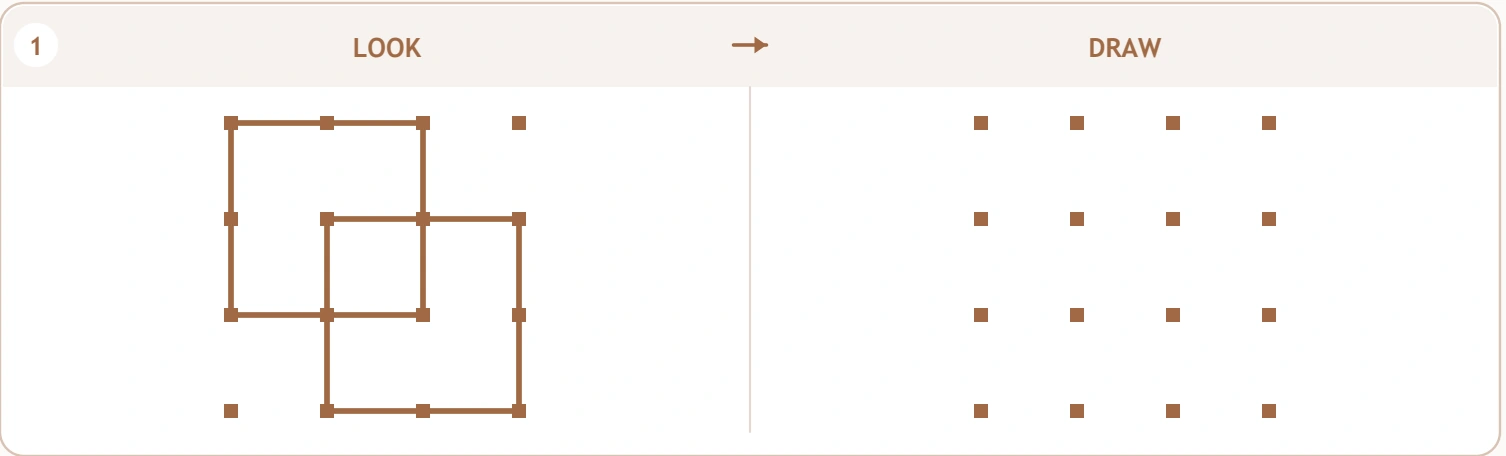
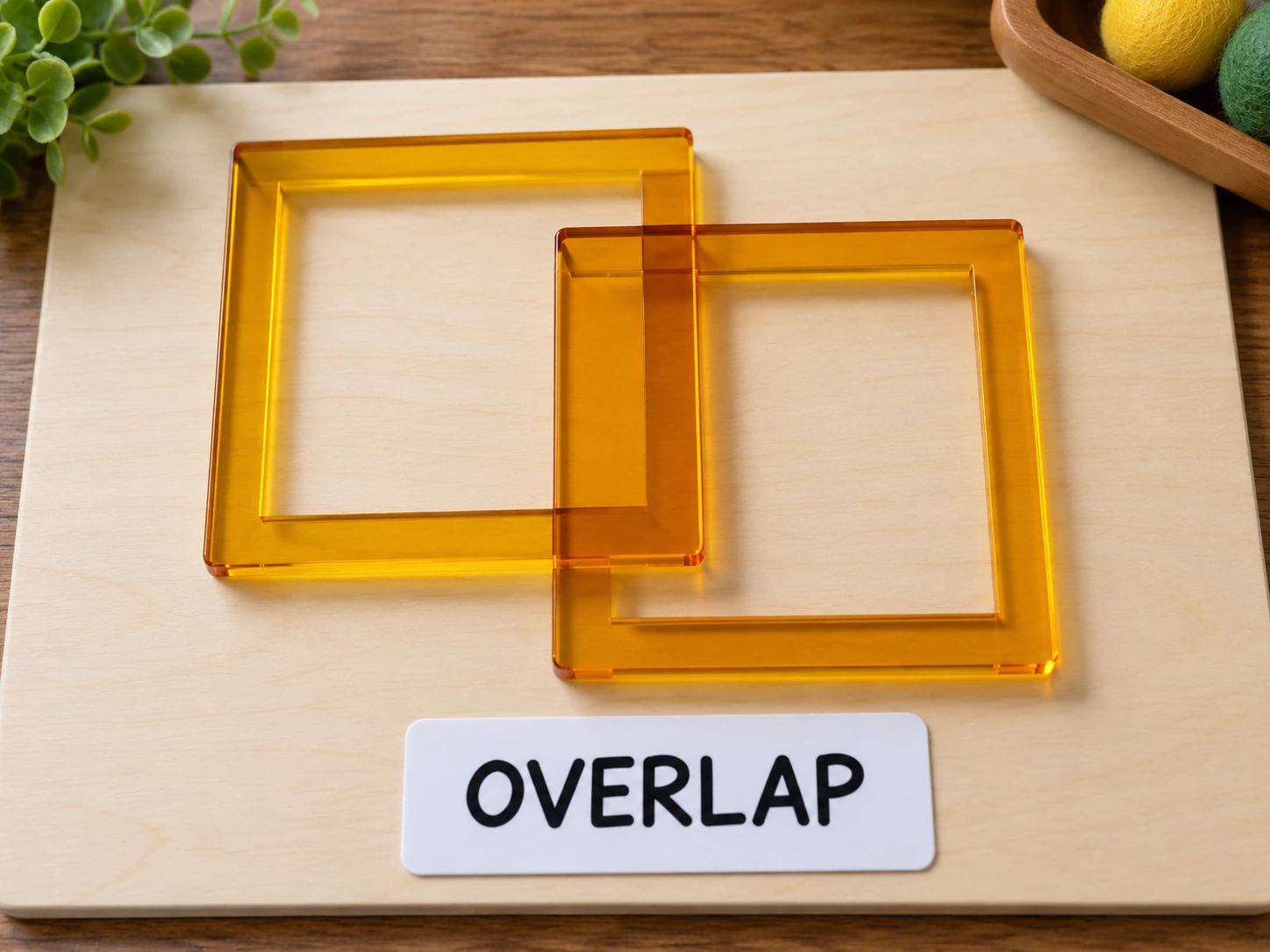
Imagine a teacher placing two transparent square frames partly over one another. Children describe where each frame continues behind the crossing. The teacher then opens Patchwork Line Puzzles and asks which printed model suggests overlapping squares. Pupils point before choosing a small section on their individual copies.
This hypothetical classroom example offers a way to introduce the visual relationship. It does not report a classroom result. One learner may inspect a lower corner while another follows an upper edge. Keeping the model visible lets the teacher observe comparison choices without expecting every child to reproduce an entire intricate design immediately.
What changes across the patchwork panels
| Patchwork Line Puzzles pair | Visible Patchwork Puzzles model | Model structure |
|---|---|---|
| 1 | Overlapping offset squares | 16 anchors / 16 bold pieces in Patchwork Puzzles |
| 2 | Square with crossing diagonals and an inner divider | 16 anchors / 21 bold pieces in Patchwork Puzzles |
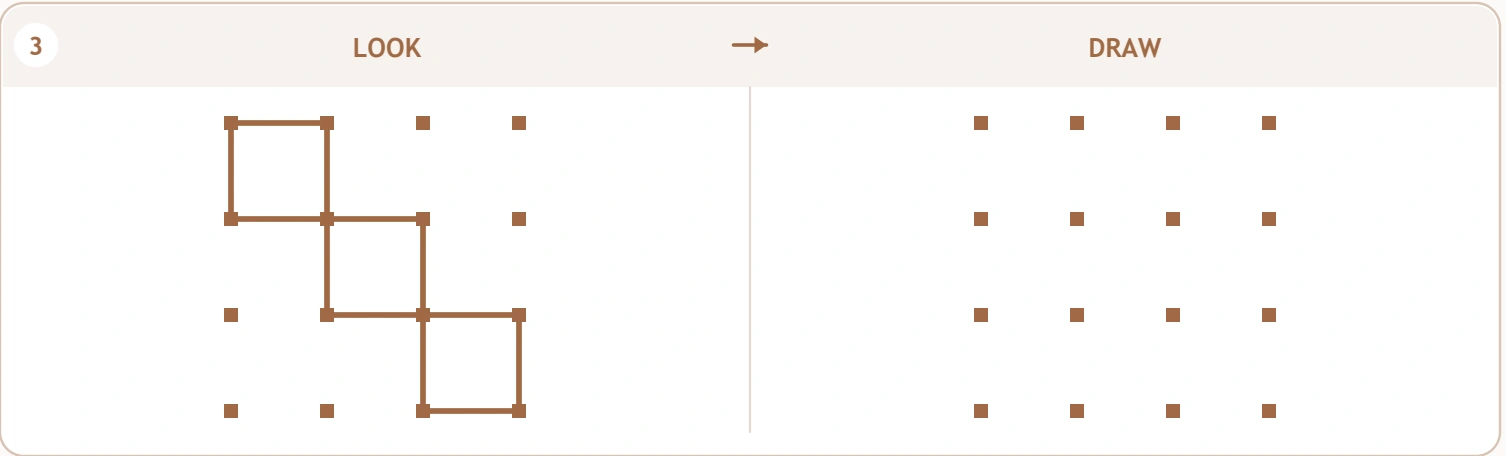
| 3 | Three small squares descending diagonally | 16 anchors / 12 bold pieces in Patchwork Puzzles |
In Patchwork Line Puzzles, the segment totals count the printed bold pieces, including aligned sections between anchors. They do not identify a required order or number of pencil lifts. Each answer field provides sixteen possible anchor positions. The task selects particular connections rather than asking children to use them all.
Follow one frame before switching attention: Patchwork Line Puzzles
When several lines overlap, the eye can jump from one shape onto another. For Patchwork Line Puzzles, begin at a recognisable corner and follow one short edge to its actual endpoint. Compare that endpoint in DRAW. Continue around a manageable part of the same frame before deciding to inspect another component.
A crossing does not automatically end the edge being followed. Check the model to see how the line continues. If the child loses the selected frame, return to a known corner instead of guessing through the dense middle. A fingertip can support this inspection without adding a pencil mark.
Six reasons the overlap is useful to discuss: Patchwork Line Puzzles
- Visual continuity. Children look for how an edge proceeds through a busier area of the model.
- Component identity. One square can remain a distinct part even when another frame overlaps it.
- Offset comparison. Similar shapes occupy different positions instead of sharing a single centre.
- Sequential attention. A learner can inspect one short group, then deliberately shift to another part.
- Pencil precision. Corners invite controlled changes between straight horizontal and vertical movements.
- Relational language. Overlap, inside, above and descending give words to a visible arrangement.
Use these opportunities to understand how a child approaches Patchwork Line Puzzles, not to assign an ability label. Recognising that two frames overlap may be clear in their explanation even if drawing all the short edges is currently difficult. A larger construction can reveal that understanding without demanding a complete small copy.
Yara's imaginary window-frame display: Patchwork Line Puzzles
Picture Yara arranging square frames on a home craft table. An adult puts Patchwork Line Puzzles nearby and asks Yara to shift one frame until its position resembles the first reference. They compare the corners that extend beyond the other frame, then choose one corresponding edge on paper.
The scenario is invented as a practical teaching example. Yara can later turn the frames into an imaginative building display. During the copying attempt, however, the printed offset remains the guide. A story about windows may make the arrangement meaningful without supplying new divisions or decorations inside the worksheet's answer field.
The middle model needs more than an outer square: Patchwork Line Puzzles
The second Patchwork Line Puzzles design combines an outside frame with crossing diagonals and an internal divider. A child who completes the familiar perimeter may feel finished before examining those inner lines. Ask what information remains inside the boundary and inspect one of those connections separately.
Do not assume the resulting sections are areas to colour or a puzzle with a hidden answer. The source presents a copying model. Identify the ends of a diagonal, locate their partners and draw the selected connection. Lifting the pencil can separate another interior piece from the outline when that makes the plan easier to follow.
Check readiness with one offset corner: Patchwork Line Puzzles
Later preschool and early primary children, approximately four to seven, may investigate Patchwork Line Puzzles with support. Overlaps and several closely spaced lines add visual complexity beyond a single simple square. Ask whether the learner can identify a corner belonging to the chosen frame and locate a plausible counterpart.
If that first comparison is uncomfortable, use large physical frames or broad stick squares. Let the child explain which shape sits higher or farther across. Return to Patchwork Line Puzzles when a short section is inviting. Completing three panels in one sitting is optional; the child's willingness and hand comfort can determine where to stop.
Four patchwork investigations with movable pieces: Patchwork Line Puzzles
Curate an offset-frame exhibition: Patchwork Line Puzzles
Arrange two large squares with a clear overlap and ask a partner to recreate their positions while looking. Change only the offset, then discuss which corners moved. This provides a broad-scale counterpart to Patchwork Line Puzzles's first model without adding more small pencil work.
Play the frame-following narrator: Patchwork Line Puzzles
A child describes one frame edge at a time while a partner points along the visible construction. Pause at a crossing and explain which frame is being followed. Swap roles so listening and describing both become part of the game.
Build a descending staircase of squares: Patchwork Line Puzzles
Place three small frames at successively lower positions. Ask a child to preserve their relationships in another construction. Compare the overall descent before checking individual edges, connecting the discussion to Patchwork Line Puzzles's final reference.
Open an original pattern studio: Patchwork Line Puzzles
Offer spare paper for a completely new overlapping design. The learner chooses how many frames to use and whether to add divisions. Display it beside a reference copy and discuss their different purposes. Invented pattern-making welcomes changes that exact copying keeps tied to the supplied model.
A shared-looking edge still deserves inspection: Patchwork Line Puzzles
When parts approach or overlap in Patchwork Line Puzzles, examine whether the same segment serves more than one visible shape. Do not duplicate a line merely because the child has described two frames. The copied result needs the printed connections, not separate dark traces for every imagined component.
Adults can point along a large physical model to clarify which edges coincide. Keep the explanation concrete and brief. The learner does not need formal set or geometry language to decide that one supplied line should appear once in the answer field.
Repair an overlap without restarting the whole picture: Patchwork Line Puzzles
Common Patchwork Line Puzzles slips include centring offset squares, stopping a diagonal at an unmarked crossing, omitting an inner divider or changing the descending arrangement into a level row. Identify a single changed relationship and compare its endpoints. A local question about which corner moved can make the correction understandable.
The arrangement matters as much as the names of its shapes. Three recognisable squares can still have different positions from the reference. If the answer becomes crowded with corrections, discuss the intended arrangement using frames instead. A thoughtful explanation is a suitable stopping point; repeated dark retracing is not necessary.
Keep a little curiosity for the next pattern
The overlapping effect may make Patchwork Line Puzzles appealing because a few straight shapes create a more intricate picture together. Let the child select a part to investigate rather than presenting the whole panel as one indivisible demand. Choosing an outer corner can provide a clear entry into a busy design.
Feedback such as “You followed the same frame through the crossing” names an observable strategy. Offer occasional brief returns among construction, collage and free drawing. Regular practice can involve inspecting one offset before stopping. Leave enough energy for the learner to explain a discovery, then invite a new comparison on another day.
Save the patchwork reference in a printable file: Patchwork Line Puzzles
The free download provides the supplied Patchwork Puzzles original. For the separate clean Patchwork Line Puzzles PDF, first confirm that your active account membership is eligible, then request the member edition. The member PDF omits website promotions, domain text and the site watermark, preserving the actual models, guides and student fields.
The related collection card opens all thirty clean sheets together for a separate $3 purchase. Save the PDF your access allows. In the printer settings, use US Letter and keep original dimensions through Actual Size or a 100% scale. Inspect the complete border before printing Patchwork Line Puzzles; page illustrations are browsing references rather than substitutes for the PDF.
Related ways to compare parts and positions: Patchwork Line Puzzles
Compare Patchwork Line Puzzles with Drawing Size Choices. After Patchwork Puzzles, try Shape Border Journeys. For Patchwork Puzzles, consider Path Copy Thinking.
Adults accompanying Patchwork Line Puzzles can explore NAEYC's family play material and PBS Parents resources for everyday learning. These independent education websites offer further ideas, not collection files or worksheet answers, and no endorsement is implied by the links.
Popular Worksheets
Printable resources families and teachers are downloading now.
 Free
 Free
 Free
 Free