
Fruit Route Decoder: 4 Delightful Picnic Line Puzzles
Add the picnic itinerary to a 25-page library at $3. Fruit naming can lead into other symbol journeys in the clean collection file, with a worked drawing example supplied on each theme.
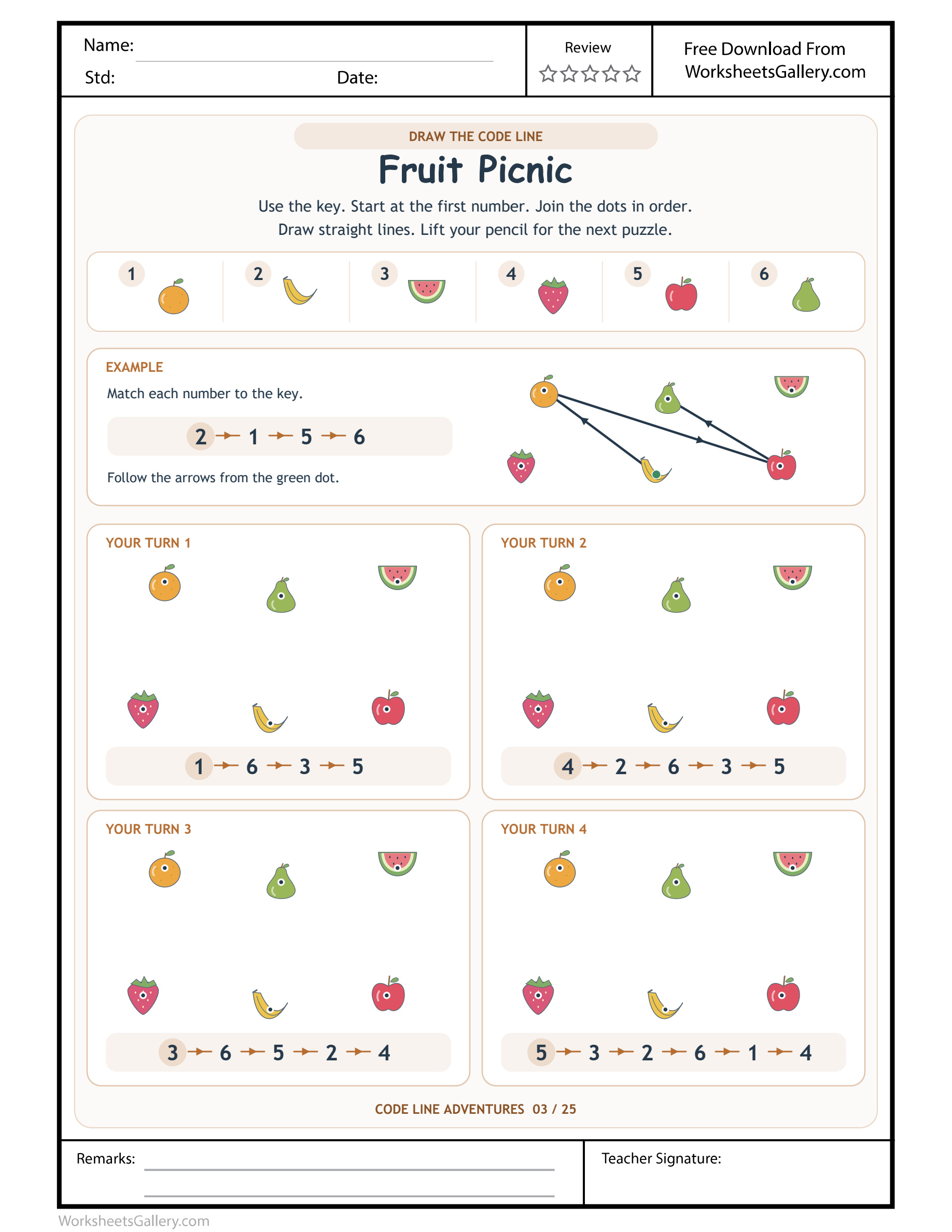
A pear can be the second stop even when its number is six. That little mismatch between counting and travelling is the heart of Fruit Route Decoder, a picture-code worksheet set around a cheerful picnic. Children translate short numeral instructions into fruit names, find the matching centre dots and connect them with straight strokes. Four independent puzzles follow a wide worked example. Saying the fruit itinerary aloud can make a puzzling number strip feel concrete: the pencil has somewhere specific to go, and the child can explain each choice before setting off.
Unpack the picnic before drawing — Fruit Route Decoder
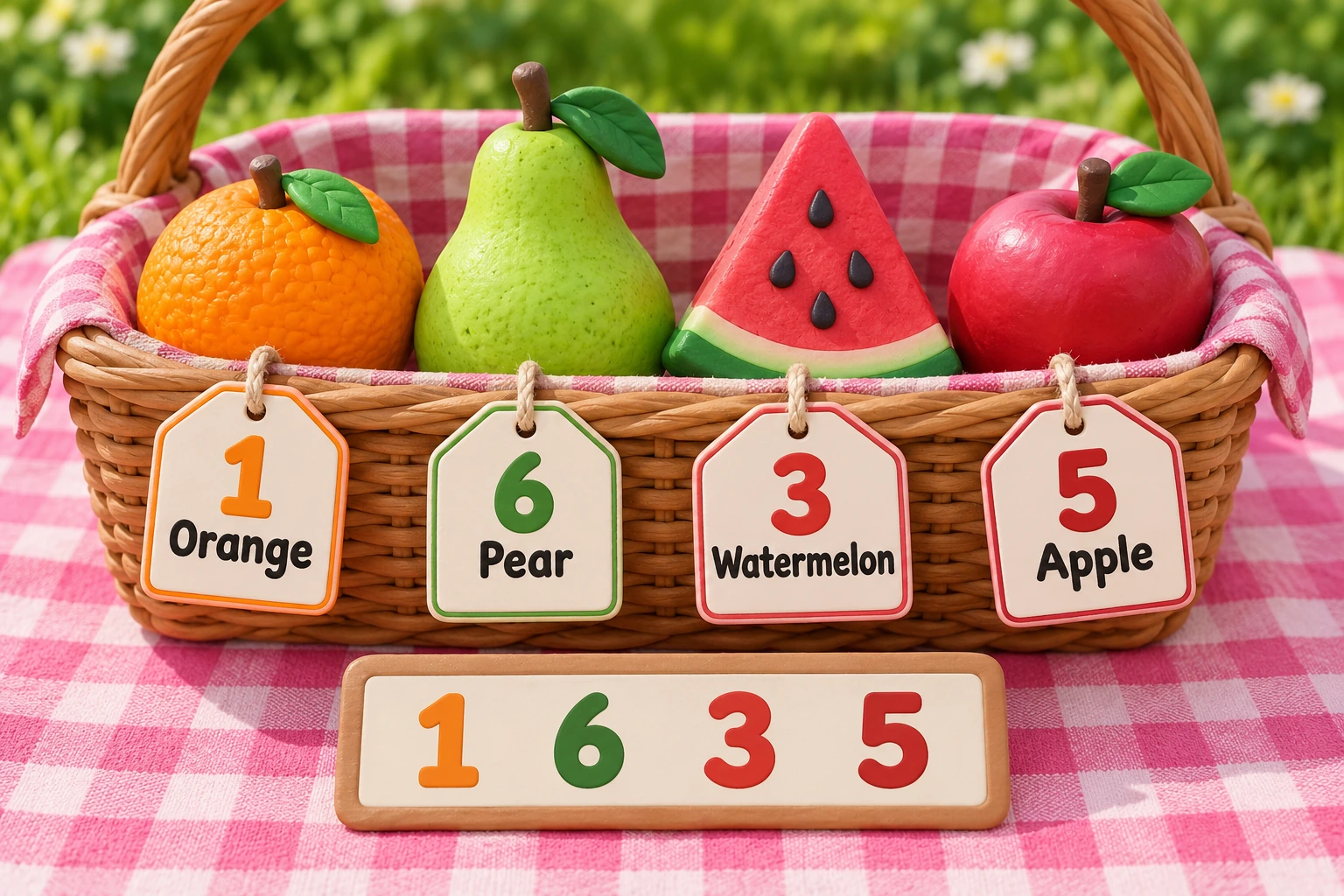
The fruit key in Fruit Route Decoder pairs one with orange, two with banana, three with watermelon, four with strawberry, five with apple and six with pear. The code uses those assignments as labels. It does not ask children to count seeds, add pieces of fruit or sort snacks by preference.
Treat the first Fruit Route Decoder route as a list of named places: orange, pear, watermelon, apple. Once the child has identified that itinerary, finger-rehearse it inside the correct practice field. The same fruit pictures appear elsewhere, so check the panel heading before drawing. Start a new journey inside each separate box.
Fruit Route Decoder legend at a glance
| Fruit Picnic numeral | Keyed picture |
|---|---|
| 1 | orange |
| 2 | banana |
| 3 | watermelon |
| 4 | strawberry |
| 5 | apple |
| 6 | pear |

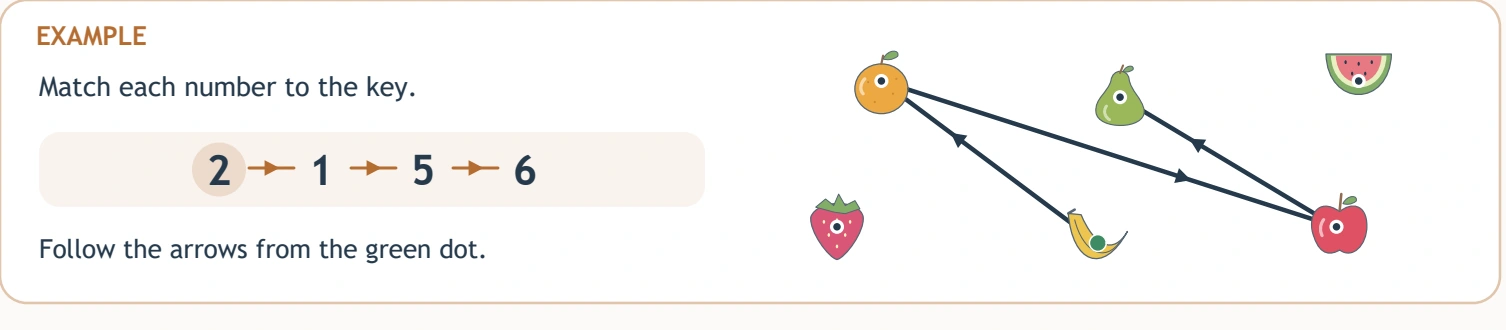
Fruit Route Decoder example before independent drawing
Fruit Picnic demonstrates 2 → 1 → 5 → 6. The Fruit Picnic itinerary is banana → orange → apple → pear. In Fruit Picnic, the green start selects banana. Fruit Picnic arrows lead to pear. Fruit Picnic has 3 worked segments. The Fruit Route Decoder example supports finger rehearsal. Inspect the Fruit Picnic practice strip separately.
Fruit Route Decoder — practice 1
Practice 1 on Fruit Picnic: 1 → 6 → 3 → 5. Translate those Fruit Route Decoder destinations as orange → pear → watermelon → apple. Begin on orange for Fruit Picnic; next locate pear. The Fruit Picnic centre-to-centre connections are orange followed by pear; pear followed by watermelon; watermelon followed by apple. Segment count for Fruit Route Decoder: 3, from 4 listed stops. The Fruit Picnic endpoint is apple. Against the Fruit Picnic strip, verify final 5.
Fruit Route Decoder leaves banana, strawberry outside practice 1. Leave these Fruit Picnic alternatives unvisited. Practice 1 for Fruit Picnic requests 1 → 6 → 3 → 5.
Fruit Picnic — practice 2
Practice 2 on Fruit Picnic: 4 → 2 → 6 → 3 → 5. Translate those Fruit Route Decoder destinations as strawberry → banana → pear → watermelon → apple. Begin on strawberry for Fruit Picnic; next locate banana. The Fruit Picnic centre-to-centre connections are strawberry followed by banana; banana followed by pear; pear followed by watermelon; watermelon followed by apple. Segment count for Fruit Route Decoder: 4, from 5 listed stops. The Fruit Picnic endpoint is apple. Against the Fruit Picnic strip, verify final 5.
Fruit Route Decoder leaves orange outside practice 2. Leave these Fruit Picnic alternatives unvisited. Practice 2 for Fruit Picnic requests 4 → 2 → 6 → 3 → 5.
Fruit Picnic — practice 3
Practice 3 on Fruit Picnic: 3 → 6 → 5 → 2 → 4. Translate those Fruit Route Decoder destinations as watermelon → pear → apple → banana → strawberry. Begin on watermelon for Fruit Picnic; next locate pear. The Fruit Picnic centre-to-centre connections are watermelon followed by pear; pear followed by apple; apple followed by banana; banana followed by strawberry. Segment count for Fruit Route Decoder: 4, from 5 listed stops. The Fruit Picnic endpoint is strawberry. Against the Fruit Picnic strip, verify final 4.
Fruit Route Decoder leaves orange outside practice 3. Leave these Fruit Picnic alternatives unvisited. Practice 3 for Fruit Picnic requests 3 → 6 → 5 → 2 → 4.
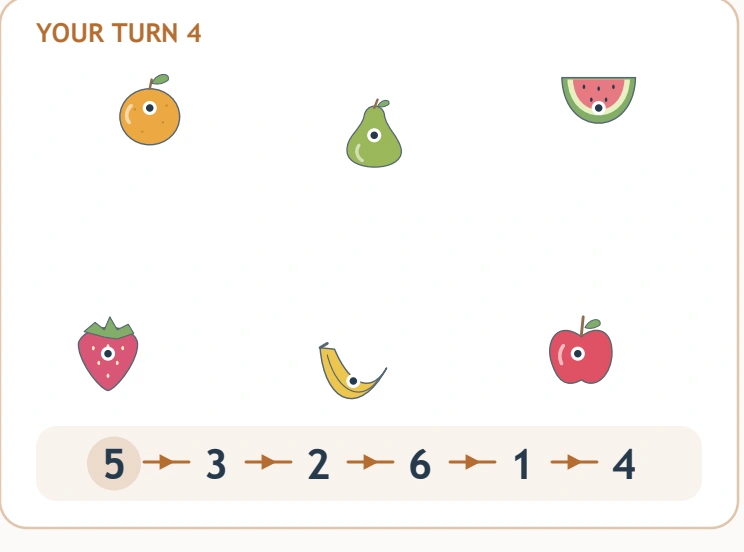
Fruit Picnic — practice 4
Practice 4 on Fruit Picnic: 5 → 3 → 2 → 6 → 1 → 4. Translate those Fruit Route Decoder destinations as apple → watermelon → banana → pear → orange → strawberry. Begin on apple for Fruit Picnic; next locate watermelon. The Fruit Picnic centre-to-centre connections are apple followed by watermelon; watermelon followed by banana; banana followed by pear; pear followed by orange; orange followed by strawberry. Segment count for Fruit Route Decoder: 5, from 6 listed stops. The Fruit Picnic endpoint is strawberry. Against the Fruit Picnic strip, verify final 4.
Fruit Picnic uses every Fruit Route Decoder entry in practice 4 of Fruit Picnic: 5 → 3 → 2 → 6 → 1 → 4. First Fruit Picnic selection: apple; final selection: strawberry.
A short home session with a spoken itinerary
Place Fruit Route Decoder where both partners can see the wide example and the key. Invite the child to name the six pictures; provide any unfamiliar fruit word without making naming a preliminary test. Read the example's numerals together, then follow its existing arrows from banana through orange and apple to pear.
For independent Fruit Route Decoder work, read only the first pair initially. Let the child locate both fruit centres and draw between them. Continue from the destination just reached; do not restart at the first fruit for every segment. A tracking finger under the code can preserve the current position while the drawing hand moves.
Cleo's invented picnic delivery
Imagine a home scene in which Cleo calls the Fruit Route Decoder pear “the green fruit.” A caregiver accepts the description and adds the word pear while pointing to six. Cleo can now follow the code without being held back by a vocabulary gap. They practise the orange-to-pear movement once with a fingertip, then try the pencil.
When Cleo asks whether the strawberry must be connected too, the adult returns to that Fruit Route Decoder route strip. Strawberry's four is absent from the first instruction, so it stays unvisited there. The pair keep the picnic story, but let the code decide which snacks receive a visit.
Six reasons to slow down at the fruit key
Vocabulary gains an immediate purpose
Naming a destination in Fruit Route Decoder is useful because someone else can find it. An adult can model a fuller description, such as watermelon slice, while accepting a shorter familiar name. The drawing remains the child's task; perfect pronunciation is not required to choose correctly.
Numerals operate as reference labels
During Fruit Route Decoder, six identifies pear regardless of where the pear sits. A child can practise matching that numeral with its assigned picture without also solving an arithmetic problem. Returning to the key is a sensible way to check an uncertain match.
A spoken plan guides a visible action
The Fruit Route Decoder itinerary can be said before it is drawn. Comparing the spoken fruit names with the pencil's destinations gives children a concrete way to inspect whether their action followed their plan. An adult can help with just one pair when the full sequence feels long.
A centre becomes a motor target
Fruit outlines in Fruit Route Decoder are decorative boundaries around the actual connection dots. Moving toward a small centre requires a deliberate start and controlled finish. Judge the selected destinations before line quality, and avoid repeated erasing when a wobble has not changed the route.
An unvisited picture becomes acceptable
Some Fruit Route Decoder fields contain fruit that the current code never requests. Leaving those pictures untouched can practise inhibition: visible choices do not all demand action. Ask which numeral would have been needed to include the omitted fruit, without altering the printed task.
Review can begin from evidence
If the Fruit Route Decoder pencil arrives at apple too early, the strip provides a place to investigate. Identify the current numeral and its fruit before redoing anything. Repairing one connection is often less discouraging than declaring the entire picnic journey incorrect.
Use readiness rather than a rigid birthday rule
From approximately four through seven, children may explore Fruit Route Decoder, with support for numeral names or pencil movement as needed. A child who cannot yet draw comfortable straight strokes may point through the itinerary while an adult demonstrates. Another may draw independently but need the word strawberry supplied.
Keep Fruit Route Decoder sessions short enough for the child to finish with interest remaining. The four panels are separate opportunities, not a required daily quantity. If the legend becomes visually tiring, pause and return after fruit sorting or storytelling. A larger clear print can help when small illustrations are the main obstacle.
A classroom picnic with paired roles, imagined
Picture a teacher using Fruit Route Decoder at a language-and-drawing table. One child gives the first two fruit names from the code, while a partner points to those symbols on their own sheet. They compare the selection before either draws. Then each child completes a segment on their individual page.
The teacher listens during Fruit Route Decoder for whether a wrong choice came from the key match or from forgetting the next stop. She offers the appropriate clue instead of taking over the pencil. Children change roles after a panel and may leave remaining puzzles for another session, keeping the activity collaborative without turning it into copied work.
Five picnic extensions with different response demands
Lay out a pretend snack itinerary
Use large fruit picture cards inspired by Fruit Route Decoder, each clearly labelled, and arrange three on a tray. Ask a toy to visit them in a spoken order. The child can be the direction-giver next. Keep real food and small objects out of the drawing space while playing.
Describe a fruit without its name
After Fruit Route Decoder, invite clues such as “the yellow curved one” for banana. A partner looks up Fruit Picnic and confirms the matching numeral. This game develops useful descriptions without requiring the child to spell fruit names or write them on the worksheet.
Compare two imaginary picnic orders
Say orange, pear, apple and then orange, apple, pear. Discuss how both lists mention the same fruit but send the traveller differently. Relate that observation back to a Fruit Route Decoder strip, preserving the printed itinerary when drawing resumes.
Give the storyteller a destination
Choose a completed Fruit Route Decoder endpoint and invent a short picnic tale that ends there. The story can include why the traveller wanted that fruit. Keep imaginative details outside the answer itself: a preferred snack does not change the numeral-to-picture assignment.
Be a gentle route reviewer
An adult can finger-follow a Fruit Route Decoder sequence with one deliberately misplaced stop. The child refers to the key and suggests a correction. Let the child decide whether to point, name a fruit or read the relevant numeral; all three can communicate the discovery.
Preserve the feeling of a successful picnic
Hurrying often leads to Fruit Route Decoder mistakes: counting upward, tracing a fruit edge or continuing into another panel. Pause at a familiar correct pair and rebuild from there. A child who notices a mistake independently deserves recognition for checking, even if the original stroke remains visible.
Make regular Fruit Route Decoder practice an invitation around an existing routine: a brief fruit conversation before one panel, perhaps twice during a week. The schedule can change with attention and interest. A thoughtful explanation can be today's finished product. There is no need to complete the remaining routes merely to fill the page.
Bring the picnic sheet to your printer
Choose the original sample download for Fruit Route Decoder, or use an eligible active membership to obtain its clean premium PDF after signing in. The premium printable removes the watermark and domain; there are no advertisements within the printable page. The $3 twenty-five-theme collection is offered separately for families wanting the entire set in one file.
Save Fruit Route Decoder, use a PDF viewer to inspect its complete portrait layout before printing. Keep the fruit key and every drawing box inside the previewed margins. A colour copy makes naming the pictures easier; print one test sheet before producing classroom copies.
Continue with other kinds of careful choices
Compare Fruit Route Decoder with Castle Color Codes. After Fruit Picnic, try Number Letter Switching. For Fruit Picnic, consider Exact Path Detective.
For conversations beyond Fruit Route Decoder, try NAEYC family articles and the activity library at PBS Parents. These general resources can inspire shared play around food words and directions; the worksheet's own key remains the reference for its four printed picnic routes.
Popular Worksheets
Printable resources families and teachers are downloading now.
 Free
 Free
 Free
 Free