
Ocean Symbol Paths: 5 Wonderful Sea-Life Connections
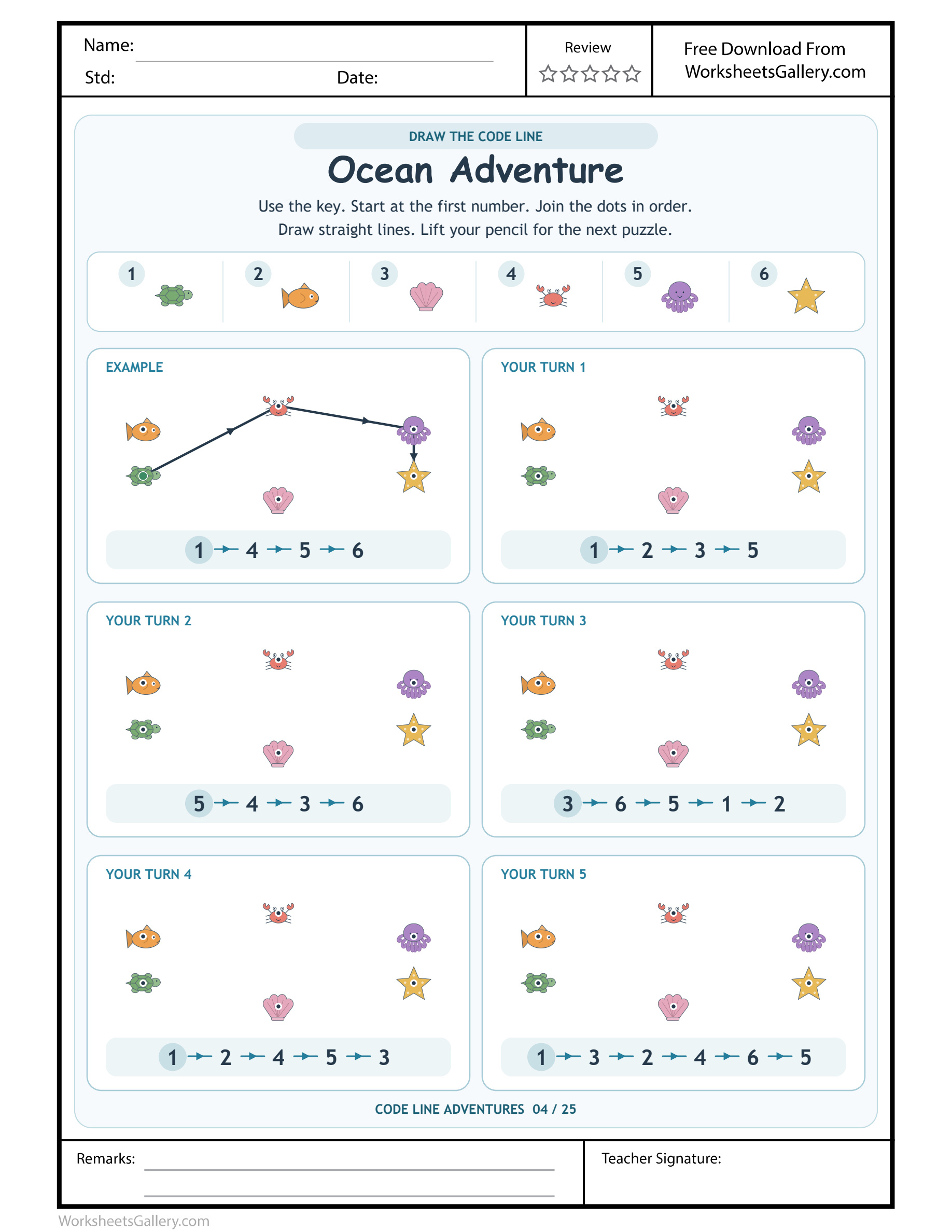
Find this sea-life key inside the $3 complete set. The collection keeps the ocean centre-dot routes with 24 additional sheets, making a different picture field available when your learner wants another setting.
Little sea creatures have tiny centres with an important job. On Ocean Symbol Paths, those dots mark where a pencil should arrive, while a number-to-picture key explains which creature comes next. The page includes turtle, fish, shell, crab, octopus and starfish pictures, a drawn example and five independent practice fields. Children read a short code, translate its numerals and connect the requested centres. The underwater scene invites a story, but the printed instruction keeps the voyage specific: a careful swimmer cannot visit every creature simply because it looks friendly or nearby today.
Centres, rather than shells and tentacles — Ocean Symbol Paths
A child's first impulse with Ocean Symbol Paths might be to outline the fish or colour the shell. Enjoy that interest, then point to the small connection targets. The requested response is a straight segment between centre dots. Curving around an animal's outside edge does not show the same route.
Use a finger to rehearse one Ocean Symbol Paths crossing while the pencil rests. Ask where the stroke will land before it starts. Choose the destination before moving the hand. This tiny pause separates locating a symbol from reaching it, making both decisions easier to observe.
An imagined ocean corner in class
Suppose Davi is using Ocean Symbol Paths at an ocean-themed table. He finds the fish correctly but draws toward its tail. His teacher points out the central target and invites a finger landing there. Davi tries the connection again on his own page, with the fish's outline still visible around the dot.
The teacher keeps Ocean Symbol Paths feedback specific: the destination was right, and now the landing is more controlled. Another child who selects the wrong creature receives help with the legend instead. Separating those needs prevents extra numeral practice being assigned when the real difficulty is where to aim.
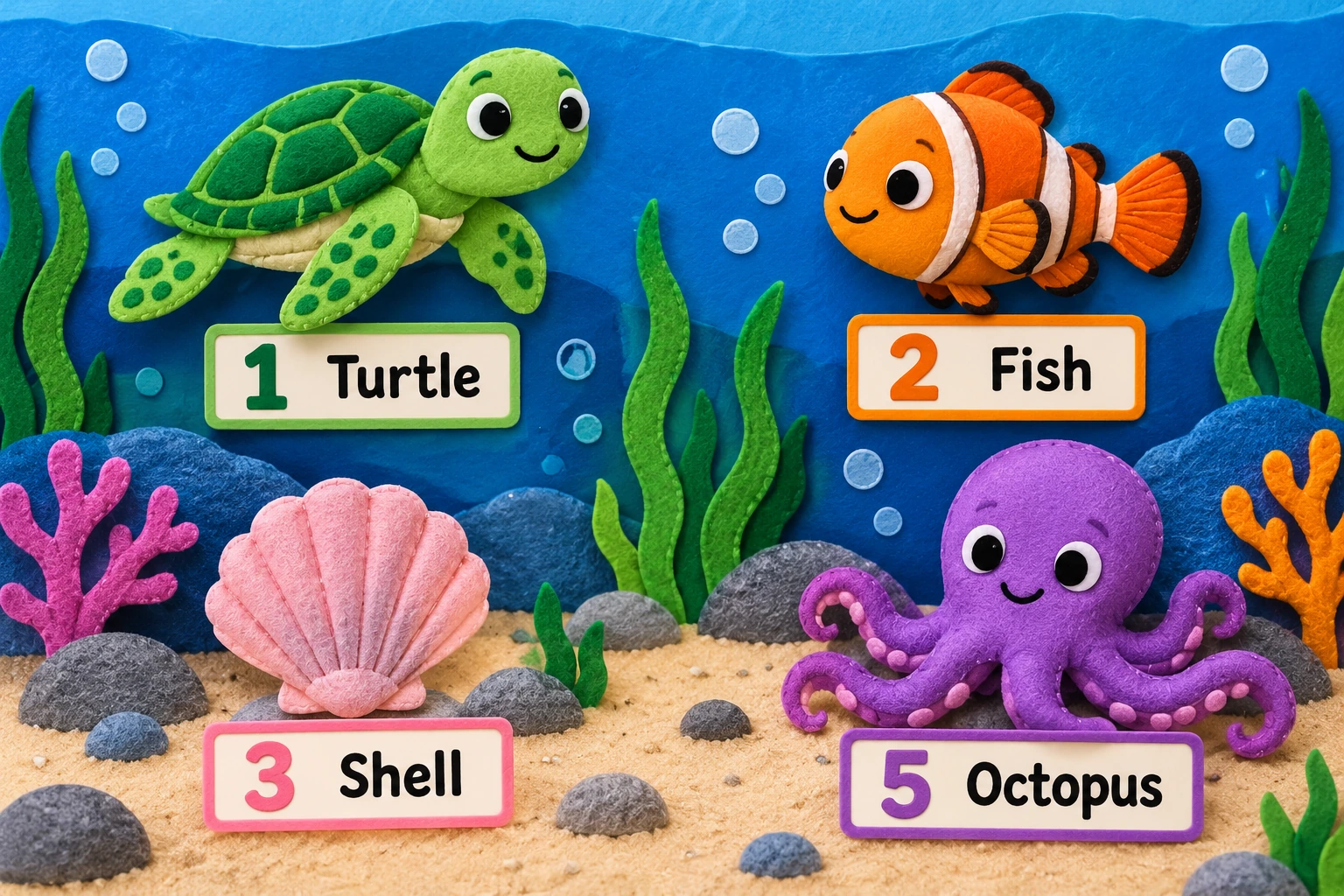
Ocean Adventure legend at a glance
| Ocean Adventure numeral | Keyed picture |
|---|---|
| 1 | turtle |
| 2 | fish |
| 3 | shell |
| 4 | crab |
| 5 | octopus |
| 6 | starfish |

Ocean Adventure example before independent drawing
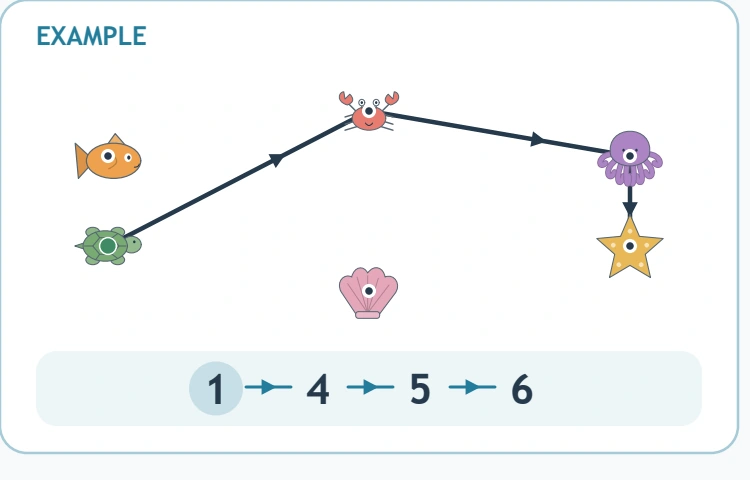
Ocean Adventure demonstrates 1 → 4 → 5 → 6. The Ocean Adventure itinerary is turtle → crab → octopus → starfish. In Ocean Adventure, the green start selects turtle. Ocean Adventure arrows lead to starfish. Ocean Adventure has 3 worked segments. The Ocean Symbol Paths example supports finger rehearsal. Inspect the Ocean Adventure practice strip separately.
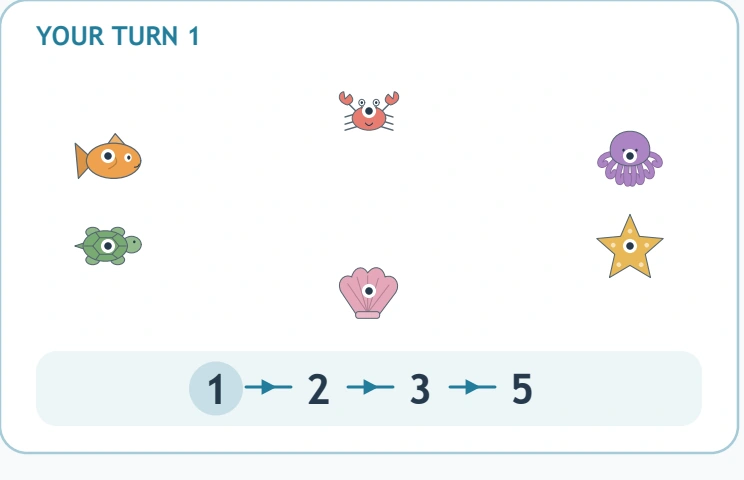
Ocean Adventure — practice 1
Practice 1 on Ocean Adventure: 1 → 2 → 3 → 5. Translate those Ocean Symbol Paths destinations as turtle → fish → shell → octopus. Begin on turtle for Ocean Adventure; next locate fish. The Ocean Adventure centre-to-centre connections are turtle then fish; fish then shell; shell then octopus. Segment count for Ocean Symbol Paths: 3, from 4 listed stops. The Ocean Adventure endpoint is octopus. Against the Ocean Adventure strip, verify final 5.
Ocean Symbol Paths leaves crab, starfish outside practice 1. Leave these Ocean Adventure alternatives unvisited. Practice 1 for Ocean Adventure requests 1 → 2 → 3 → 5.
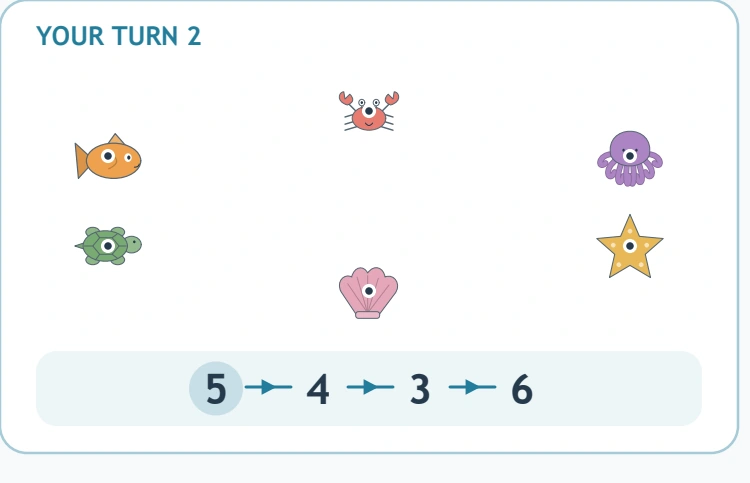
Ocean Adventure — practice 2
Practice 2 on Ocean Adventure: 5 → 4 → 3 → 6. Translate those Ocean Symbol Paths destinations as octopus → crab → shell → starfish. Begin on octopus for Ocean Adventure; next locate crab. The Ocean Adventure centre-to-centre connections are octopus then crab; crab then shell; shell then starfish. Segment count for Ocean Symbol Paths: 3, from 4 listed stops. The Ocean Adventure endpoint is starfish. Against the Ocean Adventure strip, verify final 6.
Ocean Symbol Paths leaves turtle, fish outside practice 2. Leave these Ocean Adventure alternatives unvisited. Practice 2 for Ocean Adventure requests 5 → 4 → 3 → 6.
Ocean Adventure — practice 3
Practice 3 on Ocean Adventure: 3 → 6 → 5 → 1 → 2. Translate those Ocean Symbol Paths destinations as shell → starfish → octopus → turtle → fish. Begin on shell for Ocean Adventure; next locate starfish. The Ocean Adventure centre-to-centre connections are shell then starfish; starfish then octopus; octopus then turtle; turtle then fish. Segment count for Ocean Symbol Paths: 4, from 5 listed stops. The Ocean Adventure endpoint is fish. Against the Ocean Adventure strip, verify final 2.
Ocean Symbol Paths leaves crab outside practice 3. Leave these Ocean Adventure alternatives unvisited. Practice 3 for Ocean Adventure requests 3 → 6 → 5 → 1 → 2.
Ocean Adventure — practice 4
Practice 4 on Ocean Adventure: 1 → 2 → 4 → 5 → 3. Translate those Ocean Symbol Paths destinations as turtle → fish → crab → octopus → shell. Begin on turtle for Ocean Adventure; next locate fish. The Ocean Adventure centre-to-centre connections are turtle then fish; fish then crab; crab then octopus; octopus then shell. Segment count for Ocean Symbol Paths: 4, from 5 listed stops. The Ocean Adventure endpoint is shell. Against the Ocean Adventure strip, verify final 3.
Ocean Symbol Paths leaves starfish outside practice 4. Leave these Ocean Adventure alternatives unvisited. Practice 4 for Ocean Adventure requests 1 → 2 → 4 → 5 → 3.
Ocean Adventure — practice 5
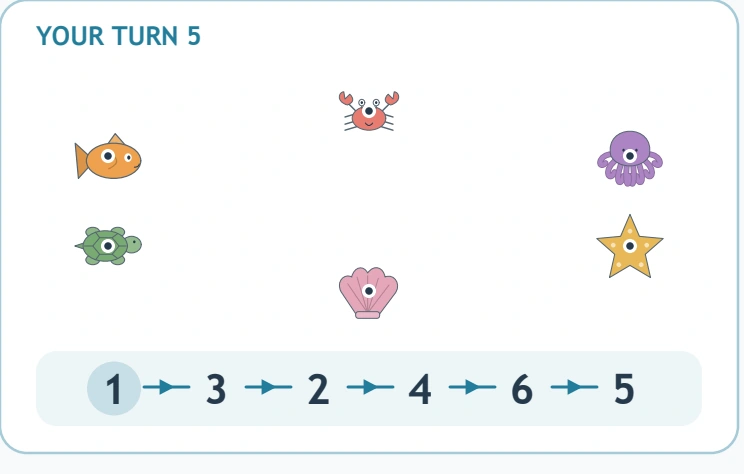
Practice 5 on Ocean Adventure: 1 → 3 → 2 → 4 → 6 → 5. Translate those Ocean Symbol Paths destinations as turtle → shell → fish → crab → starfish → octopus. Begin on turtle for Ocean Adventure; next locate shell. The Ocean Adventure centre-to-centre connections are turtle then shell; shell then fish; fish then crab; crab then starfish; starfish then octopus. Segment count for Ocean Symbol Paths: 5, from 6 listed stops. The Ocean Adventure endpoint is octopus. Against the Ocean Adventure strip, verify final 5.
Ocean Adventure uses every Ocean Symbol Paths entry in practice 5 of Ocean Adventure: 1 → 3 → 2 → 4 → 6 → 5. First Ocean Adventure selection: turtle; final selection: octopus.
Six observations worth more than perfect lines
A numeral finds its creature
For Ocean Symbol Paths, the child relates a number in a strip to a picture in a different area. A correct lookup is valuable even if the ensuing pencil line wobbles. Ask which legend entry supplied the destination and accept a direct point as evidence.
A glance prepares a reach
When Ocean Symbol Paths prompts looking ahead to the next centre, the hand has a visible target. Adults can notice whether the child searches first or starts moving while still deciding. A deliberate pause is useful planning, not hesitation that needs to be hurried away.
Direction words become concrete
Discuss a Ocean Symbol Paths segment as moving toward fish, away from turtle or onward to shell. These descriptions connect spoken language with an actual mark. They need not include exact angles or compass terms; simple relational words can communicate the route.
Two hands have different jobs
One hand draws during Ocean Symbol Paths; the other can steady the paper or track the current numeral. Keep that support comfortable and unobtrusive. A sliding sheet can make an otherwise understood route difficult, so adjust the surface before asking for better control.
Unrequested creatures can wait
Some Ocean Symbol Paths routes leave symbols untouched. The child can practise following the selected itinerary without adding a visit to a favourite animal. Ask whether the absent numeral appears in this strip before treating an unconnected picture as missing work.
Checking begins with a pair
Review Ocean Symbol Paths by comparing two consecutive numerals with one drawn segment. If they disagree, repair the local connection. That small unit of checking is easier to explain than asking a young child to judge every line on the page simultaneously.
Readiness and a calm beginning
With adult help, Ocean Symbol Paths can be explored at roughly four to seven years. The range is flexible: naming the pictures, recognising the key numerals and aiming a pencil are separate demands. An adult may name an unfamiliar octopus while the child still makes the correct lookup.
Print Ocean Symbol Paths clearly enough to see its centres. Read the example, trace its existing arrows with a fingertip and choose one unanswered box. If small targets are tiring, use a larger print or a pointing response. Do not insist on finishing the other four fields when the child has already used their comfortable attention.
A living-room sea voyage, imagined
Imagine Davi later showing Ocean Symbol Paths to a grandparent. He describes a route using creature names before drawing it. When he loses his position in the numeral strip, the grandparent rests a finger under the last completed step. Davi identifies the next picture himself rather than receiving the whole answer aloud.
After one Ocean Symbol Paths panel, they pretend the sea traveller has arrived for a rest. The story provides a satisfying stopping point without changing the code. They can return to an untouched field another day, beginning from its own first numeral rather than continuing yesterday's line.
Four sea-themed invitations beyond the page
Name a landing station
Set out large labelled sea-picture cards after Ocean Symbol Paths. Ask the child to move a toy between two named stations and stop precisely beside each. Trade direction-giving roles. This larger movement can rehearse purposeful arrival before another fine pencil target is introduced.
Speak for the route reviewer
Let a pretend crab inspect a completed Ocean Symbol Paths segment. The crab asks which numeral selected its destination. The child can demonstrate with the legend, making the reference useful to an imaginary audience. Avoid asking for a long explanation when a point communicates enough.
Compare the animal edge with its centre
On a separate large picture inspired by Ocean Symbol Paths, point to a fin, shell edge and central dot. Discuss where a connecting line would land. This distinguishes the intended target from attractive decorative details without drawing extra marks over the printed exercise.
Invent a stop-and-rest sea tale
Use a finished Ocean Symbol Paths endpoint as the final place in a short story. Let the child decide why the traveller rests there. The tale can be imaginative while the underlying worksheet route remains fixed by its numeral strip; a story preference does not rewrite the code.
Handle detours with patient, useful feedback
Frequent Ocean Symbol Paths errors include tracing an outline, copying the example's destinations or joining the next box without lifting. Return to the present code and ask for its first pair. If the pair is right but the mark strays, talk about the target rather than reteaching the entire key.
Keep repeat visits to Ocean Symbol Paths brief and varied. One route after an ocean story may be enough. Praise noticing a centre or correcting a lookup, allow a rest when the hand tires, and avoid comparing classmates' neatness. A well-explained route can be a successful day's work.
Download your ocean drawing sheet
The sample control supplies the original Ocean Symbol Paths file. An eligible active member can sign in for the cleaned premium printable, with website branding removed. Its PDF page has no watermark and no ads; the domain is absent too. The complete twenty-five-page collection is a separate $3 purchase.
Save Ocean Symbol Paths before printing and inspect its portrait preview for the full frame. Use a colour print when possible so the creatures and legend are easy to compare. Select a fit setting if your printer clips the margins, and place the finished copy on a stable drawing surface.
Other routes into deliberate looking
Compare Ocean Symbol Paths with Exact Path Detective. After Ocean Adventure, try Castle Color Codes. For Ocean Adventure, consider Number Letter Switching.
For broader activities around Ocean Symbol Paths, explore the NAEYC family resource collection and PBS Parents' play ideas. Adults can choose related conversation or movement activities while keeping the ocean worksheet's centre-to-centre drawing instruction clear.
Popular Worksheets
Printable resources families and teachers are downloading now.
 Free
 Free
 Free
 Free