
Garden Code Links: 4 Clever Bee-and-Butterfly Trips
A bigger garden of choices is available for $3. This garden-code page appears in the 25-sheet clean collection; mushroom, bee and butterfly decisions can sit beside the other supplied route themes.
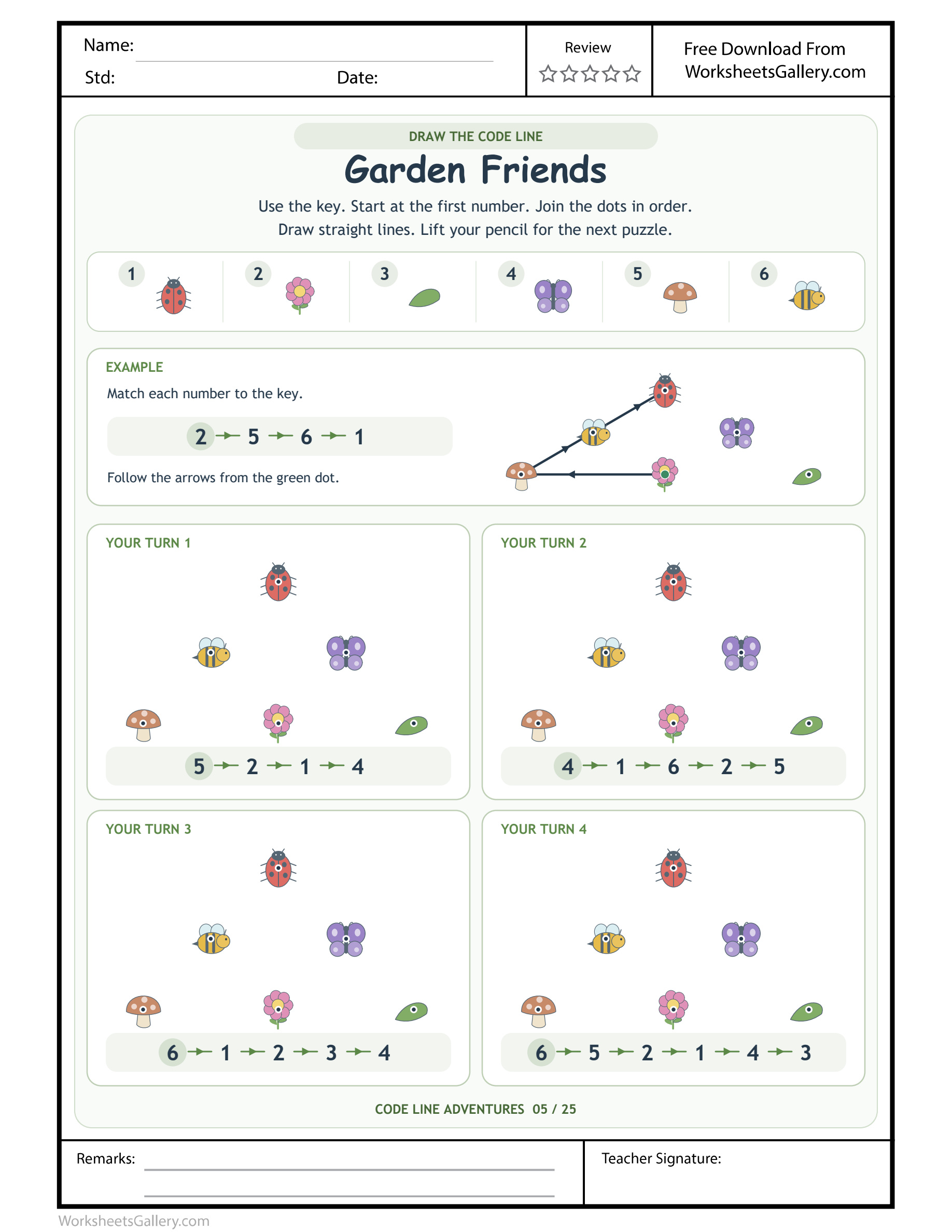
Not every garden visitor belongs on every journey. Garden Code Links presents a ladybug, flower, leaf, butterfly, mushroom and bee, then gives children a short number code that chooses which pictures to connect. A wide example demonstrates the lookup process before four unanswered route panels. The interesting work lies in choosing the next requested stop and leaving the other symbols alone. Children can describe a tiny garden trip as they draw, using the legend to guide the story instead of letting a favourite creature or an easy nearby picture take over the route.
The next stop is a decision, not a guess — Garden Code Links
On Garden Code Links, the six-entry legend is a reference for interpreting the numeral strip. Its order does not dictate a counting journey through the pictures. The first independent code, for example, sends the traveller to mushroom, flower, ladybug and butterfly. Leaf and bee are visible alternatives in that field, but they are not part of that particular instruction.
An adult can introduce Garden Code Links by naming the garden pictures together, then asking which numeral identifies one of them. No counting of petals or insect legs is requested. The little centre dot supplies the connection target, while the printed code supplies the reason to choose it.
Garden Code Links legend at a glance
| Garden Friends numeral | Keyed picture |
|---|---|
| 1 | ladybug |
| 2 | flower |
| 3 | leaf |
| 4 | butterfly |
| 5 | mushroom |
| 6 | bee |

Garden Friends example before independent drawing
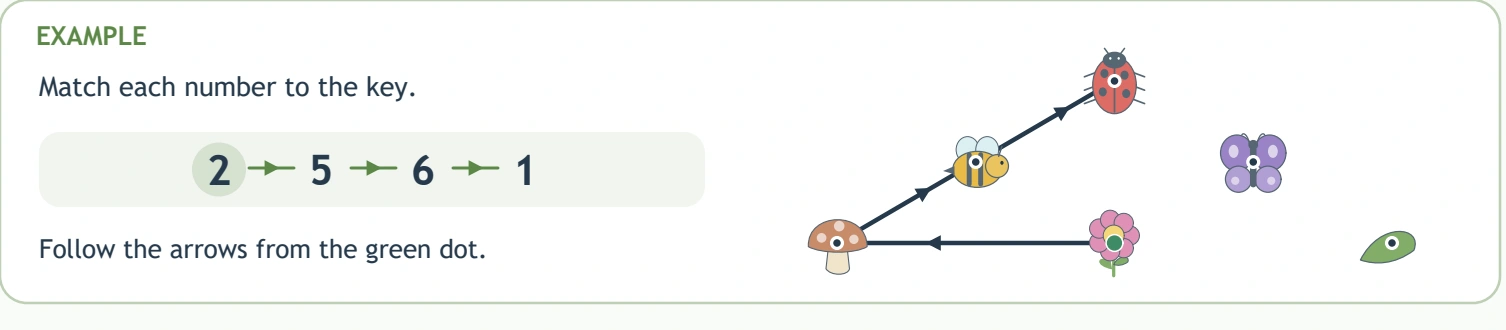
Garden Friends demonstrates 2 → 5 → 6 → 1. The Garden Friends itinerary is flower → mushroom → bee → ladybug. In Garden Friends, the green start selects flower. Garden Friends arrows lead to ladybug. Garden Friends has 3 worked segments. The Garden Code Links example supports finger rehearsal. Inspect the Garden Friends practice strip separately.
Garden Friends — practice 1
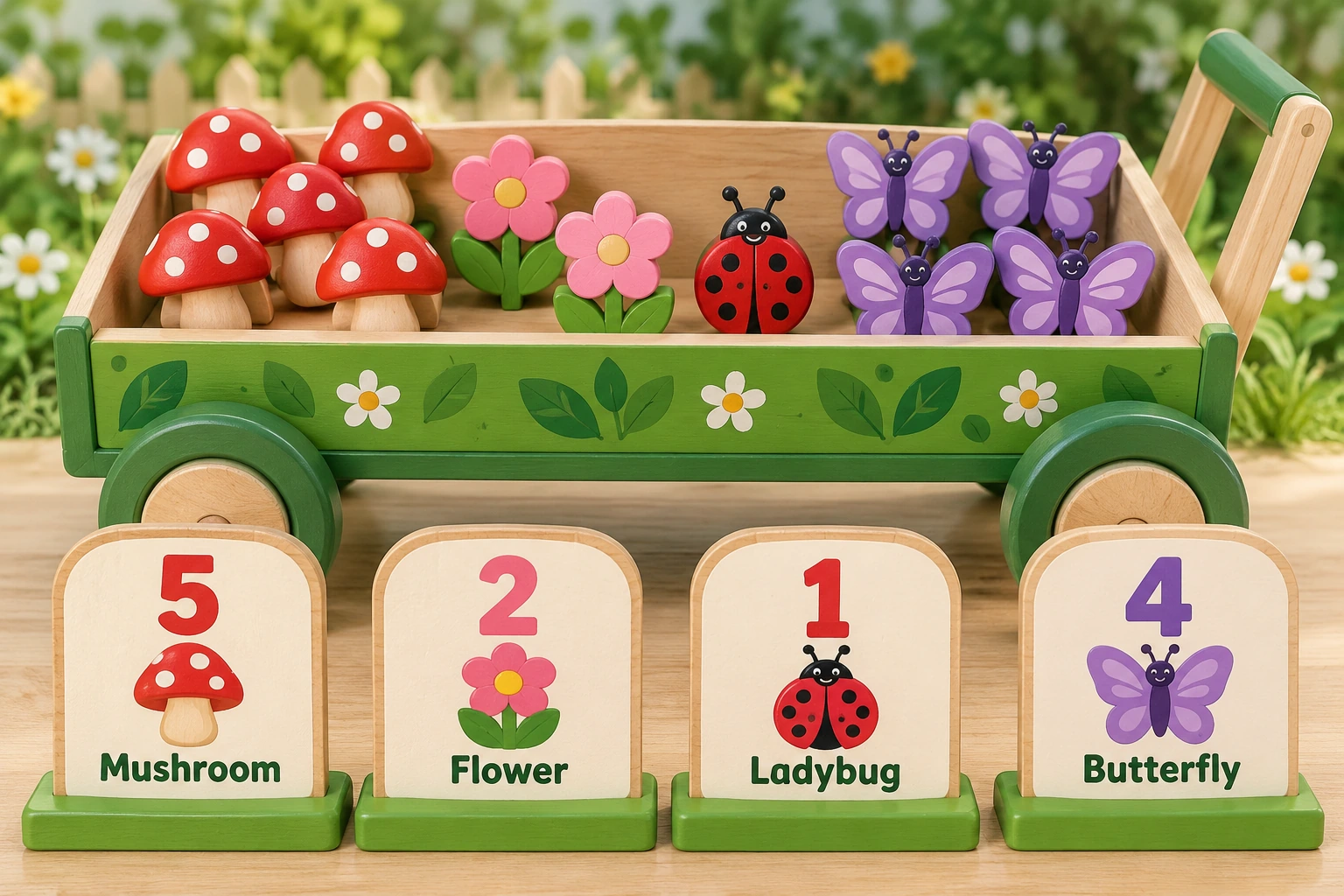
Practice 1 on Garden Friends: 5 → 2 → 1 → 4. Translate those Garden Code Links destinations as mushroom → flower → ladybug → butterfly. Begin on mushroom for Garden Friends; next locate flower. The Garden Friends centre-to-centre connections are mushroom → flower; flower → ladybug; ladybug → butterfly. Segment count for Garden Code Links: 3, from 4 listed stops. The Garden Friends endpoint is butterfly. Against the Garden Friends strip, verify final 4.
Garden Code Links leaves leaf, bee outside practice 1. Leave these Garden Friends alternatives unvisited. Practice 1 for Garden Friends requests 5 → 2 → 1 → 4.
Garden Friends — practice 2
Practice 2 on Garden Friends: 4 → 1 → 6 → 2 → 5. Translate those Garden Code Links destinations as butterfly → ladybug → bee → flower → mushroom. Begin on butterfly for Garden Friends; next locate ladybug. The Garden Friends centre-to-centre connections are butterfly → ladybug; ladybug → bee; bee → flower; flower → mushroom. Segment count for Garden Code Links: 4, from 5 listed stops. The Garden Friends endpoint is mushroom. Against the Garden Friends strip, verify final 5.
Garden Code Links leaves leaf outside practice 2. Leave these Garden Friends alternatives unvisited. Practice 2 for Garden Friends requests 4 → 1 → 6 → 2 → 5.
Garden Friends — practice 3
Practice 3 on Garden Friends: 6 → 1 → 2 → 3 → 4. Translate those Garden Code Links destinations as bee → ladybug → flower → leaf → butterfly. Begin on bee for Garden Friends; next locate ladybug. The Garden Friends centre-to-centre connections are bee → ladybug; ladybug → flower; flower → leaf; leaf → butterfly. Segment count for Garden Code Links: 4, from 5 listed stops. The Garden Friends endpoint is butterfly. Against the Garden Friends strip, verify final 4.
Garden Code Links leaves mushroom outside practice 3. Leave these Garden Friends alternatives unvisited. Practice 3 for Garden Friends requests 6 → 1 → 2 → 3 → 4.
Garden Friends — practice 4
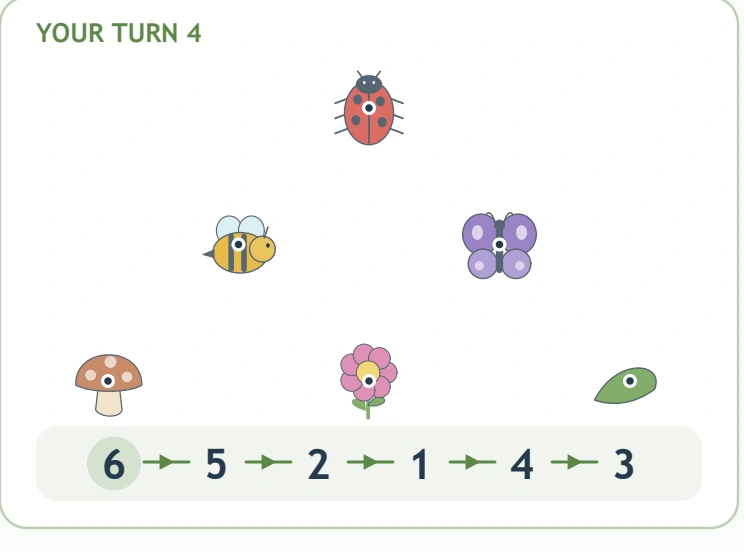
Practice 4 on Garden Friends: 6 → 5 → 2 → 1 → 4 → 3. Translate those Garden Code Links destinations as bee → mushroom → flower → ladybug → butterfly → leaf. Begin on bee for Garden Friends; next locate mushroom. The Garden Friends centre-to-centre connections are bee → mushroom; mushroom → flower; flower → ladybug; ladybug → butterfly; butterfly → leaf. Segment count for Garden Code Links: 5, from 6 listed stops. The Garden Friends endpoint is leaf. Against the Garden Friends strip, verify final 3.
Garden Friends uses every Garden Code Links entry in practice 4 of Garden Friends: 6 → 5 → 2 → 1 → 4 → 3. First Garden Friends selection: bee; final selection: leaf.
Six garden habits to encourage
Select what the instruction actually requests
The Garden Code Links drawing field offers more choices than some codes need. Stopping to inspect the next numeral gives a child a reason to choose selectively. An unvisited bee can be correct work when six is absent, rather than a sign that the page needs finishing.
Use a stable match across changing routes
Within Garden Code Links, the same legend continues to identify each picture across all four practice fields. The itinerary changes, so the child can reuse a familiar reference without repeating the same route. That balances consistency with a new decision at each panel.
Talk about beginnings and endings
Ask where a Garden Code Links journey starts and where it finishes. The child can point before speaking or name just the endpoints. Those two choices reveal whether the strip is being read in the intended direction, even before the middle connections are examined.
Plan a controlled connection
Each Garden Code Links segment links two small centres. Have the child find the destination before drawing toward it. The aim is an intentional route, not perfectly ruled geometry; a slightly uneven stroke can still communicate a sound symbol-selection decision.
Carry a short instruction into action
During Garden Code Links, one numeral-to-picture pair can be held at a time. Use a finger to retain the current position rather than demanding full-code memorisation. An adult can fade that tracking support as the child begins managing the sequence independently.
Explain why something was left out
A conversation about Garden Code Links can include “The leaf waits because three is not listed here.” Such explanations connect restraint with evidence. They also show the child that leaving part of a drawing field untouched may be an informed choice, not incomplete effort.
Start with enough support to enjoy the garden
Roughly ages four through seven is a useful starting range for Garden Code Links, with adaptations based on the individual. If a child can match pictures but not read the numeral names, read the code aloud. If small drawing movements are difficult, invite a finger route and provide an adult pencil demonstration separately.
For a home session with Garden Code Links, set the sheet flat, keep the legend visible and finger-follow the worked example. Choose one practice panel, locate its initial pair and draw that connection. Read a new strip before entering another box. A quiet pause between routes makes their independence clear.
Elsa's imagined windowsill garden
Picture Elsa trying Garden Code Links beside some household plants. She names the butterfly as her favourite and wants to visit it immediately. Her caregiver acknowledges the choice, then asks which numeral begins the current strip. Elsa finds mushroom first, with butterfly waiting until the final requested stop.
They finish one Garden Code Links field and discuss which garden pictures stayed outside its path. Elsa points to leaf and bee. The adult praises that accurate observation rather than adding extra lines to make the drawing feel fuller. They save another route for a later garden-story time.
A classroom conversation about “not yet,” imagined
Imagine a teacher using Garden Code Links with a small group. One child acts as a garden guide, naming the next destination from the key, while others point on their individual pages. When someone points to a nearby leaf, the guide shows which entry the code actually names.
The teacher asks children to give the Garden Code Links symbols a waiting role: an omitted picture can be a quiet onlooker. That story supports selective action without changing the exercise. Each child then draws their own route; the teacher offers numeral reading or hand-position support according to the difficulty observed.
Five garden games for fresh practice
Host a two-stop visitor
After Garden Code Links, arrange clearly labelled garden picture cards and let a toy visit two requested places. A child can direct the adult's toy next. Keep the route short and check the spoken order together rather than racing to touch every card.
Give the waiting picture a voice
Choose a symbol omitted from a Garden Code Links route and invent what it might say while the traveller passes elsewhere. Then identify the numeral that would have selected it. This playful detour keeps the difference between available pictures and requested destinations explicit.
Make a garden description riddle
Describe one Garden Code Links key picture using visible features: wings, spots, a cap or a leaf outline. A partner points to its legend entry and names the numeral. Avoid requiring specialist plant or insect knowledge; the printed drawing provides enough evidence for the game.
Share a route as a story sentence
Turn a completed Garden Code Links itinerary into a short sentence about a traveller. Include the stops in their drawn order. A listening partner checks the sentence against the path, giving spoken sequencing a practical purpose without adding more pencil work.
Review a puppet's unnecessary visit
Let a puppet finger-follow Garden Code Links and add an extra leaf stop. The child can inspect the strip and explain why that visit was not requested. The puppet thanks the reviewer and retries; the humour belongs to the puppet's action, not a learner's mistake.
Protect curiosity when a line goes astray
Some children hurry through Garden Code Links by counting upward or copying the sample's line. Others correctly choose symbols but trace their outlines. Identify which action needs attention, return to a single pair, and demonstrate the relevant part. Avoid erasing a whole panel when one local connection needs repair.
Offer Garden Code Links regularly in small invitations: one route after looking at a plant, another during a quiet weekend activity. Interest and comfort can determine the length. Noticing an unused symbol is worth celebrating. A calm finish helps the next garden visit remain a choice the child wants to make.
Print a garden route in the right edition
Download the original sample of Garden Code Links through the page's sample option. After sign-in, qualifying members may obtain the cleaned premium PDF; its printable page has no domain, no watermark and no ads. The separately priced $3 collection contains this garden page plus twenty-four other code-line themes.
Open the saved Garden Code Links PDF, select portrait printing and check that the full outer border remains visible. Colour makes the garden illustrations easier to identify. If the printer trims the edge, use a fit adjustment and test a single copy before preparing more sheets.
Continue with other evidence-led choices
Compare Garden Code Links with Castle Color Codes. After Garden Friends, try Number Letter Switching. For Garden Friends, consider Exact Path Detective.
To accompany Garden Code Links, the family section at NAEYC offers wider early-learning reading, and PBS Parents activity resources can inspire shared pretend play. Choose an extension that matches the child's garden interest while using this worksheet's own legend for its printed routes.
Popular Worksheets
Printable resources families and teachers are downloading now.
 Free
 Free
 Free
 Free